The Narcissist’s Playbook

The Narcissist’s Playbook

Posted on August 29, 2026 at 9:50 pm

B +
Lowest Recommended Age: High School
MPAA Rating: Not rated
Profanity: Strong language
Alcohol/ Drugs: References to alcohol and drugs
Violence/ Scariness: Discussion of emotional, physical, and sexual abuse
Diversity Issues: None
Date Released to Theaters: July 25, 2026
Date Released to DVD: August 29, 2026
The Narcissist’s Playbook

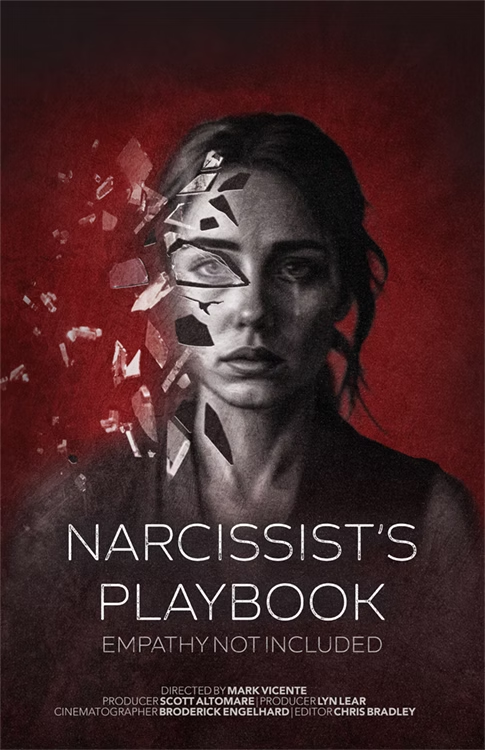
One of the most unnerving twists of the year occurs about two-thirds of the way into “The Narcissist’s Playbook,” a documentary about people who are incapable of empathy and, because they do not feel love, compassion, tenderness, or joy, often inflict abuse on others to feel powerful or just to feel anything at all.

It begins with a telling perspective-shifting quote from someone we will spend a lot of time with over the course of the film, Sam Vaknin, the Israeli author of books including Malignant Self Love: Narcissism Revisited. He says that it is not the evil of the narcissist that fools us; it is our own humanity projecting onto everyone else the emotions that feel so essential to us we cannot imagine there is anyone who cannot care about other people.

It is not surprising that director Mark Vicente would be drawn to this subject. He became first an accolyte of NXIVM and its founder, Keith Raniere, and then a whistleblower who helped bring the organization and its leader down, including a criminal trial ending with a 120 year sentence.

Most people think of narcissists as egotists who are consumed with their own status and their own needs. This film uses the term to mean what in non-clinical terms we might call psychopaths or sociopaths or borderline personality disorder, people we think of as doing whatever makes them feel safe or powerful, no matter who gets hurt.

It is structured like a typical documentary, with a lot of talking heads — experts and survivors of relationships with narcissists from seven different countries. But some elements are unusual. Four of the experts are themselves, according to the film’s press materials, “self-confessed, self-aware malignant narcissists.”

Vaknin earns our sympathy and his own credibility right away, confessing that he went to prison for securities fraud, and he is now doing his best to educate others about what narcisissm is and how to protect ourselves.

We also hear from actress Evan Rachel Wood, who at 18 met punk rocker Marilyn Manson, then in his mid-30s. He quickly persuaded her to move in with him and then, she tells us, he isolated and abused her. It was only when she played a character on the HBO series “Westworld” that she located within herself the courage to leave him. (Manson denies her allegations.)

We learn from the academic experts that what Wood describes is typical of the narcissist, who begins by “love-bombing,” telling victims how special they are, how only he or she really sees and understands them, how much they need each other. It is “fast, intense, magical.” Step 2 is isolating the victim, separating them from their friends and family. Wood says, they want us to know “the only safe place is with them.” Next, they counter all of the building you up by tearing you down, first by devaluing you, destabilizing you so you try to regain that fast, intense, magical, and SAFE feeling again. And, when someone tries to leave or expose them, the accusations start. Non-narcisssist are looking for peace; narcissists live for chaos.

Step 4 will be familiar to anyone who has seen Ingrid Bergman’s Oscar-winning performance in “Gaslight.” You don’t have time to doubt the relationship because this step has you doubting yourself, even your own ability to discern reality. And then comes the discord, drama, distractions, and lies. Another victim describes his marriage, which followed exactly this pattern.

Those who have a hard time understanding people whose underestanding extends only to their own interests tend to look for causes, abusive families, past traumas. Their first impulse may be to try to be reassuring, to feel sorry for narcissists who say they do not know what it feels like to feel love or happiness and want to heal them. But, as one of the experts points out, many people experience abuse and trauma and do not become narcissists. We are told fairly early that a true crime investigative reporter is searching for a particular narcissist who has hurt many women by posing as a therapist, but we do not find out until much later who that person is and what he will do when he is exposed.

Anyone who watches this film will think of people who fit the pattern. And everyone who watches will come away prepared to recognize and block anyone who tries those tactics.

Parents should know that this film includes discussions of physical and emotional abuse and trauma with very strong language.

Family discussion: What did you learn from this film? What should people do to protect themselves from predators?

If you like this, try: the NXIVM documentary, “The Vow”
Related Tags:


Documentary DVD/Blu-Ray Illness, Medicine, and Health Care Illness, Medicine, and Health Care Movies -- format VOD and Streaming
Michael

Michael

Posted on April 22, 2026 at 12:04 pm

B-
Lowest Recommended Age: High School
MPAA Rating: Rated PG-13 for some thematic material, language, and smoking
Profanity: Some strong language
Alcohol/ Drugs: Smoking
Diversity Issues: Child abuse, parent whips a child with a belt
Date Released to Theaters: April 24, 2026
Michael
Copyright 2026 Lionsgate

To understand what kind of movie this is, you need to know that most, but not all, of Michael Jackson’s siblings and most, but not all, of his children were producers. His lawyer, John Branca, also produced and is played by Miles Teller.

Janet Jackson, Michael’s sister and a musical superstar of almost equal prominence, who did not produce, is erased from the story. So his non-superstar sister Rebbie. So is any possible fault or flaw in the title character, and any effort to give the rest of the characters any depth or personality. What it does find time for is way too many scenes of ecstatic fans at concerts and Michael visiting sick children. The movie has its entertaining moments, mostly when Jaafar Jackson replicates some of his uncle’s most iconic performances, but the dramatic sections are weak and sanitized.

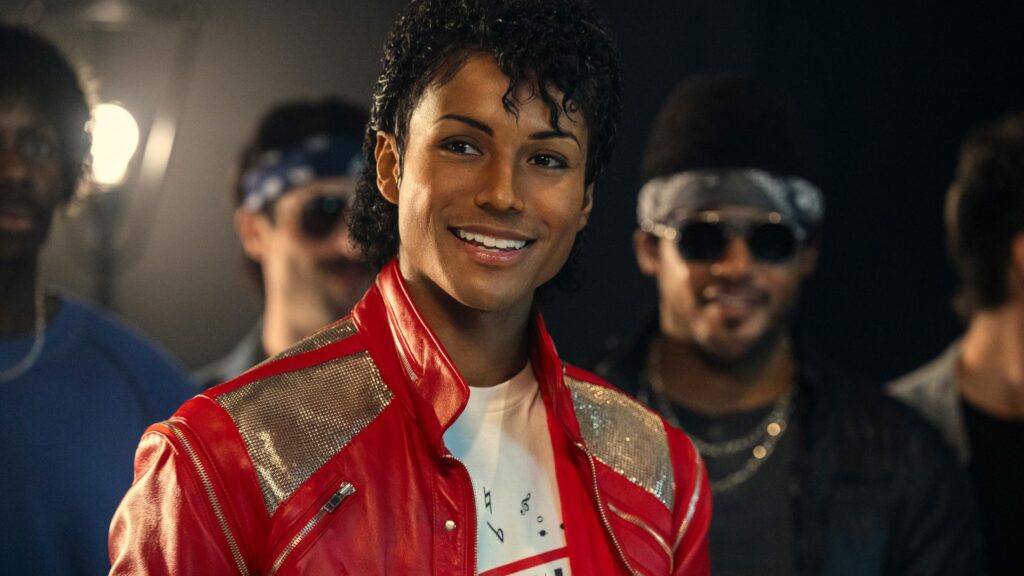
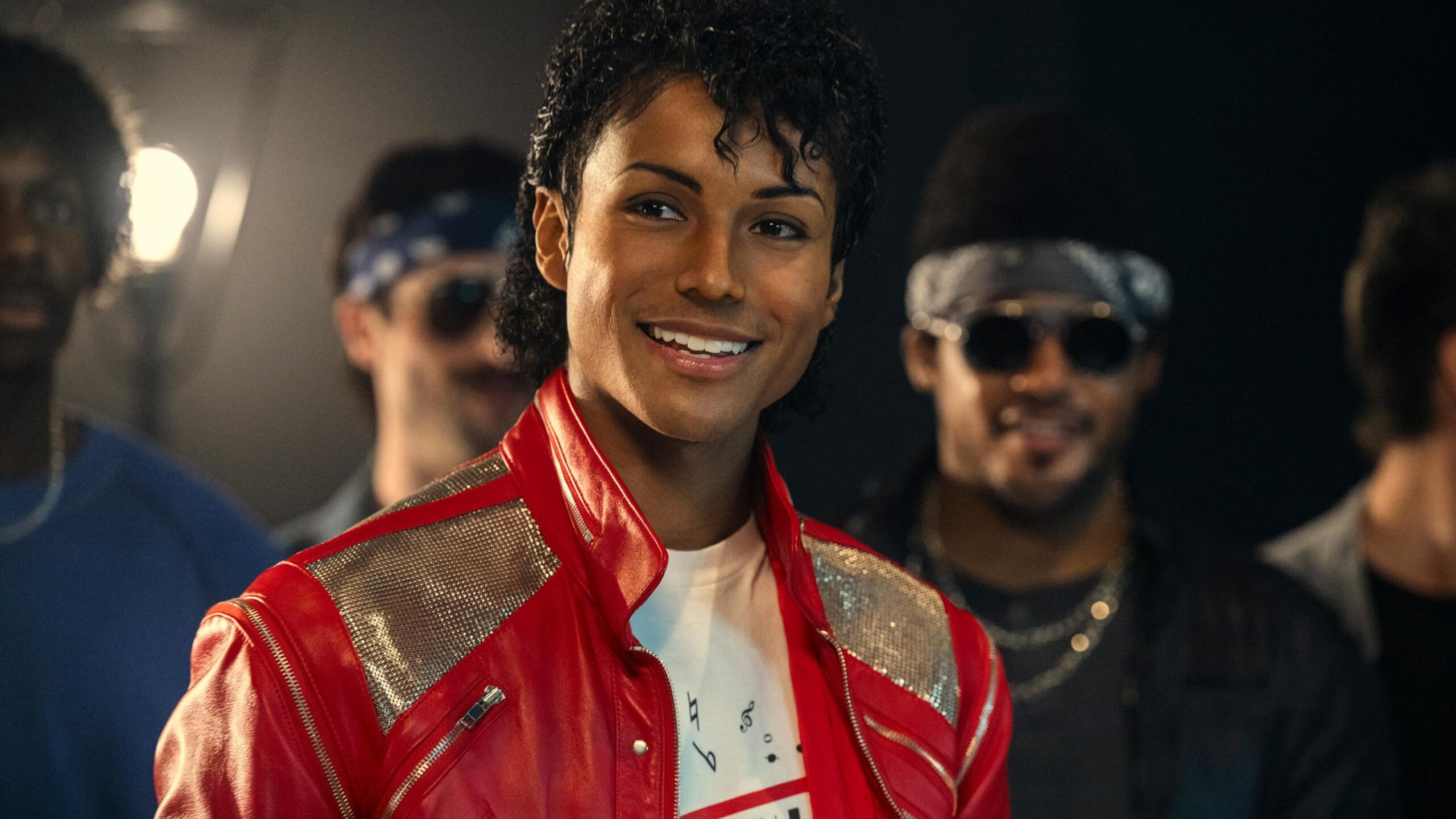
The late self-titled “King of Pop” is played by his real-life nephew, Jermaine Jackson’s son, Jaafar., who evokes the memory of his uncle with his look (before and after nose job) and moves. Colman Domingo is powerfully crafty and brutal as Joseph Jackson, the cruel factory worker who was determined to make his children his ticket out of Gary, Indiana, and did not hesitate to pull out his belt to whip them if he felt they were not paying him enough respect. Nia Long is warm and empathetic as Katherine Jackson, whose quiet support for Michael gives him something to hold onto and whose mild protests get less mild after Michael’s success.

A stand-out here is Juliano Valdi as young Michael Jackson, both in his ability to show us the then 10-year-old (but claiming to be 8) as an already-electrifying performer. (I well remember how dazzling my sisters and I were by the Jackson 5’s first national television appearance, introduced by Diana Ross.)

The Michael of this film is a 20th century Peter Pan and we are constantly reminded of how he identified with that character, writing his father’s name next to a depiction of Captain Hook. He is portrayed here as a gentle, almost angelic, innocent who considers his pets (including a giraffe, a llama, and Bubbles the chimp) as his only friends and who loves to be swept away by classic old films. His bodyguard, Bill (KeiLyn Durrel Jones) is sympathetic. But he seems to have no relationship with anyone in his family except his mother, and in the most simplistic and superficial terms the movie suggests that the only issue is learning how to stand up to his father. We learn little about what inspires his music and what performing means to him. There’s nothing here about “We Are the World” and the controversies over his marriage, his children, his mutilating surgeries, and the allegations of abuse.

The question you have to ask yourself about a musical biography is whether it has something to say beyond what we get from watching archival footage of the subject. The answer here is no. Weirdly, we see Michael tell director John Landis to shoot the dance in the “Thriller” music video the way Fred Astaire insisted his dance numbers should be shot: a steady camera showing the full bodies of the dancers, but the dance numbers here do not follow that good advice. They are dynamic but they cut away from what we want to see.

And the portrayals are paper-thin. We do not learn anything about Michael’s relationship to his siblings, what any human friendships he had were like, or what inspired his music. The movie is clear about Joseph’s exploitation of Michael, trying to control him to continue to do what is best for the family (meaning money and attention for Joseph), with no commitment or even recognition of what might be best for Michael. Joseph wants him to continue to perform with the family, making solo music only on his off hours. We are supposed to cheer for Michael when he gets a lawyer to stand up to Joseph and then stands up for himself. But it is hard to see this film as anything but continuing the family’s efforts to make money from Michael’s talent. At the end we wonder whether he would see this as just another attempt to profit from his legacy.

Parents should know that this film includes child abuse, smoking, body dysmorphia, and a scary accident when Jackson is badly burned. He also visits very sick children and patients.

Family discussion: Is this a fair representation of Michael Jackson? What more do you want to know? Why was he so beloved?

If you like this, try: “The Jacksons: An American Dream,” “This is It,” “The Jacksons: Road to Victory,” and clips of Michael Jackson singing and dancing

Related Tags:


Based on a true story Biography DVD/Blu-Ray Family Issues movie review Movies -- format Musical Race and Diversity
Lorne

Lorne

Posted on April 16, 2026 at 5:05 pm

B
Lowest Recommended Age: High School
MPAA Rating: Rated R for language and a sexual reference
Profanity: Very strong language
Alcohol/ Drugs: References to drinking and drug use
Violence/ Scariness: References to sad deaths
Diversity Issues: Diversity issues raised
Date Released to Theaters: April 17, 2026
Lorne

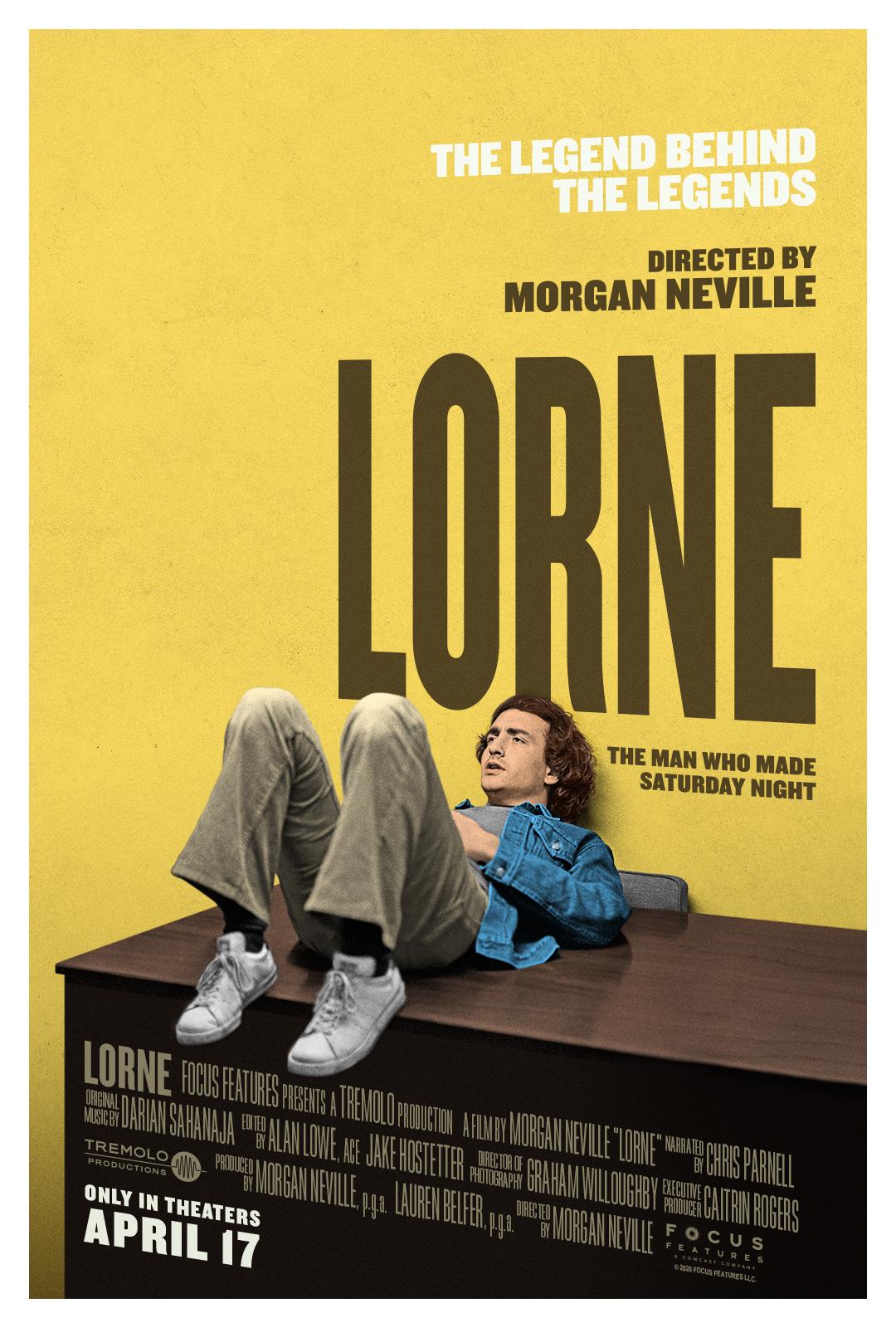
There are three problems in trying to make a documentary about Lorne Michaels, who created and continues to run “Saturday Night Live” (except for five years) now for more than half a century. The first is the many, many documentaries already made about the show and the people who have appeared on it, including Steve Martin, John Belushi, Chris Farley, so this latest one is a small addition to a big jigsaw puzzle. It goes over events that have been thoroughly covered elsewhere, with some new archival material, like Michaels’ brief appearances as a performer himself in Canada when he was in his 20s and from a brief substitute for “SNL” that lasted less than a dozen years.

Second, Lorne Michaels really did not want to have a documentary made about him. As his close friend Paul Simon says to director Morgan Neville in the film, “You’ll capture a guy who is not happy.” So the movie is not about guy who is not happy, but about a guy who isn’t happy to have a cameras on him. Michaels likes his life, his job, and especially his home and family very much and he is, as anyone in that job would have to be, very even-tempered.

Third, because he is so even-tempered, and often downright dull, he is not a dynamic film presence, and because his job is “SNL” that is a gigantic contrast with EVERYONE ELSE on screen. Neville tries to jazz it up a bit with some animated segments, but we have to keep coming back to Michaels, who is not introspective beyond saying how much he loves nature or analytic about what does and does not work in the show (we see him re-arrange the order of the sketches but we don’t know anything about why).

I’ve watched “SNL” since the very first episode and have stuck with it through all of the ups and downs that are documented or in many cases glossed over quickly or ignored entirely in this film. I’m enough of a fan that I enjoyed it, though it is in no way an indispensable or particularly valuable addition to the record. Any serious fan has seen plenty about the early days, the “is ‘SNL’ past its prime” headlines the rocketing unknown-to-megawatt star trajectories (Eddie Murphy) and the “wait, what’s that one’s name again” cast members, plus the firing of Norm MacDonald (here’s a great take with David Letterman).

One benefit of surrounding himself with some of the most brilliant impressionists and comedians in the world is that most of them have a take on Michaels’ slightly stentorian delivery (and on his disappointed sigh). It is a lot of fun to hear so many of them almost subconsciously slip into his voice. And it’s a lot of fun just to hear them talk about him, his quirks (the entire schedule is built around his preferring to start the day at 4 pm and he is constantly munching on popcorn). The best moments are just listening in on a conversation with comedy legends John Mulaney, Bill Hader, and Fred Armisen, or the comments from Conan O’Brien, writer Jim Downey (see the documentary about him), and Paul Simon. Mulaney, hyper-perceptive as always, tells the film’s most illuminating story.

We know, as we watch the archival footage, how many of those people have died. But there’s hardly any sense of how those losses affected him. We hear about the pressure to revitalize the show, but not what steps he took. Instead we hear him fretting about whether host Ryan Gosling has a doctor for his raspy throat. The other documentaries, the books about “SNL,” or any given episode of the show will tell you as much and be more entertaining.

Parents should know that this film has references to drinking and drug use.

Family discussion: What are some of your favorite “SNL” sketches and stars and why?

If you like this, try: the four documentaries celebrating the show’s 50th anniversary, especially the one from Questlove about the music.

Related Tags:


Documentary DVD/Blu-Ray movie review Movies -- format New on DVD/Blu-Ray Understanding Media and Pop Culture
Jurassic World: Rebirth

Jurassic World: Rebirth

Posted on July 1, 2025 at 5:43 pm

B
Lowest Recommended Age: Middle School
MPAA Rating: Rated PG-13 for intense sequences of violence/action, bloody images, some suggestive references, language and a drug reference
Profanity: Some mild language
Alcohol/ Drugs: Brief reference to marijuana
Violence/ Scariness: Extended peril and violence with many jump scares and graphic and disturbing images, many characters killed including several eaten by dinosaurs
Diversity Issues: Diverse characters
Date Released to Theaters: July 3, 2025
Date Released to DVD: August 13, 2025

There’s a cheeky moment at the beginning of “Jurassic World: Rebirth,” the latest in the series about dinosaurs brought back to life, originally based on the book by Michael Crichton. (I think it is very funny that the screenwriting credits say “based on characters created by Michael Crichton,” when the only “characters” in the movie based on his book are the dinosaurs.) We think we know where it’s going when we hear a roar and see the tops of the high trees rustling, then shaking.

Copyright 2025 Universal Studios

We sit back, expecting a dinosaur. But no, it’s just a helicopter. And then there’s another wink at the audience, a close-up harking back to the first film, one of the greatest shots in film history. But this time, it’s not a dinosaur in the rearview mirror. It’s just a traffic jam. Caused by a dinosaur. But at this point, the stuck driver we zero in on not wonderstruck or terrified. He’s just annoyed, as he might be if he was just being blocked by construction.

All these years after the dino DNA was extracted from the amber, humans have acclimated to, even bored with the idea that prehistoric creatures are a part of 21st century life.

Most of them have died off. The scary ones are pretty much located in the equator, closest to their habitat 66 million years ago, before they went extinct. That area is now off limits to all humans.

But one thing we’ve learned from the previous films and from ancient Greek tragedies about hubris and from pretty much all of human history is that the greatest adaptive and the greatest self-destructive quality of human beings is that we just don’t like being told what we can’t do. And so, screenwriter David Koepp, who has been writing these films since the first one, faces his greatest challenge in trying to give the human characters a new reason to put themselves in danger by going back to the dinosaurs again, what Alfred Hitchcock called the MacGuffin (or Maguffin), the simplest possible explanation of what it is the heroes need to get or accomplish.

In this case, it’s….dino DNA. Martin Krebs (Rupert Friend), the representative of a pharma company, approaches adventurer/soldier of fortune Zora (always-game Scarlett Johansson), whose specialty is getting people and objects into and out of places they are not supposed to be. For money. He tells her his company can make a revolutionary new medication that can forestall heart disease, adding as much as 20 years to people’s lives, if they can get samples of DNA from three of the largest dinosaurs, found only in the forbidden equator territory. It has to be taken from no more than 10 meters from the three biggest and they have to be alive because blah blah biology blah blah we need a reason for our characters to get into risk getting eaten situations. See: MacGuffin

Martin brings along a paleontologist, Dr. Henry Loomis (Jonathan Bailey, as magnetic and charming as he was in “Wicked,” even with an American accent).

Zora brings Martin to her long-time friend and colleague, the dashing Duncan (Mahershala Ali). He is the boat captain who will transport them, with his crew. Meanwhile, Reuben (Manuel Garcia-Rulfo) is out on his sailboat with two daughters and one’s boyfriend. Once we have had a chance to get to know them (cute little girl played by Audrina Miranda, useless teenage boyfriend played by David Iacono, for quasi comic relief and something of a redemption arc). The sailboat is toppled by a gigantic swimming dinosaur. Will our group in search of dino DNA take a detour to rescue them? Yes.

And then, what we came for: dinosaurs chasing (and eating) people. And, just to mix it up a bit, some people chasing dinosaurs. A sprinkle of humor (useless boyfriend), a touch of warmth (useless boyfriend becomes useful), a very brief detour into morality and some might say politics only because everything seems to be political these days, but mostly the aforementioned chasing. The actors do as well as possible to hold their own on screen opposite leviathans, benefitted by Ali’s rakish charm and core of integrity, Johansson’s toughness-with-a-heart portrayal of Zora as someone who has seen the worst of humanity and perhaps done some, too, but never became cynical, and Garcia-Rulfo as a wholeheartedly devoted to his daughters.

The dinosaurs are (still) hugely (in all senses of the word) impressive. The way they move, the weight that digital effects often fails to get right, the scale/size, all spectacular. The movie seems to lose track of the set-up at the beginning about a lab experimenting with cross-breeding and mutating dinosaurs, but so much is happening it is understandable. Perhaps they’re saving that for the next one. We’ll be there.

Parents should know that this is a very intense and scary movie with constant peril and some graphic and disturbing images. Characters, including a little girl, are in danger and many characters are eaten by dinosaurs. There are brief sexual references and a reference to weed.

Family discussion: If you knew you could cure a disease by taking a risk like this, would you do it? Do you agree with the decision made by Henry and Zora? What are the upsides and downsides?

If you like this, try: the previous “Jurassic” movies and Crichton’s book

Related Tags:


Action/Adventure DVD/Blu-Ray movie review Movies -- format Science-Fiction Series/Sequel
How to Train Your Dragon (2025)

How to Train Your Dragon (2025)

Posted on June 15, 2025 at 9:32 pm

B
Lowest Recommended Age: 4th - 6th Grade
Date Released to Theaters: June 13, 2025
Date Released to DVD: August 13, 2025

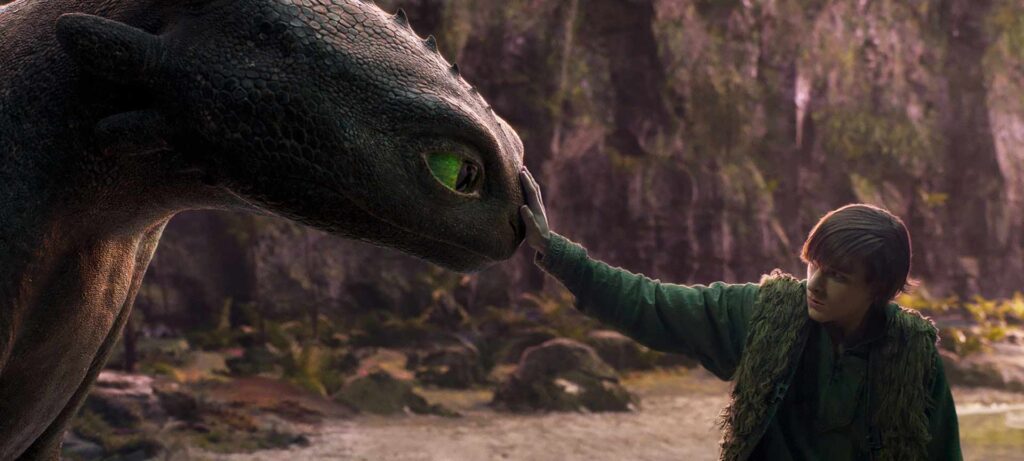
It may be completely unnecessary but this live action version of the terrific 2010 animated “How to Train Your Dragon” is still a great story. The story is heartwarming, the visuals are exciting, and the themes of courage used for a deeper understanding are still worthy. 

How to Train Your Dragon (2025)
Copyright 2025 Universal

I object to the idea that an animated film is just a lesser version until technology develops to create a “live action” remake (the dragons are CGI). Animation has its own artistry, vibrance, and expressiveness. This version is almost a shot-for-shot remake, emphasizing the original’s unsurpassability, yet somehow it is nearly half an hour longer. The original – and its sequels and spin-offs – are so memorable that this remake is like enjoying a cover band version of a classic song more for the memories it evokes of the original than for its own merits. 

Our young hero is Hiccup (Mason Thames), the son of single dad and chief Stoick (Gerard Butler, who voiced the same character in the original). They live in Berk, a craggy, stark, unforgiving, and remote Scandinavian community beset by dragons who steal their food. Status is based on killing dragons and many people in the community proudly sport scars and prosthetics to demonstrate their courage in these battles. Stoick, disappointed by his son’s lack of warrior spirit, reminds Hiccup that his mother was killed by a dragon (though those of us who have seen the animated sequels know that she is still alive). Hiccup is apprenticed to Stoick’s best friend Gobber (Nick Frost), whose prosthetic hand and foot are the result of fighting dragons, and who now provides weapons and teaches those teenagers who, unlike Hiccup, are going to be trained to be dragonslayers.

As in the original, the dragons here are wonderfully imagined, with many fascinating species. Each looks different and poses different kinds of threats. While Stoick has taken all of the warriors in search of the dragons’ nest, Hiccup finds and befriends a wounded Night Fury he names Toothless, hiding their relationship from everyone else until they are discovered by Astrid (Nico Parker), the best young warrior trainee. He takes her for a ride on Toothless and she is convinced that dragons are worthy of respect and affection. 

Very little has changed in the storyline, as noted. But perhaps 15 years distance has brought some changes in our atmosphere and understanding. For me at least, Stoick’s harsh judgment of Hiccup as weak and fearful because he does not want to cut the heads off of dragons felt like a slightly broader statement about masculinity, hierarchies based on community standards, and fear of the unknown than a father’s distorted but genuine wish to protect his son from creatures that were responsible for so much loss. Perhaps that was just because I know the story so well and thought the padding dragged a little.

Thames portrayal of Hiccup is sincere and he allows us to see the teenager sort through his feelings as he allows curiosity to triumph over tradition. Parker, the daughter of Thandiwe Newton and Ol Parker, is excellent, showing us Astrid’s fierceness and, like Hiccup, the curiosity that leads her to question her community’s assumptions, even though by the standards she was raised with, she is at the top. 

Production designer Dominic Watkins skillfully translates the animated world with intricate, textured, settings filled with intriguing details. The ships, the landscape, the workshop, even the doors in the arena that open up to allow dragons to enter for the training sessions area are all gorgeously imagined to bring us into the world. Lindsay Pugh’s costumes and the hair designs by a talented group of artists help define the characters, who dress for battle but show a lot of personality and intention in the way they present themselves. The flying scenes are dynamic, fun to watch, and I’m sure a glimpse at what the new ride at Universal Studios will be like.

Parents should know that this movie has extended peril and violence, though human and dragon deaths are off-screen. We hear about injuries and deaths, including the death of Hiccup’s mother. It also includes a very positive portrayal of people (and a dragon) with disabilities.

Family discussion: Why was Hiccup the first to see that the dragons could be friendly? Why was it hard for his father to accept that?

If you like this try: the animated moviesthe books, and the television series

Related Tags:


Based on a book DVD/Blu-Ray Family Issues Fantasy movie review Movies -- format Remake Series/Sequel Stories about Teens
THE MOVIE MOM® is a registered trademark of Nell Minow. Use of the mark without express consent from Nell Minow constitutes trademark infringement and unfair competition in violation of federal and state laws. All material © Nell Minow 1995-2026, all rights reserved, and no use or republication is permitted without explicit permission. This site hosts Nell Minow’s Movie Mom® archive, with material that originally appeared on Yahoo! Movies, Beliefnet, and other sources. Much of her new material can be found at Rogerebert.com, Huffington Post, and WheretoWatch. Her books include The Movie Mom’s Guide to Family Movies and 101 Must-See Movie Moments, and she can be heard each week on radio stations across the country.

Website Designed by Max LaZebnik