What kind of movie do you feel like?

Ask Movie Mom

Find the Perfect Movie

West Side Story (2021)

Posted on December 9, 2021 at 5:33 pm

A-
Lowest Recommended Age: Middle School
MPAA Rating: Rated PG-13 for some strong violence, strong language, thematic content, suggestive material and brief smoking
Profanity: Strong and racist language
Nudity/ Sex: Sexual references and non-explicit situation
Alcohol/ Drugs: Drinking, smoking, references to drugs
Violence/ Scariness: Gang violence, knives, gun, characters injured and killed
Diversity Issues: A theme of the movie
Date Released to Theaters: December 10, 2021
Date Released to DVD: March 21, 2022

Why remake a 60-year-old movie that won ten Oscars and is still beloved, even while admitting its shortcomings and its being quaintly out of date on some of the issues it raises? Because Steven Spielberg and screenwriter Tony Kushner have taken the best from the original and made the essence of the story even more powerful and meaningful. “West Side Story,” the original itself a remake of Shakespeare’s “Romeo and Juliet,” itself a reworking of an Italian story that had at least three different versions before Romeo compared Juliet to the sun and Juliet asked what there was in a name. The themes of love, loss, fear, and anger will always inspire our stories, and the incomparable music by Leonard Bernstein, with lyrics by then then-25-year-old Stephen Sondheim, are as thrilling as ever in this new version.

Maybe there will be another remake 60 years from now, but it is hard to imagine it being better than this one. Spielberg’s gift for visual story-telling, with brilliant cinematography from Janusz Kaminski, production design from Adam Stockhausen, and editing by Sarah Broshar and Michael Kahn match and enhance the muscular electricity of the Bernstein score. There are star-making performances from the entire cast, especially Ariana DeBose as Anita, Mike Faist as Riff, and Rachel Zegler as Maria. Rita Moreno, who won an Oscar for her performance as Anita 60 years ago, all but steals the movie as Valentina, a new role, replacing Doc, the owner of the convenience store. In this version, she is his widow, their own marriage a symbol of what Tony and Maria aspire to.
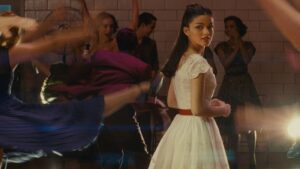
Copyright 20th Century 2021

Kushner’s changes are subtle and judicious, making the story deeper and more urgent. The opening shots show us that the turf battle has already been lost. The wrecking ball is knocking everything down. The only home the Jets have ever known is being torn down “for slum clearance” to make way for a gentrification project that will include a high-end high-rise and the high-culture Lincoln Center for performing arts. When Anita sings in “America” about some day living in an apartment with a terrace, she is standing near a sign showing the glamorous building that will replace the town-down tenements.

The setting looks like a bombed-out war zone. This makes the the emotion more vivid and the stakes more concrete (in both senses of the word). When “West Side Story” was first written, juvenile delinquents were listed by a majority of Americans as one of their most important concerns, next to atomic weapons. In order to make the concerns of the gangs as visceral today, Kushner shows us why Riff and the Jets feel that everything is being taken from them. The detective tells them that all the white people in the community who were smart enough to get out are gone. They are, he says, “the last of the can’t make it out Caucasians.”

Everything that gave them a sense of power, belonging, and control (“little boy, you’re a man, little man, you’re a king”) is being reduced to rubble and replaced with spaces that would be alien to them even if they could afford them. There is dust everywhere, and everything is washed out, knocked down, and covered with grit. The Jets cannot fight City Hall. All they have left is their fury and what they use to assuage it — the feeling of brotherhood. They sing of the Jets as a family (“you’ve got brothers around; you’re a family man”) while Tony says he envies the Puerto Ricans’ strong, committed biological families. There is no one to take it out on but the newcomers who are even lower on the social hierarchy than they are, the Puerto Ricans. Riff says, “I wake up to everything I knew being sold or wrecked or being taken away by someone I don’t like.”

Their gang, the Sharks, is fueled by resentment at being treated like second-class Americans in their own country. And they, too, are worried about losing their sense of family. They want the opportunities available to white, native English-speaking Americans but they want to remain intact, insular, restricting their associations to those they can trust. Their internal conflict is shown in “America,” where the girls sing of what they can do and buy and the boys jeer at them for ignoring the bigotry they will face — while not being willing to go back to Puerto Rico.

Some changes reflect our more sensitive understanding of the very issues the original depicted. In this version, the Latinx characters are played by Latinx performers of different skin tones and no one wears brownface make-up. All of the performers do their own singing. In addition, the Spanish dialogue is not subtitled. Some gender/sexuality insults remain in the script but the character once derisively called “Anybody’s,” who we might now call non-binary, is portrayed with more depth. The dance numbers are less balletic, more a reflection of the energy of emotions the characters are feeling.

Kushner’s changes to the script are sometimes subtle but every one adds to the emotion and revelation of character. In this version, Tony has even more reason to be reconsidering his commitment to the Jets, and he has an example in Valentina, his employer and friend, of what is possible. The “Cool” song has much more of an impact here, sung by Tony to Riff when he discovers that Riff has bought a gun. “I Feel Pretty,” instead of a bridal shop, is sung in a department store, where Maria is an after-hours cleaner. The dance through the aspirational scenes of mannequins “enjoying” middle class life parallels the reference to the apartment with a terrace. And Tony takes Maria to see The Cloisters, a beautiful cathedral-like setting for “One Hand, One Heart” that evokes the timelessness of Romeo and Juliet.

This story is very much of its time but its themes, too, are timeless, and with this new version we can experience it with the deeper understanding of its themes, a new generation of performers making it as new to us as it is to them, and one nod to the past with Moreno reminding us that like the late Bernstein and Sondheim, brilliance is always forever renewing itself.

Parents should know that this movie includes strong language with some racist terms, sexual references and a non-explicit situation, drinking, smoking, references to drugs, and gang violence, with knives and a gun. Characters are injured and killed.

Family discussion: If the story took place today, who would be in the gangs and how would it be different? What do we learn from the “Office Krupke” song? Why do Riff and Tony see things differently? What advice would you give to Tony and Maria?

If you like this, try: the original 1961 film, “In the Heights,” the wonderful documentary about Rita Moreno, and “Romeo and Juliet”

Twelve Great Christmas Movies for Families that Aren’t A Christmas Carol, White Christmas, It’s a Wonderful Life, Elf, or A Christmas Story

Posted on December 7, 2021 at 7:41 pm

I love the classic Christmas movies and watch as many as I can every year.  But there are many great Christmas films that don’t get mentioned as often and I like to remind families that these are worth making time for as well.

1.  The Nativity Story  This sincere and respectful story is a good way to remember that Christmas is about more than presents and parties.  “Whale Rider’s” Keisha Castle-Hughes has a shy but dignified and resolute air and she glows believably as the very young woman who is selected as the mother of Jesus. And “Star Wars” heart-throb Oliver Isaac effectively conveys tenderness, doubt, courage, and transcendence as Joseph.

2. A Christmas Memory Truman Capote’s bittersweet memory of his childhood Christmas making fruitcakes with his elderly cousin, the only relative who cared about him is beautifully filmed with the magnificent Geraldine Page and Capote himself reading the narration.

3. Will Vinton’s Claymation Christmas The California Raisins guys put together this Christmas special, with the highlight the funniest-ever performance of “Carol of the Bells.”

4. Come to the Stable Loretta Young and Celeste Holm are French nuns trying to raise money to build a hospital.  Their faith and goodness transforms those they meet.

5. Little Women “Christmas won’t be Christmas without any presents” is the first line of this classic novel based on the loving if sometimes tumultuous family of author Louisa May Alcott.  The movie opens with an important Christmas lesson about the joy of giving. All three feature film versions are great family films.

6. Klaus A Christmas traditions origin story begins with a spoiled son of a wealthy family sent away to learn responsibility by delivering letters in a bitterly divided town. It is a beautifully animated Netflix film with voice talent that includes Jason Schwartzman and Rashida Jones.

7. This Christmas I love this movie about a family with five adult children who return home to celebrate Christmas with their mother and youngest brother.  The outstanding cast includes Regina King, Idris Elba, Loretta Devine, and Chris Brown.  Be sure to watch through the credits to see a great dance number.

8. Desk Set Before Google, companies had human beings to track down information. Katherine Hepburn plays the head of the all-female research department for a television network and Spencer Tracy is the engineer who is installing the company’s first computer, which takes up a whole wall and uses punch cards and vacuum tubes. Sparks fly — and not just in the equipment.

9. Die Hard Bruce Willis plays a cop visiting his estranged wife at her office Christmas party when the building is taken over by bad guys led by Alan Rickman in this action-movie classic. And yes, it is a Christmas movie!

10. The Man Who Invented Christmas Dan Stevens plays Charles Dickens who has just a few weeks to write a book in the midst of family conflict and financial pressures. It is a lot of fun to see the way he draws inspiration — and insight — from the people and problems he encounters and the end result is the ultimate classic, A Christmas Carol.

11. Home Alone This comedy smash hit stars Macauley Culkin as a little boy who is accidentally left home when his family goes away for the holidays and has to take care of himself and guard the house from a couple of inept thieves.  The slapstick is a bit over the top but the message of Christmas is surprisingly touching.

12. Annie The story of the plucky orphan from the comic pages became one of the biggest Broadway musicals of all time and one of its highlights is Christmas with Daddy Warbucks.


And the Winners Are….Washington Area Film Critics Awards 2021

Posted on December 6, 2021 at 4:31 pm

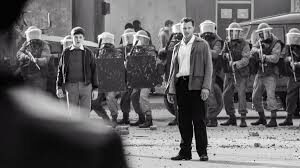
“Belfast” headlined a diverse roster of winners when The Washington, D.C. Area Film Critics Association (WAFCA) announced their top honorees for 2021 this morning. A semi-autobiographical coming-of-age drama from filmmaker Kenneth Branagh centering on a nine-year-old boy and his family during the Troubles in 1969 Northern Ireland, “Belfast” won Best Film and Branagh took home Best Original Screenplay.

Jane Campion won Best Director and Best Adapted Screenplay for “The Power of the Dog,” based on Thomas Savage’s 1967 novel, a provocative western of toxic masculinity and repressed longing set in the big sky country of 1925 Montana. As a college-aged young man with an increasing enigmatic connection to his petulant rancher uncle, Kodi Smit-McPhee was also awarded Best Supporting Actor for the film.

Copyright Warner Brothers 2021

WAFCA awarded Best Actress to Kristen Stewart for her stirring portrayal of Diana, Princess of Wales, reaching the life-altering decision to leave her marriage to Prince Charles and the royal family over the 1991 Christmas holiday, in Pablo Larraín’s “Spencer.” Also superbly playing a late real-life figure, talented composer, lyricist and playwright Jonathan Larson, Andrew Garfield won Best Actor for Lin Manuel-Miranda’s musical-drama “tick, tick…BOOM!” Best Supporting Actress went to Aunjanue Ellis, wonderful as Oracene “Brandy” Price, mother of future tennis greats Venus and Serena Williams, in Reinaldo Marcus Green’s “King Richard.”

Best Acting Ensemble accolades were awarded to Fran Kranz’s “Mass,” an emotionally shattering drama starring Ann Dowd, Reed Birney, Martha Plimpton and Jason Isaacs, as grieving parents who meet in the wake of a tragic school shooting. For Best Youth Performance, Woody Norman won for Mike Mills’ “C’mon C’mon,” as a nine-year-old boy who forms a bond with his uncle while his mother is out of town.

Copyright Bleekeer Stelt 2021

Mike Rianda’s vibrant sci-fi comedy “The Mitchells vs. the Machines,” about a family road trip that turns into a fight to save the world from a robot uprising, took Best Animated Feature honors, while Best Voice Performance went to Awkwafina for her standout work as excitable dragon Sisu in “Raya and the Last Dragon.” Best Documentary kudos went to “Summer of Soul (…Or, When the Revolution Could Not Be Televised),” Ahmir “Questlove” Thompson’s film about the 1969 Harlem Cultural Festival. Best International/Foreign Language Film was awarded to Ryusuke Hamaguchi’s Japanese drama “Drive My Car.”

In technical categories, Denis Villeneuve’s sweeping fantasy epic “Dune” was the major victor, winning Best Production Design, Best Cinematography, and Best Original Score, while Best Editing went to “tick, tick…BOOM!”

The Washington, D.C. Area Film Critics Association comprises over 65 DC-VA-MD-based film critics from television, radio, print and the Internet. Voting was conducted from December 3-5, 2021.

THE 2021 WAFCA AWARD WINNERS:

Best Film:
Belfast

Best Director:
Jane Campion (The Power of the Dog)

Best Actor:
Andrew Garfield (tick, tick…BOOM!)

Best Actress:
Kristen Stewart (Spencer)

Best Supporting Actor:
Kodi Smit-McPhee (The Power of the Dog)

Best Supporting Actress:
Aunjanue Ellis (King Richard)

Best Acting Ensemble:
Mass

Copyright A24 2021
Best Youth Performance:
Woody Norman (C’mon C’mon)

Best Voice Performance:
Awkwafina (Raya and the Last Dragon)

Best Original Screenplay:
Kenneth Branagh (Belfast)

Best Adapted Screenplay:
Jane Campion (The Power of the Dog)

Best Animated Feature:
The Mitchells vs. the Machines

Copyright 2021 Hulu
Best Documentary:
Summer of Soul (…Or, When the Revolution Could Not Be Televised)

Best International/Foreign Language Film:
Drive My Car

Best Production Design:
Patrice Vermette, Production Designer; Richard Roberts and Zsuzsanna Sipos, Set Decorators (Dune)

Best Cinematography:
Greig Fraser, ASC, ACS (Dune)

Best Editing:
Myron Kerstein, ACE; Andrew Weisblum, ACE (tick, tick…BOOM!)

Best Original Score:
Hans Zimmer (Dune)

Washington Area Film Critics Award Nominees 2021

Posted on December 5, 2021 at 10:44 am

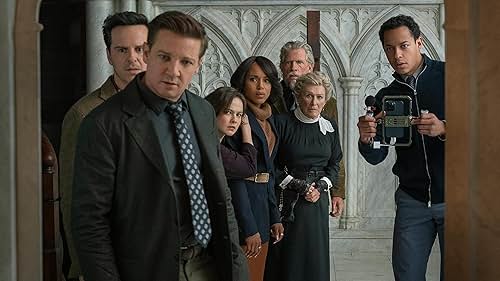
Copyright 2021 Focus

The 2021 WAFCA AWARD NOMINEES ARE:

Best Film:
Belfast
The Green Knight
The Power of the Dog
tick, tick…BOOM!
West Side Story

Best Director:
Kenneth Branagh (Belfast)
Jane Campion (The Power of the Dog)
David Lowery (The Green Knight)
Steven Spielberg (West Side Story)
Denis Villeneuve (Dune)

Best Actor:
Nicolas Cage (Pig)
Benedict Cumberbatch (The Power of the Dog)
Andrew Garfield (tick, tick…BOOM!)
Will Smith (King Richard)
Denzel Washington (The Tragedy of Macbeth)

Best Actress:
Olivia Colman (The Lost Daughter)
Nicole Kidman (Being the Ricardos)
Lady Gaga (House of Gucci)
Kristen Stewart (Spencer)
Tessa Thompson (Passing)

Best Supporting Actor:
Jamie Dornan (Belfast)
Ciarán Hinds (Belfast)
Troy Kotsur (CODA)
Jesse Plemons (The Power of the Dog)
Kodi Smit-McPhee (The Power of the Dog)

Best Supporting Actress:
Caitríona Balfe (Belfast)
Ariana DeBose (West Side Story)
Ann Dowd (Mass)
Kirsten Dunst (The Power of the Dog)
Aunjanue Ellis (King Richard)

Best Acting Ensemble:
Belfast
The French Dispatch
The Harder They Fall
Mass
The Power of the Dog

Best Youth Performance:
Jude Hill (Belfast)
Emilia Jones (CODA)
Woody Norman (C’mon, C’mon)
Saniyya Sidney (King Richard)
Rachel Zegler (West Side Story)

RAYA AND THE LAST DRAGON – As an evil force threatens the kingdom of Kumandra, it is up to warrior Raya, and her trusty steed Tuk Tuk, to leave their Heart Lands home and track down the last dragon to help stop the villainous Druun. © 2020 Disney. All Rights Reserved.

Best Voice Performance:
Awkwafina (Raya and the Last Dragon)
Stephanie Beatriz (Encanto)
Abbi Jacobson (The Mitchells vs. the Machines)
Kelly Marie Tran (Raya and the Last Dragon)
Jacob Tremblay (Luca)

Best Original Screenplay:
Kenneth Branagh (Belfast)
Mike Mills (C’mon, C’mon)
Zach Baylin (King Richard)
Paul Thomas Anderson (Licorice Pizza)
Fran Kranz (Mass)

Best Adapted Screenplay:
Siân Heder (CODA)
Jon Spaihts and Denis Villeneuve and Eric Roth; Based on the novel ‘Dune’ written by Frank Herbert (Dune)
Jane Campion (The Power of the Dog)
Steven Levenson (tick, tick…BOOM!)
Tony Kushner (West Side Story)

Best Animated Feature:
Encanto
Flee
Luca
The Mitchells vs. the Machines
Raya and the Last Dragon

Best Documentary:
The First Wave
Flee
The Rescue
Summer of Soul (…Or, When the Revolution Could Not Be Televised)
Val

Best International/
Foreign Language Film:
Drive My Car
A Hero
Lamb
Titane
The Worst Person in the World

Best Production Design:
Jim Clay, Production Designer; Claire Nia Richards, Set Decorator (Belfast)
Patrice Vermette, Production Designer; Richard Roberts and Zsuzsanna Sipos, Set Decorators (Dune)
Adam Stockhausen, Production Designer; Rena DeAngelo, Set Decorator (The French Dispatch)
Tamara Deverell, Production Designer; Shane Vieau, Set Decorator (Nightmare Alley)
Adam Stockhausen, Production Designer; Rena DeAngelo, Set Decorator (West Side Story)

Best Cinematography:
Haris Zambarloukos, BSC, GSC (Belfast)
Greig Fraser, ASC, ACS (Dune)
Andrew Droz Palermo (The Green Knight)
Ari Wegner, ACS (The Power of the Dog)
Bruno Delbonnel, ASC, AFC (The Tragedy of Macbeth)

Best Editing:
Úna Ní Dhonghaíle, ACE, BFE (Belfast)
Joe Walker, ACE (Dune)
Andrew Weisblum, ACE (The French Dispatch)
Peter Sciberras (The Power of the Dog)
Myron Kerstein, ACE; Andrew Weisblum, ACE (tick, tick…BOOM!)

Best Original Score:
Bryce Dessner & Aaron Dessner (Cyrano)
Hans Zimmer (Dune)
Alexandre Desplat (The French Dispatch)
Jonny Greenwood (The Power of the Dog)
Jonny Greenwood (Spencer)

Interview: Gil Kenan and Henry Lawfull of “A Boy Called Christmas”

Posted on November 28, 2021 at 11:32 am

Copyright 2021 Netflix
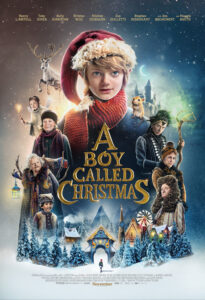
“Was Santa ever a little boy?” This question from his young son inspired author Matt Haig to create an origin story for Santa Claus with A Boy Called Christmas, now an enchanting, star-filled movie on Netflix. In an interview, director Gil Kenan and young actor Henry Lawfull, who plays the title character, talked about creating the world of the story and what gives them hope.

Gil, there’s such a lushness to the soundtrack by Dario Marinelli. How did you talk to him about creating the score?

Gil Kenan: I’ve been a fan of Dario’s music for as long as I’ve been seeing his name associated with films. From “Atonement” to his work with Laika and “Kubo and the Two Strings.” And his work scoring the “Bumblebee” film, the Transformers film. He always brings such beautiful emotion, and musicality to his work.

It was a very natural process, actually. I reached out to him as a fan and I said I would love to have a conversation about a score. And he didn’t know much at the beginning of our conversations. But he read the script. And he came up to meet me in Prague, where we were based for pre-production. And we just had a wonderful conversation about the approach to making a classic film score that would allow us to let the character, the theme, and the adventure come together in a way that would lift all three up.

I loved our collaboration. He was so cool and inventive in the way that he approached the scoring. He brought in some classic Finnish instrumentation to the film that was such a joy for me to experience as a music lover. Some of the fiddle playing in the Resistance party in the film — the cues for the music played there is based on very old folk music from Scandinavia. The phrasing, the instrumentation, he just approaches it with so much passion and joy.

So for me, it was an absolute wonder seeing the music come together. And you get this wonderful experience when you’re in the scoring stage hearing the music start to play and come to life. All of a sudden the entire work of telling the story starts to lift up on its tiptoes. And you really feel that sense of life rushing through the story. I’m so glad you’re bringing it up. He deserves so much love and affection for the one that he’s done.

I also want to ask about the production design, which has such a rich sense of detail, just at the intersection of reality and fairy tale.

GK: The journey with Gary Williamson has been one of the great collaborations in my career. I’ve just so loved bringing the design of this world to life. Gary and I actually were the very beginning of this process. I came on to adapt, and then develop this, and Gary was my first hire. And he and I sat at a big table covered in white paper and drew out the entire film as a map. But it was more than a map, it was sort of a living illustration. And we kept growing it and elaborating, and when we came away from it, it looked like a future concept of what the film was going to be. And so it was an absolute joy. He pushed at every turn to build, and make things as real, and tangible as possible. And Henry will speak a little bit I’m sure to the performers side of that. But I will say as a storyteller, as a filmmaker to allow the camera to properly step into Elfhelm, to see the streets and all the buildings fully realized is an experience that you can’t replicate using digital tools. Even though they’re incredibly useful, and I love using them to show things that aren’t possible, there is a grounded quality to being able to have big real sets. That is something I’ll always push for. And Gary is a hero in my book.

Henry, let’s talk a little bit about the stuff that was real, and the stuff that was not real. How did you feel the first time that you walked into Elfhelm?

Henry Lawfull: It was incredible. I remember I first visited the set when it was in construction, and just saw basically the wooden framework of this crazy village as it was in construction, which is really cool. And then I remember going back maybe a month later and seeing it all painted. And like this magical incredible village. It was beautiful. And then obviously to work there, and to act with it just made you feel as if you were in that situation. And for me, it brought a lot to help me with my performance just to be surrounded by that real world and to feel the characters emotions seeing this crazy place. It was amazing for me, just to see what these people can do, to build some massive village out of wood just for a film.

So, what did you do to interact with the parts of the film that were not real, like the digital creatures?

HL: There were a lot of different methods we used for bringing the characters to life, especially Miika and Blitzen . And then obviously, the troll. It was all a great part of the experience. For example, the troll scene. I remember I spent a lot of time dangling from wires and doing stunt stuff as if I was being eaten by a troll, which was this massive, giant puppet that they’d built. So that was a lot of fun to do. And then the mouse for me was Gil. He did the voice of the mouse while we were filming. I never actually heard him as Stephen Merchant until we did the audio stuff in post-production, and it was so funny hearing his voice. Obviously, it’s a challenge just working with a puppet or a little wire with some green tape or a tennis ball or something rather than a real-life mouse. But they made everything around me, and this amazing cast, the costumes, the village made it all feel real. So although I might be speaking to a tennis ball at that certain point, everything else around me felt magical. And hopefully, you can see that.

GK: That’s good to hear. If I can just add to that having worked with performers of every age now in my career, I’ve learned that there’s never such a thing as giving too much input in the shooting of the film to help to fill in the empty spaces that will one day in the future become filled in. And so bringing in real puppeteers as part of our main unit of crew was indispensable in this process. They were so incredible at bringing to life the moments between the moments. And when Henry was in the snowy birch forest meeting Blitzen for the first time, we used three different techniques to bring Blitzen into life on the screen. But the one that for me brings the most emotion to the surface was a puppeteer shot where there was just unbelievable nuance in the movement of the two puppeteers working in tandem. And hopefully one day some of that behind the scenes gets released because you do see so much magic on the screen even with just these gray puppets interacting with Henry.

Copyright 2021 Netflix

You weren’t afraid to include some melancholy to keep the story from being too sugary. That was such a smart, brave choice.

GK: It was something that took me by surprise in Matt Higgs’ book the first time I read it. It made me realize that there was fantastic current in this story that could elevate the brighter moments, the joyous moments, the moments of hope. Because the truth is that those concepts, joy, whatever it is we think of as joy, whatever it is we think of as hope, all of those moments are only as bright as the darker moments that are around them. And so the truth is that for all of us, Christmas is a holiday that we come to with great expectation and nostalgia or emotional currents that remind us of moments from our childhood or families. But there is also weight to this time of year. And part of that is just calendar-based. The days are short, the nights are long, it’s cold out but also that in the great tradition of classic fairy tale storytelling there is an opportunity in a young person’s adventure to not hold back from the full scope of human emotion, and experience.

I remember as a young audience member watching films growing up, and the ones that felt like they actually connected with me were the ones that didn’t pander, that didn’t hold back from the full weight of human experience. And I remember thinking that as a very young kid in a darkened movie theater, thinking that the movies that showed me that life wasn’t all sugar, plum, and cakes were the ones that I respected because they respected me back as an audience. I believe as a storyteller that it’s my responsibility to try to respect the emotional intelligence of my audience no matter what their age is. So that was my approach.

The movie asks the question about what gives us hope. What gives you hope, both of you?

GK: Stories give me hope every time. Story and storytelling is where I find my inspiration. It’s where I refill and recharge. It’s a very difficult time for everyone right now. And what I find gives me purpose, and when I wake up in the morning helps me to focus on which direction I want to be pointed at, is thinking about what stories I’m going to be busying myself with. And it’s such an honor to be able to tell one that I hope will connect with audiences here.

HL: I think for me, seeing loved ones, friends, and family around me happy, and doing well, and succeeding is a massive inspiration. It makes me happy to see friends and family and loved ones happy. So I guess it could go both ways where I try and stay hopeful and optimistic and happy. And that gets me through some of the worst times, seeing loved ones happy. It goes both ways.