My Letter to the Washington Post About Empire’s Costume Designers — And My Appearance on Motley Fool Money About Movies and the Oscars

Posted on February 14, 2015 at 12:00 pm

I’m delighted that the Washington Post printed my letter about the costumes in the terrific Fox series “Empire.” Robin Givhan’s article about the way the show’s costumes define the characters was outstanding, but it omitted one important detail:

Copyright Fox 2015
Copyright Fox 2015

I was delighted to read Robin Givhan’s insightful comments on the brilliant use of costume to illuminate character and context in the TV show “Empire” . But I’m sorry that she left out the names of the brilliant costume designers who selected those iconic looks.

Every choice, from Hakeem Lyon’s gold chain to Lucious Lyon’s pocket square to Cookie Lyon’s leopard-print, skin-tight minidress, was made by Rita McGhee and Paolo Nieddu. Costume designers play an essential role in defining characters and telling the story. When their work is recognized, their names should be included.

And thanks, as always, to the Mac Greer and Motley Fool Money for inviting me on their terrific podcast. We even managed to make some Oscar predictions.

Related Tags:


Media Appearances

Costume Designers: One Famous, One Not

Posted on November 19, 2014 at 8:00 am

Copyright 2009 Columbia Pictures

Costume designers are not a about pretty clothes or fashion. The one time Coco Chanel tried to design costumes for a film, her impeccable designs came across as flat and uninspired. Costumes are about creating the character and telling the story, just like every other artist contributing to the overall impact of a film.

CBS Sunday Morning paid tribute to Ann Roth, one of the greatest costume designers of all time, still working both in Hollywood and on Broadway. You’ve seen her designs in “Julie & Julia,” “The English Patient,” “The Way Way Back,” “The Talented Mr. Ripley,” “The Birdcage,” and “Working Girl.”

And Leonard Maltin wrote a beautiful tribute to an unsung heroine of costume design, Marilyn Sotto-Erdmann, quoting her nephew, Disney Imagineer Eddie Sotto:

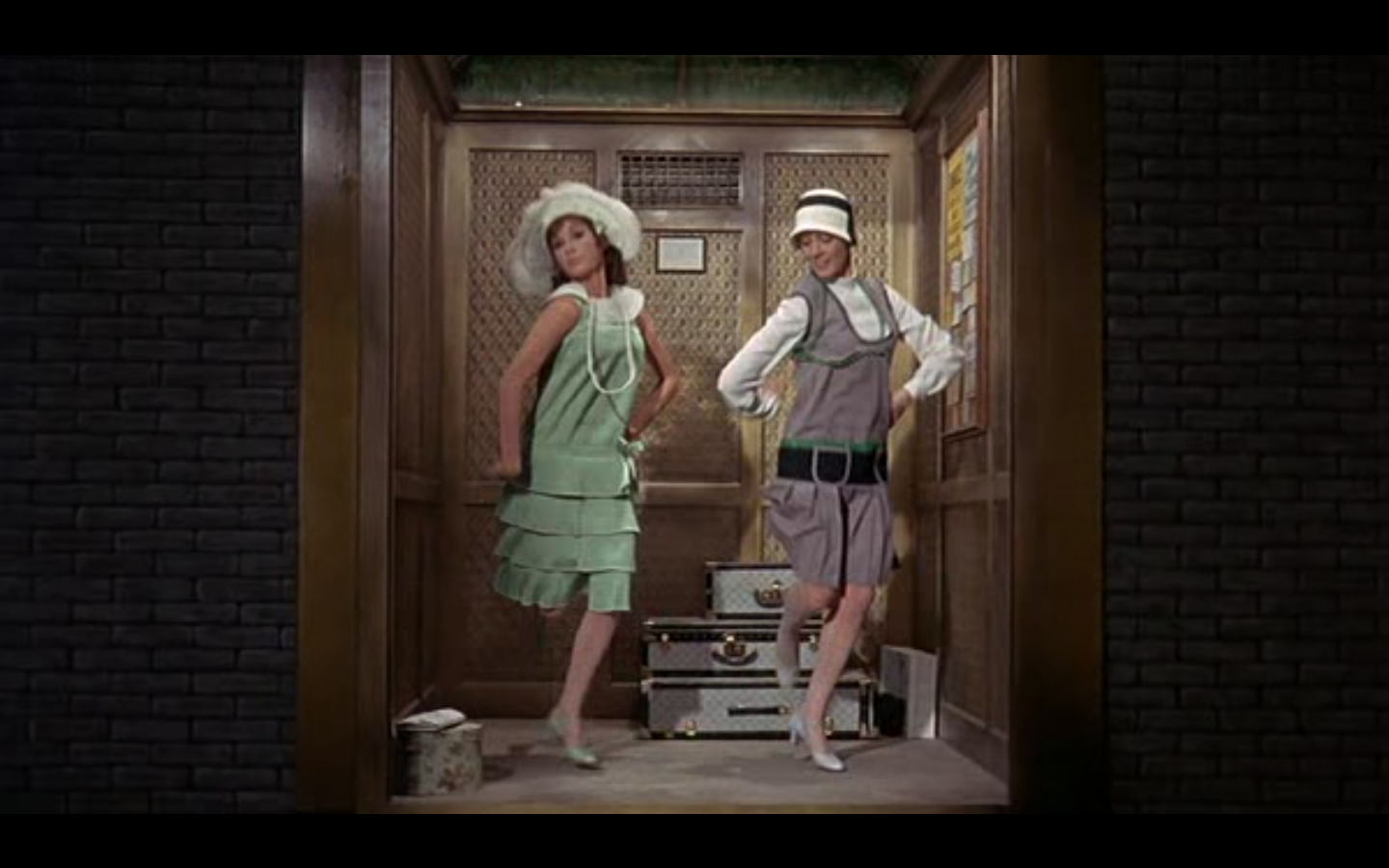
As a kid, I’d stop and watch her work on Julie Andrews “flapper” getup for “Thoroughly Modern Millie,” Diana Ross’ gown for “Lady Sings the Blues,” and many others. What an inspiration. Her talents were many; she transitioned to uniform design to bring her Hollywood touch to the opening look of the Beverly and Havana Hilton Hotels in the 1950’s. She went on to write and illustrate her own book on the subject, The Art of Costume Design. The daughter of a portrait and MGM scenic artist, she kept busy in the field of art till one day in 1986, while working on Euro Disneyland, I suggested that Marilyn consider bringing her cinematic sensibility to the costuming being designed for the Paris park, “Auntie Mare” was up for the challenge, showed her stuff, and was hired immediately.

Copyright 1967 Universal Pictures

Many of you knew her and her “bigger than life” passion for design and flamboyant personality. She brought the company and her peers a great passion for what could be, always “pushing the buttonhole” to make the costumes less “uniform”-like and more theatrical to drive the story. It was always about the show. Her work did not stop after Disneyland Paris. She went on to relocate with her husband John to Florida to design Walt Disney World parade costumes, resort and cruise ship attire, Super Bowl spectacles and more. A high point to her was researching ancient animatronic costuming for Spaceship Earth’s recent facelift. She told me that she felt she had come full circle, reminding her of doing the Egyptian garb for The Ten Commandments, decades earlier.

Related Tags:


Behind the Scenes

Costume Designers Tell the Story

Posted on January 5, 2014 at 3:59 pm

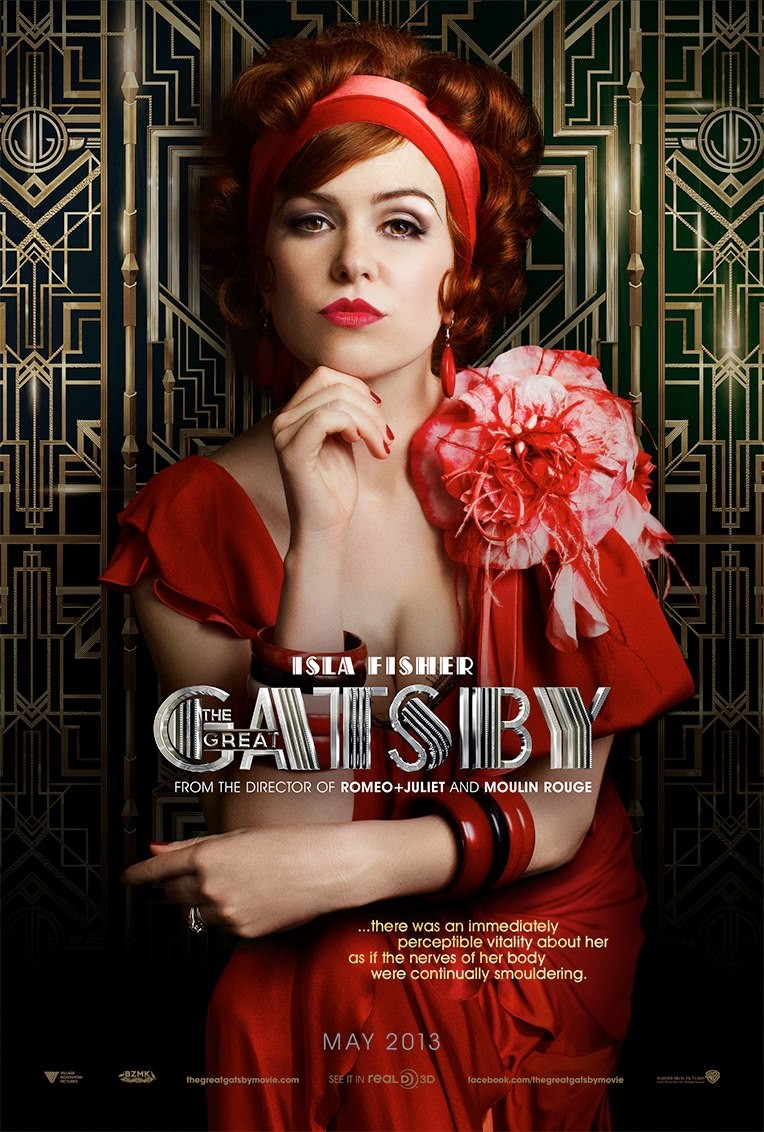
great_gatsby_xlgI love behind the scenes glimpses of the unsung heroes of film-making like The Hollywood Reporter’s great look at five costume designers who worked on some of the biggest films of the year.  Costume designers do much more than create clothes that are pretty and historically accurate.  They play a key role in defining the characters and telling the story.  Catherine Martin talks about one of Gatsby’s suits.

“That suit is a character in itself,” she says. “Tom tries to undercut Gatsby’s position by implying that he’s nouveau riche and he mentions the pink suit disparagingly,” says Martin. “Brooks Brothers was actually making pink seersucker suits in the early ’20s.” She admits: “I don’t know whether Leo was that thrilled about having to wear a pink suit. But I think it’s an instrumental part of reflecting the intense romanticism that lives inside Gatsby’s heart.
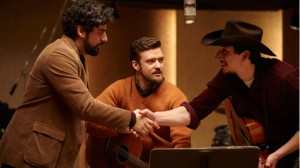
Inside-Llewyn-Davis Isaac Timberlake DriverMary Zophres designed the costumes for the Coen Brothers’ “Inside Llewyn Davis,” where the lead character wears just one outfit throughout the film.  “His character is constantly living in someone else’s apartment, so I thought he should have a smaller bag and fewer clothes.”  Daniel Orlandi speaks about dressing Emma Thompson as the real-life P.L. Travers for “Saving Mr. Banks.”  Travers always wore silver bracelets, so he made sure Thompson did, too.  But he gave her a more demure dress for the premiere of “Mary Poppins” on screen than the real author wore.  Replicating the original dress, he says, would make the beautiful Thompson look too “hot.”  A real challenge was dressing not just all of the extras in early 60’s clothes for the scene set in Disneyland, but outfitting the Disney characters as well.

“At the last minute we had to re-create all of the 1961 Disney mascots and retain that original, handmade look,” says Orlandi. “Mickey looked a lot different back then!”

And in the New York Times’ special Oscars section, the costume designer for “The Butler,” Ruth E. Carter, explains how the clothes worn by the title character’s wife Gloria, played by Oprah Winfrey, tell the story of the film — and of the challenge of putting one of the most famous people in the world into a movie and making the audience believe her as a character.

Gloria wears a cream-color A-line skirt and blouse topped by a turquoise cardigan, her hair covered by a floral-print scarf, as she sends her oldest son, Louis (David Oyelowo), off to Fisk University in Nashville from a Greyhound bus stop. “We had a big argument,” Ms. Carter said. “I think Lee’s main thing was: ‘When Oprah gets here, we’ve got to break the Oprah mold. We’ve got to make her a character.’ He told me, ‘I don’t want her in anything bright, and I want her in curlers at the bus station.’ So Oprah and I argued with him, she more than I. We won, thank God. I guess she proved to him that she was committed, and she was going to be this character and present something other than herself, and it relaxed him. And he was like, ‘O.K., you can do a couple of bright things — maybe.’ ”

 

Related Tags:


Behind the Scenes

What the Colors of the Clothes on Breaking Bad Tell You About the Characters and Story

Posted on August 18, 2013 at 8:00 am

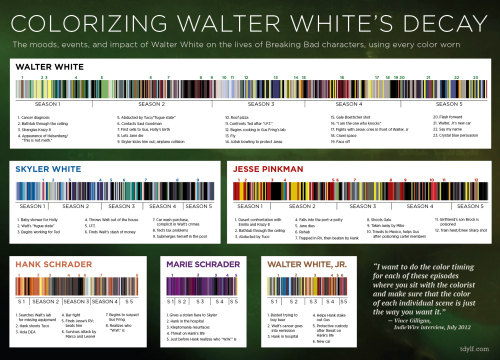
PrintI love stories like this wonderful analysis by John LaRue about the way the costume designers on “Breaking Bad” use the colors of the characters’ clothes to tell you what is going on.

There are a lot of patterns that emerge, so much so that each character has an identifying color.

After Walt’s cancer diagnosis, his colors become stronger, and eventually go black. When the cancer returns or when he’s defeated, the drab khaki returns. The closer he gets to Gus, and the stronger his ties to blue meth, the more blue shows up in his barcode.

Skyler starts out blue, but turns dark once she starts to figure out Walt’s secret. Her timeline turns deep blue, almost purple, as her flirtation with Ted grows, and then it turns green once she discovers Walt’s stash of money. The more complicit she becomes in Walt’s criminal activity, the blacker her timeline gets to the point that it’s pitch black in season 4.

Fascinating!

Related Tags:


Television Understanding Media and Pop Culture

Audrey Hepburn and Edith Head

Posted on May 10, 2013 at 8:00 am

Audrey Hepburn won an Oscar for her first starring role in “Roman Holiday,” with gowns designed by Edith Head.  I loved this segment from the early days of television that takes us behind the scenes of creating the costumes for the film.

Related Tags:


Actors Behind the Scenes
THE MOVIE MOM® is a registered trademark of Nell Minow. Use of the mark without express consent from Nell Minow constitutes trademark infringement and unfair competition in violation of federal and state laws. All material © Nell Minow 1995-2026, all rights reserved, and no use or republication is permitted without explicit permission. This site hosts Nell Minow’s Movie Mom® archive, with material that originally appeared on Yahoo! Movies, Beliefnet, and other sources. Much of her new material can be found at Rogerebert.com, Huffington Post, and WheretoWatch. Her books include The Movie Mom’s Guide to Family Movies and 101 Must-See Movie Moments, and she can be heard each week on radio stations across the country.

Website Designed by Max LaZebnik