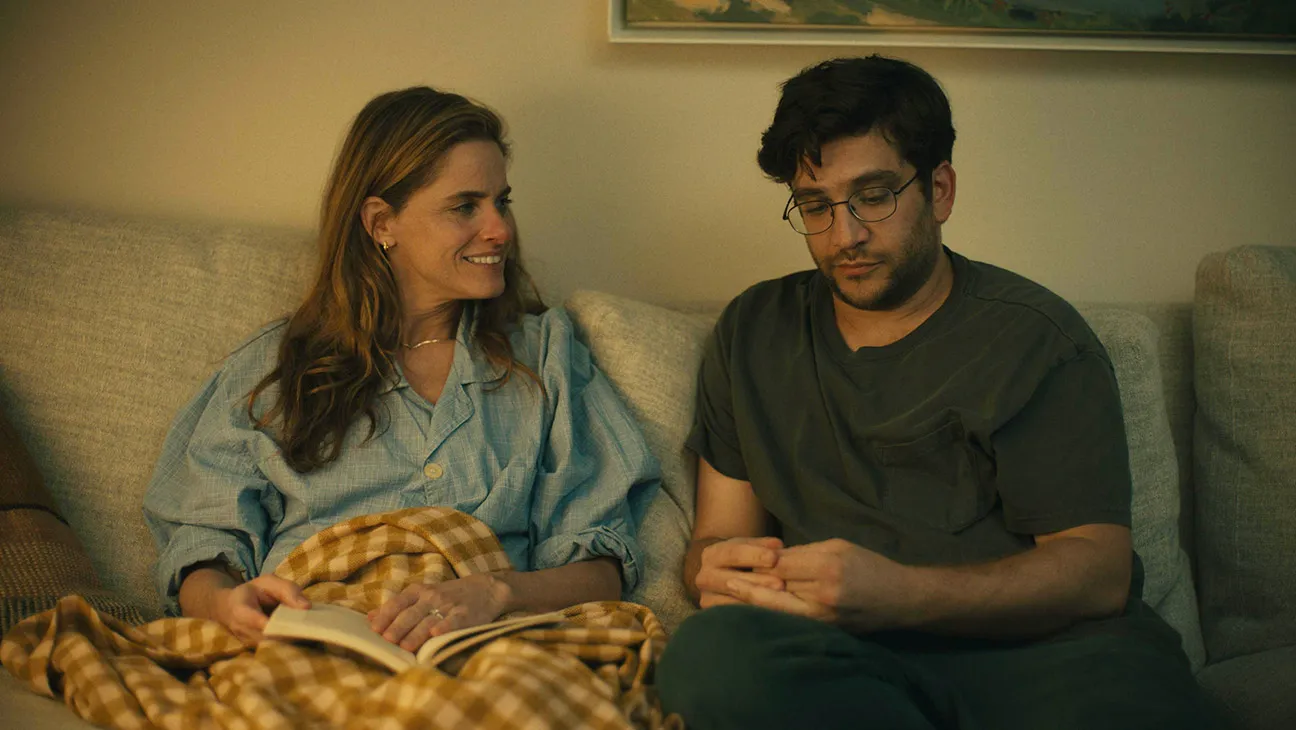
Fantasy Life
Posted on March 26, 2026 at 5:09 pm
B-| Lowest Recommended Age: | Mature High Schooler |
| MPAA Rating: | Rated R for language, some sexual references and brief drug use |
| Profanity: | Strong language |
| Alcohol/ Drugs: | Social and self-medicating alcohol, pharmaceuticals, and weed |
| Violence/ Scariness: | Tense family confrontations, mental illness |
| Diversity Issues: | None |
| Date Released to Theaters: | April 3, 2026 |
“Fantasy Life” is the story of people in their 30s-50s who are struggling with the kinds of mental health challenges that often accompany or exacerbate mid-life concerns. They do not have money problems, but they have problems of purpose, confidence, loneliness, and feeling that they don’t know how to get what they want out of life. There are chapter titles letting us know what season we’re in. But it feels more unfinished than episodic, as though it could have used one more draft. That may be a reflection of having one person serving as writer, director, and star.
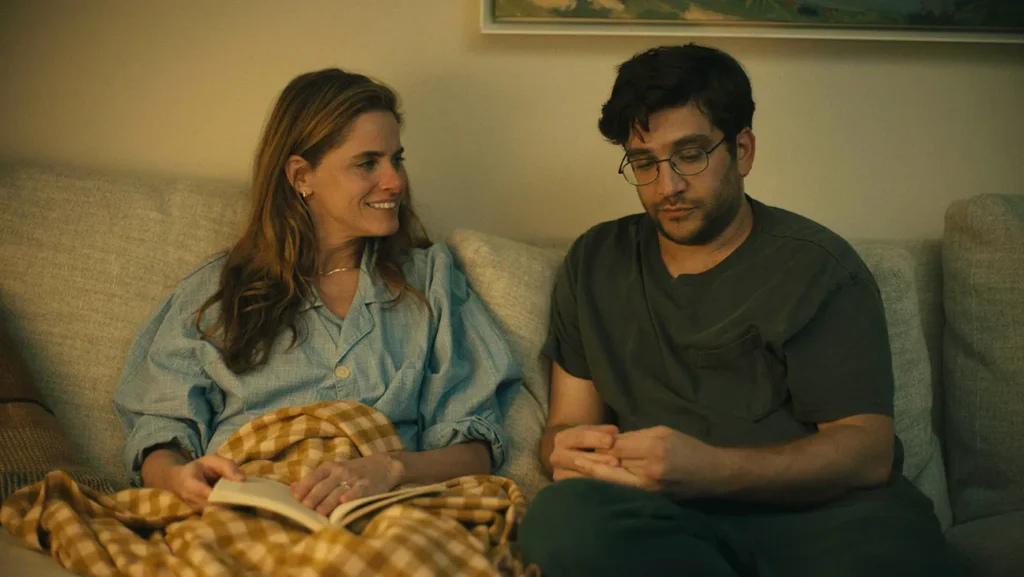
Matthew Shear stars in “Fantasy Life” as Sam, a law school dropout struggling with intrusive thoughts, possible OCD, and panic attacks. In the first minute of the film, he is fired from some kind of file clerk job. And then, he has a panic attack at a bookstore, falls, and gets a cut on his forehead.
We quickly see that he may be lost, but he is a nice guy. At the bookstore, he offers to buy the woman who offers him her thermos. With his therapist, Fred (Judd Hirsch, triggering memories of “Ordinary People”), he apologizes for his “internalized anti-Semitism,” ugly and disturbing thoughts that come to his mind.
And then Fred’s receptionist, Helen (Andrea Martin), who is also his wife, asks Sam if he can do an emergency babysitting job for her three young granddaughters, the children of her son, David (Alessandro Nivola) and his wife Dianne (Amanda Peet). Sam knows that is unorthodox, and possibly inappropriate. But Helen reassures him that it must be okay because they know his family, and, some faint praise, “you’re functional.”
Because he is a pleaser and because he has nothing else to do, he agrees. David gives him a few brisk instructions and rushes out to fill in for an ailing guitar player in a band. And Sam becomes the family’s “Manny,” but he doesn’t like that term.
Dianne is an actress, but she has not worked in many years and is worried that she is too old to get a job. She and Sam become friendly. And David is invited to go on tour with the band.
Shear makes some interesting choices as a director. The sea-green colors in the most significant interiors give us the sense that the adult characters feel like they are under water. In his first evening with the girls, and then again when he is with Dianne, they are framed sitting on a long sofa, looking at us in the audience, where the television would be. But by far his best choice was in casting. Every role is superbly performed. Amanda Peet, who seldom gets a chance to show us the depth of her talent, is breathtaking in every scene as Dianne, an actress who does not know who she is without the kinds of roles that depend on youth and beauty. Nivola shows us that David may be selfish but it is because he is scared and angry that he may not have a chance to be the musician he wants to be. Their scenes together are wrenching because we see that they seem to have forgotten how to connect, how to share their very similar mid-life fears, how not to hurt each other. Jessica Harper, Bob Balaban, and Zosia Mamet make strong impressions in small roles.
The storytelling has some gaps, not just in time but in the kind of information we want to have. At one point, it seems like commentary on the prevalence of psychopharmacology in treating anxiety and depression, and whether that prevents patients from making progress on their issues. At another point, it seems like a commentary on the existential questions of mid-life. but it limits our sympathy for the characters that they come across as spoiled and self-indulgent. What makes it worth seeing is Peet and the other performers, as well as the chance to see a first film from Shear, who deserves a second one.
Parents should know that this film has strong and crude language, characters with mental health challenges, family confrontations, and sexual references including accusations of adultery. Characters drink, including drinking to excess and drinking to numb feelings, and there is brief drug use.
Family discussion: Was Sam a good nanny? Why didn’t Dianne want to film her audition?
If you like this, try: “While We’re Young”