Downton Abbey: The Grand Finale

Downton Abbey: The Grand Finale

Posted on September 11, 2025 at 5:09 pm

B +
Lowest Recommended Age: High School
MPAA Rating: Rated PG for smoking, suggestive material, some thematic elements
Profanity: Mile language
Alcohol/ Drugs: Alcohol and cigarettes, characters get tipsy
Violence/ Scariness: None
Diversity Issues: Class issues
Date Released to Theaters: September 12, 2025

You could have a very successful drinking game if you took a swig every time someone in “Downton Abbey: The Grand Finale” talks about change, coping with it, changing with it, or trying to ignore or prevent it. But you’d be far too tipsy to enjoy this movie’s many pleasures for those who have watched the characters in the title estate for the past 15 years, through five television seasons and two previous feature films. Beginning with the death of the heir to the estate in the sinking of the Titanic in 1912, through world events and domestic developments, the series explored social norms, family dramas, both of the titled family and their servants, and the impact of world events. It was romantic and glamorous. (Those clothes! Those dinners! Those romances!) It had everyone’s favorite, Dame Maggie Smith as Lord Grantham’s mother, the acid-tongued Violet, Dowager Countess. It was often thoughtful and endearing, as characters adapted and matured and relationships reconciled. This film will be of greatest interest to those who have followed the story, though you need not have seen or remembered every detail. But for those who have come to care about these characters, it is a very satisfying conclusion.

Copyright 2025 Focus

This film takes place in 1930, and as it begins the family and some of the servants are attending a glittery performance of Noel Coward’s operetta, Bittersweet. After the show, Lord Grantham (Hugh Bonneville), his wife (Elizabeth McGovern), their daughter, Lady Mary (Michelle Dockery), and Lady Edith Hexham (Laura Carmichael) and her husband (Harry Hadden-Paton) go backstage to congratulate the play’s star, Guy Dexter (Dominic West), who became a family friend after appearing in a movie filmed on the estate. The Grantham’s former footman, Thomas Barrow, is there as well because he is now Dexter’s companion/manager. As Lord Grantham says, their relationship appears “hearty.” Dexter introduces them to Coward (a louche and very charming Arty Froushan).

Lady Mary is unaccompanied because she and her husband are getting divorced, at the time so scandalous she will become a “social pariah,” thrown out of a fancy party by the hostess (Joely Richardson) because members of the royal family are about to arrive and it would be unthinkable for them to be in the same room with someone who is divorced.

Lord and Lady Grantham have both lost their mothers. The memory of Violet and Smith lofts above the story, with Violet’s portrait in the hall and frequent references, and hopes for the disposition of the American estate of Lady Grantham’s mother because Downton always needs money. Lady Grantham’s brother, Harold (Paul Giamatti) arrives to tell her it is not what she hoped, and he brings with him an associate named Gus Sambrook (the always- excellent Alessandro Nivola).

“Downton Abbey” creator and screenwriter Julian Fellowes has a gift for melding drama with an exquisite sensitivity to social hierarchies. He understands the smallest details and the way they reflect the emotional and social upheavals. When Lady Mary is shunned by even those they thought of as close friends, her sister, Lady Edith, who has perhaps come the longest way of the characters in the show, is wise and sophisticated enough to know that the world has changed (there that word is again) enough so that there is one path to putting her back in the social world, and it is not about the old hierarchies of noble titles but about another kind of social currency.

As always, the lives of the servants are of equal importance. Two of the key figures are retiring, in a parallel to the difficulties Lord Grantham has in letting Mary take control of the estate. That means two others in the downstairs community have new responsibilities, underscored by Lady Merton (Penelope Wilton), whose more populist views come into play as she brings two members of the downstairs staff into a prominent role in community affairs.

And, as always, it is gorgeous to look at and revel in. The tiaras! The Royal Enclosure at the Ascot races! The sumptuousness of the surroundings and the empathy for the characters bring this saga to most a satisfying conclusion. If Fellowes cannot resist a wink at the audience by giving a character a speech about the importance of screenwriters, what can we do but wink back at him?

Parents should know that this movie includes sexual references and non-explicit situations as well as family difficulties.

Family discussion: How do we decide when to change and when to hold on to traditions? Which of the characters is best at adapting?

If you like this, try: the “Downton Abbey” series and earlier films and Fellowes “Belgravia,” “The Gilded Age,” and “Dr. Thorne.”

Related Tags:


Drama Movies -- format Movies -- Reviews Romance Series/Sequel
Flight Risk

Flight Risk

Posted on January 23, 2025 at 7:12 pm

C
Lowest Recommended Age: High School
MPAA Rating: Rated R for violence and language
Profanity: Very strong and crude languagecdure
Alcohol/ Drugs: None
Violence/ Scariness: Extended peril and violence, airplane peril, characters injured and killed, some grisly and disturbing images
Diversity Issues: None
Date Released to Theaters: January 24, 2025
Copyright 2025 Lionsgate

“Flight Risk” has all of the ingredients for a tight little thriller except one. There’s a good set-up — transport of a cooperating witness, accompanied by just one US Marshal in her first return to field work after a failure that left her feeling vulnerable, and a pilot sent by the bad guys to kill the witness. It has a good setting — a small plane flying through the snowy mountains of Alaska. And a good run-time — just over 90 minutes. But the direction by Mel Gibson is sloppy. Not the editing or special effects, which range from serviceable to tense, but some of the choices that interfere with the best the movie has to offer.

Topher Grace, who plays Winston, is, as always, immediately engaging, well cast as the talkative prisoner. He’s first seen in a low-end motel, sitting on the bed and staring into an aged microwave waiting for it to warm up a styrofoam cup of soup. US Marshals break in and he immediately offers to cooperate with them. Like Charles Grodin in the infinitely better “Midnight Run,” Winston was an accountant for a vicious mob boss. He agrees to tell law enforcement everything he knows if they will give him immunity and protection.

Michelle Dockery (“Downton Abbey”) is Madolyn Harris. She has to bring Winston east to testify in the gangster’s trial. Without his testimony, there will not be enough evidence to convict him. She charters a plane, gets Winston settled with handcuffs, and takes the only other seat, next to the pilot (Mark Wahlberg), who says his name is Booth. His backwards baseball cap, chewing gum, and cornpone accent do not create a great deal of confidence, but he assures Madolyn that they’ll be in Anchorage and on their way to Seattle in 90 minutes.

Except he was never told their next stop was Seattle. Madolyn gets suspicious. “Booth” is there to kill Winston. He is also the only pilot on board. There is nothing around them but snowy mountains. The rest of the movie is the very bumpy ride.

The problem is that the fun of all the tension and action is interrupted by weird dialogue that is as off-balance as the plane. As Madolyn is using the limited access to her phone to update her colleagues (and try to figure out who has been leaking key information to the gangster), she is also on with Hassan (Maaz Ali), a pilot who is talking her through the instrumentation. He is creepily predatory, in the midst of the direst possible situation insisting that she go on a date with him. What is the idea behind this? Is there any world where someone might imagine this could be reassuring? It j’ust kept taking me out of the film.

And then there is “Booth.” Reportedly, Gibson let Wahlberg write some of his own dialogue, which gives his character a chance to free-associate a series of comments that he and Gibson may have considered evidence of recklessness and pleasure in hurting people, showing us why he is so dangerous. But they are crude and off-kilter (too many references to prison rape, for example) in a way that is at odds with the tempo and tone of the film. They’re also tedious. They do not add anything to the sense of menace or the stakes. It just comes across as self-indulgent, the last thing you want in a 90-minute thriller.

Parent should know that this is a very violent film with a knife, a flare gun, a very dangerous plane flight, criminal behavior and corruption, and extended strong language with very crude sexual references.

Family discussion: How did Madolyn decide who she could trust? How did her past experience help or hurt her ability to handle the challenges of this transport?

If you like this, try: “Plane,” “Fathom,” and “Con Air”

Related Tags:


movie review Movies -- format Movies -- Reviews Thriller
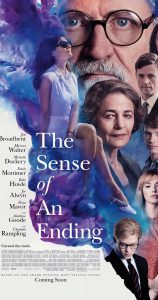
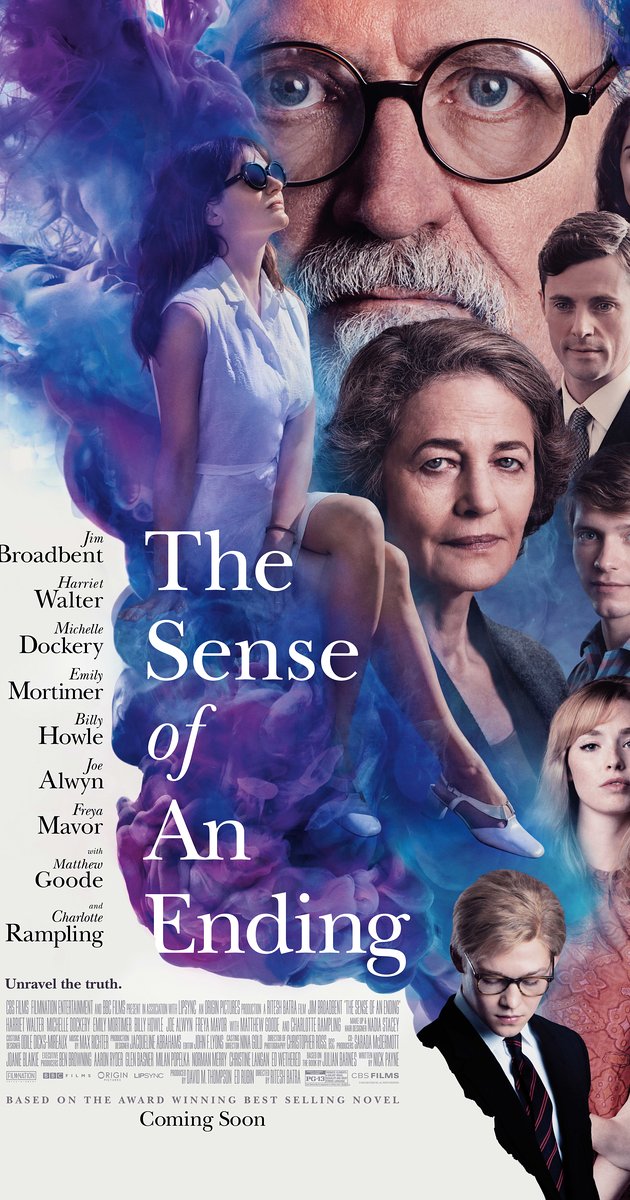
The Sense of an Ending

The Sense of an Ending

Posted on February 27, 2017 at 8:27 am

B +
Lowest Recommended Age: Preschool
MPAA Rating: Rated PG-13 for thematic elements, a violent image, sexuality and brief strong language
Profanity: Some strong language
Alcohol/ Drugs: Alcohol
Violence/ Scariness: Suicides
Diversity Issues: None
Date Released to Theaters: March 10, 2017

Copyright CBS Films 2016

Life is messy. Stories are our way of cleaning it up to help us try to make sense of it. Some of those stories are in books or movies, but most of those stories are just the editing each of us does all the time in telling ourselves and others who we are. Whether it is explaining to a traffic cop why you should not get a ticket or the difference between the “how we met” story of a couple who are still together and one who has split up, or living in a version of Lake Woebegone, “where all the children are above average,” all of us burnish the truth a little to make ourselves feel better and look better.

Julian Barnes’ award-winning novel The Sense of an Ending is the story of a older man who has to rethink the stories he has told himself and realign his understanding of his life. On screen, the delicacy of the performances stands in for the lyricism of his prose.

Tony Webster (Jim Broadbent) is semi-retired, the owner of a store that sells vintage cameras, and kind of semi-married, with a warm, companionable relationship with his lawyer ex-wife, Margaret (Harriet Walter, with a voice like a dry martini). Their daughter Susie (“Downton Abbey’s” Michelle Dockery) loves her dad, but finds him exasperating. She is pregnant, and says that her child will call him “Mudge,” for curmudgeon.

The camera store is significant. The vintage cameras are superbly crafted and in some ways better than digital cameras, but they are expensive and complicated and considered obsolete by most people. Tony identifies with the underappreciated quality of the instruments of precision and gets some satisfaction with being out of step with modern technology and mores.

But his romanticized view of the past is put into sharper focus (those cameras again) when he gets a letter about a bequest from a woman he had not seen since he was in his 20’s, when he was dating a woman named Veronica, and visited her family. After he and Veronica broke up, she dated his close friend Adrian, who later committed suicide. Now Veronica’s mother has left him Adrian’s journal, but that raises many questions: Why did she want him to have it? Where did she get it?

And where is it?  Her letter says it is enclosed, but it is not. Tony could let it go, but he stubbornly insists on seeing what it is, without considering where it might lead.

We go back in time, the moments and even the gestures mirroring the present as Tony explores the past and reconsiders many of his most fundamental assumptions about how he has lived his life. Veronica (now played with quiet fury by Charlotte Rampling) will not let him to have the journal. Instead she gives him something else, a letter that will make Tony confront one of his most painful and shameful experiences and open up to his ex-wife as he never has before.

The honesty of story’s portrayal of the foolish and selfish mistakes we make and the hurt they can inflict on people around us is tempered by the film’s tenderness toward its characters and the sensitivity of the performances, especially Broadbent and Walter. It judges them less than Tony is pushed to judge himself, and that is why it is so touching.

Parents should know that this movie includes two suicides, some violence, strong language, sexual references and a situation, and tense confrontations.

Family discussion: Why did Victoria’s mother want Tony to have Adrian’s journal?  Why was Tony wrong about Victoria’s brother?  Why did he forget about the letter?

If you like this, try: “The Remains of the Day”
Related Tags:


Based on a book Drama Movies -- format

Trailer: The Sense of an Ending

Posted on December 15, 2016 at 11:16 am

Julian Barnes’ novel The Sense of an Ending, won Britain’s most prestigious literary award, the Man Booker Prize, in 2012. It is the story of memory, loss, and regret, as a retired man is confronted with his past.

The film, starring James Broadbent, “Downton Abbey’s” Michelle Dockery, and Emily Mortimer, will be in theaters next year.

Related Tags:


Trailers, Previews, and Clips

Non-Stop

Posted on February 27, 2014 at 6:00 pm

non-stopI’ve got nothing against action movies that are dumb fun (see last week’s review of 3 Days to Kill). My bar is pretty low. I don’t ask them to make sense. But “Non-Stop” sinks to a level of ridiculousness that harshes the buzz from even a top-notch cast and engaging set-up. I never thought I’d say this, but if Liam Neeson wants to appear in an yearly middle-aged action movie to combat the doldrums of winter, maybe he should consider “Taken 3.”  Or “Snakes on a Plane 2.”

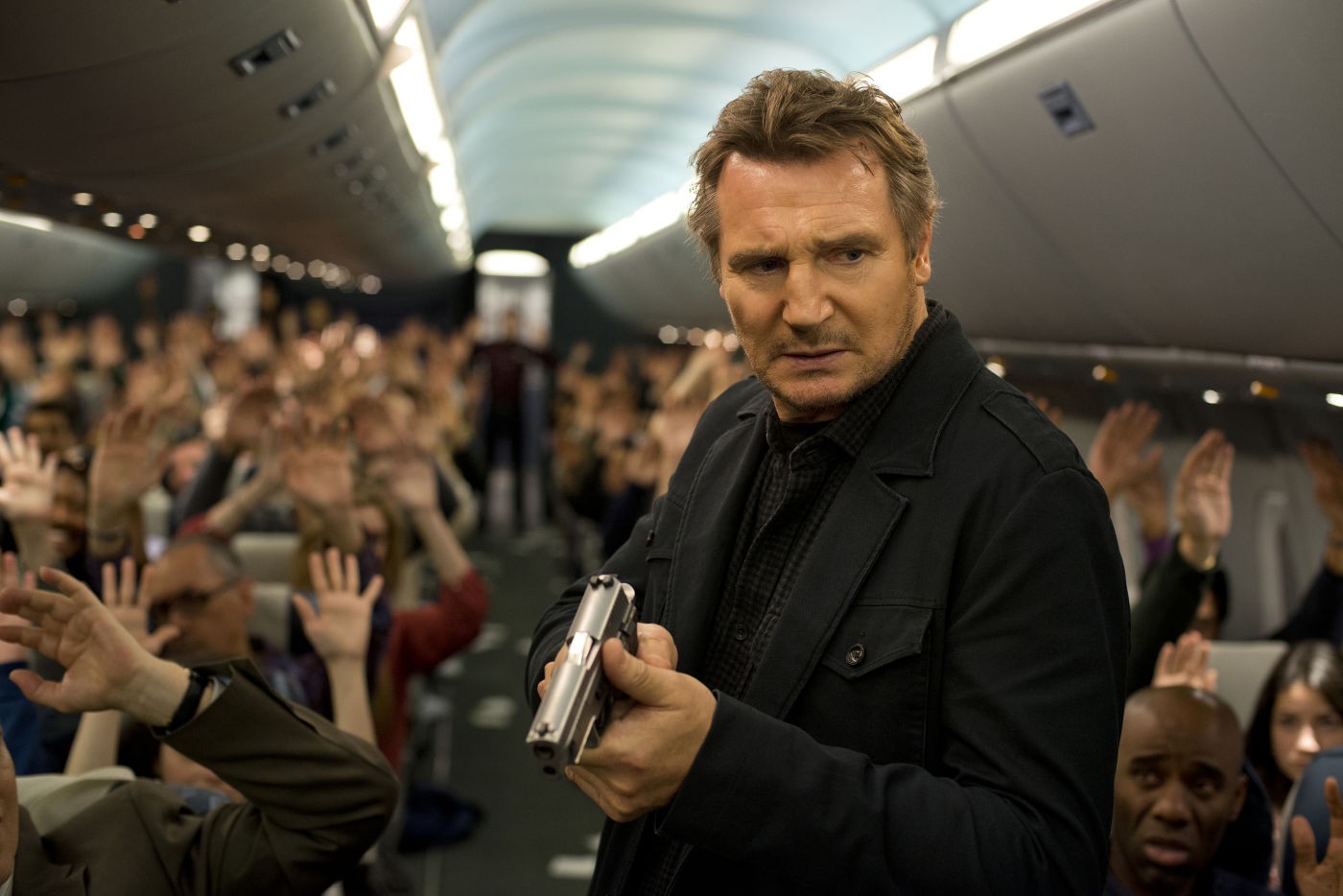
Neeson plays Bill Marks, an ex-cop-turned air marshall with issues.  We meet him in the airport parking lot, taking a drink, arguing with his boss, and looking seedy and shaky.  Outside the airport taking a last smoke, he is distracted, not hearing a request for a light, and inside the airport he is curt with other travelers.  Once on board the plane to London, he admits to his seatmate, Jen (Julianne Moore), that he is very tense during take-off, but fine once the plane is in the air. Once they air airborne, he goes into the lavatory and puts duct tape on the smoke detector so he can have another cigarette.

Back in his seat, he receives a text on the secure federal network.  It says that if $150 million is not transferred to a bank account, every twenty minutes someone on the plane will die.  The sender seems to know all about him.  Bill has to figure out if the threat is real and who it is coming from.

Thankfully, the movie avoids the obvious “if you don’t know why that well-known actor is in this movie, he’s the bad guy” syndrome.  There’s a lot of bench strength in the “that guy looks familiar” non-star supporting cast, with outstanding character performers and up-and-coming actors like Scoot McNairy (“12 Years a Slave,” “Argo”), Corey Stoll (“Midnight in Paris,” “House of Cards”), Nate Parker (“Arbitrage”), Michelle Dockery (“Downton Abbey”), Luptia Nyong’o (“12 Years a Slave”), Linus Roache (“Law and Order: SVU”), and Omar Metwally (“Harry’s Law”).  Every one of them takes the unforgiving material of the storyline further than it could possibly be expected to go, most of them giving us reasons to doubt/believe/doubt/believe whatever they are saying so nicely that they almost make it possible for us to ignore the increasingly dumber twists of what I will loosely refer to as the plot.  They make the shifting alliances hold our interest even as the storyline veers out of control.  The twists and turns of the who-dun-it and what-did-he-or-she-do-and-how are not as dumb as the decision to have Marks, for example, stop in the middle of a dire, every-second-counts moment to tell everyone on the plan a sad story about why he is so tortured.  And then there’s the moment when the cabin loses air pressure just in time to float a gun into Marks’ hand.

An airplane movie should take advantage of its locked-room setting and inherent danger.  But this one seems to miss the point.  Constricted space and the limits on getting dangerous materials through the TSA checkpoint should make the fight scenes more interesting, but they are unimaginatively staged by director Jaume Collet-Serra.  Marks’ instability is another limitation should also add an additional layer of uncertainty, but it is handled so inconsistently that it breaks the tension.  Finally, so much is piled into the last fifteen minutes that it feels like an unsuccessful attempt to get us to forget how little sense it makes.  We don’t ask for much from movies like this but the minimum is that you should get all the way to the car before you start saying, “Wait a minute….”  This one depends on such a pile-up of preposterousness that even these actors can’t land it safely.

Parents should know that this movie’s themes concern terrorism and hijacking, fights, guns, bomb, intense peril. Some characters are injured and killed, and the movie includes a sexual situation, brief strong language including gay slur, drugs, and alcohol abuse.

Family discussion: What was the villain’s real motive? If you suspected the wrong person, how did the movie mislead you?

If you like this, try: “Air Force One” and “Red Eye”

Related Tags:


Action/Adventure Drama Thriller
THE MOVIE MOM® is a registered trademark of Nell Minow. Use of the mark without express consent from Nell Minow constitutes trademark infringement and unfair competition in violation of federal and state laws. All material © Nell Minow 1995-2026, all rights reserved, and no use or republication is permitted without explicit permission. This site hosts Nell Minow’s Movie Mom® archive, with material that originally appeared on Yahoo! Movies, Beliefnet, and other sources. Much of her new material can be found at Rogerebert.com, Huffington Post, and WheretoWatch. Her books include The Movie Mom’s Guide to Family Movies and 101 Must-See Movie Moments, and she can be heard each week on radio stations across the country.

Website Designed by Max LaZebnik