
Laggies

Posted on October 30, 2014 at 5:58 pm

B+
Lowest Recommended Age: Mature High Schooler
MPAA Rating: Rated R for language, some sexual material and teen partying
Profanity: Strong and crude language
Alcohol/ Drugs: Adult and teen drinking and drunkenness, drunk driving
Violence/ Scariness: Car crash, tense emotional confrontations
Diversity Issues: None
Date Released to Theaters: October 31, 2014
Amazon.com ASIN: B00OUNNWPS

Lynn Shelton is known for writing and directing small, intimate, independent films with a lot of improvised dialogue (“Humpday,””My Sister’s Sister,” “Touchy Feely”), often using the same small group of actors. With “Laggies,” she moves seamlessly to working with a more conventional screenplay, written by someone else (novelist Andrea Seigel), and with a higher-profile Hollywood cast, but the film maintains a nice indie sensibility that lets the characters speak for themselves.  For example, the only time the word “laggie” is used, it is not directed at any of the main characters and it is never explained, but we get the point.  The laggie is Megan (Keira Knightley), who has lagged behind her close-knit group of friends from high school.  Ten years later, all of them are established in careers and relationships.  You can tell they all have mortgages and 401(k)s.  But Megan, who has an MA in counseling, is currently working as a “sign girl” for her accountant father (Jeff Garlin), standing on the sidewalk twirling an arrow sign advertising his firm.  She is living with Anthony (Mark Webber), the boyfriend she has been with since sophomore year of high school.

At a bridal shower for her friend Allison (Ellie Kemper), her friends find her joking immature and she finds them stuffy.  And at Allison’s wedding (with a hilariously pretentious First Dance), two developments shake Megan badly.  Anthony proposes. And Megan sees her father kissing (and more) Allison’s mother.  Megan leaves the wedding and meets four teenagers hanging out in front of a convenience store.  They ask her to buy some booze for them and she reasons that since someone did it for her, she should do it for them.  “It’s a rite of passage,” she reassures herself.

With no interest in returning to her messy life, she spends some time with the kids.  They think she is cool, and she likes being thought of that way.  Annika (Chloë Grace Moretz) gives her a phone and asks her to stay in touch.  When Megan gets back to her apartment, she accepts Anthony’s proposal and agrees to elope with him in a week.  Before they go, she tells him, she wants to attend the week-long personal development seminar that made such a difference to him (he learned that his spirit animal was a shark and that made him realize he had to start making decisions in his life because if a shark doesn’t move, it dies).

She has no intention of attending the seminar.  She just needs time to think.  And then Annika calls and asks her to pretend to be her mother for a parent conference at school.  Megan puts up her hair and fakes her way through.  And then she asks Annika if she can stay at her house for a week without her father finding out.  One of the many nice touches in this movie is that of course he finds out immediately.  This is not a sitcom.  The set-up may be artificial, but the characters have real-life reactions.

Annika’s father is Craig (Sam Rockwell), a divorce lawyer and single dad.  Annika’s mother left them years ago and he spends his days working with unhappy, angry couples.  Annika thought she could hide Megan because Sam was supposed to be at a mixer, but he comes home early.  I loved the detail that his name tag was on his arm and his conversation with Megan about how women at mixers like that tap him on the arm to show that they are listening.  There are lies, and excruciating confessions, and lessons learned, but the progress is organic as everyone from the school counselor who thinks Megan is Annika’s mother to the real mother (the always-excellent Gretchen Moll) to Megan’s old friends from high school and even Craig seem to be carrying a message about growing up even though you don’t have it all figured out. Shelton has enough confidence in the story, the characters, and her outstanding performers to avoid the easy exaggerations of the genre and show us real people who are essentially decent struggling to find the courage to move forward, even when they don’t know where that will take them.

Parents should know that this film includes strong language, drinking by adults and teenagers, drunk driving, car crash, sexual references, some crude, and non-explicit situations, and infidelity.

Family discussion: What animal would you pick to represent your spirit? How can you tell when you’ve outgrown your friends?

If you like this, try: “Girl Most Likely” and Sam Rockwell films like “Galaxy Quest” and “The Way Way Back”
Related Tags:


Drama Movies -- format

Birdman (The Unexpected Virtue of Ignorance)

Posted on October 23, 2014 at 5:59 pm

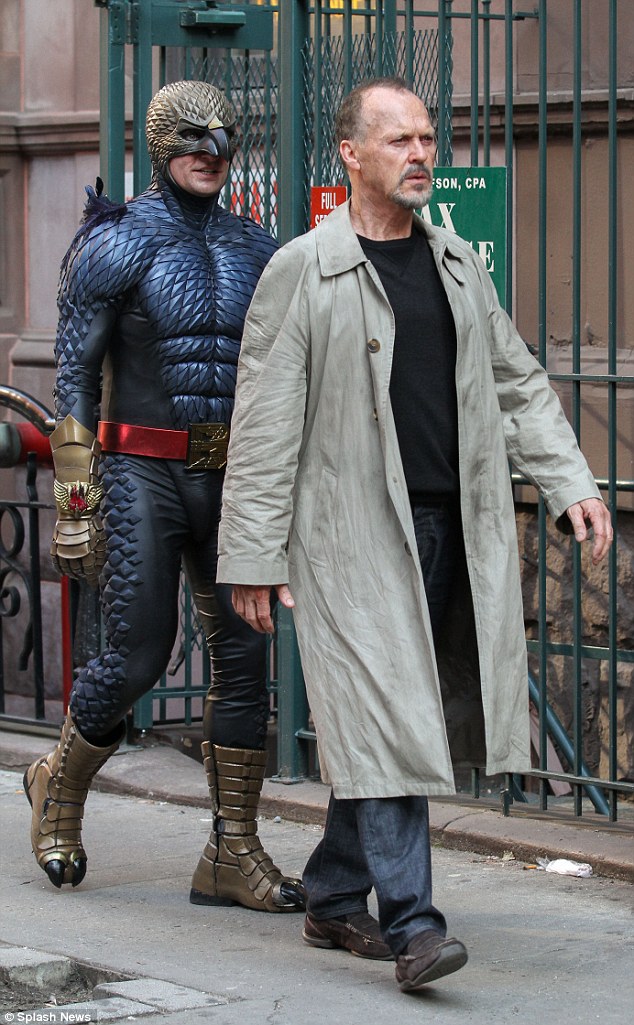
michael-keaton-birdman (1)Filmed as though it was almost entirely one long, stunning, audacious, breathless and breathtaking shot, “Birdman” (subtitled “The Unexpected Virtue of Ignorance”) explodes with ideas and visions, adopting the language of dreams to explore and upend the very idea of storytelling.

Michael Keaton plays a character in superficial ways like Keaton himself. He is Riggan, an actor who has undertaken at least three impossible tasks at once. He has adapted the acclaimed but notoriously difficult and difficult to adapt Raymond Carver collection of short stories, What We Talk About When We Talk About Love, into a Broadway play. The translation of stories whose art is in the spareness and lyricism of the prose into a theatrical production is at best ambitious, at worst impossible. But Riggan is not just the writer. He is also the director and star. He has put his last dime into the show. If it fails, he loses everything. And there is more. His estranged and angry daughter Sam (Emma Stone), just out of rehab, is working as his assistant so he can keep an eye on her and perhaps repair their relationship. One of the actresses (Andrea Riseborough), may be pregnant with his child. And a piece of equipment has just fallen on the head of one of the actors. They are about to go into previews and he cannot perform.
Riggan and Jake, his best friend/lawyer/producer (a slimmed down and pitch-perfect Zach Galifianakis), throw out (real-life) names of possible actor replacements. The best of their generation: Michael Fassbender, Jeremy Renner, Robert Downey, Jr — but they are all in Hollywood playing superheroes. Riggan knows something about that. He played a superhero called Birdman in a series of wildly popular films. He had money, fame, success, and the kind of power all of that brings. But now he has an ex-wife (Amy Ryan), an angry daughter, a possible new child on the way, and he is risking his future on the longest of longshots, a serious play in the high-pressure world of Broadway theater, between the vicious barbs of dyspeptic, despotic critics and audiences who would rather be at the latest musical based on a movie.

Riggan and Jake argue about what to do next.  The understudy? No! “It’s not like the perfect actor is just going to knock on the door!”  Cue knock on the door.  It is Lesley, the non-possibly pregnant actress in the show (Naomi Watts), volunteering her boyfriend, Michael (Edward Norton), who is available (he just got fired or quit or both) and wants to do it.  He is a Broadway darling, a Serious Actor with a lot of fans.  Jake is ecstatic.  This will sell a lot of tickets.

Michael shows up with the script already memorized and able to give a dazzling performance that pushes Riggan to do his best. But Michael is also narcissistic and arrogant. His relationship with Lesley is deteriorating and he is hitting on Sam. Worse, he is sending her mixed signals, making her feel even more insecure and putting her recovery at risk. Riggan is under even more pressure externally and internally as a voice — his Birdman persona? His younger self? His future self? — is urging him, taunting him, distracting him.

It is a high wire act, the endless, dreamlike take festooned with farce-style slamming doors, fantasy interludes with monsters and explosions, sharp satire, poignant drama, and across the board performances of superb precision. As sheer, no-net, bravura filmmaking it is pure wonder, and if it raises more questions than it answers, at least they are the big questions of meaning, identity, work, love, art, and, of course, superheroes.

Parents should know that this film includes very strong and crude language, explicit sexual references and situation, gun violence, drinking, smoking, and drug use.

Family discussion: How much of what we see in this film is “real” and how can you tell? What do you think is happening in the final scene?

If you like this, try: “All That Jazz” and Woody Allen’s “Stardust Memories”

Related Tags:


Comedy Drama Fantasy

John Wick

Posted on October 23, 2014 at 5:44 pm

Copyright Summit Entertainment 2014

This is a movie directed by two stunt men, which means it is pretty much a first-person shooter video game projected onto a movie screen. But that also means that it is directed by people who really know stunts and the kills on screen (reportedly more than 80) are on display for maximum effect. It delivers exactly what it promises, with a couple of surprisingly sharp and witty touches that lift it above the usual bang bang. There aren’t many movies where the funniest line is the way a character says, “Oh.” And I loved the idea of a very high-end, very specialized safe house/hotel just for assassins. Of course the only currency accepted is gold coins. And of course there is a doctor on duty 24/7 to sew up wounds without any pesky questions.

Keanu Reeves plays the title character and we know from the beginning of the film that he is not having a good day. We see him very badly, maybe mortally wounded, lying out in the rain, watching a video of his wife on his phone. And then we go back a couple of days to see what got him there.

His wife (Bridget Moynahan) is dying. At the funeral, he has an cryptic and uneasy conversation with Marcus (Willem Dafoe), a former colleague. That night, alone in his beautiful but spare home, John accepts delivery of a package. It is an adorable puppy, a gift from his late wife, with a note telling him that “you still need something, someone to love.” She urges him, “now that I’ve found my peace, find yours.”

When he goes out to get food for the dog, he stops to fill up his vintage ’69 Mustang with gas. An arrogant, hot-headed young Russian thug (Alfie Allen) wants to buy the car, snarling that everything has its price. His handler/bodyguard apologizes courteously and they go their separate ways. But that night, when John is asleep, they break into his house, brutally attack him, kill his puppy, and steal the car.

But they have stolen from the wrong person. Before he left the business to live blissfully with his wife, John Wick was employed as a killer and he was very, very good at it. “He was the one you sent to kill the boogeyman,” Viggo, the crime kingpin (Michael Nyqvist) says grimly. He has reason to know, as he was John’s employer. Viggo once saw him kill three guys with a pencil. And Viggo has reason to be grim; the hothead who stole John’s car was Viggo’s own spoiled son.

John gets out his sledgehammer to break the concrete floor and get to the weapons and stash of gold coins he had hidden there. He suits up (bulletproof vest and impeccably tailored grey duds), and off he goes, dodging the attacks from Viggo’s goons and then from the open contract Viggo puts out on him for any hitman (or women) who is willing to take him on, mowing down everyone, and I mean everyone (well, everyone male) who gets in his way.

Reeves is well cast as the implacable, unstoppable John Wicks, and Nyqvist (“Mission Impossible: Ghost Protocol” and the Swedish “Girl With the Dragon Tattoo” series) is outstanding as the wily Viggo. There are some nice darkly comic moments (trust me about that “Oh,” and a later reprise), but this is all about the stunts, and as pure adrenaline action fodder, this movie delivers the goods.

Parents should know that this film includes extremely graphic and intense violence with many characters (and a dog) injured and killed, disturbing images including spurting blood, wounds, stabbing, assault weapons, and explosives, strong language, smoking, drinking, drugs, skimpy clothes

Family discussion: Does everything have a price? Why did Viggo decide to make a deal? What did he mean when he said “this life follows you?”

If you like this, try: “Shoot ‘Em Up” and “Point Break”

Related Tags:


Action/Adventure Crime Thriller

23 Blast

Posted on October 23, 2014 at 3:57 pm

B
Lowest Recommended Age: Middle School
MPAA Rating: Rated PG-13 for some teen drinking
Profanity: Mild schoolyard language
Alcohol/ Drugs: Teen drinking, drinking game
Violence/ Scariness: Character becomes blind, scenes in hospital, sad offscreen death
Diversity Issues: A theme of the movie
Date Released to Theaters: October 24, 2014

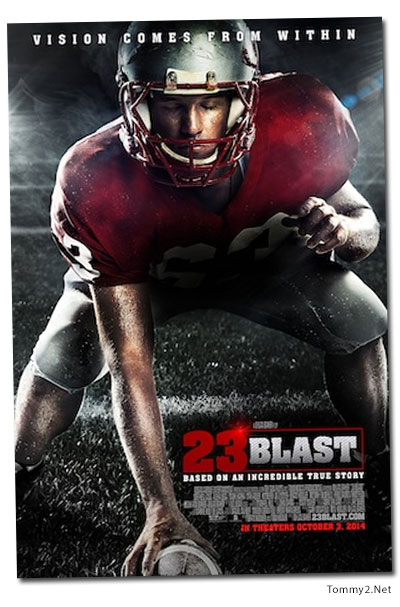
23 Blast is the name of a football play, and “23 Blast” is based on the real story of Travis Freeman, a high school football star who lost his sight, but, with the help of a courageous coach and committed teammates, was able to keep playing.

The real hero of the movie is the coach, played by “Avatar” villain Stephen Lang, with a touch of dry with along with his determination and sense of honor. The film’s very first scene, with the coach working with a group of young boys as he learns he will be getting a job with the high school team, introduces us to him as a man of character who understands that the win that counts is the integrity and teamwork he instills in his players. And it introduces us to the tone of the film, honest, unvarnished, and real. You may think you know where a fact-based story about a blind player on a high school football team is going, but this film will surprise you.23blast

That first scene also introduces us to the boys who will become the stars of the team, Travis (a very likeable Mark Hapka) and Jerry (Bram Hoover, as the bad boy with a good heart but a weak will). They are very different people. Travis plays by the rules. He is respectful, reliable, and grounded in his faith. Bram cannot resist a party, and as for rules, they are for ignoring or for breaking. But on the football field, they have a bond. Their passion for football, and their deep understanding of its options, demands, and strategies connects them. Travis is devoted to football because it is his nature to give himself fully to whatever he takes on. Bram is devoted to football because it is the only place where he feels at home.*

One night following a game, Travis becomes ill at a party. The next day he wakes up with severe swelling on his face. His parents take him to the hospital and the doctor tells them he needs immediate surgery. “You’re going to have to take the cross off,” the nurse says as he is wheeled into the operating room. He survives the surgery, but he is blind.

At first, Travis is devastated. He will not leave his room. He refuses to cooperate with the occupational therapist (a warm and spirited Becky Ann Baker). But a dream of a sermon seemingly directed to him and a visit from the coach opens up possibilities he thought were foreclosed. “I’m going to need you to step up,” the coach tells him. “The team needs a leader. Are you that guy?”

It seems impossible. How will he run, tackle, catch? The coach makes him the center and he has to learn a whole new set of skills. But learning that he can learn is revelatory. Some of his teammates are not on board. His ties with Jerry are tested by Jerry’s irresponsible and self-destructive behavior. But the coach understands that the most important thing he can teach these players is not the techniques or strategy but the meaning of being a part of something bigger than each of them.

This is quiet, even modest storytelling, with a surprising final punch, an inspirational tale that never becomes sugary or preachy.

Parents should know that this film includes teen drinking and a drinking game. A character becomes blind and there is a sad offscreen death.

Family discussion: What do we learn from Travis’ dream about the sermon directed at him? Why was Patty able to help him? Would you be willing to have a disabled player on your team?

If you like this, try: “Brian’s Song” and “Remember the Titans”

Related Tags:


Based on a true story Disabilities and Different Abilities High School Movies -- format Spiritual films Sports

Fury

Posted on October 16, 2014 at 5:58 pm

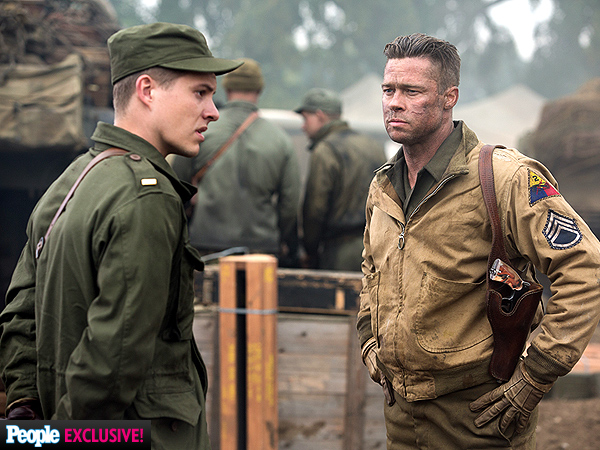
fury brad pittHistory, Winston Churchill reminds us, is written by the victors. But sometimes those victors have some second thoughts, more complex thoughts, about the nature of heroism, patriotism, and the spoils (in both senses) of war. And sometimes people want to comment on contemporary conflicts but find that it is more compelling in an historical framework. That is how we get “Fury,” a fictional story set in the last days of WWII, with Brad Pitt as “Wardaddy” (everyone gets a “war name”), the leader of a tank team pushing through an increasingly desperate Germany.

“Fury” is what is painted on the gun barrel of the tank. Death, both German and Allied Forces, is everywhere. Our forces, we are told at the beginning, are “outgunned and out-armored,” with “staggering losses.”

The first person we see looks like a cowboy hero, a lone figure on a horse, silhouetted against the sun.  He is not a cowboy and he is not a hero.  He is about to be killed, and not in a Hollywood, glamorized, bang bang way.

“It will end, soon,” Wardaddy tells Norman (Logan Lerman), his fresh-faced and terrified new driver, a kid fresh from the typing pool who has never been in a tank or fired a gun in combat. “But before it does, a lot more people have to die.”

I’m in favor of movies that show war as brutal, morally compromised, and horrific. Ultimately, though, it has to have more to say than that.  It is a movie, a work of drama, and if it is not going to be about something bigger than how terrible war is, it runs the risk of making the very horrors it depicts turn into entertainment and have exactly the opposite impact from the original intention.  Steven Spielberg did it with “Saving Private Ryan,” making both the personal story of the individual characters and the larger story about sacrifice and honor compelling and meaningful.

But writer/director David Ayer, whose previous films included the pulpish law-and-order “SWAT,” “Sabotage,” and “End of Watch,” is no Spielberg (though this film borrows a lot from “Saving Private Ryan”).  This film tells us very little about history, war, or the human experience.

Parents should know that this film includes very intense and graphic wartime violence with many characters injured and killed, executions, disturbing images, sexual assault, looting, constant very strong and crude language, drinking, smoking

Family discussion: How does this differ from other portrayals of WWII combat? What are the different ways the men in this movie cope with the moral compromises of war? Why did the men choose “war names” and what did they signify?

If you like this, try: WWII dramas “Saving Private Ryan” and “The Big Red One” and the Israeli film “Beaufort”

Related Tags:


Action/Adventure Drama War
THE MOVIE MOM® is a registered trademark of Nell Minow. Use of the mark without express consent from Nell Minow constitutes trademark infringement and unfair competition in violation of federal and state laws. All material © Nell Minow 1995-2026, all rights reserved, and no use or republication is permitted without explicit permission. This site hosts Nell Minow’s Movie Mom® archive, with material that originally appeared on Yahoo! Movies, Beliefnet, and other sources. Much of her new material can be found at Rogerebert.com, Huffington Post, and WheretoWatch. Her books include The Movie Mom’s Guide to Family Movies and 101 Must-See Movie Moments, and she can be heard each week on radio stations across the country.

Website Designed by Max LaZebnik