Don’t Think Twice

Don’t Think Twice

Posted on August 4, 2016 at 5:53 pm

B+
Lowest Recommended Age: Mature High Schooler
MPAA Rating: Rated R for language and drug use
Profanity: Very strong language
Alcohol/ Drugs: Drinking, drugs
Violence/ Scariness: Sad offscreen death
Diversity Issues: Diverse characters
Date Released to Theaters: August 5, 2016
Date Released to DVD: December 5, 2016
Amazon.com ASIN: B01IV40HUY

Life is pretty much improv, after all. We are constantly challenged to respond to what we cannot predict. But we do not have the two foundational rules that make performance improvisation so compelling. First is “yes, and.” Whatever anyone on stage says or does, everyone else has to build on it. If someone says, “Wow, it’s cold in here,” no one is allowed to say, “What do you mean? We’re outside and it’s warm.” You have to say something that takes what the first person said to the next level, maybe “Yes, who turned the air conditioning down to 60?” Or even, “Well, there’s really no practical way to heat an igloo.” It is the high-wire without a net act of improv group’s lightning quick, sharply observed, and deftly funny scenes that audiences enjoy.
Copyright 2016 Film Arcade

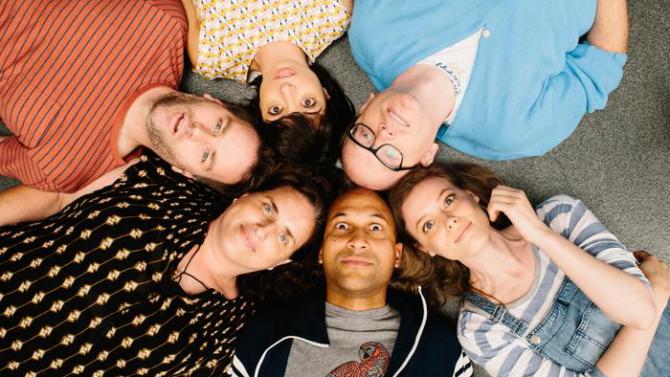
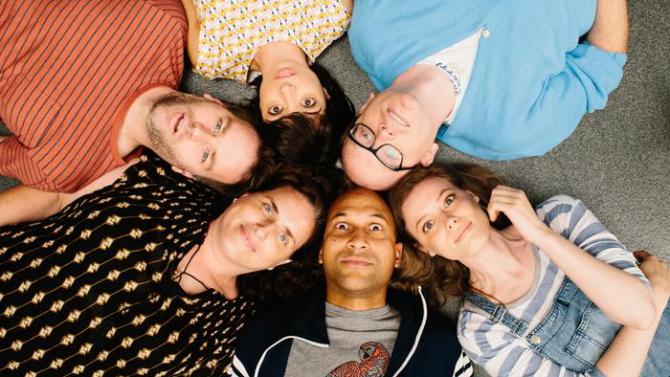
The other fundamental rule is what improvers say to each other before they go on stage: “I’ve got your back.” Improv is about the group, not the individuals. “Don’t Think Twice” is the story of an improv group called The Commune, suggestive of its familial, interdependent, collegial quality. They are something like a family, if a dysfunctional one. While they have very different backgrounds and goals, the way they come together on stage is, at least for now, enough to make them feel they have a home together.

The closest thing they have to a leader is Miles (writer/director Mike Birbiglia of “Sleepwalk With Me”), who is a little older and taught many of them. He is still teaching improv classes and often has brief affairs with the young women who are his students. Samantha (Gillian Jacobs) and Jack (Keegan-Michael Key) are a couple. Allison (Kate Micucci) is a quiet woman who is working on a graphic novel. Jill (“Inside Amy Schumer” writer Tami Sagher) lives with her parents and is the only one who does not have money problems. And Bill (Chris Gethard) is making ends meet by handing out hummus and chips in the grocery store. “Your 20’s are all about hope. And then your 30’s are all about realizing how dumb it was to hope,” one character says.

The group is presented with some bad news and some good news, two crises that expose the fragility of their connection. They are about to lose their performing space, and there are no alternatives they can afford. And Jack and Samantha achieve the most coveted of opportunities, the chance to audition for a television program that is the equivalent of “Saturday Night Live,” a sketch comedy show that is a major cultural institution. Both put enormous pressure on the group, and the sense of desperation, jealousy, and competition shatters their pretense of unity and endless support for one another. At the same time, Bill’s father becomes critically ill, which gives them a way to continue to connect.

Birbiglia’s “Sleepwalk with Me” showed great promise. The transfer from stand-up to screen was awkward, but the atmosphere and the specifics of life on the road as a comedian were exceptionally well handled and he is on screen, as on stage, an engaging character. Here he once again takes us unto a very specific world that we can all relate to, especially when it comes to the way the characters use humor to reach a place of honesty. Birbiglia takes a risk here, making Miles less likeable, but it works as he very effectively creates real and vivid characters who have to figure out who they are when they are offstage. While the first film gave us one perspective, this one expands with a clear-eyed but generous take on each of them. So, the individual stories work and they provide balance and counterpoint. Even family members have to grow up, accept responsibility, and decide when to change course.

Parents should know that this film has very strong language, sexual references and an explicit situation, rude humor, sad death of a parent, drinking and drugs.

Family discussion: Why is it important to say “yes, and?” Is it sometimes hard for you to be happy when your friends succeed?

If you like this, try: “Sleepwalk With Me” and Mike Birbiglia’s short film on YouTube, “Fresh Air 2: 2 Fresh 2 Furious”
Related Tags:


Comedy Drama DVD/Blu-Ray Pick of the Week Independent
Interview: Sebastian Evans, Composer of “Teenage Mutant Ninja Turtles”

Interview: Sebastian Evans, Composer of “Teenage Mutant Ninja Turtles”

Posted on August 4, 2016 at 3:55 pm

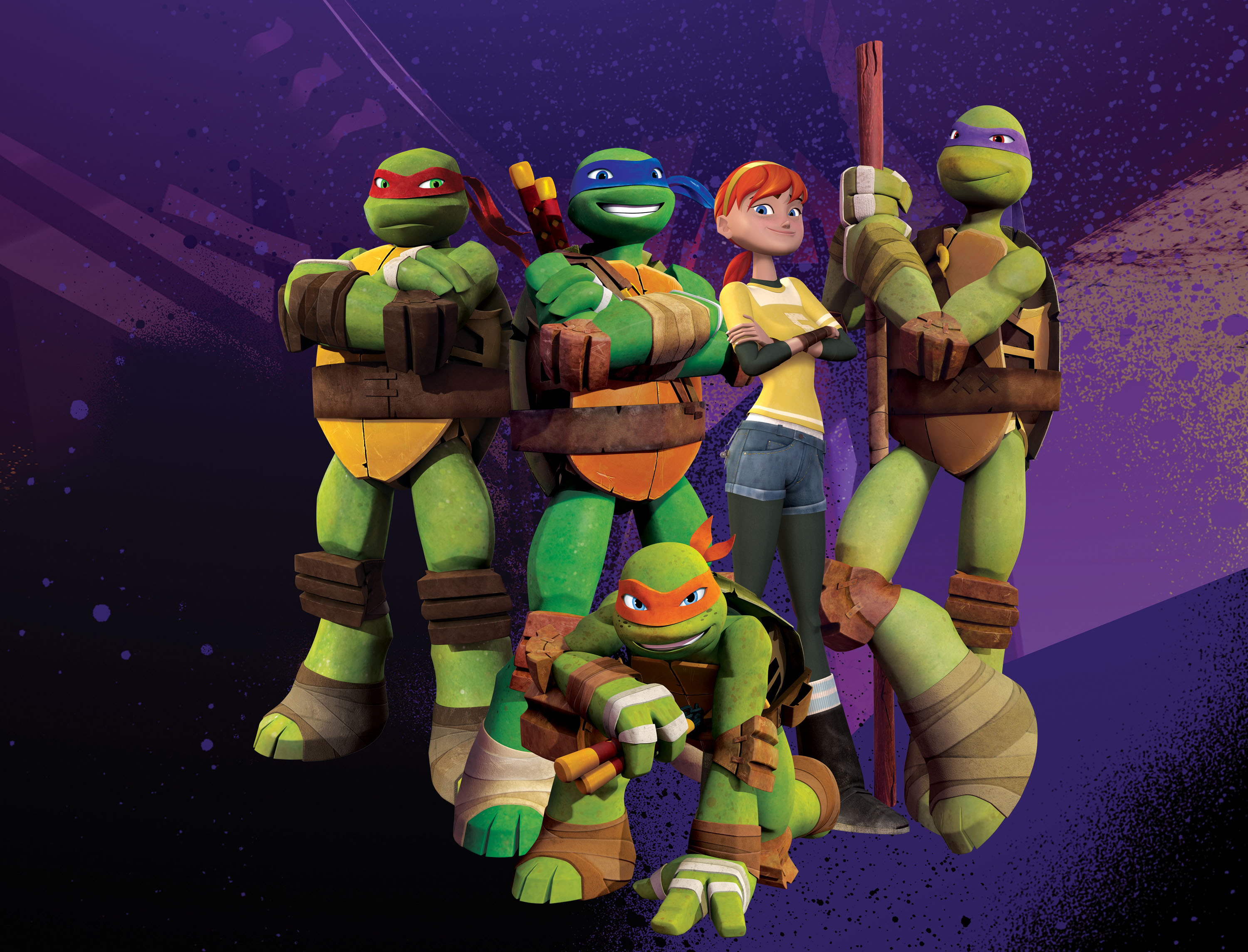
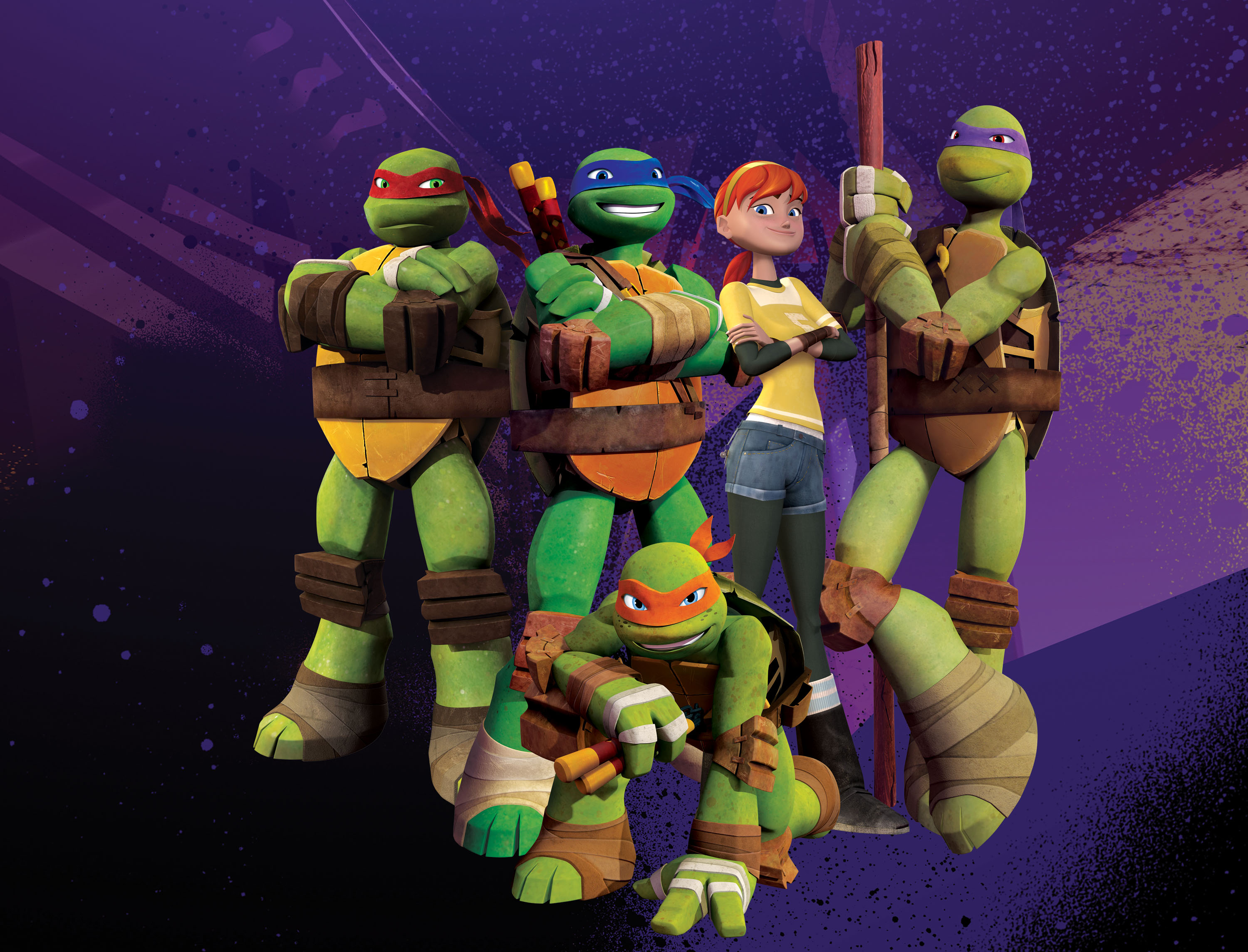
Pictured: Raphael (red mask), Leonardo (blue mask), April (red hair), Donatello (purple mask) and Michelangelo (orange mask), in TEENAGE MUTANT NINJA TURTLES on Nickelodeon. Photo: Nickelodeon. ©2012 Viacom, International, Inc. All Rights Reserved
©2012 Viacom, International, Inc. All Rights Reserved

Sebastian Evans is the composer whose music instantly puts kids in the world of the Teenage Mutant Ninja Turtles, with enough of the original melody to be familiar to parents who grew up with the heroes on the half-shell but enough that is new to match the fresh and exciting updates in the series and feel contemporary for today’s kids. In an interview, Evans spoke about his earliest memories of playing music and which movie composers he admires the most.

Where did you grow up and what was the first instrument you played?

Most of my early childhood was spent in the Bay Area/Alameda County part of Northern California. Though I lived in Hayward, I suppose I spent most of my time in Oakland and San Leandro. When I was 10, my family moved to Vacaville.

My parents would say the first instrument I played was drums. In the kitchen. Using wooden spoons for drum sticks and pots and pans for drums. For hours on end. I don’t remember that so I must have been really young. But if that doesn’t count, it would have to be a “Casio SK-8 keyboard” that I got when I was around 7 or 8 years old for Christmas. It had some kind of click-in hard drive pack that could record and playback what you played. It also had a training mode where you could follow along as it played songs. I think my parents were surprised at how dedicated I was to learning how to play the songs it came with as well as making up stuff and recording it. I also wouldn’t go anywhere without it.

How is composing for TV and film different from writing a song?

Copyright 2016 Sebastian Evans

I believe that writing a song is just a form of self-expression at its core. A song, or even an album for that matter, is all about what I feel, what I think, what concerns ME, etc. Or what makes US happy or sad if it’s a band or group. Writing a song is a bit one sided as far as perspective goes by nature. When I write music for TV or film its not just self-expression. I think a composer’s job is to convey those aspects of the human condition in characters and environments made up out of thin air. I’m trying to convey moods, tone and emotions from multiple perspectives. There’s a little more “extrospection” required. I should be clear that music is just one form of art out of many working in concert to achieve that purpose. I believe that my self-reflections on my own emotions from past experiences inform those perspectives so that’s where the self-expression comes into play but it is different even if it’s just a slight difference.

At what point in the production do you get involved and what does the director give you by way of guidance?

I usually have an initial meeting with the producer and the director about 2 or 3 months prior to post production. When we get a little closer to a locked picture of an episode that’s when I usually have an in depth discussion with the director about what’s needed. Every director I’ve worked with is different. Some want to hear your thoughts on how you’d approach the project and go from there. Other times a director will have a pretty solid idea on what is needed musically and then the process starts from trying to realize that idea. Some are a hybrid of both. For me, the director is the most important creative person on a project because that is the only person that has an all-encompassing vision of the project. How I approach any project always starts with the director.

How does the theme for the new TMNT echo the original series and what did you do to make it fresh?

Well, minus the melody, the chorus is pretty much the same. I will say that it was a significant challenge to create a new version of something that has been a constant earworm since childhood. So when Nickelodeon requested I take a stab at remaking it I was initially at a lost. But one day I was driving somewhere with my iTunes library blasting on random when “Intergalactic” by the Beastie Boys came on. I had an “ah ha!” moment. I’ll make it a rap! After that epiphany the theme came very quickly and easily. It’s a fun hip hop song with a super hero-ish undertone.

Which is your favorite turtle and why?

It’s always been Donatello. I’ve always identified aspects of other characters I like in him. He’s R2-D2-like in his focus and resourcefulness. He’s Batman-like in his detective-like attention to detail as well as his intelligence and ability to create tools to give the turtles an edge over the enemy. He’s Clark Kent-like in his awkwardness and sincerity when interacting with others. Also, he’s just a genius!

How is writing for series aimed at kids different from writing for edgier series designed for adult audiences?

Well, full disclosure: I have not yet had the chance to write for a series geared towards adult audiences. But I would imagine that the score for an adult show would be far more subtle and intricate. Most animated shows aimed at a younger audience utilize music as well as sound effects more conspicuously to embellish visual aspects of a scene in order to obtain the same sense of realism you get while watching a filmed show. Though the voice actors are always amazing, the facial expressions and body language of the characters are created at a different time. So music and sound is also leaned on to re-assemble the voice actors performance with the visual artists’ interpretation. For the most part, scores for adult shows are understated. You’re really going for a more visceral connection with the audience. At least until the army invades or a building blows up.

Do you ever bring in unusual instruments or sounds?

Yeah. Sometimes you need different tools to get across what you want. In the second season of TMNT I used a theremin for the Dimension X theme. I really wanted to bring that 50’s sci-fi horror/Mars Attacks vibe to it. The sound of the theremin carries those connotations with it and fit perfectly with what I was trying to convey.

Do you have a favorite classic movie score or composer?

Michael Nyman’s score for “The Piano” has to be my favorite score. I can’t say I have one favorite composer. Thomas Newman, Nobuo Uematsu, Jon Brion, Edvard Grieg, Danny Elfman, Peter Tchaikovsky, Jeff Beal, Bernard Herrmann. John Williams, of course. I’m a big fan of Michael Giacchino who’s doing amazing things right now. I’m sure that list would change slightly depending on what day I was asked.

If you could compose for any movie, would you pick sci-fi, action/adventure, comedy, or drama?

If I were to think practically, I’d say drama. It’s what comes to me naturally and it’s what I feel most at my core. But I’d love to create a huge epic score for an awesome sci-fi or fantasy movie or series.

Related Tags:


Composers Interview
Interview: Phil Hall on Lost Films

Interview: Phil Hall on Lost Films

Posted on August 3, 2016 at 3:45 pm

Copyright BearManor Media 2016
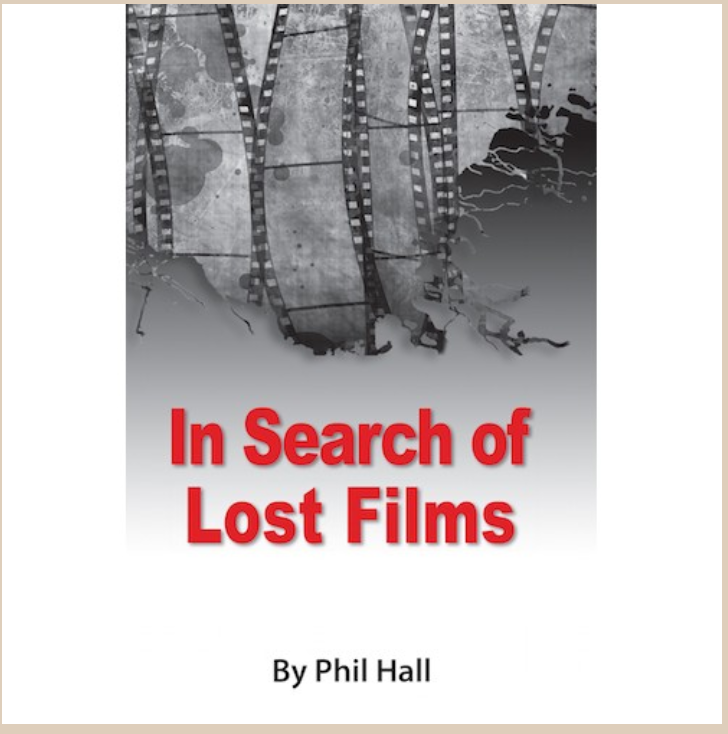
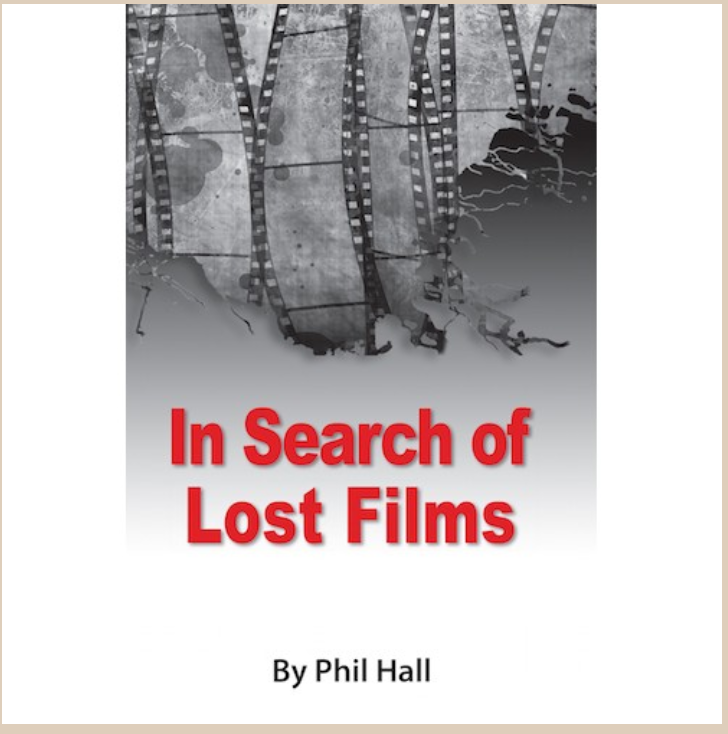
Critic and film historian Phil Hall has written a fascinating book, In Search of Lost Films with details about the thousands of movies made from the earliest days of the silent era through the 1940’s that have disappeared through damage or neglect. In an interview, he explained his interest in the lost films and the best hope for finding some of them.

What are lost films and how did you get interested in them?

Lost films are motion pictures that, as far as we can determine, are no longer in existence. In some cases, there are no known surviving prints. In other cases, the films exist only in fragments.

I have been writing about film history for three decades, and one of the major problems with the subject involves the voids created when a film is considered missing. After all, how can one truly consider a creative artist’s genius and historic significance if we are unable to re-evaluate their full canon?

How did the film stock of the early 20th century contribute to this problem?

Prior to 1951, motion pictures were presented on nitrate film, which contributed to the popularity of the medium – when projected on a big screen, the images on nitrate film were beautiful to behold. Unfortunately, poor storage of nitrate film contributed to the decay of the prints and negatives. Nitrate film was also highly flammable, and in too many situations there have been fires that resulted in the loss of countless rare films.

What resources are available to learn about the films that have never been archived?

That question is almost impossible to answer. For starters, many films that are considered lost were archived, but failed to survive due to poor storage.

One of the most fascinating aspects of researching this book was learning about the discovery of films that were previously unknown to film historians. One of the most remarkable stories involves film historian Paul Gierucki, who purchased a mysterious can marked “Keystone” at an antique fair and discovered that he acquired “A Thief Catcher,” a 1914 Charlie Chaplin film – prior to this, no Chaplin biographer knew that he appeared in this film.

I can say that one of the most disturbing things I discovered in researching this book was that many archives did a sloppy job in keeping a proper inventory on the films in their collections. More than a few titles that were considered lost for decades existed all along – they were simply mislabeled or incorrectly stored by archivists.

Why are missing American films sometimes discovered overseas?

American films were very popular overseas – especially in the silent cinema era, when it was easy to change the intertitles to accommodate non-English-speaking audiences. And Hollywood’s output was so overwhelming in quantity and quality that few global film industries were able to compete in terms of content creation or audience appreciation. When films were sold for overseas sales, many of them remained uncollected by their sales agents after their theatrical releases were completed. Thankfully, a lot of these works wound up being donated to museums or archives in those nations – an act of altruism that saved many, many American films that disappeared in their nation of origin.

What actors and directors are underestimated or forgotten because their most important work has disappeared?

Silent film stars Theda Bara, Lloyd Hamilton and Raymond Griffith are known primarily by reputation because the bulk of their output is considered lost. Much of Lon Chaney’s film performances are also gone. Pioneering Argentine animator Quirino Cristiani’s landmark films vanished in fires, while the majority of the films created by two groundbreaking non-white American filmmakers, Oscar Micheaux and Esther Eng, are also considered irretrievably lost.

Are there particular genres or categories that are most difficult to find?

Many early sound films that were presented in the sound-on-film process – where the soundtrack was on a separate disc that played on an oversized phonograph – survive with either the soundtrack disc surviving without the accompanying film or the film remaining while the soundtrack disc is lost.

There are also national film industries whose cinematic heritage is wildly incomplete because of poor preservation and the lack of international distribution that could have guaranteed the survival of prints overseas. Too many films made in Pacific Rim and Latin American nations are considered lost forever because of this.

Tell me about the Marx Brothers first film, which is now lost.

In 1921, the Marx Brothers self-financed a short comedy called “Humor Risk.” Details on the film’s contents and production history are sketchy, as there are various stories on what took place. We know that the Marxes appeared as characters that were far removed from their well-known personas: Groucho was a criminal on the run, Chico was his assistant, Harpo was a detective chasing these miscreants and Zeppo had some sort of connection to a nightclub where the bad guys were overwhelmed by their foe.

Some sources claim the film was never screened, others say there was single screening that was poorly received, and other sources suggest the film may have been released (perhaps under another title). The Marx Brothers never had a positive opinion of the work, but the story that they recklessly allowed the film to disappear seems strange when you consider their financial investment in the production.

How did you learn about a pre-“Snow White” animated feature film made in Argentina and what were you able to find out about it?

I learned about that when I was around 11 years old – there was a book on film history (I cannot recall the name of it) and it mentioned that the first animated feature film was something called “El Apóstol” made by the aforementioned Quirino Cristiani in 1917. The film was a satire on Argentina’s President Hipólito Yrigoyen, but the humor had no broad global appeal and it was never shown outside of Argentina. Unfortunately, all materials related to the film were destroyed in a fire.

Cristiani also made the first feature-length sound animated film, the 1931 “Peludópolis.” That was also a satire of Argentine politics, and the surviving materials of that work also perished in a fire.

Where do you do your research on films no one has seen for nearly a century?

As I said earlier, I have been writing about film history for three decades, so I have quite a library of books on the subject. I also sought out help from many prominent film historians, and I was grateful for input from the Library of Congress and even such distant resources as the South African National Film and Video and Sound Archives (because there is very little available information in the U.S. about South Africa’s film history).

If you could wave a magic wand and have just one of the lost films appear for viewing, what would it be?

I would be curious to see the 1926 film version of “The Great Gatsby” – considering the various film versions of this Fitzgerald classic utterly failed to capture the spirit of the source material, I would be intrigued to see if the film made during the Jazz Age got it right.

Of course, if I was waving my magic wand to make film disappear, I have 100 to choose from in my last book, “The Greatest Bad Movies of All Time” (published in 2013 by BearManor Media). But that’s another story!

For more information:

Related Tags:


Books Film History Movie History
Suicide Squad

Suicide Squad

Posted on August 3, 2016 at 12:00 pm

Copyright 2016 Warner Brothers

I always say that the success of a superhero movies depends on the bad guy. So, shouldn’t a movie that is all bad guys be really great? That’s the idea behind “Suicide Squad,” a sort of “Avengers” (all-star hotshots who don’t play well with others have to work together as a team to save the world) crossed with “The Dirty Dozen.” And it kind of works. On the one hand, it is an August movie, the cinematic equivalent of the shelf in the back of the grocery story with the dented cans, irregulars, and day-old bread. On the other hand, it approaches a nicely messy, authentically amateurish, form equals content vibe that suits the subject matter. If these guys made their own movie, they might overlook some of the fine points, too.

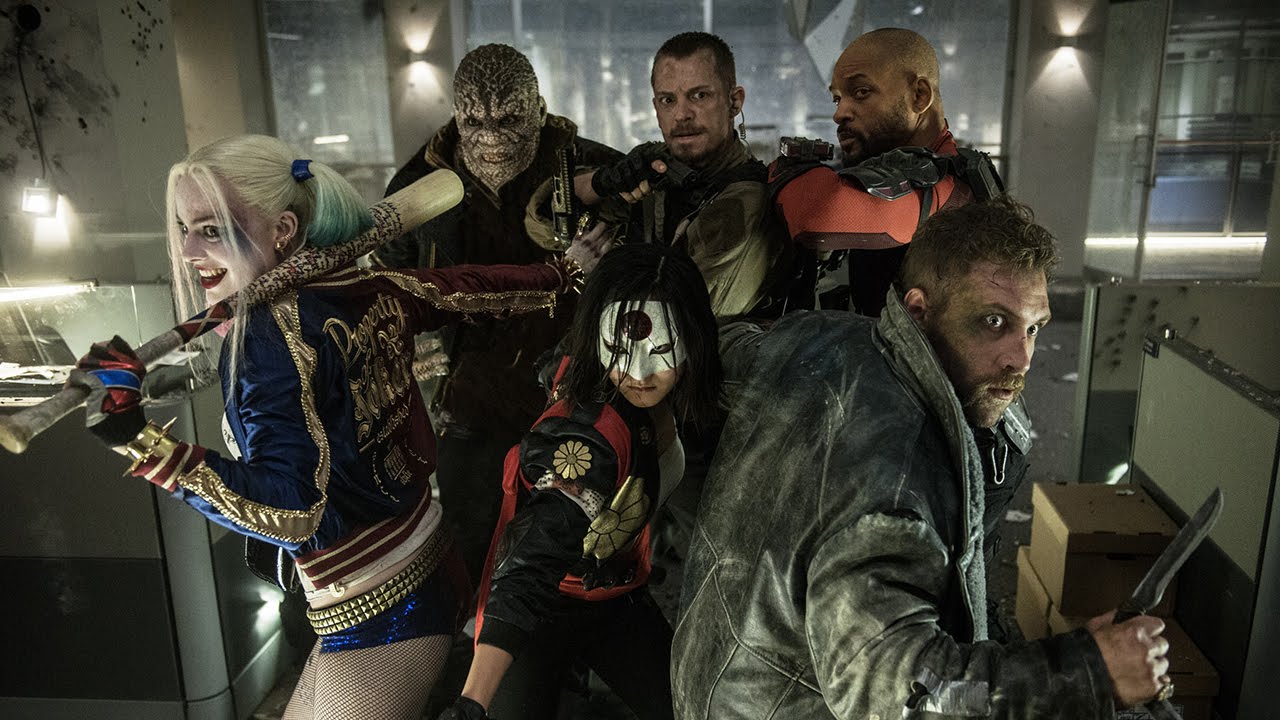
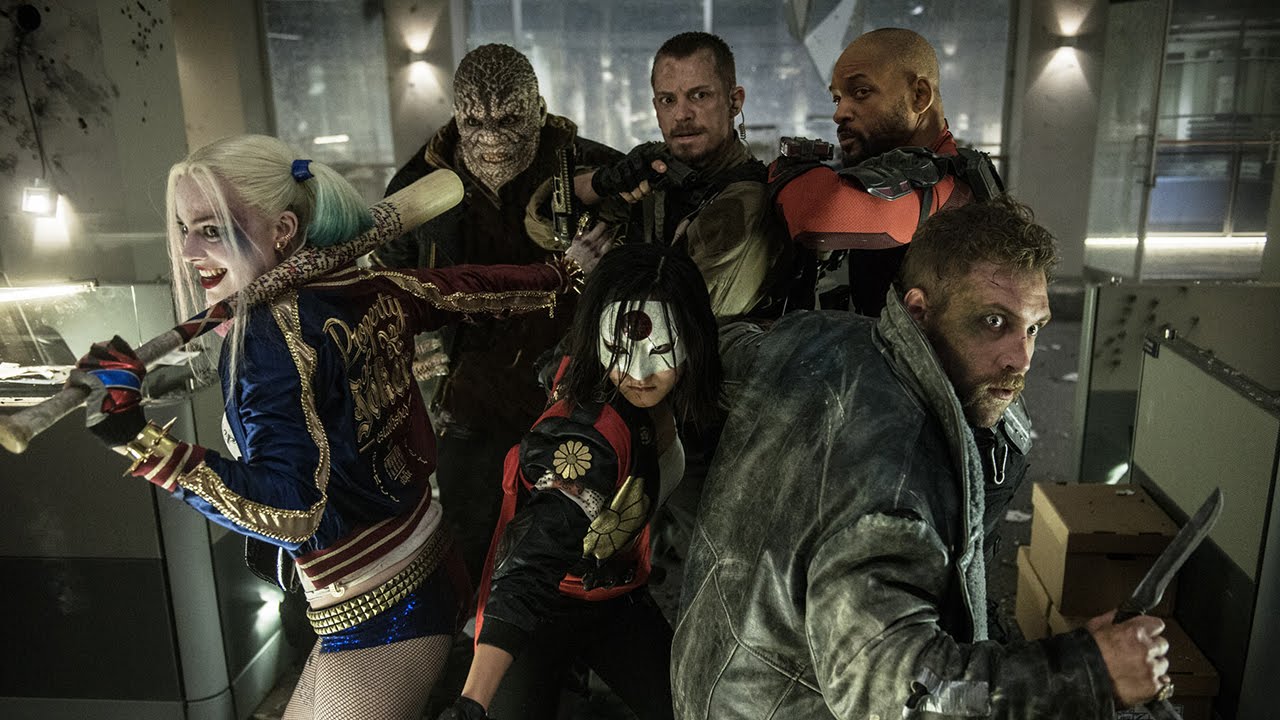
Our scrappy little band of anti-heroes live in one of those “lock them up, throw away the key, throw away the Constitution, and any record of their existence while you’re at it” sort of prisons. Will Smith plays Deadshot, an assassin with a young daughter he loves. Margot Robbie is Harley Quinn, a psychiatrist turned psychopath with the demeanor of a school girl, locked in a romantic tangle with the Joker (Jared Leto) so twisted it makes Sid and Nancy look like Dick and Jane. Somewhere behind full-face tattoos, Jay Hernandez is Diablo, a gang-banger with the power of fire. Somewhere inside a reptilian rubber suit (maybe it is CGI, but it looks like rubber) is Adewale Akinnuoye-Agbaje as Killer Croc, and I never quite figured out what he could do besides fight and swim. Jai Courtney plays the Aussie thief Boomerang. Neither one of them is intelligible.

They get a chance to escape the abuses and isolation of prison life when national security expert Amanda Waller (Viola Davis) says that their special skills make them the world’s only hope against the terrorism threat that entities with supernatural powers will pose. “The world changed when Superman flew across the sky. It changed again when he didn’t.” (Cut to super-coffin)

Waller is certain she can control them. Whether she can or not, there is no alternative. And so they are assigned to Colonel Rick Flag (Joel Kinnaman), who informs the motley crew that each of them has an explosive injected into his/her neck, and that he will not hesitate to blow their heads off if they disobey or even if they vex him. “I’m known to be vexing,” Harley Quinn pipes up helpfully, well aware that saying so she proves her point. And then it’s off to the big confrontation with some moments for (1) some bad behavior, (2) some exchanges of confidence and bonding to let us see that these guys may be bad but they have their good points and while they may have made some poor choices, they have feelings, too, (3) a few reminders that these are the bad guys, (4) some setbacks and death of a tangential character to show us how serious this is, and (5) weaknesses becoming strengths, strengths becoming weaknesses, a chance to see that some of the good guys aren’t so good and some of the bad guys aren’t so bad (and deaths are not necessarily deaths).

Here is what the movie gets right: B**** please. Margot Robbie is a huge movie star who owns this film and every moment she is on screen in “Suicide Squad” you get your money’s worth and then some. Anything else that works in the film is an extra cherry on the sundae. #imwithharley so give HQ her own movie PDQ.

Smith and Kinnaman are also excellent. Most of the best of the rest was in the trailer including one exchange which inexplicably was cut from the film. In fact, given the many evident recuts and reshoots, Warner Brothers should just have turned the footage over to whoever made the trailer and let them control the final print.  The soundtrack veers into Spotify playlist mode but there are some good choices.

Here is what it gets wrong: Writer/director David Ayer, whose speciality has been military and law enforcement stories, does not understand the right tone for a comic book movie. Compare Marvel/Disney, which managed to create distinctive and right-on-the-money tones for Thor, Captain America, Iron Man, Ant-Man, Guardians of the Galaxy, and Deadpool and yet make us believe they could exist in the same universe, and made that work in the “Avengers” movies without shortchanging anyone. Second, note the reference to the evidence of reworking above. Third, note the very first thing I said. Comic book movies are all about the villain. In this case, with villains as the the good guys, they really need someone specially evil for us to root against. The villains in this film are terrible in every category, starting with the special effects, which should be primo, right, Warner Brothers? But most importantly, a movie that spends too much time introducing us to the Z-team’s backstories never provides us with the basics about the powers and threat of the bad guys so we have no way of knowing what we are hoping for (other than obliteration) from the final battle. Wait, so this and that didn’t work but this and that do? Really? And what happened to those SEALS?

It is good to see more than one female character and this film has four strong and powerful women of different races. But the gender politics of the film are less than one might wish.  Both female Suicide Squad members are there because of the men they love, and the female villain is alternately weak around the man she loves and strong but not as strong as her brother. Viola Davis, as always, is sublime as a woman who may be only human but is in every way a match for anyone, superpowered or politically powered.

It’s better than “Batman vs. Superman” and “The Fantastic Four,” but it falls frustratingly short of what it could have and should have been.

NOTE: Stay through the credits for an extra scene, but you don’t have to stay after that.

Parents should know that this film includes extended sci-fi/fantasy violence with some graphic and disturbing images, torture, abuse, many characters injured and killed, skimpy costumes, sexual references, some strong language

Family discussion: Who was the worst villain in the movie? Who caused the most harm? What could “bad guys” do that the “good guys” could not?

If you like this, try: “The Avengers” and “The Dirty Dozen”

Related Tags:


Action/Adventure Comic book/Comic Strip/Graphic Novel Fantasy Scene After the Credits Series/Sequel Superhero
THE MOVIE MOM® is a registered trademark of Nell Minow. Use of the mark without express consent from Nell Minow constitutes trademark infringement and unfair competition in violation of federal and state laws. All material © Nell Minow 1995-2026, all rights reserved, and no use or republication is permitted without explicit permission. This site hosts Nell Minow’s Movie Mom® archive, with material that originally appeared on Yahoo! Movies, Beliefnet, and other sources. Much of her new material can be found at Rogerebert.com, Huffington Post, and WheretoWatch. Her books include The Movie Mom’s Guide to Family Movies and 101 Must-See Movie Moments, and she can be heard each week on radio stations across the country.

Website Designed by Max LaZebnik