One Direction: This is Us

Posted on August 29, 2013 at 6:00 pm

One-Direction-movie-poster-1840689“They don’t know me, but they love me,” says one dewy-eyed One Direction fan, and that says it all.

This 3D documentary and concert film gives us a peek at the moment in time when One Direction, a group of five British teenagers, reigned as the number one musical act in the world.  As inevitable a part of early adolescence as cliques and braces is the transitional object known as the teen idol.  Almost a hundred years ago, it was Rudolph Valentino.  Then there was Frank Sinatra, the Beatles, the Monkees, Bobby Sherman, David Cassidy, Shaun Cassidy, the Backstreet Boys. The girls move on, but those ties are strong.  Take a look at last Sunday’s Twitter feed when Justin Timberlake’s Video Vanguard performance included a reunion with N’Sync.  While there have been notable individual teen idols, the boy band has the advantage of giving fans a range of options.  All of them are always safely, well, let’s just say they don’t have to shave very often. There’s usually a cute one and a smart one and a (comparatively) rebellious one. So whole slumber parties can debate the merits of individual members but unite in their shared passion, and each girl can feel that she is expressing her sense of independence and still-evolving personal taste in her selection of a favorite.  (I’m a Paul girl, myself.)  Teen idols are a mostly harmless transition object for young girls as they rehearse some of their experience of attachment with someone who is safely far away.

After an “aw”-inducing introduction with some home movie footage of the five members of One Direction, as they tell us in voice overs about their early childhood (we’re talking seven to ten years ago in most cases) dreams of stardom.  And then we see the Cinderella story of how they got started.  They never met before they were contestants on the British talent competition show, “The X Factor.”  They all lost competing as individuals.  (Does anyone remember who beat them?)  But then star-maker Simon Cowell saw something in the long line of runners-up.  He pointed: you, you, you, you, you.  He told them to get together and come back as a group.  They laugh in recollecting that their first conversation was not about the music or the performance but about what they should wear.

What they had, in addition to nice, tuneful voices, was good attitudes and great chemistry.  Over and over, they tell us how much fun they have with each other and how what keeps them going through all the work and pressure of the tour is that they’re in it with their best mates.  They insist that they’re not like other boy bands because they’re “cooler.”  Also, they are not good dancers and they don’t dress alike.

Morgan Spurlock (“Super Size Me,” “Pom Presents the Greatest Movie Ever Sold”) directed, so you might expect some exploration of the merchandising behind this “pre-fab five,” who seem like nice, talented kids, but who are the avatars of a marketing machine.   When a fan says, “They say what we want to hear and no one says to us,” those of us outside of the fangirl demographic would like to know something about the genius who thought One Direction should sing about how it is not knowing she is beautiful is what makes a girl beautiful.  We’d like to know more about how the age of social media make these boys stars before they had put out a single record.  But this is not that movie.  And it is certainly not Alun Owen’s/Richard Lester’s “Hard Day’s Night,” a masterpiece completely separate from the charm and hooky tunes of the Beatles in its innovative structure and documentary-like intimacy.  This is just a love letter to the fans from five boys who know how lucky they are and like to show off for the camera.

Parents should know that the movie includes some strong language, some underwear shots, and brief potty humor, but is about as squeaky clean as any documentary about teenaged boys could be.

Family discussion: Which one do you like best and why?  What makes them get along so well?

If you like this, try: “Bye Bye Birdie,” an affectionate satire of the teen idol phenomenon


Related Tags:


3D Documentary Music

Closed Circuit

Posted on August 27, 2013 at 8:00 am

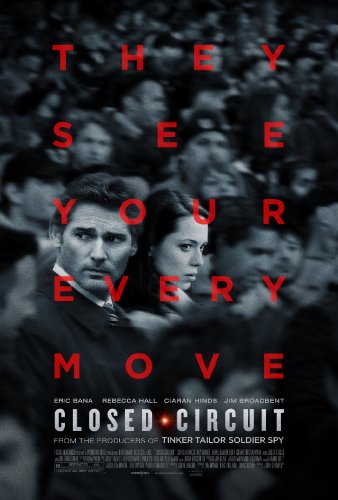
closed circuitTerrorism has killed thousands of people, destroyed buildings and property, and caused seismic rifts in our notions of who constitutes “us” and “them.”   What is even more terrifying is the damage it has inflicted on our most fundamental notions of privacy and justice.  “Closed Circuit” is an up-to-the-minute thriller in which the chases and explosions are less scary than what it reveals about how ineffective our legal system is for responding to terrorism.  The damage to democracy may be more devastating than the damage to life and property.

The story begins with a shocking terrorist attack at a London market.  Two suspects died in the bombing and one died “resisting arrest.”  Farroukh Erdogan (Denis Moschitto), described as “the last man standing,” is quickly captured and accused.  The traditional judicial system cannot provide him with the rights that are accorded all defendants under UK law, including the right to examine and respond to all evidence against him and to be given any evidence the government has that might cast doubt on his guilt.  So he is given two different trial attorneys (called barristers in Great Britain), one for an open hearing, one for a separate closed hearing.  The judge soberly advises them that “you must not meet or communicate or share information in any way.”

Martin (Eric Bana) will represent Erdogan in the open hearing to the best of his ability without any access to information deemed sensitive by the government.  Claudia (Rebecca Hall) is appointed to have access to those files the government has selected as confidential.  In a complicated set of procedures, if she discovers something in those files that is relevant to the case, she can show it to the judge but not to Martin or the defendant.  This procedure is intended to provide some some fairness in an inherently unfair process we continue to refer to as the justice system.  “There is no right way out of this,” a character will say.

Claudia initially tries to withdraw.  She does not explain much but we learn that she and Martin have a history.  Even though the process prohibits them from having any contact, that past relationship makes things more complicated.

Separately, Martin and Claudia begin to believe that they are being manipulated, even threatened.  But by which side?  Is it possible to sustain a democracy, or any kind of accountability, when an official explains, “You want the freedom to attack me, but without me you wouldn’t have much freedom at all?”  It is eerily reminiscent of Jack Nicholson’s famous speech in “A Few Good Men” and Jose Ferrar’s in “The Caine Mutiny.”  Both accuse us of feeling superior to the decisions we delegate to those who guard our freedom, and our willingness to overlook the infringements of freedom that result.

As an audience, we can distance ourselves from the chases and explosions.  Our most terrifying realization is the same one Pogo made famous: “We have met the enemy and he is us.”

Parents should know that this film has very strong language, references to adultery a terrorist attack, chases and fights, suicide, some disturbing images of murder victims, drinking, and smoking.

Family discussion: Read up on the US FISA court and the controversy about NSA access to personal information.  How do we balance the need for national security with the fundamental guarantees of individual justice like the presumption of innocence, the right to examine evidence, and the protection against self-incrimination?

If you like this, try: “Four Lions” and “The Ghostwriter”

Related Tags:


Courtroom Drama Politics Thriller

The World’s End

Posted on August 25, 2013 at 2:14 pm

B+
Lowest Recommended Age: Mature High Schooler
MPAA Rating: Rated R for pervasive language including sexual references
Profanity: Constant very strong and crude language
Alcohol/ Drugs: The theme of the film is a pub crawl intended to make the characters very drunk, drinking and drunkenness, drugs, drug dealer
Violence/ Scariness: Comic peril and violence with some graphic images
Diversity Issues: Homophobic insult
Date Released to Theaters: August 23, 2013
Date Released to DVD: November 18, 2013
Amazon.com ASIN: B00BPEJX12

world's endSimon Pegg, Nick Frost, and co-writer/director Edgar Wright have re-united for the third in the genre-bending “Cornetto” series, which I refuse to call a “trilogy” because I want them to keep going.  In case you’re listening, guys: Please.

“Shaun of the Dead” was a romantic comedy with zombies and strawberry Cornetto ice cream.  “Hot Fuzz” was a sort of deranged meta-buddy cop film with blue Cornetto ice cream.  And now we have “The World’s End,” a comedy about a group of high school friends who get together to re-create a legendary pub crawl in their suburban home town.  Twenty years after their high school graduation, they go back home to have a pint in each of the twelve pubs that constitute the “golden mile,” concluding at one called The World’s End.  And yes, that is foreshadowing.

Things go badly.  Things are not as they remembered.  When the group arrive at the first pub on the list, it is depressingly generic.  In the decades since they left, everything has been homogenized into sterile, interchangeably dull corporate decor.  The second one is indistinguishable  from the first.  Gary has always cherished the notion that they were legends in the town.  But no one seems to remember them, not even the high school bully.

Then the robot aliens show up and things get worse.

Co-write Pegg plays Gary King, who is now only dimly realizing that the qualities that lead to popularity in high school do not equip one for success thereafter.  This is particularly the case when those qualities are essentially limited to creating the kind of experiences that result in watching the sun come up with bloody knuckles, a hangover, and vomit on your shoes.  You can still do that after high school, as Gary’s current status as an inpatient in a substance abuse clinic attest.  It’s just that it no longer makes him a hero to his friends.  Now all respectable men with jobs and, for most of them, families, they have moved on and have no interest in going back.

But Gary, who thinks he lost his way when they failed to make it to all twelve pubs in “the golden mile,” manages to persuade the other four to come with him and try it again.  For no other reason except for pity, survivor guilt, and perhaps some wish to revisit a carefree past, they decide to come along.  It is possible, though, that they envy Gary’s freedom as they are constantly checking with their watches, their phones, and their wives.  There’s car dealer Peter Page  (Eddie Marsan — all of the characters have royal court-related names),  realtor with a permanently embedded bluetooth earpiece Oliver Chamberlain (Martin Freeman of “The Hobbit”), recently divorced Steven Prince (Paddy Considine), and Gary’s former best friend Andy Knightly (Nick Frost), whose hostility indicates that a revelation about some horrible misdeed lies ahead.  Also in town is Sam Chamberlain (Rosamund Pike), Oliver’s sister, who was there for an important part of the legendary pub crawl in 1990.

Gary is darker than the previous roles Pegg wrote for himself, which mostly had him as an amiable, if immature and socially inept doofus (although in “Hot Fuzz” he was a very buff and straight arrow variation).  He clearly relishes playing a completely dissolute character who cannot seem to figure out why a system of doing or saying whatever will get him what he wants at that moment without any regard to the consequences for himself or others is not working for him anymore.  It is also good to see Frost playing something different as well.  His Andy is responsible, dignified, and quietly competent and confident.  He also turns out to be very good at fighting the robot aliens.

It’s a delicious mix of understated British humor and over-the-top craziness, with witty lines, some knowing digs at Hollywood, and razor-sharp satire.  It also has the only credible explanation for hideous public sculpture I’ve ever seen.  I hope they end up with at least as many in the series as there are flavors of Cornetto ice cream treats.

Parents should know that this film has constant bad language, including crude sexual references and a homophobic insult, a lot of drinking and drunkenness, drugs, and mostly comic peril and violence with some disturbing images.

Family discussion:  Why did Gary’s friends agree to come back?  Why was the pub crawl important to Gary?

If you like this, try: “Shaun of the Dead,” “Hot Fuzz,” “Paul,” and the television series “Spaced”

Related Tags:


Action/Adventure Comedy DVD/Blu-Ray Pick of the Week Fantasy Science-Fiction Series/Sequel

Short Term 12

Posted on August 23, 2013 at 9:37 pm

B+
Lowest Recommended Age: Mature High Schooler
MPAA Rating: Rated R for language and brief sexuality
Profanity: Very strong language
Alcohol/ Drugs: Drinking, drug references
Violence/ Scariness: Tense confrontations, references to abuse, suicide attempt
Diversity Issues: Diverse characters
Date Released to Theaters: August 23, 2013
Date Released to DVD: January 17, 2014
Amazon.com ASIN: B00EOAHDT8

There is a look in the eyes of those who have seen the very worst that can happen.  Those who no longer have the blessing of living in denial.  Those who know, not just in their heads but in their souls, that the innocent can be hurt by those they trust, that their bodies, their hearts, and even their minds can be damaged in ways that leave them shattered, convinced that they will always be alone and outside the magic circle everyone else seems to know how to stay inside.  Then there are those rare souls who have traveled all the way to the end of the road of no expectations but hold on to their sense of humanity by using what they have experienced to help others.  The look in their eyes is tired, but not entirely closed off from the world.  As T.S. Eliot said in “Ash Wednesday,” the goal must be “to care and not to care.”  short term 12

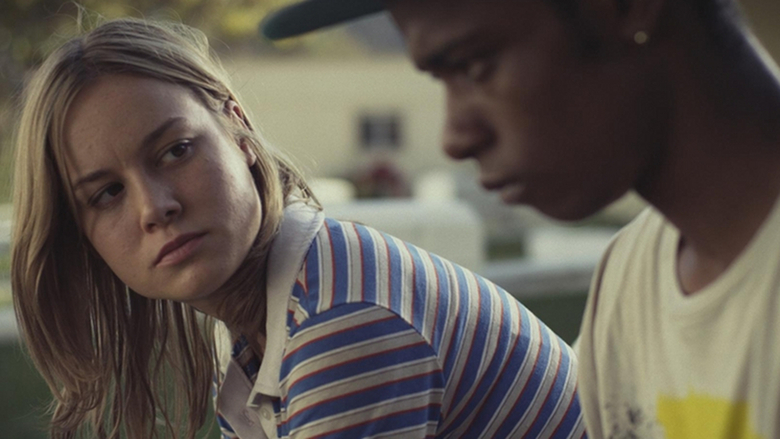
The gifted actor Brie Larson captures that look in “Short Term 12,” a wise and heartfelt new film about the staff at a facility for abused, neglected, and damaged teenagers.  It has the intimacy of a documentary so that the solid, assured narrative structure sneaks up on you.  This assured feature from writer/director Destin Cretton shows that kind of understanding behind the camera as well.

Larson plays the aptly named Grace.  She is not a therapist or a doctor.  She has a more important credential, as we will learn.  Her job is to help create a space that makes the kids who have no reason to trust anyone can feel safe, despite the drab institutional setting, the almost non-existent budget, the overworked professionals, and the rules that restrict them.  How can you make someone feel safe when the state will throw them out with no support after 12 months or when they turn 18?  How do you not give up when you see this kind of damage every day?  Can you find yourself in helping others?  Can you hide from yourself there?

Grace lives with her co-worker, Mason (“Newsroom’s” John Gallagher Jr., authentically disheveled), who loves her deeply but is troubled that she cannot truly open up to him.  Remi Malek has the thankless role of the newbie who gives the other characters the chance to provide some exposition and show us that good intentions are not enough.  But Cretton handles even this character with sympathy and humanity.  Then there are the residents, including Marcus (Keith Stanfield), who is about to turn 18 and leave the only home he knows, and a new arrival, Jayden (Kaitlyn Dever), who is furious and hostile.

Beautifully observed scenes open these characters up to us, with moments of small-g grace that are more heart-wrenching than the traumatic revelations.  They seem to bloom on screen thanks to sensitive writing and gorgeously heartfelt performances.  Birthday cards.  An anniversary tribute.  A look of resignation, recognition, and exhilaration as an emergency, but a relatively and reassuringly solvable one, comes up.  A broken teenager begins to heal.  And a broken adult begins to acknowledge that helping others cannot be enough unless she does what she asks from them, and what Cretton does before our eyes: to tell the truth.

Parents should know that this film includes very strong language, sexual references and situations, discussion of very severe parental abuse including sexual molestation, and frank discussion of family dysfunction and abuse

Family discussion: What do you learn about Mason from his family party?  Why is the character named Grace?

If you like this, try: “Manic” and “The United States of Leland”

Related Tags:


Drama DVD/Blu-Ray Pick of the Week Stories about Teens

Austenland

Posted on August 22, 2013 at 6:00 pm

austenland2Edward Arlington Robinson wrote a poem about a man named Miniver Cheevy who wished so much that he could have lived in the days of knights and ladies that he refused to participate in the life before him.  Author Shannon Hale wrote Austenland about a young woman named Jane who is so in love with the romance and elegance of Jane Austen’s Regency-era romances that no real-life modern relationship can ever measure up.  She has a lifesize cardboard photo of Colin Firth as Mr. Darcy from “Pride and Prejudice” and her bedroom is like a deranged bed and breakfast version explosion of 19th century fantasy.

So she spends all of her money going to an immersive theme park called Austenland, where fans of Austen’s classic novels like Pride and Prejudice and Sense and Sensibility and the swooningly romantic movie versions can pretend to thaw the hearts of proud men in wearing breeches who would never think of addressing them by their first name or presuming to try a kiss.

“Napoleon Dynamite” co-author Jerusha Hess wrote and directed the film adaptation, with “Twilight’s” Stephenie Meyer as producer.  A radiant Keri Russell (“Waitress”) plays Jane, who is taken aback when she arrives at the 18th Century Italianate mansion (played by the historic Wycombe estate, also seen in “Downton Abbey”).  It is presided over by the redoubtable Mrs. Wattlesbrook (Jane Seymour), who crisply informs Jane that as the purchaser of the “Copper Package,” she will be known as the fortuneless “Jane Erstwhile” and live in a small room near the servants’ quarters.  (Janeites, think Fanny Price.)  Also visiting Austenland are the wealthy “Miss Elizabeth Charming” (Jennifer Coolidge, hilarious as always), who has no idea who Jane Austen is but thinks she will look good in Regency dresses, and Lady Amelia Heartwright (Georgina King) (Janites: think Jane Fairfax with a touch of Crawford).  Having paid for the premium package, Charming and Heartwright have luxurious rooms and clothes.  And, apparently, first choice of the very handsome men who are there to provide the full Austen experience, or at least the simulation/stimulation thereof.

As a full-on Janeite who has read all of the books several times, I laughed out loud at some of the references and variations on Austen’s themes and at the silliness of the juxtaposition between the 18th century period details and the intrusion of the present day.  At one point, Jane is left out in the rain and romantically rescued by the severe Mr. Nobley (J.J. Feild, whose Austen credentials include playing Mr. Tilney in a “Northanger Abbey” television movie).  (Janeites, think “Emma.”)

At first, Jane plays along as though she was really in the Regency era.  But then, around the time that her soaking wet dress splits up to the hip, she cannot help reacting like the 21st century young woman she is.  And how very un-Fanny Price for her to decide that it is time to depart from Mrs. Wattlesbrook’s directions and write her own story, starting with getting rid of the dowdy hairstyle and clothes she has been assigned and moving on to spending quality time with the groundskeeper.  This is less Lady Susan than Lady Chatterly.

Like all Austen heroines, Jane has some lessons to learn.  And a very happy ending, including a hilarious final credit sequence.  Hess manages to both send up and pay tribute to the core conventions of romantic comedy, and for fans of the genre that has been all but absent from theaters in 2013, that is a very happy ending indeed.

Parents should know that this film includes sexual references and situations, some bawdy and crude, some strong language, and drinking.

Family discussion:  What was it about Austen’s books that was so important to Jane?  If you could visit any fictional place, what would it be?

If you like this, try: Any of the many movie and television versions of Jane Austen’s novels, especially “Sense and Sensibility” with Emma Thompson and “Pride and Prejudice” with Colin Firth

Related Tags:


Based on a book Comedy Romance
THE MOVIE MOM® is a registered trademark of Nell Minow. Use of the mark without express consent from Nell Minow constitutes trademark infringement and unfair competition in violation of federal and state laws. All material © Nell Minow 1995-2026, all rights reserved, and no use or republication is permitted without explicit permission. This site hosts Nell Minow’s Movie Mom® archive, with material that originally appeared on Yahoo! Movies, Beliefnet, and other sources. Much of her new material can be found at Rogerebert.com, Huffington Post, and WheretoWatch. Her books include The Movie Mom’s Guide to Family Movies and 101 Must-See Movie Moments, and she can be heard each week on radio stations across the country.

Website Designed by Max LaZebnik