The loss of actor Robin Williams is almost unbearably wrenching. His boundless gifts could not help him battle depression so devastating that it prevented him from understanding how deeply he was loved or perhaps how deserving he was of love.
Williams was a classically trained actor who studied at Juilliard. He was a gifted dramatic actor, with enormous sensitivity, depth, and naturalism. I think he was at his best in drama when he played a doctor. He was awarded an Oscar for his sensitive portrayal of a therapist in Good Will Hunting, and was equally good in Awakenings, holding his own with Robert DeNiro, as well as Dead Again with Kenneth Branagh, and What Dreams May Come. I am not a fan of “Patch Adams,” but his performance was excellent and now, to see him with his co-star Philip Seymour Hoffman, will always have a special poignance.
He was a teacher who taught students the love of language and poetry and inventing one’s own life in Dead Poets Society.
He was disturbing as the disturbed, repressed photo clerk in One Hour Photo. He played a devoted partner and father, letting Nathan Lane be the flamboyant one in “Bird Cage.”
But when we think of Robin Williams, we think first of his uniquely mercurial imagination, so superhuman in his quicksilver, stream-of-consciousness brilliance that it made perfect sense that he came to attention first playing an alien in “Mork and Mindy.” Only Disney animation could adequately embody and keep up with his unique mix of fluidity and precision.
He was perfectly cast in “Good Morning Vietnam” as a radio personality who brought an outrageously fresh, funny, and honest voice to a troubled time.
Williams was also a man of great kindness and generosity. He was a devoted friend to his former roommate Christopher Reeve. He helped to found Comic Relief, which raised more than $50 million for the homeless.
This afternoon I listened to a segment about the connection between comedy and mental illness on the podcast hosted by Mike Pesca on Slate’s The Gist. One of the comedians discussed was Williams’ hero and friend Jonathan Winters. Some of the people quoted on the show said that the vulnerability and sense of being an outsider that are often heightened by mental illness can contribute to the insights that fuel a comic sensibility. At its best, that comic spirit can help ease the feelings of pressure and despair. But it is not enough. Williams struggled with addiction and now it seems that he took his own life. As we mourn his loss, I hope we reach out to each other to share our grief and to provide loving support to those who are in need. May his memory be a blessing.
Interview: John Michael McDonagh and Brendan Gleeson of “Calvary”
Posted on August 6, 2014 at 8:00 am
Brendan Gleeson in “Calvary”
Writer/director John Michael McDonagh and Brendan Gleeson met with my friend John Hanlon and me to talk about “Calvary,” where Gleeson plays an Irish priest in an oceanside community that is filled with sadness, regret, and loss.
Some of the movie’s most important scenes take place on the beach. McDonagh spoke to us about the landscape and the way it helps to define the characters and tell the story. “I’m a big believer in the choice of locations when writing a script because I think you need to get the location right. It’s an added character in the movie. And ‘The Guard’ was all shot in county Galway. My mum is really jealous, so I said, “When I shoot my next movie I’ll shoot it where you’re from in County Sligo. All those landscapes was where I used to go on summer holidays so I knew a lot of the places which makes it also easier when you’re location scouting because I can give the location guide ideas. I will say, ‘This is this space, this is that place’ and I already know what it looks like.”
“In terms of its use in the film, there was a much more brooding and somber atmosphere to the movie I realized, after getting all that footage; going up in the helicopter, going around those landscapes, around the mountain. You can imagine in screenplay, it says ‘Shots of the town’ but once you get that kind of brooding, somber feeling of Benbulben, the big mountain. I started to notice that every time we went to an exterior location with the mountains in the background it’s this looming presence over the whole thing. And I realize its meaning, and it’s only after seeing a rough cut of the film, I realized the mountain doesn’t care what we think or what’s going to happen to us. We’re all going to be gone and the mountain will still be there. There’s a lot of talk about detachment in the film, it’s that the spiritual quality of the earth that it will go on without us with all our concerns I suppose. But that only became apparent when we saw the footage. It just wasn’t in mind when I was writing the script.”
One of the characters in the film mentions that the waves are a big draw for surfers. “I wanted the surfers in the backdrop,” McDonagh said. “They are surfing all the time and all this terrible stuff is going on basically on the mainland and they don’t care either. It was actually in the script, I cut it but the confrontation on the beach in the end was going to have cut away to a character who had been introduced who was a surfer she doesn’t know what’s happening and she continues to surf unbeknownst to the terror that’s going on at the end of the beach but I cut that out. I was thinking it would be kind of a mythic backdrop. I’m a big fan of the John Milius film ‘Big Wednesday’ so I thought that gave it a mythic backdrop.”
McDonagh and Gleeson had just visited the Andrew Wyeth exhibit at the National Gallery. “I was just going to see all the tourism sites; so we just passed the National Gallery and saw that it happened to have the Wyeth exhibition going on. I used his work as a visual reference all the way through the film. He has a lot of frames within frames, looking through doorways, he has oil slickers hanging on the wall so we had the cassock hanging on the wall and all that kind of stuff. That was a big influence on the movie so yes that was quite strange coincidence to be at the Gallery. That’s almost the universe giving you a thumbs-up.” He described the inspiration of Wyeth’s images. “There’s one of a man lying with his hat over his face in a field of barley with a dog and that became picnic scene by the split rock with Brendan and Kelly. Wyeth often would have a symbol of mortality like a skull on a cupboard” and that also inspired a scene in the film. He contrasted it with his previous film with Gleeson, “The Guard.” That “was very colorful; lots of art popping colors in there. This is kind of a more somber movie and a lot of the scenes, there’s a lot of whites and blacks, obviously the cassock was black. But we still had big splashes of color. When I had the doctor telling his hellish story, it’s all red behind him. And that pub is basically hell on earth.”
I asked Gleeson where he learned to listen as sympathetically as the priest character he plays does in the film. His answer was one word: “Marriage!” But then he talked about the importance of listening for an actor. “It’s like a fundamental thing, part of our craft for a start is that. And another few actors don’t really kind of wise up to it and a lot of young actors instinctively do, that you’ve got to listen, you’ve got to be present enough to listen and it’s quite a hard thing to do if you’re young and you are learning your lines and you’ve got your lines banging away in your head and you’re intensely trying to know this one, to remember that this is actually a interaction. Some actors are quite greedy in that way and it’s very dull working with people like that, it just is. And it’s amazing when you work with young actors who haven’t really taken on board or haven’t had the experience of when they realize that actually listening is a huge part of what’s involved and that it informs everything you say. And if you are properly prepared, then you actually can answer anything no matter what the other person says. If your character is rooted then you can respond to that pretty much even if your lines are set in stone, you could still use them to respond in a different way depending on how everything comes. So for a start, I know from working with actors over the years, the generous actors listen. And what was great about this particular cast was that everybody who came in was worth listening to. All the lines were exquisitely written but also the commitment of the actors and the generosity of these like right through to generation in the way of mostly Irish actors but like obviously Marie-Josée Croze and Isaach De Bankolé. There was this common thread among them all, they were wonderful actors but also generous to a fault and understood the notion of listening themselves. So it’s joyous to work on something like that where you feel there is proper interaction and it’s the way, it’s the only way to work actually when it comes down to it. You can get efficiency the other way but to have a proper sizzle between what’s actually going on and that human kind of connection is really important.”
McDonagh added, “And also visually, on ‘The Guard,’ it’s mostly sort of medium shots. This was all going to be driven by big close-ups, getting a lot of close-ups right from the very first scene. And there are lots and lots of close-ups all the way through the movie. I don’t know if I spoke to the actors about that but I think it became apparent; we are only going to do a couple of takes and a big wide and then we’re going to go in quite close to it.
Gleeson said “this is earned by the nature of the dialogue, by the intensity of the scene, by what we know or don’t know already about the person so there is an intrigue in what’s going on their faces. But you’ve got to learn it. If people take shortcuts to that, it’s such an assault to have too many close-ups where there is no real truth behind it. So I guess yeah, even though it was good and it felt intimate too in the way that John took all the shots but there was an intimacy. And I suppose in a way once someone is communing with his God or attempting to or failing to, that kind of intimacy, that notion, that you are slightly inside somebody’s head instead of looking from the outside, can be hugely valuable.”
McDonagh said,”We were talking about it yesterday; one of my favorite scenes in the movie is with Brendan and Marie-Josée and the crows in the chapel and that’s a very simply shot sequence. It’s just low angle, blind angle close-ups basically but if the actors are great and the dialogue is pretty good, it becomes cinematic.”
“It is a tilted shot too,” added Gleeson. “Her husband’s dying, it’s very gentle and even the music over the top of it; there is a feeling of sanctity and there is a feeling of maybe refuse in that church but the tilted shot means the world’s misaligned. They are two low angle shots and there is an odd diagonal that goes across. We shot it to the other ways but it was too obvious in a way. You want it slightly skewed.”
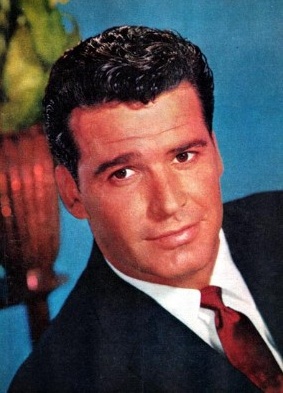
One of my favorite actors has left us. James Garner, handsome, wry, effortlessly masculine, all-purpose leading man for decades on television and in movies, has died at age 84. He had consummate skill in comedy, drama, and romance, and even in selling cameras in television commercials. He will be sorely missed.
Born James Baumgarner in 1926, he was from Norman, Oklahoma. He named his production company Cherokee Productions in honor of his grandfather. He had a difficult childhood and was left on his own at age 14. He had a number of jobs and went into the military, where he received two Purple Hearts.
Early in his career, he had a non-speaking part as a juror in “The Caine Mutiny” on Broadway. He said it was superb training to be on stage for the entire show, watching the lead actors up close each night. His early film roles included parts in the classic “The Great Escape” with Steve McQueen and “Sayonara” with Marlon Brando.
He was superb at light comedy, often showing an off-beat cynicism that was a refreshing change from the earnestness of the 1950’s and early 60’s. When television was filled with laconic Western heroes, his “Maverick” was true to the name as a easy-natured gambler.
Two of his best films co-starred Julie Andrews. He was a cynical American soldier in The Americanization of Emily and an amiable gangster in love with a cross-cross-dressing performer in Victor/Victoria. He was nominated for an Oscar for the bittersweet romance Murphy’s Romance, with Sally Field.
He continued to create unforgettable performances into his 70’s, with films like The Notebook. No actor half his age could have played a sweeter love scene.
We bid a sad farewell to this most graceful and appealing of actors. May his memory be a blessing.
The great Elaine Stritch has died at age 89. It is hard to imagine a world without that vibrant, brash, brassy, and utterly vital force of nature. She was the kind of woman about whom it was not just apt but the highest of compliments to use terms like “classy old broad” and “great gams.” She was frank about her many poor choices and wrong directions (she picked a date with Rock Hudson over Ben Gazzara and tells the story brilliantly in her one-woman show). But she did not need to be frank about the great passion of her life because it was evident in every breath and gesture: the theater.
Her one-woman show, Elaine Stritch at Liberty, is a master class in show business history. She talks about the highs and lows of her career with enormous insight and humor — and with every bit of the stage presence that made her a star for six decades.
She was unforgettable as Jack’s mother in “30 Rock” and she appeared in films from 1953’s “A Farewell to Arms” to 2012’s “Paranorman” (including Woody Allen’s “September” and “Small Time Crooks”). But her home was the Broadway stage, and there she was dazzling.
Here you can see her incredible focus and commitment in rehearsing her signature song, Sondheim’s “Ladies Who Lunch.”
Watch her knock it right out of the park and into orbit.
My own favorite of her songs: If Trust me on this. It will knock your socks off your feet and into the next room.
Amanda Scherker has an excellent piece in the Huffington Post about “whitewashing” in films — ethnically white actors playing non-white characters. We understand now how absurd it was to have John Wayne play Genghis Khan or Katharine Hepburn play “Dragon Seed’s” Chinese peasant. Scherker’s article has a range of examples, but there are still more. Marlon Brando played a Japanese man in “Teahouse of the August Moon” and Alex Guinness played another in “A Majority of one.” Shirley MacLaine played an Indian in “Around the World in 80 Days.”
As I mentioned yesterday, this is especially timely as the trailer for the upcoming film about Moses shows a cast of white actors playing Middle Eastern characters and the director has announced that he will next make a film about David.
I am in favor of color-blind and even gender-blind casting unless it is inconsistent with the storyline. It’s fine to cast a man as a woman in both versions of “Hairspray,” but the racial themes of the film make it impossible to be race-blind in casting. In the case of Biblical stories, I believe every effort should be made to use actors who are ethnically Middle Eastern.



 and
and  . He co-starred with Doris Day in two of her most sparkling comedies,
  and
and  and
and  and an amiable gangster in love with a cross-cross-dressing performer in
  . He was nominated for an Oscar for the bittersweet romance
  , with Sally Field.
 and
and  .
. . No actor half his age could have played a sweeter love scene.
 , is a master class in show business history. She talks about the highs and lows of her career with enormous insight and humor — and with every bit of the stage presence that made her a star for six decades.
 , is smart, sassy, and lots of fun.
 Trust me on this. It will knock your socks off your feet and into the next room.