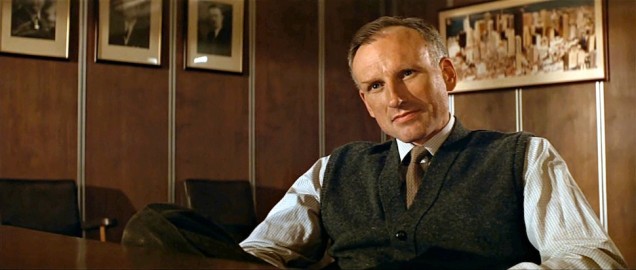
Tribute: Mickey Rooney

Posted on April 9, 2014 at 8:00 am

One of the last remaining links to the golden age of Hollywood left us this week when Mickey Rooney died at age 93. That means he was in show business for more than 90 years, from his first performance in vaudeville before he was 2 to his last in the upcoming remake of “Dr. Jekyll and Mr. Hyde.”  In the Washington Post, Adam Bernstein’s graceful obituary paid him tribute.

The irrepressible performer Mickey Rooney, who died April 6 at 93, began appearing before audiences at 15 months in his parents’ vaudeville act, singing “Pal o’ My Cradle Days” while sporting a tuxedo and holding a rubber cigar.

So launched a nine-decade career of unapologetic scene-stealing — he could sing, dance, play drums and do pathos, pratfalls and impersonations — that once made him the top box-office draw in the world.

Born into a performing family as Joe Yule, Jr., he was just 15 months old when he joined his parents on stage. He appeared in more than 300 films, television shows, and theatrical productions, winning a special Oscar and nominated for a Tony. He was a performing powerhouse. His greatest success came as the star of the popular series of Andy Hardy movies, playing a small-town kid in an idealized America, and as the co-star of his close friend and fellow second-generation vaudeville veteran, Judy Garland. They made several musical films together and were usually finding some reason to put on a show in somebody’s barn. The stories were corny but the musical numbers were magnificent.

He first appeared as a child in silent films. Here he is in an early talkie, as Puck in the lovely “Midsummer Night’s Dream.”

Rooney was a gifted serious actor as well. Some of my favorites of his early performances are “Boys Town,” “The Human Comedy,” “Young Tom Edison,” and especially “National Velvet.”

He was nominated for an Oscar for another horse movie, “The Black Stallion.”

He appeared in every kind of film, from crime drama (“The Strip”) to sports (“Requiem for a Heavyweight”) to wacky comedy (“It’s a Mad Mad Mad Mad World”). But in a romance, he was more likely to be the wacky neighbor (his most embarrassing performance, “Breakfast at Tiffany’s”) than the lead.

Off-screen, he struggled, with eight marriages (including Ava Gardner), and substance abuse, gambling, and financial problems, all described with candor in his autobiography, Life Is Too Short. His real home was performing and we were very lucky to be his audience. May his memory be a blessing.

Related Tags:


Actors Tribute

White Actors Cast In “The Gods of Egypt”

Posted on April 6, 2014 at 10:10 pm

I’m in favor of race-blind casting except when race is a part of the story.  And that seems to be the case in a $450 million epic film called “The Gods of Egypt” that takes place in Egypt.  But instead of casting people of Middle Eastern ethnicity, the parts of the gods Set (Gerard Butler) , Horus (Nikolaj Coster-Waldeu), and Ra (Geoffrey Rush) plus Brenton Thwaites as a “common thief” are played by European white actors.  As Rebecca Cusey wrote about the casting in “Noah,” it would be nice to see the actors reflect the breadth and diversity of humanity.

Scott Jordan Harris wrote about a related issue on rogerebert.com, casting non-disabled actors to play disabled characters.

Consider “Glee”, a TV show unmistakably self-satisfied with its inclusiveness. Its makers would never have considered having Rachel, the female lead, played by a man in drag. They would not have considered having Mercedes, the most prominent black character, played by a white actress in blackface. But when they cast Artie, the main disabled character, they chose an able-bodied actor and had him sit in a wheelchair and ape the appearance of a disabled person….the most important reason for casting disabled actors as disabled characters does not concern how films will be viewed in the future. It concerns how they are made now. Every time an able-bodied actor plays a disabled character it makes it harder for disabled actors to work.  Indeed, if we are okay with disabled roles being played by able-bodied actors, we are okay with disabled actors being prevented from acting at all. Able-bodied actors can play able-bodied roles. Disabled actors cannot. If disabled actors cannot play disabled roles, they cannot play any roles at all—and they are excluded from film altogether.


Related Tags:


Actors Commentary Disabilities and Different Abilities Race and Diversity

Tribute: James Rebhorn

Posted on March 25, 2014 at 3:06 pm

Today we mourn the loss of actor James Rebhorn, who appeared on “Homeland” and in films like “My Cousin Vinny” (the tire expert) and “Independence Day” (the Secretary of Defense).  He was one of those dependable familiar faces who always brought substance and credibility to whatever he was in.  The obituary he wrote for himself is touching in his humility and sense of honor.  james rebhorn

James Robert Rebhorn was born on Sept. 1, 1948, in Philadelphia, PA. His mother, Ardell Frances Rebhorn, nee Hoch, loved him very much and supported all his dreams. She taught him the value of good manners and courtesy, and that hospitality is no small thing. His father, James Harry Rebhorn, was no less devoted to him. From him, Jim learned that there is no excuse for poor craftsmanship. A job well done rarely takes more or less time than a job poorly done. They gave him his faith and wisely encouraged him to stay in touch with God.

He is survived by his sister, Janice Barbara Galbraith, of Myrtle Beach, SC. She was his friend, his confidant, and, more often than either of them would like to admit, his bridge over troubled waters. He is also survived by his wife, Rebecca Fulton Linn, and his two daughters, Emma Rebecca Rebhorn and Hannah Linn Rebhorn. They anchored his life and gave him the freedom to live it. Without them, always at the center of his being, his life would have been little more than a vapor. Rebecca loved him with all his flaws, and in her the concept of ceaseless love could find no better example.

His children made him immensely proud. Their dedication to improving our species and making the world a better place gave him hope for the future. They deal with grief differently, and they should each manage it as they see fit. He hopes, however, that they will grieve his passing only as long as necessary. They have much good work to do, and they should get busy doing it. Time is flying by. His son-in-law, Ben, also survives him. Jim loved Ben, who was as a son to Jim, especially through these last months. His aunts Jean, Dorothy and Florence, numerous cousins and their families, and many devoted friends also survive Jim. He loved them all, and he knows they loved him.

Jim received his BA at Wittenberg University and his MFA at Columbia. He was a member of Lambda Chi Alpha Nu Zeta 624, a life-long Lutheran, and a longtime member of both the AMC and ACLU.

Jim was fortunate enough to earn his living doing what he loved. He was a professional actor. His unions were always there for him, and he will remain forever grateful for the benefits he gained as a result of the union struggle. Without his exceptional teachers and the representation of the best agents in the business, he wouldn’t have had much of a career. He was a lucky man in every way.

Related Tags:


Actors Tribute

Interview: David A.R. White of Pure Flix and “God’s Not Dead”

Posted on March 19, 2014 at 8:00 am

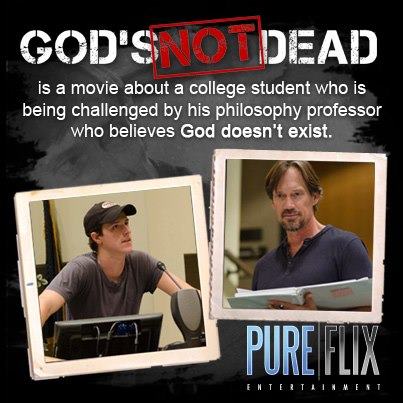
David A.R. White (“Evening Shade”) is the founder/writer/director of Pure Flix, which makes films that “uplift and inspire the human spirit.”  He graciously took time to answer my questions about making faith-based films and what he has learned.  New films from Pure Flix include “God’s Not Dead” with Kevin Sorbo and “Mom’s Night Out,” an uproarious comedy starring Sarah Drew, Trace Adkins, and Patricia Heaton.

Why did you create Pure Flix?  What is your goal?  Who is your intended audience?

We created Pure Flix to make uplifting and inspiring content on a consistent, ongoing basis, so audiences would truly have an alternative to what Hollywood puts out.  Pure Flix produces faith and family films, so the audience is the entire family.

What are the most important lessons you learned from the writers and directors you worked with on television series like “Evening Shade?”

Evening Shade was such an eye-opening experience. I was 19 when I went on that show.  I had barely had an acting class.  So as Burt Reynolds continued to bring me back for the next three years, I learned so much from him and all the other legends that were on the show. People like Hal Holbrook, Charles Durning, Michael Jeter, Marilou Henner, etc.  One of the biggest things I walked away with was how Burt loved to work with his friends.  Most of these people he had done movies with for 20+ years, and I wanted to do the same.  Which is why in a lot of our films you see a lot of recognizable faces, good friends of mine from the last 20 years.
In the 50’s and 60’s, Hollywood studios were making films like “The Greatest Story Ever Told” and “King of Kings” and “A Man Called Peter.”  Why is it hard to get films like that made now?

Well this year would probably be the year to do that, as they are calling this the “Year of the Bible”.  I think there is always an ebb and flow in Hollywood about what is current.  And as people are responding to more and more life-affirming content, I think we will see more and more of those type of movies.

“Noah” has not opened yet and it is already controversial as some Christian groups say it departs from the Bible.  Is it hard to reach Christian audiences with big-budget movies directed at the mainstream?

I think it’s hard because the filmmakers don’t really believe in what they are making.  So for them, accuracy is not a priority in the movie and it becomes something else.

Can mainstream films deliver a spiritual message?  Can Pure Flix films reach an audience that is not church-going?

Yes, on both questions.  Pure Flix makes evangelistic films, but we also make family films. I think the viewer wants to see quality entertainment that the whole family can watch, and many nonbelievers watch our films because they can watch with their family and young kids.

Your films often have a refreshing sense of humor.  Why is that important?

I love comedy. Which is why I keep trying to bring comedies out like “Me Again”, “Marriage Retreat”, “Holyman Undercover”. I think it’s important we don’t take ourselves too seriously. We need to be able to laugh at ourselves; it’s very disarming and works wonders in relationships.

Related Tags:


Actors Directors Interview Special Effects Writers

Interview: Kevin Sorbo of “God’s Not Dead”

Posted on March 18, 2014 at 8:00 am

It was great to catch up with Kevin Sorbo to hear about his new role as an atheist professor with a student who is a committed Christian in “God’s Not Dead” from Pure Flix.

The last time I talked to you, you were playing a preacher!  Now you’re playing a professor who not only does not believe in God, but will not allow his students to believe.  Was that a challenge for you?

Not really.  It’s always in the script.  Great writing on this and a great story.  I was hooked as I read it for the first time.  I have met enough atheists in my day to get a grasp for the character anyway.

People always struggle with the eternal question about where God is when bad things happen.  What does this movie want them to know?

Free will.  God gave us that.  Can’t have good without evil.  Evil will always be there.  It is how we act and react to evil that defines who we are.  Life is all about choices.  We know what is right and we know what is wrong.  We don’t always make the right choice.  So what we do after we fall is what builds, or destroys, one’s character.

Why did you want to play this role?

Loved the script.  As an actor I am drawn to many personalities and this one just seemed like a chance to show people no matter where you are in your life, you can make find a place and time to redeem yourself and find the hope you either shut out or thought was no longer available to you.

Poster @Pure Flix
Poster (c)Pure Flix

Preachers, professors, and actors all perform in front of an audience.  How did your experience as an actor help you create this character’s classroom persona?

As i said…..it was in the wonderful script.  I have done the college life and I drew from professors in my past.

You have worked with David A.R. White before — what does he bring to a film?

This was the first time David and i worked together as actors.  I shot a movie he produced a few years ago called “What If….” and I did a Christmas movie called, “Christmas Angel.”  David is a pro and was easy to work with on and off the set.

Who should see this film?

I hate to preach to the choir, so I hope the choir comes to see this movie just because it is a wonderful family film.  I really want the fence sitters out there to come and form their own opinions about if there is a God.  I would love atheists to come and see this film as well.  I realize we can’t change everyone’s mind out there, but hopefully we make some of them reflect and wonder.

What do you hope families will talk about when they see this movie?

This movie will create dialogue.  That is good.  It means it has struck a chord with people enough to make them bring up the issues this movie exposes.

Hollywood is producing some big Bible stories this year.  Why does this seem to be the moment for these films?

People want these movies.  Simple as that.  They want to have movies that have a positive message and the whole family can watch.  I don’t think its going to slow down anytime soon.


Related Tags:


Actors Interview Spiritual films
THE MOVIE MOM® is a registered trademark of Nell Minow. Use of the mark without express consent from Nell Minow constitutes trademark infringement and unfair competition in violation of federal and state laws. All material © Nell Minow 1995-2026, all rights reserved, and no use or republication is permitted without explicit permission. This site hosts Nell Minow’s Movie Mom® archive, with material that originally appeared on Yahoo! Movies, Beliefnet, and other sources. Much of her new material can be found at Rogerebert.com, Huffington Post, and WheretoWatch. Her books include The Movie Mom’s Guide to Family Movies and 101 Must-See Movie Moments, and she can be heard each week on radio stations across the country.

Website Designed by Max LaZebnik