
The Cast of “Frozen” Sings About Making “Frozen”
Posted on February 27, 2014 at 3:59 pm
Just in case you were maybe sort of kind of thinking you didn’t need to order the DVD/Blu-Ray of Disney’s Frozen
Posted on February 27, 2014 at 3:59 pm
Just in case you were maybe sort of kind of thinking you didn’t need to order the DVD/Blu-Ray of Disney’s Frozen
Posted on February 27, 2014 at 8:00 am
Jon Negroni just might get you to cry over “Toy Story” again. I love the post from Beliefnet’s former “Deacon’s Bench” blogger about the connection between the first shot of the original (Pixar’s first and the first-ever full-length feature film that was completely computer-animated) and the last shot of the third. But Negroni tops it with an argument documented with a level of detail and analysis usually reserved for Supreme Court briefs, showing what may be the sweetest and subtlest secret in the films. Negroni says that Andy’s mom, barely glimpsed and heard in the movies, has a deeper connection to the movie’s toy characters than we knew. She was the original owner of Jessie. Read his piece, watch the movies, and appreciate filmmakers who respect the audience enough to reward careful attention.
Posted on February 26, 2014 at 8:00 am

“I just put on hand cream, so I can’t shake your hand,” Roma Downey said as I walked into the room. “You’ll just have to get a hug.” Fine with me!
I was there to talk to Downey and her husband, Mark Burnett, about “Son of God,” adapted from their ground-breaking television series, “The Bible,” and released in theaters this week, in time for Lent.
I know you had an overwhelming response to the television series. Tell me about the comments that you got that were most meaningful for you.
MB: I think the biggest comments initially were the result of the viewership; it being the number one show of the night. I think they were surprised there was a big audience. It was the number one show of the night and then of course they repeated it and the repeats beat most of the new shows. It just became like this wave and all press; faith press and secular press, like to get on board with something is that hot. And so, the big discussion’s for five weeks. Whoa, everyone is talking about the Bible! Everyone is talking about the Bible!
RD: We’ve been so humbled and excited as we travel around the country now with the film, “Son of God,” letting people know the movie’s coming up, people stepping up and shaking our hands and thanking us for having put “The Bible” on TV. And it’s a bit like I would imagine maybe serviceman returning feel. There’s been such a overwhelming sense of gratitude being expressed from people who are around the country as we go in to do interviews; the receptionists, the guy in the elevator, the driver of the taxi, everybody just responding that it brought enlightenment to Scripture, for families that it gave an entry point into a bigger conversation around the kitchen table. In office places it allowed for an entry point for conversation around the watercooler. The people at work who typically didn’t speak about faith or it hadn’t come up at the workplace. It was like it gave people permission to have that bigger discussion and that’s very encouraging.
And we had wanted to relay the story in an exciting and dynamic way, but ultimately to reveal it for the love story that it is and I think that that certainly came through in the series. With this film, to see the Jesus narrative stand alone in the feature film experience, you really get a sense of this extraordinary life in a way that’s grand and epic and sweetening and it is surprisingly intimate.
You chose to play Mary. In that agonizing crucifixion scene, that you have to do everything with your eyes.
RD: I just had a few lines in the entire film and yet they speak volumes with no words. Mary and Jesus had this extraordinary relationship between them. What a teacher Mary is really. It is the ultimate trusting; that she had to trust God, that she was so privileged to be the mother of the Savior, that she had to stand there as a mother and watch her son being murdered and trust that that is what he came to do. It was a very emotional few days filming those scenes for everybody.
As producers, what did you do to create the kind of spirit on the set that could be felt through the film?
RD: I think everything begins with intention. We prayed on this from the beginning, from its beginning as a whisper in our hearts, we prayed on it and we continued to pray and asked others to pray for us and with us. And I think that has been part of the spiritual engine, certainly behind the project from the beginning. There were moments over there we clearly could feel the presence among us. Every day we had to clear away one or two snakes, but on the day when we filmed the crucifixion, there were over 40 snakes to be cleared away.
MB: She told this story, at the National Shrine and people gasped.
RD: As our cast would arrive in Morocco, Mark and I wanted to do something that would be special for each and everyone of them. I have memories myself as an actor, of showing up on a location and how strange that can be sometimes when you don’t know anybody and yet as an actor you are often required to do your most vulnerable scene first or to step in pretending you know everybody and so I thought it would be nice if we greeted each person personally and it became clear that it was fine for the first few actors coming in. But then we were actually out and working and on the set so it wasn’t possible so the next best substitute was a handwritten letter and so every actor who came into a hotel room late at night on that late flight from Casablanca would receive a little hand selected gift of some sort and letter which was just a letter of welcome. And as they started this journey with us of shining a light; because our company is called Light Workers, tired of cursing the darkness; we wanted to be part of shining a light, shining his right. And what is interesting is that we got to know them after that, a few of them that they were so deeply touched by this; the warmth of the welcome immediately put them at ease and a few others thought we were complete nut cases but once they met us and knew our hearts, that everybody immediately felt so comfortable.
And I think what also happened with all the actors. This is where the spirit just wove itself through everybody. There was such a camaraderie that the developed among the actors. You know I’ve been on many sets my whole life and I can’t remember too many where we sat around on rocks in a desert reading Scripture together. There were times we would go into a scene and we had to emotionally reset; we would say “shall we reread this Scripture leading up to the scene” We were about to pray just to give everybody a reminder of where they are coming from and what is about to happen. And so we would sit around and read and pray and that is very, very special.
I wanted all of the focus to be on Jesus. I want his name to be on the lips of everyone who sees this movie, so we cast Satan out. It gives me great pleasure to tell you that the devil is on the cutting room floor. This is now a movie about Jesus, the Son of God, and the devil gets no more screen time, no more distractions.
Posted on February 23, 2014 at 11:05 pm
The new film from quirky writer/director Wes Anderson is “The Grand Budapest Hotel,” with an all-star cast that includes Oscar-winners Adrian Brody and F. Murray Abraham, along with Ralph Fiennes, Jude Law, Bob Balaban, and Anderson regulars Bill Murray and Owen Wilson. Here’s a peek behind the scenes.
Posted on February 20, 2014 at 7:53 am
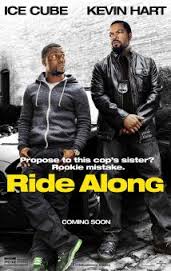 Christopher Lennertz is one of Hollywood’s busiest composers. Lately, he has specialized in writing scores for comedies like Kevin Hart’s Ride Along, with two more big comedic projects later this year: Think Like A Man Too (with Ride Along director Tim Story) and Horrible Bosses 2. In addition, he also does the music for the CW series Supernatural and the NBC drama Revolution. Past credits include last year’s Identity Thief, Think Like A Man, Horrible Bosses, and Alvin & The Chipmunks. He was generous in taking time from his very busy schedule to talk to me.
How did you get involved in writing music for movies?
I started loving music at a very young age, I started playing the trumpet when I was nine and then I think I wrote my first song in fifth grade. Then I realized that the guitar is much cooler and the girls seem to like guitar players much better so I started playing the guitar when I was 13 and I just got more and more into music. I played in a rock band and as I really started to get into it, I studied classical and jazz and then coming out of California, I originally studied guitar and then I found myself in my sophomore year of college recording a session with Henry Mancini.
Wow!
Yeah, that sort of changed everything and I sure went back the next day, changed my major and decided I wanted to be a composer. I think it was just watching that session that gave me the impetus to sort of change my focus and focus on writing rather than on performing and that is a big difference. For me, that was a really big move.
What it is about writing that makes writing a score a comedy especially challenging? Especially something like Ride Along which is really 60% action movie, 40% comedy; how do you cover both types of themes in composing?
You’re right. There are sort of three different styles of music in Ride Along. One is most definitely the comedy and that is usually focusing on what Kevin Hart is doing. But one of the things that Ioved about that movie and that I liked about those types of comedies is that it allows you to sort of us set up the comedy with reality and sort of hyper reality so what that ended up doing was playing Ice Cube really, really straight, very, very tough no-nonsense, so that when Kevin did get funny, everything sort of became a big contrast. Same thing with the action; I really treated the action as real.
At what stage in a movie like that do you get involved? Is it early on or after the story has been shot?
This one I came onto about halfway through shooting and I had worked with the director, Tim Story, on Think Like a Man, so we had a relationship. At that point it was relatively quick that I sort of jumped in and started to come up with ideas and Tim and I started working on our approach and figuring out what he really wanted out of the music and that is sort of what put it to the next level.
I know you can’t talk too much about Think Like a Man Too, but you are working on that now aren’t you?
I started on it last week. All I can tell you is that it is just as funny, if not possibly funnier than the last one but it is also very similar in the fact that the ending is even more romantic and it is really kind of sweet. Again it is a great movie because it is funny for guys and super romantic at the end. It is just all around a great movie and I think it is just going to be bigger than the first one.
Do you just create the themes or do you also work on the adapting them to individual scenes?
By the end of the day every single scene has gone through trial and error. I try to make it fit every bit of the action just the way Tim wants it to and that’s really how we do it. It is a very intricate process going through the movie from start to finish we will probably, on Think like A Man 2 be about a six week to two month process. Usually what happens is I’ll write for a brief period of time, I’ll write for five days, seven days, have him come in, check out how the process is going, give me some directions, continue writing, that kind of thing and then slowly but surely we get through the whole thing and that is definitely what I assume is going to happen with this one too.
What’s on your iPod? What are you listening to when you are in the car?
Oh wow! You know, that is one of the reasons I love doing what I do. If you looked at my playlist in the car you would find Metallica, you’ll find U2, you’ll find the Beatles. You will also find Danny Elfman, John Williams and you also find John Coltrane and Miles Davis and a bunch of stuff like that so I really like the idea of being very eclectic with music because it really keeps things interesting. I think every style of music has a valid thing to contribute to people’s lives and I think that I love the fact that I can float around in various multiple genres.
Can you give me an example of a movie where you think that the music works really, really effectively to create the mood and tell the story?
There’s so many. I think John Williams is sheer perfection. Indiana Jones was sheer perfection and Star Wars and at the same time I think of Braveheart. The Godfather was perfect. That was really one of my favorites.
If you could pick any movie from the past that you could magically transport yourself back in time and create a score for, what movie would you pick?
It is really hard to do that because the movies that I love the most already have what I would consider to be phenomenal scores and so when I go back and think about that I think one that always comes to mind that I would love to get a crack at is Terminator. Because I feel like, and let me explain this and be clear, I think that the music for Terminator was absolutely perfect the year that it came out but because it was so synthesized it becomes very traditional. It becomes very dated 80’s music, an example of that where the music was so current as far as what the instruments were, that later on you watch it and you can’t get it out of your head how dated it sounds so I think that given an opportunity, I would love to take a shot at it. I would love to do a big sword and sorcery kind of thing. I would love to do a Lord of the Rings or Braveheart or something like that but then again, who wouldn’t?