Interview: Paula Patton and Laz Alonso of ‘Jumping the Broom’

Interview: Paula Patton and Laz Alonso of ‘Jumping the Broom’

Posted on May 4, 2011 at 8:00 am
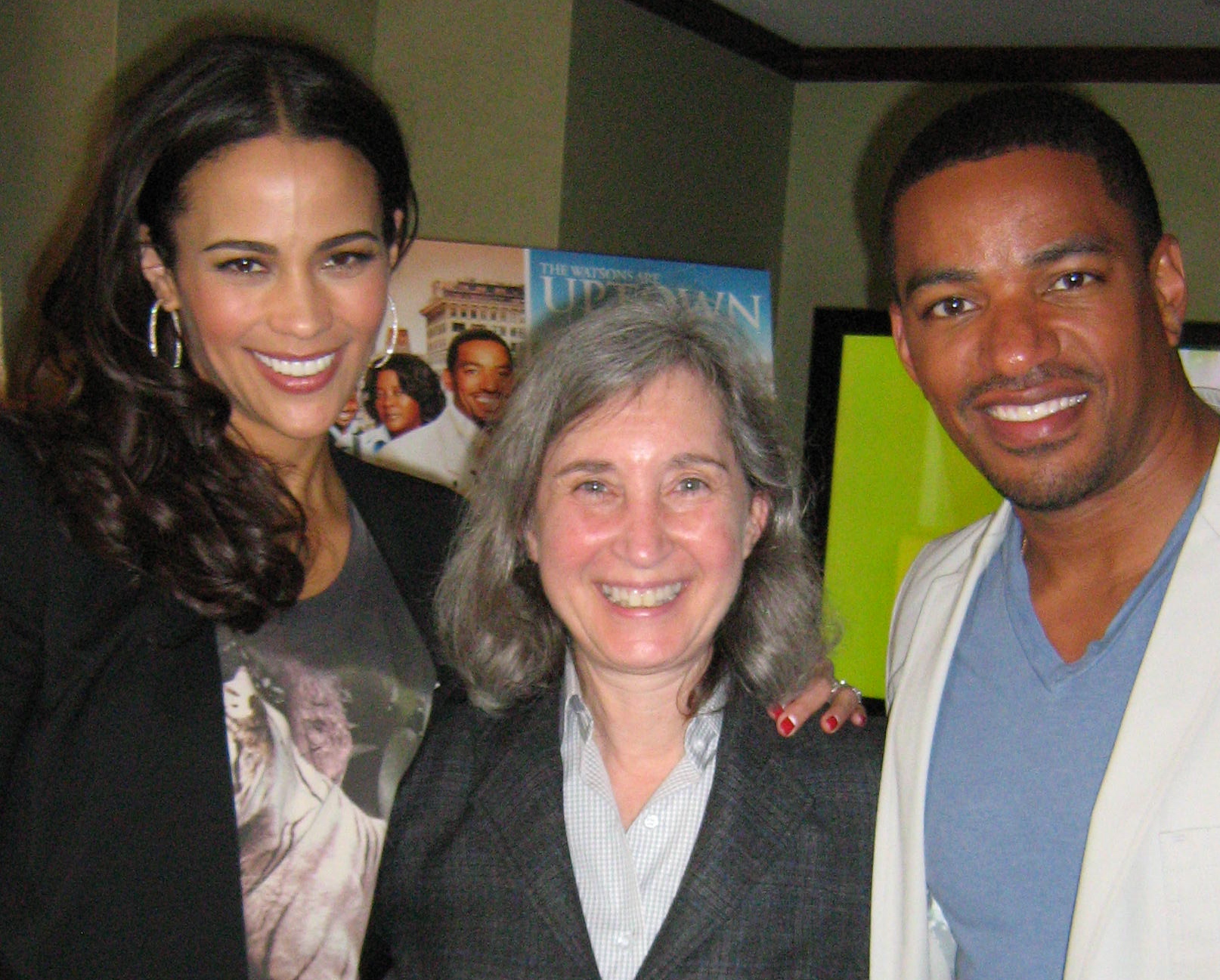
Movies have some magical moments, but some things only happen when everyone is really in the room together.  There were both the night I saw “Jumping the Broom” with an audience mostly made up of students from DC’s Howard University.  The movie, from Reverend T.D. Jakes, is about the wedding of a lawyer from a wealthy family and an investment banker from a working class family, raises universal questions, with clashes on race, class, and money, insecurity, doubt, betrayal, and lies — but also faith, romance, forgiveness, commitment, honor, and love.  When stars Paula Patton and Laz Alonso (a Howard University alum and DC hometown hero) greeted the crowd, the excitement level exploded.  Even after they left, the audience’s appreciation of the film was palpable — this is a movie you want to see with other people to enjoy its masterful mix of comedy, drama, and the resilience of families both well-established and just beginning.

The next morning, they sat down with four critics to talk about the film, starting with what initially drew them to the project.  A script is always a work in progress, but if the blueprint is good then you’ve got something,” said Patton.  She liked the concept of the families from two worlds and playing a character who is flawed and learns to change her ways.  “These movies are not rocket science.  They’re meant to be feel-good and funny and make you happy, and I think it did a wonderful job of that.”

Alonso said he could tell right away the script had the bones of a really good story.  “And then as actors, it is our job to put the meat on the bones.”  He talked about what he learned from the other actors.  “Paula has a work ethic that surpasses even my workaholic work ethic.  And Loretta Devine is a method actress who would yell at me when she would see me in town if I would dare have breakfast and not include my mother.  To this day, I still have to call my mom!  And then you have someone like Salim Akil, who I actually modeled my character after.  He directed “The Game,” “Girlfriends,” “Soul Food,” back in the day.  He is such a classy, strong man.  He is not going to let this film be anything but a classic depiction of these two families, especially my family.  He took my family as his personal responsibility, to show that just because you may not necessarily be wealthy doesn’t mean that you don’t have dignity and you don’t have class.  He didn’t play the stereotypes.”

In the first scene of the movie, Patton’s character realizes that she has not been honoring herself in her relationships with men.  She makes a promise that if God will help her find a good man she will not have sex before marriage.  She and Alonso spoke to us about what that brought to the story.  “For my character, some of the backstory that might not have shown up in the final version of the movie is that he did not grow up very traditional, going to church, but because he fell in love with Sabrina, and she was going to try this approach, he realized that love was more important than any previous beliefs that he had and he was going to put her first,’ said Alonso.  “A lot of times we see very sexualized images with sex coming before romance.  This is kind of a throwback, with romance coming first.”

Patton talked about how her own parents’ marriage brought two very different families together.  “There’s so much drama that goes into bringing two families together.  My mom and dad could not have come from more different families.  My dad was from Mississippi, his parents were sharecroppers; my mom was from Connecticut and her father was an executive at GE.  So I definitely understand two different families coming together and all the drama that ensues — and all the love, and getting past all those things, and realizing your likenesses and through all the struggle that you are family, that you will support each other and count on each other and be this bond in front of God and everyone that you’re going to be together for the rest of your lives, hopefully.”



Related Tags:


Actors Interview
Interview: Jodie Foster, director and star of The Beaver

Interview: Jodie Foster, director and star of The Beaver

Posted on May 3, 2011 at 10:00 am

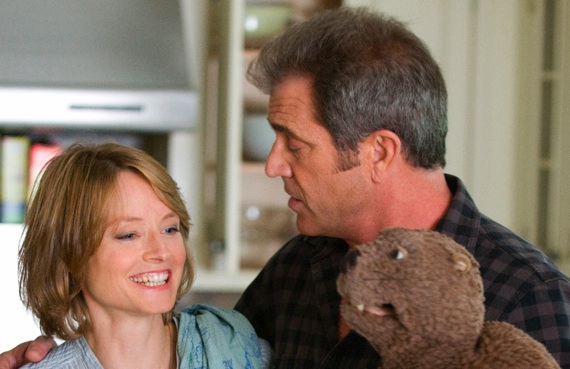
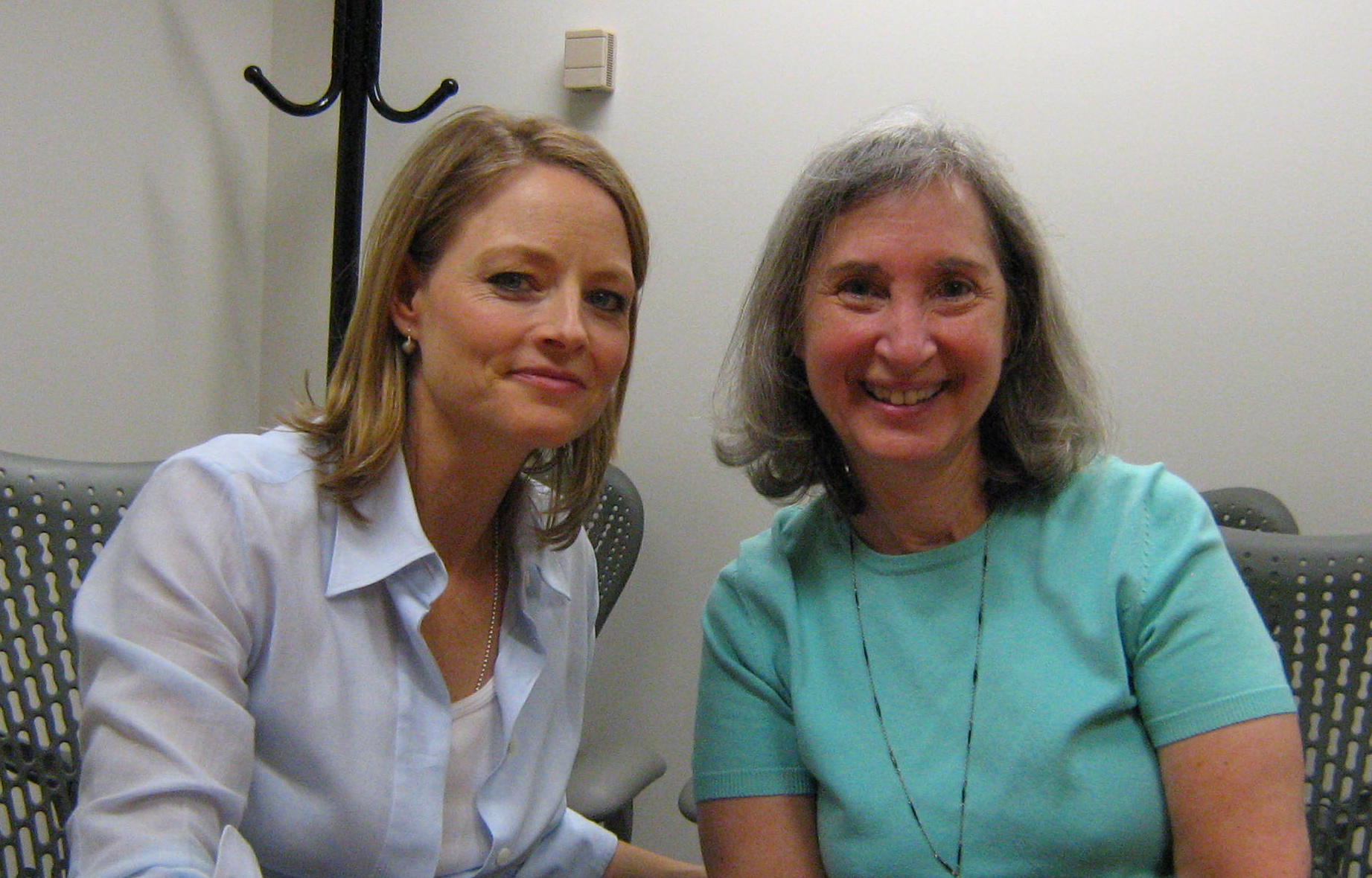
Jodie Foster directed and co-stars in “The Beaver,” a movie notorious already for two reasons.  First, its script by newcomer Kyle Killen was on top of the famous “black list” of outstanding unproduced screenplays.  Everyone knew how smart and distinctive it was and everyone know it would be very tough to film and very tough to find an audience for a story about a severely depressed man who finds that he is able to communicate through a beaver puppet he finds in a dumpster.  Second, the lead role of Walter is played by  Mel Gibson, whose behavior in the past few years has ranged from volatile to profoundly offensive.  But one of Foster’s many outstanding characteristics is her commitment to her work and to her friends.  It was a deeply rewarding pleasure to speak with her about the challenges of making this film and what she has learned from the movies and the people she has worked with in making them since she was a child.

Unlike ventriloquists (seen most recently in the documentary, Dumbstruck), Mel Gibson continues to act even when he is “speaking” through the beaver puppet on his hand.  Do you as a director intend the other characters on screen and the audience to look at him rather than the puppet?

I was surprised that people didn’t watch the puppet more.  I liked that about it.  I never wanted the audience to forget that there was a man behind the puppet.  It was a widescreen format.  We used an anamorphic lens, and that allows you to do two things.  First, it lets you keep two people in the frame almost all the time, even in close-up.  And with depth of field you can switch the focus very quickly from the front of the frame, where the puppet is, to where he is, so there’s a real distinction to the field that allows you to keep them in the same frame at all times in the beginning of the film and yet separate them emotionally.  We’re always, always following Walter’s path.  Then, as time goes on, we change that and allow the beaver to start taking over about halfway through the movie.

It seems to me that making a film is a little bit like having a puppet on your hand.  Instead of telling your story through one imaginary character, you’ve got many.

Yes, that’s pretty accurate.  It’s not just the director’s and the actor’s voice but the writer’s, the costume designer’s, the props, production design.  They’re all different languages and each one contributes to telling this one story.  There are other experts and you make decisions.

Tell me about how you worked with the costume designer to tell the story.

I’ve made many movies with Susan Lyall.  I love her stuff because it’s really real.  She spends a lot of time combing through vintage stores and looking through bins.  She didn’t come up through theater, so she doesn’t do draping and all that stuff.  She has a little bit of a different bent and I think it is more authentic.  The idea that there is this perfect icon, valedictorian and a cheerleader — that’s just a delusion.  Not only do they not exist, but when it appears they do, there’s a whole other side to them.  So for the character played by Jennifer Lawrence, at first she has a lot of make-up and that perfect WASP-y cheerleader outfit.  But as you get to know her — as Porter gets to know her, she changes and becomes a deeper and truer person and becomes more informal.

Your cast is one of the movie’s great strengths, including Jennifer Lawrence, nominated last year for an Oscar for her role in “Winter’s Bone” and soon to star in the big budget film of “The Hunger Games” and the brilliant theater actress Cherry Jones.  How did you select them?

I’m always trying to get Cherry in movies.  I love her.  Anton Yelchin is also amazing and really shares the screen with Mel.  Casting is a long process for me.  I take a lot of time.  Some people you know right away.  Anton I knew right away.  I met with some other actors but I was never serious about anyone but him.  I’d seen a lot of his work.  I knew that he could handle the wit, the lightness of the character but also had the dramatic side.  Plus, he looks like a combination of Mel and me so I was pleased about that!  I knew he could hold the screen with Mel even though they don’t have many scenes together, just one at the end of the movie.  The rest of the time they are fighting each other from opposite corners.  I spend a lot of time just making sure that it’s true.  There’s really nothing else you can ask.

Everybody reads for me.  I was never weird about that.  I never minded coming in and reading.  They should know if I’m the right person and I should know if I want to do a movie.  Some of it is just to hear it.  When I’m casting I’m still in the process of figuring out what the movie’s about, making decisions about locations, photography, and all that.  When I can hear it, either around a table or at an audition, then I can really see how things are going to work.  If I don’t get that process with the actors I’m walking into a mystery and I don’t want to do it.

You have quite a challenge in having a clinically depressed person as your main character. Even more than other illnesses, depression makes a person inaccessible and disturbing.

The world is littered with movies about people that are depressed that either did not come out or are not successful.  I read this article in the New York Times that I thought was so smart about obsessive ruminators.  It’s a real phenomenon.  I thought, “I do that!”  People who are good artists don’t just type it into the typewriter and win the Pulitzer Prize.  It takes a lot of rumination and thought, a lot of time thinking, “Why did that happen that way?” “How do those two things fit together?” and waking up at 3 in the morning to think about it.  It’s a very depressive process.  You go over and over and over drama and it can be depressing and isolating.  But you come out the other side.  And people who don’t, who just go to the beach and play volleyball to cope with their problems don’t get to the other side of their issues.  So I see it as a gift, and essential for being an excellent artist.  But it does make you alienated from the rest of the population.

There’s a very delicate structure to the film.  We start out inside Walter’s head.  He’s so lost at that point he’s not even speaking.  The beaver is speaking for him.  It’s a light, witty, but removed voice.  It’s remote.  And that gets you through the first part of the movie.  And then when he starts to want to live again, you get that burst of vitality.  It really isn’t until the second half when reality sets in and the drama begins.

Is the puppet’s accent another way for him to be separate from Walter?

Yes.  Walter wants the beaver to be everything that he’s not — charming, quick-witted, blue-collar, decisive.  The beaver is somebody who is a leader.

There’s a fairy tale quality to the movie — the narration and the quick turn-around in Walter’s business.

It’s a fable.  It’s a dark fable at times.  I don’t see anyone walking around with a puppet on his hand in real life.  Puppet therapy is very common for children.  It’s not something that adults take on.  It should be seen as a fable, carrying through to the ending as well.

It’s a fable in its facts but the underlying theme of finding a way to take a break from your negative elements is psychologically valid and dramatically compelling.

He adopts a survival tool.  People who go through tragic circumstances where they don’t have another option adopt a survival tool and any therapist will tell you it’s a good thing.  But you adopt and adapt these survival tools as a child — at a certain point, when you grow up, they can start to kill you.  You have to amputate them.  You have to get rid of your survival tool or it will take you over and destroy you.


Related Tags:


Actors Directors Interview
Interview: Carl Christman of ‘Selling God’

Interview: Carl Christman of ‘Selling God’

Posted on April 27, 2011 at 3:59 pm

Carl Christman, writer/director of the documentary Selling God, answered my questions about his film, an exploration of the way that fundamentalists market their religion.
How did you come to this project?

My films are a form of catharsis. I have many opinions about the major issues in life and feel the overwhelming desire to share my ideas. In past films I have dealt with War and Patriotism (Freedom Fries) as well as Terrorism and Fear (Culture of Fear.) The topic of religion seemed to be worthy of discussion.

How do evangelicals differ from other religious groups in spreading their religion?

Most religions movements work to spread their message. What sets the evangelical movement apart, and prompted me to focus on it in this film, is the skill with which they do it. They have very effectively used all forms of media and marketing to get their message out.

Are evangelicals successful in converting outsiders? In retaining those who grew up in the faith?

Judging by the continued growth and increased power of the evangelical movement I would say they are very effective at converting outsiders.

What do they consider the biggest threat to their way of belief?

There seems to be a feeling among many evangelicals that they are under attack from secularism. Since secularism is basically defined as being non-religious this means that religion is under attack from non-religion. Since three quarters of Americans identify themselves as Christian, however, I do not see Christianity as being in any danger.

Are they a political force?

The evangelical movement is definitely a political force. Evangelicals make up roughly a quarter of all Americans. This is a highly prized demographic for politicians and has tipped the balance in many elections.

How are some evangelicals like people who market books or music or other consumer goods?

My point in this film is to show how the marketing of religion is very similar to the marketing of anything else. The same techniques are used whether one is selling clothing or cars, soda or salvation.

Who do you think is the audience for this film?

Selling God has different audiences that watch the film for different reasons. Those that are not religious are likely to view it from the outside as a critique on the evangelical movement. Evangelicals are likely to watch the film and relate to the examples I offer, often on a personal level. In talking to people that grew up in the various denominations I dealt with in the film I found that they were amused by my unique take on the religious customs they had often taken for granted.

Did the evangelical community respond?

Most of my evangelical friends thought this was a thought-provoking critique. They did not necessarily agree with all of my conclusions, but they certainly enjoyed the process of exploration.

Do you see hypocrisy in the way that Christianity is marketed?

I do not see the marketing of Christianity as hypocritical. There is nothing that I am aware of in the tenets of Christianity that opposes marketing. Many people will not like talking about Christianity in terms of marketing, because they view it as being above such earthly techniques. I, however, have enjoyed applying the well-known consumer paradigm to the world’s largest religion. Hopefully this film offers a unique perspective on religion.

What good works do the members of this community support (other than trying to make converts)?

The Christian community has established many important institutions that improve all of our lives. I went to Christian schools from pre-school through college and I now teach at a Christian university.

What was the biggest challenge you faced in making the movie? What surprised you?

The biggest challenge in making this movie was trying to get access. Much of the footage I wanted to use was not easily available and many of the people I wanted to interview were not willing to speak with me. When I did have people welcome me with open arms it really stood out. I remember being outside the local Unitarian Church getting some shots from the street. When some of the parishioners saw my camera operator and myself outside, they invited us into their church, allowed us to film inside and spoke with us about their faith. I found their openness very refreshing.

Related Tags:


Directors Documentary Interview

Interview: Mike Disa of ‘Hoodwinked Too! Hood Vs. Evil’

Posted on April 27, 2011 at 12:43 pm

Director Mike Disa has a terrific piece in the Huffington Post about his new film, “Hoodwinked Too! Hood Vs. Evil,” with not one but two heroines who are strong, smart, brave, and compassionate.

Look at any recent animated movie. Despite sometimes clever plot devices, each of the main female characters’ primary concerns are always love, marriage and family issues. Overused and limiting themes for a modern heroine.  And that’s when the female characters are even focused upon at all. How many animated films have you seen where the female lead is little more than a cliché object for the hero to impress in the last reel? Face it, if you want to be a strong female character in animation you are better off as a mouse.

I had a wonderful talk with Disa about making the film.

Why, all these decades later, do animated girls seem stuck back in the days of Snow White singing “Someday my prince will come?”

Isn’t that amazing?  It’s been basically the same story model now for 90 years.  It’s flabbergasting to me.  I used to get in conversations about this when I worked at the big studios.  They’d say, “Well, it’s a fairy tale and that’s what fairy tales are about.”  I’d say, “Go read the original fairy tales!  There’s a lot of other stuff going on.  And we’re choosing to change this and that — why aren’t we choosing to change this part of it?”  The only honest answer I have for that question is that the people making the films are unwilling to look at women in a different light.  You can go on about fairy tales and animation and the patriarchal system that creates princesses and all that but I think it comes down to the people in films want to portray women like that.

Powerful women in films tend to be the bad guys — Ursula, Cruella DeVil, Maleficent.

There are powerful female heroes in animated films; they just aren’t human.  Did you ever see “The Rescuers?”  If you’re a mouse, you’ve got the potential to be a great character?  You’re likely to get pigeonholed into being about family or sexual identity or role — if you’re an attractive human female or anything female in a Pixar movie, with the possible exception of Jessie in the “Toy Story” movies.  And even she is played off as Woody’s counterpart.  It’s odd because a lot of these studios are so interested in pushing the boundary technically.  Why aren’t they so interested in telling more than the same old story over and over?

What is even more revolutionary in your film is that not only is the girl a heroine, but so is the grandmother!  And not only is she tough, but compassionate and forgiving as well.

I’m really glad you liked that because that was a part of the film I was pushing hard for as well.  Comments I have had about the Huffington Post article are like, “You don’t want to make love stories anymore?”  Of course I want to make love stories!  This is a love story.  It is about the love between dear old friends who have lost each other along the way because of the choices they have made, about the love of a grandmother and granddaughter.  It’s very much a classic love story.  Love is about more than dating.

http://www.youtube.com/watch?v=azVIjdXOsQc

I was so glad Patrick Warburton returned as Wolf.  No one can nail dry, understated wit the way he does.

He is amazing.  He was an absolute superstar.  He would show up after a day of shooting his live-action series, exhausted after a 15-hour day on the set.  (I can’t believe I just said “live-action.”  It shows I live in he animation world.  I’m like — “live action, it’s a little niche thing, don’t know if you’ve heard of it.”)

Not only would Patrick give an incredible performance but he would try alternatives, a different word choice or , he never quit.  You don’t need to direct him.  He’s got a fantastic ear.  You play it back and he’ll hear the same thing I hear, and say, “Let’s do it again.”  He’s a marvel to work with.  It’s such a joy to have people come in and not treat it differently because it is animation.  Every word he wants to be perfect, to work for the character, to fit the lip-synch, to reflect the subtext of the relationships and the rhythms of the other characters.

I’ve seen animation directors who are just: “Go faster.  Go slower.  Be angry.”  That’s such a waste if you have an actor like Patrick who plays subtext and comedy and rhythm.  If it’s appropriate, he’ll give you the funny line reading.  But then he will give you such true heart and emotion, until you get these great little moments.  There are some great moments where Wolf gets very introspective.  A lesser actor would have gone for the laugh.  You see that in animated films all the time.  We got some real emotion — he’s an incredibly talented guy.  I’m gushing, but he was just a revelation.  And he and Wayne Newton are two of the nicest people I’ve ever met in show business.

I wanted to ask you about the Wayne Newton character!  Is his singing harp inspired by “Mickey and the Beanstalk?”

He was influenced by it.  I grew up with that movie.  It’s spectacular.  But that comes to a larger point.  Everything in this movie is working on two different levels, and that is one of the things I like about it.  The movie respects its audience enough that it knows you’ve seen other versions of these fairy tales.  What we can do is subtly play with your expectations.  What was a huge part of the film was knowing that everyone would immediately think of the most popular version of the story.  So our beanstalk was made of cast iron and aluminum because I wanted something reminiscent of that wonderful organic Disney beanstalk but I wanted something completely different.  The same with the singing harp.  We need to nod to the classics but we need to twist it. The nightclub is based on the classic old Hollywood place where the great singers and performers played in the 1940’s before Las Vegas got big.  If you’ve seen any of the movies or places we refer to, it adds another layer.  But if you haven’t, it still works.


Related Tags:


3D Animation Directors Interview
Interview: Morgan Spurlock of POM Wonderful Presents: The Greatest Movie Ever Sold

Interview: Morgan Spurlock of POM Wonderful Presents: The Greatest Movie Ever Sold

Posted on April 21, 2011 at 8:00 am

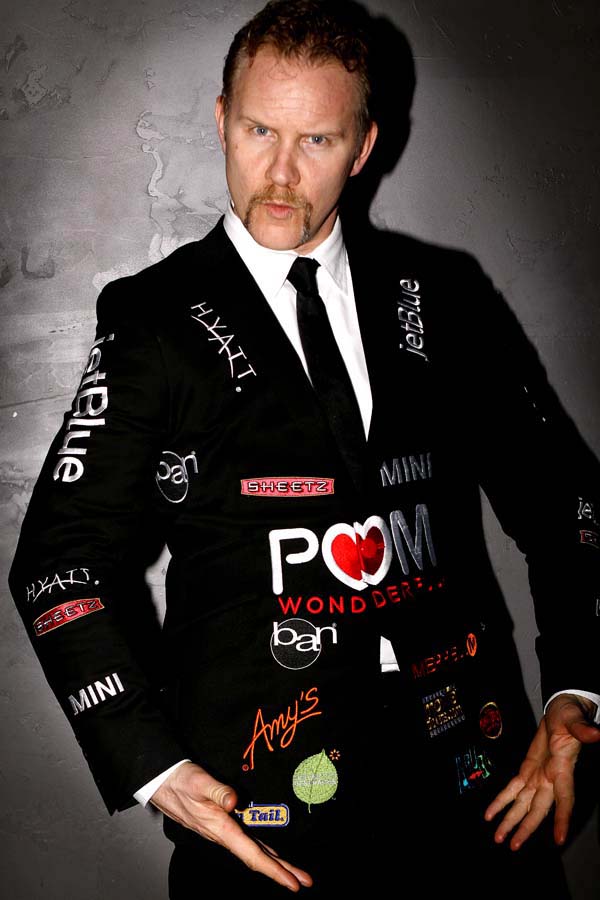
Morgan Spurlock took on fast food in “Super Size Me.”  He was funny, direct, and at times outraged as he tried to live for a month on McDonald’s “supersize” portions, and I liked his even-handedness in taking on the consumers as well as the providers, calling on us to take responsibility for ourselves.  His television series, “30 Days,” had people (including Spurlock himself) immersing themselves for a month in a culture outside their comfort zones.  Again, despite tone that seemed highly satiric at times, the show was about the middle, the gray areas, the nuances.  His new film is called “POM Wonderful Presents: The Greatest Movie Ever Sold.”  Yes, he made a movie about product placement that is entirely financed by product placement.

Spurlock spoke to me about the movie.

You were right!  At the screening you said that everyone there would never look at the world the same way again.  We walked out of the theater and the first thing I saw was a banner on a building I had never noticed before.

And it’s going to get worse — and better at the same time!

Advertising is everywhere.  Amazon has just discounted the Kindle for customers who are willing to look at ads.

And it’s such a small discount!  Shouldn’t it be free if they’re going to send you ads?

I think the most disturbing thing in the movie is the school selling advertising to raise money.  It’s especially sad that it is such a small amount of money and yet they can’t get it any other way.

It’s incredible. School districts are getting literally five to seven thousand dollars a year and in exchange they are letting all this advertising in.

What kind of impact does that have on kids? Does it desensitize them or do they stay susceptible to being drawn into the brands that are put in front of them?

That’s what the jury’s out on. There’s multiple layers to that one. You start to believe that these products and these brands are the ones that make things happen. They’re the ones you should trust, the ones that have solutions. That’s the question I have all the time, do we really want to live in a world where everything’s brought to you by some sponsor? That’s the way it seems to be going.

That’s right. Even at the Smithsonian, the flag that inspired “The Star Spangled Banner” is now brought to you by Ralph Lauren. Is POM happy with the results from paying to have their name in the title of the film?

Everybody seems to be. It’s gotten a great response. I think it makes all the sponsors who paid to be in the film look incredibly smart. I called 600 brands but only these 20 were brave enough to be a part of the film and want to pull back the curtain and have a real honest conversation about transparency. It’s very telling.

For me what was telling was that they basically say, “We don’t care what you say about us as long as you get our name out there.”

That’s part of what I love about it. Who was it who said, “I don’t care what you say about me as long as you spell my name right?”

Will you have product placement in your future films?

I think it really works for this one because the satire makes the whole thing work. I can’t imagine shooting an interview for another movie about Darfur or something where suddenly someone is drinking Coke in the middle of an interview. But one of the things I love is what J.J. Abrams says in the film: “I’m about story-telling, not story-selling.” We live in a world where people use products. They drive Cameros. They drink Coke. They wear Nikes. So it’s not like I think we should try to eliminate this stuff from entertainment. It would create a very unreal scenario. But what I don’t want is Ford in the writer’s room, “I want to start with a wide shot of the car and when the guy gets out of the car it would be great if he could say how well the car handled.”

You want the product to tell you something about the character.

Yes, if he drives a Mustang, he drives a Mustang.  If he drives a Volvo, he drives a Volvo.  But don’t make them show an extreme close-up of the logo just because they gave them a car to be in the movie.

You kept Mane and Tail shampoo in the film even though they didn’t pay.

They were the only ones where we were contractually obligated to say that they did not pay.  But there were others in the film who did not pay.  But what they brought to the table was not hard cash but soft money in terms of promotions.  Big brands do that all the time with studios so they can have Iron Man in the store or Tony Stark wearing sunglasses in their ads.  Characters appear on cereal and candy bars and potato chips and then there are lunchboxes, t-shirts, hats, and all that other stuff.  I tried to get McDonald’s to be a partner on this film.  I really wanted those documentary action figures.  Those would have sold like hotcakes!

Many of the companies that were willing to work with you were family-owned, like POM, Sheetz, and Hyatt.   They were very big, but they didn’t have the kind of bureaucracy of publicly-traded companies and were more inclined to do something off-beat.

Some of them make more than Fortune 500 companies.  And MiniCooper is part of a giant corporation.  Old Navy is owned by a gigantic conglomerate.  But they didn’t come on until they saw the film at Sundance.  Eight partners came on after Sundance.  That happens all the time with big Hollywood movies, too.  They wait to see how the film comes out and how audiences react and then say, “I want to be a part of this.”

What do you advocate?  Better disclosure?

It’s already at the end of a movie, where it says, “promotional consideration by…” but by then you’ve stopped watching.  The BBC has just started to allow product placement.  Like we have TV-MA, they have P for product placement before the show.

Do you advocate different rules for children’s programming and programming intended for adults?

You have to look at them different.  They’re two entirely different audiences.  They consume media in very different ways.  Kids recognize brands at a very young age, as young as four years old.  I don’t think you should have placement in kids’ shows but it goes beyond that.  The character becomes the toy, the lunchbox.  The argument for that is, “I can’t have free enterprise?”  The problem I have is the targeted advertising around programming.  My own son said, “I want to get that wrestler set!  But the pieces are sold separately.” I said, “Time to turn off the TV.  We’re done.”


Related Tags:


Directors Documentary Interview Understanding Media and Pop Culture
THE MOVIE MOM® is a registered trademark of Nell Minow. Use of the mark without express consent from Nell Minow constitutes trademark infringement and unfair competition in violation of federal and state laws. All material © Nell Minow 1995-2026, all rights reserved, and no use or republication is permitted without explicit permission. This site hosts Nell Minow’s Movie Mom® archive, with material that originally appeared on Yahoo! Movies, Beliefnet, and other sources. Much of her new material can be found at Rogerebert.com, Huffington Post, and WheretoWatch. Her books include The Movie Mom’s Guide to Family Movies and 101 Must-See Movie Moments, and she can be heard each week on radio stations across the country.

Website Designed by Max LaZebnik