John C. Reilly is one of the most versatile actors working today. He has appeared in outrageous comedies (“Step Brothers,” “Walk Hard”), dramas (“Magnolia,” “The Aviator”), and even a musical — he was nominated for an Oscar for “Chicago.” He has worked with Martin Scorsese, Renee Zellwegger, and Will Ferrell. And this week, he stars in “Cyrus” as a man who finds his romantic life complicated by the title character. Cyrus is the adult son (Jonah Hill) of the woman his character is dating (Marisa Tomei). He still lives with his mother and has no interest in sharing her. I spoke to Reilly about working with the Duplass brothers, independent filmmakers who work in a genre sometimes described as “mumblecore,” small, improvised, films about authentically awkward moments without the usual easy, predictable resolutions in studio productions.
John Ratzenberger is Pixar’s favorite all-star, the only actor to appear in every single Pixar film. His face is known to “Cheers” fans as the know-it-all mail carrier Cliff Clavin, but his voice is Pixar’s good luck charm and he has appeared as everything from a piggy bank (Hamm in all three “Toy Story” movies) to a whole school of moonfish in “Finding Nemo.” He spoke to me about his background in improv, failing the audition for Cheers, his Nuts and Bolts foundation to inspire hands-on creativity in children, and his favorite Pixar role.
Tell me about the early days of Pixar.
It was 15 years ago, but I remember liking them enormously because they were so passionate about the work. This wasn’t a hobby or a way to make some quick money. This was a passion. They just do things right, the old-fashioned way. And they have children — they get it. They don’t talk down to anyone. They understand how absorbent children are. You won’t get any below-the-belt humor with Pixar, which is pretty much all you get with some of the other people who do animation.
Why is that so important?
When my son was five — he’s 22 now — we were driving down the road and he dropped something and he let go with the s-bomb. I said, “Hey, that’s a new word from you. Where’d you pick that up?” I was thinking maybe one of his friends. He said, “ET.” That’s what really brings it home. In that scene, the kid swore and the mother didn’t do anything; there was no recompense. When did that become acceptable? When did that become hip? You can reverse-engineer it right to the Woodstock generation. That’s where it all started. Most of the problems of today can be laid to the feet of the Woodstock generation and their world view. There’s no hardships in their lives; everything was handed to them. That’s why we have the problems of today, the educational system, this nonsense of self-esteem. You can’t have self-esteem handed to you. You get it from doing things, from achieving things. Not from just showing up.
Do you have a favorite of the Pixar characters you’ve played?
P.T. Flea in “A Bug’s Life.” They actually went out into the park with magnifying glasses and got down on their hands and knees and that’s the care that Pixar takes. Now they can afford to go to South America to research “Up.” But when I started with them, they could only go into the back yard. They set the bar very high for themselves; they never rest on their laurels. Every project they undertake has the same passion and love they had for the first one. Could you imagine going to any other film studio with the story of “Up?” They’d throw you on the street in five minutes.” An 82-year-old guy? They pick a difficult subject and they ground-break in every single movie, always something that has never been done in animation before. Like in “Finding Nemo” the water. Up to that time water had never been done in a way that felt realistic. It’s like a master work of art.
What kind of training did you have in acting?
My background is all improv. I had my own troup touring Europe in the 1970’s. I never went to acting school. That’s how I got the part in “Cheers.” I actually failed the audition. I was walking out the door. And I turned around and said, “Do you have the bar know-it-all? They said, “What are you talking about?” I just improvised the whole thing and got them laughing enough to get my dignity back, and I left. Two days later I got the call. Scripts don’t get in my way, but I come from the Tim Conway, Jackie Gleason school. I’ll learn the script, but there’s ways of having a little more fun with it.
What is the Nuts and Bolts Foundation?
We fund camps nation-wide that teach kids manual skills. We made the mistake in this country of sending everyone to college. We forgot that someone’s got to build the college. Someone’s got to repair the college. Someone’s got to fix things. Who’s going to operate the motor pool? Statistically, we’re running out of people who can do that. We had one kid who wanted to be a stone mason but his parents said people would think he was stupid. We need to get out of that way of thinking. Forget that he wanted to do it and could make a good living at it. We need those people.
I’m a carpenter. I still build things. Now I’m working on furniture, a little rocking chair for my grand-daughter.
Interview: Brian Wells of ‘Secrets of the Mountain’
Posted on June 6, 2010 at 3:59 pm
One of the happiest surprises of the year on television so far is “Secrets of the Mountain,” an excellent movie for the whole family that premiered on April 16, 2010 on NBC. I interviewed the executive producer, Brian Wells, who talked about his commitment to making something that was both “great” and “good,” the films that inspired him, and his hope for making more films that families can enjoy together. For DVD giveaway info, see below.
Your movie inspired a lot of enthusiasm from audiences. How do you achieve that?
It’s always exciting when something’s kind of birthed in your heart and then connects with other people. This movie, like all the other projects we’re working on, it comes from the heart, it’s not a bunch of creatives that say, “Oh, I think this would be interesting.” We start with sitting down with moms, sitting down with kids, sitting down with teens, understanding what motivates them, understanding the kind of challenges they’re facing with their families. Maybe that entertainment could even help. It was birthed in the heart of a father and has been by the same kind of people that watched the movie.
The person who came up with the original concept is Dante Amodeo, a father down in Jacksonville Florida, and he came up with the idea of the family dealing with some challenges and going on an adventure, and by going through the adventure they come to understand that when families go through bad times they are not supposed to run away from each other; they are supposed to run toward each other.
How do you bring that spirit to the screen?
This also came out of sitting down and talking to families around the country. We talked about it in terms of “great and good.” Every element of the story from the writing to the filming to the casting to the special effects had to be great and good. “Greatness” is how we think of entertainment — is it exciting? If it’s a comedy does the humor flow from the characters or is it just somebody slipping on a rug? If it’s a drama, do I care about these people? If it’s adventure, does it keep me on the edge of my seat? What’s the production value of the whole thing? It’s got to be great to engage us. But we can’t stop there. We all know that there’s a lot of entertainment out there that achieves its greatness of entertainment value by preying on what’s worst in the human condition. And there’s enough of those stories out there.
What was your goal in making this film?
We were looking for stories that achieve greatness by calling out what is best in us. And so at every point of the way, we asked ourselves, “Is this both great and good?” A lot of people settle for the idea that it can’t be both. But it can. Our constant drive at every point of development was to do both. As a father, my constant litmus test was: could I sit on a couch with my 11 year old daughter and my 14 year old son and my wife and have each of us enjoy it equally?
Was it difficult to get backing for this film?
it is challenging to get any movie made. But to try to say we’re setting the bar that a 40-something will want to watch this like a 10 year old. But we were fortunate to have a couple of sponsors, Wall-Mart and Proctor & Gamble that were behind it because they believe we need to see more content that the whole family can watch together. The challenge along the way was the execution, but all the details, everything, wardrobe, music, we had to get a team together where everyone believed in this great/good concept.
On the outside there’s a conception that a movie is made because of the singular vision of a director but while that is a really big part of it, there’s at least 100 people that make these things happen. If you can surround yourself with people who are talented and who believe in making great/good stories, it’s a lot easier to make.
We look for people who are great actors and for people who have voted with their talent to show they’re interested in the things we’re interested in. Paige Turco brought such nuance to her role as a mom, dealing the the tension of being a sole parent and provider, dealing with some pain from her past, she was outstanding. Barry Bostwick is the kind of guy as a kid I would want to hang out with. People who’ve watched it, in the industry and people who watched in their homes, everyone has a different favorite.
What are some of the movies that inspired you to become a film-maker?
The movies that have really moved me, I’m dating myself here, but I am a fan of the old Hitchcock movies, “North by Northwest.” The movie “Rain Man” with Dustin Hoffman and Tom Cruise — the emotional journey that it took me on is amazing. My all-time favorite movie is “To Kill a Mockingbird.” If I could ever make a movie like that I would have fulfilled my purpose.
What are you working on next?
We won the night on April 16, meaning we got the most viewers of any show that night, so that should make it easier for us. We already have another movie coming up on July 16. It’s called “The Jensen Project” and it is a high-tech thriller about a secret society of geniuses. A mom and dad and son get sucked into this adventure. There will be more and we’re hoping some of these might get picked up as series as well.
Great news! I have FIVE DVDs to give away and there is a very special extra: it includes a bonus CD with eleven songs inspired by the film, some used on the soundtrack. The first five people to write to me at moviemom@moviemom.com and tell me your favorite family movie will get the prize.
NOTE: Prizes provided by the studio; all opinions are my own.
Thanks to Ben Ohmart for reminding us of the unjustly neglected Judy Canova. He specializes in books about golden-age era performers, and he is the author of a new biography of the “Ozark nightingale,” Judy Canova: Singin’ in the Corn!. It covers the career of an actress and singer who was one of the most popular performers of the 1930’s-40’s, with not one but two stars on the Hollywood Walk of Fame, honoring her performances on radio and in film. She starred in her own top-ten radio show for twelve years and appeared in the Zeigfield Follies.
Perhaps it is because the character she created seems old-fashioned that she is not as well known as other stars of her era. Canova played what in those days was called a “country bumpkin” or “hillbilly” or a “hick,” a forthright, uneducated, woman from the country who was loud, naive, enthusiastic, and unfailingly good-hearted. Canova was a gifted comic performer and singer and I am delighted that this book, with research including interviews with friends, family, and co-workers, does justice to her talent.
The author was kind enough to answer my questions:
How did you come to specialize in writing about 1930’s and 40’s entertainers?
I began listening to radio shows after I found an interesting looking set of tapes in a Waldenbooks when I was about 9 or 10. Jack Benny, Fibber McGee, Abbott and Costello, and Duffy’s Tavern were in that set. I was hooked with the pace and cleverness immediately. That made me pay attention to the old b&w films – Abbott and Costello – that were played on WGN every Saturday afternoon which I’d watch religiously after delivering newspapers.
Transfer this 15 years later when I was a would-be writer trying to carve myself into the niche of screenplays, poetry and plays – the trinity of most unnecessary writing – and getting nowhere. I found out online in 2000 that Charles Stumpf had written a book on Fibber. I wrote to him for a signed book (we were both living in PA), and from there, he showed me that it was possible to combine loves. A love of old films and a love of writing. It’s hard to believe that was 10 years ago already!
How did Judy Canova develop her character as the pig-tailed country hick?
That seemed to come from her surroundings. Like me, she grew up in the south, and though of course she didn’t quite speak like the thick hick we all know and love, she did realize that the southern character, as stereotyped and sometimes true, was inherently funny, and worthy of showcasing to the world. In reality, Judy had a real sense of style that you can see in the glamor and “ordinary” photos in my book, when she wasn’t on stage playing for laughs.
Did she ever regret being so closely identified with her character that people thought she was being herself?
I asked Diana, her daughter, about this, and didn’t get the sense that she was in any way sorry. She became a superstar because of it. And, like today’s stars who need to hide just to walk across the street, taking off her square clothes and unbraiding her hair was like stripping herself of her character that would then allow her to have a very normal life. Judy’s radio series, which also contained the likes of Mel Blanc and Hans Conried, was one of the biggest series of the day, and she enjoyed her fame!
Do you see her influence in today’s entertainers?
She was the first country actor/singer superstar, so it’s impossible to believe that Larry the Cable Guy and Jeff Foxworthy owe her nothing, because she opened the door to the genre so that Hollywood and the entertainment business started taking it “seriously.” The trouble is, unscripted TV dominates today, and what’s not on TV is out of mainstream focus, so she’s rather a forgotten icon these days. A few channels for old films to remove 1% of the cooking and home improvement shows, and the balance of the universe might be corrected.
Were her fans mostly rural audiences?
Most probably. Though I relate it to the Harlem effect, too. Her country bumpkinness was a novelty that soon became mainstream, and like the black music of Harlem suddenly appealing to a lot of white people, the country act of Judy and her Canova Trio soon became the “in” thing to love. Her radio series was always one of the top shows and you don’t get that way just appealing to mountain folk!
What surprised you most in your research?
How beautiful Judy was! She had the strong jawline and the antics of a kid sister you wouldn’t wish on anyone, but away from the character, she was hot stuff! Also, I started to admire her singing ability a lot more than I did. She was a first class yodeler and could belt opera notes with the best of them. Her vocal range was incredible and that alone made me understand just why she was the first hick superstar.
She did it all — recording, movies, and radio — which was her favorite and why?
She probably achieved her biggest success on radio, which gave her the biggest live audiences and allowed her to belt out songs and hear the much-deserved applause, so that would be my guess. She actually didn’t make a lot of albums or singles, which also surprised me.
Which is her best movie?
Ah, she made a lot of goodies, especially in the early war years, and if you want a small dose, check out a couple of her early films where she and Anne and Zeck got to shine in short specialty numbers.
Who was her favorite co-star?
That I don’t know, but my vote for Best co-star would certainly be Jerry Colonna. That man was walking around funny, and complimented our Judy perfectly!
Was her control over her own career unusual for the era?
Less unusual than you might think, though women were and are still outnumbered in “having it all” careers like men have. I also wrote a book on Joan Davis and there are many similarities between the gals. They both kind of ran their radio shows and produced their own visual products (for Joan, TV, for Judy, films) in the ’50s. It’s unfortunate that the industry started to change in the ’60s, and Judy suddenly found herself out of the loop. But through the ’50s during her film career, and at her height on radio, she knew just what she wanted, and she got ‘er dun!
I have one copy to give away to the first person who sends me an email at moviemom@moviemom.com with Canova in the subject line. Enjoy!
Neil Volz had one of the most powerful jobs in Washington as chief of staff to Congressman Bob Ney. He then joined Jack Abramoff as a lobbyist and was a part of the corruption scandal involving illegal payments and gifts to members of Congress. He pled guilty and received a reduced sentence of probation because of his assistance to prosecutors. I spoke to him about the new documentary, “Casino Jack and the United States of Money.” Why did you decide to cooperate with the making of this film?
I’m the son of a teacher, brother of a history teacher, and I believe in this concept of learning from mistakes and talking it through. I met with Alex and saw some of his movies. With loud trumpets — I’m responsible for my behavior, what I did. That is fundamental. I don’t move off of that. For me not to get involved with Abramoff would have been as simple as me making different choices. The reaction to it, having said that, my Rolodex went from about 5000 people to about 15. There was a psychological process I was going through. Do you want to be this bitter person who doesn’t trust anyone and doesn’t move forward? Or do you want to, as a friend of mine says, live naively, think, “I’m going to meet my next best friend today.” The downside is, you’re probably going to get burned along the way. It was a little bit of a leap of faith. These guys seemed to be earnestly seeking the story behind the story, to add some depth to a complex situation. So it was therapeutic to sit down and shoot straight with them. Did it help you understand it better, too?
Absolutely. Bob and I had different situations. He was in the public eye. I was in my cave. I had to come to grips with what I’d done, how to move forward, the shame of dragging my family through the scandal. That’s the hardest part. I had a special status there. My stupidity reverberated in the echo chamber back home and that hurt so much more than just about anything. But my family was unbelievably supportive of me. You worked on both sides of this mess, on Capitol Hill and for Abramoff, which makes you unique in this story.
I look back on who I was. It was the ultimate rationalization in some respects. I was working so hard for the Congressman — now, the more power he got, the more I got, so I was also working for me. And that was clouding out so much of the rest of my life. My relationships weren’t as strong as I would like them to be. I thought the jump to Abramoff’s team was a great opportunity to make money, get more influence, get more powerful, and also get some normalcy. That was the ultimate perversion because it was, “You need to go out with the Congressmen and these guys.” I rationalized myself all the way down the slippery slope.
I didn’t want to get caught but I definitely felt that certain corners were acceptable to cut. Now, I see that little things are big things. The slippery slope is real and breaking the gift ban becomes the gateway drug to taking the trips — the real corruption occurs with quality of life enhancements, the trips, the tickets, sitting across the room, “I’m the public servant and you’re my potential future employer.” There’s this institutionalized loop.
I’m a self-described right wing nut job but I worry about the aggressive nature of the Supreme Court in the Citizens United decision . What does that mean for social policy, environmental regulations, all these things that become upended?
I’m a big fan of people who are actively engaged in politics, on either side. What are you doing now?
I’ve been working in the non-profit community for the past couple of years. I worked for the United States Veteran’s Initiative. I worked with homeless veterans. I couldn’t get a job. I couldn’t get some volunteer positions. But the US Vets had a position open and I said, “That sounds perfect.” I wanted to go from the gray to purely doing some good. I don’t want to worry about where my feet are. Helping homeless vets? They put the uniform on and are now having a hard time? I’ll be there like clockwork. I did some case management, conversations on everything from employment, financial management, addiction issues. I built a lot of camaraderie with the vets, focus on what I can do, not what I can’t. One of the best moments I had was when one of the vets said, “If you didn’t have that money, you’d be sitting in jail right now.” I just blurted out, “That’s probably true. But if I didn’t have such desire for money, I wouldn’t have gotten into trouble in the first place. The money I made, I gave to my attorneys to defend me.”
It would have been better if I wasn’t so greedy in the first place.
My wife and I got divorced. I moved to South Florida where I didn’t know a soul. I thought, “Radical change is good. Especially for someone like me, not normally one to embrace change.” I got a job managing a motel. Going from DC where there isn’t anyone who doesn’t know my baggage and my dirty laundry to working on the basics, create honest relationships, be who it is you want to be, build one step at a time. Now I’m working as a volunteer with Falling Upstairs, improving the delivery of social services. Was there some advice that was particularly helpful to you?
I met with Michael Deaver . He said, “One, you’re going to get through this. What you’ve got to remember is get right with the facts and stay with the facts.” I’m a practical person and that was very practical advice. I can be a classic over-thinker, I rationalized my way through so many things, but that means, get your yeses right and your noes right, words matter, and get right with the facts. I’ve tried to live that.


 ” fans as the know-it-all mail carrier Cliff Clavin, but his voice is Pixar’s good luck charm and he has appeared as everything from a piggy bank (Hamm in all three “Toy Story” movies) to a whole school of moonfish in “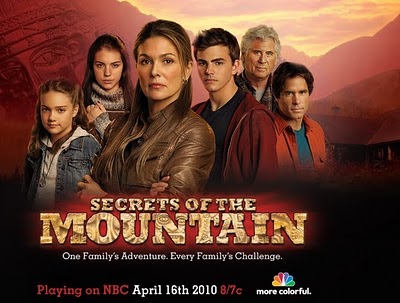
 . It covers the career of an actress and singer who was one of the most popular performers of the 1930’s-40’s, with not one but two stars on the Hollywood Walk of Fame, honoring her performances on radio and in film. She starred in her own top-ten radio show for twelve years and appeared in the Zeigfield Follies.