Interview: Rachel Griffiths on “Hacksaw Ridge”

Interview: Rachel Griffiths on “Hacksaw Ridge”

Posted on February 20, 2017 at 3:22 pm

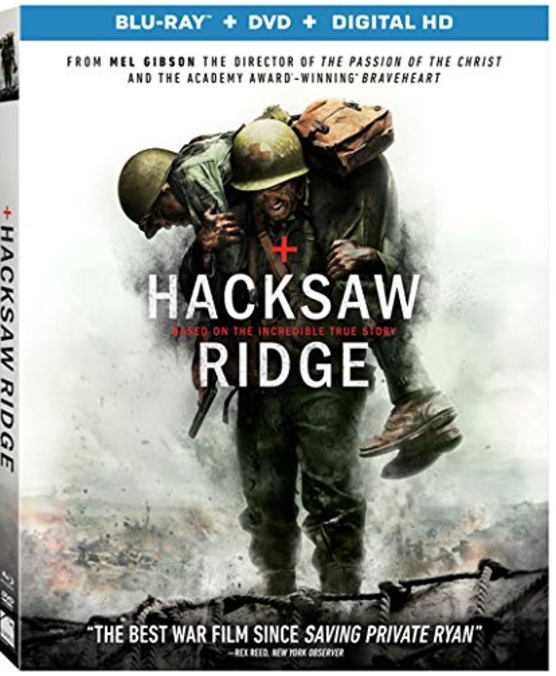
In the Oscar-nominated “Hacksaw Ridge,” Rachel Griffiths plays the mother of Desmond Doss (Andrew Garfield), a devout WWII medic who saved the lives of 75 soldiers by carrying each one of them to safety as he dodged enemy fire in Okinawa. The movie is now available on DVD/Blu-Ray. In an interview, Griffiths spoke about playing a real-life character and re-teaming with her fellow Aussie Hugo Weaving, who plays her husband. She also gave me some information about her next project, an ABC miniseries called “When We Rise.”

How did you work on that excellent Virginia accent? You really captured the Lynchburg sound.
Copyright Warner Brothers 2017

Oh, you are so kind. I had two conversations with Lynchburg ladies and I listened to a lot of samples before I found a sample that we settled on. You want to be specific when you do an accent. You don’t want to just kind of just do a general idea of it. But you also have to find that accent that is going to be comprehendible across the world first. You can’t be so accurate that everybody is like, “What did she say?” And you have to sound like you and the people who play your family are all from the same place. I ended up probably taking my cues as much from Andrew because I play Andrew’s mother. I figured I had the most influence on him so we needed to sound similar. So I was listening to a lot of Andrew’s early scenes that he was doing before we shot our part and I think he had a lovely softness and it definitely has this kind of rural edge to it but it wasn’t too sudden and it didn’t feel like he was commenting on who these people were.

Is it different to prepare for a role when it is a real person’s story?

I think it’s kind of a privilege to tell someone else’s story and it’s not something that we want to do lightly. You certainly don’t want people’s first response coming out of a film like that to be, “Why did they make it in Australia?” It’s a touching universal story and particularly something we can relate to because Australians were so involved in the Pacific during WWII. The Pacific war was as much our war as it was the American war, when Australians are experiencing their stories they feel as close to home because we sent many of our boys off who had barely experienced another life, from a very simple life into a hell that they could never have imagined. That’s a very universal story with the resilience of how you get through that.

I’ve heard that you’ve described Mel Gibson’s movies as kinetic. What do you mean by that?

They never stop moving and they are never boring. You never fall asleep in them. The cameras are always moving, the people are always moving. I think he has a heightened need for input and visceral stimulation; you can just tell that by talking to him. His dial is set to eleven where as my dial might be set to three or four and I think what makes his movies so compelling is, I this amazing momentum, it’s like stepping on a ride and you don’t want to get off and you can’t get off until it’s done.

Your character has limited screen time but is very important to the story. How do you convey so much in a relatively brief time?

You can’t measure your importance by how much time you’re on the screen. I think it’s really understanding what is that character’s role. I did want to convey that his faith was based in the kind of deep moral and emotional conviction that’s communicated through a mother, not just a book. I didn’t want people to see him as a fundamentalist only leaning on a book for his guidance. Behind that book is these kind of early critical moral essence that comes from a place of great strength and love. That is the job of me in that movie and his mother generally especially when his life is conflicted with a male figure who, for reasons of his own trauma is not able to be living a loving and forgiving life.

You’ve worked with Hugo Weaving before — does that help you to play his wife?

For sure. I am glad for the opportunity to work with Hugo. He is so amazing, he is such a human being — I have nothing but the greatest love and respect for him. So I think I brought that to the relationship. You know there’s a kind of just tender adoration that I have for him as a performer and as a human being so he can be behaving as he is but to me on screen but I am just seeing this incredible painful agony that he is actually in. So I’m sure that helped to make it more complex.
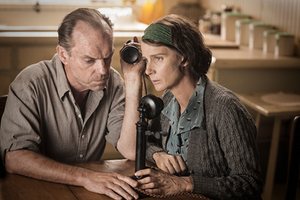
Copyright Warner Brothers 2016

How is it different preparing to play a real-life character?

Of course it depends on whether or not that character is actually known to the public. If you are playing Jackie Kennedy obviously you’d have to meet certain expectations but the true roles I’ve played tend to be the less overtly famous ones. In the end you make a decision to tell the story but I would the hate ever to be sitting on a couch with a person I am playing and being embarrassed or ashamed of the betrayal I have done so I always fight for my character’s believability. I do think there is an extra layer of obligation, but it is with that person and their living descendents. I do think you’re more committed to making sure they’re not compromised.

What does a Mel Gibson bring to directing that only an actor can understand?

That’s a really interesting question. I think he really understands how limited a kind of cerebral approach is. That’s not to say that you can’t discuss the character intelligently but you know on the set to that cerebral approach doesn’t necessarily get what you need. It’s a very unique approach he has. It’s like he’s inside the play with you, like if you’re kids on a fort, he is not outside the fort telling people, “You go there, and you be this and you be that.” He’s like one of the kids inside the fort. And you are all pretending to be pirates. It’s not like Princess Fluffy Pants watching the play — he is inside the play and he is like, “What if? What if this?” And you’re like, “Oh I’ve got it!” In that he kind of inspires us to get kind of hotter and more committed. Does that make sense?

How did your costume help define your character?

Well of course we were working with the majestic and wonderful Lizzy Gardiner who famously wore a dress made of credit cards to the Academy Awards when she won an Oscar for “Priscilla Queen of the Desert.” She is a genius. You know we might try on 30 cardigans and we both knew when we got exactly the right one, faded but not too faded, an honest cardigan. Some cardigans are like pretend honest. And her layering and textures. We were just in such good hands with her. If you rejected 60 worn-out cotton dresses to find the one she wouldn’t think you’re being difficult she would just know that’s the process and then you kind of nail it down to three and she might be like, “Well you know this one is in brown, I wouldn’t mind you popping a little bit.” So it’s is just very, very collaborative, very fun and she’s amazing.

Tell me about your ABC miniseries, “When We Rise,” premiering February 27, 2017.

“When We Rise” is about the history of the civil rights movements through a gay, lesbian, and transgender lens. It is also about the women’s movement and it’s about the struggle for equality and the history of very brave people who were living good and righteous lives but were held by certain percentage of the population to not be. I play a nurse called Diane Jones and the most wonderful thing about her is that at the time when people were so terrified of AIDS and HIV, you know the hospital orderlies wouldn’t take the trays into the ward, she as a mother, as a young mother was spoon feeding men and women who were dying of HIV-AIDS — the incredible courage of that and her faith that she was living a righteous and good life in that moment surrounded by the AIDS.

There were schools that wouldn’t let HIV children come to schools, there were people trying to get people fired for being HIV. For her to be holding the heads of dying men and wiping their bodily fluids is just a real blessing. I am so moved by the humble courage of people — not just the people with the microphone but people who are just quietly living goodness.
Related Tags:


Actors Interview

Interview: Harry Connick, Jr.

Posted on February 3, 2017 at 3:52 pm

I love “Harry,” the free-wheeling, upbeat, always-entertaining talk show hosted by Harry Connick, Jr. The New Orleans-born actor/singer/musician gives the show a Big Easy vibe, always making his guests and his audience feel as though we’re in his living room. It was a great pleasure to talk to him about what he does to make the show welcoming to his guests and his audience — and his favorite place to eat in his famously food-centric home town.

What is the biggest challenge of doing a show in front of a live audience?

That’s my favorite part to be honest with you. Being a performer and having so much experience playing in front of a live crowd, that’s just what I love to do. I think if there were a challenge it would be normally when I perform I’m sort of the only person making the decisions as to how the show is going to go, when I play, when I sing, when I talk, when other people solo, those are all decisions that I make. When you do a television show like this there are so many other people involved regarding the pace and the structure of the show. I don’t really think of that as a challenge. It’s just more of a collaborative effort and that is relatively new for me but it’s just a really cool process to be involved with a lot of talented people versus doing it all myself.

How do you cope when things go wrong in front of the audience?

I don’t know if I call it things going wrong. Things happen all the time that we didn’t plan but those are the type of things that are the most exciting for me. Those are the moment that we live for. I remember one time we had a guest who didn’t show up and I went into the audience and grabbed some lady and brought her onstage and she didn’t know who the guest was but I made her sit in the chair and I interviewed her as if she were the guest and then the producer came and whispered the answers that only he would have known, like for example, “When are you going on tour again? and she just said “Oh I’ll be on tour from July to whatever.’ Those are the types of things that we really look forward to because my whole show is extremely spontaneous and many times I go out not being aware of a lot of the details about what’s going to happen because I like to kind of experience things with the audience. So, we love that stuff when it happens.

I really enjoyed when you had that super fan of Megan Good come on and he was so excited. Who makes you become a total superfan?

I feel like that just towards everybody that sits in that chair. Anytime somebody sits down, they’re bringing something that I don’t know how to do, certainly not from their perspective so I always end up learning something from everyone whether they are a celebrity or not. It’s a great thrill to see things through their eyes. I mean obviously there are some people that are incredibly accomplished. Laurence Fishburne was on the other day and guests like that are always inspiring. But I had an 18-year-old girl from Detroit who made it her life’s mission to raise awareness and give aid to the homeless and it’s become a big deal in her town, a lot of churches and groups are jumping on board trying to help and I was as impressed with her as I was with Laurence Fishburne. So I take those opportunities very seriously because ultimately there’s a lot to learn from everyone.

Do you have a technique for making guests, especially those who are not used to being in front of an audience feel comfortable?

I don’t really know if they are comfortable or nervous when they come out but it’s my job to make that person feel like the only person in the world for the time that they are out there, The way I do it is if it’s Laurence Fishburne and he was promoting a movie that he did when he played Nelson Mandela I made sure I watched it, I know everything about Laurence Fishburne so that I don’t sit up there with the blue note cards and make him feel like he’s been interviewed. Although there’s nothing wrong with that for some folks, but when he sits down with me it’s a blank slate and I look at him and ask him questions and listen and it turns into a conversation. The same thing with that young lady from Detroit, I knew everything about what she was doing. That’s what the host is supposed to do, to make their guests feel comfortable. Every other part of the show I don’t really know what is about to happen which is what I wanted because I like things to be spontaneous but it’s really important for me to make sure that every guest is made to feel welcome and that’s how I do it.

How do you see the importance of the music on the show? What genres do you feature?

Just to have music in general no matter what it is, is really important. There are no bands on daytime TV. But I have not only a band but I have my band which has some of the best musicians in the world playing every single day. So if you’re lucky enough to see them in the studio audience, you’re hearing them play through the commercials, before the show, after the show. It’s just a big party in there with this amazing group of musicians. And the music that I’ve written for the show spans a huge gamut of styles from jazz to funk to EDM to country to samba to merengue. I put in everything because I want everybody to feel like they have a piece of the music on the show.

It’s just an incredible opportunity to have a nationally syndicated show and have real people playing real instruments. One of my trombone players is an African-American guy from Miami. He said, “’m a trombone player, I’m a black man, and this is an incredible responsibility and opportunity for young musicians watching. They may end up making a career decision because they see somebody that looks like them playing trombone on television.” That’s an immense honor for me to be able to provide that opportunity for these guys. I can only imagine what it must be like for young kids to turn on the TV and see these musicians playing right in the middle of the day. That’s a huge thrill for me to be able to be a part of that.

Do your daughters watch the show? Do they like it?

They love it, and my daughters they come to the show a lot. One of my daughters actually works for me at the show so she’s there every day. Yesterday I called her over during a commercial break and put my arms around her. It’s very loud in there because of the music and I kind of whispered in her ear, “I love having you here.” It is such a dream when you raise your kids and you never know what’s going to happen. I get to have one of them there every day and it’s just a great sort of extra layer to our relationship that is really cool. One of my daughters is away at school. It’s hard for her to watch it every day but she sees things online and she’s always telling me what she likes. And my other daughter who’s in eighth grade, she comes whenever she has a half day or day off so she was there yesterday actually and it was just so fun to have them there. They are loving it and they are so supportive and it’s really a nice feeling.

I hear that “Will And Grace,” one of the greatest shows of all times is coming back. Are you going to be a part of that?

I only found out about it because it was in the news. I would love to do it if they call. I’m not sure if my schedule would work out with their schedule but it’s so exciting for everyone. We’re all pretty fired up about it.

What’s the best advice you ever got about performing?

It wasn’t just about performing at it was from my dad. He was a lawyer, a District Attorney in New Orleans for about 30 years. He said, “Be on time and be nice to people.” As basic as that sounds, if you can just show up when you’re supposed to show and treat everyone with kindness it’s amazing how much easier your life can be. It’s something that he does and it’s something that I try to do as much as I can.

How has the world of social media affected the way that you get the word out sometimes on the show?

I was late to the game. I didn’t start until around 3 or 4 years ago. I guess but it has been an amazing way to let people know who is going to be on, the types of things that we think people would like to see. My team goes through all of those comments. I find that it can be all-consuming if you get caught up in the routine of that but the things that I have seen, the responses have been just overwhelmingly positive and it’s so encouraging, the things people say, like “thank you for doing the show,” which is just a reminder of how humbling this can be. You have a show that comes into people’s living rooms in every market in the United States every day, sometimes twice a day. It is just an incredible feeling and responsibility and it’s humbling really so I think social media has been a big part of getting the word out.

I really like the way that your show is a safe space for kindness, creativity, and good news.

Oh, that means a lot. You know faith and family and community, these are all things that I think we can represent without preaching to the people. Nobody wants to hear me come out and shove my values down their throat but I think all of us or at least most of us in this country are really good people, despite our differences, which is I think one of the great points of our country because we do come from different backgrounds and beliefs. Most of us are good people in this country. There are so many great people and it makes me so proud to be an American. I think by example I can try to do what I think is important. You know there’s a lot of people who get on TV and they talk politics, they talk social issues and they are far better equipped to do that than I am which is why all I really want to do is celebrate aspirational ideals in people and inspirational things. It’s hard to find that on TV especially daytime TV. We wanted a show that felt like a party in the middle of the day, music and uplifting stories and celebrating women and celebrating things that we all should be proud of. I think those transcend sort of any political differences or differences in religion. These are the things that we want to try to show rather than preach about.

You come from New Orleans, in my opinion the greatest restaurant city in the world. Where’s your favorite place to get a good meal there?

My favourite place is pretty new, it’s only been there for a few years it’s called Cava and it’s in Lakeview which is the neighbourhood I grew up in and man — it is just amazing. They don’t even have a freezer, that’s how fresh their seafood is. It is so good, it’s real New Orleans food in a real local environment. I just love it there.

Related Tags:


Interview Television

Daniel Pemberton on Composing the Score of “Gold”

Posted on January 25, 2017 at 3:55 pm

Daniel Pemberton is one of my favorite composers (“The Man from Uncle,” “Steve Jobs”) and I was delighted to catch up with him to talk about the score for the new Matthew McConaughey film “Gold,” inspired by the true story of the rise and fall of a gold miner.

“Gold is a pretty remarkable movie about this character called Kenny Wells who comes from a family of gold prospectors,” Pemberton said. “He is down on his luck, down to his last few bucks but he still believes and dreams he can make it big. So he goes on one last splurge to try and find a gold mine in the Indonesian jungle which he does, remarkably, and then it’s kind of rise with him and what he has to battle with having found that gold mine.” Former Sexiest Man Alive Matthew McConaughey is almost unrecognizable in the film, “with a massive pot belly and balding.”

Pemberton came to the project later than usual, “but it was really great to work with Stephen Gaghan, who I hadn’t worked with before. He was a really great collaborator to work with, really enthusiastic and great at trying to push unusual ideas into the score. It is a quite complicated film to score in the sense that it’s not really like a film you can describe in one line. It’s got everything. There are aspect of the relationship between Kenny and his wife played by Bryce Dallas Howard, there is this kind of caper of trying to find the gold mine, there are two major locations which are the jungle and New York. What I really wanted to do with the soundtrack is take New York to the jungle and take the jungle to New York. Even though they are vastly different there were still similarities. The mountains of Indonesia were not that different to skyscrapers in New York and there are predators in the jungle and we have predators of Wall Street who try and take over what Kenny’s built. And so musically it’s trying to find a way to put all these story strands together and try and do it in an unusual fashion.”

Wall Street is famous for a sound that is musical but not usually heard in music. “I always try to find a way into every film I do. I was watching it again and again and there was a noise that came in the film, that I’ve heard many times before but I don’t think it has been used musically and I was suddenly struck by this sound. It was perfect for the film. It’s the sort of sound of the American dream, of modern capitalism, of making it rich, of New York City and it’s a bell and it has a pitch I like as well. It’s bare metal and shiny and it’s the bell at the New York Stock Exchange. We started trying these ideas, taking that bell and looping it and building beats underneath it and rhythms and throwing that into these early adventures in Indonesia and it was just amazing to have just the right pace for the film and his relentless drive. Kenny won’t stop even if he’s down to his last dime. He always keep going. And that bell has got a sound like someone just hitting away which is like a casino paying out or like people smashing rocks. So, it was a really great sound. So I end up manipulating that a lot, using it like straight, looped, then I speed it up or slow it down. Slow it down and it sounds like this incredible death bell. That is all peppered through the score. It was a really interesting starting block and then I went into using different kinds of bell and gongs as well and then there’s like a real variety of instrumentation, more synthetic for the relationship moments. It’s quite a broad canvas musically on this film.”

Related Tags:


Composers Interview
Interview: W. Bruce Cameron, Author of “A Dog’s Purpose”

Interview: W. Bruce Cameron, Author of “A Dog’s Purpose”

Posted on January 23, 2017 at 3:47 pm

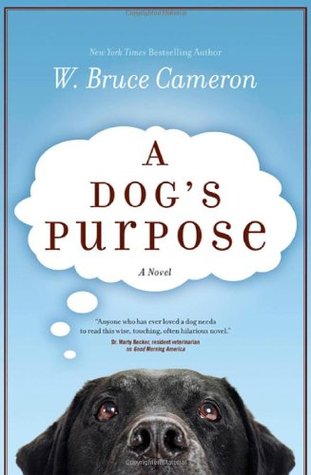
Copyright Forge Books
“A Dog’s Purpose,” in theaters this week, is a love letter to dogs and the people who are lucky enough to be loved by them. A dog named Bailey loves a boy and then, as he dies and is reborn as other dogs, he becomes an important part of the lives of others as well. Dennis Quaid stars as the man who reunites with Bailey in his new form after many years.

The movie is based on the best-seller by the same name and I spoke to its author, W. Bruce Cameron, who also wrote the similarly endearing 8 Simple Rules for Dating My Teenage Daughter: And other tips from a beleaguered father .

We agreed that it is a challenge to find the right name for a dog. He said “you have to wait for the personality to assert itself. Of course that means that you call the dog ‘Hey, puppy!’ and the dog thinks its name is Puppy. My dog Tucker came with the name already stuck on him and it was a perfect name for him. I can’t imagine calling him anything else. As long as you fall in love with the dog, the name is going to be fine.” Tucker was a rescue dog. He was abandoned as a newborn in a box outside of the animal shelter. “My daughter, who runs an animal rescue was called because this was a death row case. Three newborn puppies would have overwhelmed the resources of the shelter. So, they asked her if she could help out, and she happened to have a lactating German shepherd whose puppies had weaned the day before. So she brought in these three puppies that were still slick from being born and said, ‘Hey, remember that wild weekend at the Sigma Chi house?’ and presented her with the puppies. I took him over when he was seven or eight weeks old. She was in Denver and we were in LA so I told her we were not going to come get the dog and she said, ‘I’ll be there on Wednesday.’ Her goal in life is that if you don’t have a dog, she will make sure you get one, and if you have one, she will persuade you to get another one. And if you’re allergic to dogs, she will get you a cat.”

He had dogs when he was growing up, starting at age 8, the same age as the boy in the book. “None of the kids in the neighborhood had dogs. My dad walked in that labrador and we started running together and rolling around together like we found each other after years apart. And then suddenly some of the other people in the neighborhood started getting dogs, too. Pretty soon we were overrun with them. So I always had dogs and our friends had dogs, and our dog needed a friend so we got Gypsy and she needed a friend. So most of my teenage years we had three dogs.”

He loves hearing from people about their dogs. “The Dog’s Purpose premise has gotten me so many emails and comments from people who say that their dog is so much like one they had when they were young or years before that it seems like the truth. The idea that you would come across an old friend later in life.” But he does not have any tips for training a dog. “Tucker is Exhibit A for showing that I don’t know how to train a dog. He’ll agree to some things. He’s the only dog I’ve ever owned who is willing to stay. On the other hand, if I throw a ball and tell him to bring it back, he will run after it and sniff it and look at me as if to say, ‘Why are you throwing this perfectly good ball away?’ I think I’m good at training dogs, but none of my dogs agree with me on that.”

The search for purpose for a dog he says, “is just the search for the right person. That’s their ultimate purpose. But they have another purpose, too. They are so joyous and so happy to be with you. If you want to go for a walk, they’re happy to go wherever you want to go, they’re happy to come back from the walk. With the exception of a bath, they’re happy to do whatever you want to do. If you come back from taking out the trash, they’re happy to see you. And they’re with us such a short period of time and don’t seem depressed about that. The lesson of that is that we should live like the dogs. We should have every day be joyous. My advice to anybody including myself is if you’re going through a bad period and you just can’t see the world’s on your shoulders and no day is a good day, you’re missing the whole point of the experience. And that’s something dogs know from the moment they come bounding up to you as a puppy.”

Related Tags:


Books Interview Writers
Interview: Sunny Pawar, the Adorable Star of “Lion”

Interview: Sunny Pawar, the Adorable Star of “Lion”

Posted on January 22, 2017 at 12:36 pm

sunny pawar
Copyright Nell Minow 2017

The breakout star of the movie “Lion” is Sunny Pawar, just six years old when he played the young Saroo Brierley, who was separated from his family in India as a child, adopted in Australia, and then, as an adult (played by Dev Patel) searching for his original home on Google Earth. Sunny visited Washington D.C., where he was delighted to meet President Obama, who said, “Well done, my boy,” and gave him the traditional Indian greeting, “Namaste.”

Casting director Kirsty McGregor told New York Magazine’s Vulture they talked to more than 2000 children before they found Sunny:

Firstly, we were aware of the pitfalls of casting in India. We weren’t going to be able to search everywhere, because we knew that we needed to find a child who had papers, basically, because we knew we’d have to get him a visa to shoot in Australia….Sunny just has this soulfulness that you could just see. He has an ability to be still on camera, to be himself on camera, which a lot of kids, when they start acting, don’t have. A lot of kids can be natural on camera because they don’t have a preconceived idea of what acting is, but sometimes once they do, depending on what they’ve been watching as well, they can get an idea of what acting is and it becomes a bit more like playing pretendsies. We were really looking for naturalism.”

I saw that in Sunny when I got a chance to chat with him, with the help of an interpreter. We exchanged “Namastes,” and he told me that since he did not speak English, director Garth Davis would tell him what to do by putting his hand on his heart. “I wasn’t conscious of the cameras at all. It was always about having fun and I think I’m blessed to get this little gift of acting naturally so I wasn’t conscious but the emotional bits, since I was only about 5 1/2 when we shot the film. There was a sign language that Garth and I developed so he could say, ‘Sunny, feel it from here. Any unanswered question, ask your heart.'” His father, who was with him throughout the filming, said the same thing: “Don’t worry son, just be calm and listen to your heart. It will automatically come”.

Sunny’s character has some very scary adventures, but Sunny was not afraid, except in one scene. “All scenes were actually great fun — the train sequences, the running sequences — but there was one particular sequence I wasn’t scared but a little just nervous, it was the scene where a bike comes and hits me.”

Sunny appeared with Dev Patel at the Golden Globes. They play the same character at different ages so had no scenes together but they became good friends. “It was great fun working with Dev and you know he has this habit of tossing me in the air which I really love. He did it at the Globes as well and he’s like an elder brother to me now.” He does not watch American movies or television so did not recognize any of the celebrities, but he is a big fan of WWE wrestling, so his heroes are The Rock, Undertaker, John Cena, Kalisto, Brock Lesnar and Roman Reigns. His drea would be do make a movie with The Rock.

He has enjoyed his time in America, especially meeting President Obama and going to Disney World, where he rode the Tower of Terror — twice!

Related Tags:


Actors Interview
THE MOVIE MOM® is a registered trademark of Nell Minow. Use of the mark without express consent from Nell Minow constitutes trademark infringement and unfair competition in violation of federal and state laws. All material © Nell Minow 1995-2026, all rights reserved, and no use or republication is permitted without explicit permission. This site hosts Nell Minow’s Movie Mom® archive, with material that originally appeared on Yahoo! Movies, Beliefnet, and other sources. Much of her new material can be found at Rogerebert.com, Huffington Post, and WheretoWatch. Her books include The Movie Mom’s Guide to Family Movies and 101 Must-See Movie Moments, and she can be heard each week on radio stations across the country.

Website Designed by Max LaZebnik