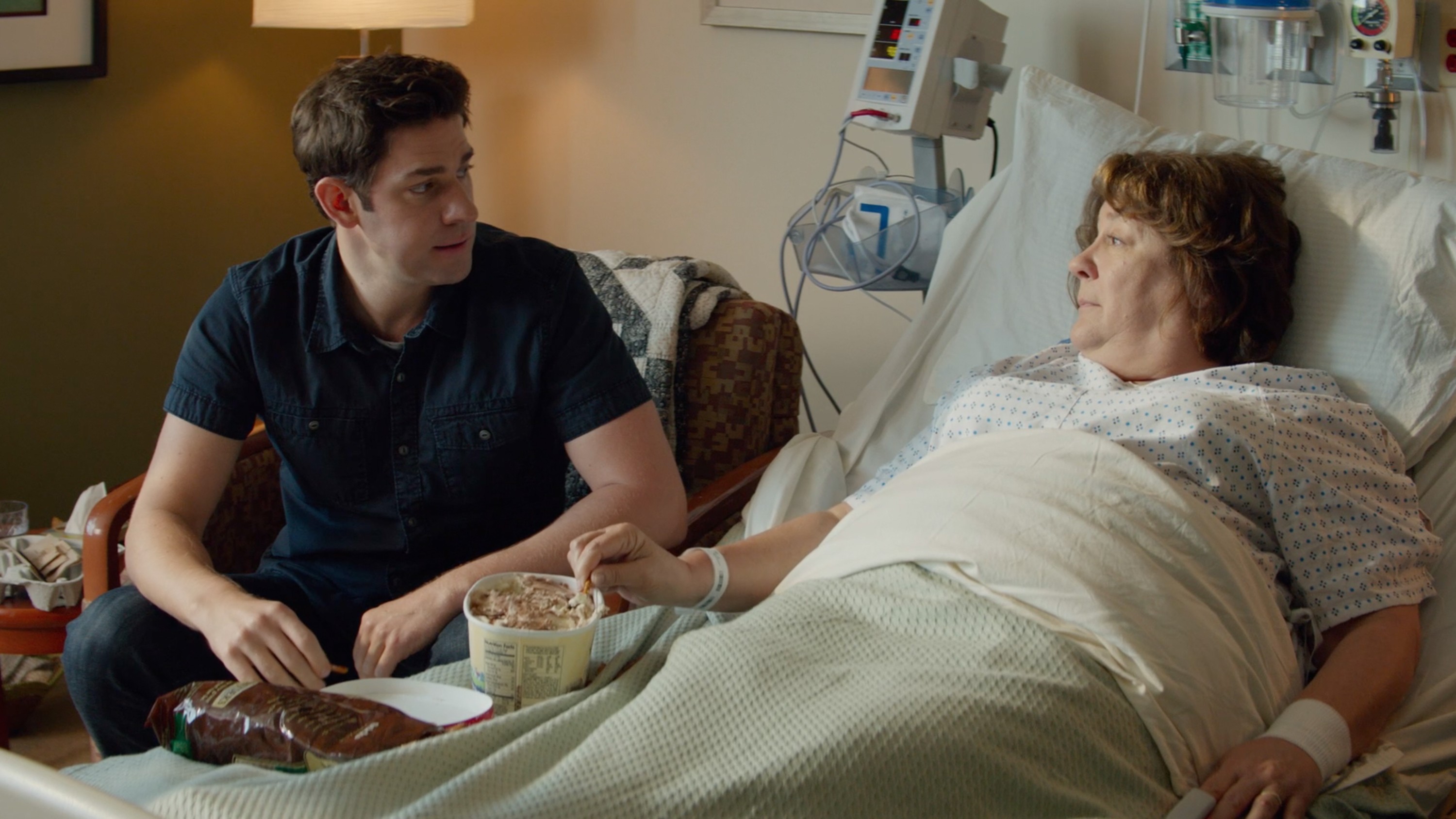
Copyright Sony Pictures Classics 2016Producer Tom Rice (“The Way Way Back,” Mississippi Grind”) answered my questions about the endearing independent film “The Hollars,” with director John Krasinski starring as a confused young man about to become a father, who is called home when his mother is hospitalized with a brain tumor. The brilliant cast includes Margo Martindale, Richard Jenkins, Anna Kendrick, Sharlto Copley, and, as a kind-hearted church youth leader, singer Josh Groban.
How did you first come upon the script?
I read the script on an airplane and immediately fell in love with it. I was laughing out loud, I was crying – people were looking at me, and I didn’t care. I fell for these characters, and saw my own family in the Hollars. I fell in love with the sincerity and love these people have for each other – in the midst of the chaos and dysfunction. It’s such a special story, and it fits right into the Sycamore ethos.
What matters most to you in the projects you commit to?
Any project we greenlight has to fit the ethos of our company. The Sycamore mission is to make films with elements of redemption, reconciliation, social justice, or what Andy Crouch calls the “full human condition.” We don’t ever set out to make blatantly Christian films – but I hope everything we do will have some type of positive impact on our culture and community.
What did John Krasinski bring to the film as director?
Everything. It was his passion that kept this project alive during development. It was his vision that attracted the cast. It was his charm, humor and sensibility that’s organically infused in every scene. And it was his leadership that everyone got behind, every step of the way. John is a very well-loved person, and people will come out of the woodwork to support him.
What do stories about loving but dysfunctional families help us understand about ourselves?
Well, I think everyone will relate to this film in some way. For me, it’s about grace. Family is everything to me, but it’s not always easy. Communication, honesty, forgiveness, love – those are all necessary. We all need to be more giving in those areas, because we all need it to be given to us. It’s grace in action. We’re all messy, we’re all broken – and we all try to pretend like we’re not. When a story like this comes along and shines a light on that – with a perfect blend of heart and humor – I think it inspires us to let down our own guard a little – take of our masks, so to speak – and trust ourselves and our loved ones with who we really are.
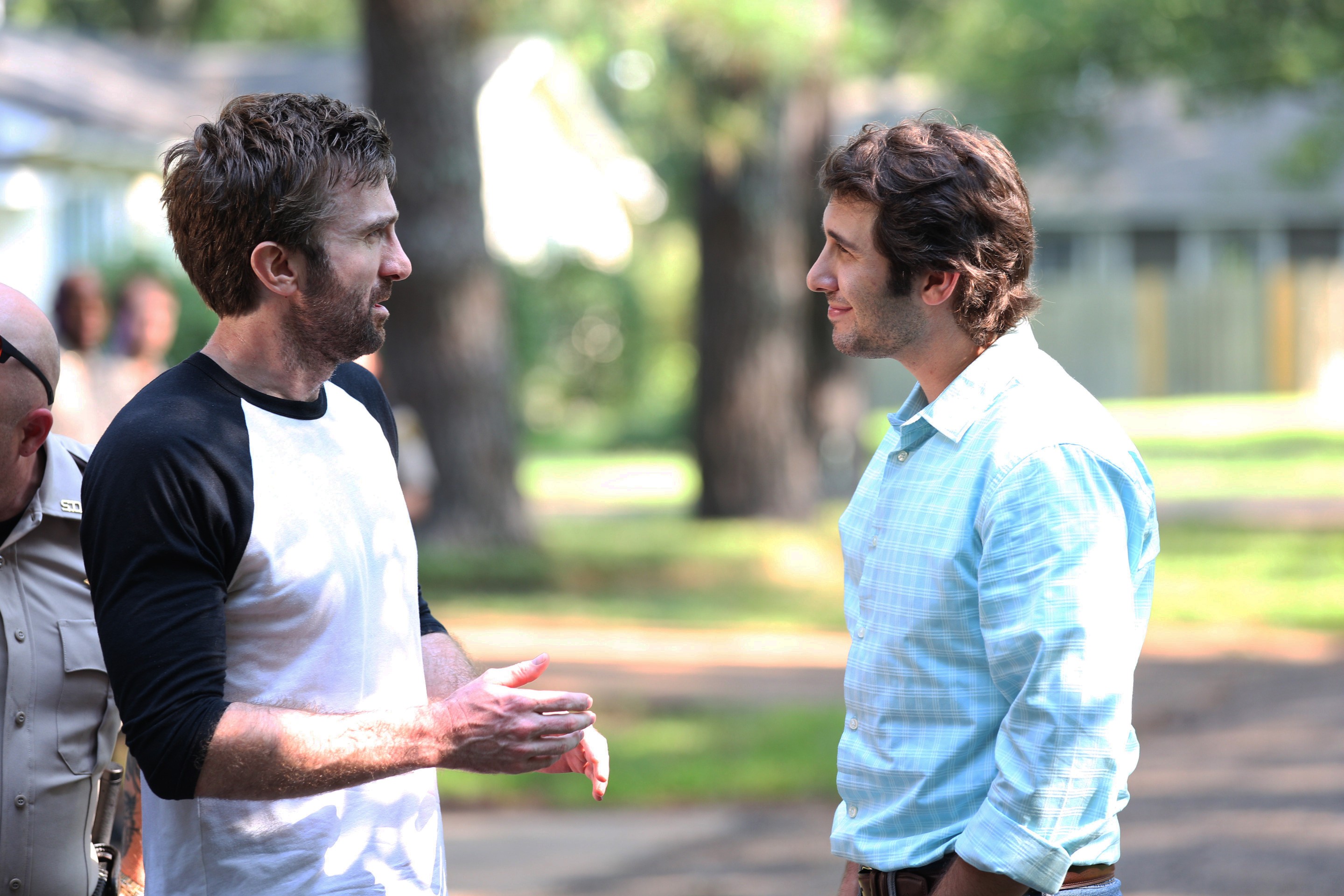
Copyright Sony Pictures Classics 2016One of the film’s most endearing characters is singer Josh Groban as a church youth leader. How did he get the role and what does it add to the film?
Josh and John are friends, and so Josh took the role when John reached out and offered it to him. Josh is perfect casting here. He brings such a likeable, calm yet authoritative presence to the role. He never has any passages of dialogue where he’s preaching – but his character has a strong impact on another character just by being patient and understanding with him – and this grace – there’s that word again – allows the other character to grow and change. It’s a beautiful and honest portrayal of a good man.
Although it is not explicitly a faith-centered film, how does it touch on matters of purpose and connection?
I really hope those discussions are about healing. How it’s never too late to make amends, or to grow closer without the burden of the past weighing us down. This is true in human relationships, and central to our relationship with God. We can meet God wherever we are in life, and He’s there for us. And I would hope everyone has someone in their life – a family member or friend – that embodies that. We are all built for community. We need each other, and this film is about our human need for those relationships in so many ways – especially familial.
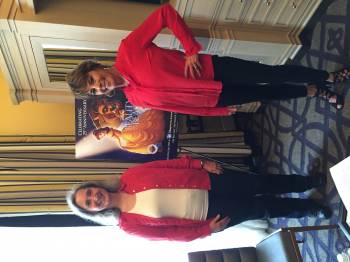
Interview: Paige O’Hara, Belle in Disney’s “Beauty and the Beast”
Posted on September 26, 2016 at 1:12 pm
Copyright Nell Minow 2016
Broadway star Paige O’Hara provided the sweet singing and speaking voice for Belle in Disney’s classic “Beauty and the Beast,” celebrating its 25th anniversary with a gorgeous new DVD/Blu-ray edition. She is also an accomplished painter. I was delighted to get a chance to talk to her about her earliest and favorite singing roles and what it was like to appear in Disney’s most romantic musical fairy tale. She told me the exact moment when Belle falls in love – and she shared for the first time a lovely story about her favorite singer, Mary Martin.
What was the first song you ever learned to sing?
“Swing Low, Sweet Chariot,” because my nanny used to sing that.
And did you always love performing?
My family always knew I was an actor, I’ve always been an actress. They called me “Little Sarah Bernhardt” but I didn’t know I could really sing till I turned around 12 years old and did I did the “Peter Pan” song “I’ve Gotta Crow” for a competition. And they said “Oh my gosh! That voice is huge, you’ve got to sing.” And I started singing really around 12 years old.
Were there performers in your family?
No, not really. The only singer or musical person in my family was my aunt who sing with Dinah Shore. But she fell in love and got married and left the business. But my mom was my drama eacher. She did the acting and directing for the performing arts high school. So my mom was really my teacher, she was amazing.
She’s really brilliant but she wasn’t “method” in the fact that she didn’t over-intellectualize everything. She would actually try to be organic with the direction of the characters. So the realism of my characters I think came from her teaching me about that. Do you remember the character Auntie Mame? She was like that, with the looks of Carole Lombard!
What was the first musical play you saw?
I think the first musical play I saw I was in. It was “The Wizard of Oz.” I was like a little this background munchkin person but then the next year I got to play Cinderella so that was fun.
You came to New York after high school to be on Broadway?
Of course! I actually turned down a full scholarship at the Cincinnati Conservatory to go right to New York, but I was ready. I had been in this school with my mom and I’d been acting my whole life. It’s not really the norm for most people and I don’t really recommend it unless you’re in this circumstance that I was in. I was just ready to do it and I was lucky. I had to do those watercolors and sell them on the street to pay my rent. But within one year I had my equity card and created Della in “Gift of the Magi” on Broadway. So it was really cool.
What was your audition song for “Beauty and the Beast?”
I sang “Heaven Help My Heart” from Chess. That’s a great, great song because it shows range.
It’s a very challenging song.
I played the lead in “Chess” so I knew it really well and from the reaction from the casting director, I could tell I was getting a callback. So we went through five auditions and every audition had more people, two people, four people, all of them including Jeffrey Katzenberg. So it was crazy and it was over a span of two weeks and my husband had proposed to me, a day before I got the job. The next day I walked into the apartment and there was a message from David Friedman who was the musical director for Beauty and the Beast saying “Paige it’s David, we’ve got to get together and set keys” and I was like, “My God, my God!”
That’s how I found out. And literally like two seconds later my agent called and I said, “I know!!” It was just crazy, a pretty exciting week!
Tell me about creating the character of Belle.
I always say there’s a lot of us in Belle. We all share the role, Linda Woolverton who wrote it, James Foster and Mark Swain who animated it and then me. So it’s kind of funny that a lot of people said that the Linda Woolverton and I could be sisters. She is very much like me and like Belle she loves books and reading and I pushed that. Belle has a sense of humor and she is the oldest Disney Princess. She’s in her early 20s. They had never done it before; the other princesses are teenagers. She is an old soul, too, and her heart has got to be evident throughout the entire film; you’ve got to feel her heart. And I appreciate it more now, 25 years later, what she did being willing to give up her life for her father. I just love the fact that Belle was her own person. She wasn’t looking for a man and she had the guts to stand up to Gaston.
You were lucky enough to work with your fellow actors in recording, which is not always the case in animated films.
It was fun working with Richard Wild because he was a friend and I had known him for years, so I felt I could take it pretty far. We had the written words and everything but they said, “If you want to expand a little bit on the dialogue, you can.”
Robby Benson and I were together, too. My whole character came to fruition when Robbie was hired because I was hired a month before they found him. It was instant chemistry. I’m such a fan because I was one of the many to have crushes on him. We were the same age when he was doing his films as a teenager and he would love hearing that but he would also love the fact that I loved him in “One on One” because I’m a diehard NBA fan. I think it’s kind of disappointing he didn’t have his own song in the movie but what an actor, oh my gosh!
Belle’s feelings change a lot over the course of the story.
Yes, absolutely, from being terrified to falling in love with him. And I know the moment she falls in love with him. When the little birds jump up on this paw and she smiles and she touches him and runs behind the tree. We talked about that with the directors. That’s the moment when she realizes she’s never felt this before, and her heart is going and she knows that… She knows she’s falling in love with him at that point.
Did you meet Angela Lansbury?
Yes! I was a huge fan of Angela’s and when I came to New York she was starring in “Gypsy” on Broadway. I paid to see it once. I was so broke but then I sneaked in at intermission and came back again and again and again to hear her sing “Rose’s Turn.” Every night the audience would stand and stop the show. So it was really cool to talk to her. I pointed out that she played Mama Rose as if she was the child and Louise was the adult. She looked at me and she said, “You were the first person that ever said that and that’s exactly my intention”. And I was like, cool. I got it, I understand her theory in that role because she’s the most lovable of all the women that played that role. Because that role can be very abrasive but she was something else when she did that.
When she recorded “Beauty And The Beast” she spent all night traveling. She had gotten stuck in another city and was on the planes all night long before the session. They said they could cancel it and she could do it another day and she said, “Oh no, I’ll be there.” She gets in and she’s very nervous. She said, “I don’t know, that song has so much line, I don’t know if I can do that anymore,” they said, “Of course you can,” and lo and behold we have the whole orchestra, everybody’s there, and she’s behind the headset, and did it in one take. One take, one take and people were crying, people were crying. It was just unbelievable! It’s crazy!
And you’ve continued to play Belle into some other versions.
You have appeared on stage in so many classic musicals. Do you have a favorite?
One of my favorites of course is “The Sound of Music.” Mary Martin’s granddaughter, Heidi Hagman, Larry Hagman’s daughter, played Liesel in our show. She told Mary that I was a huge fan of hers. She said, “This Paige girl is like crazy for you, Grandma.” I got this big box sent to the theater she had pulled out her Ordinary Couple dress that was in the museum and the note said, “I want you to wear this. Love, Mary. I hear you are a lot like me.” I still have the note. I wore the dress and it fit perfectly and then I sent it back. That was like the most amazing thing. And she set it up for me to talk over phone with the real Maria.
What do you hope families will talk about after they see the movie?
It’s timeless. It’s one film where every single factor came together. I get so much fan mail from of little girls because they don’t feel like a geek anymore because Belle loves to read. The message is just timeless, it’s relevant now. Beauty comes from within.
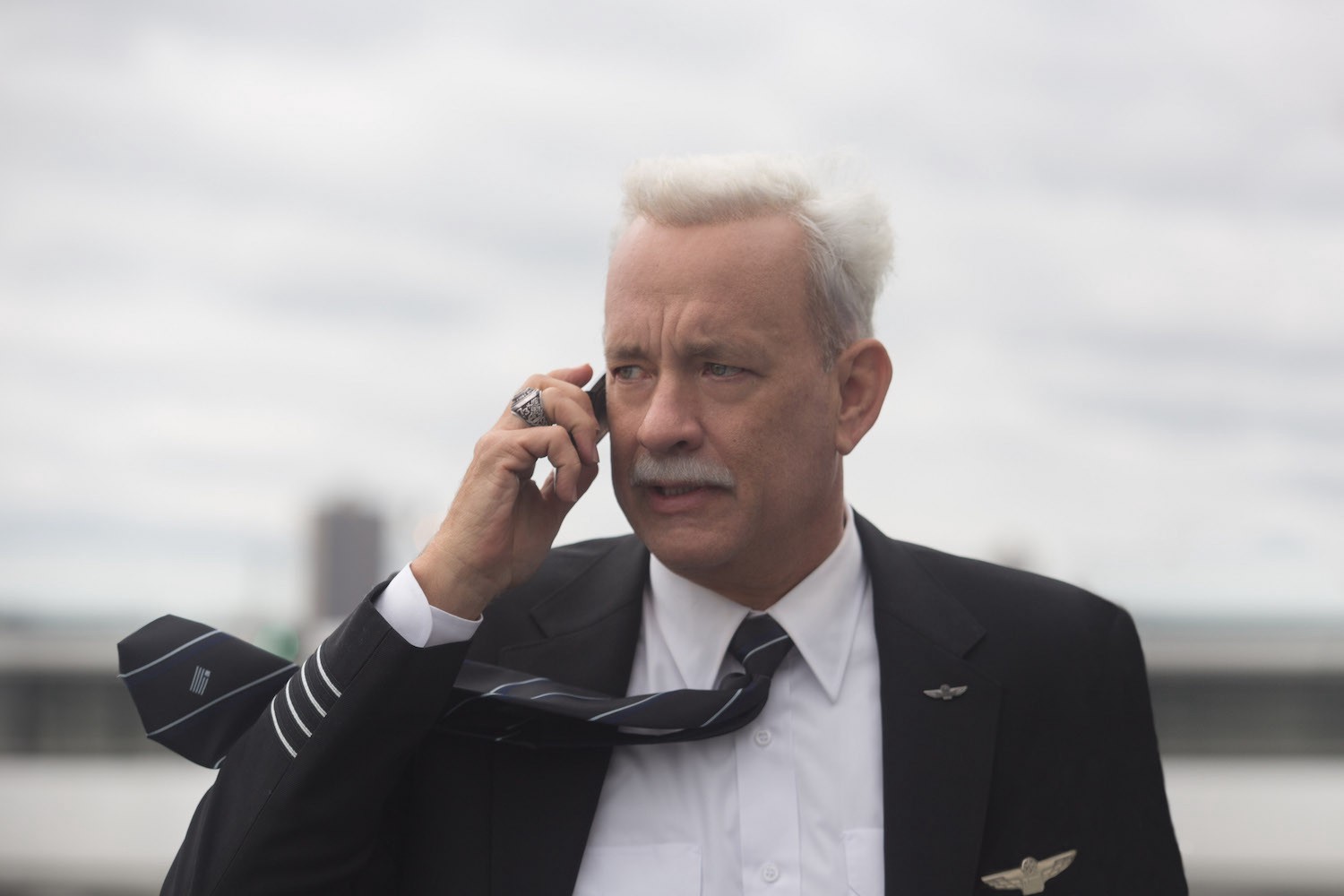
Copyright 2016 Warner BrothersTodd Komarnicki is a Hollywood producer (“Elf”) and writer whose screenplay for this week’s Clint Eastwood film, “Sully,” is exceptionally well-crafted. It was a great pleasure to talk to him about telling the story of Sully Sullenberger, the pilot who made an emergency landing on the Hudson River, and about why Tom Hanks keeps making movies about real-life stories of transportation disasters.
Everyone remembers the news stories about Sully and the images of the passengers standing on the wings of the plane in the middle of the Hudson River. But that was a while ago. How do you draw people back into that story?
The secret was Sully, just meeting and getting to know Sully. He had the untold story which is the bedrock for our film. He had it in his own experience. He didn’t put it in his book but he was able to share it with me. And so going deep with Sully allowed me to uncover all the stuff that the world just didn’t know and because of that it immediately it was obvious that we had a scintillating movie.
The movie begins just after the emergency landing but takes us back in time to help us understand what happened. How did you decide when to give us more information?
I have this storytelling theory which is “the eternal now.” It works for certain stories really, really well and perfectly plugs into Sully. That theory is that everything that has ever happened to us immediately leading up to this phone call between you and me, everything that’s ever happened to us is with us. We have it with us. We can access some of it by memory, some of it just by a sense of feeling. Most of it we don’t remember, but it’s all in there. Then there’s what’s happening right now at the present and then there is of course how the present impacts the moments that follow and so on.
It’s always eternally now and all these things are cooking inside of every human being. So as a storytelling trope that really works because I don’t like the idea of flashbacks. I want everything to feel connected, so just by drifting past the character’s shoulder in a present situation you can go anywhere you want as long as you come back to where we started. That allowed me to go on these memory tributaries with Sully as he was trying to patch his life together. And because he was under such stress with PTSD everything was a trigger for him anyway. So it reminded him of the crash, it reminded him of what he was at stake often losing, they could’ve taken his pilot’s license easily and much more than that. So using memory as a trigger for how to react to the present allowed me to structure the movie that way.
It is so striking that instead of referring to the people on the plane as “passengers” he calls them “souls.”
Yes, I believe that we are all souls so there were certainly 155 souls in that plane. I just want people to remember that it’s not just this crazy impossible thing that occurred but it involved 155 people and their families and their loved ones. The fact that they all survived means that for generations their family tree is going to continue to sprout and that brings me deep joy. To tell that story, that’s really the happiest ending part — these people are alive and are thriving. And because they survived such a dark moment, they are even more effective in the world. Nobody got off that plane and became a worse person; everybody improved after that. So the world is a brighter place because of what happened that day.
One thing that I thought was a very telling detail and very true to life is that nobody paid attention to the safety talk at the beginning of the flight.
Yes, I’m so glad you noticed that. That’s in the script, absolutely. I wanted to highlight that because nobody ever pays attention.
So, do you listen now when you’re on a plane?
Are you kidding me? I elbow everybody near me and I pay total attention! I’ll tell you where your seat cushion that can be used as floating device is or whatever you need. I’m on it.
The phone conversations between Sully and his wife, who are never together throughout the time period of the film told us a lot about who they are and what was going on.
It’s interesting that you singled that out. It works as a metaphor for isolation — that the person you love the most is the one person you can’t help nor can they help you. They’re really stranded on the other end of the telephone line, and they’re stranded on opposite end of the country. There is a deep sense of helplessness. That’s really a chore for actors to convey all that, the relationship via phone. Our actors were at the top of the chart, so they were able to pull it off. It’s very, very difficult to do but the journey for the Lorrie character is from confusion and agitation to finally understanding that she almost lost the love of her life, and that’s really the journey.
So I love that as a storytelling tool. The only artistic license in the film is the fact that I had to compress the time of the investigation, which actually lasted nine months. I had to collapse it into a handful of days. So, that’s why he didn’t go back to California and knowing that I couldn’t have him go back to California allowed me to infuse those phone scenes with all the powers that they needed to really sparkle.
What did being a producer teach you about creating a script?
As a producer the hardest and the most frustrating thing is getting the writer to not give up. A lot of writers reach rewrite fatigue. They take it from the 5 yard line, to the 4 yard line, to the 3 yard line, but then they run out of gas and often in Hollywood writers get replaced for that reason. It’s hard and it’s frustrating and as a writer who produces some of the producers have the instinct of just saying, “If I could just fix that scene.” But that doesn’t work either because you can’t take the power and the respect away from the writer you are working with.
So in this case I had such incredible partners in Alan Stewart and Craig Marshall creatively during the development process and also Kipp Nelson, the Executive Producer. So they were such strong guys that as I was writing and developing, I knew that we were just making it better and better. And because I had no plans to go anywhere as long as they were happy with me I was going to stick around. So it was a great working relationship and a real blessing. And also, I need to give a shout out to Jonathan Coleman who runs my company and he is my editor. He is the first person that sees the material before anyone and he always forces me to make everything as good as the best scene in the script. So that means constant rewriting and something that had worked for five drafts suddenly up against the new scene doesn’t work anymore. You’re always forced and forced and forced and pushed. You need a gadfly like that and I’m grateful for Jonathan.
I know you are a person whose faith matters deeply. Do you have a favorite Bible verse?
I definitely try to remind myself to live by Romans 8:28 which is “All things lead together for good for those who love God.” It allows me to just relax and trust that the God of the universe is in charge and is on my side and it makes life a lot more peaceful. It’s been easier to do that as I’ve gotten older. I’m 50 now and at 30 I believed the same thing but I struggled a lot more with letting it sink in. And so what I would say now is that, that Scripture has allowed me to stop wanting what I want and only want what God wants and by doing that it has made my life a lot sweeter.
I think we have got time for just one more question. I’ve noticed that Tom Hanks seems to be playing real-life people responsible for saving people on vessels a lot. He was on Apollo 13, he was Captain Phillips — what is it that makes him so trustworthy in that role?
Tom is drawn to characters of deep spiritual worth. Tom is a great guy and he wants to play people that are inspirational. He makes choices outside of that too but I would say if you look back at his career he has always played someone that is very soulful even if they are searching. He is not a guy that runs out and plays a bunch of bad guys. He is our Gary Cooper and we’re so blessed to have him.
Interview: Natalie Portman on “A Tale of Love and Darkness”
Posted on August 31, 2016 at 3:44 pm
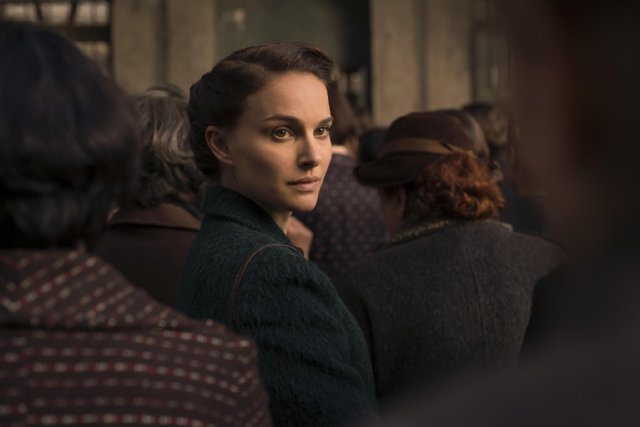
Oscar-winning actress Natalie Portman wrote, directed, and stars in “A Tale of Love and Darkness,” based on the international best-selling memoir by Amos Oz. It was a pleasure to speak to her about the challenges of adapting the book and directing a child actor.
What do we learn from the troubled but tender relationship between Amos and his mother?
The film and the book are very much about what happens when expectations don’t line up with reality. And I think that a lot of the things that they might tell young people about what happens once you have a job or once you go to college or once you get married, these things are like the way to happiness or something, once you’ve got to those realities and you achieved those whether you call them goals or expectations and then they are different than you expected them to be, and then dealing with those differences can be one of the most challenging things in life.
In the film, the child’s father is fascinated at the derivation of and connection between words, possibly because it takes place at a time when modern conversational Hebrew was being invented.
It’s a really fascinating time in history because not only was this country of Israel being created by a group of refugees, which I’m not sure has happened before, but also they were revising the language as you said, a language that has been spoken purely in a religious context, in a Biblical or liturgical context for hundreds of years and then all of a sudden it needed to be used for everyday usage and needed to be updated rapidly. And so it’s really fascinating seeing how they came up with new words, what they drew from. Ohad talked about his uncle in the book who was one of the architects of modern Hebrew, creating new words, from biblical words and he created the word for “shirt” and he says in the book, “If my uncle hadn’t invented the word for shirt we would still be saying, ‘I put on my coat of many colors this morning.'” And it’s really amazing how they introduced these new words and got them really accepted into everyday usage. And what an exciting time to be a writer, too, because you could literally invent your language as you were inventing your story.
Copyright Focus World 2016You began acting when you were very young and now in this movie are working with a very young actor. What did you learn from your experiences as a child performer that helped you direct this actor?
I think the most important thing was that when I was a kid I felt that everyone on set made sure that the environment felt like playing more than working and I wanted to repeat that for Amir because the film is quite serious in tone. The atmosphere should always be positive for him so I really tried to make sure that everyone was very calm on set and between takes we would goof around and make jokes and not have it be a stressful environment for him.
You have worked with so many outstanding directors, very different directors in terms of their approach and their style. What were some of the things that you tried to take from your experiences and use as a director?
I have been lucky to work with so many people who I admire so much and I took a lot from many different directors I worked with. From Darren Aronofsky, I saw how he worked with each actor really individually. He would do different things with different actors to elicit their performances from them which I thought was really smart because everyone needs something different. And from Terrence Malick, I saw that you don’t have to play by the rules at all. You just need to make movies the way that you make them and the way you want to tell them. And then Mike Nichols just always always says, “Keep reminding yourself what story you are telling, where you are in the story and claim the big moment.”
What do we learn from the scene at the end that gives us a glimpse of the main character as an adult?
The book actually deals with many different time periods including the present. I felt that it was important for me to show where he ends up because he did and end up fulfilling his mother’s dreams in a way by becoming this pioneer by becoming a writer. After all of her storytelling, somehow his mother’s absence turned him into the man he became. He was so influenced by her but also he gave himself his own name. Ohad means strong in Hebrew and it.s part of remaking himself.
How did you use your character’s clothing to tell her story?
I actually was lucky enough to have the great designer Alber Elbaz who formerly designed at Lanvin for the past ten years and is originally Israeli also. He did all of my costumes for the film. We really wanted to tell a story through the wardrobe. I like this European elegance that they had but also poverty. They don’t have a lot and she’s wearing the same clothes over and over again. But they’re beautiful clothes that she had from Europe. She had three outfits. Also the clothes helped tell the passage of time. We go from a more 40’s silhouette to a more 50’s silhouette which helps us understand the time that has gone by.
What were you looking for in the movie’s score?
The music was an amazing part of the film to do and to learn. It’s actually really surprising to me how hard it was because I really love music and I’ve always known very specifically the kind of music that I want. But the problem with this film, the music that I felt fit emotionally, when you put it next to the actual emotion on the film, it kind of doubled the emotion and was too much. And so I realized that you have to actually had to go against, and again, it can’t be the exact same emotion you’re going for. I worked with a really close friend, the composer Nick Britell who was amazing. He would just sit with me and try hundred different things because I really needed to hear it to make sure it was right. He wrote so many beautiful pieces for the film. I’m so proud of the work that he did and he added immeasurably to the film.
What do you want this film to tell people about Israel?
I don’t intend to be educational on this film. It’s really very much about a family. But I think if there’s anything that movies can do it is that they can remind us that people and places that we might not know about or that we might have preconceived notions about or even prejudices against, they can make us relate to someone as a human and hopefully you just see them in a different way. A movie can help you relate to the emotion and it might of someone that you might never meet your whole life.
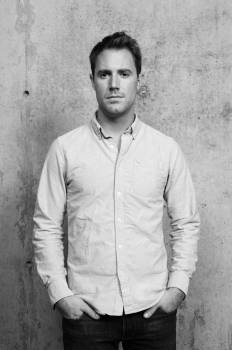
Keegan DeWitt is a versatile and sought-after composer who has worked on a remarkably wide range of television and film projects. Keegan DeWitt is a versatile and accomplished composer, who has strengthened many stories across film and television. This October, his music will heighten the drama of HBO’s highly anticipated series, “Divorce,” starring Sarah Jessica Parker, Thomas Haden Church, and Molly Shannon. He wrote the scores for eight Sundance Film Festival selections including the current release “Morris From America,” starring Craig Robinson. I was very glad to get a chance to talk to him.
Music is a very important part of the storyline of “Morris in America,” with key scenes including rap and electronic music. How do you approach that?
It’s easy because Chad Hartigan and I have been friends since we were teenagers. I work with some really interesting people but it is great to be able to work with a close friend, especially because Chad and I grew up talking about movies and getting excited about movies. So the process of making a movie with somebody you went through that with is that much more rewarding. And this was one especially cool. One day Chad has this idea of, “Let’s figure out a way to make an international co-production in Germany with Americans and Germans,” so I was like “Okay,” and next thing I know, me and him are riding bikes across the park in Berlin to go to the production office and score the movie which was so great.
And then musically, it’s a tough double-edged sword in that when we sat down, we had to make so that when people watch it they will have no idea this is a score. We really wanted it to feel like the hip-hop stuff was totally authentic, real hip-hop. And the EDM with exactly the same. And so on and so forth.Copyright 2016 Keegan DeWitt
And then when the score stuff happened, it just was like breathing in the film and it all felt really organic and at no point did you notice it. That’s an especially tough gamble when it is such a music-centered film and there is a ton of music in there.
It was a fun project in that I had to roll up my sleeves and go, “Okay, how do I do each of these types of music?” It was also hard because there are racial implications in it as well, just like Chad as the writer and director creating this narrative. I felt this huge spotlight on myself to not be just a white person imitating hip-hop.o for me I was really encouraged when I sat down to write like that when he’s 14. But I clued into what first got me really excited about hip-hop when I was a teenager which was the melodic stuff like De La Soul and Del the Funky Homosapien and people like that. The hip-hop that the character Morris creates is sort of goofy, like a goofier hip-hop that somebody who is coming from a slightly more naïve innocent place like Morris could get into. And so for me that was my little slot in the door. I was like, “Ah, I got it.” I could sneak in with this because this is authentic in my experience and I also think it could be authentic to Morris’ experience.
And we also thought that it was an important thing to choose hip-hop that was somewhat fun so that we weren’t trying to comment on or make things seem gritty. The thing that I thought was so rare about the script is actually like it’s just so thick with love and curiosity and all those things. And it’s like Chad said, “If you want that really gritty dark person, go see every other movie about what it’s like to be a bad teenager.” I think that’s really true. And I am always drawn to what somebody wants to do something that’s like very pop. And so I was excited to be able to do that on this as well. And then on that note also to make the electronic music feel scary too. We tried to make it really loud and aggressive so that when he’s walking up to that club on that night you feel that rock in his stomach that you would feel if you were stepping up and could just hear the pounding music from inside.
So, now that you’re working on the new “Divorce” television series, how is it different to approach a TV series versus a movie?
I was lucky on “Divorce” because it’s HBO so it super creative and artistic to begin with. And also with this show, because everyone loves Sarah Jessica Parker and Sharon Horgan the creator, there is just a reverence for them in the work they do that there is a lot of space and a lot of grace for the creative process. When I got there they pretty much shot two-thirds of everything and we really got to spend like three months just being creative.
I don’t think it’s often on a TV series that we are a month into postproduction and it feels like hanging out on a Saturday evening. We are all just talking about music and I would play them little things and they would get excited and be like, Oh, what’s the name of that type of drum?” Yeah, the Bodhrán, okay. Bodhrán, let’s go crazy on that and experiment with that. So we did like a whole week of crazy Bodhrán music and then did crazy flute music because that show is really like in the 70’s and Jethro Tull and stuff like that.
I’ve been really lucky in that way. I’ve done other stuff where you jump in and you are just creating music and you are like, “I hope that makes sense.” But with this, we really did get to begin almost as if it was a movie and go through each episode and really choose to be adventurous. I was just really lucky, especially for a relatively younger composer, to be able to be in a room that’s got that many talented people. It was an opinionated room for sure and it was a competitive kind of “Can I meet these expectations?” But that’s always exciting as long as the people are really intelligent and excited as they were.
The thing that I know that SJ fought for and resonated with me was that it’s really important that as an adult so often things can be super dark or super sad and then in the same moment totally farcical. We had to figure out ways to mix extreme happiness with awkwardness or extreme sadness with moments of real tenderness or even silliness. And so I tried to make sure that I represented all ends of the spectrum and even if I would stay on the silly side of the spectrum, there was a real humility and a real intelligence to it and then it if was sad, it still felt a little bit like off kilter, a little bit ridiculous.
Thomas Haden Church is so good in the show. He’s so funny and has such heart. One minute he’s sabotaging Jessica Parker’s life but in the other minute he’s like this dad whose family is falling apart and he’s desperately trying to keep it together. So as soon as I walked into it I knew this is an intelligent project and I really had to make sure that I continued to meet that in terms of not giving them a cue that included all of the moods and emotions.
Do you compose on the piano? Or a computer keyboard?
My main instrument is piano to compose on but this was a crazy experience in that one day we were talking about me maybe going into the project and then the next week I was flying of the New York and literally composing in the post-production office. I was just trying to be a ninja with the computer as much as I could. So there are lots of saxophones and organic things that I try to really add some humanity. And every night I would walk to the subway and be calling a bunch of people that I know all over the United States to be like, “Hey, can you send me a voice memo of you playing this theme on the saxophone but sort of make a long?” And every morning I would be getting email dispatches from players around the United States that I would then bring in and chop up and have to work on the slide to get things together.
I always say I could divide it and these two camps; the people who are great with computer and the people who are purest with real instruments. And I’m always fascinated by what if you send me a really crappy recording of your saxophone where so it feels really gritty and interesting and breathy and then I’m going to take it to the computer, re-pitch notes of it, cut it in half, slow it down, put it in double time and then once I do that with five different instruments at once it’s this really cool mix of both of those things.
I always try and remember a limitation is not a limitation. It’s like a gift, it’s a creative gift. So this thing was like how do I compose music that I have to audition in high-pressure circumstances with like 15 minute turnaround times in a production office in Greenpoint on a laptop? It’s time to treat this like it’s a scrapbook and I’ve got a bunch of scissors and paste.
Then we sit down with Sharon and SJ and everyone. It was this challenge of one group wanted a lot of the Bodhrán because it was chaotic and interesting and crazy and the other one was flute music and I was sort of jokingly at one point, “Do you realize that when you mix Irish drums with flutes you’ve got ‘Braveheart.’ I turned the flute into a saxophone because it’s got a little bit more comedy but also when used right that sound can be very emotional. So I tried to kind of leverage all of those things together and take it one notch off of what makes sense.