Interview: Chris Glass of “The Jungle Book”

Interview: Chris Glass of “The Jungle Book”

Posted on August 29, 2016 at 3:45 pm

Copyright 2016 Disney
One of the most visually striking and just plain beautiful films of the year is Disney’s gorgeous live-action remake of “The Jungle Book.” The man responsible for the look of the film is production designer Christopher Glass, and it was a thrill to get a chance to talk to him about it.

“It’s kind of funny,” Glass told me, “because Jon Favreau, Bill Pope, Rob Legato, me, everyone working on the movie, all of us come from the same philosophy where more practical is better. You know we talked about CG movies, movies that were mostly done on the computer and the shortcomings or the strengths, what works and what doesn’t work, and then it’s kind of ironic because we’re making a movie that’s 98 percent computer generated. But I think that is actually good that we all had this healthy skepticism of the technology. Rob Legato is a master of the technology and so is Andy Jones the animator and Adam Valdez and Dan Lemmon. So really what we needed on this movie was kind of that spirit of doing things practically but yet we knew that a lot of it wasn’t going to be practical. But having said that there was a lot of practical stuff but it was all snippets and slices of sets and a prop sometimes like a cow bell would be real, like the stuff around Mowgli inside King Louie’s Temple next to him is real. We had some real fruit on the ground. We threw real fruit out of a fruit launcher when he throws the fruit down on the ground. But there’s some CG. You don’t know where the line begins or ends and that was kind of our intention. Jon wanted to blur the line between reality and what we create in the computer. We wanted to be fooled ourselves.”

In a non CG film you can see the footage immediately after it has been filmed. But because of all the effects, the crew would not see what the scenes looked like for months. “It wasn’t like the next day you would see the finished shot; it was an iterated thing. So our challenge was to see if we could fool one another and there were times when we were fooled, and sometimes it would be the reverse, sometime Jon would be like, ‘Oh that is so fake’, but it would be real. I would say, ‘No that’s actually my set.’ He would be like, ‘Oh, that’s the fakest part’ and I’d be ‘Oh no.’ It felt sometimes like it was backwards. There were literally times I was designing sets after we had already shot the scene physically and edited it then I would design the set; it was very odd.”

Ultimately the real and virtual worlds were so integrated that it was hard to tell where the line was. “Basically anything Mowgli is touching is mostly real. If his feet are touching it or his hands are touching it, but not always. The animals aren’t real, some trees are definitely not but a lot of the plants and the things he’s walking through are, and even the grass he is walking through when he is talking to Bagheera. We built a little strip of grass like 4 feet wide for him to walk through. Technically it served the purpose of giving him interaction. If you have to animate everything that the kid is touching and everything it would have made his task even more daunting than it already was. And if you do end up replacing stuff it’s a great lighting reference and physical interaction reference for the animator so that they can copy that when they are doing the rest of it so that it behaves in the same way or looks the same.”

The-Jungle-Book-Movie-2016

Glass was very impressed with Neel Sethi, the young actor who played Mowgli, and how natural he was even when he had to imagine how it would all look. “A lot of the stuff he did do completely with nothing but blue and he did a great job. I think even well-seasoned actors have more trouble. A kid is pretending and he’s cool with it. He was talking to the puppets and it worked.”

Glass had been to India and other jungles before. “And we did have a team that went out and took at least 80,000 photographs of India. We had research that were on for many, many months; we just researched everything that we could. We used the Internet, we used books, we called consulates, we talked to directors who were shooting. There was the “Monkey Kingdom” movie that was shot in Sri Lanka and India. We talked to them about monkeys, how they behave and what kind of places they lived and they showed us their footage. We discovered the pangolin, the weird-looking scaly animal that’s highly endangered and I said, ‘Oh let’s put that in the movie.’ We took some liberties but we really tried to keep everything as something that could be realistically found in India. Now obviously we have exaggerated sizes, and we created a world that was more like the composite of India because the kid really couldn’t walk from a really jungle area to a really desert-y area overnight like that. In reality that would take months and weeks. And we looked at the Disney ’67 movie and we had to incorporate the feeling much of that film, too. It’s more colorful, with more flowers, more whimsy and I had to bring that into the real rendering of the plants and things. We tried to find the balance of where it starts to looked too weird, where it looked good. So it was all just a lot of experimentation and a lot of research.”
Related Tags:


Behind the Scenes Interview Understanding Media and Pop Culture
Interview: Peter Winkler on James Dean

Interview: Peter Winkler on James Dean

Posted on August 26, 2016 at 3:54 pm

Copyright Chicago Review Press 2016

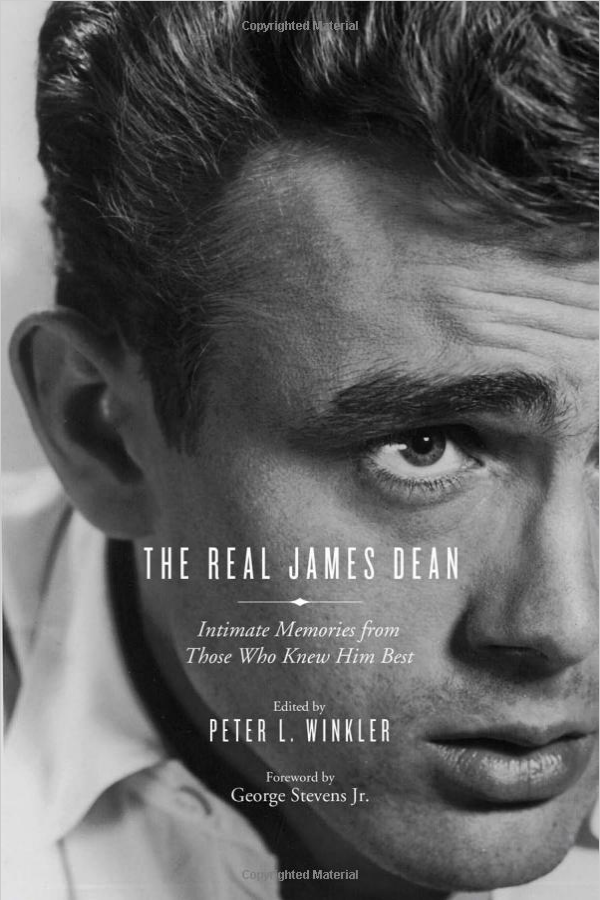
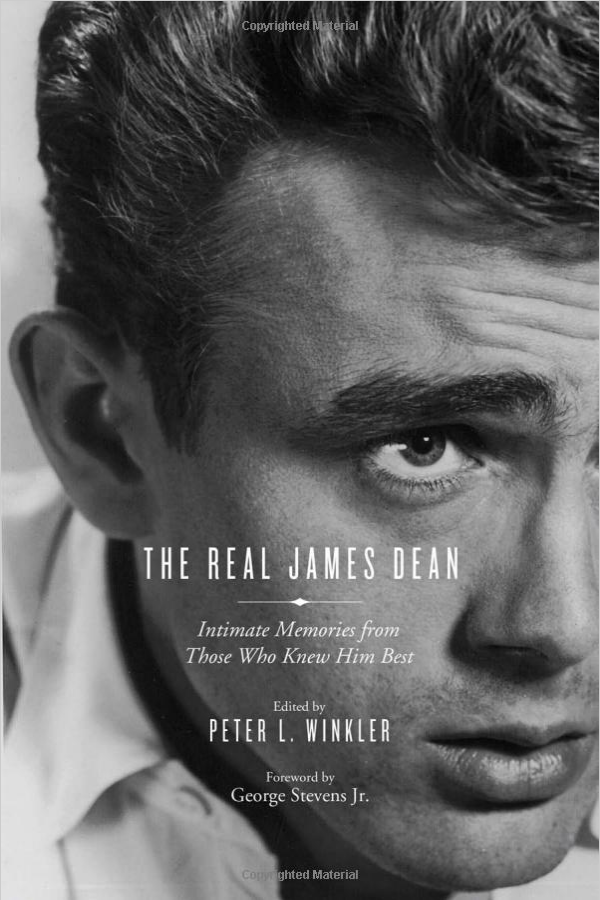
Peter Winkler’s new book, The Real James Dean: Intimate Memories from Those Who Knew Him Best, collects the memories of friends, family, and collegagues who remember the star who played just three lead roles in films but remains one of the most beloved and influential movie stars of all time. Elizabeth Taylor tells a story she would not allow to be published until after her death. Winkler found (and, when necessary, annotated) essays by Dean’s high school drama teacher, his male and female lovers, and his close friends, and one autobiographical high school paper written by Dean himself. In an interview, Winkler described his research in old movie magazines and archives and picked one Dean performance that is his favorite.

The most touching and, in a way, revealing essay in the book is the one James Dean himself wrote for a high school assignment. Where did you find it and what do you think we should learn from it?

Fortunately, Dean’s autobiographical sketch was saved and later published in a couple of the books written about him. It’s also available online. One thing we learn from it is that the trauma the nine-year-old Dean suffered when his mother died continued to haunt him as an adult. The other takeaway from his autobiography is his prophetic prediction, “I think my life will be devoted to art and dramatics.”

Which is your favorite Dean performance and why? Which do you think he was proudest of?

My favorite Dean performance is in Rebel Without a Cause. “Rebel Without a Cause” still feels contemporary today, whereas East of Eden and Giant feel like period pieces. The story and the characters’ situations remain relatable, and director Nicholas Ray’s film sense surpasses Elia Kazan and George Stevens’s. Dean is at his best in “Rebel;” it contains his most fully developed performance. He is immensely attractive. When he changes into his jeans, T-shirt, and red windbreaker, it’s as if a butterfly has emerged from his chrysalis: he suddenly becomes the iconic James Dean whose image has launched a million pieces of merchandise.

Dean never ranked his performances when he was alive: he had acted in only three major motion pictures at the time of his death but he was looking forward to making many more. If he ever thought about it, I think he would might been proudest of his performance in “Rebel Without a Cause.”

Which director do you think understood him best?

Nicholas Ray was on Dean’s wavelength and granted him the greatest amount of creative freedom he would enjoy in his brief film career.

What resources did you use in collecting these essays and photos, and in your editorial clarifications and amplifications?

Most of the photos were provided by Photofest, a commercial photo archive that is available online. The rest of the photos came from my personal collection.

I obtained copies of decades old issues of Modern Screen, Photoplay, and other periodicals from eBay. Additional material was gathered from Ron Martinetti’s excellent website American Legends and from the Academy of Motion Pictures’ Margaret Herrick Library in Beverly Hills, California. The autobiographies of Dean’s colleagues were loaned from branches of the public library. I then photocopied the sections containing their recollections of Dean.

The information contained in my footnotes and editorial comments are the result of having read just about everything about Dean’s life and career that is available in English, as well as my knowledge of his colleague’s lives and of Hollywood history.

Was there one that was particularly difficult to find or surprising?

Dean’s girlfriend Pier Angeli gave an exclusive interview to the National Enquirer in 1968. I had a hard time tracking down a copy of the issue of the Enquirer containing her interview. The Enquirer is intended to be a disposable newspaper; very few people collect them, and libraries don’t subscribe to it. I was finally able to purchase a copy from a seller on eBay.

I think that the excerpts from Ron Martinetti’s biography of Dean will surprise more than a few readers. They reveal just how important Dean’s live-in relationship with a gay advertising executive was to the advancement of his career.

How do you think Dean’s difficulty with reading affected his preparation for roles?

Dean drove his fellow actors crazy at rehearsals. He would put his head down and mumble incoherently because he couldn’t read the script easily. He needed a great deal of time to learn his lines.

Do you think he was an “existential pencil?”

James Dean told his friend John Gilmore that he was an “existential pencil” because he felt nothing when his girlfriend Pier Angeli jilted him and married singer Vic Damone. I don’t think Dean was being honest when he said that to Gilmore. Maila Nurmi (a.k.a. Vampira of Plan 9 from Outer Space fame) said that Dean was heartbroken by Angeli’s decision. I can’t decode what Dean meant when he called himself an existential pencil. Perhaps he wanted to sound profound. Existentialism was in vogue in the ‘50s and Dean wanted to be thought of as an intellectual.

What do you think fueled his fascination with matadors?

Dean’s hometown minister, Rev. James DeWeerd, showed the teenage boy home movies he had taken of bullfights. Like many young men of his time, Dean read Hemingway’s The Sun Also Rises. Hemingway’s equation of masculinity with the physical courage of the matador was more fashionable then than it is today. The idea of testing yourself in the ring against the possibility of instant death appealed to Dean. It was part of the brinksmanship he engaged in in every area of his life.

How reliable would you say the fan magazine pieces are?

Except for Elia Kazan, William Bast, and John Gilmore, none of the other people who recalled their experiences with Dean in magazine articles or in their autobiographies were writers. They undoubtedly worked with ghostwriters to translate their memories of Dean into coherent narratives. Without access to the ghostwriters’ original notes or tape recordings of their interviews with the credited authors of the pieces, it’s impossible to know how credible their stories of Dean really are.

Who, in your opinion, was Dean most himself with? (My guess, from the book, is Vampira.)

Dean was very guarded and found it hard to open up with others. He was always afraid they might use it against him. Elizabeth Taylor gave him emotional support and became his confidant when they filmed Giant.

I think he enjoyed similar relationships with Eartha Kitt and Maila Nurmi. He felt comfortable enough with them to drop his armor and reveal himself to them. They were kindred spirits.

What do you want people to learn from this book?

For all his personal failings and foibles, James Dean’s central animating energy compelled him to dedicate himself to becoming the best performing artist he could become, and by so doing, stake a claim to immortality—and he succeeded beyond his wildest dreams.

Related Tags:


Actors Interview
“Southside With You” Interview — The People Who Made the Obama Date Movie

“Southside With You” Interview — The People Who Made the Obama Date Movie

Posted on August 25, 2016 at 8:00 am

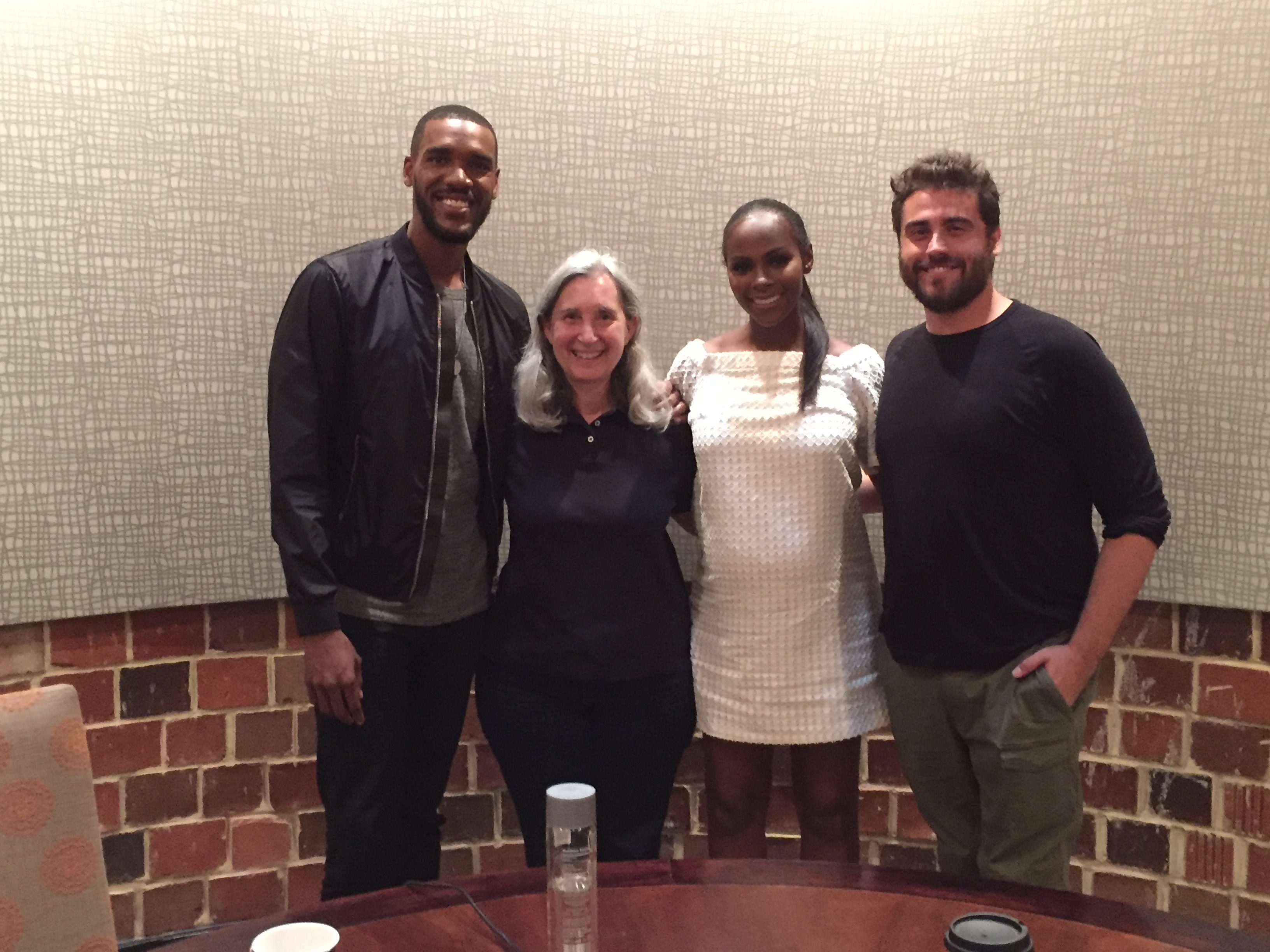
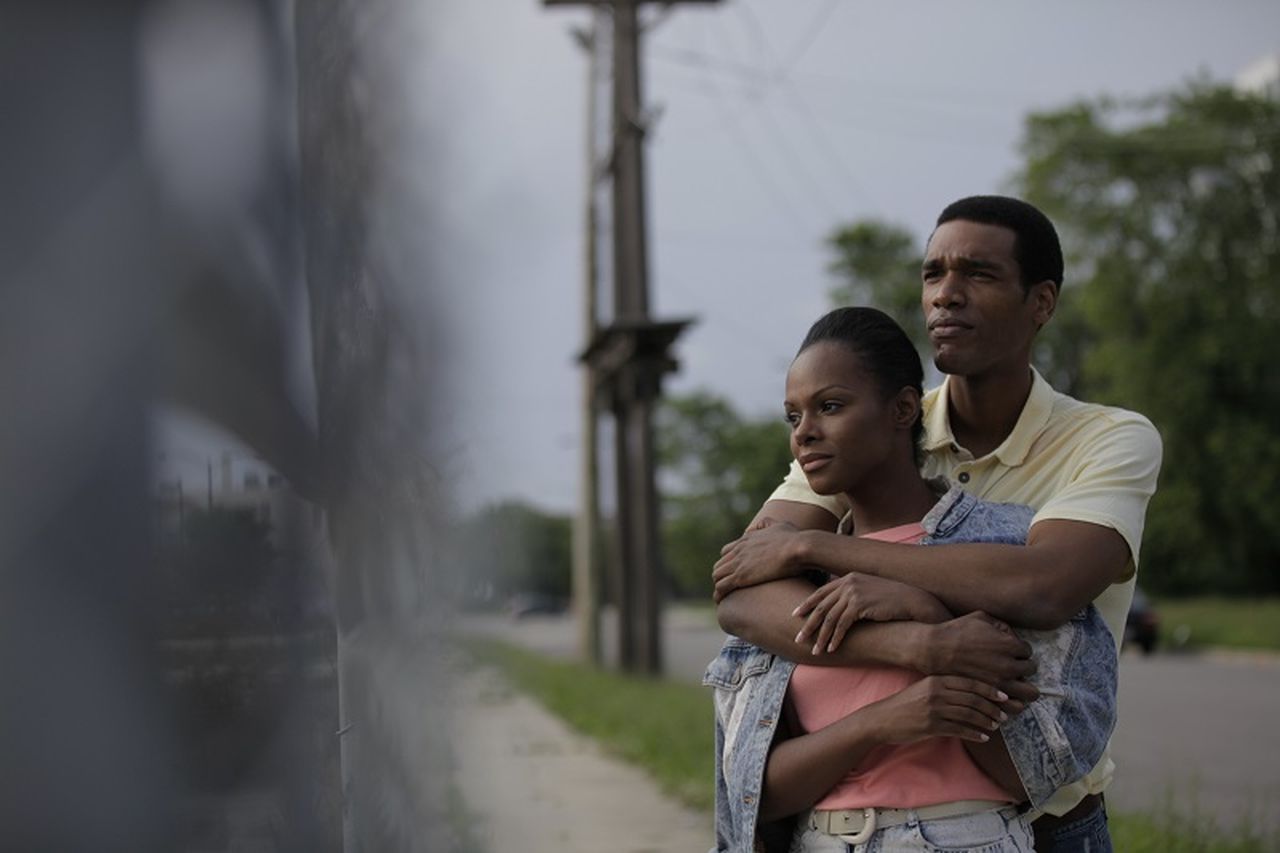
The most charming and romantic film of the year is the lovely “Southside With You,” the story of the First Couple’s first date. Michelle Robinson was recently out of law school herself when she was asked to be mentor/supervisor of a law student named Barack Obama. She agreed to go with him to a community meeting and insisted that it was not a date. But it ended with their first kiss, at a Baskin-Robbins that now has a plaque commemorating the historic event. “Southside With You,” like “Before Sunrise,” is the story of two bright, curious, vulnerable, committed young people getting to know one another and falling in love. Three journalists spoke to the people who made the film, writer/director Richard Tanne, and stars Tika Sumpter and Parker Sawyers.

Copyright Nell Minow 2016

Tanne said, “I was just really struck by the two of them as a couple, just the way they looked at each other, the way that they flirted, there was something authentic about it and vibrant and even a little sexy. I think that that is a rare thing in people and I think it’s an even rarer thing in public figures. So when I did end up reading about their first date, it just got me really excited because the conflict was: she’s not interested and he has one day to win her over. That felt like a really good romantic conflict to hang a movie onto. Not to mention there’s another aspect of it that we know what they went on to accomplish together, and the history that they have made, but the two characters don’t, so there is a dramatic irony running through the entire movie. Whatever your relationship is to the Obamas you’re going to bring that to it as well. And there’s a tiny bit of almost suspense in the fact that if something had just gone wrong on that date where would we be today? It would be a different world.”

Sumpter and Sawyers were careful to give performances, not impersonations. Sumpter said “We definitely when we started this process Rich and I said, ‘We do not want to impersonate; we want to embody the essence of who they are,’ and so for me I took the whole ‘Okay this is Michelle Obama’ off and went back to the girl who went to a magnet high school, who was told no, that she couldn’t get into Yale, just back to that family, the essence of her family, her parents who worked really hard, and I related it back to my life and said, ‘okay a lot of girls can relate to her’ and that’s why she’s so accessible. Even in the dancing scene, with the drumming, it’s like look at Michelle now, she’s dancing with Beyoncé! So I read books, Invisible Man which we thought they obviously would read in school and then also her brother’s book A Game of Character really helped me to see who she is and who she was during that time. So that informed me a lot about their family, like how tight they were and how they gave those kids so much confidence that they could do anything they really wanted in the world, even if the world told them they couldn’t, so that was part of my process….I think what intrigued me and what I really got from her, I just felt like she didn’t apologize for who she was. She didn’t dumb herself down. She spoke her mind and I think a lot of the time women are constantly saying ‘I’m sorry’ for the things they shouldn’t be sorry for or trying to dim their lights so that somebody else can feel greater. And it’s like ‘No, if I’m going to be here you come up here and we see each other.’ And so that inspires me to this day because I’m like ‘Wait, I can be just as smart, I can say what I need to need to say’ without people looking at me like ‘she is such a bitch or whatever.’ It’s like ‘No, nope, I am actually smart and I’m speaking my mind like you would.’ So I think that inspired me and intrigued me for the movie and in life.”

Sawyers said, “I took Richard’s notes before I sent in my tape for the audition. He told me, ‘Just be a guy, trying to get a girl,’ that’s it. And so obviously I worked on Barack Obama as we all know him now and then dialed that back and then overwhelmingly used Richard’s notes just to be a guy talking to a girl. He’s really trying to charm her. He knows he is going to graduate from Harvard and do well, he knows he’s working in a law firm, he knows these things in his life, he knows he is probably going to make a lot of money but he doesn’t know if he can get this girl if he doesn’t act right and really put his best foot forward and so for me that was the goal in that film…So to normalize how I think and just to realize how normal they are, that was the biggest thing.”

Copyright 2016 Miramax

As the couple discuss their families, we see the contrast between Michelle’s loving, stable home and Barack’s absent father. Sumpter said, “I think sometimes life brings you the person that needs to teach you something about yourself and I think she came from such a stable background and he didn’t, full-family wise. I think she was a little bit wound up, like she wasn’t used to telling people about MS and all that stuff, so there’s something about him that made her feel comfortable enough to speak about that. There is an empathy there as you go on in the movie the way he speaks about his father. There’s some kind of connection there where she felt comfortable enough and I think that affected her, it enabled her to share about her dad and what’s going on and her dad was a huge influence in her life.” Sawyers added, “I think she helped him understand what a father could be. What he missed out on. And he enjoyed hearing that. And then perhaps looking forward to the future he thought. ‘I can be a good father even though I didn’t have one.’ I listened to his interview with Marc Maron, and in it President Obama does say that Michelle had the family, the roots, not a perfect family but a great support system. That’s one of the things that attracted him to her and he also mentioned that he was late like all the time and she had to stop him once and say, ‘Listen, my dad had MS and we would get to my brother’s basketball games two hours before so he could walk the stairs. He didn’t want to sit in the handicapped section, and he wanted to walk up the stairs by himself and he was always on time, so stop being late.’ He told that story.”

Tanne said first and foremost was the love story “and to try my hand at a movie where I could be in an unfolding mood over the course of a day. I love movies that take place over the course of one day. One of them being “Do The Right Thing,” which takes place on a hot summer day. And that’s one of my favorite movies, obviously the Linklater movies and then those were sort of a gateway drug to the Éric Rohmer films where he invented the romantic walk and talk and philosophical ambling movie. The opportunity to show all the little moments between two people that most romantic movies leave out.
I wanted moments on the cutting room floor, that’s what I wanted in this movie to be. So we were cutting it together from the kind of quiet minutiae that other movies might ignore. I really like that. And the great things about these two actors is that with Tika, she almost could be a silent film star, like a Lillian Gish but now. And I think one of the great discoveries of the movie is her facial reactions and her eyes and the way that she responds to things. In a way I wish I could go back and rewrite the script and have less dialogue. The more we made the movie the less the dialogue was important and just the way that they were interacting. Parker for this being his first leading man role in a movie ever, Tika has been leading on TV shows and other movies but for him it was the first time out and he was able to meet her at that level and they were able to really exist in the moment. And for a movie like this that’s what it needs to be, you need to find those moments. They would just sit with each other and we could just roll the camera and wait for them to react and have those little moments where she looks at him and he is not aware that she is looking. And then she looks away and he looks back. And so they found those things organically, some of them we worked on, some of them we said, ‘Hey this is a turning point where emotionally where you are starting to let your guard down,’ but for the most part it was all found organically in the moment. So again the fact that he was able to do that his first time out, the fact that she’s kind of a master at it, it was really nice to have that.”

A turning point in the movie is when Michelle sees Barack speak to a community group that has had a setback and is feeling disappointed and let down. Tanne spoke about the challenge of writing a speech for a man who is known as one of the greatest speakers of our time. “It wasn’t too daunting because by the time I got to that scene in the movie, which is the middle of the film, and I wrote it in order, so by then I was really familiar with the characters. I knew who he was at this point in the story, I knew who she was at the point in the story and the underlying goal was, he’s got to impress her with this speech. Now there is a duality there because it’s not like he wouldn’t have been there if Michelle wasn’t there that day but it’s a benefit that she is. So he may have even been showing off or hitting it harder that day because she was there. So I knew how powerful it needed to be but I also was aware that he was a little bit rough around the edges, not as fully formed yet and I was familiar with the Altgeld Gardens at that time. I had done my homework and I just felt like I had a good sense of what a meeting like that could have been like. So without sounding too artsy fartsy it sort of just wrote itself. And then in doing it, Parker actually came to me before we shot it, maybe a few weeks before, and he was like ‘I think we should start working in some of the more practiced Obama mannerisms because this is him in a different setting.’ And it’s public speaking.  He brought up how there was a video of Obama at age 29 on the Harvard campus defending a professor at the rally. He was already sort of fully formed as a public speaker at that point. So we figured out this was a year earlier, so that was really the first point in the movie where we actively went after some of the mannerisms.”

Sawyers said that he practiced the speech, even buying his visiting sister a spa day to get some time alone to rehearse in his hotel room. “It was one of those things where if Barack speaks to the people the way he wants to speak to people to move them that will indeed move Michelle because she would see who he is. So I wasn’t necessarily playing for Michelle in the way I acted, it was more like, if I just do what I do then she’ll see I’m not this bad guy.” Tanne added, “We must have shot that scene from seven or eight different setups all the way through from the beginning to the end, what was that a 15-minute speech? Something like that? And he didn’t trip up once on a single word, I mean it was remarkable.”

The first stop on the date is an exhibit that features the work of artist Ernie Barnes. Tannes explained, “I couldn’t find any information about what art they saw that day so I just love Ernie Barnes’ art and I took a risk in writing the scene to his art because you never know if you’re going to get the rights. Luckily the Ernie Barnes Family Trust read the script and they really responded to the script and they’ve been incredible from the time we shot all the way through letting us use the imagery in the trailer, giving us the works for the end credits, works that aren’t even seen in the movie. I’ve always loved his artwork which I first saw in Good Times and that’s how it all came about. The exhibit they visit is an Afrocentric exhibit so there are other artists there but the bulk of the dialogue could very easily derive from just looking at the Ernie Barnes’ work because it covers the spectrum of black life. And so it led to them talking about their family members and their experiences as kids and it just prompted all this really interesting discussion from the two of them.” Sawyers agreed. “It was a perfect inspiration.”

Related Tags:


Actors Directors Interview Writers
Interview: Neal McDonough on “Greater”

Interview: Neal McDonough on “Greater”

Posted on August 24, 2016 at 12:39 pm

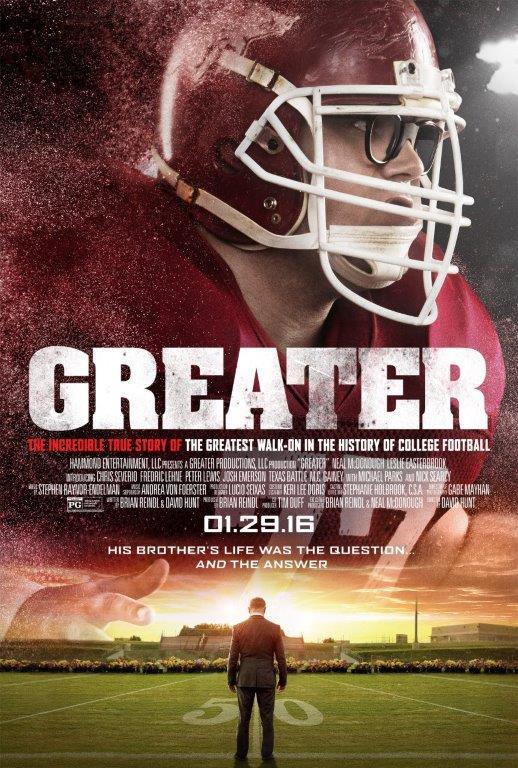
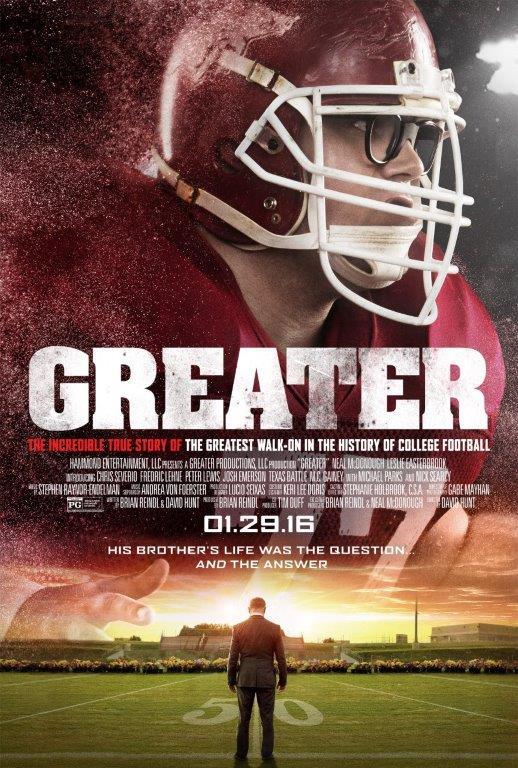
Neal McDonough (“Arrow”) stars in “Greater,” the true story of Brandon Burlsworth, the greatest walk-on in the history of college football. He plays Burlsworth’s brother Marty, who inspired and supported Brandon’s dream of playing for the Arkansas Razorbacks, and who made it through sheer determination and persistence. McDonough, who has played supervillain Damien Darhk in “Arrow” and “Legends of Tomorrow” and superhero good guy Dum Dum Dugan in “Agents of S.H.I.E.L.D,” answered my question about playing a real-life character and why we love movies about sports.

How did growing up in a big Irish family help prepare you for working on movies and television?

I joke sometimes that it was great training for working in ensembles, because you’re so accustomed to having to do something to make yourself stand out when you grow up one of six kids. I suppose the real help it’s been is that it teaches you to be comfortable in crowds and chaos – and movie and TV sets are certainly that.

Your character in “Greater” was more than an older brother to Brandon Burlsworth. Why was that relationship so vital and how is it portrayed in the film?

Marty is so much older than Brandon that he is often mistaken for his dad – which is a running joke in the film and was a running joke in the lives of the real Marty and Brandon. And since their father is troubled and absent for both of most of their lives, Marty is very much a surrogate dad to Brandon. So he has almost two concurrent relationships running with Brandon – the jovial, joking brother side and the more caring and protective parental side. It makes for a very rich and complex character to play.

You’ve been working on some heightened, genre projects based on comic books. How do you recalibrate for returning to a more realistic, fact-based drama?

It’s why they pay us to act, right? Actually, for me, a role like Damien Darhk in “Arrow,” who is such a true comic-book, over-the-top villain, is far easier to play than Marty. There’s less deep characterization in a villain like Darhk – lots of broad brush strokes of villainy – how truly bad can you be, you know? But it’s a lot more rewarding, and more of an exercise in the craft of acting, to take on a character with as many emotions and layers as Marty.

What are some of your favorite football movies? Why are we so drawn to sports stories?

Favorite football movies? Well, “Greater,” of course. (laughs). Sports movies, when done right, spotlight the best about the human spirit and character: doing your best, overcoming the odds, matching your skills with another person’s, developing camaraderie and teamwork and achieving a goal – whether as a team or an individual. Sports are where we test our limits, face our fears, make our dreams come true. That’s what audiences will see in “Greater” – excitement and emotion.

Copyright 2016 Greater Productions
What was the first acting job you got paid for?

I played the pivotal role of “Dockworker No. 2” in Darkman, which I hadn’t thought about until right now, is interesting because it was a superhero movie and, well, had a character with “dark” in his name at the center. Interesting, isn’t it, how you notice all these “coincidences” when you look back over your life and your career – when you’ve tried to follow the path God has laid out for you. Fascinating, and humbling.

What’s the best advice you ever got about acting?

Steven Spielberg told me, “Every good actor is no further than 50 feet from the camera, even in-between rehearsals, between takes.” That’s great advice because If you’re in the orbit of the camera, no further than 50 feet away, if they need you, boom, you’re right there. They don’t have to call to get you out of your trailer. If you’re always right there; that’s a great actor. You learn so much because you see how they do certain lighting; you see how other actors act. For young actors, the more you can stand around or sit there—-even when you’re not shooting-—just sit there on the set and shut up for three hours, you’ll learn more in one day than you’ll ever learn in film school.

What do you want people to learn from the story of Marty and Brandon?

First and foremost, I hope they’re truly entertained. This is a movie of very big ideas and themes but also great fun and humor. There is some excellent, exciting football action in this movie, along with lots of solid family drama. And there’s plenty of humor, too, in Marty’s relationship with Brandon but also as we see Brandon expanding his social skills as he gets more and more accomplished at football.

But I also hope audiences leave encouraged – reminded that when hard times do come, and they will, that God has a purpose in them. And we can actually be blessed through the pain if we follow Him through it.

Related Tags:


Actors Interview

Interview: Director Elia Petridis of Filmatics 360 VR Creative Services

Posted on August 21, 2016 at 3:27 pm

Elia Petridis, CEO and Founder of the Filmatics 360 VR Creative Services, is at the forefront of technological and narrative innovation in storytelling, and I had a lot of fun talking to him about it at Comic-Con. “We pitch pure creative for virtual reality and/or 360,” he told me, which means that they introduce filmmakers to new, immersive technologies, “anything where you can interact with the space.” Just like you can look around your room, you can look around the “room” or “landscape” of the film or game. This applies not just to the visuals but the audio. “The audio in your ear is positioned so when you move away from it, it moves away from you.” He says the technology could support any kind of storytelling. “They’re going to cover news, they’re going to do animation, they’re going to do education, training. In terms of narrative you have to think about it in a modernist way and so it’s like what really deserves to be immersive. Our piece is a seance in and virtual-reality you’d be at the table.”

He made a film called “The Man Who Shook the Hands of Vincente Fernandez,” which he describes as “A Western that takes place in a nursing home.” The cast included Oscar-winner Ernest Borgnine in his last role, along with Barry Corbin and June Squibb.

That film was shot in a traditional manner, with a 35mm film camera. “And then here I am directing content for an immersive space which is basically four GoPros, 4K whatever. So it’s just about the impulse to tell stories and the impulse to service the medium.” It isn’t only the equipment that is different in a 360 movie. Petridis said that he looks for actors with theatrical experience “because we are shooting masters, stagnant masters for the most part. So if they drop a line we go back at square to one. I can’t jump in, I’ll get in the way, so I can’t do that. They have to nail the scene so we rehearse, rehearse, rehearse. And then get your lines, get the beats and the motivation, get the performance right and then we’ll choreograph into space, then we’ll set the camera up and we’ll shoot two or three takes and that’s it. How to directly determine a narrative in an immersive space is a different story. I would choreograph the eye like I would choreograph the dancer. So I would have something take place here and have an actor carry the activity into the next quadrant like a baton, and then have someone hand me the baton here and then have someone call me from here and then turn to him. It’s more like dance choreography mixed in with their storytelling.”

The use of this technology will extend into every area of communication and education. Petridis is now working on children’s content for hospitals, to help them cooperate with blood tests, “to distract children through neuroscience and content to make nurses lives easier and children’s lives easier, to disengage anxiety from the blood tests, especially for kids who are chronically ill. So things like helping them with sitting still or extending hands. For the VR to progress one must sit still. The nurses’ lives become super easy because the kid is sitting still and then all of a sudden 30 seconds in, in order for it to draw they give out their hands and the Band-Aid that they get is branded like the Band-Aid they see in VR so when they come out they can still look at the Band-Aid, they’ve got their badge of honor. We check in with the user experience. We want to make sure that it’s the best content for that, it’s not just like let’s put them on a CGI roller coaster. The sky is the limit if you do it right.”

Related Tags:


Directors Interview
THE MOVIE MOM® is a registered trademark of Nell Minow. Use of the mark without express consent from Nell Minow constitutes trademark infringement and unfair competition in violation of federal and state laws. All material © Nell Minow 1995-2026, all rights reserved, and no use or republication is permitted without explicit permission. This site hosts Nell Minow’s Movie Mom® archive, with material that originally appeared on Yahoo! Movies, Beliefnet, and other sources. Much of her new material can be found at Rogerebert.com, Huffington Post, and WheretoWatch. Her books include The Movie Mom’s Guide to Family Movies and 101 Must-See Movie Moments, and she can be heard each week on radio stations across the country.

Website Designed by Max LaZebnik