Interview: Ashley Smith Robinson, the Real-Life Captive Who Inspired the Movie

Interview: Ashley Smith Robinson, the Real-Life Captive Who Inspired the Movie

Posted on September 21, 2015 at 3:17 pm

Ashley Smith Robinson was a recovering drug addict, a widow in her 20’s, and a mother who desperately wanted to be able to prove that she could care for her little girl. Brian Nichols was a desperate man about to go on trial for rape when he escaped from prison, killed four people, and took Smith hostage in her own apartment. For seven terrible hours he kept her there. She gave him drugs, made him pancakes, and read aloud to him from Rick Warren’s best-seller, The Purpose Driven Life: What on Earth Am I Here For?. She wrote a book about her experience: Captive: The Untold Story of the Atlanta Hostage Hero.

Now Ashley Smith Robinson, happily married, mother of three, and continuing to spread the word about her faith and her story, she spoke to me about what she has learned and what she hopes to inspire in people.

What has been your experience of talking to people who have seen the film already? How have they responded to it?

People have responded very positively. Definitely everyone is understanding and seeing the redemption side to the story, seeing that God reached down and pulled me out of the pit of hell that my life had become and completely changed my life. This film is kind of a tough thing to deal with because four people lost their lives for my life to completely change for the better and it has been a hard thing for me to deal with that. I try to stay on track and help people see that something good can come out of a very negative event and try to continue to give God all the glory.

How did that experience make you see yourself differently?

For me up until this point I was very lost in my way of life. I was raised into a Christian home and as a teenager I got off on a very bad path, begun to use drugs and begun to live a very party lifestyle, the ways of the world. And suffered lots of tragedies in my life, the loss of my first husband, lost custody of my daughter as a result of the drugs. It was a very deep dark place and I didn’t really feel worthy of God’s love anymore because I thought the decisions that I made were too bad and Satan always let me know that I was too bad for God to love me. But that could have been nothing further from the truth because today I understand that there is absolutely nothing I could do to let God not love me because he loves me despite on my past mistakes even the mistakes that I make today. He loves me no matter what and there is nothing I can do to make Him not love me. So I think seeing myself knowing that He loves me no matter what has made me the person I am.

How did it feel to actually meet Rick Warren after his work was so important in your story?

He spoke some real positive truth in my life and he has always been very good in encouraging me to continue to stick to my faith and stick to my story. You know, sometimes the world doesn’t always want to hear the name Jesus, they don’t want that to be the explanation of the one thing that turns out for the better but the truth is that is the explanation. God is the one that changed my life and got me out of the apartment alive and so He definitely gets all the credit. Rick Warren has been very important in helping me continue to stay true to that when I need encouragement. He keeps on telling me that God uses brokenness no matter what. When he came out on the Oprah show and gave me a hug is when he said, “Don’t let people get to you. It’s your story, you tell it and let God be bold in there.”

One of the real turning points in the film and I guess in the real story is when you gave Brian meth and he wanted you to participate and you didn’t. What is it that gave you that strength at that moment?

I really believed that Brian Nichols did not want me to do drugs. Jesus Christ took the body of Brian Nichols at that moment and He was asking me did I want to do drugs and continue living the life that I was living. Because if I did then my life would be over but if I could chose one time not to do drugs then God would really give me a life that I couldn’t imagine. And you know to be honest with you I didn’t know if I was going to live for five minutes or live to see more years but five minutes of a better life than the life that I was living and actually saying no to the one thing that controlled my life was seeming a lot better to me than continuing on the path that I was on. So I chose not to do the drugs and I immediately felt really free, not physically of course because I was still being held captive, but emotionally and spiritually, I felt like God was in complete control.

Is it extremely painful for you to keep reliving that experience with people talking to you about it?

I don’t think it’s painful for me it’s actually good for me because it keeps me remembering where I came from and where I don’t ever want to go back to. And the reason that I tell my story and not for any other reason, my hope is to help other people see that even through our brokenness God loves us and continuing to talk about it. If it helps just one person then my job is been done successfully.

Why did David Oyelowo, who co-produced the film, want to play Brian Nichols?

He says that if he believed God found the humanity in Brian Nichols then that’s what changed the whole situation and got me out of there alive. David is a man of deep faith and he’s very true, very true in his actions and everything that he is and everything he represents. He wasn’t quite happy about playing the person who murdered four people in a day, but it was underlying story of redemption and Grace and humanity drew him through to the film.

Watching the film, it seemed the two shared a sense of desperation.

When I choose not to do the drugs, I begun to look at Brian Nichols in a different way. Instead of looking at him at the through the eyes of Ashley Smith a human being, a very flawed human being, I begun to see Brian Nichols through the eyes of Jesus. And I began to see that he was just a sinner saved by God’s grace, the same way I was, he had chosen to kill four people, to brutally murder four people, where as I at one point in my life chose drugs over my daughter and made other bad decisions in my life. I was just a sinner saved by God’s grace and so I began to see that we were very similar in who we were and things that we had done. I began to feel God’s love that night and I began to know Him and there was absolutely nothing I could do to make Him not love me and I just kind of wanted Brian to feel like a human being also. He told me that he just wanted some normalcy in his life and I tried to give him normalcy so that I could make it out of there alive. I felt for sure that if I could strike a chord in finding some similarities in us, that would make a connection. Once people have children, they tug at your heartstrings, and so we began to talk about having kids. At one point he took a shower and he tied me up before he did that so I wouldn’t run away but the I was cooking him pancakes and just being normal, that’s what normal was to me.

What do you think is the most important lesson of the purpose driven life?

I think the most important lesson is that you learn to serve God in the shape that God has for us. For a long time I tried to control my life and do the things that I thought God wanted me to do but I was still absolutely wrong, ruining my life. I think we need to learn to serve God in the path that that He has selected. He is all-powerful and all knowing and has got a perfect plan for each one of us.

Is there a Bible verse or prayer that is really special to you?

Ashley: My Bible verse is Proverbs 3:5-6. “Trust in the Lord with all thine heart; and lean not unto thine own understanding. In all thy ways acknowledge Him, and He shall direct thy paths.” It’s definitely important to me that I know that I trust God in all that I do and not try to understand because some things you just can’t understand. You just have to go on faith alone.

Related Tags:


Interview
Interview: Director Khoa Le of “Walt Before Mickey”

Interview: Director Khoa Le of “Walt Before Mickey”

Posted on September 20, 2015 at 10:52 am

“Walt Before Mickey” is the story of Walt Disney’s earliest years in animation, filled with passion and imagination but also plagued by failures and setbacks. “American Pie’s” Thomas Ian Nicholas and “Napoleon Dynamite’s” Jon Heder play brothers Walt and Roy Disney. The film was made on a micro-budget with a first-time director, Khoa Le. It was a pleasure to speak to Le about the challenges of coming to this very ambitious project at the last minute and bringing it all together in a very short time frame.

“I got the call on Christmas Eve in 2013 and my friend asked me if I wanted to make my first feature film and I go, ‘Yes, sure. What is it about?’ And he goes, ‘Well it’s about Walt Disney.’ And I said, ‘Wait this is a Disney film?’ and he goes, ‘No it’s a film about Walt Disney,’ and I said, ‘Is it a documentary?’ And he goes, ‘No it’s narrative feature film. It hasn’t been fully casted yet and they’ve been going through some trouble.’ and I said, ‘So that’s the catch to my opportunity.’ Just like anything else, any first-time opportunity, you’re going to have to make some sacrifices. And at the time I was growing my business and we were in the baby stages of the business. And I had to make a decision if this was something that was going to propel the career or hurt my career or risk the opportunity of losing my business at the same time because I knew I would have to step away at least for a few months to make this project work. Instead I stepped away for almost a year because we had to go into post production and all that type of stuff to make this movie work for almost no money at all. But I’m glad that we did it with blood, sweat and tears and with so many issues that were presented on the set. And I think as a first-time feature it couldn’t have been more perfect, even with all the mistakes that we had, seeing how the production was pretty much a disaster coming on board because of another director had left. I always believed that you only succeed from the failures, you always learn from the failures, so if we never went through those failures then I’d have to learn all of this in my next feature production. Instead I get to learn it from here. So during the film I wanted to kill myself, I got sick, I had pink eye, it was a mess but I think it comes to show that no matter what the budget is as long as you have a strong mind and a set of people that’s willing to pull this forward then you can make any project as successful as it can be.”

The challenges made Le appreciate even more the challenges his main character, Walt Disney, went through in life and was going through in the film.

“When I came on board I didn’t know how many crew I was going to be managing, I didn’t know I had a crew of over 100 people. I thought it was a much smaller team but we had an experienced crew. We had costume designers that worked on Pirates of the Caribbean and people that worked on Fast And Furious as well. I was really intimidated because I’m probably the most inexperienced one out of that group but what I was much more experienced about was running an organization and growing a business because I just came off from winning Small Business of the Year For Fastest-Growing Business in Hudson County New Jersey and we were becoming this 1/2 million dollar organization and continue to much further growth. So I knew that if I go in there telling them, ‘Okay guys this is what we’re going to do,’ we’re going to have a problem, but if I going there even to inspire the crew and get them to believe in what I’m capable of without having to question me and then I return the same thing obviously we would be able to create a more manageable team and a more structured organization when we are making this movie.”

With a tiny budget and short schedule, shooting a period film with several different locations meant enormous challenges in the sets, cars, props, and costumes. Though the story takes place in the Midwest and California, most of it was shot in Florida.

“To start with, it took me 18 hours to get to Florida because of a snowstorm. From a micro budget standpoint, everything had to be shot on the medium-size, I couldn’t shoot anything wide because if you go into anything wider you might see a light pole or might see a construction site. Sound was a problem because you hear modern cars flying by, effects really tough to work with. We shot one part in Kansas City which is more period, but the producers are from Florida so that’s where they wanted to shoot. It’s their home town, they knew everybody over there so I guess it makes the most sense. But from the directing standpoint it was a nightmare because I would say, “Can I have this?” “No you can’t do that, you can’t do it right here.” “Can we lock down the street?” “No we don’t have the budget for this.” “Can I get at least two picture cars in the scenes? And I wanted a crane for the farm scene, but that was too much, too. And of course the producers are very inexperienced as well so we were learning together. If you’re making small changes on the day of whether you’re having another actor in or you’re taking another actor out or you change the shot just a little bit, I learned that it affects all the other departments. Costume has to change, make up has to be fixed, and it creates this craziness on the set.”

When he arrived, the script was not even ready. “The producer gave me the book to read and also I had two scripts to look at. One was a script that was 150 pages which is nowhere close to a shooting script, it was more of a draft but it had a lot of ideas and good elements in it. The shooting script didn’t have the strong element but could fit within that budget to make it work. But it was tough because both of them were not ready to be shot so when I got down there and this is before I met Frank Licari, he is actually my film partner now but at the time I didn’t know him. He is also the co-producer on the movie and also the additional writer on the movie. This guy was a phenomenal writer and I knew right then and there this guy is going to be my right hand through this process because for two weeks while over there I didn’t even get to set up anything that was for directing purposes, everything was trying to fix the script. And so by the time we got to the last week we didn’t have an actor to play Walt Disney until the last week of production. We didn’t even stop looking for locations the week before we had the shoot.”


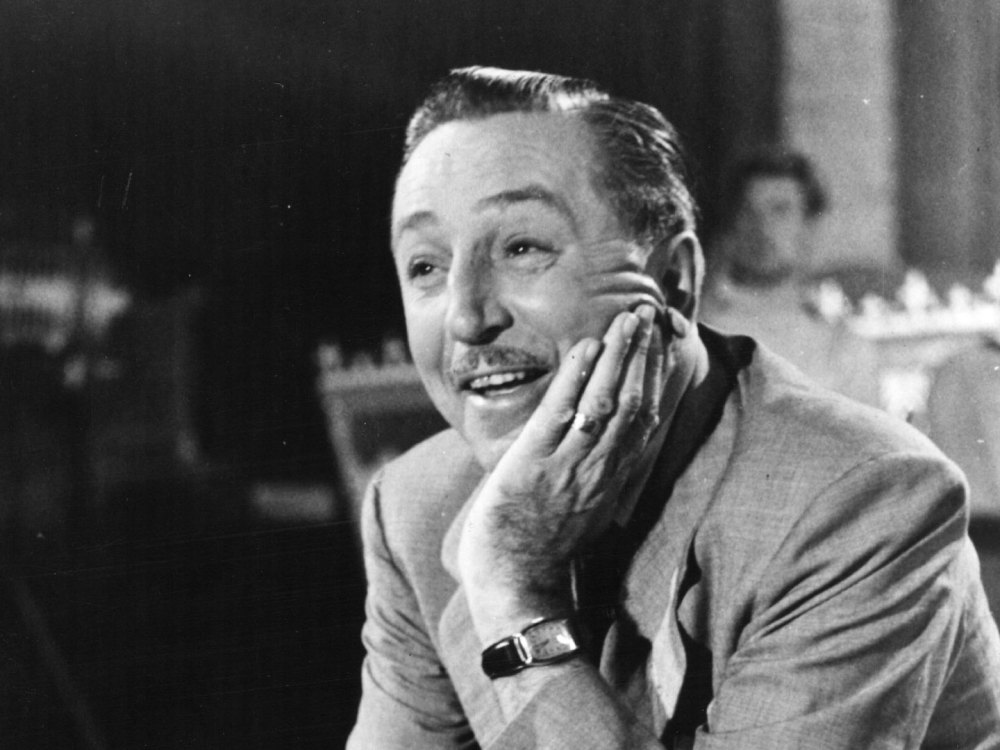
He turned over as much as he could to the experienced crew members, telling the costume and prop people that “I’m going to leave it up to you guys to be very creative and I want to trust you because we have no time to debate on these things so at the end of the day I kind of set them free on any restrictions, no micromanagement, you can’t and that’s how we collaboratively made this happen.” He regrets missing the chance to film some of the scenes they could not get to, “with the details that I wanted to shoot to make the transitions and the cast more interesting just didn’t have any time or opportunity for that.” But “I’m still proud of the movie for sure. I think people are going to be surprised. I look at Walt Disney as more of an entrepreneur than just a creator. Every entrepreneur has a reason why they exist in the world. What is their cause and their belief to pull through. He could just as easily create animation and call it a small business forever and just do that but he didn’t. He wanted to create something that could change the world. He created something that could be iconic, and could create a legacy not for himself but for people that experienced what he created. So it’s about happiness at the end of the day. If you could create a world where it’s just pure happiness and nobody’s fighting, nobody is jealous of anything else or a place where you could come back to and could rekindle a family or save a marriage or help you raise a child, that’s a life worth living. And I think that’s what Walt Disney did. That’s why when you watch the movie, you watch it not only for the educational piece, but you are watching it for yourself. Because everyone goes through adversity, everyone goes through challenges; everyone goes through all these obstacles in order for you to achieve your dream. It doesn’t get handed to you on a silver plate at all and Walt Disney just like you and me, he is just a normal person like just you and me with a reason why he wanted to create all of this with a passion. That is more than just watching it, if you could realize that someone iconic that created a world that you live in of knowing what he did, in my opinion, that’s breathtaking.”

Related Tags:


Directors Interview

Interview: Karina Longworth on the “You Must Remember This” Podcast, Now on Panoply

Posted on September 17, 2015 at 12:00 pm

Karina Longworth is the creator/narrator of the brilliant “You Must Remember This” podcast, which covers Hollywood history. Last season was entirely devoted to a mesmerizing narrative about the Charles Manson murders. The show has now moved to Slate’s Panoply podcast network and the new season responds to listener requests. Longworth answered my questions about the show.

What led you to tell these stories via podcast rather than a book or series of articles? How does that format change the way you present the stories?

The simple and practical answer is that I started the podcast because I found myself increasingly wanting to consume information that way myself. I still read a lot of books and longform reporting, but I find that there’s too much of that stuff, and potentially interesting things either fall through the cracks altogether, or else I don’t get around to them as quickly as I would like. But I’m always “running out” of podcasts to listen to, so I figured if I made one that was unique I figured there might be people like me who would be willing to take a chance on it.

The more complicated answer is that on some level, I’ve kind of been waiting for this format to come around and become viable for nearly 20 years. When I was in art school as an undergraduate I studied experimental non-fiction film and video, and the work I was making was basically 19 year-old me’s version of this podcast, except that I was editing together montages of mostly found imagery in order to give it a visual element. Now I don’t have to have the visual element.

Hollywood pioneered the idea of press agents and personal brands, and even scandal magazines often suppressed negative stories in exchange for access. How does that affect your ability to research what was really happening?

A big part of the show is about that process, and that uncertainty. In most cases, I don’t think we can know without a shadow of a doubt what really, truly happened. It’s the conflicting stories, and the gaps between the facts we know and the ways in which the stories were or continue to be spun, that I think are really interesting. My hope is that through the process of sifting through all of this, larger truths will emerge.

What was it about the Manson stories that inspired you to delve into such an extended retelling? What do you think made him such a compelling leader? Do you consider him a reflection of his era?

I wanted to talk about a time and a place in which no one suspected Charles Manson was going to orchestra multiple murders — and even after the murders, no one thought he was involved for awhile — because he and everything he was doing simply wasn’t considered to be weird. It was also really clear to me after a little bit of reading that his story was kind of the worst case scenario version of a really familiar Hollywood tale, of the pilgrim who comes to Southern California thinking they’re going to “make it,” only to have their hopes dashed, and then have them respond, shall we say, ungracefully.

What kinds of resources do you use for your research?

Because I’m pressed for time, these days I primarily use biographical books and other mass-published Hollywood histories, but for various different episodes I’ve done more in-depth archival research at places like the Margaret Herrick Library, the Warner Brothers archive at USC, and the BFI Library in London, where I’m currently living.

Can you give us a hint of what some of the listener requests are that you’ll be reporting on this season?

There were so many compelling requests, but as I was weeding through them all, it became clear that multiple people were interested in the stories of the studio moguls, and how the studio system was run during the classical Hollywood era. Also, there were requests for the stories of many individual stars who were associated with MGM. So in the end, I chose 15 stories that would allow me to explore a number of different facets of how the studio worked, why it was so dominant for so many years, and how the system it mastered of creating and promoting stars ultimately fell apart.

Related Tags:


Film History Internet, Gaming, Podcasts, and Apps Interview Understanding Media and Pop Culture
Interview: Sarah Colt on the PBS Documentary “Walt Disney”

Interview: Sarah Colt on the PBS Documentary “Walt Disney”

Posted on September 13, 2015 at 3:18 pm

Copyright PBS 2015
Copyright PBS 2015

Sarah Colt’s two-part “American Experience” documentary about Walt Disney is a fascinating look at one of the towering figures not just of film history but of American history. Disney revolutionized film and the way we tell stories with his animated features, nature documentaries, and family entertainment. He created a new industry and a new way for families to vacation together with Disneyland and the Disney World properties. He was a pioneer of new technologies from sound recording to photocopiers and animatronics. And he built one of the world’s most successful businesses. It premieres September 14 and 15, 2015, on PBS stations.

Director Sarah Colt told me that the Disney company opened up its vast archives for her with no restrictions and no right to review the film before it was made public.

It was really an amazing thing and we were thrilled. It made the project possible. From a documentary film maker’s perspective who has worked on a bunch of historical films this was like a dream come true. Because I was making a film about an artist, a filmmaker, and an animator. So not only was there material of him and the behind the scenes kind of stuff that you are always looking for but also his work. To be able to use big chunks of “Snow White” as part of the story was just amazing. So that was just incredible. I’ve never made a film about a filmmaker before. That was very fantastic to have all that material. And their photograph collection is very well organized. They have a really good database and we could access what we needed. The footage of the behind the scenes kind of material was harder to find because the Disney Company. They are not a professional archive and that’s not their main purpose so not surprisingly their collection is not necessarily all in one place, it’s in lots of different places and it was a lot of work. They totally helped us but it wasn’t a one stop thing where you just look in a database and there’s all the material. There was a lot of hunting and talking, asking questions and then were these big moments of excitement when we found things. I’ll give you an example, the footage of Disney playing baseball with his colleagues. I had seen it once somewhere in another film but we were not finding and nobody at Disney could find it and then all of a sudden they found it and not only did they find it but it had sound. Most of the footage from that era as you probably know doesn’t come with sound attached, so we do sound design. So when you hear those voices cheering Disney as he is hitting the balls and running the bases, those are the voices of the people there and those kinds of finds were very exciting because they helped to really tell the story in a way that you wouldn’t be able to do without that kind of material.

Disney’s fascination with using new technology is a theme of the documentary and there is a charming example of one of his earliest cartoons, before he had his own company, with a real little girl interacting with animated characters, like this Laugh-o-Gram production from 1923, featuring Walt Disney himself.

He was an innovator, no question in a lot of different areas, and technology was definitely an important part of his ability to innovate. So he was always pushing things. It wasn’t that he was actually inventing things but he would see how other people were doing things and he had these ideas to take them to the next level. I think sound is a great example of that and we use that as our main example of his technical innovation in the film. Other cartoonists were using sound and experimenting with sound and sound was becoming a part of the movie business. But what Disney did with sound was to take it and really make it an integral part of what the film was about so that the film didn’t make sense without sound, instead of the sound just being kind of layered on top of it. He had a way of pushing things and what I think is really interesting too is that he understood the potential. It wasn’t that he figured all these things out, it was like he had an idea and then he would surround himself with the most talented people in every category. If you’re thinking about artistry, the most talented artists, when it came to technology the most talented people with that, so a perfect example is his collaboration with Ub Iwerks. You know Ub Iwerks was very talented but also he really was technically amazingly savvy. So Ub helped Disney take things to the next level. I don’t think alone either of them could have done what they did but together they did these amazing things. So Disney was always collaborating with the top people. Now he was always in charge, there was no question that he was the visionary, he was in charge but he recognized talent and he was able to attract talent. And that’s how I think his technological innovation happened because I don’t think, he certainly wasn’t technical wiz, it was more that he was figuring out how to do that with other people’s talent.

But the documentary is frank in showing that he cultivated talent and he appreciated talent and yet he alienated a lot of the talent, resulting in a strike and defections to a rival studio, both which hurt him deeply.

Copyright PBS 2015
Copyright PBS 2015

He was a complicated boss. I think he was a very good leader. He knew how to create a sense of excitement, he knew how to translate vision and get other people excited about it but at the same time I think he could be quite insensitive. He treated some people very kindly, very well and then treated other people not as well and he was very unaware of how he alienated people. As the film portrays, the strike is the ultimate example of something that could have probably been avoided by a leader who had been more aware of himself and what was going on around him. He was blind to things that were happening right in front of him and so he could be a very difficult boss. I think he was very demanding. He demanded the highest level of performance from people and some people did very well under that but some people were mad that they were not being properly compensated. They were working long hours without being recognized for the work they were doing. I think he could be very difficult and so he was charming but he was also I think demanding and difficult.

One of the film’s most moving sections concerns the brief time Disney spent as a child in the small town of Marceline, Missouri, which he thought of always as the happiest time of his childhood. Disneyland’s Main Street and many of the settings of his film reflected his idyllic memories of Marceline.

Right from reading the first biography it was clear that Marceline was a hugely important place and whether it’s a real place or more of an imagined memory of a place it was crucial and so it was clear that we needed to include it in both his upbringing but also how he remembered it. And so we were especially happy to have footage of his return to the town with his brother as adults. It was just such a wonderful way to be able to take note of how important Marceline had been to him as a child and how important it was to him. And then what better way to see him as a middle-aged man in a suit kind of visiting this little town in the Midwest and how important it was. So I feel like that’s where my job as a documentary filmmaker is so fun because it’s like you’re using these finds that you have, we found that footage and I was like, “Okay, this is the scene and this is going to be how we really show how it builds into Disneyland and what does Disneyland mean and so Marceline is in a way kind of a version of a Disneyland for Disney. For Walt Disney it is this place in imagination, a place where he felt safe, a place where he was with animals and nature and an escape from the troubles and the problems of real life and so I think that’s what Marceline represented for Disney and then Disney takes that and makes Disneyland.

Colt wants the film to show people Disney as a person, a man of vision, a man of sentiment, and a dreamer who always liked to remind people that it all started with a mouse.

When people hear “Disney” they may think of the company or its products. It’s very easy now especially with the amazing success of the Disney company since his death to forget who he was and that he was a real person. I want people to be able to take away that he was human and that he was human both an exemplary human being and also he had flaws, and he was complicated and that some of his greatest successes came out of difficult things from his own personal life and experience. And that it’s a layered and much more a kind of deep and interesting story than the legend of Walt Disney.

https://www.youtube.com/watch?v=DgdeLgCdUNc
Related Tags:


Biography Directors Documentary Film History Interview Television
Interview: Patricia Clarkson on “Learning to Drive”

Interview: Patricia Clarkson on “Learning to Drive”

Posted on September 11, 2015 at 9:53 pm

Copyright 2015 Broad Green Pictures

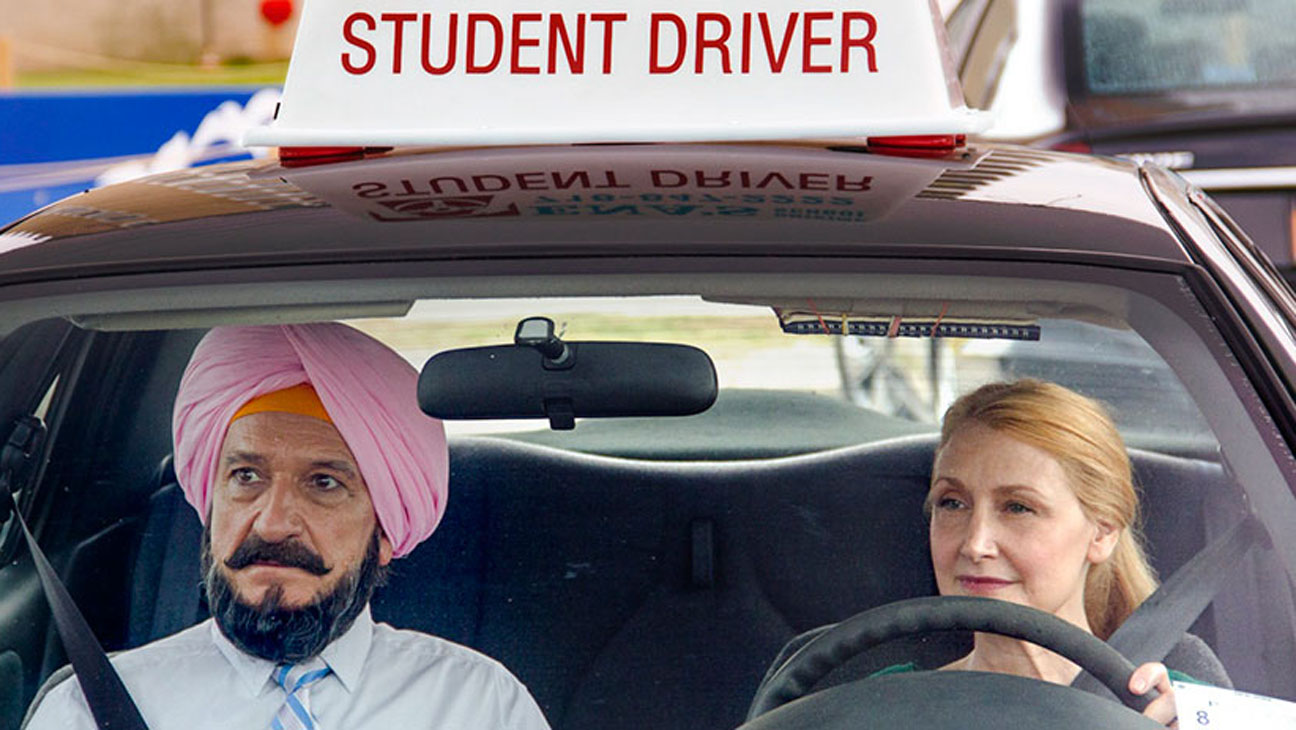
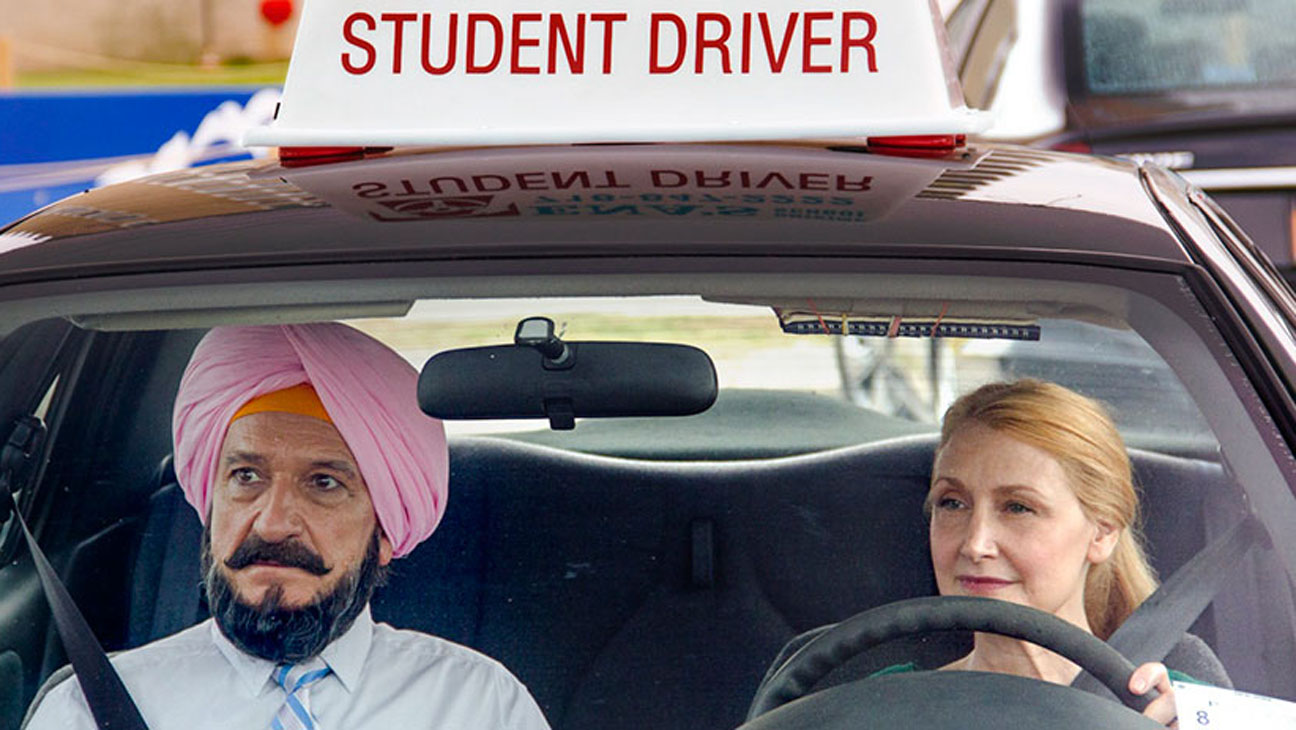
Patricia Clarkson stars as Wendy in Learning to Drive, the story of a New York writer who has to get her first driver’s license after her husband of 21 years leaves her for another woman. The license is just a symbol of all she has to do to learn how to pay more attention to what is going on around her and to become more independent. In an interview, Clarkson explained why this small story resonates so deeply. “I think it’s not unique to women. Men have to go through growth experiences too. They do, they do, we all have to. As we age we have to encounter strife and change and that’s to me what interests me about making movies, it’s to reflect the things that we as adults are really going through. I mean I love to play fantastical characters really but it’s also nice a play people who have real life problems.”  It seems that in every scene she is at a different stage, from denial to acceptance and transcendence, so I asked how she kept that all straight while filming out of sequence.  “I spent a lot of time with the script. It’s part of acting, it’s part of learning, taking the journey and so as we work on a script, actors have to do homework and we have to really do homework or we’ll be caught up short. And so I had to just kind of chart her levels of denial and rage and anger and acceptance and love and I think at the end that’s where she lands.  She’s able to love herself and other people and that’s the beauty of this journey. This is a woman who finds a better self, not a new self, a better self, a less surface self, which is a great journey for all of us to be on. More engaged, present. In this world of selfies and computers, we forget to actually be present in life, to actually take others in, to actually hear other people’s troubles, joys, to know anything. We forget to actually look right in front of us or look right beside us. That’s the beautiful metaphor of this film in that through driving she learns so much more about life. You have to pay attention, you have to look, you have to be present, you have to care. You have to be absorbed in something other than yourself.”

Clarkson herself learned how to drive without any drama.  “I was born and raised in the great city of New Orleans and my father taught me to drive at 16. I was actually a pretty good driver but as I slowly became more and more of a New Yorker, as I slowly become more and more like Wendy, my driving abilities waned. So the glorious Sir Ben Kingsley had to trust in me that I had enough abilities left over to drive him in our scenes.” Unlike a real driving instructor, he did not have a passenger-side brake.

She was especially proud of the women behind the movie. “It’s extraordinary. I would say I have many, many proud moments on this film struggling to get it made and actually the first day of shooting was an extraordinary moment. But a couple of weeks ago we had a New York premiere and I took a photo. You know a picture says more than 1000 words. In that photo is the great Katha Pollitt who wrote the essay, Sarah Kernochan who did the adaptation, Isabel Coixet our extraordinary director, Thelma Schoonmaker the great one and only, greatest living editor of all time, myself, I’m okay, and Dana Friedman, our producer, it is a remarkable moment in cinema history that these six women came together. We had great men in front of the camera, it doesn’t get any better and two remarkable young men who started a production company and this was the first film they made and they were young men which is why I call them visionary. But this particular film, to have the six women at the helm, women who were not 25, 35, none of us were even 50. That’s a beautiful moment in this industry, it’s a proud moment for this industry. It’s a moment I shall cherish for a very very very long time.”

That may be why this movie has a sex scene that is more from a woman’s perspective than we usually see in films. “Sex scenes in movie are always not what they appear but I loved the scene. I thought it was funny, true, necessary, valuable to the story. Which you don’t get all the time and it’s nice that women my age are naked on film, it’s nice to see young women naked on film. But we have to continue to see women of all ages naked on film. We certainly see men of all ages naked on film.” She also spoke about the brief nudity in a flashback domestic scene with Wendy and her husband. “We know each other; it’s just a moment but it’s what she reflects on, which is what we do reflect on. When we miss someone we reflect often on the most ordinary.”

Clarkson also loved the cross-cultural friendship Wendy has with her Sikh driving instructor, an immigrant from India played by Sir Ben Kingsley. “At the end of the day what I honor most about this film is that we are obviously from different cultures, Sir Ben and I, our characters Wendy and Darwan, but at the end of the day we are just two people and we are grown-ups. It is about how true friendship can have a profound effect and change on one’s life. I hold most high and most dear those relationships. I have exquisite friends and I must say at the end of the day when I’m feeling blue or feeling fraught or feeling less, then I remember the remarkable and extraordinary friendships that I have. And this film is I think at the end of the day an ode to friendship, to adult friendships. And we can get a lot out of a relationship that is chaste, that is that is pure and that’s a nice thing. Purity is a beautiful quality. So having a pure friendship is a beautiful thing, when it’s not all muddled.”

Related Tags:


Actors Interview
THE MOVIE MOM® is a registered trademark of Nell Minow. Use of the mark without express consent from Nell Minow constitutes trademark infringement and unfair competition in violation of federal and state laws. All material © Nell Minow 1995-2026, all rights reserved, and no use or republication is permitted without explicit permission. This site hosts Nell Minow’s Movie Mom® archive, with material that originally appeared on Yahoo! Movies, Beliefnet, and other sources. Much of her new material can be found at Rogerebert.com, Huffington Post, and WheretoWatch. Her books include The Movie Mom’s Guide to Family Movies and 101 Must-See Movie Moments, and she can be heard each week on radio stations across the country.

Website Designed by Max LaZebnik