Interview: Maya Forbes on “Infinitely Polar Bear”

Interview: Maya Forbes on “Infinitely Polar Bear”

Posted on June 19, 2015 at 3:25 pm

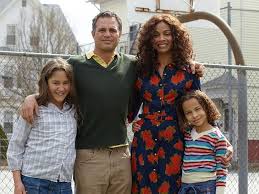
Writer/director Maya Forbes did not just base her new film on her own childhood; she had her sister contribute to the soundtrack and cast her daughter as Amelia, the character inspired by Forbes herself. The film covers the period when Forbes and her sister were living with their father, who has bipolar disorder, in Boston, while their mother was getting her MBA in New York so she could support the family. Cam, the father, is played by Mark Ruffalo and the mother, Maggie, is played by Zoe Saldana.

Most movies are not very accurate in portrayal of people with mental illness. What did you want to make sure to avoid in creating a more realistic, three-dimensional character?

Yes, there are some movies that are great and there are many that are terrible. And I didn’t want it to be this sort of cute characterization or assembly of quirks. It was very important to me that it felt like the core was Cam, who he was. The mental illness was something he experienced but not everything he was. I had my father and other people who are bipolar in my family and I sometimes are wonder, “Are you manic right now or are you just really happy?” And that sort of anxious feeling because you don’t want to tell someone that they’re manic when they’re just happy. Because they’re not that different. It was very important to me to make it feel holistic. And I was trying to avoid making light of it but I also wanted to show a person who is loved and loves other people and is lovable. A lot of families have mentally ill people and it’s somebody they love who suffers from addiction or mental illness. It is a family issue and so it is important to me to portray that.

What were the challenges of making this evoke the 70’s?

Copyright 2015 Sony Pictures Classics

I wanted it to feel like a vivid memory. Sometimes memories pieces are kind of faded and sepia, but to me it felt like memories that are sort of vibrant and alive. And I was drawn to that style of doing it. Especially doing a smaller budget movie you are looking for these evocative environments that have a sort of neutral quality. There is a movie called “Small Change,” a Truffaut film that I love. He shot that in a French village and it’s very simple because it’s mostly the stone facade of these big old French buildings. I was kind of looking for brick and stone and wood. I’m going to look for texture. I’m not going go to Harvard Square because Harvard Square doesn’t exist anymore. I didn’t shoot in Massachusetts actually; I shot in Providence because Providence looks more like Cambridge in the 70s than Cambridge does now. So Providence had all these great locations that have not been gutted up and changed. Also with the clothes I wanted it to evoke the period that does not bludgeon you over the head with “Hey remember the 70’s, wasn’t it cool?” I wanted it to have a bit of a timeless quality but with just smaller touches so working with my whole design team we were looking for these textures and these little touches that would evoke the period without trying to recreate the whole period, which is something that we wouldn’t be able to do anyway.

Speaking of “Small Change,” like that film, this really gives us the point of view of the children, though we understand more of what is going on than they do.

Being embarrassed, that is one thing children do definitely understand. They understand how to be embarrassed by a parent’s annoying behavior. The wonderful thing about the kids is that they really are in the moment. The main thing is just getting them to listen to the other actors. That’s the key; they are listening and they are responding, they also need to seem quite natural. I didn’t go looking for kids that were highly trained because I don’t feel like this movie needed that. It needed a freshness and a naturalness. There was a lot of anger, there was sadness. My daughter plays the older one, so I would take her off into the corner before some of the sad scenes. We talked about the context of the scene then I would start crying and then she would start crying and I would say, “Okay, now….” So that was part of the process of working with her, sort of sharing the emotion in a context with her was helpful to her in terms of bringing her to that place.

Did you see your childhood differently as you worked on this?

I knew always that my sister and I we were a team, we were a team as children going through the world, and we still are. The main thing is I resolved a lot of issues with my mother. I had never felt that she abandoned us but then when I had children of my own…I had two little girls, just like she did, so it was almost like I was reliving something. All these memories came flooding back. I was just catapulted back into my childhood and reliving it somehow.

My mom is an ardent feminist. She has always wanted my sister and me to go out and be in charge. So for her to see me direct this movie, that’s what she thought I should be doing. She thinks it’s important for women to step up and be leaders. But we were having some conflict in the areas of motherhood and career when my kids were younger. She pushes the career so hard and I wondered if she was just trying to validate her choices. I said, “Maybe I don’t want to make those choices,” and she said, “Don’t drop out. It’s hard to get back in. You’ve built a career, don’t drop out.” I was resentful of some of those messages. Then as I was writing the movie I saw things so much from her point of view, what she had been up against and what she had wanted for us and what she had given us in terms of sending us to good schools. My father’s family sort of have a culture of “don’t try too hard.” You want things to come naturally to you. You don’t want to be a striver. And it’s easy to kind of absorb that attitude but it is a crippling attitude; it means that you don’t go out and try because you are not supposed to fail. But my mom is not like that. It almost didn’t matter to me whether it got made because what it did to my relationship with my mother was so profound. She became my hero and I realize she was right about a lot of these things. And, on my mother’s side she had read it and it did the same thing for her seeing my perspective as a child and what it had been like. She was there but I don’t think she as deeply understood some of the painful times, just the complicated emotions that we had, that my sister and I had just because of the situation that we were in it, a lot of different feelings and exposure to things that you maybe don’t want to kids to expose to or to have to deal with. Seeing each other’s stories was really amazing.

She was working really hard at school, she didn’t have a great apartment, she came back to our apartment and it was not like anyone was trying to make it easy for her. We weren’t all taking care of her when she came back. She came back and took care of us. It was very, very difficult and I’m so grateful to her.

Related Tags:


Directors Disabilities and Different Abilities Interview Writers

Interview: Director Peter Cousens of “Freedom”

Posted on June 9, 2015 at 3:41 pm

Freedom” interweaves two stories of slavery. In one, an enslaved family led by Samuel (Cuba Gooding, Jr.) escapes via the Underground Railroad. In the other, set a century earlier, John Newton, the captain of a slave trader sails from Africa with a cargo of slaves, bound for America. On board is Samuel’s great grandfather whose survival is tied to the fate of Captain Newton. This portion of the story is based on the real-life captain who wrote the hymn, “Amazing Grace.” Director Peter Cousens talked to me about the film, and I  began by asking him about the significant role played by music.

The music is certainly an important part kind of the kind of content for the film. It took a little bit of a while to massage the script and the story to make sense of these songs so that they came organically either out of the character’s kind of world or it just by chance within the storytelling.  Obviously, some of the choices were scripted and sometimes we found other choices. Some of the music is a little bit anachronistic and not necessarily of the period but seemed to make sense with the story. And then the music for me that is probably the emotional heart of the film.  “Amazing Grace,” which eventually get into full flight at the very end, obviously.

The other songs for me sort of become the emotional road to freedom. Being a singer myself, I understand that music is enormously releasing emotionally and psychologically releasing. The music sort of plays a kind of megaphone.  As the songs become more and more kind of uplifting, when Samuel finally discovers his voice and is able to sing “Amazing Grace,” it’s really about him finally finding true freedom and it is expressed through the opportunity to sing.  That for me is kind of metaphorically just happening throughout the film as he discovers his voice, he discovers his heart.

How did you approach telling two stories from two different time periods and in two different locations, keeping it all as one organic whole?

Initially in the script there was no real connection between these stories so I had to try and work out how we could do that. The central notion of that Bible and the boy became a connector to the two stories.  But dealing with the two periods, especially for a small independent film, it was challenging, discovering how to create part of England, the Atlantic Ocean, a journey to Richmond, Virginia, all in Connecticut. I was lucky I had a really great designer and costume designer and director of photography and locations manager to kind of discover how we could actually create those two worlds. And she has challenges as you could imagine with the costume in those periods and just creating and finding ways. For instance at Mystic Harbor in Connecticut we shot in one direction just to create a particular harbor in West Africa.  And then we just turned the camera around the next day and faced it the other way and created Charleston in Carolina. Those sorts of great cinematographer choices, that sort of trickery is kind of a way of solving some of these problems which were many.  But I find with working with Americans in particular nothing is really impossible. If you ever were to be marooned on a desert island, get marooned with an independent film crew and you will survive.

My favorite scene in the film was the stop on the Underground Railroad with the theatrical troupe.  It reminded me of the Crummles in Nicholas Nickleby.

When I was a younger actor I actually had the good fortune of performing in the eight-hour theatrical version of “Nicholas Nickleby.”  I played Lord Verisopht and my wife played Fanny Squeers and Miss Petowker.   It’s a favourite of mine and when I was doing this film the Crummles and that notion of Nicholas Nickleby was very present in mind as well.  That sort of heightened actory campery that goes on in a troop like that.  To me that as quite fun just directing those scenes obviously. So I’m glad you made that reference that was certainly in my head as well.

Related Tags:


Directors Interview
Interview: Pastor Steven Earp of “Where Was God?”

Interview: Pastor Steven Earp of “Where Was God?”

Posted on June 5, 2015 at 12:00 pm

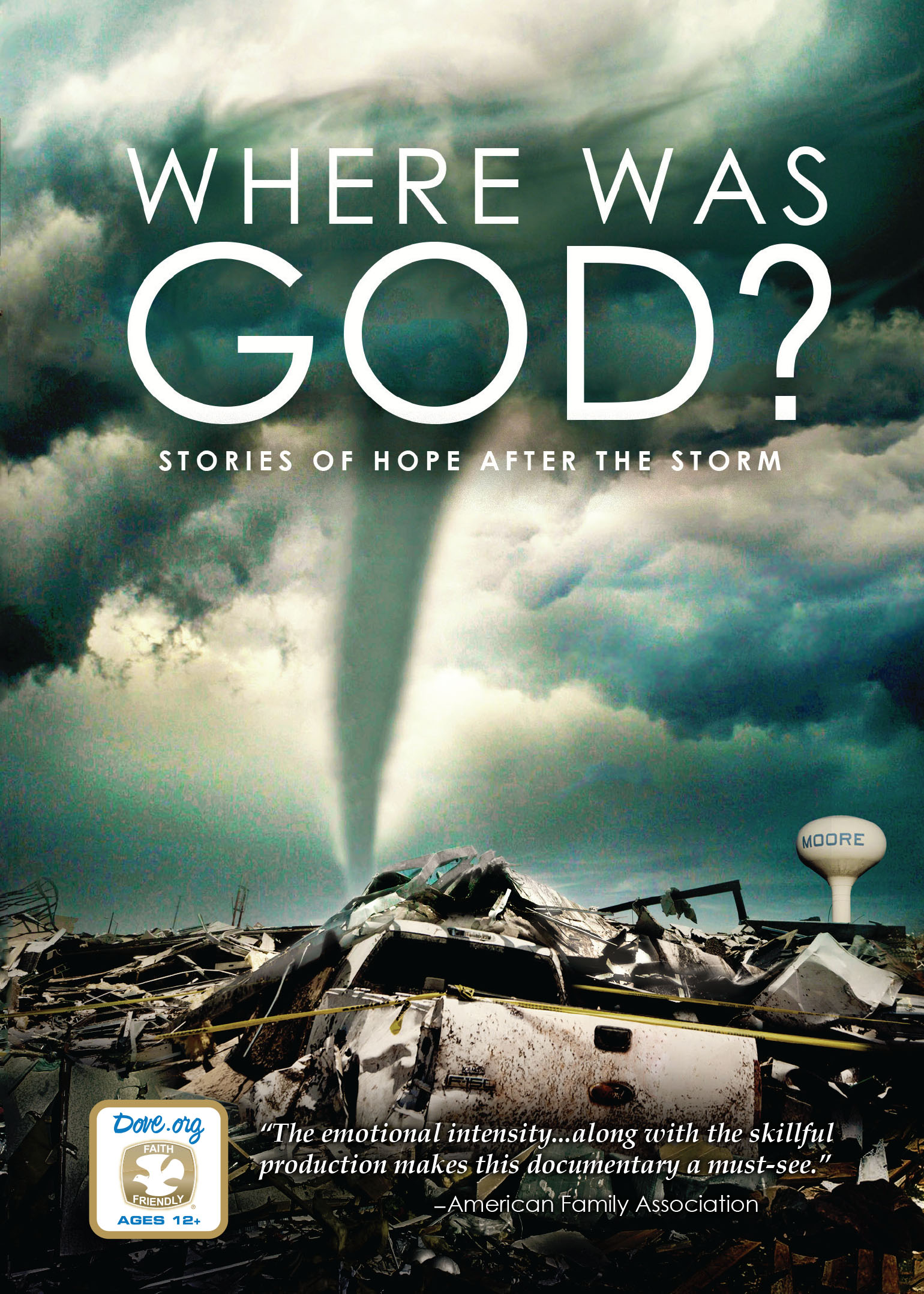
Where Was God?” is a documentary about “stories of hope after the storm,” the impact on the community of Moore, Oklahoma of an E5 storm with destructive power eight times that of the bomb dropped on Hiroshima. I spoke to Pastor Steven Earp, who produced the film and who is featured in it as well, telling the story of his own involvement. It is now available on DVD and streaming..

Copyright 2015 Elevate Faith

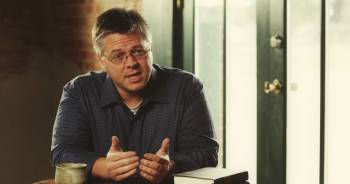
My wife and I were in a storm shelter the day of the storm. My kids were in five different places. So our kids were at school and at work. We came out of the storm shelter, we find out that our home was spared, the tornado had missed us by a mile or mile and a half but immediately we were thrust into full-time disaster relief. Every other church in town is crammed, we’re looking for our kids, we’re not able to get contact from anyone and when people would contact us we would get 40 text messages at once when communications would finally come through. And so immediately everyone’s in full-time disaster mode. The tornado was a mile and a half wide at certain points, so it just went right through the middle of a highly populated area. And so the hours turned into days and the days turned into weeks and about two weeks in we were still in day and night, full-time disaster relief mode and all of our plans changed and all of our appointments changed. A friend approached me who has been involved in some film projects and he said, “Hey Steven, you know here in another two or three weeks all these media trucks are going to be gone and there are still going to be stories to tell, the deeper stories, stories of hope and faith in overcoming and, what does it look like for someone to recover emotionally or for someone to recover spiritually? Specifically what does tragedy or what does difficult time and what does the storm do to someone’s faith?”

I had been doing almost nothing but listening to stories day in and day out. Churches and organizations would send resources to those of us who were here and they we were just given food and clothes and money and everything to people who lived there and so we had these stories. And I resonate with the concept that there definitely would be stories that needed to be told. So that’s how we started out. Initially we wanted to follow 10 or 12 families for about a year. We would narrow that down to 4 or 5 stories that we wanted to share. And it ended up as we started this process, a handful of the families that we were interviewing their stories started overlapping and it became more apparent that they were all linked in one way or another. And then we started hearing other stories, someone who lost everything but you still see a lot of light in the eyes. Like the Moody family who talked about overcoming addiction and things like that and they have already been through that life storm and then they experienced this storm that didn’t particularly shake their faith as much because they had already been through some other life storms.

Earp spoke about the power of sharing stories, for the listener and the speaker.

I definitely think that there is a therapeutic peace of overcoming tragedy, just being able to talk about it, just being able to hear someone else’s story.  You see a little bit of your story in their story. And as the McKays said, “Every time we talk about our son, our hearts heal just a bit.” Our initial plan was for this to be a tool to help bring emotional disaster relief specifically to this community. That was initially our plan and during the film we took pictures of the houses being rebuilt. But what about the hearts that needed to be rebuilt and the homes, the relationships that need to be rebuilt? So it just sort of grew into something more and as we started seeing these stories especially certain families’ lives started intersecting.  And so we felt like it did have a message beyond does this community.

It was important to him that the film itself be a form of community storytelling, even the music.

The music was an original score written by Christopher Clark, a local artist, local musician. Everyone who worked on the film is local to Oklahoma City. Many of them are film professionals.  He worked with Travis Palmer. And they sort of put together a theme behind each family and each story so there is a slightly different sound with each family.

At screenings, he has seen that the impact of the film reaches far beyond the specifics that it covers.

Locally, of course the film has a huge impact because everyone in our community knows someone in the film. So it has helped to bring a lot of healing.  Across the country whether someone has seen it at the film festival or in theaters, we get messages every week from people saying, “Thank you so much for putting this together.”  A lot of the stories we get are, “I’m going through cancer and I see some hope now.” Or “I lost my son 18 years ago in a tragic accident and I’ve never been able to put into words what I saw but when I saw the McKabes say those things my heart resonated with that.” I’m super honored to have been able to be in a project that is impacting people in the way that it has. And so that was what our initial goal was. And so we are really grateful to be involved in this because of the impact, so we had a great response in film festivals and in churches and all over the place.

Copyright 2015 Elevate Faith

The movie begins with a child reciting a passage inspired by Romans 5:3 about the purpose of suffering, and that raises the question asked in the title of the film.

We just thought felt that that was the main theme of the film.  People asked, “Where was God?”  A lot of people ask when tragedy strikes,  “Why does God allow it to happen?”  And that is a question that believers have to wrestle with and also a question that skeptics ask as well. And it is very difficult. We would have to literally know the mind of God to be able to answer the question, “Why does God allow specific instance of suffering?”  And so I don’t feel that we can answer that question particularly but the question,  has more to do more with when people experience tragedy where did they see him working in their lives?  So we just let people tell their own stories and let everyone else come to their own conclusions about that. It’s first person narrative, just letting them tell their stories so in these stories you see people saying, “I experience God in this way, I experience God in this way, I experience God in this way.”

Some people can experience tragedy and they run to the Lord and other people run away from him and why is that? And I don’t know why. I think is a great mystery of life.  The answer to the question “Where was God?” I think is during life storms God is always near. And I think that the Romans passage deals most directly with that. “I rejoice in my suffering,” you know these are the results of suffering there are things that come as a result of suffering and in our darkest time we can perhaps experience even more closeness to Him than we could at any other time.

I asked Pastor Earp what to say to a person who is suffering.

Saying less is better than saying more. The things that matter most are letting them talk.  Our silence says more than our words and I think the more we tend to say, the worse it tends to be. And so I think love and compassion and acceptance and affirmation of what they are experiencing and what they’re feeling, those are the kinds of things that can help people and then in addition to that the practical things that people need that many times they don’t realize they need because they are stunned. So someone loses a loved one, they don’t need your advice or counsel but they might need your presence and they might need just a quiet hug or they might need you to just sit there or they might need you to go to the grocery store or clean their bathrooms and they will never ask for it. So those are the ways it’s counterintuitive, we want to come up with answers for people, and in general people don’t need our answers, in general they need our love, they need our mercy, they need our help.

Related Tags:


Documentary Interview Spiritual films
Interview: “Mike and Molly’s” Billy Gardell on “Dancer and the Dame”

Interview: “Mike and Molly’s” Billy Gardell on “Dancer and the Dame”

Posted on May 26, 2015 at 3:31 pm

Copyright 2015 UP
Copyright 2015 UP

Billy Gardell, star of television’s Mike & Molly, talked to me about his new film, Dancer & The Dame. He plays Rick Dancer. “He was once like a super detective and he kind of got obsessed chasing this bad guy but he didn’t have enough evidence to take the bad guy down and he started to obsess and he tried to do it prematurely and the bad guy who was tied into the city made him look foolish and got him busted down and therefore he kind of gave up on himself. He kind of gave up on himself and became cynical and then end up pushing mail papers around the precinct room. And then what happens is, like in life, the right thing sparked his inspiration and made him become a good cop again and start caring again.”  Unlike many actors, he was not worried about working with an animal.
“It was fine with me. I wanted to do a movie that was family-friendly. I have an 11 year old ]and I thought it was a cute script. My friend Tommy Blaize wrote a really good script and it was a really fun family adventure, I don’t know about all that stuff about ‘Don’t work with dogs or kids.” I don’t really believe that. I think this is just a nice family movie, a nice movie for families to enjoy together.”

He says that working on the road as a stand-up helped him as an actor.  “You learn how to really deliver a funny line very well and you learn to think quickly on your feet. So if there’s something quick that you come up with to make the take even funnier, I think that plays into it.”  That is especially important on “Mike and Molly,” where he is working with the famously inventive improviser Melissa McCarthy.  “She does a lot of improvising and then I have to be on my toes to adjust to what it is that she’s going to do. And that’s what makes it super fun for us to work together. I just never know when she’s going to go off the main path and then trying to keep up with that and being a straight man too has been a lot of fun.”  He says the key to the show’s popularity is that “you see real people in this show and whether it’s Mike and Molly or my mother or the woman who plays Melissa’s mother the whole cast has a character that is kind of based on reality. And then ultimately underneath all of that, it is two people that thought they would never fall in love falling in love and I think people root for that.”

Gardell is having a lot of fun on his new game show series, Monopoly Millionaires Club. “That’s a very exciting opportunity that came my way last year. So far we’ve given away $1 million twice in 12 episodes and the odds guys said that wouldn’t happen for 30 episodes. So I’m not sure the insurance companies are happy but I think it makes for great TV. It’s a super fun fast-paced version of Monopoly and there is a lot of all or nothing moments. And I get to give away a bunch of money and so it’s wonderful. It’s not mine so I don’t mind it — I hope the audience wins. I hope they win it all.”

A Pittsburgh guy at heart, he is still the biggest Steelers fan there is. “I’m a fanatic. Absolutely! We have Steeler Sundays out here in California at my house and I only allow Steeler fans over for the Steeler games and the rest of my friends can come by but I’m die hard to the end. The team resonates what that city is that’s why it is so connected to the city.”

Gardell told me about the first time he got a laugh. “I was at a baseball banquet. It was one of those end of the year is things and I think I must have been about eight years old or so. And our guest speaker was Bill Hillgrove who is the announcer from Steelers because I grew up in Pittsburgh. And he had said something and my father leaned over and whispered in my ears, ‘say this’ and I stood on my chair and I said whatever it was that my father told me to say and I got a huge laugh and it was very addicting. I thought, ‘Wow, what a great way of going through life — I want to do that.’ And to this day my father and I try to remember what that line was and neither one of us can remember. Isn’t that funny? I remember the feeling. I remember that distinct feeling of having a room full of people laugh because you said something fun.”

He listened to George Carlin and Richard Pryor records as a kid. “We did not really understand the whole thing but the parts we did they would just make us laugh from our souls. And then my dad turned me on to Jackie Gleason when I was very young and then I had a grandmother, Edith Bean, who I told her at nine I want to be a comedian and she said, ‘Well, if you work really hard every day you can do it.’ It’s an old World War II generation idea that if you never quit you can do this and I trusted her opinion so much that I never asked anybody else.”

He says he has learned the most from “Mike and Molly” director James Burrows and creator Chuck Lorre. And he also learned a lot from Greg Garcia, “a wonderful man who created ‘My name is Earl’ and ‘Yes Dear’. Greg was kind of my first taste in the work and constantly because they gave me recurring part on the show for ‘Yes Dear’ he was super good to me and helped me along. And then in the first two years of ‘Mike and Molly’ being the lead Jimmy Burrows really gave me a guiding hand and Chuck Lorre kept me from completely freaking out. So I’ve been around some men that really were influential and really helpful. If Chuck sees something that he thinks is going to work is unafraid to do it. And he is also not afraid to put normal characters in situations that you wouldn’t ordinarily see them in. He just believes that the story is good enough and the characters have that sense of worth that people are going to invest themselves in it.”

Related Tags:


Actors Interview
Interview: Brett Haley, Writer/Director of “I’ll See You in My Dreams”

Interview: Brett Haley, Writer/Director of “I’ll See You in My Dreams”

Posted on May 21, 2015 at 3:12 pm

Copyright 2015 Bleeker Street

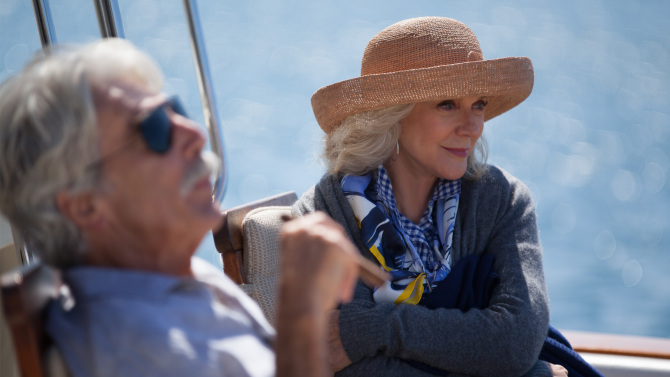
Brett Haley wrote and directed “I’ll See You in My Dreams,” a bittersweet romance starring the luminous Blythe Danner as Carol, a widow taking some tentative steps toward love with Bill, a handsome new neighbor played by Sam Elliott. Haley talked to me about why he chose to make his story about people in their 70’s and why music plays such an important role in the film.

Blythe Danner is magnificent in the film. In the scene where her beloved dog is put to sleep, she is mesmerizing.

Yes, that was a very challenging scene to film because we’re obviously dealing with an animal and animals are unpredictable. We have really amazing trainers and they really got the dog to a level of calmness that I’ve never seen. He’s trained to just get very, very calm and then I just let Blythe take her time and do what she wanted in there and she knew the script, she knew what we were doing and I just let kind of roll with it and we just set multiple takes back to back to back so that the dog would just stay calm. I didn’t want to come in and say cut and reset and all that. So we just rolled the camera and Blythe would just do the scene and then stop. And then she’d take a breath and then she’d do it again. It was a really tough scene to shoot obviously. It was a very sad scene and I thought, “Oh boy am I being manipulative? Am I being exploitative in any way?” But no, I really stand by it. I think the way it’s done was honest and truthful and that is my ultimate goal with everything that I do.

What interested you in writing about people of that age?

I’m very sort of intrigued and curious and fascinated by older people because I think they have a lot of life experience and they’ve gone through so much more than what I’ve gone through. I’m starting to ask questions about life and loss and why are we here and why do people die and how do you deal with loss and things like that. I think older people have experience quite a bit more of that. So to me it was a no brainer if I wanted to make a movie about those themes I should make it about older people. And then I think on the same hand when you think about it and you go yes, it’s like older characters especially in films are marginalized. They always put on the sidelines, supporting characters or plot movers, wacky characters.  They’re never the leads, they’re never fully dimensional, three dimensional leads or rarely I should say. And especially rare being romantic in any way and that was something that I was really intrigued by.

What are the biggest differences between romance early in your adult life and romance near the end?

People who are towards the end don’t have as much time to mess around. They cut to the chase more and I found that actually really refreshing to write. Bill certainly knows what he want and he goes for it. And I think there’s less time to sort of beat around the bush so to speak. I think when you’re young you think the world is ahead of you. You just don’t think about the realities as much when you’re young. You’re sort of caught up in a moment which is a great beautiful thing but I think when you’re older you can feel the weight of that ticking clock a little bit more. I think you’re a little bit more decisive. You just go after what you want more. I thought that was really fun. That was really fun to write.

Music is very important to the film.

Music does play a huge role in the film. There’s karaoke and Carol was a singer in her younger years and Martin’s character, Lloyd was in a band and a poet. I don’t want to spoil it for people but there’s a huge emotional moment in the film that is centered around the song of the title and I think it’s really crucial. I love music and I felt that it a really fun way to explore some of the emotions in the film.

Malin Akerman plays Carol’s daughter. What do we learn from the relationship between the two of them?

I think it’s unfortunately a bit of a common one. I think we get pretty self-obsessed in this world. I think we kind of we forget about the other people around us, who we love and who we think about. I think that they both had sort of been drifting naturally. No hard feelings but living in their own lives. They live on different coast and that sort of adds to the drift. I was trying to get at something to show a different side of Carol, that she is not perfect and neither is her daughter. I think they both should probably put more effort in their relationship. I wanted it to just be real. I didn’t want her daughter to show up in the movie and just be this perfect daughter and have this perfect relationship because that’s just not the way people are. There’s always something more there; there’s always something more layered. To me it rang true to pick them as slightly distant but then it’s really about them realizing how much they need other, how much they truly love each other and that they shouldn’t take each other for granted. The film is all about relationships really, and connection.

One of the highlights of the film is Carol’s relationship with her friends, played by three fabulous actresses, June Squibb, Rhea Perlman, and Mary Kay Place.

Everyone was my first choice and everybody just came on board this small budget movie without too much hoopla. They just responded to the material, I think they appreciated a three dimensional role that was on the page for all of them and I think that they just wanted to be a part of it. I was just super blessed to have them want to join the party. Blythe described it as a repertory company, in this together and not in it for the money but in it for the passion of the piece. And we just had a wonderful time, it was just a wonderful experience and so lucky to have these amazing actors believe in me and put their fate in me to go and make this film and gosh, I’m a lucky guy.

Did they have a lot of fun filming the pot smoking scene?

Yeah the girls were having a great time shooting that scene and it just shows how funny they are. They’re all comic geniuses. Obviously they were not really smoking pot, but everybody has been asking me if they were really high! Of course not. I think it’s very interesting that these ladies, they didn’t go for the cheap laugh. They went for the really honest stuff that comes out of that scene and I think that’s why it works. They don’t yuck it up too much. They keep it really grounded and honest.

What’s the best advice you ever get about directing?

The best advice I ever got was to be kind and gracious to everyone who works on your movie. Understand that no one is better or worse than you on a film set. A lot of directors take their power into their head and feel like they can treat people without respect. I’m a big believer and especially on the set but in life you should treat everyone with kindness. And then you should be grateful to everyone for their hard work especially when they’re working on your film. It’s very important to me that everybody gets treated with equal amounts of respect and no one is better than everybody else on a movie set or in the world. If you’re kind to people they’re going to be good to you and I think that’s the big life lesson. I think we forgot that. The energy that we had on that set did come through on the screen as well, from Sam Eliot down to the PA. Everybody wanted to be there and felt a part of this film and there was a really nice energy and I think it translated to the film.

Related Tags:


Directors Interview Writers
THE MOVIE MOM® is a registered trademark of Nell Minow. Use of the mark without express consent from Nell Minow constitutes trademark infringement and unfair competition in violation of federal and state laws. All material © Nell Minow 1995-2026, all rights reserved, and no use or republication is permitted without explicit permission. This site hosts Nell Minow’s Movie Mom® archive, with material that originally appeared on Yahoo! Movies, Beliefnet, and other sources. Much of her new material can be found at Rogerebert.com, Huffington Post, and WheretoWatch. Her books include The Movie Mom’s Guide to Family Movies and 101 Must-See Movie Moments, and she can be heard each week on radio stations across the country.

Website Designed by Max LaZebnik