Interview: Claire LaZebnik, Author of Wrong About the Guy

Interview: Claire LaZebnik, Author of Wrong About the Guy

Posted on May 20, 2015 at 3:54 pm

Copyright Harper Teen 2015

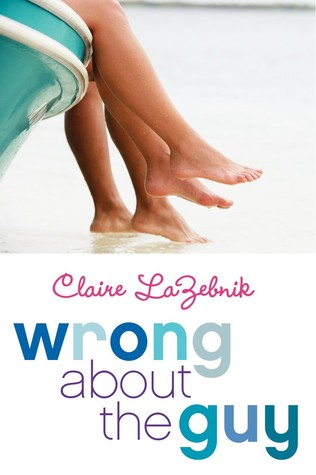
The wonderful Claire LaZebnik has written another terrific YA book.  This one is Wrong About the Guy, the story of Ellie, a high school senior who lives with her mother, her musician stepfather, who has become unexpectedly famous as the judge of a reality music television series, and her little brother. The book is inspired by Jane Austen’s Emma, and like Emma, Ellie has a tendency to try to run the lives of everyone around her. Even when her intentions are good, the results are not always what she had in mind.

I loved the book’s heart and humor and I was thrilled to have another chance to interview LaZebnik.

Jane Austen famously said that with Emma she was creating a character that no one would like. Did you think that at times about your main character, Ellie?

You know what’s funny? I loved Ellie from beginning to end. My own teenage daughter is sort of charmingly irreverent and disrespectful (but only when we’re joking around). I saw Ellie as being like that–quick with a funny insult and a little overly confident, but fun to be with, whether you’re another character or a reader. So I’ve been a little surprised when some people who’ve read it have said they didn’t like her. I love her! I love all my heroines, no matter how flawed. But she does get humbled in the course of the book and becomes an even better person by the end.

We hear the story in Ellie’s own voice. As an author, what are the advantages and frustrations of a first-person account?

I love writing in the first person. It feels so much more engaging to me: the reader gets to go through the journey WITH the character, learning things as she does and falling for the same deceptions. But of course it’s frustrating that anything that happens away from the narrator’s presence can only be described to her. Sometimes the most dramatic scenes have to be boiled down to a bit of dialogue because you just can’t justify having the narrator in the room. And the fact that you can’t see into other people’s minds is also limiting. But I’d say the benefits outweigh the frustrations.

Ellie’s privileged life is very different from what she and her single mother had when she was younger. How does that affect her world view?

I wanted her to have clarity about the way people suck up to you when you’re famous and it seemed like she’d have more perspective on it if she hadn’t always lived with it. It made her a little less Emma-like (Emma is very much to the manor born) but more interesting to me as a modern character. She and her mother also aren’t used to being waited on and living in the lap of luxury, so they still appreciate those things and don’t take them for granted. It makes them more relatable.

Because her stepfather is famous and wealthy, she is reluctant to trust some of the kids at school who try to befriend her, and yet is still taken advantage of by one of them. How does that affect her other relationships?

I know some kids out here with famous parents and they really are besieged by attention from people who want access to their house and relatives. It’s a lot of work to sort out the real friends from the ones who are starstruck—and of course it’s not always a simple either/or. You can have a good friend who also gets a thrill from being around your famous father or mother. So it’s complicated. I think you learn to be wary. I explored some of this in my first YA novel EPIC FAIL, where one of the main characters has two movie star parents and is very distrustful of anyone he hasn’t known for years. And in this one, part of the reason Ellie desperately wants her best friend to go to the same college as her is because she wants someone she can trust completely at her side there.

Even though she is careful not to be too trusting in some cases, Ellie misses some important signals of less than trustworthiness in others. What makes her vulnerable to those mistakes?
Ellie’s problem is hubris: she thinks she knows everything. And she does know a lot–she’s actually very smart and fairly intuitive. But her very intelligence makes her overly confident. Once she thinks she’s figured something out, she assumes she’s right and ignores any evidence to the contrary. And that leads her down the wrong path several times in the novel. She also doesn’t like being disagreed with or told she’s wrong—it’s not something she’s used to—so she stops listening when someone tries to point out the flaws in her thinking.

Ellie is in some ways most wrong about herself. How does that crucial rite of adolescence, the college application essay, help her see herself more clearly?

Oh, I had so much fun talking about college essays! I really do think they reflect so much of what teenagers are trying to figure out about themselves and the world in general. Ellie tries to write about her passion for global community work, but eventually her tutor forces her to admit she hasn’t actually done anything to help people who are suffering in other countries. So then she tries writing something that’s more honest, about how she means well, but falls short of her ambition to be a good person. I think that’s true of so many of us: we want to think of ourselves as do-gooders, but we really just sit on the sidelines and try to stay out of trouble. She accepts the reality that she’s not nearly so involved or caring as she likes to think she is, and that makes her resolve to do better in the future.

Ellie’s mother and stepfather have a strong, supportive, close relationship, but it is hard for them to talk about what is going on with their son. Why is that and what role does Ellie play?

Because my own son has autism and I’ve written a couple of books about that, I’ve really studied how families react to concerns about their children. Ellie’s brother is a late talker and often throws tantrums. His mother thinks something must be wrong; his father thinks she’s overreacting. This is really a classic dichotomy: mothers tend to worry and fathers tend to be dismissive. Ellie loves her brother just the way he is, so she sort of agrees with her stepfather that they should just let him be. At the same time, she’s very close to her mother and wants to support her too. She finally realizes that her role is to help both parents really LISTEN to each other. That’s all that matters in the long run. Just listening and working together to figure everything out.

In Austen’s book and in “Clueless,” also inspired by Emma, the main character encourages her naive young friend to pursue a young man named Elton, with disastrous consequences. Your re-interpretation of that part of the plot is very creative! What led you to that variation?

I’m sure you know the Bechdel Test, based on a cartoon strip by the wonderful graphic artist Alison Bechdel. A movie fails the Bechdel test if there isn’t more than one female character, if the women never talk to each other, or if the female characters only discuss men when they DO talk. Even though I was borrowing a lot from Austen, I didn’t want the two young women in my book to spend most of their time talking about men, but I still wanted my main character, Ellie, to steer her naive friend in the wrong direction. So I switched Mr. Elton to Elton College! It’s the school Ellie wants to go to, and she wants her friend to go there too. It’s hard to get into, but Ellie’s a good student and very smart and her stepfather’s famous—she has a good shot at getting in. Her friend, on the other hand, is really out of her league with this school, but Ellie refuses to see that and keeps pushing her to apply early. The storyline follows the arc of the one in Emma, but it’s not about young women pursuing men—it’s about young women trying to figure out the whole college thing.

Did your own experiences as a teenager inspire any part of the story?

For the most part, no—I grew up on the east coast and this is very much a Hollywood novel. The only area that I’d say I drew from my own life for was the discussion about writing college essays. That hasn’t changed much in the last few decades—too many kids still try to sound like someone they’re not in those essays and I think the phoniness will always come through. I actually wrote a humorous essay about being the youngest of five siblings. It was weird and totally personal . . . and I got into to my first choice college. And my son wrote one about his lousy sense of direction. (Also successfully.) So I’m a big fan of doing something weird and unique.
Related Tags:


Books Interview
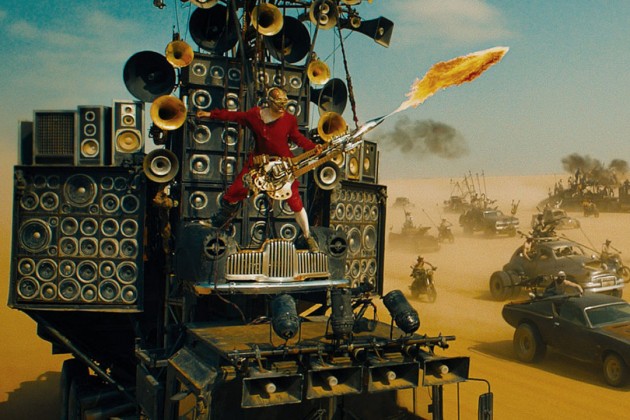
Interview: Junkie XL, Composer of “Mad Max: Fury Road”

Interview: Junkie XL, Composer of “Mad Max: Fury Road”

Posted on May 19, 2015 at 3:58 pm

Copyright 2015 Warner Brothers

It was a treat to talk to Junkie XL (aka Tom Holkenborg), the award-winning, multi-platinum producer/composer who created the sensational soundtrack for Mad Max: Fury Road, ranging from orchestral to heavy metal, and now available for purchase. Coming up next, he is working on the remake of “Point Break,” “Black Mass,” and “Batman v. Superman.”

Junkie XL told me about working side by side with writer/director George Miller and about the unexpected member of his household who is heard on the soundtrack.

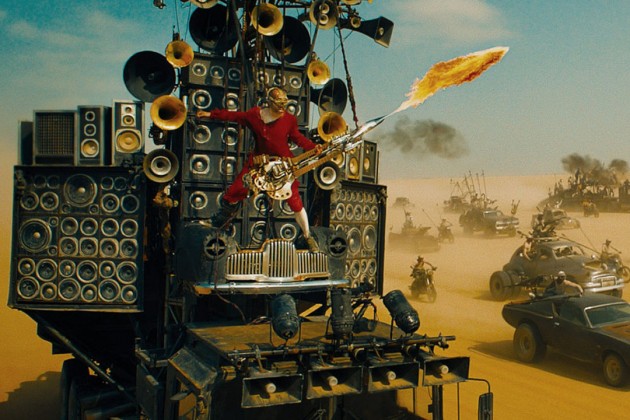
I’ve been listening to the score and the track called “Escape” sounds Metallica if its lead singer was a Tyrannosaur Rex.

It’s a part of the movie where Max breaks loose from his capturers but this is a really strange world. It’s so over the top, the scenery is so intense, all the detail that goes into the set and the costumes, what these people looked like, the cars, it’s unheard of. And so the music needed to live up to that standard. I said to George, “Let’s do this insane rock opera where everything clashes and there is like choir and there’s sound design and there’s mad drums and mad electronic sounds and over the top strings and very small strings and very emotional little things and he said, “Yeah let’s do it.”

And so “Escape” was one of the earlier cues that I started on and it needed to be crazy. Max in this case is a very troubled character. He’s not the stable, funny guy that we know from the earlier Mad Max movies in the 80s. He’s been through this so many times and he’s got post-traumatic stress and whatever he has, he’s very troubled. And so the music needed to be very troubling too.

Is that all together electronically? did you have an orchestra?

There’s an orchestra in there but I actually set with the string players and the bass players and we created these really crazy tones that normally do not come out of these instruments. They have to play them in a certain way. They have to get really out of tune. There’s that whole string section in there with a really haunting motif which was very inspired on the great late 40s, 50s, 60s, the golden era of Bernard Hermann and some other classical composers. It’s really like a golden time period and we really have to record it multiple, multiple times to get the right feel and the right tone.

Yes, some of the tracks are very lush and orchestral.

I grew up classically trained and I have a really strong relationship with pieces written, let’s say from 1850 to 1950/1960 and it was played a lot around our house. George is very familiar with that time period too and he loves that style. So that is what we use when there are parts of the film where these characters step out of that dystopian madness and they actually warm up to one another as human beings. That’s when we need to go to that tone. That’s when we need to go to that musical language and again we discuss the 50s, late 20s, 50s early 60s and we took best elements out of that era and we use it in a very modern film score.

https://www.youtube.com/watch?v=T9Zc9cZVdOc

Everything in the films looks like it has been assembled from pieces in a junkyard. How do you reflect that aesthetic in the music?

It’s like there’s a lot of sounds used in the score that actually come from a metal cans, oil drums, all kinds of metal objects that I sampled and did some sound design on that are being used. I mean, generally, in music, I come from a world where you sample bits and pieces from other records so you compile it together into what then becomes a dance track. That’s the world that I come from, so when George starts talking about creating objects out of other objects I was like, “Oh I know that world.”

What were some of the more exotic sounds that you sampled in the soundtrack?

Animals. There’s a lot of those sounds are in the score. The sound that you hear right at beginning of “Escape” is coming from my dog. You need some electronic treatment, and then you get it pretty far. He’s the sweetest dog in the planet. But if he bark and you treat that a certain way, yeah it becomes really scary.

The last time we talked it was about “Divergent.”

“Divergent” is quite different. It was this movie about a young girl that grows up and becomes this heroine. In “Mad Max” you get thrown into the film. You see all these really tough characters that tried to survive had to find their own methods of surviving. So we meet Furiosa played by Charlize Theron, who did a stunning job playing this character, and you meet these other extremely tough women. It’s almost like the reverse. We start with all that violence and throughout the film we warm up with these characters as we get to know them. Whereas in “Divergent” we definitely know the characters and then once we know the characters we go through the story and she becomes this really powerful heroine at the end.

How closely did you work with writer/director George Miller?

It was a remarkable process. George and I worked really intensely on this. It was a true collaboration where he got inspired by the music and to change certain things with the scene and then I got inspired because he did that and then I would do something else and we went back and forth like that multiple times. Eventually I packed up my studio with my assistants and my family and music editors and we all went shooting for eleven weeks roughly and worked with George from early morning till late at night until we were really satisfied. He’s fantastic and we have two things in common. One is we’re extremely precise and we put the bar really high for ourselves and we won’t rest until all the details are right. I drive my assistants to absolute madness and when I was in Nerv in my artist era, I would drive my fellow band members completely to madness because I wanted to do it again and I want to make it different, I wanted to try something else and then back and George is exactly the same thing, the same way. So we really admire that with one another, that you can only strive for the best constantly. You constantly have to second guess, “Is this the best I can do?”

And the second thing is we’re both extremely curious. So when certain things work out a certain way we always start wondering why and we want to know why and then when we know why we apply a little theory to it. We try to understand why it’s so great and then we apply that theory on another scene of the film. Could this be potentially as great as we did there? And how should we do that? Constantly being curious is frustrating but it also enriches your knowledge and your work ethic and also ultimately your results.

At Comic-Con last year, George talked about how excited he was to use the Edge camera car. How did that affect the way you thought about the score?

The first thought is how can we make this experience as thrilling for the audience as possible? So the fact that these cameras make the audience almost part of what you’re going to be seeing on screen, and that goes for the music too. When I saw the movie I know there’s no way I can get away with a cello and a flute.

Related Tags:


Composers Interview
Interview: Sandy McLeod on “Seeds of Time”

Interview: Sandy McLeod on “Seeds of Time”

Posted on May 19, 2015 at 12:00 pm

Copyright Kino Lorber 2014

Seeds of Time is a documentary that seems like a terrifying science fiction story. It is about the efforts of Cary Fowler, funded by Bill Gates, to find, preserve, and store seeds from plants necessary for all life forms on the planet, as over 90 percent of the plant species we use for food have become extinct in the last century. For the best and worst reasons, most of our food now comes from modified plants (and the animals who eat them), created to be more efficient to grow and ship — and to be able to be patented and thus a better investment for agribusiness.

Seeds of Time is in some theaters now, and anyone can bring a screening to any community via Theatrical On Demand film distribution service Gathr®, which is free if it “tips,” meaning enough tickets are reserved.

I spoke to director Sandy McLeod about the film.

How did you come to this project?

I had been sent an article that was in the New Yorker by two friends and I was reading it one morning at breakfast. My husband was on the speaker phone and I’m reading about Cary Fowler and I hear my husband talking to a guy named Cary on the phone and I don’t really think much it. But I read a line in the article that says Cary Fowler was given $30 million to collect the seeds through the Gates Foundation and I hear my husband ask this person on the phone. How much were you given by the Gates Foundation? And I hear the person on the other end say “$30 million.” And when my husband hang up the phone I said, “Was that Cary Fowler by any chance?” and he said, “Yeah, how did you know?” So I ask my husband if he could introduce me to Cary and that summer I read Cary’s book which is called Shattering: Food, Politics, and the Loss of Genetic Diversity/. I realized that there are so many things in that book that I had no clue about even though at I’m a foodie and I know quite a lot about food, and it is of fundamental to having an intelligent conversation about the status of the food system today. And so I went to Memphis and I interviewed Cary and he really blew my mind. I realized that if this was something that people really need to know about in order to have an intelligent conversation about food and that I was going to learn along with my audience. So I felt like I was a good guinea pig for them.
The extinction statistics are staggering. How do you respond to people who say, “Well, that’s Darwinism. It’s just natural selection, right?”

It’s not in this case because we actually domesticated those plants and we ate those plants and we had tremendous diversity and a lot of different kinds of fruit and vegetables that we no longer have. In fact 93% of all the fruit and vegetables that were in the United States in the last 80 years has gone extinct. So that is huge, that’s a tremendous number and with agriculture now facing so many difficulties including limited lands, limited water, low availability of fertilizers, population expansion, and now climate change, having lost that diversity means that there are less tricks in the tool bag to let genetics be able to give to the farmers to work with to have a radish that’s going to survive, to have heat tolerance or drought resistance or all the things that farmers are starting to feel in terms of what’s happening with the climate. So that loss would have continued if Cary hadn’t done what he did. It’s an ongoing battle. Seed banks are still becoming extinct and if they’re not backed up, those seeds will go with them.

The scenes in the seed storage facility between Norway and the North Pole were like something out of a James Bond movie. What was it like to film there?

Well, it was very cold there. It was 50 below and 30 below in the vault. and I didn’t fully appreciate what that would mean. I have a lot of cold weather gear because I’ve shot in a lot of strange places, very cold places but I’ve never really been in any place like that. It’s very other wordly. It’s ironic that we store all those seeds up there because nothing could ever really grow up there. There’s a very short season where it’s day all the time and then the rest of the year starts again and it is very, very cold. And in my exuberance as soon as I go there I wanted to go to the seed vault and I jumped out of the car and ran up the hill and found a shot that I wanted to get and I very quickly realized that my nose hurt. I didn’t have anything on my face. You have to cover everything up. You can’t really run around in those kinds of temperatures. And it was funny because when we went into the seed vault which is 30 below it actually felt really warm to me. If you decide you’re going to shoot outdoors you have to stay outdoors all day because once you bring the cameras in they have to go through a thawing process and the lenses fog up. But we were lucky in a way that we’re in a modern enough time where we weren’t shooting film, because the film can break under those conditions. Also, it’s a really expensive of place to be. All the food that’s there has to be brought in and hotels are really expensive there so we couldn’t really stay there very long but we ran around as much as we could, while we could.

Your opening shot is so beautiful. It really invites you into the film even though it’s going to be a scary and disturbing stories. So tell me a little bit about the cinematography.

I come from a feature film background. I used to do continuity on feature films and I’ve worked with a lot of great cinematographers. And so I’ve learned what good lighting looks like and how to frame the shot. One of the biggest problems I had on this film was that I couldn’t have the same cinematographer with me all the time. I worked with lots of different people, so I had to keep trying to keep the look unified. It was really challenging but so far most people don’t seem to notice that. And because it’s about seeds, first of all I wanted people to see how beautiful seeds can really be because they’re so tiny we don’t really look at them. These two guys in London did a beautiful book of photography on seeds and I had seen it and they let me use some of those images in the film. They’re amazing when you look at them and, they are beautifully engineered, they have incredible subtlety and nuance and diversity. So finding things like that to shoot was really, really fun and we went to a lot of great locations. Peru is a beautiful country and the Peruvian farmers are incredibly beautiful people. They dress up in their indigenous gear and they look phenomenal in the film. And we were shooting in the Sacred Valley, which is a very lush mountainous part of Peru and which is incredibly photogenic. We were lucky and the film lends itself to lots of lush imagery.

How has working on the film changed the way that you shop?

I eat a lot more fruits and vegetables now than I ever had and I really look for things that were unusual. I’m interested in tasting new things. I’ve always been pretty healthy eater, except probably when I was in my teens. But I appreciate diversity in the supermarket now more than I ever have and I also appreciate what the farmer does more than I ever have. I really do appreciate actually having a relationship with someone that I know who’s growing my food.
It’s something really…that feels really connected to me and I like knowing what can grow seasonally where I lived and when it becomes available. Even though I live in the city, I live in a loft so I do grow some herbs on my fire escape. At least I can participate in that way and know what’s sort of growing around me. I think it’s healthier to do that.

How do you think of the people who were in their 20s today see these issue different than the last generation?

I have godsons in their 20s, and they are really much more interested in the land and their food, than I was when I was their age. Even though I was interested in it I was, I mean, I would go to the health food store and that sort of thing. One of them is taking a permaculture in class now. One of them has to come a really good chef and is interested in this new ideas of more nutrition per acre and how acre and how do you that instead of being so concerned about yield per acre. So I think that they are more aware because they see the issues that they’re about to confront. There are economic issues, though, too. I mean the whole farmers market phenomenon and I know that’s a certain…it has a certain…I know that Walmart is sourcing a lot more food locally and trying to make organic food more readily available. We need to have more democracy in our food. Consumers can help drive that. I know a lot of the big companies are trying to make healthier products now they see that they sell and that people are making a lot of money on this stuff. So I don’t think most people realize how powerful their dollars are and they can cast a vote on the food that they want by not buying what they don’t want to eat. And I know that their people who don’t know we have that choice because they’re in a hurry and they don’t have time to think about it. I think we should be responsible about what we do because it definitely influences the powers that be. They’re in the business of selling things and if they can’t sell them they’re not going to make them. So we can help drive that.

Related Tags:


Directors Documentary Environment/Green Interview

Blythe Danner Talks to Susan Wloszczyna About “I’ll See You In My Dreams”

Posted on May 18, 2015 at 3:46 pm

One of my favorite critics interviewed one of my favorite actresses — Susan Wloszczyna spoke to Blythe Danner about her role in the bittersweet romance, “I’ll See You in My Dreams.” Paltrow talks about introducing her daughter, Gwyneth Paltrow, to organic foods when she was a child, what she loves about stage acting, why low-budget independent films have more interesting roles, and kissing her co-star in this film, Sam Elliott, her first-ever kiss with a man who has a mustache.

Related Tags:


Actors Interview
Interview: Carlos Pratts of “McFarland USA”

Interview: Carlos Pratts of “McFarland USA”

Posted on May 17, 2015 at 3:57 pm

Copyright 2015 Walt Disney Pictures

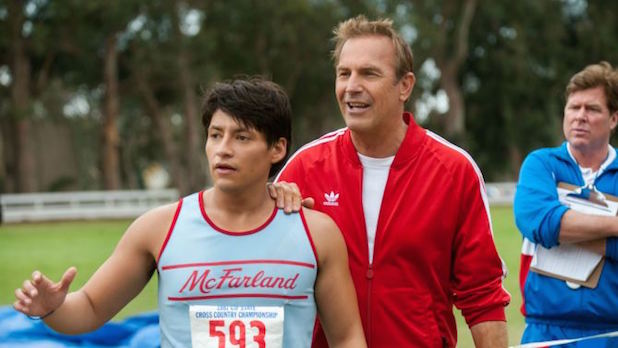
Carlos Pratt plays a real-life high school championship athlete in McFarland, USA, available on DVD and Blu-Ray June 2, 2015. Kevin Costner plays Coach Jim White, who has never coached running before when he helped a group of boys from one of the poorest schools in the country to win the state championship.  Pratts talked to me about what makes a great coach and the sports movie that made him decide to be an actor.

What is it that makes Coach White so special?

He saw something in his kids. He was just a teacher, a true teacher. He was there for them. He was a mentor to them and as well as their parents. He went the extra step.

And what was it like with Kevin Costner, was she also kind of coachy with you guys?

Absolutely. Kevin was super coachy. He just made us feel right at home. We are quite a family. And if we had any questions he was always there, and if he had questions we were there. We just worked together. It was great. Kevin is an awesome, awesome man.

Did you have to audition for this part?

I did. I auditioned quite a few times. I read for the role of David Diaz originally. But the casting director thought I was more right for Thomas.

How would you describe Thomas as a character?

Oh man! He’s just tough. He’s gone through a lot in life and he’s kind of been shut down so many times. It’s hard for him to open up to everyone. He kind of thinks that this is as good as it gets. He’s come to that realization so he’s not really expecting more out of life. That was just it until Coach White comes to his life and shows him that there’s more. His father was working and his mother at the house and his sister getting pregnant and his father really not being there because of work, end of story. He had to grow fast.

How much running did you do for this film?

Before we were filming we would do 5 or 6 miles a day as a team and then while we were filming it varied. I ran a lot for sure. We filmed one race that was three miles. But filming it, we would run 9 miles before that was over.

And did you go running it all with the real runners from the story, who we see at the end of the film?

No unfortunately, I didn’t get the chance. I did meet Thomas while we were filming but I was very brief with him because…not brief but we have more a little bit of a time together because I did have to go shoot the next scene so I didn’t have the chance to go with anyone but I do think that Hector Duran who played Jonny Samaniego, I think he went for a rune with the real Johnny Samaniego. I almost thought that he did.

What movie made you say, “I want to do that?”

There’s a movie called Friday Night Lights that was like my high school story. And then I went to college and I saw the movie and I just remember welling up. I was like, “Whatever this feeling is, I want to get it back to the world.” and that’s when I said, “I’m going to act.”

One of the most powerful scenes in the film is when the team sees the ocean for the first time.

There have been so many sports movies, but I come understand really quick but that there’s something about Nikki Caro in having a woman’s touch that just makes this one a little different. And I think the way she had everything set up strategically, it was almost like she was being a mother. We did that scene maybe in, like, November and when we got there we were just excited. For me it was like I was seeing like my little brother for the first time. So you find that and then you just challenge yourself and you go and have fun and you jump in. You jump in the ocean together. It was cold but it was awesome. I felt super organic with everybody. You put the seven of us together in any room, we’re going to have a blast. We really are brothers so you can see us just having fun and playing in the water.

You and the other actors had to learn to work together just like your characters did. What is it that creates a team?

Here is the thing about a team. Everyone is going to have a different personality and an ego of some sort or whatever but if you realize that you’re all coming for the same goal and you accept each other and who they are for their strengths and their flaws, then I think you work together in unison. You have to try and encourage each other and help each other but you only push them whenever they can’t push themselves anymore. I think we really did a great job of that.

What has meant the most to you in the responses to this film?

I’ve been hearing a lot that “I’m proud to be a runner again,” that “I’m proud to be whoever,” but it’s really awesome to hear people say, “I’m proud to be me, “I’m proud to be Hispanic,” “I’m proud to be Mexican,” “I’m proud to be black,” or “This inspires me.” Kids will tweet me all the time in their finals week and they’ll take a picture, a screenshot and make fun of when I’m running and they’re like, “I just need that push.” I’ll savor it and say “Good luck.” It’s really cool that something like that gives a little extra strength. That’s what you make when you do with a film. To encourage and start planting seeds that lead to a better tomorrow.

What’s the best advice you ever got about acting?

That you are enough. What that means is that who you are as a person is enough. Never be afraid to show it. Some people act and they are phenomenal at it, but it’s very hard to showcase who you really are and your real emotion. That’s the best advice that I got. It was just to give a side of Carlos in that situation, in every situation.

What do you look for in the films you take on, as a producer or an actor?

I just want to be a role model and I want to film great stories. Before every audition I say a prayer. I say, “God, thank you so much for giving me this opportunity. Thank you for allowing me to be here. Allow me to use the tools that you’ve given me and to perform nerve-free. If my words and actions are positive, let that everyone see that and learn from them. And if what I’m saying could be viewed in a negative way let people learn what not to do from my actions. And that’s it, I just want to influence and encourage and help make a better tomorrow.

Related Tags:


Actors Interview
THE MOVIE MOM® is a registered trademark of Nell Minow. Use of the mark without express consent from Nell Minow constitutes trademark infringement and unfair competition in violation of federal and state laws. All material © Nell Minow 1995-2026, all rights reserved, and no use or republication is permitted without explicit permission. This site hosts Nell Minow’s Movie Mom® archive, with material that originally appeared on Yahoo! Movies, Beliefnet, and other sources. Much of her new material can be found at Rogerebert.com, Huffington Post, and WheretoWatch. Her books include The Movie Mom’s Guide to Family Movies and 101 Must-See Movie Moments, and she can be heard each week on radio stations across the country.

Website Designed by Max LaZebnik