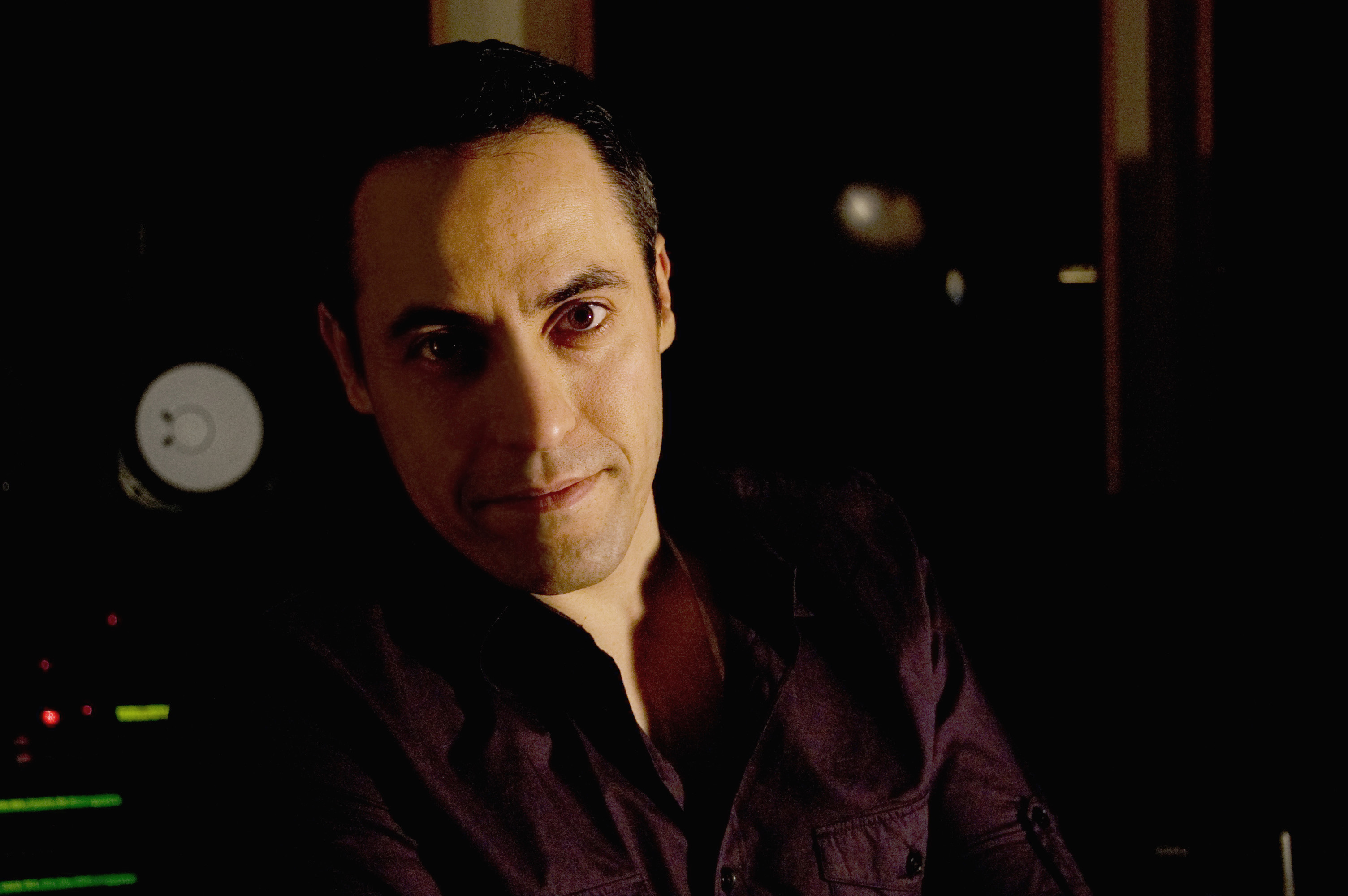
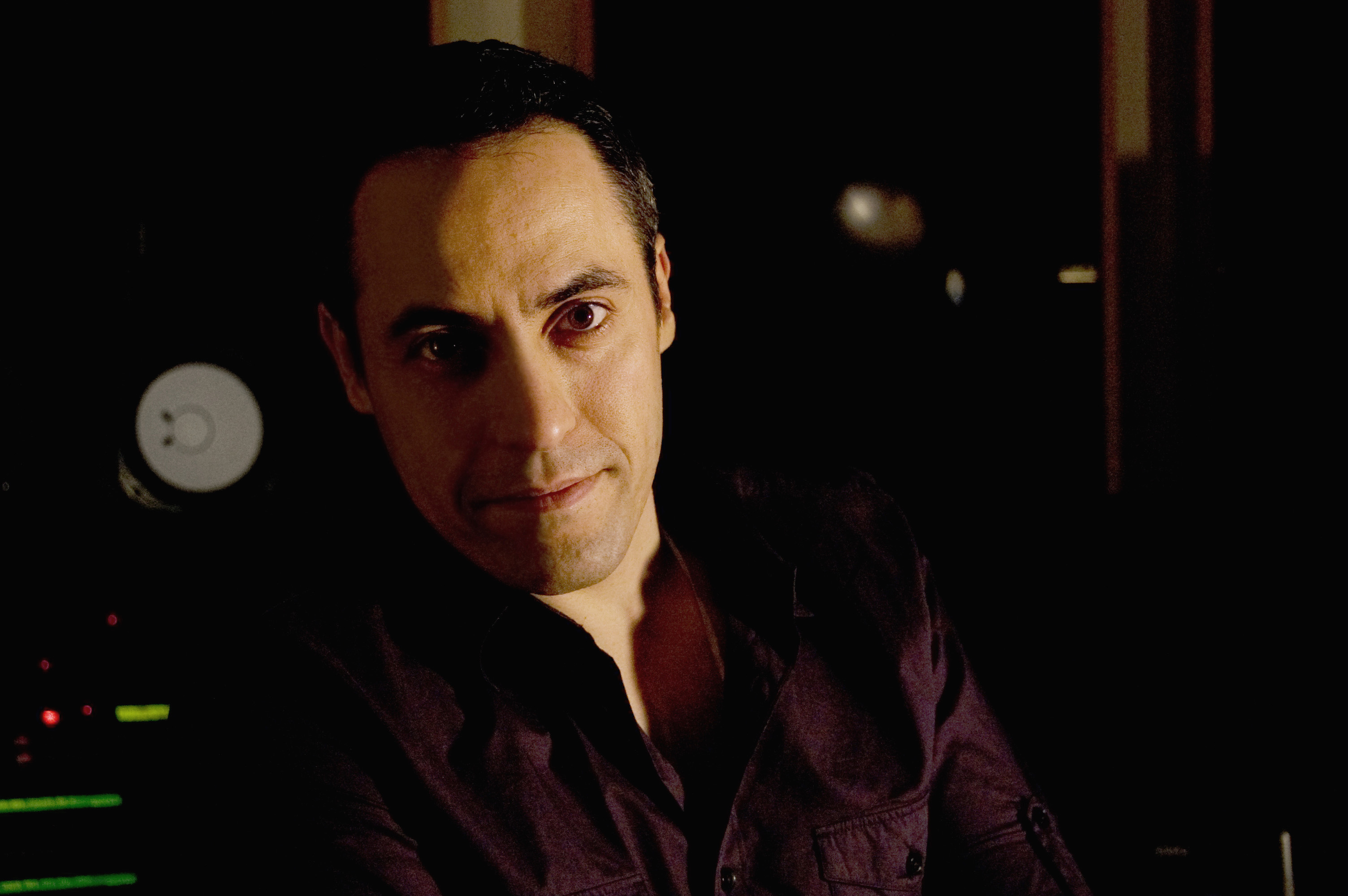
Interview: Tom Salta, Composer for HALO Spartan Strike
Posted on May 11, 2015 at 3:55 pm
It’s one thing to create a soundtrack for one story. But Tom Salta had to create one consistent theme for multiple potential storylines and outcomes for the latest version of HALO, called Spartan Strike.
The game is available on Windows 8, Windows Phone 8, Steam, and for the first time in Halo’s history, on iOS (iPhone and iPad). Salta answered my questions about composing for the HALO universe.
What was the first instrument you learned how to play?
One day when I was five years old, I heard my mother playing on the piano. I asked her, “Could you teach me how to do that?”… I studied piano with her until I was in eighth grade.
What was the first music you paid to own or hear in person?
Now that’s a question no one has ever asked me before… It was the soundtrack to Raiders of the Lost Ark…12 inch vinyl in 1981. I can’t tell you how many times I listened to that soundtrack. It was my favorite movie of all time and the music is what brought it to life for me. This was before VCRs so listening to the soundtrack was the only way I could experience the movie at home. I even bought the movie cards that showed scenes from the movie and would scroll through them matching the scenes to the music.
What is the most difficult part of writing music for a game and how does it differ from writing for straight narrative like a television show or a song for a recording artist?
Watching a movie or a TV show is a linear experience: It has the same beginning, middle and end. The same goes for a song. In all these forms of media, the picture, dialog and sound effects happen exactly the same way every time. In contrast, video games tend to be non-linear by their very nature because they’re interactive and, therefore, the experience is different each time you play. The music can change unpredictably from one moment to the next, so you have to think in a non-linear way and anticipate how various parts might connect with each other. This also means that most of the time you’re not scoring to a specific action on screen but instead to the general mood of that scene.Copyright Tom Salta 2015
How does music help guide and inform the player?
I often refer to music-to-picture as the emotional dimension. It is the easiest way and often the most effective way to alter the player’s mood and perception. It has the same effect in films… you could look at the same picture with completely different music and it can completely change the scene. It’s been stated many a time before but I think it’s worth repeating that Steven Spielberg once said, “Music and sound represent at least fifty percent of the entertainment value of all my films.” In games, music can be even more important.
How do you reference previous HALO soundtracks to maintain familiarity and consistency but keep it new?
The original Halo: Combat Evolved from 2001 is what inspired me the most to switch from making records to making music for games. I have absorbed the soundtracks to all the Halo games for over a decade now, so it’s part of my musical DNA. Sometimes I’ll go back and reference some of Marty O’Donnell and Michael Salvatori’s original music, but usually, I don’t have to. When I’m creating original music for the Halo universe, it comes from a sincere understanding of the “Halo sound”. It’s become a part of my musical identity. When you’re being true to who you are as a composer, it’s easy to remain consistent and evolve at the same time.
How many hours would the soundtrack be if you played it all at once?
It’s about 60 minutes of music in total.
What’s your favorite part of the HALO universe?
I’m a little more surprised saying this than you might think, but looking back, I think the music is my favorite part. In my opinion, the music is what took Halo from being a great game into an iconic game. The original musical identity that Marty and Michael created over a decade ago is forever intertwined with Halo’s identity, just as much as the characters, the graphics and the story. Perhaps this is why, being a huge Halo fan myself, the responsibility that I feel as a composer in this franchise is monumental. If it doesn’t feel authentic and doesn’t draw me into the Halo universe, then I’m not doing my job. Fortunately, I’m thrilled to see that so many Halo fans out there are really resonating with the music and feel that it’s keeping the spirit of Halo alive.
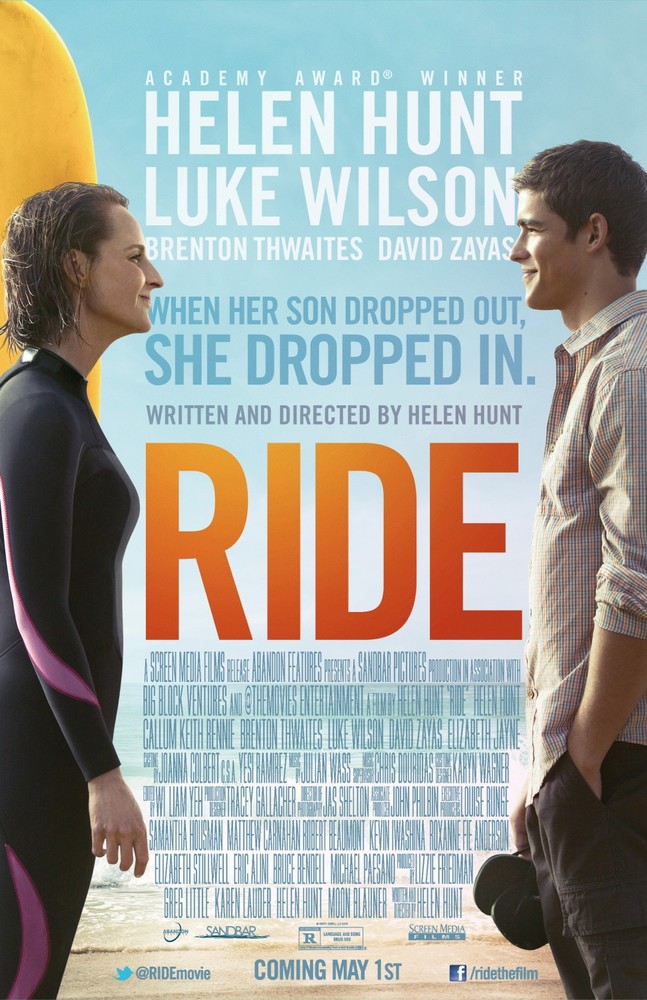
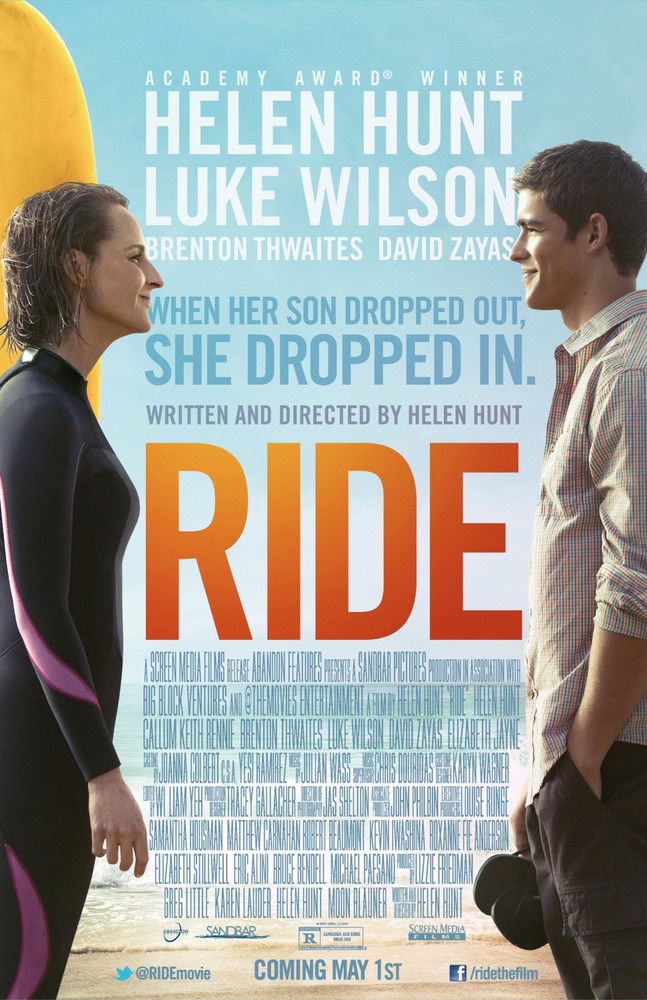
Copyright Sandbar Pictures 2015Australian actor Brenton Thwaites (“Maleficent,” “The Giver”) stars in “Ride,” a new film written, directed, and starring Oscar-winner Helen Hunt. She plays Jackie, an overprotective mother whose son Angelo (Thwaites) is about to start college and move into a dorm a short walk from their apartment. When he decides to drop out of college and escape to California, where he can spend his days surfing, she follows him out and ends up taking surfing lessons herself, from a handsome surfer played by Luke Wilson. Thwaites, who is currently filming the next “Pirates of the Caribbean” movie, told me that while he did not consider himself an expert surfer, he is better than the character he played, so he had to “down my game because the character actually is not an experienced surfer. He is a New Yorker gone to LA to kind of start the process of surfing so knowing how to surf wasn’t really key in the role but it was an advantage, I guess.”
The early scenes in the film convey a very close connection between mother and son. I asked him how he and Hunt developed a rhythm that seemed to show years of spending a lot of time together. “A lot of it was in the writing, I have to be honest with you. She wrote these very unique characters that are on the same wavelength and only on that wavelength. It’s hard for other people to really connect with and understand what they’re talking about a lot of the time. And the way we kind of got to do that was just talking to each other, was just rehearsing, talking the lines through. I had to audition a couple of times to understand her flow, her style. But once we are in there, there is no going back. It’s quite fun to relish it.
He told me that it was not easy to be tough on Hunt, who was not only his co-star, but his director. “That was one of my challenges; to find the right level of frustration and anger towards her without seeming like I, Brenton, really didn’t like her. I didn’t want to annoy her or piss her off but at the same time that was my job. I had to do it.”
He did not think his first audition went well. “I went to her house and auditioned with her and we worked a couple of scenes and I went away feeling like I just destroyed my tiny chance of getting the role. And so I was called back for second audition with some notes to take on. And in the second one we kind of worked it and I was a little more relaxed. I understood the character a little more and the cadence and the text. I guess he found our flow. I guess she learned to see Angelo through me I guess. I know she had written someone in her mind very physically opposite to me. I am the furthest thing from inner-city New York. Probably not right for the role but I guess I convinced her somehow.” He really appreciated her “understanding of actors because she is an actor. A lot of actors don’t like this but I personally love the fact that she would be in the scene with me directing me on either side of “action” and “cut.” It just created a sense of rhythm throughout the whole movie that I loved. It was quick, it was effective, she knew exactly how to step on my triggers and she know how to pull me back, how to change my thought. And I guess slowly I learned to push her buttons and I guess I had to figure out how to play with her but at the same time preserve her to direct the film. I was trying to affect her in a way that only actors can affect each other. There was nothing to hide. So if she says were not going to get this shot or we don’t have time for this close-up then you know that. It is not hidden behind the camera behind a screen somewhere. She was very open with everything that was going on set and guess in that I learned to trust her and believe in her.
The biggest challenge for him was the first scene filmed, which comes late in the story, “the resolve of the movie. That was quite difficult just because it was my first scene and I was nervous and I didn’t really know what the set was like and how she was is a director/actor but it worked out really well. I think my most challenging scene was the most rewarding so I think that was the case for this one.”
Interview: Jonny Campbell, Director of J.K. Rowling’s “The Casual Vacancy”
Posted on May 7, 2015 at 12:53 pm
Copyright 2012 Little BrownJ.K. Rowling’s first book for adults was the dark, sometimes savage story of small town politics, The Casual Vacancy. The title refers to an elected office that is vacated before the term is up, which in this story occurs in Pagford, a small, cozy-looking English village. But its inhabitants are miserable. The town is filled with deceit, selfishness, betrayal, cruelty, and a government that alternates between negligence and incompetence for the poor and highly effective protection for the privileged.
I spoke to director Jonny Campbell about the two-part miniseries adaptation now appearing on HBO, which Slate’s Kay Waldman calls “infinitely better than the book.” At times melodramatic, at time satiric, at times comic, at times tragic, the story follows characters who are often desperate and always trying to protect themselves from hurt and loss.
J. K. Rowling called this story a comic tragedy or a tragic comedy. So how do you as a director signal to the audience what it is that they are seeing, especially since everyone is familiar with her very different Harry Potter books?
The screenplay and the story tell me what I’m supposed to convey to the audience and quite honestly I take great pleasure in the fact that sometimes the tone can be inconsistent, different. Tragic comedy — you don’t get much more extreme than that. People write articles and pieces and analyses of the show, criticisms, features, whatever, and you start to get a picture of how people receive it. I read one earlier today which said it was totally inconsistent and I was left not quite knowing what to feel at the end… Isn’t that brilliant?
For me the tone is the way I like to tell the story. but based on the script. I don’t try and spoon feed it to people. You need to leave people to make up their own mind about the character, rather than dictating and telling people. Now I’m not trying to claim that this is perfect or this is an in-depth insight into the myriad of characters. It just wouldn’t be possible to do that in three hours. What we did try and do is let each character be there on a need to get to know basis. So you kind of stir in the characters as and when you want to turn a new chapter or when the story develops and you feel the audience can withstand yet another new face and we are talking about not less than 30 characters here, you add them in. If people think it’s inconsistent I see that as a strength. Life is full of variation and equally at the end you hope people are moved. If some people are left floundering going, “I’m not quite sure what I’m supposed to feel,” that’s fine too.
You’ve got a community of people in Pagford that are living cheek by jowl. The danger is it can become a bit soapy. It’s very much my intention to try and not let it do that because while these people’s lives at the end of the book will still keep going, like the end of the movie you know you want to make people aware that they have stopped, the end of the story is here. And the other thing to say is one of J. K. Rowlings’ intentions in writing this was she wanted to write a contemporary novel which had the sensibilities of the 19th century novels. I didn’t realize this at first when I read the screenplay. And I hadn’t read the book at that point, so the penny dropped for me it when it sort of dawned on me that this was very much in the sort of vein of Charles Dickens in terms of shining a light on every aspect of every strata within society within the confines of the story. I’m a huge Dickens fan. In his books you you have a vulnerable teenage character whether it’s David Copperfield or Oliver Twist or Pip you have this central character who is being sort of bashed around like in a pinball machine through the sort of the straits of life by various eccentric characters who even in the Dickens context has to be sort of slightly heightened and caricature in their nature. But here people often see that as a weakness, saying “that character is stereotypical and caricature.” And yet if they were wearing wigs and bonnets then we never would level that criticism at all Because it is a contemporary setting it just shows what people’s expectations are and why I felt this was really original piece. If you watch it with an open mind you totally get it. If you don’t to be prejudiced by your sort of preconceptions about… I am being introduce to this character, I want to know everything about their story, everything about their journey it is like “hang on a second”, they are playing a part in this machine of telling the story about society, about the family in particular but to be patient and just watch it unfold. Don’t be impatient and let yourself go a bit.
As a director, you had a real challenge in managing so many characters and stories.
When you read the novel, it is one of the difficulties is trying to put a face to a name almost. In a way that makes it easier with an adaptation because at least you have an actor being that character. When you are reading it in a novel you kind of just have to close your eyes and keep reminding yourself as part of the joy of reading a book who is who, but here equally it was about not trying to introduce everybody at the same level one after the other but as and when they become necessary for the storytelling. You might not know their name at first. That might come a bit later.
So we wanted a sort of contrast in, both in terms of Sarah Phelps writing the screenplay and bring the characters in like a mixture of a recipe. You say, “Well, hang on, we are able to take another character at this point and if so is this the best time to name check them, is this the best time to have a visual cue?” When we first see Colin Wall you just see the back of his head. You’re forcing the audience a little bit to sort of go, “I guess that must be her husband and that’s her son” instead of telling them everything. I find that more interesting. One of the thrills of doing it is setting out all the chess pieces before you could really go to town on cranking up the story, hopefully ratcheting up the stakes.
I noticed several different times where you used images of reflections. What did that convey?
You get an extra mark for spotting that. Whether it’s a reflection in the mirror, or in the water, or in the river that goes around Pagford like a noose sort of tying itself, constricting the village, there’s a visual metaphor. In terms of the reflections that was deliberate in terms of distorting things, showing that things aren’t always what they seem and that it’s a way of holding the mirror up to ourselves. That’s what J. K. Rowling does in the novel very astutely. She has this uncanny ability within one sentence to sum up absolutely the motivation of a character to make a particular decision and that whole process. And I think what they ended up doing thought and action and that’s one of the fascinating joys of reading the book.
When you try to adopt that into a screenplay, it would be foolhardy to try and just verbatim transpose that into a screenplay, it just can’t do it. You would not be successful anyway so we had to make some decisions not everyone was going to agree with what but we did want to try and do was visually to be constantly challenging the viewer to think about those characters their own locations, their environment become a part of the storytelling part of them, sort of an echo of their own characters and there’s a lot of detail in the set design to visualize thoughts. We had to sort of use anything we could to sort of try and get that across. But the mirror itself was about in a very simplistic level about those in society, with a mottled old antique mirror indicating a timeless story and hopefully implicated by the typeface of the Casual Vacancy itself. This is a classic story in a temporary setting.
I was very struck in particular by the performance of Julia McKenzie, as this kindly-looking lady who is shockingly vicious.Copyright 2015 HBO
She’s a grand dame of the British acting establishment, a huge musical and operatic star and she’s been in lots of comedies over the years and more recently she was Ms. Marple. So she’s a perfect choice to play Shirley because she starts off as this of doddery, smiling, respected sort of harmless cardigan-wearing granny and then as the story progresses you see the Machiavellicome out and you realize that she’s pulling the strings and her husband is pretty much her puppet. And she’s Lady Macbeth by the end. I think she turns in an astonishing performance.
She says to her daughter-in-law, “You are not a victim. You are a failure.” It is devastating.
Yes, it all goes pear-shaped for her from that moment. It is like by speaking what she feels to be the truth, by seeing the inner workings of her mind, we know she is despicable in that moment. So it makes the scene where she’s forgiven all the more touching or at least more meaningful because because part of the story is having not a happy ending but just a sense of “hang on, some kind of change has to come through this village.” That moment of forgiveness is almost like a blessing. It is for me one of the really key moments.
Alex Garland is the screenwriter of thought-provoking sci-fi films like “28 Days Later” and “Never Let Me Go.” He wrote and for the first time directed “Ex Machina,” a fascinating story about Caleb, a computer programmer (Domhnall Gleeson), invited to the remote home of Nathan, a reclusive genius (Oscar Isaac), to evaluate a new artificial intelligence persona in the body of a lovely female robot called Ava, with the exquisite face and voice of actress Alicia Vikander. Nathan tells Caleb to perform a “Turing test” but as he and we learn, he is really the one being tested. There’s a reason the Turing test is blind. Ava’s programming and appearance are designed to play into Caleb’s susceptibilities.
I loved talking to Garland about the film.
You must know Domhnall Gleeson pretty well by now. But this was your first time working with Oscar Isaac, right?
It is the third movie we have worked on together. So we’ve known each other backwards. Not only that, the first movie he ever worked on, “28 Days Later,” was with his dad. So out of five movies four of them have been with Gleeson so I know that clan and I know Domhnall really very well. We’re friends. So casting him is different. I just call him up and say, “Look man, there is this thing, I really think it would be good, would you take a look?” The thing about Oscar was I have seen him in stuff like Ridley Scott’s “Body of Lies,” set in the Middle East, and he is acting opposite Leonardo DiCaprio, which can freak people out, and I was thinking, “He is just owning every scene, and what is he doing? How is he owning it?” I can’t see what he’s doing, he is relaxed and he is so natural, an incredibly naturalistic performance but also very magnetic, a sort of gravity suck performance that just pulls you towards it. And so there’s something fascinating about him. Every time I saw him it might be in a bad movie but he’d good.
Copyright 2015 A24
When you hire an actor it’s like a three years lag in a funny way. Everybody starts talking about these guys before they really hit and everybody knew Oscar was good. That was the word going around, this guy was really good. I knew he was good and then I met him and he was really smart. Again not all good actors are smart. They can project smart, they can act smart but they may not actually be smart. He is really smart and by the end of that meeting I knew he was right for Nathan. And so I got this growing sense of anxiety through the meeting. You start to think, “What if I don’t get him?” I know that there are three other movies trying to get him.
And then you get this crazy thing where you get to know this young man, he’s intelligent, he’s quite slim and he is articulate, he’s quite delicate, he is a guitar player and he says, “I’ll be there in 21/2 months.” and you think, “Yeah, we’ve got this slim young guy,” and he turns up, he’s like a bull, and I don’t know how he did it. And then you get used to this other person because Oscar, the guy you knew, vanished. You can’t find him anymore, he is gone. And instead, there is this powerful muscular, testosterone-driven alpha male and he dominates everything. Often working with him on set was like being in theater where you are watching a performance and I would lose track of all the things I should be watching because I’m completely locked into his performance. Just exactly like being at the theatre with terrific actor on stage. It is incredibly seductive and so you totally forget to say, “Cut.” And I really mean that, it’s not just a set of words that people say. But eventually you get used to it, then the film ends. And you meet Oscar three months later. He was over actually for the premiere of “Inside Llewyn Davis” where he was a completely different person and the bull is gone and the slender young guitar player guy is back again. Everything I just said vanishes. He vanishes part by part.
I didn’t recognize him at first in the trailer, with the shaved head and beard and the thick, muscular body.
It was a result of collaboration and conversation. I liked the idea that Nathan had a beard for various reasons partly because I’ve always being told in previous films when I would write a character with a beard that the studios hate beards, they used to hate beards because it kills international sales or some stupid reason like that. So I knew he had a beard and I knew that I wanted him to be physically powerful because he is a bully on an intellectual level and the implicit violence in him. Oscar arrived with a whole bunch of other things. One thing that Oscar felt that he needed was glasses. It was quite interesting, when he didn’t have classes he looked like a thug but when he wore glasses he was at least an intelligent thug. Somehow we’re taught that glasses make you look smart and it does kind of work. And eventually we settled on the shaved head and beard and he had the muscle mass and the glasses. And then the final thing he did which was really lovely and strange was his Bronx accent which he got from Kubrick because he loved the juxtaposition. Kubrick was is obviously an intelligent man who has this owlish look which Oscar often does if you watch his performance. He has this sort of owlish raised eyebrow look but this Bronx accent that is slightly incongruous.
There’s something that is slightly kind of obscene in a way about this because to say it’s a low-budget film when it’s $15 million, which is obviously a massive amount of money, but in the world of film-making it’s turns out to be a small amount of money. So then what do you got, you’re telling a story about a guy owns the biggest tech company in the world, as rich as anything you can imagine with a property which needs to reflect his level of wealth. How does a low budget film create endless wealth? It is a sort of paradox. We found this beautiful spot in Norway. It wasn’t the just the architecture; it was also the landscape. Some of the mountain landscape was sort of chocolate boxy, a bit like Ansel Adams, too beautiful, too perfect. Norway had a kind of brutal bleak sort of aspect and these big powerful skies and these mountains that could kill you really and not care, with powerful sort of glaciers and rivers and stuff like that.
What do you see as the significance of the Turing test?
The Turing test is perceived as test of sentience but it is not, it is a language test. It’s a test to see if you can pass the Turing test.
Nathan does not abide by Asimov’s rules preventing robots from hurting a human.
He is doing a self-destructive thing. He’s working on successive machines each more successful and capable than the next. He knows that the intention is at some point one of these machines will outsmart him and when that happens it won’t be good for him. He knows that. He knows it won’t be good for him and he knows it probably won’t be good for us.
He’s very Darwinian about it.
He is very Darwinian and actually that was a very important aspect of this, that they are actually part of us, a continuation of us. We tend to see them as parallel. Either they get presented as a rival species or as a creation is like Frankenstein, semi-religious, where it is not your place to mess with God’s work. I was just trying to present it as a parental thing, the creation of a new consciousness, which is what parents do. And also those consciousnesses do rebel from us and do move on and actually what we ask of them is that they live longer than we do and have better lives. Always for me when she turns around and says to Nathan, “What is it like to have made something that hates you?” — it’s an adolescence.
Everybody who worked on the show had some direct or very close experience with cancer. How does that affect the way the show is made?
It certainly made it very personal for all of us. In my case it was my grandmother. When she died when I was in my early 20’s. I didn’t even know what she had died of. My parents thought it was better not to actually tell me. Even then, which wasn’t that long ago, it shows how much stigma there was still around this word “cancer” and this whole set of diseases. And I think that’s persisted to some degree up to today. When we started this project we did so knowing that somebody in the own production team was going to be diagnosed or have someone very close to them diagnosed with cancer during the project. Sure enough there were three separate episodes during the two years we were working on this film. Edward Herman, our narrator, received a diagnosis and or died from the disease so it was very personal from the very beginning.
The series really comes at cancer in several different ways. There is a historical part, there are the individual stories, there is a science story. How do you keep that presented in an accessible way?
This is a bold experiment in filmmaking. We were not sure at all if these three strands that you just identified would work together. I’m not aware of it ever having being really tried on this scale before. Essentially we have been working in historical film which Ken Burns and I are very familiar with doing. We have pieces following patients through their journeys, being with them every day, letting the cameras roll. Then we have a very heavily scientific story in which the we are trying to explain to people and what we found to our delight was that each strand kind of resonated with the other and sort of vibrated with the other and you have almost a kind of music coming out as a result.
And when you see for example a contemporary story of Terrence deciding whether or not to roll their child in a clinical trial agonizing over the pluses and minuses and all the unknowns, we get a deep insight into what the parents must have been going through the 1950s when the first multidrug clinical trials were happening at the National Cancer Institute and children were literally being almost sacrificed for science, for the knowledge that was coming out of these trials to with very little benefits to them. Those parents must have faced an even more intense decision to make about whether to go forward with this. So the only way to understand that historical time is to see it with your own eyes, happening right now.
What were some of the challenges that you had to convey the scientific material and did you use animation? Did you do microscopic photography?
All of the above and many more things. That was in some way the most challenging part of the film itself. In the first place we had to satisfy ourselves that we understood it. So my litmus test is always, if I can understand it simply and clearly I can get it across to our viewers. So it was really about not pretending that we understood something that we didn’t understand, really asking these world-class researchers and Nobel prize-winning scientists to try to talk as if they were talking to their grandchildren. And they were remarkably successful at that.
They were able to simplify these concepts so that it really does become comprehensible and then we availed ourselves of some really, really beautiful animation. And we kind of had a worldwide search to find an animator who could do this and we actually ended up working with a woman who lives about three blocks away from me in Brooklyn. And she just happened to be really an artist not so much kind of trying to literally show what is going on but almost create a world that the viewers can kind of sink into and that way really the science became much more accessible to people, much more interesting to people.
One of the things that I think is frustrating to non-medical people is that it seems that every day there is a headline that something either does or does not cause cancer or reversing what we were told last time. What is the reason for that and what is the best way to understand it?
I think that it’s born of frustration. I mean it is still the case that some half of all cancers have no known cause at all and maybe, it’s very possible are the result simply of random copying errors inside our always dividing cells. I think this is partly especially for Americans who want an identifiable cause, something that we can stop and so we won’t ever get this disease in the first place. And while certainly true that there probably are carcinogens that we probably haven’t yet identified certainly many of these so-called causes whether it’s power lines or cell phones or sugar or whatever it is, really there’s no serious scientific evidence showing that these are carcinogenic.
The number of known carcinogens once you get past tobacco, obesity, sunlight, some viruses, there are very few that have been identified solidly. I think that is just tremendously frustrating for people so there’s that vacuum into which is poured all sorts of half-baked theories that I think do a real disservice. People running around not knowing what to eat or what to drink or where to stand on where to live and it is really, really a problem and I think one of the most important and promising areas of cancer research are in kind of honing our understanding of what is preventable and what is not preventable.
You show in the series how just a few decades ago the word “cancer” was spoken in whispers, if at all. Now Angelina Jolie writes about her surgery in the newspaper. How have we changed in the way that we talk about cancer?
I think we have made a lot of progress in that area. Cancer isn’t quite the taboo subject it was even 30 years ago when my grandmother died. And we owe a debt to people like Angelina Jolie or Betty Ford or Nancy Reagan or people who have publicly shared their particular stories. And I think in the case of Angelina Jolie there are some people who criticize her because she has taken these what seems like drastic steps for perhaps very little medical reason but that is a very dangerous thing to do, is to criticize another person’s choices. The service that she’s giving us is that she’s willing to talk about it and she’s willing to say, “I have a gene that may well give rise to cancer and this is what I’m going to do personally to try to prevent that from happening. You don’t have to follow my lead but this is one option.” And I think it is less what she has chosen to do than the fact that she has discussed it at all openly that is a real achievement and service she has given us.
What do you think is the most promising avenue that you have discovered for either prevention or treatment in the course of working on the series?
Just since this book came out five years ago, there is a whole new sort of frontier in how cancer research has developed. Immunotherapy is setting the cancer world on fire. It’s not just us, our decision to focus on it, it’s really universally thought of as being the most exciting new area of cancer research. And the reason for that is that for centuries people wondered why the human immune system couldn’t, didn’t fight cancer the way it fought every other infection. Why can’t our immune system help us? So (a), it does help us we probably have cancer all the time in our bodies and the immune system is part of the defense mechanisms that are fighting the cancer but more importantly even there are very specific reasons that the immune system as it turns out doesn’t fight cancer mostly because it doesn’t see it, it doesn’t recognize it as ‘other’ and that’s partly because cancer is so close to our cells, it really is our cells.
So what’s so exciting about this is that they have devised ways to basically unblind the immune system, to take the restraints off the immune system and that means a possibly non-toxic therapy, a therapy against which the cancer cannot form a resistance. All the defense mechanisms that cancer has are rendered useless when the immune system is unleashed against it. This isn’t even hypothetical, there is a billion-dollar industry already, and there are approved drugs out there that are working remarkably well against certain types of cancer. And every month it seems there is a new clinical trial for a different kind of cancer. You rarely see scientists in this field jumping up and down and getting giddy and childishly giggling but you do see that when you talk to them about immunotherapy. With all the caveats about where we’ve been before and had all these promising sort of moments before it in history cancer research there is still a lot of optimism about this new field.

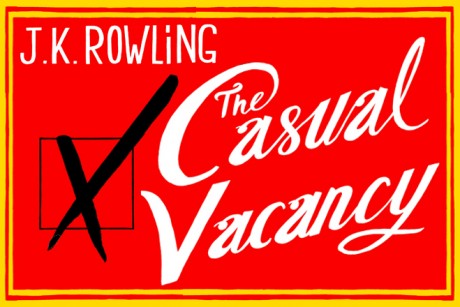

 . The title refers to an elected office that is vacated before the term is up, which in this story occurs in Pagford, a small, cozy-looking English village. But its inhabitants are miserable. The town is filled with deceit, selfishness, betrayal, cruelty, and a government that alternates between negligence and incompetence for the poor and highly effective protection for the privileged.



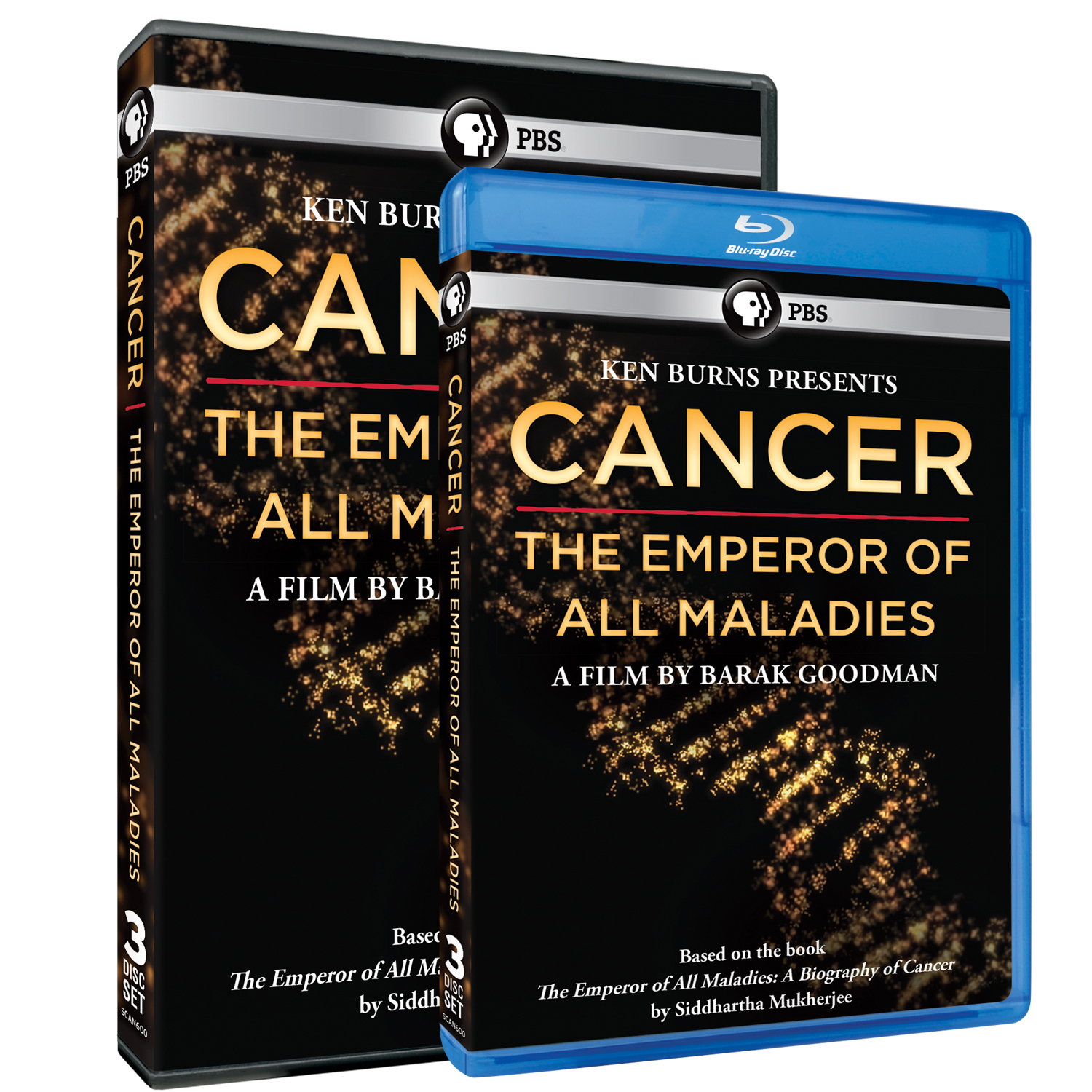
 , now available on DVD. The series is produced by Ken Burns, based on the book by
  .
.