
Interview: Georgie Henley of “Sisterhood of Night”

Posted on April 12, 2015 at 3:41 pm

Georgie Henley stars in “Sisterhood of the Night,” a story of intense teenage girl friendships and bullying, based on a story by Steven Millhauser. I have been a big fan since she played Lucy in the Narnia movies, and it was lovely to get a chance to chat with her about filming on location in New York state and working on her American accent.  The film is now in some theaters and available on VOD.

Did you enjoy working on location for the film?
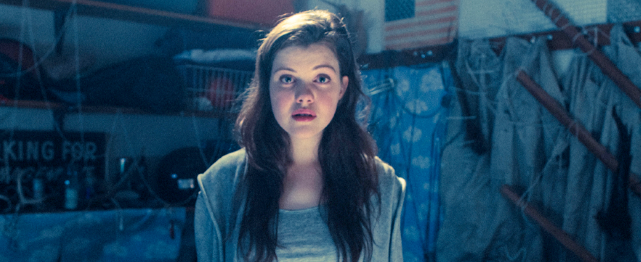
georgie henley sisterhood night
Copyright 2014 Cinemosaic

We were shooting in Kingston, where we were a couple of hours out of New York City. It was a place in the world I’ve never been to. The scenery was just gorgeous. And we were so welcomed by the locals. The whole community got really involved in the shooting of the film which is always fantastic. You know you don’t want to invade people’s space and rub them the wrong way. So it was just gorgeous and we have an incredible director of photography on the movie and he really made the most of the fantastic location that we were working with there.

The film really captures the intensity of friendships which are so important at that age. So how did you and the cast get comfortable with each other and establish that chemistry?

It’s all happened pretty quickly. We were all kind of at tender ages in our teenage years. From the very minute that we met we just all knew that we were going to get along. I remember we had a lot of pre-production stuff in New York and we went to go see a few shows together and we would have dinner all the time and we were all kind of getting costumes and enjoying getting to know each other. Then once we got to Kingston and we actually started shooting the film we were all staying the same Holiday Inn. We all pretty much spent every single minute with other, just became pretty much inseparable and when we were not kind of messing around on set we were messing around at the hotel or staying up until 3 o’clock at a diner somewhere and just having fun and taking walks. So we really did not have to force that connection. It just came really easily. We all just got to completely adore each other and we still do. We made friendships for life which is kind of beautiful but also I guess sometimes quite rare. It was fantastic, it was great!

How did you manage that superb American accent?

Oh thank you. When I thought about auditioning for American project I knew I needed to get a good American accent. I’m terrible at accents. I think American is the only one that I can do kind of possibly. So I used to have Skype sessions with a dialect coach in New York and we would go through scripts, thinking about rules but also kind of developing an ear for the accent. And I found that after I have had some sessions with her I found that I was able kind of just pick stuff up just by listening to it. It is surprisingly easy when you’re on the sets with Americans to kind of let that natural osmosis happen and it just kind of seeps into your brain and into your dialect. So I find that when I’m around Americans I can just kind of slip into it quite naturally. I do stress about it a lot so it is nice when people tell me that it is a good. That makes me very happy.

Did you pick up any Americanisms?

I’ve just been at the Atlanta Film Festival and me and my mom became obsessed with that expression y’all! It compresses everything nicely and it rolls off the tongue.

Copyright 2014 Cinemosaic

When did you first hear about “Sisterhood of the Night?”

I read the script a really long time ago, must have been two or three years before they even started auditioning for it. And then about three or four years later I had this script land in my inbox again and the draft that I read was even better than the last draft. I’m very picky about projects, I feel like when you read something you have to really be absolutely absorbed in something. This script to me was just incredibly raw and honest and just really beautifully written.

And I could tell that within the kind of complexities of the description that it was also going to look incredibly visible stunning. I was like, “I have to be in this film.” And I tried sending some audition tapes. I actually originally auditioned for Lavinia and Emily. I love the role of Mary but I just couldn’t see myself as a Mary. I was just thinking to myself, I’m definitely more of a dreamer, maybe more of an outcast and I kind of fit the role of Lavinia and Emily more. And then they came back to me said, “We would love to see you try Mary.” And I’m like “Really? Are you sure?” I was lucky enough to get the role, and it still surprises me to this day that they trusted me with such incredible role. It was a leap of faith for them, especially because they never met me before. It was done entirely by tape. It was pretty terrifying for me.

You started acting very young. What did that experience help you bring to this film?

It’s kind of weird because I’m used to being the least experienced one on a film set. And then I came into this and I found that people were now asking me questions, and me advise them when normally it had been the other way around. I just like to kind of being able to be a bit of a big sister to everyone. If someone was worried about having an emotional scene or something like that, being able to talk to them about it was wonderful. I don’t think it makes a difference in my performance because I think no matter how experienced you are I’m still always a nervous wreck when I’m on set because I just want to do a good job. But it was nice to be able to help other people and to kind of be able to say to them that it is going to be okay, it doesn’t matter if you mess up, and talk to them about things that they were kind of worried about or scenes that they were unsure how to approach, so yes it was nice to do that.

One of the most interesting things about the film is the way that we see how developments in technology and social media have amplified the typical adolescent intensity in dealing with relationships and feeling left out. So tell me a little bit about how you think that plays out in the film.

Yes, social media is definitely a generational thing. And it was exciting to be part of a film that explored themes of alienation and identity but in an entirely fresh new perspective with this kind of social media. And I’m not a social media person myself, I don’t have anything, I don’t have Facebook or Twitter or Instagram or anything like that but I can understand the pull of it. And I think that this film is really important for a lot of young people to see, girls and boys because it shows kind of the dangers of over exposing yourself and also the dangers of giving into peer pressure, letting something spiral out of control because once something is online it is pretty much online forever. There is no real erasing of it.

The word I keep coming back to it and I know it’s quite simplistic, but it really is an important film. I think it is an important film for people to be seeing and if you put aside the beauty of filmmaking and the beauty and of the scripts and if you put all of that to one side it is incredibly important film for people to be looking out for the message alone. Because it is not a preachy film and is not saying that social media is bad but it is just exploring the different elements of it and trying to show people that obviously there are two sides to everything, there are two sides to all dialogues on the Internet really.

Related Tags:


Actors Interview

Interview: Jean-Michel Cousteau of “Secret Ocean 3D”

Posted on April 2, 2015 at 3:51 pm

Copyright 2015  3D Entertainment Films
Copyright 2015 3D Entertainment Films

Jean-Michel Cousteau has carried on the legacy of his famous father, Jacques Cousteau, who first allowed the world to see the creatures that live in the water, through deep-sea diving and his pioneering underwater photography. Now his son has used the latest technology to show us another world previously unseen, with tiny animals and colors as bright as any garden in full flower.

I spoke to Cousteau about his latest film, Secret Ocean 3D.

He wanted to work with IMAX 3D, in order “see the behavior of things that I’m flying or swimming over all the time since I started diving when I was seven years old, fifty nine years ago. And I would be very frustrated not to be able to see the behavior of tiny little things. So they put together the prototype cameras which are allowing us now to focus in slow motion on the behavior of small creatures and see what they are doing to feed themselves, protect themselves and be of course in relationship with other creatures. So for me I am now for the first time in my life able to see things on the big screen which I cannot see when I’m under water.”

I was especially fascinated with the tiny animals who look like flowers and the squid who could instantly change color to match the environment. “The flower-like creatures are found mostly in the tropical environment. The beautiful one that you see in the show are in the tropics in the Caribbean and in Fiji. Then there were these beautiful worms which are called Christmas tree worms. The squids were in Southern California. Squids and octopus can change their color, their texture. They have no bones so they are very bendable. They can hide. They are really amazing creatures. The bad news as you probably have heard on the show is that they die every year. After they reproduce they are gone. I am totally convinced that if they didn’t die they probably would run the planet today because they have real brains and are very clever creatures.”

There is a creature that looks like a pile of sticks. In the film, we learn that it has no head or brain but can regenerate its limbs. “We have seen those creatures but usually we don’t see the same one during the day and then come back and see the same one at night. Thanks to science and scientists we are able to learn about these creatures because they capture them and they analyze them. So the instinct that they have to capture food and bring into their mouth when you realize they have no brain is just for me it’s fascinating. I’m just like a kid every time I see them. So we were very patient, we saw it. As a matter of fact we saw two of them during the daytime and we decided, okay we have to wait and come back at night and we did and they were still there. And we were able to film them.”

What surprised me most in the film was the information about the tiniest creatures, plankton, and the part they play in keeping the rest of the world breathing. “Plankton are really the foundation of life in the ocean. And you have two kinds of planktons, the big which you see which are very spectacular, many different types of species and then the tiny little ones which drift. And the big ones are animals. They are called zooplankton. And then the tiny little ones which are plants, they are phytoplankton. Now the zooplankton is feeding on the phytoplankton. They need that to feed themselves and to grow and they are what you call the foundation of all life in the ocean. Without them there would be no life. So being absorbed within the food chain, they migrate towards the surface every day. And they are very very active at night and of course there are a lot of creatures that are coming by and feeding on them, both the plants and animals. And it goes all the way up the food chain all the way to the big creatures whether they are fish or mammals, whales or sea lions or tuna. Totally every creature is dependent on these unbelievable plants and animals which are the foundation of all life in the ocean. As a result of all that about half of the oxygen that is being produced comes from the ocean. And every other breath of air that you take you are getting it thanks to the ocean. So we are totally connected and dependent on the quality of life in the ocean. Unfortunately we didn’t know that before. Now we are learning and we are learning very fast thanks to what I call communication evolution. There are people all over the planet now who are asking questions now about these creatures. We need to learn very quickly and pass on the information to the decision-makers and the future decisions makers which are the children, the young people. They need to understand that we need to stop using the ocean as a garbage can. Because all of that decomposes and it affects the food chain, it affects the plankton, it affects the creatures which are concentrating those chemicals in their system and accumulates them, and concentrates as the creatures are getting bigger and bigger up the food chain. So we are hurting that environment which means we are hurting ourselves. At the end of the day it is not just the fact that we fishing or we catching more than nature can produce. We have learned that a long time ago, we are not hunters and gatherers we are farmers. So we need to do something with the ocean but we cannot farm creatures that are disappearing and you cannot farm in the ocean where you have the storms, hurricanes and so on.”

Jean-Michel told me that his father pushed him into the water with a tank on his back when he was seven and the water is home to him. “He kept telling me, ‘People protect what they love,’ and I kept telling him, ‘How can you protect what you don’t understand?’ So thanks to my dad I have this thirst for discoveries and wanting to protect what we don’t understand.”

Related Tags:


Animals and Nature Directors Documentary Environment/Green Interview

Interview: Writer/Director Noah Baumbach of “While We’re Young”

Posted on April 2, 2015 at 3:18 pm

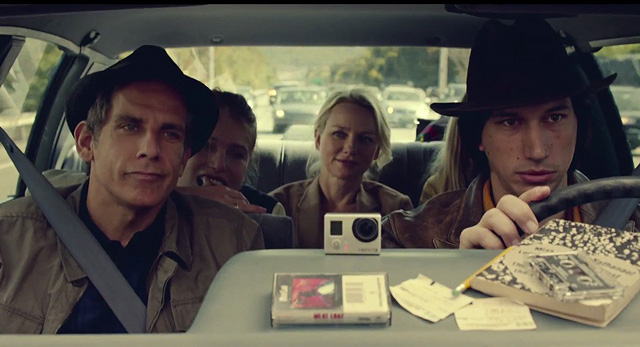
Writer/director Noah Baumbach talked to me about his new film, “While We’re Young,” starring Ben Stiller and Naomi Watts as a middle-aged couple. They befriend a young couple played by Adam Driver and Amanda Seyfried, and the movie has a wise and humorous take on the dreams and delusions of all four of them.

What do you miss about being younger?

I miss going to the doctor and being able to raise somewhat extreme worries about health or something. The doctor used to laugh and say, “You are fine, don’t worry.” Now when I go to the doctor I brought up something and he was like, “Maybe we should get a MRI.” I thought our thing was when I would bring up something and he would say it was nothing. I miss that.

Is there anything you don’t miss about being young, that you are glad you don’t have to do anymore?

I think I feel more myself than I did then. I wouldn’t say I’m relaxed but I feel less urgency in a funny way than I used to. I think in my 20’s I felt like: this is happening so I’ve got to get something done, there is no time, everybody’s doing something, what am I doing? I feel more at ease, maybe that’s not the word, but I feel better in that way.

Copyright 2015 A24
Copyright 2015 A24

Why are we so fascinated with the effortless coolness of young people?

It’s like the basis of body switching movies. We think we all could be better 25 year olds now or better 18 year olds now than we could then. It does work that way, so that’s totally understandable.

When do you feel a generational disconnect?

A lot of my friends who are in their 20s or 30s tend to have a kind of old-soul quality, they sort of feel older than their years. It comes up more in those conversations like “Where were you when…?” Like when Clinton was first elected, that’s always striking if they were kids then. My first election that I voted in was Dukakis. And then the reverse which is the movie obviously engages in which is them introducing me to stuff, in some cases stuff that I lived through and they didn’t but they are somehow in the way that they listen to music or whatever I’m able to appreciate it in a different way because it is sort of removed from its context.

Why do you think this film is being described as your most “accessible?”

Well, my last film was black and white. And this time I was trying to make my version of a kind of comedy of marriage and there’s more of tradition of those kinds of movies. And so even though it might be my kind of perverse version of that I still felt like I wanted to follow some sort of template, not that there is a template but at least that I had a responsibility to tell a story with a married couple that goes on various detours and comes back together. They have learned and there is hope.

This is the second time you’ve worked with Ben Stiller. What does he bring to your projects?

When Ben saw “The Squid and the Whale” he got in touch with me and we both sort of quickly connected. I think our sensibilities or backgrounds may be different in some ways but we were both born and grew up with creative parents in New York and we like a lot of the same movies and comedies and things. So we recognized something in each other. “Greenberg” was a great experience and for me. I wrote this thinking of Ben, and thinking of Ben’s voice, and I felt like Ben’s calming voice was an important element in this movie too. Since Greenberg was kind of a different role for him and very different from him this would be a way to kind of use his iconography because more comic iconography in something that was more my territory.

How do you see the young couple that your main characters find so fascinating?

I was having fun with this idea that these young people seem too good to be true in some way. I mean they are ultimately projections for Ben and Naomi. They could be younger versions of themselves or romantic versions of themselves but they are also like surrogate children and I felt like in another movie they would have conjured up ghosts, something that kind of comes at the right time. Because Ben and Naomi don’t know that they need this but they do. So that is how I initially came to them and then as I wrote them it got more real. The thing with Darby is that you kind of discover that she is in some ways as much a victim of the sort of experiences Ben has and they have their scene where they kind of bond in a way. People have reacted differently to Jamie and Darby. Some say, “Do you hate hipsters?” And some say, “That’s such a sympathetic portrait.” I felt like whether you like Jamie or not no human being should bear that kind of responsibility that Ben basically gives him. And Ben really hands him the keys and then gets angry when he doesn’t do what he kind of imagined he is going to do.

Do you think couples fall in love with other couples?

Yes, I think they do and that was one of the things that I had in my head because I thought about that for an earlier movie, a script I started years ago after “Squid.” It is very interesting and understandable and I think the way couples project on one another. In this movie you see it even in a more casual way with the two couples at the beginning of the movie, the couple who had a kid and the couple who hasn’t, and I find that very interesting and funny, moving and understandable. And potentially tragic.

You worked with the legendary Ann Roth, who did the costumes for this film. How do you design clothes for characters who are supposed to be very much of the moment when you have no idea what will be cool by the time the movie comes out?

The thing that Ann and I knew early on was that there we would never would be able to actually document Brooklyn youth culture in terms of wardrobe. I mean we would be chasing it forever. The thing about working with Ann is that she sees the whole movie and she talks about characters. She will have back story for characters that I have not even thought about. I worked with her first on “Margo at the Wedding” and she would start talking about one of the characters and her ideas and I was kind of scared because I didn’t have any answer because I haven’t thought about this stuff. And actors love her for that reason. After a fitting with Ann, an actor will come out having all these ideas and all this understanding of themselves as a character that’s a kind of unique experience. With this Ann and I kind of just made up our own ideas. There is this hair groomer movie I love called La Collectionneuse from the late 60s. The actor Patrick Bauchau kind of looks like Adam, or Adam looks like him in that movie a lot. We actually kind of parted Adam’s hair like his and we dressed him in some cases like him too, the long leather jacket that he has that feels like John Lurie in Stranger Than Paradise. There are just things that feels right to her and she’s a great collaborator too. That’s the thing you want in all collaborators — they see the whole movie, not just their department.

I know she sometimes brings in pieces from other movies. Did she do that here?

Naomi is wearing Jane Fonda’s bag from Klute.

What are some of the great “marriage movies?”

The Awful Truth with Cary Grant and Irene Dunne. I love Holiday, too. Twentieth Century was a great marriage movie because it’s crazier, I guess. To Be or Not to Be also. I miss the kind of movies studios used to make that were mainstream but they were character driven. They would have broad humor but then they would be very moving like Broadcast News or Working Girl or Tootsie. . They are all different kinds of movies but they were all about adults. You know, as a viewer I miss those movies because they are not made really much anymore and I wanted to try to do one.
Related Tags:


Directors Interview Writers

Interview: The Woman in Gold’s Simon Curtis and E. Randol Schoenberg

Posted on March 31, 2015 at 3:37 pm

Director Simon Curtis told me, “My last film was My Week with Marilyn, and this one is my century with Maria.”  He is referring to “The Woman in Gold,” with Helen Mirren as Maria Altmann, who brought a lawsuit to get back the portrait of her aunt Adele, painted by Gustav Klimt, which had been stolen by the Nazis.  The story covers much of the 20th century, from Maria’s childhood in a wealthy Viennese Jewish family, in a luxurious apartment, where the portrait was on the wall.  I met with Curtis and Randy Schoenberg, the real-life lawyer who represented Ms. Altmann, who is played by Ryan Reynolds in the film.

It is an extremely complicated story, so I asked Curtis how he decided what he needed to focus on. “It could have been so many different movies.  Adele could have been a movie in her own right.  We wanted to tell the story of Maria and Randy’s relationship and their campaigns.  Once we were telling that story we realized we needed to just go back into the past and get a sense of that incredible time in Vienna before the second World War and in particular that sense of community, that extraordinary community that produced so much that the world benefited from and that was kind of shattered overnight in 1938.  I was influenced by the Bergman film Fanny and Alexander and I felt the sense of that apartment where all these people, all the different generations who bumped into each other and thrived on each other.”

Copyright 2105 The Weinstein Company

Schoenberg, whose grandfather, the composer Arnold Schoenberg, was one of the luminaries who visited Altmann’s family in Vienna, knew Ms. Altmann because their families stayed in touch when they emigrated to the United States.  As shown in the film, he was young and inexperienced when she asked him to help her get the painting back.  I asked if their relationship was as spirited as the one portrayed in the film.  “Sometimes it was,” he said.  “Every part of the film where you think, ‘Oh, that must have been made up’ has this core of truth to it. So I told Alexi Kaye Campbell that I had at one time an argument with Maria. It was actually after we won the case but Austria had required us to do a whole procedure where they could have an option to buy the paintings. This was after they decided, and Maria was feeling so magnanimous that they flew out to meet with us. They said, ‘We need more time.’  She was 89 years old. And she said, ‘Oh of course, there is no problem,’ and I pulled her aside and I said, ‘Maria, you cannot do this to me after eight years of working on this. You can’t let them do this. They are going to stall; they are going to find out some way not to give back the pictures and it’s all going to be lost.’ And I had to really sort of fight with her.  So that shows up in the film in other ways. We had a very friendly relationship obviously because she was very close with my family, very close with my grandmother and she would tell stories about my grandmother and great grandmother. So normally we had a very friendly relationship like being with my own grandmother.”

As shown in the film, Ronald Lauder (who ultimately bought the portrait) did offer to pay for a more experienced team of lawyers. In real life, Schoenberg urged her to get advice from some independent law firms about whether he was up to the job.  After she consulted them, she decided to keep him.  And, as shown in the film, he was so nonplussed by the first question he was asked at the Supreme Court that all he could do was say, “I’m sorry, I don’t understand the question.”

This was not the first time Curtis worked with Dame Helen Mirren.  He was a production assistant on one of her films, where he said his job was bringing her coffee.  “That’s pretty much all I did with her on this film as well,” he laughed.


Related Tags:


Directors Interview The Real Story
THE MOVIE MOM® is a registered trademark of Nell Minow. Use of the mark without express consent from Nell Minow constitutes trademark infringement and unfair competition in violation of federal and state laws. All material © Nell Minow 1995-2026, all rights reserved, and no use or republication is permitted without explicit permission. This site hosts Nell Minow’s Movie Mom® archive, with material that originally appeared on Yahoo! Movies, Beliefnet, and other sources. Much of her new material can be found at Rogerebert.com, Huffington Post, and WheretoWatch. Her books include The Movie Mom’s Guide to Family Movies and 101 Must-See Movie Moments, and she can be heard each week on radio stations across the country.

Website Designed by Max LaZebnik