Interview: Kevin Sorbo of “God’s Not Dead”

Posted on March 18, 2014 at 8:00 am

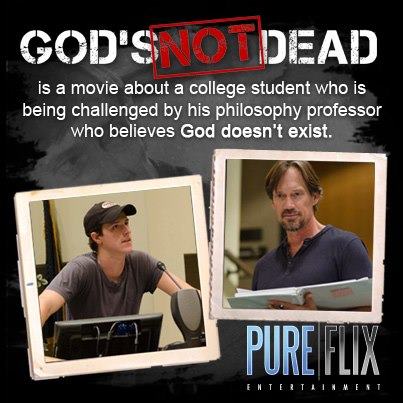
It was great to catch up with Kevin Sorbo to hear about his new role as an atheist professor with a student who is a committed Christian in “God’s Not Dead” from Pure Flix.

The last time I talked to you, you were playing a preacher!  Now you’re playing a professor who not only does not believe in God, but will not allow his students to believe.  Was that a challenge for you?

Not really.  It’s always in the script.  Great writing on this and a great story.  I was hooked as I read it for the first time.  I have met enough atheists in my day to get a grasp for the character anyway.

People always struggle with the eternal question about where God is when bad things happen.  What does this movie want them to know?

Free will.  God gave us that.  Can’t have good without evil.  Evil will always be there.  It is how we act and react to evil that defines who we are.  Life is all about choices.  We know what is right and we know what is wrong.  We don’t always make the right choice.  So what we do after we fall is what builds, or destroys, one’s character.

Why did you want to play this role?

Loved the script.  As an actor I am drawn to many personalities and this one just seemed like a chance to show people no matter where you are in your life, you can make find a place and time to redeem yourself and find the hope you either shut out or thought was no longer available to you.

Poster @Pure Flix
Poster (c)Pure Flix

Preachers, professors, and actors all perform in front of an audience.  How did your experience as an actor help you create this character’s classroom persona?

As i said…..it was in the wonderful script.  I have done the college life and I drew from professors in my past.

You have worked with David A.R. White before — what does he bring to a film?

This was the first time David and i worked together as actors.  I shot a movie he produced a few years ago called “What If….” and I did a Christmas movie called, “Christmas Angel.”  David is a pro and was easy to work with on and off the set.

Who should see this film?

I hate to preach to the choir, so I hope the choir comes to see this movie just because it is a wonderful family film.  I really want the fence sitters out there to come and form their own opinions about if there is a God.  I would love atheists to come and see this film as well.  I realize we can’t change everyone’s mind out there, but hopefully we make some of them reflect and wonder.

What do you hope families will talk about when they see this movie?

This movie will create dialogue.  That is good.  It means it has struck a chord with people enough to make them bring up the issues this movie exposes.

Hollywood is producing some big Bible stories this year.  Why does this seem to be the moment for these films?

People want these movies.  Simple as that.  They want to have movies that have a positive message and the whole family can watch.  I don’t think its going to slow down anytime soon.


Related Tags:


Actors Interview Spiritual films

Interview: Author, Game Creator, History Buff Arie Kaplan

Posted on March 10, 2014 at 10:58 pm

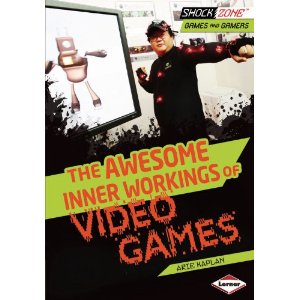
The multi-talented Arie Kaplan (From Krakow to Krypton: Jews and Comic Books)graciously took time to answer my questions about his latest projects.  He wrote the story, dialogue, and in-game fiction for the new videogame PARANORMAL STATE: POISON SPRING (based on the A&E series PARANORMAL STATE), which is out now from Legacy Games. It involved quite a bit of research on subjects like Native American folklore and the American Civil War. There’s also a character in the game who’s loosely based on legendary pulp novelist Walter B. Gibson, creator of The Shadow.   He also wrote a 6-volume series of Young Adult nonfiction books about the video game industry (the SHOCKZONE “GAMES & GAMERS” series), and those books are out now from Lerner Publishing Group. And THE NEW KID FROM PLANET GLORF, the children’s graphic novel that he wrote for Capstone, is now a best-seller.

Courtesy Lerner Publishing Group

How is writing the narrative and dialogue for a game different from writing a linear work like a novel?

There are similarities and differences. One of the similarities is that videogames and novels both involve things like structure, plot, character development, and dialogue. In writing the script for a videogame (sometimes called a “game script”), you try your hardest to make sure the characters are well fleshed out, relatable, and compelling. That’s also true of writing a novel, a comic book script, a play, a screenplay, a TV script, or anything else really. And the plot of a videogame might not be that different from that of a novel. There are some differences though, like the fact that videogames involve multiple story paths and branching dialogue. Of course, there are books (like the “Choose Your Own Adventure” series of children’s books, and other interactive books) that also offer multiple story paths. But most books don’t work that way; most novels progress in a linear fashion, and they don’t give you multiple options as to how the story might progress or end. So that’s a pretty big difference. Also, in some videogames, the writer is brought in on the ground floor, at the very start of the development process. In that case, the writer works from the very beginning with the designers, producers, and so on to build the game from scratch, to craft the story and the characters and the narrative. In other cases, on other games, the writer is brought in part-way through the development or production process; concept drawings have already been drawn up, storyboards have already been created, game design documents have been created, and everyone already has a very clear idea of where the story will be going and who the characters will be. In those cases, the writer’s involvement is still very important, but the writer is jumping in to a partially-formed world at that point. I’ve been involved in both situations. I’ve worked on some games where I was involved from the very beginning, and on others where they’ve come to me and said, “This is what the overarching story is going to be, here are some drawings of the characters, and we need a writer to flesh the characters out and write dialogue for them and fully shape the plot and the narrative.” In both situations, it’s quite a bit of fun and very creatively rewarding. And it’s always a collaborative art, creating a videogame, and it involves many people working together. Which is always fun. In that way it’s also very different from – say – prose fiction, where it’s just one person staring at a laptop screen.

I know you love to do historical research. Where did you begin in researching the Paranormal State: Poison Spring game and what did you discover that surprised you?

I wrote the story, dialogue, and in-game fiction for the Paranormal State: Poison Spring videogame. When I was working on the game, early on I had many discussions with the game designers and the game producers at Legacy Games. We talked about how this was going to be a game where the Paranormal Research team (from the hit A&E TV show Paranormal State) is called in to investigate mysterious supernatural events that are occurring at Poison Spring State Park. Now, Poison Spring State Park is an actual park that exists in real life. And in real life, as in the videogame, Poison Spring State Park was a Civil War battleground during the 1860s. And so – in the Paranormal State: Poison Spring game – we had ghosts from the 1860s haunting the park. This meant that I had to do quite a lot of research on the American Civil War. The park was also built on a piece of land where Native Americans used to live. There was going to be a demon from Native American folklore involved in the game. So I then went off and did research; which exact Native American tribes lived in that particular region (the area where Poison Spring State Park now stands), and which tribes had folklore that involved demons? The answer to both questions was the Cherokee. I researched a particularly gruesome monster from Cherokee folklore called the “Iron Finger Demon,” which I believe we re-named “Spear Hand” in the last draft of the script. I guess one of the things that surprised me the most was that normally, when we think of a demon, it’s the very Eurocentric type of demon, the kind we might see in most horror movies. That derives largely from European folklore, and the European concept of a demon is often tied – in some way – to Lucifer. To the devil. Not that there’s anything wrong with that. But Native American demons are a bit different; they’re more tied to nature and the elements than European demons. So that made me write Spear Hand’s dialogue a bit differently than I would if I was writing dialogue for a European demon, and it made me think about demons and monsters in a slightly different way. Which was really cool. Anything that gives you a fresh take on things is cool. I also did a LOT of research on exorcism rituals of various kinds while writing the game script, and that was pretty fascinating.

Roger Ebert famously created a lot of controversy by saying that a game could not be an art form.  Was he right?

I remember reading about that. Roger Ebert was a great critic. But he was just plain wrong in that regard. It’s not very forward-thinking of him to say that. OF COURSE a video game can be an art form. Most videogames ARE art, and I have a tough time NOT considering them as art. Animation is an art. Writing is an art. Conceptual design is an art. Narrative design is an art. Graphic design is an art. Sound design is an art. Acting is an art. If a videogame involves any or all of these arts, how is that videogame NOT art? I think that a decade or two down the line, people will look back and think it’s quaint and funny that anyone ever doubted whether a videogame could be an art form. Sort of the same way that in the 1950s, many people doubted that rock & roll music could ever be viewed as a legitimate musical genre. They thought that rock & roll was just a fad, and that there would never be any great rock & roll songs, there would never be any classic rock & roll songs. Well, now we chuckle at how short-sighted that sort of mindset was. It’s the same with videogames: they’re definitely an art form, and I can’t believe there are still people out there who can’t see that.

How did you first become interested in Native American folklore and where do you find the resources to research it?

I have many books on folklore and mythology in general, and these books cover myths and legends from all over the world, including those that pertain to various Native American tribes. But I also found various online resources that I used for research while writing the game script for Paranormal State: Poison Spring.

You wrote a 6-volume series of Young Adult nonfiction books about the videogame industry. It’s called the Games & Gamers series (2013, Lerner Publishing Group). What inspired you to write about gamers and the gaming industry?

I thought it was a bit odd that there are so few books for young readers that explain exactly what a game writer does, what a game designer does, what an animator does, what a combat designer does, etc. The Crazy Careers Of Video Game Designers (one of the Games & Gamers books) answers all of those questions…and then some. And it explains what it’s like to work in the video game industry. Also, there aren’t a lot of books out there for kids or pre-teens about the history of videogames, so that’s why I wrote The Epic Evolution of Video Games (also one of the Games & Gamers books). And there aren’t exactly a ton of books that talk about the pioneering figures in gaming history. Who are the designers, programmers, writers, and animators who created the Super Mario games, the Pokemon games, the BioShock games, and so on? That’s why I wrote The Biggest Names Of Video Games (another of the Games & Gamers books). I think we’re coming to a point in our collective history where we’re finally starting to realize that it’s important to honor those who created our great pop cultural touchstones. That when you play a videogame, people worked really hard to bring that game to life, and you should know who those people are. Shigeru Miyamoto created Donkey Kong, Super Mario Brothers, and The Legend of Zelda.  Kids should know who he is, because even if they haven’t played one of his games, they’ve probably played a game that was influenced by one of his games. That’s why I think that it was so important to write the Games & Gamers books.

How have advances in technology affected gaming?

They have affected gaming in so many ways. Here’s one of the most basic ways: When the first videogames were created for the mass market, in the early ‘70s, the “characters” were just dots and blips on a screen. You couldn’t have a character who showed any emotion, who spoke dialogue, and there was no need for writers. I mean, who are the characters in Pong? What’s the plot of Pong? I doubt you needed a character artist or a combat designer on Pong, either. But I’ve wasted enough time ridiculing Pong. The point is, in the late 1890s and early 1900s, the first movies were just five-second-long shots of a train racing towards the screen or a horse galloping. And audiences at the time were AMAZED by that. They’d never seen anything like it! They ran out of the theater, for fear that the train would burst out of the screen and flatten them! And when the first videogames hit arcades in the ‘70s, people had never seen anything like THEM, either. But as technology has advanced over the past 40 years, we were able to create videogames that allow for longer, more complex, and more immersive gameplay, with infinitely better graphics, animation, and sound, and more intricate stories and more interesting characters. So it allows everyone involved in making the game to get more and more ambitious, and to try to really push the envelope and to give the player an unforgettable experience. I mean, when I played the first BioShock game, it had some of the most disturbing imagery I’d seen in a game in a long time. And it was creepier than most horror movies. But you sure wouldn’t have been able to create that kind of disturbing, addictive, emotionally involving game with the technology available in the ‘70s.

Are games more like books, comics, or movies or an entirely new kind of story-telling?

A bit of both, really. They meld aspects of books, comics, theater, movies, TV, and even radio. But they’re also a relatively new kind of storytelling, compared to all those others that I just listed. They’re immersive and interactive in a way that film, for example, is not. So we’re still just figuring out what a game can do. Can a videogame move a player to tears just like a film can move a viewer to tears? Absolutely. But we’re just starting to see how moving and emotionally involving and immersive a videogame can be, and what that means for gaming specifically.

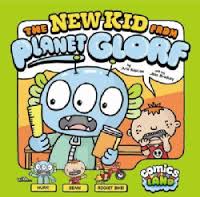
Courtesy Comics Land

You wrote the children’s graphic novel The New Kid From Planet Glorf (2013, Capstone). Where did you get the idea for the book?

I wanted to write a graphic novel for kids that was about friendship and the universality of being a kid. The fact that even if you’re a kid who lives on another planet, you’re still a kid, and you still have the same fundamental wants and needs as a kid on Earth. And how that applies to real life is, if you’re a young child and you see another child who looks different than you, you should know that he’s still a child with the same wants and needs as you. Looks are such a superficial thing, and a kid is a kid is a kid, whether he’s a kid from Glorf with three eyes and antennae, or an Earth kid with two eyes and no antennae. That’s the message I wanted to impart with this book. There’s a scene in the graphic novel where Nurk (the kid from Glorf) first meets Sean, a kid from Earth. And they both point at each other and say, “Whoa! An alien!” Then Sean says, “What do you mean? I’m not an alien.” And Nurk says, “Well, no one looks like you where I come from. You would be an alien there.” And that’s the point: we’d probably look as strange to people from Glorf as they look to us. Also, The New Kid From Planet Glorf is drawn in such a fun, cartoony way, which is a testament to the work of the book’s illustrator, Jess Bradley, who’s wonderful. But I definitely wanted the aliens in the book to have a “classic sci-fi” look, inspired by movies like Forbidden Planet (1956) and Flash Gordon (1980), and there were references to those movies in the script’s stage directions. In the script, I described the inhabitants of Glorf as having green skin and antennae, because I wanted them to have a “classic alien” look, as opposed to a “Roswell” alien look. When I was at NYU studying playwriting, I wrote a trilogy of stage plays set on Mars, and the Martians in my plays had a similar “little green people” aesthetic. But those stage plays were definitely written more for adults. So in a way, The New Kid From Planet Glorf is sort of a more kid-friendly version of those plays. For some reason, I like parodying the type of alien you used to see in 1950s sci-fi movies.

Who is the ideal audience for the book?

I think 5-7 year old kids are the ideal audience for The New Kid From Planet Glorf, but hopefully parents can enjoy it as well.

If you visited another planet, what would be your first question?

Hmm…that’s an interesting question! I think ANY question you asked an alien would be equally important, because their reaction to it would be very telling. I mean, who or what are the inhabitants on this other planet anyway? Are they little green people, like in The New Kid From Planet Glorf? Do they look like little bits of algae or floating orbs of light? Do they look exactly like we do, but with little teacups on their heads? In that case, I’d ask, “So, what’s with the teacups?” The answer to that question would probably have tremendous consequences for the future of the galaxy. Or maybe not. Maybe they’d just say, “We like teacups. They make nice hats.” And that would be that.

How do you create the mindset of someone who is completely unfamiliar with Earth?

I just tried to think about all of the things that we take for granted. Nurk is obviously educated, but he doesn’t know what books are. They probably have a very different way of educating children on Glorf. And he doesn’t know what whiteboard erasers are, because they probably don’t have whiteboards on Glorf. So, what does Nurk have in common with Earth kids? He wants the same things that they do: love, respect, compassion, the freedom to express oneself. But many of the creature comforts that we have on this planet probably don’t exist on Glorf, and it was fun thinking about that.

Related Tags:


Books Internet, Gaming, Podcasts, and Apps Interview Writers

Interview: Joshua Oppenheimer of “The Act of Killing”

Posted on March 1, 2014 at 8:00 am

If I were voting, “The Act of Killing” would not only win the Best Documentary Oscar, it would be a contender for Best Picture as well.  Director Joshua Oppenheimer broke through barriers from the secrecy and denial of government-sanctioned gangster killings of more than a million Indonesians in the mid-1960’s to the disaster-fatigue of audiences to tell a riveting story by letting the murders, still living in the community as respected citizens, tell it themselves.  The details that have been repressed individually and institutionally for decades are revealed as the men who killed choose iconic movie genres to re-enact their crimes.  A musical, a western, a gangster movie — these re-enactments allow both the gangsters and their communities to acknowledge the horrors of the genocide for the first time.  The full unabridged version of the film, with scenes not included in the US theatrical release, is now available on iTunes and Amazon.

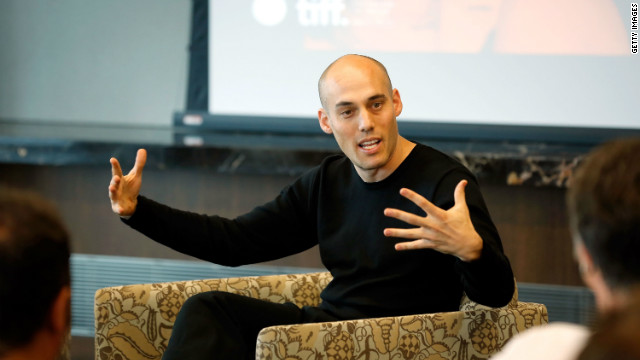
I spoke to Oppenheimer about the impact that the film has had on Indonesia and the world community and about his biggest regret in making it.joshua-oppenheimer

I’m familiar with the work of the Truth and Reconciliation Commission in South Africa, which sought to provide healing and a sense of justice by documenting the atrocities of apartheid, and it occurred to me that your film is the closest equivalent that Indonesia’s going to get.

You’re right in a sense that before the film came along, there was no chance that the government would implement a truth and reconciliation process.  The president of Indonesia from 1999 to 2000, Abdurrahman Wahid also known as Gus Dur proposed a truth and reconciliation process and apology for what happened in 1965 and he was immediately removed from power as a result.  But it is also my hope that the film has now opened a space where ordinary Indonesians are saying, “This is wrong” where the media is saying, “This is wrong and we have to talk about this not only to right a major historical wrong, not only for the sake of healing but also so that we can beat corruption, fear, and gangsterism that prevent Indonesia from acknowledging what happened.  It’s led the Indonesian media to finally address what had been a 50 years silence about the genocide and talk about the genocide as a genocide and connect the moral catastrophe of the genocide with a moral catastrophe of the regime that the killers have built and presided over ever since.  And it’s emboldened ordinary Indonesians to finally talk about the most painful aspect of Indonesian history and the present for the first time without fear.  It particularly has led Indonesians to say that “We want this country to be the democracy that we would like and that claims to be. We need to address not just the crimes of the past but also how they have terrorized all of us into not holding our leaders into account for corruption and gangsterism in the present.”  So it’s lead to this national discussion which I’m optimistic will eventually be the truth and reconciliation process in Indonesia.

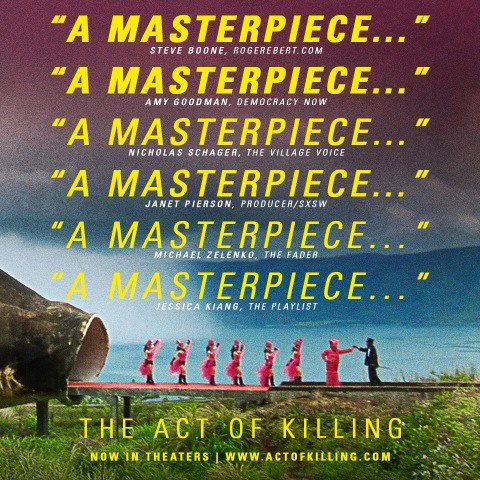
act of killing posterAs you spoke to these admitted killers who seem to feel no regret, did you conclude that they had to be sociopaths before they killed the first person?  Or were they made sociopathic or numb through just the incredible level of atrocity they perpetrated?

Hannah Arendt famously said in her writings in the banality of evil that the killer is an ordinary person.  That doesn’t necessarily mean that every ordinary person is a potential killer. But those of us who haven’t killed are extremely fortunate not to have to find out.  My belief is that there is a moral paradigm that underpins most of the stories we tell, particularly in movies where we divide the world into good guys and bad guys.  According to that paradigm, we tend to believe that because the killer has done something monstrous, the killers are monsters.  And in that sense, we imagine that we’re somehow different from them.   What’s clear is that the killers are human and if we want to have any chance of understanding how human beings do this and then the consequences of their actions, how they tell stories to justify their actions, we have to start from the premise that they’re human and that killing changes them.  So I think that certainly the numbness comes from having killed.   And then because the killers are human, consequently they have to tell themselves stories to justify their actions so that they can live with themselves afterwards.  And then horribly, they impose those stories in the form of victorious history glorifying what they’ve done on their whole society.  Ironically, that of course leads to a downward spiral into further evil and corruption.  If Anwar was to refuse the second time, it’s equivalent to admitting it was wrong the first time.

So further evil is perpetrated not necessarily because the men are monsters but because they’re human and they know what they’ve done is wrong and they don’t have the courage to face that.   So denial has a terrible, terrible cost.

There are so many chilling moments in the movie but, for me, one of the most is the talk show where you see the host speak so cheerfully about the killings.  Denial is so pervasive throughout the entire culture.

I want to also point out that the talk show is as shocking to Indonesians as it is to outsiders.  I think that when Indonesian State Television discovered that the governor of the province or the publisher of the leading newspaper in the province or the head of the paramilitary movement the minister of youth and sport, Anwar who’s famous in North Sumatra — that all of these people were making film scenes, quite ambitious scenes dramatizing what they’ve done, they started to think perhaps we’ve been too tolerant about the killings.  You see the history that talks about the extermination of the communists in general terms as something heroic without ever going into the details of the killings. When the producers at state television saw that they were going into the details of the killings rather than say, “Oh, wait a moment, maybe these  executioners are getting a little carried away and this could make Indonesia look bad,” they thought instead, “maybe we have been too cautious in our representation of what happened and this is a great story, this is a big story, these are the most powerful people in this part of Indonesia, let’s make a talk show about what they’re doing.”  And it sounds more like the individual perpetrators more than it sounds like the mouthpiece of the state which is what State Television is.  And it’s shocking for ordinary Indonesians.  That talk show is an unmasking of the regime by precisely the institution that until now had served to mask the regime.  I guess one other interesting thing is that among the only people in the film who seem to see that the true meaning of what these killers did or the people in the control room while they produced that talk show who start commenting and whispering and saying, “How many people must be haunted?  How do they sleep at night?  They’re greedy.  They’ve been stealing all their lives.  They must have gone crazy from doing this.”  But we have to remember that even if those other people with the same moral perspective that we have, they are also the people who are actually producing that monstrous show.

Another really affecting moment for me was the guy who was smiling when he told the story about how his stepfather was killed. And then, when asked to portray the part of the victim himself, that was not acting, right?  He really was sobbing, wasn’t he?

I think it’s real emotion coming out for sure.  I mean he’s being exactly what he said he wanted to do.  He says that they should stage this story, everybody feeling uncomfortable that suddenly, there’s a survivor in their midst rejects the idea saying it’s too complicated, it would take too long and he responds by saying, “Well we can at least use this story to motivate our acting.”  And that’s what he goes on to do.act of killing

And it’s of course real trauma because it’s his real story but that scene is the one thing of the film that sometimes I really regret.  It’s an error.  It’s an error of omission, not commission but it’s an error.  When we were shooting in the studio which was where he tells that story, we would shoot with two or three units shooting simultaneously because there were many things happening at once.  He doesn’t speak Indonesians, my cinematographer.  He didn’t understand the story and I didn’t hear the story until six months after the shoot.  When I did hear it, I was mortified because if I heard it, I definitely would have pulled him out.  There a principle that there should be no survivors or victims in the film at all, all of the people in the reenactment of the attack on the village, all of the extras are immediate family members of the perpetrators and the paramilitary leaders.  So when I heard this story, I thought, “Oh no.  I would have pulled him out.  I would have taken him aside and said, “Look, you should be behind the camera for the rest of the day and tomorrow.” But when I put the film together, I could see that he had this sort of very painful journey and strange journey through the film because it keeps cropping up during the talk show, he’s acting in the village massacre scene and I wanted to make sure I really understood what was happening there.  Why was he there?  How did he feel about it?  So even though it made me feel guilty, in a way, I called him and his wife answered the phone and said that he’d died 6 months before from complications of untreated diabetes.

I asked her why he was in the film, did he ever talk about it, she said he talked about quite a lot.  He thought that it was the one chance in his life he would have to express the horror of what he’d been through, and somehow felt that even though we were making the film with the perpetrators, this would be the right place to do it.  In a sense, he correctly interpreted what we were doing and sort of infiltrated the film, I was making this film in collaboration with survivors in the Human Rights Community and in constant dialogue with them and much of my Indonesian crew comes from that community.  In a way, that film was an infiltration into the perpetrator’s world.  He kind of infiltrated that.  And in that sense, he wanted to be there.  He went on a mission.  He made the film much more powerful for his presence and if I had pulled him out, he would have failed.

But if I could do it all over again knowing what I know, I would have pulled him out.  I would have pulled him out again.  When you spend so many years looking at what killing means and torture means, the last thing you want to do is somehow be complicit with its currents.

There’s a brief shot where sort of over in the corner, the television’s on with President Obama talking.  Tell me a little bit about what you think that moment means in the film.

Yeah, because Obama grew up partly in Indonesia, Indonesians love Obama and see Obama as the kind of Indonesian in the White House.  There’s a big hit movie called “Young Obama.”  Obama left Indonesia in fact so he says in his book, Dreams from My Father, because his mother was told that the place was haunted and becoming increasingly corrupt because of this recent trauma that has happened.  Genocide was casting a shadow and I put it in the film for the same reason that a lot of the American sort of references are in the film.  The United States supported, participated in, and then ultimately ignored these genocides.

I would have loved to be able to go into the history of that but so much is unknown.  The United States is also not come to terms with this past.  All of the CIA job files from that period remain, covert operations in Indonesia, have been classified.  The documents that have been released were then immediately reclassified.  Luckily, they were made available by National Security Archives in Washington University but they’re heavily redacted, covered with black magic marker.  The US should declassify everything about this.

We want to say that Indonesia ought to apologize, issue a formal apology for what happened and implement a process of justice.  The US needs to set an example and take leadership I think.  We were a part of this.  Fifty years is enough time to get comfortable with what we did.  It’s too long to not call it genocide.  It’s genocide and it’s time that we all accept what happened and our collective role in supporting and participating in those times.  And when I found out that Hammond was watching Obama’s inauguration address as a kind of a victory speech to practice for his own speeches, I immediately felt that it implicates all of us.  And Hammond says his reason to go into politics is to intimidate people and to steal.  And the fact that he’s inspired by Obama somehow evokes the sense that some of it is the unintended or the intended consequences of US policy.

How does the experience of re-enacting these crimes within the context of different film genres make you feel about narrative films?  Does it make you change your idea about how influential they were or about a certain moral quandary of making narrative films?

I think that this is a film about how we tell stories to justify our actions to escape from our most bitter and painful truth, and it’s a film about how we lie to ourselves and it’s a film about those consequences for those lies.  These characters used cinema at that time to distance themselves from the act of killing, coming out of the cinema inspired by whatever movie he’s just seen, waltzing across the street, dancing across the street, he could be intoxicated by his love of the film especially for example, and killing happily.

Cinema is a means of escape.  And this is a film about escapism and the importance also of confronting the most painful truth about who we are and equally in this film, that there’s also I think actually a demonstration of how cinema can equally be a mirror in which we actually look at the most painful aspect of who we are.  Cinema becomes the vehicle with Anwar and all of Indonesia now are looking at the most painful aspect of what it means to be who they are.  I think the film is kind of a manifesto almost of how art ought to be a means by which we invite to do or force our viewers to confront really the most important, painful, mysterious, troubling aspect of what it means to be human.


Related Tags:


Directors Documentary Interview

Interview: Alex Wolff of “HairBrained” and The Naked Brothers

Posted on February 28, 2014 at 9:00 am

Alex Wolff plays a child prodigy who goes to college at age 13 in the new comedy “HairBrained.”  He and his brother Nat formed the Naked Brothers band when he was 10, and they starred in a movie and television series based loosely on their lives as kid musicians.  Now 16, he talked to me about working with his brother and his mother and what he learned from his “HairBrained” co-star Brendan Fraser.  But of course we had to begin by talking about the enormous puff of hair that gives the movie its title.

Come on, how much of that hair was yours?

I’m sorry to rain on the parade.  I did let my hair grow for an entire year.  My classmates kept asking why I had a village on my head.  I had giant, giant hair.  It was pretty crazy.  But they did add extensions.  So it was a lot of real and a lot of extensions.  The most hilarious part about shooting the movie was I kept forgetting that I had it.  I didn’t feel it after a while.  I would go into the bathroom and wash my hands and look up at the mirror and start dying laughing because I forgot I had it.  If I had noticed it, I would have been attracted.  I think the movie works because it doesn’t draw too much attention to the hair.  About halfway through, you just accept it and forget about it.HairBrained

You’re a musician and an actor.  What is the difference between preparing for a musical performance and an acting performance?

In a music performance, it’s my brother and me, we’re ourselves.  No matter where we are, what songs we’re doing, what the set looks like, we have the same rituals backstage.  We put our thumbs together and say “One heart.”  We have all these little ritual we do before the gig, and that’s going to happen forever.  But in acting, it’s a different character every time, so every preparation is different.  Because it’s a specific character, I have to prepare in a specific way.

Your mother, Polly Draper, appeared as an actor on “Thirtysomething” and created your Naked Brothers movie and television series.  Have you learned a lot from her?

The cool part of watching my mom as director, writer, and producer gave me all the training I needed for producing, writing, directing, and acting the short films I have done.  She comes on the sets of the movies I do and gives me notes and I honestly don’t know what I would do without her.  And I have learned a bunch from my brother, Nat.  I watch him all the time because I think he is one of the best actors around.  If you’ve seen “Stuck in Love” or “Admission,” you know what I’m talking about.  I’m not biased!  I honestly think that when I see him in movies, he’s a movie star.  I always look to see what he’s doing.  And people like Ben Kingsley, Kodi Smit-McPhee, Katie Chang , and Parker Posey and Brendan Fraser — that’s the cool part of being an actor.  You get to experience all these other actors around you, see what their processes are and help me cultivate my own.

In this film, you play a kid who acts much older than his age and your character bonds with a character who acts much younger than his age, played by Brendan Fraser.  What did you learn from him?

Yes, the tables are kind of turned for those characters.  That’s what’s fun about the movie.  He’s so funny and energetic and nice to everyone, even everyone on the crew.  That’s something you don’t see with many movie stars.  He was extremely nice to every single person.  That’s something I admire so much and it really reaffirmed my doing that as well.  He showed us that to be a real artist you have to treat every single person like they’re the star of the movie.  That was awesome.

Your character keeps a lot inside.  Is that a challenge for an actor?

I related to the anger that he carried around.  There’s a certain sarcasm and he always has some remark that can outsmart anyone and he uses it as a defense.  But I am very external, so sometimes it would get to be too much when there was a lot going on around me to stay in character and I would have to just go in a room and be by myself for a second.  I couldn’t be as 100 percent social as I would normally have been on the set because I was in that character.  I had to be quiet and angry but also make myself vulnerable.  I was trying to do a lot of different stuff — I hope it comes across.

Your character is a trivia champion — how are you at trivia? 

At movie trivia I’d be pretty good, but I would not have known any of those questions.  They were one of the most hilarious parts of the movie.

Related Tags:


Actors Interview

Interview: Moviewise — Movies to Teach Morality and Character

Posted on February 24, 2014 at 3:44 pm

The anonymous creator of the Moviewise website was kind enough to agree to an interview about movies and the lessons they teach.

How did the moviewise website get started?  How long have you been doing it?

I started the moviewise site in December 2012, and began writing content for Yahoo! Voices in March 2013. Both are the result of wanting to promote well-crafted, professionally distributed movies that incorporate “Life Lessons,” that is, they contain messages or insights about life that are useful. I know very deeply and personally how much media can influence our beliefs, our biases, and our behaviors. Usually when people acknowledge this, they focus on the negative aspects of movies, particularly violence, where the research clearly shows a correlation between observing media violence and increased aggression in both adults and children. But the inverse is also true. Media can also have positive effects on behavior by showing prosocial content. I want to support and encourage films that are thoughtful and meaningful because of the very real positive impact that they can have on audiences.

We all learn by modeling, and movies are essentially dramatic, full blown examples of behaviors that we give our undivided attention to for large spans of time. They are teaching us something, and sometimes those lessons are needed, they are profound, they are important, and they are helpful. I want to catalogue these types of movies objectively, by quoting a particular movie scene that directly illustrates the Life Lesson, such that each movie reflects the filmmaker’s and/or the larger society’s social mores, thus creating a kind of anthropological data set. In essence, the moviewise site contains my research notes, and the articles on Yahoo! are my interpretations of the data I’ve collected.

Can Hollywood do a better job of addressing moral issues?

I don’t see Hollywood as a monolith. In fact, I don’t even see Hollywood as a monopoly, controlling everything we see.

I think there is a lot of diversity and a wide range of voices within the Hollywood system. Sure, there is an imbalance, an overrepresentation of some and underrepresentation of others, but all kinds of movies get made, by all kinds of people. And now with the infrastructure available for independent filmmakers, the emergence of foreign films, and the funding possibilities of crowdsourcing, it seems that anyone who really wants to make a film can do so.

The result is that thousands of films are made that explicitly tackle moral issues: effects of war, degradation of the environment, exploitation of others, abuse of animals, malfeasance by government leaders and corporations, and on and on. The truth is that moral issues provide a lot of inspiration to filmmakers because they have all the elements of a good story: a well defined conflict with clear characters in a specific setting.

The challenge for audiences is finding the films that speak to them in particular, and this is where film critics can have a role. My site, for example, is an attempt to highlight the messages in movies, which are not always about moral issues, but nevertheless reveal a particular perspective. I hope that finding the core, the central premise of a movie, will allow people to make informed decisions about what movies they choose to watch.

Do all movies have a moral lesson?

No, not all movies have moral lessons. In the process of becoming a film critic, I have found that movies fall into one of two categories: “movies as entertainment” or “movies as art.” The distinction between the two lies in whether there is a message integrated in the film. Movies that are diversions, that primarily function to amuse or to thrill, are in the “entertainment” category. Most slapsticks, horror films, and special effects movies fall in this category. They do not have a substantive message. On the other hand, movies that make audiences feel and think, that continue to stimulate them after the movie has ended, that inspire conversation about ideas, are in the “art” category. All the movies on moviewise are in this latter category.

This is not to say that the “entertainment” category is bad. There is nothing wrong with wanting to watch a movie just to have a little fun and feel some excitement. I do not think that all movies need to have a message or a Life Lesson. In fact, it is important to have variety and to have movies that function in different ways. I personally value the films that seem to be revealing the beliefs and consciousness of the filmmaker more than the films that are devoid of that connection. But I enjoy many different kinds of films.

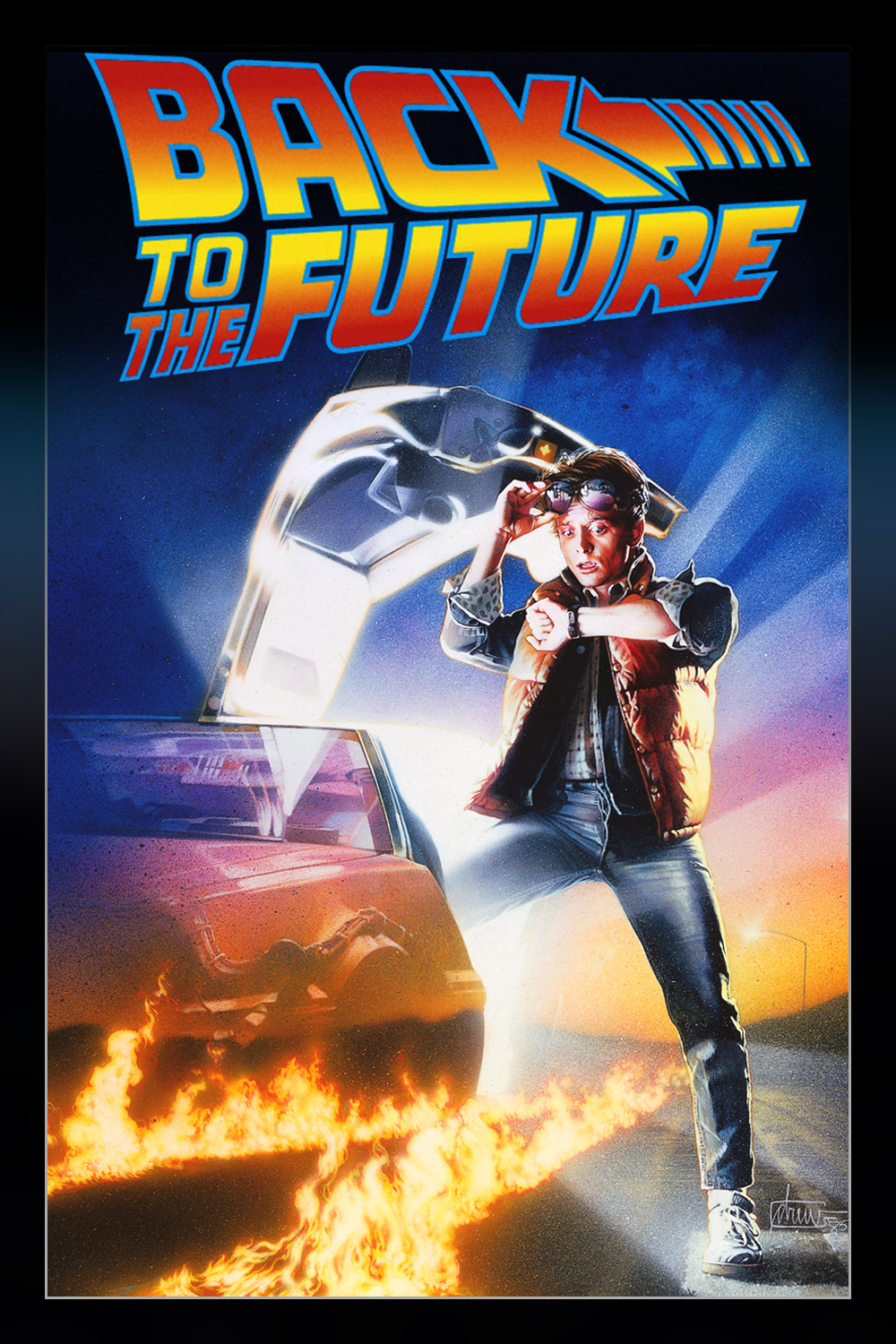
Do you have a favorite movie?Back-To-The-Future
These are my favorite films by category, so far:

Animated Film: Kung Fu Panda (2008)

Comedy: Moonstruck (1987)

Documentary: Happy (2011)

Drama: Dead Poets Society (1989)

Fantasy: The Princess Bride (1987)

Sci-fi: Back to the Future (1985)

If I had to choose a single movie, however, it would be Back to the Future (1985). It is such a well crafted movie, with so many wonderful elements all coming together in a very precise and logical order to create an enthralling and exciting experience. Every scene is necessary, each seamlessly furthering the story, increasing the tension, leading to ever more interesting twists. The attention to detail in this movie is masterful. It deserves to be high on the American Film Institute list of the 100 best American movies. Sadly, it is not listed at all, while a much more inferior film, E.T. The Extra-Terrestrial (1982), is ranked #24.

Back to the Future was nominated for an Academy Award for best writing, best sound, best music, and it won for best effects. It was nominated for a Golden Globe for best motion picture, best performance by an actor, best screenplay and best song. Although the movie is almost 30 years old, the look and feel of the movie, the dialogue, and the settings do not feel dated. The story it timeless. It is rated 8.5/10 on IMDB, and 96% for critics, 94% for audience on Rotten Tomatoes. Whereas E.T. is 7.9 /10 on IMDB, and 98% for critics, 71% for audience on Rotten Tomatoes.

Back to the Future also has had a cultural impact. In 1986 President Ronald Reagan referred to the movie in his State of the Union address: “Never has there been a more exciting time to be alive, a time of rousing wonder and heroic achievement. As they said in the film Back to the Future, ‘Where we’re going, we don’t need roads’.” It is in the U.S. National Film Registry, selected by the Library of Congress for being “culturally, historically, or aesthetically significant.” And it had an effect on popularizing skateboarding. Thus it meets and exceeds the criteria for inclusion on the AFT’s 100 best films.

The Life Lesson of Back to the Future is: Learn to persevere – if you put your mind to it, you can accomplish anything.

This message resonates in a number of characters and scenes in the movie:

Marty’s father, George McFly, in the altered, more successful future where he becomes a writer, pulls out his just published novel and tells Marty, “Like I’ve always told you: You put your mind to it, you can accomplish anything.”

The African-American cafe worker, Goldie Wilson, in 1955 proclaims, “Look at me. You think I’m gonna spend the rest of my life in this slop house? No, Sir! I’m gonna make something of myself. I’m going to night school. And one day, I’m going to be somebody.” And Marty, coming from the future, 1985, responds “That’s right. He’s gonna be mayor!”

Doc also accomplishes something after putting his mind to it: inventing the time machine. In the process exclaiming, “It works! It works! I finally invent something that works!” And of course his heroic efforts on top of the clock tower during a lightning storm demonstrate this Life Lesson in full dramatic effect. You see the face of determination, of steely resolve, of trying and trying after hitting multiple obstacles and finally reaching the goal.

And of course, Marty learns this Life Lesson when he succeeds in getting back to the future by confronting all his fears, all his anxieties, and overcoming them all.

To me Back to the Future is a truly great film: It is expertly crafted, has a wonderful, dynamic story, beautiful music, is skillfully acted, and has a well integrated, substantive message. I love this movie!

How do you pick the movies you cover?

All the movies on moviewise come from Netflix. I have to watch the movies at home, and not in a theater, because I need to transcribe the scenes, which means a lot of rewinding and pausing. I have 500 movies in my queue and those movies got there through a variety of means: going through lists of best films from different sites, watching interesting trailers, finding award winners, and getting personal recommendations. About 85% of the movies I watch get onto moviewise. Above all, the movies I select have to be good, well-made films. The movies that get rejected, about 15%, either have a significant failure in some aspect of the craft: writing, editing, acting; or didn’t have anything to say as far as I could perceive; or were not enjoyable to watch.

What is the best way for families to start discussions about the lessons in movies?

I think it is extremely important to be cognizant of the messages in films, and to question and recognize the assumptions and biases that they show, while you are watching them. Being able to watch a movie at home and share the experience with other family members means that you can have a running commentary with each other, pause the movie to ask questions, and be actively participating rather than passively watching.
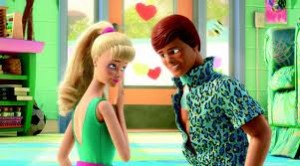
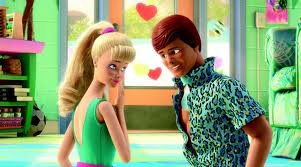
toy story 3 barbie kenOne example that comes to mind involves Toy Story 3 (2010) where Ken, Barbie’s romantic interest, is called a “girl’s toy” as an insult. Within the movie, this is understood to be a slight: It is said during an argument as an attack, and Ken is defensive about it. But what does this imply? Are girls’ toys inferior, or are girls inferior, or both? Why should being called a girl’s toy be an insult? When that line was spoken everyone in the room was struck by it because we’ve previously discussed negative portrayals of women and girls in movies.

But if you haven’t been made aware of sexism in movies, then scenes like this become part of the norms that we learn and internalize, thus perpetuating these attitudes. It is a quick little scene, but the message is extremely damaging and negative. It strongly implies that what girls like is inferior to what boys like, and by extension that girls are inferior to boys. Something like that needs to be confronted in the home, a voice has to say: I don’t agree with that assumption. It is unfair to say that something is bad simply because girls like it. It should be an honor to be a girl’s toy, in the same way that Woody and Buzz are honored to be Andy’s (a boy) toys. Ken should have said, “I am proud to be a girl’s toy because the power of a girl’s imagination is so wonderful and full of joy” rather than being ashamed to be associated with girls. But more importantly, this shouldn’t have been lobbed as an insult. It shouldn’t be insulting to be a girl’s toy.

So one small scene can generate a lot of discussion, which I think provides a powerful bonding and learning experience for all. In an ideal situation, watching movies would be interactive, allowing people to share their reactions and insights. But if this is not possible to do as a group, because of people’s schedules, or divergent interests or capacities, there are many forums and blogs where people love to discuss movies. I think that is another viable way to engage and to become aware of all kinds of issues and points of view, which I think is beneficial for the individual and for society.

And there are in fact actual therapeutic benefits to sharing a movie with someone else. A recent study from the University of Rochester, for example, found that watching and discussing movies about relationships lowered divorce rates as much as intensive counseling programs did. So I would very much encourage families to use movies as launchpads for discussion and to mediate the messages that are transmitted. I think that this is an effective and fun way to learn more about each other and to spend quality time with one another.

Do you have a suggestion for a good movie about integrity?  About justice?  About compassion?

Yes. Below are three entries from the moviewise site:

Integrity

Almost Famous (2000) is a semi-autobiographical drama written and directed by Cameron Crowe about William Miller, a fifteen-year-old writer for Rolling Stone magazine whose first assignment is to tour with a tumultuous rock band, Stillwater, while needing to call home to check-in with his mother, Elaine Miller (Frances McDormand), and getting advice from a cantankerous music critic, Lester Bangs (Philip Seymour Hoffman).

Life Lesson: Be yourself, always.

Movie Scene:

Lester Bangs: “Oh, man. So you made friends with them? See, friendship is the booze they feed you. They want you to get drunk on feeling like you belong.”

William: “Well, it was fun.”

Lester Bangs: “Because they make you feel cool. And hey, I met you. You are not cool.”

William: “I know. Even when I thought I was, I knew I wasn’t.   I’m glad you were home.”

Lester Bangs: “I’m always home. I’m uncool.”

William: “Me too.”

Lester Bangs: “You’re doing great, man. The only true currency in this bankrupt world is what you share with someone else when you’re uncool. Listen, my advice to you, and I know you think these guys are your friends, if you want to be a true friend to them, be honest and unmerciful.”

Justice

Yentl (1983) is a drama based on the story by Isaac Bashevis Singer, co-written and directed by Barbra Streisand about Yentl (Barbra Streisand), a Polish woman who disguises herself as a man in order to continue her education at a yeshiva when her father, Rebbe Mendel (Nehemiah Persoff), who taught her in secrecy, dies – leaving her an orphan.

Life Lesson: Don’t let others stop you from pursuing knowledge.

Movie Scene:

Yentl: “Why is it that every book I buy, every bookseller who comes has the same old argument?”

Rebbe Mendel: “You know why.”

Yentl: “I envy them.”

Rebbe Mendel: “The booksellers?”

Yentl: “No, not the booksellers. The students, talking about life, the mysteries of the universe. And I’m learning how to tell a herring from a carp.”

Rebbe Mendel: “Yentl, for the thousandth time, men and women have different obligations.”

Yentl: “Have different obligations, I know, but –”

Rebbe Mendel: “And don’t ask why… Go on. Get the books. Get the books.”

Yentl: “Thank you, Papa.”

Rebbe Mendel: “Thank you, Papa. Thank you, Papa. The shutters darling.”

Yentl: “The shutters. If we don’t have to hide my studying from God, then why from the neighbors?”

Rebbe Mendel: “Why? Because I trust God will understand. I’m not so sure about the neighbors.”

Compassion

The Lord of the Rings: The Fellowship of the Ring (2001) is a fantasy directed by Peter Jackson based on the book by J.R.R. Tolkien about an unlikely hero, a young Hobbit named Frodo Baggins (Elijah Wood), who sets out on a quest along with eight companions, including the wizard Gandalf (Ian McKellen), to destroy a ring that can give its owner the power to enslave the world.

Life Lesson: Be compassionate — show mercy — towards those who offend you.

Movie Scene:

Frodo: “There’s something down there.”

Gandalf: “It’s Gollum.”

Frodo: “Gollum?”

Gandalf: “He’s been following us for three days. He hates and loves the ring as he hates and loves himself. He will never be rid of his need for it.”

Frodo: “It’s a pity Bilbo didn’t kill him when he had the chance.”

Gandalf: “Pity? It was pity that stayed Bilbo’s hand. Many that live deserve death. Some that die deserve life. Can you give it to them, Frodo? Do not be eager to deal out death and judgement. Even the very wise cannot see all ends.”

What is the first movie you ever wrote about for moviewise?

The first movie review, published on December 19, 2012, was for a documentary about ballet students training and competing for the Youth America Grand Prix, called First Position (2011). I chose that movie for a number of reasons: 1) it was relatively new at the time 2) I wanted to start with a documentary because this is the category I struggle most to fill 3) I love classical ballet as an art form; it is exquisitely beautiful. The combination of wonderful music, story, and impressive skill that comes together in a ballet performance leaves me awe struck. Structurally, ballets are also similar to films. There are dramas: Giselle, Romeo and Juliet; comedies: Coppelia, Don Quixote; fantasies: Swan Lake, The Nutcracker; fairy tales: Cinderella, Sleeping beauty. So I see a connection between these two art forms. 4) I greatly admire dancers and musicians. They bring beauty into the world, and they do it by honing their craft to reach amazing levels. So I thought it would be fitting to start the site with a movie that has as it’s Life Lesson: “To become the best, push yourself harder than the rest.” The Movie Scene illustrates this by quoting one of the competitors, an eleven year old boy named Aran Bell, who demonstrates a foot strengthening exercise by saying, “You’re supposed to do it as much as possible, and then do five more after you absolutely can’t do it anymore … Youth America grand Prix is coming up and I’ve been training really hard for it. Hopefully it will pay off. It feels good to be worked that hard and to be in that sort of mindset, and then have everything hurting when you come home.” He goes on to win “Best Overall Performance.” I find this story and the documentary very motivating. I’m inspired by people who are so driven, and that makes me want to share their stories with others. This is why First Position became the first movie on moviewise.

Do you have a go-to “feel good” movie?
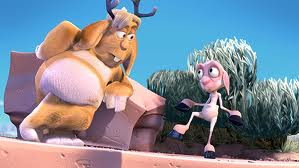
boundinMy go-to “feel good” movie is actually a Pixar short, only about 5 minutes long, called Boundin’ (2003). When I was going through a really stressful time in my life, I would watch that movie every night before going to bed, and it would make me smile and feel better. It is a story about a lamb whose beautiful coat is suddenly shorn, leaving him naked and exposed to ridicule, until a Jackalope comes along and teaches him to look at his situation differently. It then becomes a story about resiliency, about taking the bumps and bruises that come with life, but finding ways to still have joy. I think I have internalized this story, and whenever I feel down I remember the line, “You still got a body, good legs and fine feet. Get your head in the right place and hey, you’re complete!” I appreciate that the movie acknowledges that it’s normal to have ups and downs, and that it’s ok because you can get through the rough patches and be happy again. I think that many people hide when they are feeling down, since it is seen as a sign of weakness, and I think that isolates them and makes them feel worse. So in a way this movie removes some of the stigma about showing vulnerability in public, by basically saying “so what?” Yes, something bad happened to you; yes, you were embarrassed; yes, it’s hard, but these things don’t have to define you and they don’t have to take away your happiness. The movie shows us a more positive reaction to disappointment than being miserable: bound and rebound, get up and continue doing what you love.

Related Tags:


Internet, Gaming, Podcasts, and Apps Interview Understanding Media and Pop Culture
THE MOVIE MOM® is a registered trademark of Nell Minow. Use of the mark without express consent from Nell Minow constitutes trademark infringement and unfair competition in violation of federal and state laws. All material © Nell Minow 1995-2026, all rights reserved, and no use or republication is permitted without explicit permission. This site hosts Nell Minow’s Movie Mom® archive, with material that originally appeared on Yahoo! Movies, Beliefnet, and other sources. Much of her new material can be found at Rogerebert.com, Huffington Post, and WheretoWatch. Her books include The Movie Mom’s Guide to Family Movies and 101 Must-See Movie Moments, and she can be heard each week on radio stations across the country.

Website Designed by Max LaZebnik