Interview: Julie Locke of “The Heart of Christmas”

Posted on December 4, 2012 at 6:00 pm

Julie Locke‘s two-year-old son Dax was critically ill with cancer.  He loved Christmas lights, so although it was only October, she put them up.  When their neighbors found out why the Lockes had Christmas decorations up before Halloween, they came together to give Dax an early Christmas, and that story inspired the heartwarming film starring Candace Cameron Bure, “The Heart of Christmas” and the Matthew West song, “One Last Christmas.”

I spoke to Ms. Locke about the loss of her son, the support of the community, and the foundation she has created to give back to St. Jude Hospital, with thanks for all they did to help Dax.  I asked her about the response to the movie.  “It’s just been overwhelming, such a blessing.  So many people’s lives have changed, their priorities are different.  It has been so peaceful for me to know that my son’s life can help other people realize the importance of family and what love is really about,” she told me.  “Dax was so strong.  He was two and he was sick a lot.  But kids don’t sit there and complain like we do.  Seeing him so happy and full of life made me a stronger person.  He was suffering, truly, but he always wanted to dance and be happy.  I tried to let him see me being happy because that’s what he did for me.”

Locke started a blog on the social network Caring Bridge “to cut down on the phone calls” when Dax first got sick.  She received over two million comments.  “People would write me messages of inspiration and prayers and I could feel the love.  It really helped me when I was feeling alone.”  She said it was overwhelming to try to care for Dax.  She did not have time for anything else.  It was the neighbors who spread the word about putting up Christmas decorations and got the whole community involved, “a silent showing of support for us.”  They were new to the neighborhood and knew no one in the area, “so it was really powerful.”

She set up a foundation to run St. Jude for one day because “they never charge families.  They never worry about the money.  They gave me a year and a half with my son that I never would have had. That’s my life mission.”  She hopes people who see the movie will be reminded that “it is important to cherish every moment with your family, because that is what life is about.  Life not about money or material things; it is about relationships and loving one another and helping one another.   I hope people can see in the movie how people did that for me and how it changed my life.  It’s such a fulfilling thing in your heart to be able to do that for someone.”

I have a copy of the DVD to give away.  Send me an email at moviemom@moviemom.com with “Heart” in the subject line and tell me your favorite Christmas ornament.  Don’t forget your address!  (US addresses only)  I’ll pick a winner at random on December 10.

Related Tags:


Behind the Scenes Contests and Giveaways Interview

The Man Behind “It’s A Wonderful Life” — Philip Van Doren Stern

Posted on December 3, 2012 at 11:00 am

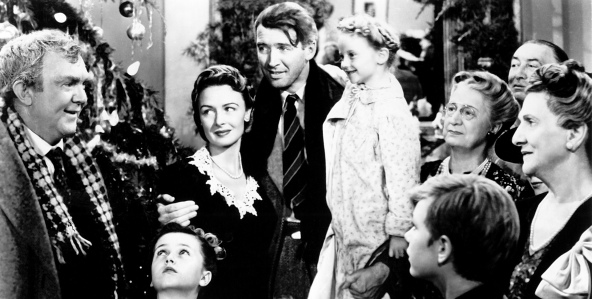
It was an honor to interview Marguerite Stern Robinson about Beliefnet’s Movie of the Month, It’s a Wonderful Life. Dr. Robinson’s father, Philip Van Doren Stern, wrote the short story, “The Greatest Gift,” and when no one would publish it, he printed it up himself and sent it out as a Christmas card.  Director Frank Capra and leading man James Stewart, both just back from serving in WWII found in the story the inspiring and meaningful ideas they wanted for their first post-war project.  It was not especially popular at first, but by the 1970’s it had become a holiday classic and no film is more beloved and more emblematic and influential.

In her afterward to the book, The Greatest Gift, Dr. Robinson writes about three themes in the film that continue to be especially important today. One is the issue of “financial inclusion.” Another is “the awesome power of apparent insignificance.” “The business about the insignificance is very important. George wished he had never been born. It was only after he learned for himself what the world would have been like without him that he begs to be returned to his life. Clarence, his guardian angel, then grants George’s wish,” she said. The third relates to David Brooks’ article, “Social Animal.” She explained that the article raises the question “about which is better, to have freedom and adventure or roots and connections. comes down strongly on the side of roots and connections, which is certainly related to ‘It’s a Wonderful Life.’”

I asked her if she had a favorite scene and she responded, “It’s all my favorite!”

Check out the rest of the interview in Beliefnet’s Movie Corner!

Related Tags:


Interview Writers

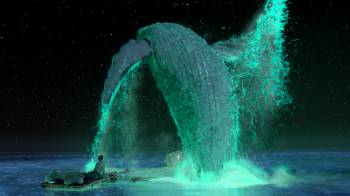
Interview: Ang Lee and Suraj Sharma of “Life of Pi”

Posted on November 21, 2012 at 3:48 pm

Director Ang Lee and star Suraj Sharma met with a group of journalists to talk about “Life of Pi.”

Lee said the biggest challenge was to “make a big mainstream movie out of a philosophical book that’s beloved.” And it was a challenge to create an illusion that mixed the action and themes so seamlessly that it wouldn’t take people out of the movie.  “It’s adventure story, and it is a movie about faith and hope, so we keep a balance, but that’s very, very challenging for the film-maker. Of course, there’s a kid, there’s water, there’s a tiger,” not to mention his first time with 3D and all the CGI.

He was asked whether his vision for this film could have been made a few years ago. “No, I don’t think so. My vision? No. some other vision, probably. You can have a lot more restraint. I think, actually, the use of 3D actually helped to set you out by the water, and also the realism of the animal, and the scope of God’s vision and it provides a lot of new visions, so to speak, tools to visions.  I think visual effects-wise, it would be very challenging. It’s not impossible, but it’s hard to believe. I’m still a novice in 3D. Very carefully, I learned very diligently, but after all, we’re just discovering another new cinematic language to enhance not only effects but dramatically where you put things and how you take in the images, soak it in, and take that as the new grand illusion…I think five years ago those elements wouldn’t be there for me. We could still make the movie, but it’s different.”

The water is almost a character in the film.  Lee spoke about it.  “On the surface, I think, because this is a movie about faith, a young boy, soaking all his innocence with organized religions and society, that he throws into the ocean. So in some ways, water is like the desert; it’s a test of his faith, of his strength and everything, he goes through the journey. And as a film-maker, I like to see the water that carries life, it’s a representation of nature and emotions, and anything that has with water, even rain or mist or cloud formations, that represents some kind of mood that Pi’s going through, so I’d have liked to us the mood, the transparency or semi-transparency for the blocking and the reflection, this is a nightmare for 3D, (by the way, we overcome that obstacle) we use all of that as a way of explaining life, where he looks at the sky, the air, that’s heaven, God and death (to me.) Sometimes they blur, you don’t see the horizon, they blur together. Sometimes they separate, sometimes they reflect each other. I think it’s just a wonderful tool to externalize, to visualize internal key things. I like to use them to express my internal feeling and Pi’s.

He likes to feel that he is scared by his projects, “doing something that will put me on the edge, it’s like Pi facing the tiger, keeping me alert, putting me in the God-zone I need, I need total attention, focusing, and therefore I get the thrill that I’m living life fully, and that’s how I choose to express myself and be seen by people.”  He sometimes asks himself, “Why am I doing this? Why, why why?” but he loves the challenge.  “I get to learn all these new things about film-making; I’m an avid film-student, I would like to see my career as an extension of film-school. Now I get to learn 3D, how good is that? Somebody’s paying for it….I got these naïve, double-negative thoughts, like ‘if I add one more obstacle, maybe it’s possible,’ and more dimension, maybe I can take that leap of faith. At least, I think, by giving new cinematic language, people might open up, just bring back, just naturally, that innocence of watching a movie, and theatrical experience; maybe that will happen…There’s no way I could do what I did there with 2D. The wave has to be so much bigger, 10 times bigger, to get a feeling. Still, you don’t get that you’re floating there with Pi. I think animal, the animation is more believable, because it has real dimension and depth, and the excitement of finding new ways of expression and putting things in different places, giving the depth and manipulating the depth and your point-of-view, actually that adds a lot to, help you expend a lot of your imagination and exploration, so, all of that is pretty good for the unusual project. You know, I’m a film-maker, I live for that kind of thing.”

Sharma told us about what it was like to make his first film. “I think that if you work with someone as great as , it’s not intimidation, it’s comfort, you know? You feel that if someone can trust you like the way he is, then you just give it everything you have and you trust him back, and in that, everything will be okay. That’s how I saw it, and you know, before we started shooting, there was three months in which I learned a lot of things, there were a lot of things that took place, I met a lot of the crew—and you know, when you get so familiarized with people who are so nice, who become like your family, then you lose that pressure. That pressure is lost, you just become part of the whole process, it becomes something that you do for yourself and you do for everybody who is putting your faith in you for you to do it.  I didn’t know how hard it is to make a movie, ever. I thought it was all, honestly, I thought it was all glitz and glamor and stuff, I didn’t have much of an opinion, but just being on set, in itself, taught me so much. You learn about how there are so many things that go into making movies, so many people with all of these different things from all these different places coming together, all who are different at what they do, at what they specialize in, they’re all kind of working together like a machine, just for even, just for maybe three seconds of film. It’s the most inspirational feeling I get, just being on set, that I don’t know—that intensity with which people work, the passion, the fire, it really gets to me. I start feeling like, maybe starting to work, I want to do this so badly. It makes me feel driven.  There were moments when I thought,’How am I going to survive this?’ there were moments where I was so dire and so exhausted but everything just seemed to come together.  I really like the fact that they put so much faith in me, to make me go on, and that’s what kept me going.

Lee listened and smiled.  He said that Sharma was a spiritual leader for the entire crew “because he didn’t know. If he’d known, we would act differently, and he wouldn’t be a leader. We’ve been in the business for a long time. A lot of us can be jaded, can be cynical, we’re still doing what we do best, with passion and everything, but we can really get cynical, get tired, and then when we see something like that, a person who doesn’t know that he’s leading the thing, he’s carrying everything on his shoulder, he still thinks that everybody tells him what to do…there’s a beauty to that, there’s certainly innocence that remind us why we want to make movie in the first place.  He doesn’t know, he doesn’t have any comparison. He probably didn’t know what bad acting is, it’s just the way you do it. He didn’t realize that’s the best thing you can do for acting. So that’s treasurable. So we don’t tell him until the last day.

 

Related Tags:


Actors Directors Interview

Interview: David Magee of “Life of Pi”

Posted on November 19, 2012 at 3:48 pm

Screenwriter David Magee met with a group of journalists to talk about “Life of Pi.”  He told us that as a not very successful actor, he enjoyed doing audio books.  One day he would do the full book and the next, the abridged version.  “I came in the next day and said, ‘This is terrible. I’m sorry, but it’s really terrible what you’re doing to this author’s book, I feel bad reading this. I mean, I could do better than this,’ and the producer said, ‘Well, would you like to try? I mean, we need abridgers all the time.’ I asked how much it paid, and it was not a lot but it was enough, and so I jumped at the chance to do it because I could abridge books anywhere, any time. I could be in a theater in Utah and abridging in my apartment while I did a show there.  Over the course of about five years I did over 80 novels in non-fiction and all sorts of books, and the process is taking a book that is anywhere from 105,000 to 200,000 words and cutting it down to 29,500 words.  By the time I was done I had gotten very good at selecting the essential things for this story, focusing on the dialogue and the action, pairing away the room description; you know, there are a lot of wonderful scenes in books that describe the paintings on the wall and the feeling when you look out the window—there’s no time for that in an abridgment, and in a film, that’s the set job, it’s not your job. So, it actually was very natural training for me to get into this.”

He spoke about the classical stories of survival at sea.  “I went back and read Moby Dick and I read back and I read the James Joyce’s Ulysses, which is very different, but I was looking for the spiritual journey. So I was trying to find, and in early version that no one saw, I was sticking in lines from Joyce’s stuff and trying them on Ang Lee…I really, very much took those to heart Moby Dick and Ulysses and Noah, obviously, that was very much apart of it. There’s also obviously Job in his trials and ordeals, and ‘God, why hast thou forsaken me’ and all of that, comes into that storm sequence.  When we first started working, we talked big picture. What were we trying to say, how were we trying to combine these characters? And so I spent a lot of the early days just typing up notes about different religious traditions.  We did some research, I tried to listen to some tapes on different religions…a lot of it was absorbing that world. And then when we actually went off and wrote it, you know, it was not so much about making sure that every reference was put in, it was trying to find ways to bring action and bring life to what was happening in the scenes.

I worked very closely with Ang. Once we decided we were going to do this, I would go away for a week or maybe two and I would type up notes on the project ideas, do some research, pull together different things, and then I’d send it over to him, he’d read it, we’d meet for lunch down in China town, I’d eat very well, and we’d start a discussion: ‘Yes, I like this one…but think more about this, David, think more about: what can we do in this scene? Maybe we should try this part of the structure idea that you had, but let’s keep this open for now.’  There was a lot of back and forth, so it became an extended conversation. I’d then go back home, I’d type more notes, I’d send them back, that would get us a little further down the field. So it was continued that way throughout the research period.”  He contacted Stephen Callahan who wrote The Book of Drift, which was about his true-life experience of being adrift at sea for 69 days. “It turned out he lived in Maine. Ang and I went up there and met with him and talked about how that changes the way you feel about life, how that affects you physically, all of those things. Stephen actually became our survival consultant for the film. He ended up being a major part of the film. He took us out on a boat, originally Ang wanted to have him leave us out on the ocean for ‘a few hours,’ he said, so we would experience what it was like–and I’d pull Stephen aside and thank him not to do that. So he went with us, but he did take the sail down and we bounced around in the water for quite a while, it was like being in a washing machine.”  Magee and Lee also went to India together “and at some point while I was on the journey with him in India he said something about this being an adult telling an adventure story that he would tell to kids. And I thought ‘that’s the right tone, that’s kind of what we’re looking for—it’s not a kid’s story, it’s not an adult’s story, but it’s an adult telling a story where he wants you to lean forward and go, And then this happened…’ and that clicked with me. I understood what he meant and I started writing that and went into a draft.”

I asked him about the island, which is one of my favorite scenes in the book and the movie.  “The way I saw the island…first of all, in the whole of the film, you could take things allegorically obviously, but you can also take them as ‘No, it really happened to me, why are you doubting me?’ which is what Pi essentially says at the end. ‘This is just what happened.’ And so I don’t want to take away from the possibility that this was ‘just what happened.’ Our goal in writing the film the way we did was to make sure that you could read the story or stories in any way you wanted to, and it would be more of a reflection on your own belief system at the end. But if you want to talk about the island allegorically, this is my interpretation of the island and I would say this is the film’s interpretation of the island —  it is a place that is nurturing and bountiful by day, it giveth, and at night it’s a place of devouring and consuming and danger, at night, taketh away. Sometimes we call it ‘the Godhead island’ because Pi’s journey, over the course of the film, is to have his presumptions stripped away, his comforts stripped away and ultimately to reach a point where he’s at death, and then he finds himself on that island and comes to know something about the nature of his relationship to God, and that island saves him, and as he says at the end, but that island also pushes him onward on his journey. Rather than resting, which would be essentially death, it forces him to return to society.

He also spoke about the challenge of adapting such an internal book to film.  “Sometimes I think when people talk about this book being difficult to film, they were referring just to the fact that it was tremendously difficult to put a boy and a tiger on a boat together without one of them eating the other, but sometimes I think it has as much to do with the structure of the book and the fact that it moves back and forth in time and that it involves several different Pis along the way.  We had to make a choice early on whether or not we were going to use the older Pi and the writer at all.  We could have framed the film using the story of Pi meeting the investigators in the hospital as the entire frame, and we considered that. Having tried a hundred different ways, because we really did, the reason we ultimately decided to have the writer and Pi as the framing device, this is a story, ultimately,  about story-telling, and we wanted the writer to take the story with him, and that passing on of the story was important to us thematically, not just from a framing-device sense.  Also if you just tell that third act from the boy’s point of few, it’s told in extremis, it’s told emotionally, not as a grand tale, not reflectively; which, we wanted this to be the kind of big story that, you know, I’m passing this onto you…it gives it a larger scope to say ‘I’m reflecting back now, and I’m telling you the way I felt when I was there. This was how I experienced it, this was the journey and then this is what happened.’ There are all sorts of rules for screenwriting, and they’re generally there for good reasons, and those reasons are that people who’ve tried something different and it falls on its face, and so you want to pay very close attention to those rules, but by the same token, the rules didn’t come before the screenplays were first written, the rules came in response to the fact that people had tried things and they hadn’t worked out, so…they’re not like building codes that you have to follow. They’re warnings, that if you don’t follow them, you have to really think hard about how to do it, and that was a choice that we had to make from the moment that we decided to use that as a framing device.”

And he spoke to us about moments of surrender.  “When Pi says, ‘I surrender to you, God, let me know what comes, I want to know what comes,’ he is surrendering on a very surface level but he’s not surrendering his beliefs, he’s not surrendering his belongings…he thinks he’s letting go and he is turning and saying, “What will come, will come,” which is, on a surface level.  If he had not made that, I don’t think he would ever have learned to train the tiger. But having mastered the tiger, he has to make a greater, a deeper kind of surrender, he has to essentially, be stripped of everything and find himself reaching that island. So I think that the ultimate moment of surrender is when just before he reaches that island, when he says, he comes to term with the tigers.”

Related Tags:


Interview Writers

Santa Paws 2: The Santa Pups

Posted on November 19, 2012 at 1:36 pm

B
Lowest Recommended Age: All Ages
MPAA Rating: G
Profanity: None
Alcohol/ Drugs: None
Violence/ Scariness: Mild peril
Diversity Issues: None
Date Released to DVD: November 18, 2012
Amazon.com ASIN: B008C0C23I

If there’s anything cuter than the Santa Buddies, it is the sequel, the new DVD/Blu-Ray pick of the week, “Santa Paws 2: The Santa Pups.”  The puppies stow away on Mrs. Claus’ trip to a Christmas-loving town and have a lot of fun granting wishes until something goes wrong and Christmas itself starts to disappear.  Who can save the day?

http://www.youtube.com/watch?v=rB8StgkqdQY

It was a lot of fun to catch up with Kaitlyn Maher, who returns for the sequel.  “Santa is at his workshop and he needs a new child ambassador and he sends Mrs. Claus to go and find one.  She meets the Reynolds family.  Their town used to have the best city with the most Christmas spirit but the Santa pups decided that they were going to come and they took something without asking.  Somebody wished for Christmas to go away and it happened.  Mrs. Claus and my character have to help save Christmas, but I’m not going to say the ending,” she told me.  The puppies were “so sweet and cuddly and cute,” she said, “and even sweeter when there was a dog treat around.”  She said the trainers used “lots and lots of treats” and little toys and breaks, too, “if a puppy was being finicky or something, they would always have a new dog waiting.  They were very professional.”  The biggest challenge was that “there was a train that would go by six times every single day.  We would have to stop recording, even if it was the best take we had done.  We would have to stop until the train circled around the whole track.”  She loved the set for Santa’s workshop.  “I asked the producer where all the toys were going to be going.”  When no one had an answer, Kaitlyn said, “Can I please donate them?  I’d love to pick a few charities in Vancouver.”  She became charity coordinator and the toys went to four different charities. “It was a great way to get the whole cast involved in sharing the joy of Christmas.”  Her favorite prop in the workshop was a big bell.  She thought it was funny when the elf fell off the bell in the first movie.  Kaitlyn is home schooled and “I love that my mom teaches me.”  She likes the American Girl books and Nancy Drew and loves to read about ancient history.  And she likes movies that have a message.  “The Sound of Music” is one of her favorites and she also likes mysteries.  She says the buddies movies are popular because “the movies are fun and have a good message.  The writers bring that message through magical and wonderful things that you could not imagine.  Everyone works together and they’re family-friendly.  People really feel blessed by them.”  She loves to sing and her favorite scene in the movie was when she got to sing “O Holy Night.”  She especially loves to write songs and will work on a new CD next year.  “I like to make songs that are inspiring and encouraging.  I like to make people smile.”  And she is looking forward to Christmas with her family and spreading the joy of Christmas to everyone.  “I think it is very, very important that people have the love they need on Christmas.”


Related Tags:


Actors DVD/Blu-Ray Pick of the Week For the Whole Family Interview Series/Sequel Talking animals
THE MOVIE MOM® is a registered trademark of Nell Minow. Use of the mark without express consent from Nell Minow constitutes trademark infringement and unfair competition in violation of federal and state laws. All material © Nell Minow 1995-2026, all rights reserved, and no use or republication is permitted without explicit permission. This site hosts Nell Minow’s Movie Mom® archive, with material that originally appeared on Yahoo! Movies, Beliefnet, and other sources. Much of her new material can be found at Rogerebert.com, Huffington Post, and WheretoWatch. Her books include The Movie Mom’s Guide to Family Movies and 101 Must-See Movie Moments, and she can be heard each week on radio stations across the country.

Website Designed by Max LaZebnik