Interview: Martin Sheen of ‘The Way’

Interview: Martin Sheen of ‘The Way’

Posted on October 5, 2011 at 3:56 pm
Copyright Elixir Films 2010

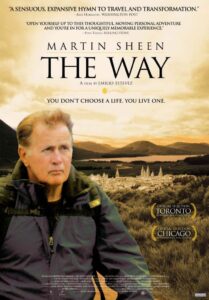
There I was, at the Georgetown Ritz hotel, and Martin Sheen walked into the room.  President Bartlett from “The West Wing,” Kit from “Badlands,” star of movies from “Apocalypse Now” to “Catch Me if You Can,” to “The American President.”  He starred in the very first movie I ever reviewed — for my school paper — “The Subject Was Roses.”  He was in town to talk about his new film, written and directed by his son, Emilio Estavez, called The Way.  Sheen plays Tom, an American doctor who comes to St. Jean Pied de Port, France to collect the remains of his adult son (played by Emilio Estevez), killed in the Pyrenees in a storm while walking the Camino de Santiago, also known as The Way of Saint James. Rather than return home, Tom decides to embark on the historical pilgrimage to honor his son’s desire to finish the journey.

I was very impressed that before Sheen turned his attention to me, he spoke very graciously to the Ritz employee who was there to see if there was anything he needed.  And then he introduced himself to me and we settled in for a conversation that was so warm and engaging I felt like we were old friends.

Sheen talked to me about his parents.  His mother was born in Ireland and his father was born in Cuba, the son of Spanish immigrants.  They met in Ohio in a class for people who wanted to become American citizens.  They had eleven children, ten boys (one who died at birth) and one girl, and they adored each other.  He adored them, and he told me that the only two places in the world where he feels completely at home, “absolutely totally secure and safe” are Spain and Ireland.  “I never make a reservation; I just arrive and something happens.  Haven’t spent a night on the street yet.”

Where did the idea come from for a movie about a pilgrimage along El Camino de Santiago?

It’s been there for more than 900 years and it is a national treasure.  It’s one of the oldest pilgrim sites after Jerusalem and Rome, one of the top three Christian pilgrimage sites since the Middle Ages.  St. Francis actually walked it.  Millions and millions of people have done it.  My father was a Galliego.  He grew up about 80 km from Santiago.  Santiago is St. James.  Compostela is the Field of Stars where his remains were discovered.  I grew up knowing about this path and having a romantic image of the journey.  You always think you’re going to do all the someday bucket list things.  Someday I still will do it!

In the summer of 2003 we had a six week break from “The West Wing.” I’d been studying on it and I thought, “This is the year!”  All I had was the intention.  I didn’t have any plans.  I didn’t have a backpack.  I didn’t even have a map.  But I had studied it and read all the guidebooks and I was ready to go.

The previous year, my brother had died.  I’m the seventh son and this was the guy ahead of me.  We were “Irish twins,” and very close.  We were inseparable.  I said. “Enough funerals, let’s celebrate.”  I organized a family reunion for the siblings on what would have been my mother’s 100th birthday, God rest her soul, in her village in Ireland.  We got everybody there from all over the place and it was a wonderful celebration.  We had mass in chapel and celebrated for three days.  I invited everyone to come to Spain to walk the Camino, but no one would come with me!  Taylor is Emilio’s oldest son, and he came with me.  He’s our tour manager here today.  He was just 19 then.  And I have a friend, Matt Clark, I’ve known longer than my wife.  He appears in this film as the priest my character thinks is a rabbi.  He’s like a brother to me so he went with us to Ireland and came with us to Spain.  He and Taylor and I were in Madrid trying to figure out how to do it in two weeks.  You can take horses and you can take bicycles and you can walk it, but in two weeks it is impossible.  So my sister suggested we rent a car and drive along it for future reference.

We stopped in San Pedro de Cardeña, the town in the movie where the boy steals my bag.  It’s where El Cid is buried.  We took refuge in a bed and breakfast that night and there was a pilgrim supper, with people from all over.  The family was serving dinner and the youngest daughter, Julia, walks in and she looks at Taylor and Taylor looks at her and they fall instantly in love.  They’re married now and they live there.  I came home without a grandson!

That sealed our fate.  I had a grandson that completed the cycle of his grandfather, my father, who left Spain in 1916 and sailed to Cuba and then came to America.  And now his great-grandson, Taylor, is back in Spain.  This is a real family story.  And I still yearn to do the pilgrimage without a camera or a phone, someday.

I told Emilio when I got back that he had to check it out and he knew if he was going to see his son he had to go to Spain.

In this era of airplanes and the Internet, why do pilgrimages still matter?

It is about relieving yourself, removing yourself from a comfort zone.  It is about finding balance, about seeing honesty transcendence, about uniting the will of the spirit with the work of the flesh.  No matter who you are, religious, spiritual, agnostic, we are all looking for balance.  Pilgrimage allows the opportunity to challenge ourselves.  If you don’t do something that costs you something, what is its value?  You start out and make plans and you pack a big back, I need this, I need that.  And then you get there and you start taking things out of your pack.  You cannot give that stuff away.  The other pilgrims do not want it.  But you learn that you do not need what you thought you did.  You start leaving things along the way.  Every little refugio along the way has libraries of books in every language on earth that people have brought and left behind.  And then your interior journey begins and you begin to let go of all of the stuff you have been holding onto that weighs you down.  Everything you have accumulated that is burdening you.  And you begin to free all of the hatred and envy you have been keeping.  “Please let me forgive this person.”  You own this journey and you begin to become yourself.”  Please do not let me reject love.”    And you realize that a conscious rejection of love is the universal sin.  Pilgrimage confirms our life’s journey.

Tell me about being directed by your son.

He had no hesitation about telling me what to do!  Absolutely no hesitation.  I adore him.  He’s my closest friend.  He lives just down the road from us.  He started an organic garden and now a vineyard.  He was always a storyteller.  He started writing plays in high school.  He’s the best director — for me anyway.  He knows where all the buttons are and he knows if I am faking it.  He loves me enough to risk my wrath by telling me the truth.  No other director could know me the way he does and love me enough to make sure I do it right.  He wrote the part for me and it is about a father and son.  The Irish have a phrase: We never get over our fathers and we’re not required to.  For good or ill, you’re stuck with the father.  My father was 6’5″.  I grew up with this giant.  I left home at 18 and came back a year and half later and realized he was only 5’6″.
Related Tags:


Actors Interview Spiritual films

Interview: Tiffany Shlain of ‘Connected’

Posted on October 2, 2011 at 8:00 am

Tiffany Shlain’s new film is “Connected,” a personal memoir and broader exploration of the ways we connect and misconnect through technology.  The film is opening in select theaters across the country: It opened in LA at the Arclight Theater in Hollywood on September 30, and opens in Seattle on October 7 and in NYC at The Angelika Film Center on October 14.  For more information, follow Connected on Facebook and on Twitter @tiffanyshlain.

She wrote:

I hope that Connected will help create a global conversation about what it means to be connected in the 21st century.  I believe that by engaging people to talk about connectedness in their own lives and in the world, the ripple effect of these conversations will have far reaching impact.  Appreciating that this is a huge subject, I employ many tactics (humor, animation, archival, and my own personal story) to attempt to untangle what interdependence and connectedness mean in terms of the history of the human species and moving forward. Through this journey, I wield a large magnifying glass to look at some of the absurd and beautiful behaviors of our species and our world. While the core components of humans desire to be “connected” have not changed since we first appeared on this planet, I believe a new zeitgeist is emerging through all these new technologies that are making our world smaller and more intertwined, and that that zeitgeist can make the world a better place.

Shlain, whose film about Barbie and the woman who created her explored Jewish identity, answered my questions about the way technology aids and thwarts communication.

When was the first time you went online and what was it like?

1995. I was working on a CD-ROM on the musician Sting. (remember the CD-ROM days;) someone said to me, “you have to see this thing called the web, and he showed me this website where people from all over the world were talking about how they loved Sting. I was blown away. I knew it was going to change the world.

What keeps us feeling optimistic that despite the odds that our next email is spam or some dumb joke that’s been circulating since DARPA-NET we keep checking because it might be something great?

We are linking up everyone on the planet and creating a central nervous system. The fact that we are going to such a diversity of ideas all circulating is going to help us tackle some of our biggest problems. We are just at the beginning of seeing what collaborative tools online can do.  That gets me excited. Also, I think we are opening up new channels for empathy….people are sharing more. These are all very good things. The internet is just an extension of us…all that goes with that. With “Connected,” we hope to trigger a conversation about the good, the bad, the hope. We think now is the perfect time to talk about what all this connectedness means in our lives personally and globally.

I believe in humans and humanity and in our innate ability to change for the better.  Look at the end of slavery and apartheid, the women’s rights and civil rights movements, and other political and social transformative movements in the last few hundred years, and you can see how we are indeed evolving. There are two things that make me optimistic. We as humans are curious and we have a deep desire to connect. These two things will make us move us forward to a better place.

How did you look for the archival footage you used and how does it help tell the story of technology that is less than a decade old?

Ever since I was young, I had always loved film and technology. When was at UC Berkeley, I took “history of film,” as an elective with an incredible teacher, Marilyn Fabe. She had an infectious enthusiasm about how each technological advancement in film radically changed how ideas could be conveyed and activate the viewers to think in a new way. I was hooked. This was the way I wanted to convey ideas. However, there were no film production facilities, so mostly I edited together archival images I found from old movies or sound slug on a 16 mm editing table I discovered in the back of the architecture department. Recontextualizing images from many different eras to get at some larger ideas was very exciting to me. That archival aesthetic still informs my style today. Around 70% of our film “Connected,” is comprised of archival images from every era imaginable sewn together with original animations by the very talented Stefan Nadelman,  in my attempt to put my arms around our world, where we came from, and where we’re headed.

What is the source of the little hits of pleasure we get from feeling connected through technology?

I found clues when reading about the hormone oxytocin, which the brain releases when humans connect with each other. Oxytocin decreases fear and anxiety, creates empathy, trust, and cooperation, and reinforces our urge to connect. The human brain is also designed to seek pleasure because of a hormone called dopamine. Researchers now know that the brain releases dopamine when new information is received. So every click, search, tweet, or text has the potential to stimulate the same hormonal rush as sex, drugs, and rock’n’roll. But an interesting thing happens with dopamine—you never feel fully satiated. It’s called an “infinite dopamine loop,” leaving you constantly wanting more. The combined release of oxytocin and dopamine when plugged into cyberspace helps explain humans’ insatiable hunger for knowledge, approval, and being constantly connected.

Does use of social media strengthen or weaken our ability to create in-person intimacy?

I think it does both.

Do you ever take a break from technology?  Do you have any technology-free spaces in your home or day?

My father loved quoting Sophocles, “Nothing vast enters the life of mortals without a curse.”  So, from the beginning of time, every new technology and advancement brought with them a complex mix of positive and negative repercussions as well as unintended consequences.  “Connected” addresses the potential of these new 21st century technologies, the importance of harnessing their powers, but also covers the ramifications when these new technologies take over and even overwhelm our personal lives.

I’ve started practicing what I call “technology Shabbats” with my family. Every Friday at sundown, our whole family disconnects until Saturday night.  No cell phones, no internet, no television, no Ipads. No multi-tasking. We disconnect completely. Or maybe I should say we connect completely – with ourselves and each other.

I am learning that turning off technology is just as powerful as turning it on and that our society needs both.  Technology can be so enticing and overwhelming, but we also need to remember how important it is to be fully present with the people you love and also be alone and quiet.  The potential of technology globally and personally is exponential, but we need to know where the off switch is and when to shut it down.

Do you see social media or multi-player games replacing the shared experience of seeing a movie in a theater?

No. these are all new experiences but nothing will replace being in a darkened theater experiencing something together with a group. Laughing, crying, thinking together. We are social creatures. We will always go to the movies.

What has surprised you in the audience reaction to the movie?

At the end of the screenings, after sharing something so personal everyone in the theater feels very connected to me and to each other, which I didn’t expect. Normally, after you feel connected with someone, you are compelled to share some part of yourself with them..but with “Connected,” here I was experiencing the reverse. In the film, I share and then people feel connected. It has been exciting to then see the audience in turn feel connected to not only me, but to the bigger ideas in the film.

And lastly, everyone is ready to have this conversation about “what does it mean to be connected in the 21st century?” It feels like everyone has been waiting to have it. No one wants to leave the Q & As. Our goal is to trigger a global conversation about “connectedness” and it seems people are ready.


Related Tags:


Directors Interview
Interview: Will Reiser and Seth Rogen of ’50/50′

Interview: Will Reiser and Seth Rogen of ’50/50′

Posted on September 30, 2011 at 8:00 am

Will Reiser and Seth Rogen were friends who worked together on “Da Ali G Show,” making fun of everything and everyone, especially the powerful.  So, when Reiser got cancer, they took it on in the same spirit.  Finding their own experience as survivor and friend very different from the transcendent and saintly stories they had seen in movies and thoroughly annoyed by all the people who asked Reiser if he had a “bucket list,” they decided to write their own movie.  It is not a factual re-telling of the real-life story but it is an authentic portrayal of the feelings of young men who have not even figured out how to live when they are confronted with thinking about the possibility of death.  Can a man who is not very good at taking care of himself take care of his friend?

Copyright 2011 Summit

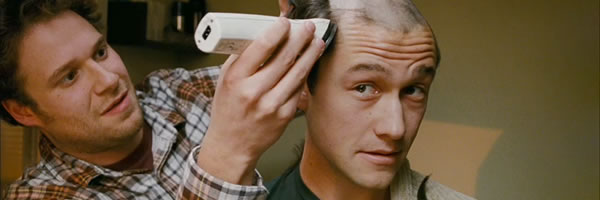
Resier’s character is called Adam, and he is a producer at NPR.  Joseph Gordon-Levitt plays the role.  Rogen’s character is named Kyle and is played by Rogen himself.

Reiser and Rogen sat down with a small group of journalists at the Georgetown Ritz hotel to talk about the movie. As he was “going through the ordeal,” Reiser said, he and Rogen talked about how different the experience was from anything they had seen in a movie.  But people’s impression was formed by the movies.  They’d ask him about “My Life” or “The Bucket List.”  “To punch you in the face is the first thing on it,” said Rogen.  They wanted to make a movie where the audience does not cry all the way through and the person doesn’t die at the end.  “Tonally,” said Rogen, “not the procedures.”  Reiser said that in movies the cancer patient “has this great clarity, understands life and who they are, comes to terms with all these issues with family members and dies the next day.  For me, it was dysfunctional and crazy and no one really knew what to say and then I got better and was left with this aftermath of all this.”  He felt comfortable writing about personal things because of his close relationship with Rogen and Evan Goldberg, even though it was his first screenplay.    “I’m so aware of all the laughs are in the movie,” Rogen said.  “I’m so not used to having a movie that bums people out for any length of time.  So when I’m watching it, I’m like, we’ve got this thing and this thing and then we get a big laugh and get these people out of this.”  They agreed that the biggest laugh is when the immediate reaction from Adam’s mother, played by Anjelica Houston, is “I’m moving in.”

“It’s less that the scenes actually happened to me and more that it draws thematically on what happened with relationships,” Reiser told us.  “And also the way in which my friends and I used humor to cope.  At that time I was very neurotic and worried about everything.  Seth would describe me as annoying.”  “Used to be,” Seth broke in.  “I didn’t have the ability to express what I was feeling and kept everything bottled up inside.  That emotional arc — Adam is very much an extension of me and what I went through.  The MRIs, those are my real MRIs.  And we worked together and he’s my closest friend and what the doctor said, that all really happened.”  “The question we asked ourselves was not ‘did this happen,'” Rogen said, “but ‘is this like something that would have happened?”  “Did this feel real?” Reiser said.  “Are these conversations we could have had?”  “There was a scene in an early draft where the character went to talk to a rabbi,”said Rogen.  “We’re like, would you do that?”  “I have not been back to synagogue since I was bar mitzvahed,” said Reiser.  “But the last scene in the movie, changing the dressing, that really happened.  He’s very squeamish.  A lot of that scene we figured out as we rehearsed it.”

The one role where they insisted on an audition for was Rachael, the girl Adam is dating, played by Bryce Dallas Howard (“The Help”).  Adam’s illness puts a serious strain on the relationship.  “We knew it would be tricky to be able to play that character and not have her be a bitch.  You see that bitchy girlfriend character in so many movies,” said Reiser.  “Or a cartoon,” added Rogen.  “Not necessarily that you would sympathize with her, but intellectually you would understand what she is going through.”  Canadian actor Serge Houde plays Adam’s father, who is struggling with dementia.  Joseph Gordon-Levitt came in at the last minute, arrived at 11, stayed up all night talking about the part, and was rehearsing and getting fitted for the costume and wig two days later.  “We don’t want a guy doing a Will impression,” said Rogen, “but people say he’s exactly what Will was like at that age.  He never asked him behavioral things, but he did ask him about emotional things.”

Rogen and Reiser have different approaches to writing.  Reiser begins with the characters.  “I really agonize and spend a lot of time my characters and doing a lot of research.  If I find myself forcing it, it’s because I don’t know the characters.”  But Rogen begins with a scene ideas and things he wants to put in the movie.  “We make a lot of lists. Right now we’re working on an apocalypse story, so we made a list: sinkholes, demons, exorcism.  And then funny ideas come out of it.  Sometimes the characters are the last thing that’s developed.” They said the therapy scenes were among the hardest to write, especially the last one, where we see the growth of the young therapist played by Anna Kendrick and her ability to call Adam out on his behavior and see his situation more clearly.  Rogen kept sending it back for rewrites.  Reiser said the line in the movie he is proudest of is when she says to Will, “Your mother has a husband she can’t talk to and a son who won’t talk to her.”  Rogen laughed. “A lot of moms got a lot of calls after that one.”

They are working together with the “50/50” director, Jonathan Levine, on another movie based on Will’s life, “Jamaica,” about a vacation he took with his grandmother.


Related Tags:


Actors Interview The Real Story Writers
Interview: Adam and Mark Kassen of ‘Puncture’

Interview: Adam and Mark Kassen of ‘Puncture’

Posted on September 28, 2011 at 8:00 am

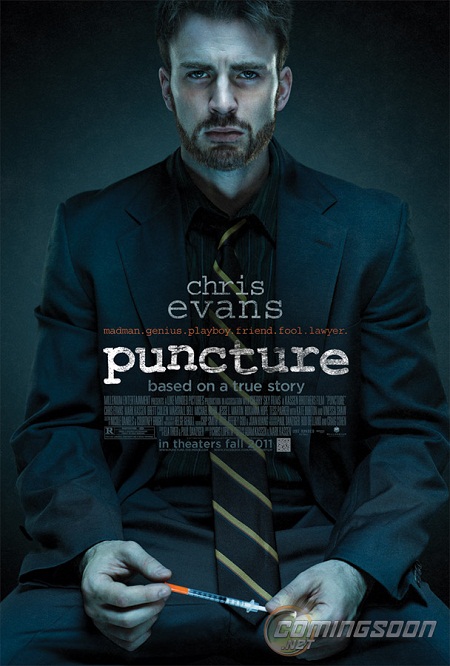
Brothers Adam and Mark Kassen co-produced and co-directed “Puncture,” the true story of an idealistic but drug-addicted young lawyer from Houston who took on the mammoth pharmaceutical  companies on behalf of a quirky inventor who came up with a simple and inexpensive new life-saving technology to prevent health care workers from being infected by used syringes.  Because the big companies did not own the retractable syringe technology, they would lose revenues, so they fought to keep it out of hospitals.  Chris Evans (“Captain America”) plays Mike Weiss, the young lawyer, and in addition to co-producing and co-directing, Mark Kassen plays his law partner Paul Danziger.  The cast also includes Jesse L. Martin (“Law & Order, ” “Rent”), Michael Biehn (“Terminator”), and Kate Burton (“Law & Order”).

I spoke to Adam and Mark about the movie and about why so many successful Hollywood teams are brothers.

This is such a powerful story.  What message do you want this movie to carry about the role of corporations in healthcare?

Mark: Adam and I are focused primarily on the movie’s mission and the more it can get out there we hope it will connect to a larger conversation.

Adam:  We’re not investigative reporters.  This is a film, not a documentary.  It is entertainment.  But we hope that it has a larger message.  We hope people will watch it as entertainment and then start a conversation afterwards.

There’s kind of a connection between your flawed hero, who is addicted to drugs, and the industry he takes on, which is addicted to money and power.

Mark: That’s a cool analogy.  It’s an addiction to money, an extra $40 billion that gives nothing back to the industry, growing itself at any cost.  And a drug addict will get high at any cost.  It’s a more fertile ground to an already-burgeoning problem.

Adam: These group purchasing organizations run by the health care industry started out with good intentions.  It was a more streamlined way to get the products to hospitals at the best price.  But that became, like almost everything else in the health care industry, guided by the profit motive.  It turned into the opposite, squeezing out products that doctors want and nurses want, but because of politics, money, and corporations they cannot get them.

You assembled a remarkable cast.  

Mark: Adam’s been trying to get me for a long time.  I had my mom do the negotiation.

Adam: He had so many demands, a big trailer…

Mark: Adam agreed to give me the part if I finally told him he was right.    Well, first and foremost, we had to get the right actor to play Mike.  We were introduced to Chris Evans by a mutual agent.  We had seen “Sunshine,” the Danny Boyle film, which he was great in.  And whatever he was in, he is always great.  We wanted somebody for that role who would have a sense of tragedy but not self-indulgent but dynamic, charismatic, exciting.

Adam: Like the real guy was.  Chris is this multi-layered actor and he knocked it out of the park.  We cast around him with really great actors.  Jesse L. Martin is a good friend of ours and did it to help us out and because he was excited about the material.  Kate Burton (who plays the Senator) came down for a day.

Mark: There are upsides and downsides to making a small movie like this.  Once we got Chris, we that means you have just this much money to get the movie made.  So, people say, “this guy plays a second lead on that TV show, so he’s worth this much money,” and we didn’t do that.  With our casting directors, we were able to get just good actors, the best we could.  Brett Cullen is actually from Houston.  The last scene in the movie, the camera shoots out the window, you can see the Cullen building.  In Houston we got so many great local actors.  We were surprised by how many people we could get from the area.

For a lawyer who appears in court, Mike was a very flamboyant dresser.

Adam: We talked to so many people who knew Mike, opposing counsel, judges, people he went to high school with and one of the most consistent through-lines beside his brilliance was the way he dressed, where he had them tailored, where he bought them.  There were all these stories about his suspenders and wild colored shirts and how he thought he was the Man!

It’s surprising how many brother teams there are in Hollywood today — the Coens, the Farrellys, the Wachowskis.  What is it about the brother relationship that works in film-making?

Adam: We’re used to being around each other.

Mark: In all honesty, if making a film is all about communication, you’re used to being able to communicate with each other on an intimate level and that gives you a good start.

Adam: There’s a lot of debate and conversation and exploration involved, in a good way, with the actors, the editors, the DP.   Being brothers, we’ve been debating for a long time, and if you are friends as brothers that means you have done it successfully.  Being on a film set is stressful at times, but no more stressful than doing the dishes together after dinner with your parents.  You’re used to debating in that high-stress environment.  And you know each other so well.  You recognize that look that’s been making you angry since you were 10 years old that someone else might not notice.  But it’s over very quickly as well, so arguments don’t resonate.  We have similar creative sensibilities and that really helps.  And we have that basic level of trust.


Related Tags:


Directors Interview
Interview: Claire LaZebnik of Epic Fail and Families and Other Non-Returnable Gifts

Interview: Claire LaZebnik of Epic Fail and Families and Other Non-Returnable Gifts

Posted on September 27, 2011 at 3:59 pm

Claire LaZebnik is the witty and wise author of two new books, both highly recommended.  Families and Other Nonreturnable Gifts (for adults) is the story of Keats, the “normal” child in an unconventional family with poetically-named siblings Hopkins (a brilliant doctor) and Milton (a reclusive computer geek) and divorcing parents who disapprove of her long-time boyfriend.  Epic Fail, for YA (young adult) readers, has the daughter of the new principal of a tony prep school meet the son of Hollywood stars in a Pride and Prejudice-style romantic comedy.  LaZebnik is as much fun to interview as she is to read and it was a treat to get her to answer my questions.

You are a big Jane Austen fan — which book is your favorite?  How has she influenced or inspired you?

My favorite Austen novel used to be Pride and Prejudice, because it’s the most unabashedly romantic of them all.   Darcy and Elizabeth spar so beautifully while they’re falling in love–the romantic tension is phenomenal.  I’ll never get tired of rereading it.  But at some point after college, I started to prefer Emma.  Emma is such a wonderfully flawed heroine. She’s conceited and overly-confident and a snob, but she’s also smart and beautiful and lovable.  And Mr. Knightley is . . . <happy, dreamy sigh because words can’t capture how I feel about him>  . . .  There’s just something about the way he’s guiding her and loving her and forgiving her all at the same time that I find even more romantic than the Elizabeth/Darcy sparring thing.  But I had to grow into that.

Austen’s inspiring because she was limited to writing about the world she knew, which was a very restricted world of parlors and teas, but she still managed to capture an entire universe of human behavior.

Also,  Austen wrote in her sister’s house, in the midst of chaos.  I do most of my writing downstairs, surrounded by the family and pets, in the midst of chaos.  If she didn’t complain, I’m not going to.  (Okay, that’s a lie.  I always complain.)

When you began Families and Other Nonreturnable Gifts, the story of upheavals in the life of an unconventional family, did it start with an image or a character or an incident?

With a contrast actually: I wanted to contrast a middle-aged mother who’s dating a bunch of different men with her young daughter who’s in a longterm relationship.  I like that they both play against people’s expectations.

Why do we all feel like outsiders in our own families at times?

When you’re a kid, you buy into your family’s mythology.  You believe that the way your family does things is the right and proper way to do them–maybe even the ONLY way to do them. Then you leave home, go to college, fall in love, get to know other people’s families, go into therapy . . . and you suddenly have a different perspective on your childhood.  You walk into your old home and realize that there was nothing universal about your upbringing, that it was specific to your family and that certain aspects of it probably could have been better.  And once you realize that, it can be strange and alienating.  You can go home again but you’ll never look at it quite the same way.

How do you have a first-person narrator tell a story so that the reader understands some things before she does?

A friend once told me that even though her boyfriend was difficult and jealous, she loved him and intended to marry him.  I could tell she was actually trying to gather the courage to break up with him.  Sometimes we telegraph our intentions before we even acknowledge them to ourselves.  And that’s what happens with my narrators sometimes–they manage to communicate to the reader their underlying emotions without stopping to examine them.

You have some vivid and sympathetic portrayals of characters with social interaction issues, not often seen in novels.  What does this add to the story?

I just think it’s realistic: I know lots of people who have mild agoraphobia or autism or depression, and there are times when these things can really interfere with forward momentum.  So I find that interesting to include in a novel, especially since how their family members deal with it–whether they’re supportive or enabling or dismissive–reveals a lot about those characters too.  And I think readers really root for someone who’s struggling to overcome any kind of inner paralysis.

Do you have a particular audience in mind when you write?

My editor, mostly!  I’ve had the same editor for my last four adult novels.  She’s wonderful–smart and receptive and kind–and I feel like if I can please her, I’m on the right track.  She’s also kind of the target audience for the book–she’s young,  and well-read.

Why does Keats, the “normal daughter,” remind you of Marilyn in the old Munsters TV show?

Cousin Marilyn was the odd man out in the Munsters, because everyone else was a monster and she was blond and pretty and human.  Keats, who’s competent and lucid and socially outgoing, feels like she’s the weird one when she spends time with her brilliant, quirky, incompetent relatives.  Normalcy is relative: out in the world, Keats is normal, but at home she’s the oddball.

How did you pick the three poets that inspired the names of the main character and her siblings?

That’s such a good question!  I didn’t even realize how much I was hoping someone would ask that until you did.  Yeats is my all time favorite poet, so I would have liked to have named my protagonist Yeats but that’s just TOO weird.  No one even knows how to pronounce it.  But Yeats makes me think of Keats . . . and that seemed much closer to a real name.  So she became Keats.  Hopkins wrote my favorite line of poetry, one that’s stuck with me for decades–“There lives the dearest freshness deep down things“–so I’m fond of him.  Plus, Hopkins sounded like a cool name to me.  And Milton is a real name, and also one of the greatest poets of all time, so he seemed like an obvious choice.

What has surprised you most about readers’ reactions to your books?

Their concern about characters I haven’t thought that much about.  I don’t want to ruin anything, but one character does get his heart broken in this novel, and several people emailed me to say, “I’m very worried about him–please promise me he’ll be okay.”  Someone even asked if he could get his own sequel. In all honesty, I hadn’t given him another thought once he was out of the picture . . .  but it’s kind of gratifying to know that readers feel that invested.

Your books are very funny — what makes you laugh?

Many things make me laugh, but my kids most of all.  Like, a few months ago we were all trying to figure out what movie we should go to and my husband and I wanted to see “127 Hours,” so we were describing it to the kids, and my 11-year-old son said, “I don’t think I should see that movie and I don’t think I should have to be the one to point that out.”  Every time I think of that, I start laughing again.  He was so right.  And it was such a great way to put it.

What was the first piece of writing you got paid for?  What did you do with the money?

Wow.  I’m not positive, but I think it was probably an essay I wrote for GQ magazine.  My sister was a magazine writer at the time and they asked her to do an “All About Adam” essay (I don’t know if they still have that feature–women writing about men) and she was too busy but she told them they should give me a shot at it.  So I did and they bought it and that was the beginning of my magazine career.  I think it was like a dollar a word, so a few hundred dollars, maybe?  I’m sad to say that I’ve never been one of those people who earmark earnings for something special.  I always stick checks in the bank and they just become part of my savings, although sometimes I will think, “Well, that last check paid for this” when I buy something indulgent.

What’s the best thing about writing for a YA audience?

The fan mail.  I get the most mind-blowingly wonderful emails from teenage girls.  They care deeply about the characters and really want to connect with me to discuss them.  And a lot of them are interested in a writing career, so I love having the chance to encourage that.   I answer every email I get.  If someone’s taken the time to write me, I’m going to let her know how much I appreciate it.

Your characters often use humor to connect with or deflect each other — how do you create the humor personality of each character?

My romantic leads tend to “find” each other through their similar senses of humor.  I often have the main characters tease each other in a way that other people in the book just can’t keep up with.  I’m not interested in snarky or nasty humor–there has to be a positive and playful energy to it.  And they have to know when it’s time to be serious.  Not everything should be a joke.

What is it about the Elizabeth/Darcy conflict that makes it so enduring and relatable?

I don’t know if I’d say it’s relatable so much as it’s a truly satisfying fantasy: I mean, the most sought-after bachelor in your social circle falls in love with you AGAINST HIS WILL.  He knows he shouldn’t, but he can’t help himself.  It’s the most romantic thing in the world!  And the reason he falls in love with her is that she’s so funny and smart.  Honestly, there are so many clunky romances these days where you never actually see the attraction, where the authors assume that having characters be rude to each other is the same as Elizabeth and Darcy sparring.  E and D are never RUDE.  They’re smart and witty and have good conversations, even before they fall in love.

How is high school like Austen’s insular communities?

There’s a clear hierarchy to both, one that might not be obvious to outsiders, but is very clear to anyone inside the community.  And those social divisions are almost impossible to cross or change–it’s very rare for someone in one group to fall in love with someone in another, and if it happens, it sends ripples throughout the entire community.  Plus everyone knows everyone else’s business–it’s virtually impossible to keep a secret!


Related Tags:


Books Interview Teenagers Tweens Writers
THE MOVIE MOM® is a registered trademark of Nell Minow. Use of the mark without express consent from Nell Minow constitutes trademark infringement and unfair competition in violation of federal and state laws. All material © Nell Minow 1995-2026, all rights reserved, and no use or republication is permitted without explicit permission. This site hosts Nell Minow’s Movie Mom® archive, with material that originally appeared on Yahoo! Movies, Beliefnet, and other sources. Much of her new material can be found at Rogerebert.com, Huffington Post, and WheretoWatch. Her books include The Movie Mom’s Guide to Family Movies and 101 Must-See Movie Moments, and she can be heard each week on radio stations across the country.

Website Designed by Max LaZebnik