
Tribute: Carrie Fisher

Tribute: Carrie Fisher

Posted on December 27, 2016 at 3:55 pm

Copyright Lucas Films 1980

We mourn the loss of Carrie Fisher, who has died of a heart attack at age 60.

Her first two movie roles were in films that have becomes icon of their eras: “Shampoo” and the original “Star Wars,” now known as “A New Hope.”  In both, she wore white. Other than that, they had little in common, introducing us to a performer with confidence and range.  She has said that George Lucas gave her little direction as she had to watch a green screen that would some day have an image of her planet being destroyed.  All he said was, “Look over there.” But, still a teenager, she instantly conveyed the fierce resolve that made Princess Leia a heroine to lift the hearts of boys and girls around the world and across the generations.  She even survived one of the worst hairstyles in the history of movies.

She also survived a Hollywood childhood of chaos in the public eye.  Her parents, Debbie Reynolds (who also became a movie superstar while still in her teens, when she made “Singin’ in the Rain”) and pop star Eddie Fisher were considered America’s sweethearts, until Fisher left Reynolds for the just-widowed Elizabeth Taylor (who would leave him for then-married Richard Burton).  Fisher explored her relationship with her mother and her recovery from drug abuse in Postcards from the Edge, first a novel and then a movie starring Meryl Streep and Shirley MacLaine, and her relationship with singer Paul Simon, including a brief marriage, in Surrender the Pink.

She was an uncredited script doctor for many films, including “The Empire Strikes Back.”

Copyright 1980 Lucas Film

If the heroine of a romantic comedy (or her sarcastic best friend) has a witty quip, more than likely that was written by Carrie Fisher. She reportedly sharpened up the dialog on “Sister Act,” “The Wedding Singer,” “Lethal Weapon 3,” and “Hook.”  Perhaps her most apt role was as the quippy best friend in Nora Ephron’s When Harry Met Sally. Slate has a lovely tribute to that role.

I was lucky enough to see her one-woman show, “Wishful Drinking,” based on her memoir. I loved the story she told about what happened when her mother found out she had dropped LSD. “So, she called Cary Grant,” Fisher said with a dry edge. “As one does.” And no one could bring down the house with one syllable the way she did in describing some of the people on her very complicated family tree. She would assign them their legal relationship and then pause for just a beat to add, “ish.”

Fisher was fearless about her failures and challenges, from her struggles with bi-polar disorder and drugs to personal upheaval. She was a devoted mother to her Billie Lourd, who is following in the family tradition by appearing on the television series “Scream Queens.”

Like fans everywhere, I sighed with happiness to see Han Solo and Leia embrace in “The Force Awakens” last year. And like fans everywhere, I wept to hear that she left us today. The Force was strong with that one. May her memory be a blessing.

Related Tags:


Actors Tribute
Hidden Figures

Hidden Figures

Posted on December 23, 2016 at 9:15 am

Copyright 20th Century Fox

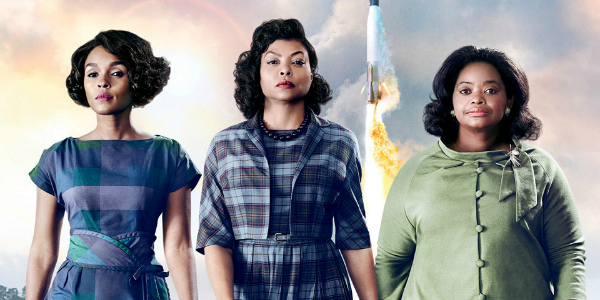
The sign on the office door said, “Colored Computers.” That was not a reference to IBM’s Big Blue or to a machine of any kind. In the early days of the space race at NASA, computers were people doing all of the complex, unprecedented math calculations by hand, and the “colored” computers were the African-American women who had more talent, more dedication, more integrity, despite less pay, less credit, and less resources than their colleagues. Twice marginalized, as women and as African-Americans, they were heroically dedicated, capable, and resilient. Their story, unknown until the book by Margot Lee Shetterly, is beautifully told in this heartwarming, inspiring film.

Katherine Johnson (Taraji P. Henson), Dorothy Vaughan (Octavia Spencer), and Mary Jackson (singer Janelle Monáe, “Moonlight”) are stopped by a highway patrolman on their way to their office at NASA. They get out of the car, expecting the worst. In his own way, the white patrolman expects the worst, too. This is Virginia, just a few years after the state shut down the entire school system to avoid complying with the Supreme Court’s decision in Brown v. Board of Education. This is the same era depicted in “Loving,” the true story of the couple who challenged Virginia’s laws prohibiting marriage for people who were not of the same race.

This was also the era of the space race. President John F. Kennedy famously said, “We choose to go to the moon. We choose to go to the moon in this decade and do the other things, not because they are easy, but because they are hard, because that goal will serve to organize and measure the best of our energies and skills, because that challenge is one that we are willing to accept, one we are unwilling to postpone, and one which we intend to win, and the others, too.” But there was another reason to go to the moon. The Soviet Union was ahead of us in space exploration, and beating them had huge symbolic, morale, and political value.

And that meant that something was more important than the deeply institutionalized racism and sexism of the era — ability. These women and their colleagues were simply too good to be overlooked. And to contribute all that they were able, that meant removing some obstacles and indignities. It was not until Johnson’s boss (Kevin Costner) exploded because she was not at her desk when he needed her that he learned she had to go a quarter of a mile to the “colored” bathroom in another building. And it was her vital importance to the project, not any commitment to inclusion or justice, that led him to insist on change. John Glenn (a likable performance by “Everybody Wants Some!!‘s Glen Powell) refused to get on the rocket ship that would make him the first person to orbit the earth until Johnson personally verified the calculations.

Henson, Spencer, and Janelle Monáe are clearly thrilled to have roles of such significance and depth and honor their characters with performances of wit and subtle charm. When Jackson has to go to court for the opportunity to take the evening classes at a segregated local high school that will qualify her for an engineering degree, when Vaughan decides to teach herself computer programming to make sure that the first-ever mainframe being installed at NASA does not make her work obsolete, when Johnson explains that it may be unprecedented to have a woman in the top-level meeting but it is also unprecedented to send a man to the moon, we see the power of their intellect and the steel in their souls. A light-hearted girl’s night shows us the support they gave each other and how much it meant to each of them.

Johnson, Jackson, and Vaughan plotted a course for NASA to put men into space. They also plotted a course for all of us to do things because they are hard, because they are important, because we can do better.

Parents should know that this movie includes extensive portrayal of the racial and gender prejudice of its time, along with smoking and social drinking and some language.

Family discussion: Why did the women in this film continue to be so loyal to a system that constantly disrespected them? Why did Dorothy Vaughan want to learn how to use the IBM machine? What do you think of her reply to Vivian Michael?

If you like this, try: “The Right Stuff” and “The Dish”

Related Tags:


Based on a true story Drama Gender and Diversity Race and Diversity
THE MOVIE MOM® is a registered trademark of Nell Minow. Use of the mark without express consent from Nell Minow constitutes trademark infringement and unfair competition in violation of federal and state laws. All material © Nell Minow 1995-2026, all rights reserved, and no use or republication is permitted without explicit permission. This site hosts Nell Minow’s Movie Mom® archive, with material that originally appeared on Yahoo! Movies, Beliefnet, and other sources. Much of her new material can be found at Rogerebert.com, Huffington Post, and WheretoWatch. Her books include The Movie Mom’s Guide to Family Movies and 101 Must-See Movie Moments, and she can be heard each week on radio stations across the country.

Website Designed by Max LaZebnik