There are always these first and only stories, where it’s like, the first black person to do this, or the first woman to do this, and we need those stores. They are super inspirational. But the thing that’s so exciting to me about this is that none of these women had to be the first or the only. Like the first white computer pool was five women, the first black computer pool was five women. Over time, each of those pools grew tremendously to prove over and over that women are very adaptive and have the right temperament, the right skill set, the right intellectual firepower for this work. That’s truly confidence-inspiring, because you don’t have to face the objections of like, “Yeah, well, there’s just one woman. We know that most women are like this.” It’s like, No, no, no. This is a revolution. The technological revolution that was the space race was carried out with two women and their mathematical talents, because of other women.
Anna Fricks stars in Wish for Christmas, a sweet Christian faith story about a high school girl who impulsively wishes that her parents were not so religious, mostly so she can go to a school dance on Christmas Eve. When her wish comes true, she is happy at first but then misses the compassion and warmth of her parents’ faith. Her mom and dad are played by the gifted comic actors Leigh-Allyn Baker (best known from “Will and Grace”) and Joey Lawrence (“Blossom”).
It was a pleasure to speak to Ms. Fricks about being in the film.
How did you first get involved with the movie?
I had a friend who was a director and she knew Alexandra Boylan, the co-writer and co-producer. She reached out to me and told me that she had these friends that were casting a movie and if I was interested then she could try to get me in the room for it. So, it kind of just fell into place. I was the first person to audition for the role of Anna and I went in and it just kind of fit. It was really awesome and I had a few more callbacks after that and I went to go meet them again to do a few more scenes and then I got the phone call.
What were they were looking for and how did they describe the character to you?
She was a mean girl. She is pretty straightforward like that and she’s very selfish, very conceited, and self-absorbed but she also had a big heart. That really helps me connect to the character, knowing that she still loves people even though she is very caught up in her own world and her own things. That’s what carries throughout the whole film. If you really pay attention you can see that even when she is not very nice to anybody she still treats people she cares about with love in her own way. So that to me was important to get across in my audition, her humanity. Mean people aren’t just mean people, they still have their loves and their joys. That was really important for me to show in her from the beginning. And as far as the change went and the way that she progresses throughout the movie, that was important as well. It’s easy to make it seem unreal. Because it’s a wish movie, you’re kind of like, “Oh that doesn’t really happen,” but it does have a little different twist because of the faith aspect of it. So making it real, making it seem really real was difficult but I really enjoyed that.
I particularly enjoy the interaction between your character and her parents, both before the wish and after the wish.
Yes, it was really fun, the first few days on set it was just me. And then they came in and it was totally different, not what I was expected because they just brought a new life to the set. There was never a dull moment. It was really fun. The first scene we did together was the scene at the breakfast table. It was interesting to just have that energy, and talking and laughing before the shooting and then they said “Action” and in an instant going into the character, but also including improv. We all added our own things and words and stuff and so that was really fun too. It made it a lot more loose and comfortable. So, they made it a lot easier to get work done.
Your parents are played by such experienced and talented comic actors. What would you say that you learned about acting from working with them?
Leigh-Allyn really helped me a lot just because she is very comedic and improvs a lot. I’m more of a traditional actress but working with her really made me love comedy and the improv aspect of it. So, talking with her about that and working with her on that just made me see the beauty of adding your own thing to the lines and just kind of having your own take on things, so that was really cool. It’s always inspiring to work with other actors anytime on any set and so when they’re really that good it’s absolutely awesome and I can walk away from that learning so much.
One thing I think that anybody who sees the movie can identify with is the stress between a teenage girl and her parents where she wants to do whatever she wants and they want to impose rules on it. Was that something that you could draw from your own life or people you observed around you?
Yes, I could totally draw from my own life. It was very easy to relate to that because I’ve been there, not as much anymore now that I’m older but when I was a preteen and a young teenager it was difficult. I grew up in a Christian home so it was very much that way when my friends could do things that I couldn’t and it just didn’t make sense to me. Now looking back, I think, “Thank goodness that they were like that because I would be a completely different person.” So, it’s really a “be careful what you wish for” type of situation that I can totally relate to.
When did you first know that you wanted to act?
The first time I ever did anything with acting, I was three years old and I somehow still remember being on that stage and loving it. So, it’s kind of crazy because I have been acting my whole life. I’ve always loved it. I’ve always wanted to do it. So when I was younger I don’t think I really knew what it meant to be an actress and to have a manager and agent. So my mom actually told me when I was younger, “Okay, we’ll wait until you’re about 16 and then, if you’re still serious about it, if you still want to, then we’ll pursue it.” So I took some classes in Atlanta, which is where I am from, all through my preteen years. I stayed serious about it, I learned about it, took classes, everything I could do and then when I was 16 I said, “Hey mom, you remember that promise you made me? I’m still interested. I want to do it.” So, that’s when I started pursuing it seriously, so sort of all my life but it definitely took some time to really start making it a career.
What’s the best advice you ever got about acting?
Just to make sure that you really love it because it’s a really difficult business to be in. Hollywood is a difficult place and the industry is kind of crazy at times. So make sure that you love it and make sure that it’s what you think you’re supposed to do. I think the only way that things have worked out for me is truly because of Jesus and following him because I’m striving to do it for His glory. So, I don’t know how else to explain that but I think if it’s truly what you think you should be doing then you should actually pursue it with all your heart.
Do you have a favorite Bible verse?
I do, Jeremiah 29:11 For I know the plans I have for you,” declares the Lord, “plans to prosper you and not to harm you, plans to give you hope and a future.”
And Psalm 37:4, it is “Delight yourself in the Lord and he will give you the desires of your heart.” In anything you do, delight yourself in the Lord and the desires of your heart will be His and not your own. So, He’ll make your heart full of His desires. So, that was really important for me to understand going into acting which was that this might be something I want but it’s also something that He has for me.
And you hope in your acting to exemplify some of the principles that are important to you?
Absolutely. I hope it will go far but for now I’ll just give Him the glory and I hope I can really be a light in the darkness that is Hollywood or on sets to be an example because you are actually going into people’s homes when you’re on their television screens or their computer screen. It’s like you’re a part of them for a second. So, I think it’s really good to be a good example for them and important as a Christian in this industry to really be that light and stay in Christ.
I am proud to be a member of the Alliance of Women Film Journalists and proud of our awards for 2016. We give out traditional awards for the best of what we saw this year and also the EDA awards for the best and worst treatment of female filmmakers and characters.
Copyright 2016 Plan B Entertainment
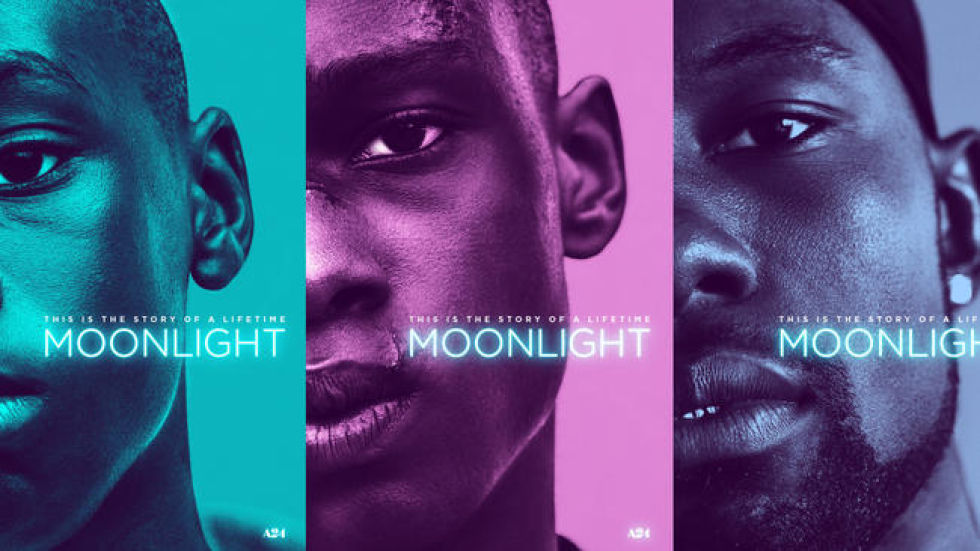
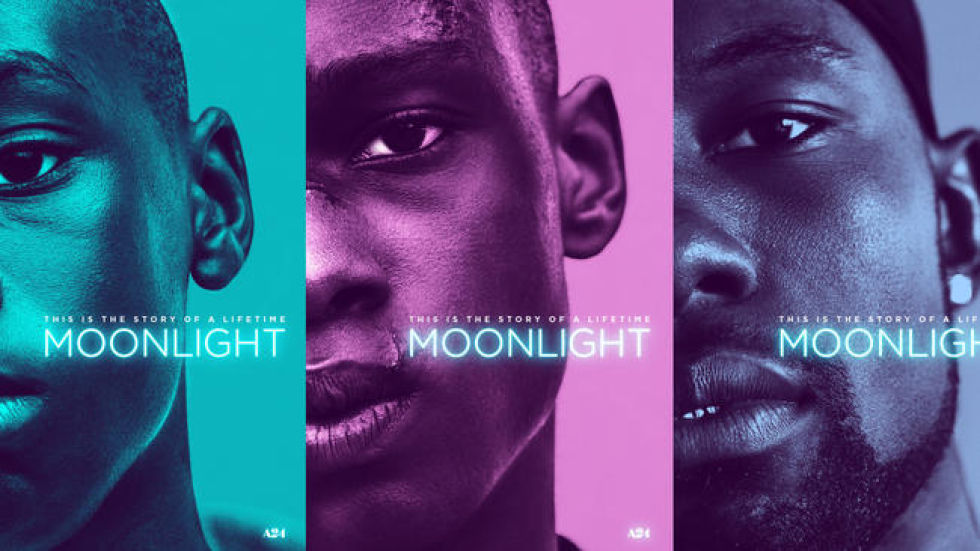
Best Film: Moonlight
Best Director: Barry Jenkins – Moonlight
Best Screenplay, Original: Manchester by the Sea – Kenneth Lonergan
Best Screenplay, Adapted: Moonlight – Barry Jenkins
Best Documentary: 13th – Ava DuVernay
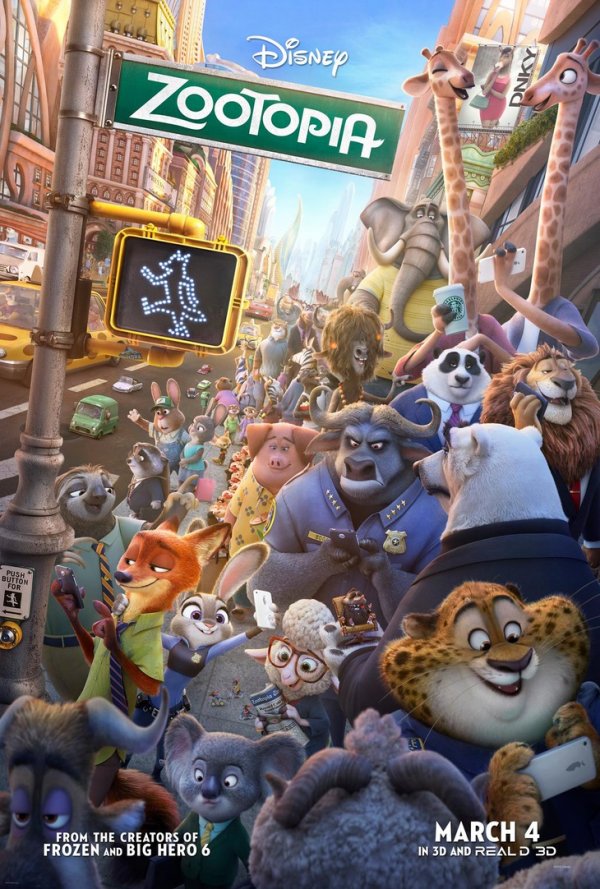
Best Animated Film: Zootopia – Byron Howard, Rich Moore, Jared Bush
Best Actress: Ruth Negga – Loving
Best Actress in a Supporting Role: Viola Davis – Fences
Best Actor: Casey Affleck – Manchester By The Sea
Best Actor in a Supporting Role: Mahershala Ali – Moonlight
Best Ensemble Cast – Casting Director: Moonlight – Yesi Ramirez
Best Cinematography: Moonlight – James Laxton
Best Editing: Moonlight – Joi McMillon and Nat Sanders
Best Non-English-Language Film: The Handmaiden – Park Chan-Wook
Copyright 2016 Disney
EDA FEMALE FOCUS AWARDS
These awards honor WOMEN only.
Best Woman Director: Ava DuVernay -13th
Best Woman Screenwriter: Kelly Reinhardt – Certain Women
Best Animated Female (tie):
Judy in Zootopia – Ginnifer Goodwin
Moana in Moana – Auli’i Cravalho
Best Breakthrough Performance: Ruth Negga – Loving
Outstanding Achievement by A Woman in The Film Industry:
Ava DuVernay – For 13th and raising awareness about the need for diversity and gender equality in Hollywood
EDA SPECIAL MENTION AWARDS
Actress Defying Age and Ageism (tie):
Annette Bening – 20th Century Women
Isabelle Huppert – Elle and Things to Come
Most Egregious Age Difference Between The Lead and The Love Interest Award : Rules Don’t Apply – Warren Beatty (b. 1937) and Lily Collins (b. 1989)
Actress Most in Need Of A New Agent: Jennifer Aniston – Mother’s Day and Office Christmas Party
Bravest Performance: Isabelle Huppert – Elle
Remake or Sequel That Shouldn’t have been Made: Ben Hur
AWFJ Hall of Shame Award: Sharon Maguire and Renee Zellwegger for Bridget Jones’s Baby
ABOUT THE ALLIANCE OF WOMEN FILM JOURNALISTS: AWFJ, a not-for-profit corporation, is an international association of professional female movie critics, reporters and feature writers working in print, broadcast and online media, dedicated to raising the volume on women’s voices in the film community by broadening opportunities for women who write about film and supporting films by and about women – both in front of and behind the cameras – through intra-group promotional activities, outreach programs and by presenting EDA awards in recognition of outstanding accomplishments (the best and worst) by and about women in the movies.
ABOUT THE EDA AWARDS: The AWFJ presents EDA Awards to honor women’s achievements in front of and behind the cameras. In addition to the annual end of the year awards, AWFJ presents EDA Awards for Best Female-Directed Films at select film festivals,including IDFA, Whistler Film Festival, DOXA. Edinburgh Film Festival. St. Louis International Film Festival and others. The EDAs are named in honor of AWFJ founder Jennifer Merin’s mother, Eda Reiss Merin, a stage, film and screen actress whose career spanned more than 60 years. A dedicated foot soldier in the industry, Eda was one of the founders of AFTRA and a long standing member of AMPAS.
Interview: Pharrell Williams on the Music of “Hidden Figures”
Posted on December 21, 2016 at 3:37 pm
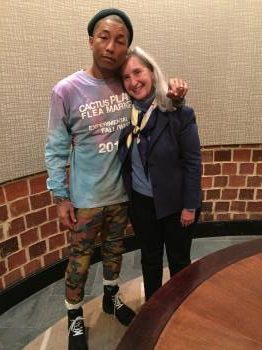
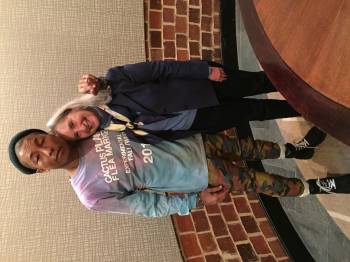
“Hidden Figures,” the true story of African-American women mathematicians at NASA during the 1960’s is one of the most uplifting films of the year. Its score is composed by by Hollywood legend Hans Zimmer with Benjamin Wallfisch and the best pop producer in the business and one of the most popular performers as well, Pharrell Williams, who told me “I’m lucky to be a part of this film.” Even before he got involved, Williams had begun to experiment with some 60’s-inspired compositions. “I grew up around that kind of music because I was born 11 years later. So I used to hear it around the house, my parents played it and at my grandmother’s house too, I used to hear the music. That’s a very crazy time, but it felt good and it was all music that evoked, music that came from the soul and that’s why they call it soul music. It was like you could just feel the core of where someone was coming from.” He used a mix of old and new instruments to create the sound.
Copyright 2016 Nell Minow
Williams has worked with a wide range of musicians and performers. “Collaborating allows me to channel and learn new ways of working, new ways of thinking, new directions. This is all an education. Life is an education, so every time I collaborate with somebody it’s like a crash course into the way that they work, into this new moment that we are sharing and into uncharted territories.”
He told me what he learned from Zimmer and Wallfisch about writing music to complement a story. “Hans always likes to find the poetry in a script and then he likes to parallel it with the score. And Ben is like a seeker of tenderness. I like to stoke the fires and try and stimulate something. So it was like this really interesting trio in the way that we worked. It was a whole lot of fun. And ultimately we came to the conclusion that when you think about scores there’s always like the default go to, Euro/Anglo angle when composing a score so we thought well, these women were not Euro and they were not Anglo. They were African-American, they were women and it was the 1960s, so those were our coordinates. That’s what we locked in on and that’s what we tried to chase.” He said this might be the music they listened to as they were cooking and driving to work. “This music was meant to be the backdrop to the most important dialogue and the most important stories in its universe, in its world and so the music was never supposed to shine brighter than what was going on in the film because that was the most important part.” He said that does not mean creating the melodies differently but “you’ll know when it’s doing too much. I tried to pull the fire out of something first. Like in other words if you ask me do that then I have to go to that dial I have to dive deep on the four dimensional level and try to well up as much fire as I can and then I dial it down once I’ve got it.”
Mission: Jimmy Stewart and the Fight for Europe, by Robert Matzen
Posted on December 21, 2016 at 2:43 pm
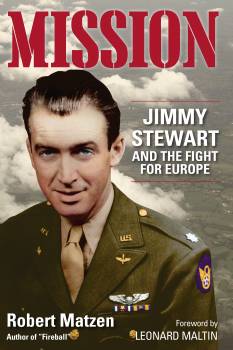
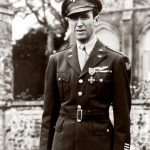
Copyright Paladin 2016Mission: Jimmy Stewart and the Fight for Europe by Robert Matzen, tells the story of the extraordinary war service of the man we all know as the genial actor who always seemed to exemplify American values. He seldom spoke about his combat missions, so the stories of his war service in this book are new and the impact that experience had are critical in understanding his body of work. the first in-depth look at Stewart’s life as a Squadron Commander in the skies over Germany, and, his return to Hollywood the changed man who embarked on production of America’s most beloved holiday classic, reflecting his more sober, complex, but still hopeful view of the world, “It’s a Wonderful Life.”
Matzen sifted through thousands of Air Force combat reports and the Stewart personnel files; interviewed surviving aviators who flew with Stewart; visited the James Stewart Papers at Brigham Young University; flew in the cockpits of the B-17 Flying Fortress and B-24 Liberator; and walked the earth of air bases in England used by Stewart in his combat missions of 1943-45. If he had not been an Oscar-winning actor, we would still recognize him as a war hero.
The introduction by film scholar Leonard Maltin notes:
It’s a Wonderful Life was a challenging project for him and his director, Frank Capra. Both of them had been reshaped by the war and were understandably nervous about resuming their careers. It is fitting that Matzen bookends his story by describing Stewart’s return to the world of make-believe that this job represented in 1946.
This is not to say that he was a one-trick pony in the 1930s and early 40s. His earnestness was his stock in trade, but he reveals a comedic cynicism in The Shop Around the Corner and an unexpected sophistication in The Philadelphia Story, which earned him his only Academy Award.
But It’s a Wonderful Life calls on him to express a range of emotions he had never tapped into before. After all, here is a man so overcome by despair and the feeling of failure that he tries to commit suicide. The scene in which he breaks down while sitting at Nick’s Bar was so draining that the actor begged his director not to make him do it a second time. After the first take, Capra wanted to do another and have his camera push in toward Stewart; he accomplished the effect with a laboratory blowup instead.
This meticulously researched book provides important insights into one of the finest actors — and, as we now know, one of the finest combat pilots, in history.