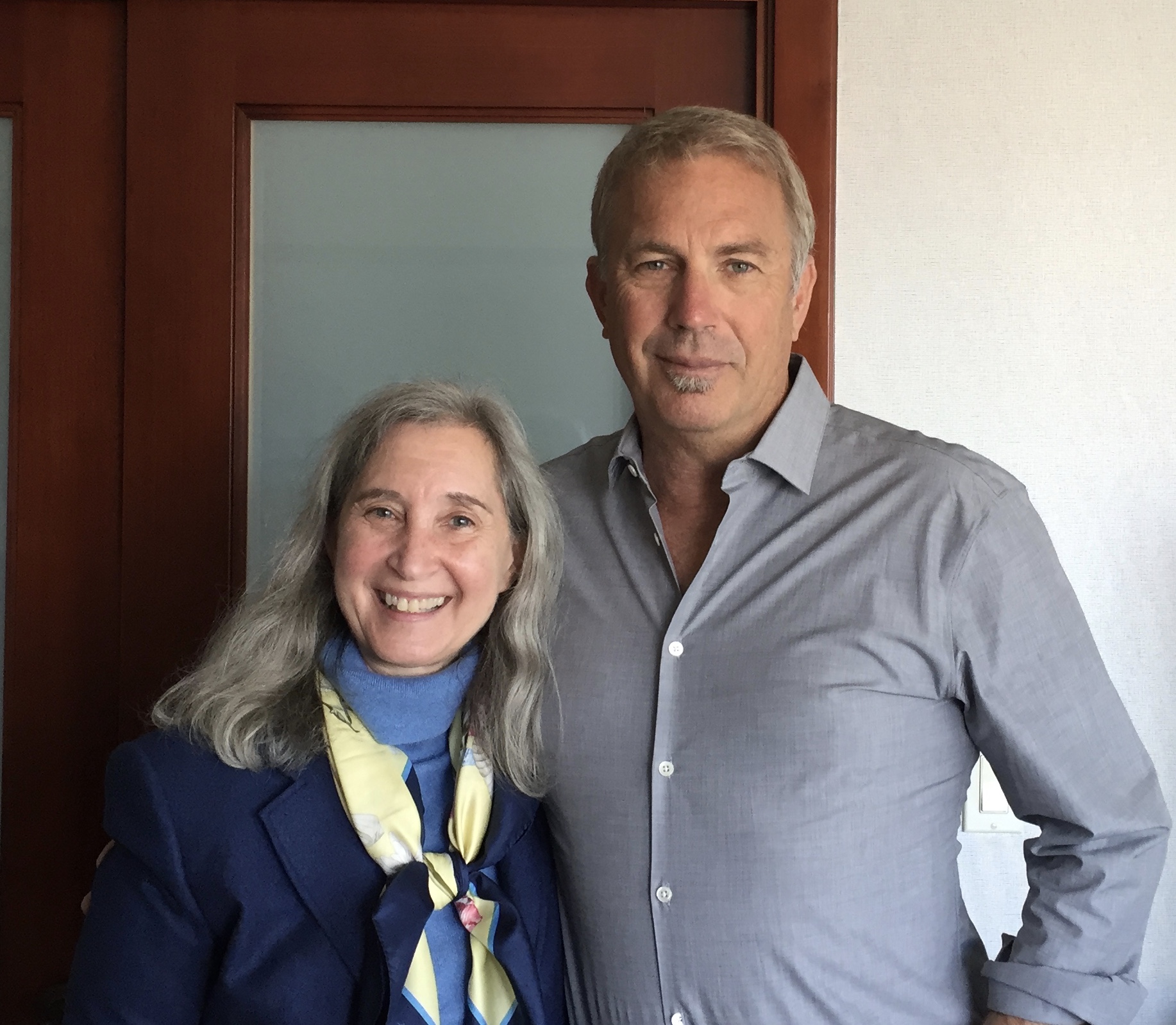
Copyright 2016 Nell MinowKevin Costner almost turned down his role in “Hidden Figures.” Based on the remarkable true story of African-American women mathematicians at NASA in the 1960’s, it is an inspiring, uplifting story of the triumph of intelligence, hard work, dedication, and integrity, despite the powerful obstacles they faced as women of color. But the supervisor character played by Costner was the weakest part of the original script. “My character was one they didn’t have the rights to. So he really was an amalgamation of three people and it read like that. I almost didn’t do the movie because the character didn’t make a lot of sense to me, his contributions weren’t enough to prop up the girls. It was just kind of moving from room to room and saying things that were very contradictory. So when I approached the director about that I said, ‘Look, I like the movie, I think the girls are written beautifully. It’s not an MO of mine to want to increase my part or do whatever but there’s something very schizophrenic about this, and Theodore Melfi said, ‘Well you got me.’ and I said, ‘Okay, explain,’ and he said, ‘I couldn’t get the rights to that character, I spend the least amount of time with him and he is not one person. I know, it reads like three.’ And so I said, “That character doesn’t survive in this screenplay that well and he is also not propping other people up because he is saying some inconsistent things. He is giving some mixed signals. So we don’t have to make him better, we don’t have to make him bigger. We have to make them real.'”
He researched the era to understand how limited the technology was. The film shows the first mainframe computer being installed at NASA at a time when “computer” was the term assigned to the women who performed complex calculations by hand. “That was a first click, it was interesting to see that. It was a very crude time. We tend to think of it as very sophisticated, but my children have some toys at home that are more sophisticated than all the technology they had in that room.”
Even though the technology was very limited, Costner related to the role of a man supervising engineers and mathematicians. “I have technologies that I have supported and own and funded, so I deal with scientists and engineers. So I know what it is like to prop them up so that they can do their best work. I know their mindset and I know that they are not always possessed of managerial skills. They’re very individual and they are very creative. I think of them as artists but they have to be managed. But I can’t talk their language because once I quit doing percentages I was done with math.”
The haircut and the clothing helped him imagine the past, but some elements of the story are timeless. “There some things that are constant when it comes to behavior, when it comes to people who are insecure, who are selfish, who can’t give credit. That kind of person has emerged throughout time, the one that’s insecure, so the men are somehow not allowing the cream of the crop to have a chance. The best are not getting through the eye of the needle because of insecurity, not necessarily racism. There’s a big difference but the reality is, that’s a very human quality. So that existed in the 60’s and racism exists now, too. We can be very pleased with looking back and being happy that the story is told and how absurd it seems that woman had to be off-campus so to speak, how absurd to see that they had to be divided. Then the separate bathroom, the separate coffee pot and things like that. I hope people are feeling how absurd it was. I hope they are feeling a sense of shame because every time they do that means we have a chance to go forward. When they walk out of the theater they just have to hold up a mirror to where we are at today and we can still be found wanting in a very severe way. Ask yourself and then answer honestly. We have come a long way but there are other areas where we’ve just not. We have not evolved enough. There are more evolved people now than ever. There are more people that don’t want to accept racism, don’t want it to be here. There are more people that want to protect the planet now than ever. But the noise of the people that are not thinking that way is just louder. There are more of us than ever but they are louder than ever and it’s disappointing that people can’t have a level of empathy.”
Even with all of his experience and honors, Costner finds something new in every project. “I am still learning. I think I’m a better actor than I was three years ago because I tried.”
Thanks to Rogerebert.com for including my tribute to Viola Davis in the annual round-up of especially memorable performances. Many of these performances were in film that are small-budget or genre and thus are usually overlooked when it comes to awards. Each of the write-ups is a gem. Be sure to check out Angelica Jade Bastién on Natalie Portman, Sheila O’Malley on Trevante Rhodes, Simon Abrams on Stephen Lang, Alan Zilberman on Joel Edgerton, Christy Lemire on Lily Gladstone, Odie Henderson on Hugh Grant, Nick Allen on Tika Sumpter, Noah Gittell on Sarah Paulson, Brian Tallerico on Adam Driver, Sean Mulvihill on Alden Ehrenreich, Scout Tafoya on Gabriel Byrne, and Matt Zoller Seitz on Susan Sarandon.
When a movie is called “Sing” and it centers on an “American Idol”-type amateur singing competition — with animal characters — it presents something of a challenge for its composer, who has to figure out a way to tie together a wildly and often hilariously disparate bunch of songs and singers. So it was a lot of fun to talk to composer Joby Talbot about how he managed to create a lively and engaging score that meshed with a bunch of iconic tunes from many different genres.
“The film is directed and written by my old friend Garth Jennings,” he told me. “I wrote the music for both of his other films, Hitchhiker’s Guide to the Galaxy and Son of Rambow, and when he asked me to do it I completely leapt to the chance to work with him and with Illumination, one of the absolute greats in this golden days of animation that we’re living through at the moment. I love “Despicable Me’ and ‘Lorax,’ and all those other movies they have made. Garth explained what it was and he said that they made the decision early on they were going to keep the whole score and song elements quite separate. They do overlap occasionally but Harvey Mason Jr. and his team were in charge of the songs and I was in charge of the score. We realized very early on that the score was going to have a lot of work to do. It’s really important that in this film it is necessarily broken up by some numbers but there’s something that’s really a central kernel, and impetus of the film that really takes you through it. The score really helps you leap between the different storylines or the different characters but most importantly really helps you identify with the characters, helps gets across their kind of emotional journey and who they are and helps you really care for them and fall in love with them. That’s what I was setting out to do with the music. The music cues in the score, even though sometimes they are quite short when they fall in between songs just taking you from one to another, that doesn’t mean they are small or not important. They’re doing so much work all the time. The themes being developed and a whole number of different emotions being thrown at you — that is the work of the score, so it’s actually a huge challenge but I really enjoyed it.”
Talbot met the director in the 90’s, when he was playing in a rock band and Jennings was doing music videos. “I used to play in a band called Divine Comedy way in the 90’s in England and he was one half of Hammer and Tongs who made their name doing promo videos for pop songs. He’s one of the really famous directors in the golden days of the pop videos back in the day when there were enormous budgets and MTV ruled the world. Garth was one of the main guys and we met through our mutual friend Nigel Godrich, the producer of Radiohead and Beck, he’s got great, amazing talent, and Garth was directing actually a commercial for British telecom, the big telecommunications company in Britain and it was supposed to be like a sort of 90 second mini disaster movie with all kinds of objects falling out of the sky. Nigel suggested me for the music and although I hadn’t met Garth I actually knew his wife quite well. She had been in charge of the clothes we wore on a particular pop video that we did. Copyright 2016 IlluminationAnd we met and instantly we got on really, really well. Garth had never worked with a composer actually scoring in any of the films he had made and I felt incredibly lucky to be the guy who got that gig because and his approach as a director is inspired by people like Billy Wilder. He likes that kind of old-school moviemaking and he was adamant he wanted an orchestral score and he wanted it to function in a way those great orchestral scores of yesteryear worked. With my background in classical music that absolutely chimed for me and we just hit it off and never looked back really. Working with him is always a complete joy. I have a couple of collaborators in different fields who I really, really love working with and Garth is one of the best. He such a thrill to work with. We just get each other; it’s great.”
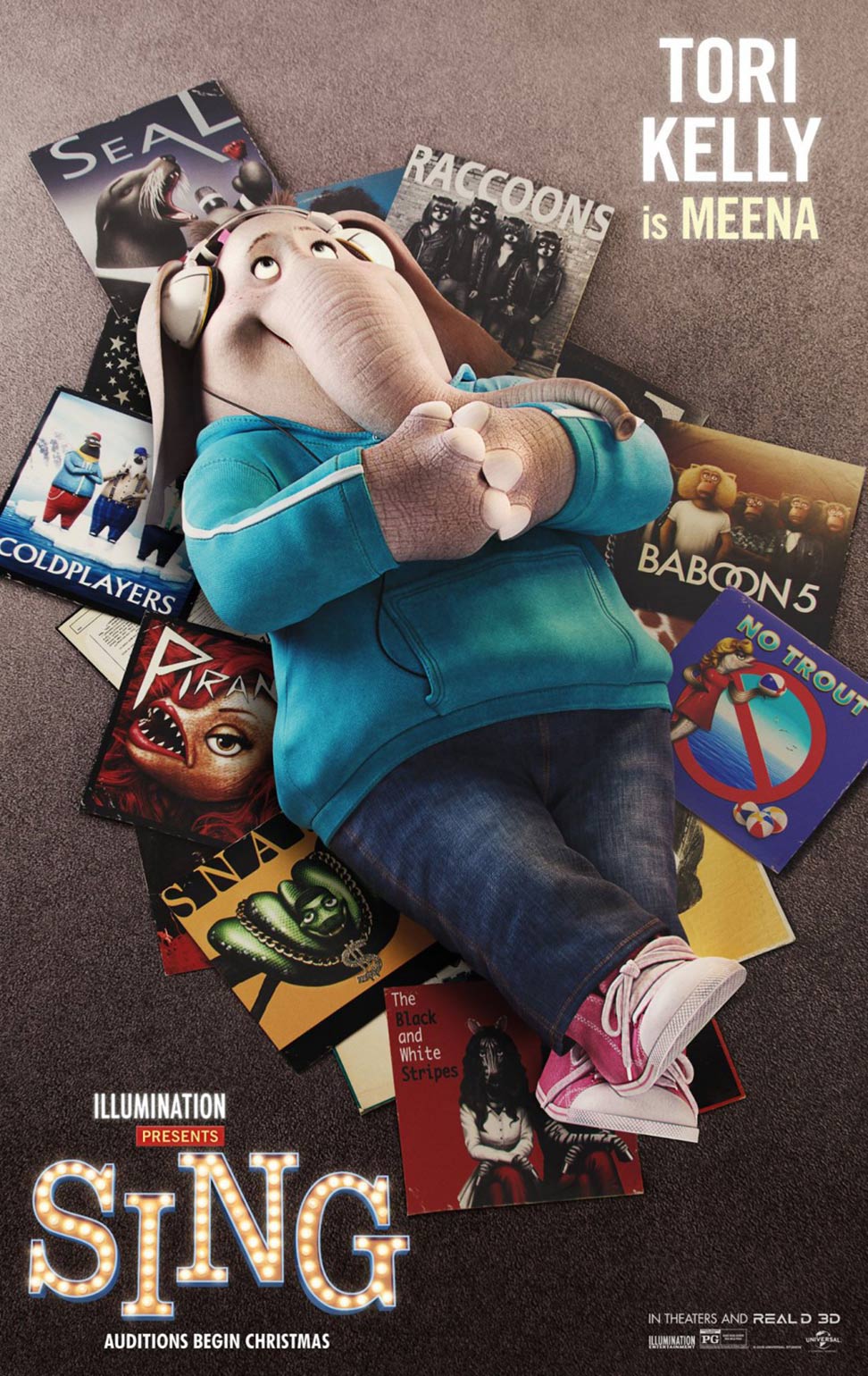
This film has animal characters that include a pig who is a housewife and mother, a shy teenage elephant, and the ape son of a crime boss. There are dramatic incidents which could be quite intense in another kind of film like a robbery, a parent in prison, and a fire. Talbot spoke about finding a way to musically reassure people that it’s exciting not too tense or scary. “There was one cue where they go to the visiting room at the prison and they were aware that that might be rather scary and alarming sequence for a little kids, so that was the one cue where they said, ‘If you could try and reassure us with the music rather than amping up the scariness but everything else, that would be great.’ I just was going with my feeling as to what the emotion of the scene was meant to be. The big robbery sequences were really kind of full contemporary action. So we brought in some really fantastic guitar and drum and bass players and overlaid it with big, bombastic orchestra. But those sequences don’t last that long, so you are just like catapulted into that world and then you are spat out the other end and you get on with the rest of the film. One thing I’ve learned pretty quickly, there was no putting any kind of intro into anything, it is just like, blam! We’re into the cue, here we go. The film actually lives or dies on whether or not you believe in these characters, believe in their motivations and care what happens to them and really root for them. The music has a huge role to play in that. For example, Meena the elephant is so paralyzed with shyness. It isn’t until later in the film that she sings and so the music really has to tell you what she’s failing to tell the world until finally of course in the end she has the opportunity to tell the world that she’s absolutely great. Tori Kelly has amazing vocal power. She’s incredible.”
The movie has a sensational collection of great songs, from “My Way” to “Shake It Off” to “Baby Got Back” and even “Bad Romance.” I was able to persuade Talbot to confess which is his favorite: “I am a big Steve Wonder fan, so ‘Don’t Worry ‘Bout a Thing.” But he adds, “The things that’s really nice about it is that you might go there knowing full well that you don’t like some song or kind of music and then you find yourself with a big smile on your face tapping your foot.”
Featuring almost 1000 images and over 350 pages, The Art of Jay Ward Productions provides the ultimate overview of the Jay Ward studio from its early inception through its many fondly remembered cartoon shows like Rocky and Bullwinkle, Dudley Do-right, Fractured Fairy Tales, George of the Jungle and Super Chicken, plus animated commercials for products like Cap’n Crunch and Quisp & Quake.
We mourn the loss of one of the 20th century’s most glamorous figures, Zsa Zsa Gabor, who went from teenage Hungarian beauty queen to much-married movie star and died today at age 99.
Long before social media and personal brands, she was a master of self-promotion, including perpetuating and mocking her own image. She said, “I am a marvelous housekeeper. Every time I leave a man I keep his house.” Her nine husbands included hotel magnate Conrad Hilton, actor George Sanders, and the one who survives her, Frédéric Prinz von Anhalt, who paid a princess to adopt him when he was in his 30’s so he could (arguably) gain a title and who claimed to be the father of Anna Nicole Smith’s child (he was not). He was more than 20 years her junior.
In later years, her sister Eva Gabor was better known because she starred in the popular television series “Green Acres.” But Zsa Zsa had a lead role in “Moulin Rouge,” directed by John Huston and also appeared in “Gigi” as the subject of the song, “She’s Not Thinking of Me.”