Interview: Lauren Miler Rogen on “Like Father”

Interview: Lauren Miler Rogen on “Like Father”

Posted on August 17, 2018 at 8:54 am

Copyright 2018 Netflix
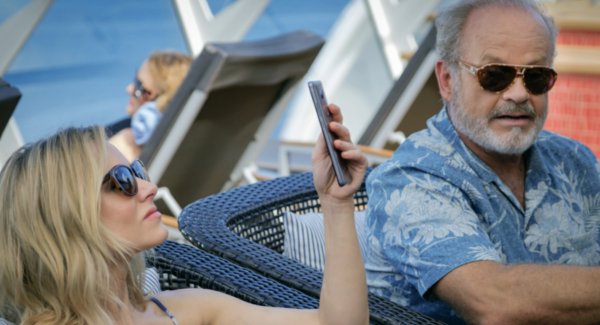
Writer/director Lauren Miller Rogen crafts stories about women who have everything, or think they do, just so she can take it all away from them in the first ten minutes of the movie and see what happens.

Rogen co-wrote “For a Good Time Call…,” in which she also starred as a determined, organized, young woman who thinks she has everything figured out until she gets dumped by her fiancé. “Like Father” has a similar premise, only more publicly humiliating, with Rachel (Kristen Bell) getting dumped in the middle of the wedding ceremony and then ending up taking her estranged father (Kelsey Grammar) on her honeymoon cruise.

In an interview, Rogen talked about the challenges of filming on a real cruise ship and the pleasures of directing her husband, Seth Rogen, who plays a fellow passenger.

I understand that you did not have quite as smooth sailing as the characters in the movie.

No we did not have smooth sailing. When we were shooting the movie we ran up against Hurricane Irma and had to change some of our plans. We had intended on shooting on the ship for a full two weeks. We were supposed to go on a Saturday and Irma hit on Sunday so the ship couldn’t come back into the port. So we ended up at a hotel at Disney World for six nights and then eventually we got on the ship and things went better from there.

Once you did get on, what was it like to film on a cruise ship with all the crew and passengers?

Making a movie is a challenge no matter where you are, whether you’re on a cruise ship or on a soundstage, but we had our own set of things we needed to overcome. Yes, it was a working cruise ship, so there were five thousand people taking a vacation all around us. That was both great for the atmosphere of the film but also sometimes people are like, “You’re ruining my trip.” It was nice that people wanted to be extras and they thought it was cool and they wanted to watch.

Royal Caribbean were incredible partners to us. They did not pay us; it’s not a commercial for Royal Caribbean, we paid them. And because of Hurricane Irma, we actually didn’t have any days off on the cruise ship, so we worked the whole time which was crazy. You’re in the middle of the ocean so you can’t run off to the store if you don’t have something. We were shooting the scene that takes place at night on the deck and there was so much wind we couldn’t shoot and thank God Captain Johnny, who is so amazing, stopped the ship for us for two hours so we could shoot our scene.

There were those adventures but at the same time in the middle of the ocean it was beautiful. Some of those shots we had with the sunshine were amazing and it is such a special crazy thing to be able to be in the actual setting of where your story takes place and not on a soundstage. That’s a real cabin, people were in the hallway, we were on the ocean; what a cool thing to be able to be so authentic.

From the perspective of first of your characters and then of the crew, what are the advantages are of isolating you from everything else in the world?

That was in the setup as the story was originally pitched to me by Anders Bard, who was one of the producers on the movie and also is just an amazing human being. If they had just gone to an all-inclusive resort they could just leave, so they had to be trapped somewhere in order to face the depth of their issues and then make the decision to stay. Being trapped in the middle of the ocean they can’t go anywhere. They have to face each other.

And honestly any movie is like summer camp because your crew is all together for twelve to thirteen hours per day. You are tired, you’re happy, you’re angry, you’re sad, you’re hungry, you are smelly. And it is an adventure you share in a very intense way. We shot in New York for two weeks, then we came down to Florida and we were stuck in Orlando together for six days, almost quarantined in Orlando and then on a cruise ship for twelve days, and then we moved to Jamaica together, so it was really quite an adventure. We bonded so much. We did a sort of cast and crew screening last week just to see everyone and watch the movie in a theater and it was so nice. There were many relationships that bloomed; I think three relationships came from the movie which is amazing. Three relationships! It’s funny, our wedding caused three breakups and my movie caused three relationships.

Copyright 2018 Netflix
This was one of the most appealing, low-key roles Seth Rogen has had. What was it like directing your husband, who is himself a writer and director as well as an actor?

I did not actually write the role for him. He wasn’t ever going to be in the movie. And then somewhere along the way we thought about him playing Owen because we liked the idea of putting someone recognizable in that role so it would sort of be a misdirect, like you would think he would come back or she would cave and go back to him. Then around maybe two months or so before shooting, I was in Canada with Seth in Vancouver and like any loving American wife would do towards her Canadian husband, I was making funny Canadian jokes, and said I might make the character Canadian instead of from the Midwest as I had originally planned. And he said, “I am not going on that cruise ship.”

Then I talked to him about it as we do when we are writing anything and came up with just so many funny jokes. He had never played a Canadian who likes to make jokes about that and he was like, “Oh man, that would be so funny,” and it just got to a point where he was like, “Okay, I’ll do it.”

What’s great about it is that to me he’s not that much of a square and Jeff is a real square, an adorable square, but it’s much closer to who Seth is in real life. He is sweet and quiet and he’s not his character from “Knocked Up” or “Pineapple Express.” I have friends who say, “Oh, Seth is so much quieter than I thought he would be.” And so I love seeing him in roles where his much sweeter side comes out because to me that’s who he is in real life and it was nice to see him that way.

Parts of the movie hark back to the kind of classic black and white movies you see on TCM. Are you a fan of old movies?

Yes, of course. My dad was a big, big movie fan. We had a closet with 500 plus VHS tapes that he had made illegally by copying rental videos to actual VHS tapes. So I watched movies from when I was very young. My favorite movie to this day starting from when I was three years old is “Funny Girl.” Honestly, I walked down the aisle to “Don’t Rain on My Parade.” It’s a theme for my life because I’ve always been that sort of funny girl who wanted to be serious. I was extremely influenced by Nora Ephron, Penny Marshall, of course Barbra Streisand and Garry Marshall; all those movies that are sort of funny but emotional and make you feel things and make your heart just want to connect and feel a human emotion. I was definitely a student of those movies growing up and want to tell those stories as my career goes on.

What’s the best advice you ever got about directing?

The best advice I ever got was from my husband and it’s just not about directing. He gave it to me the night before we started shooting For a Good Time Call which was that as the first person on the call sheet — same if you are the director — my first job above all was to be in a good mood. If I didn’t want to be there no one else was going to want to be there. I needed to know what I was doing and be happy about it. I think of that every day before I start something, even when I’ve been a guest star on a TV show. The truth is, we work in an industry where if we are working on a set, we worked really hard to get there and I think that sometimes the hours and the circumstances can be exhausting. But the truth is it’s important to remember to be grateful. I worked really hard to get to direct my first movie and if I’m not acting like I’m appreciative of that, what a jerk I am. So that’s the best advice.
Related Tags:


Directors Interview Writers
The Meg vs. Jaws: The Revenge

The Meg vs. Jaws: The Revenge

Posted on August 12, 2018 at 9:05 pm

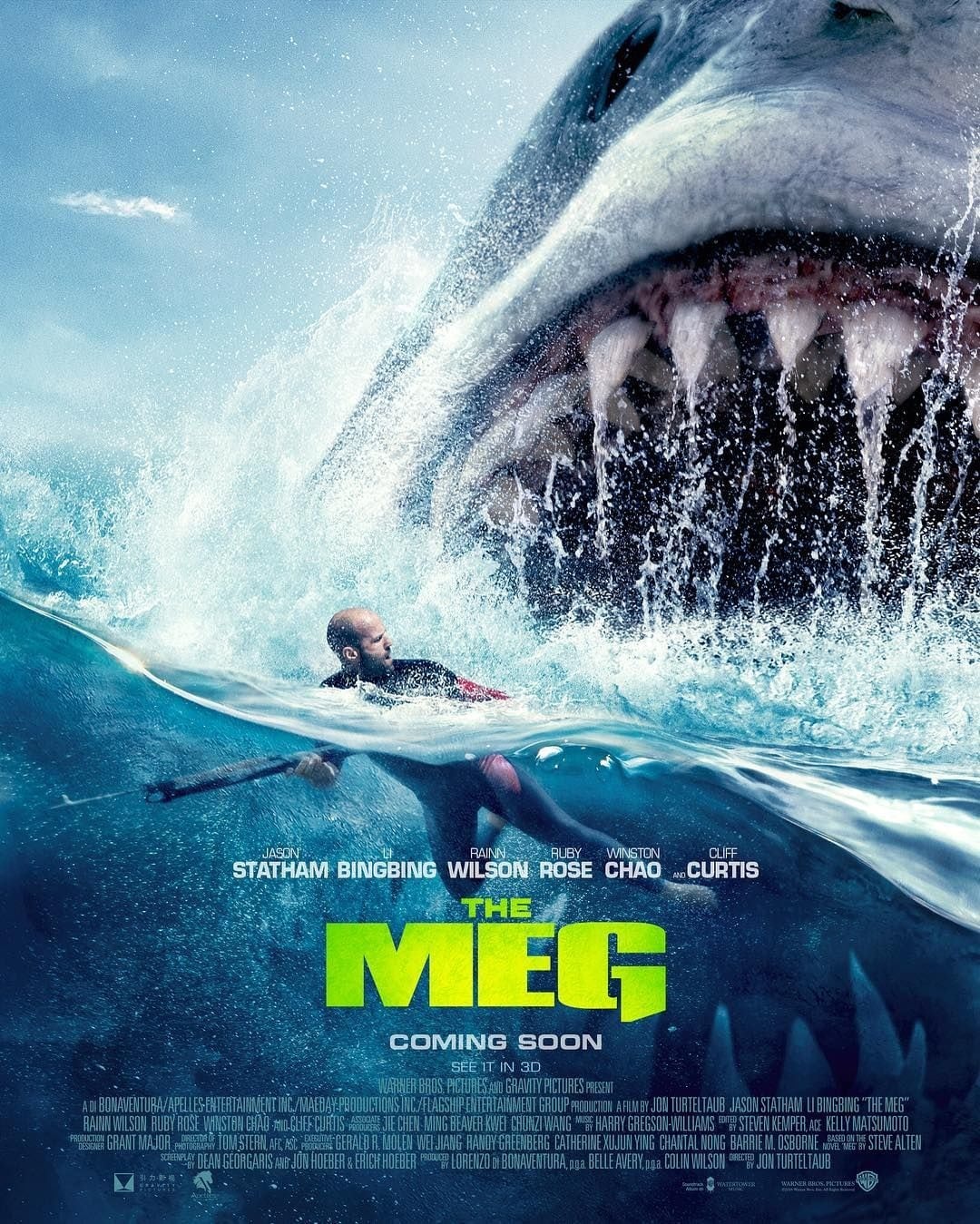
Slate’s has a great essay by Keith Phipps comparing “The Meg” to the nutty “Jaws: The Revenge,” asking “Which is the crazier shark movie?” It is wonderfully passionate, thoughtful, and thorough and tons of fun to read.

Everything about Jaws: The Revenge, from its borderline incoherent story to its chaotic action to its iffy effects to co-star Mario Van Peebles’ attempt at a Bahamian accent reveal it as a patchwork movie with little holding it together.

And it gives me a chance to share my all-time favorite stand-up routine ever, from the late, much-missed Richard Jeni.

Related Tags:


Understanding Media and Pop Culture
Interview: Brigham Taylor, Producer of “Christopher Robin”

Interview: Brigham Taylor, Producer of “Christopher Robin”

Posted on August 10, 2018 at 8:00 am

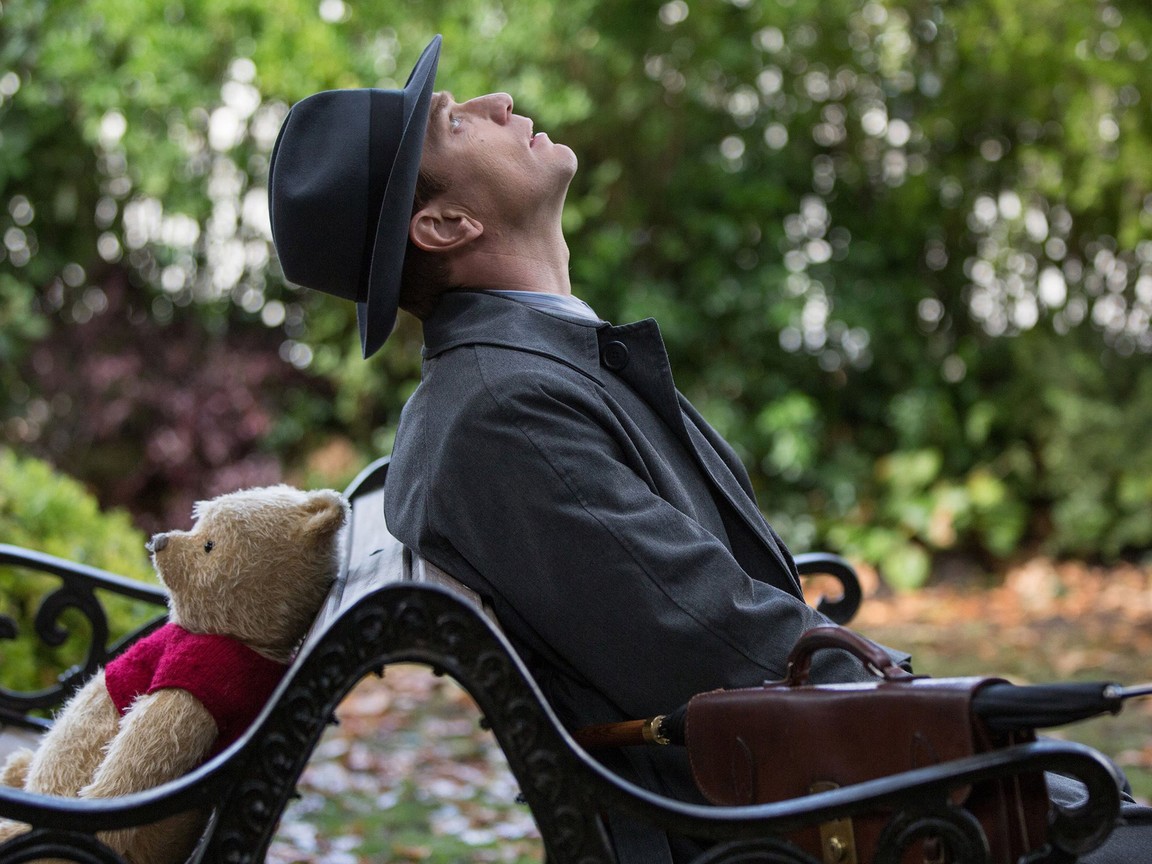
For The Credits I interviewed “Christopher Robin” producer Bringham Taylor, who talked to me about bringing together the old (Disney legends Jim Cummings returning to voice Pooh and Tigger and Richard Sherman writing new songs) and the new — a grown-up Christopher Robin, some new voice talent, to tell a story for all ages.

I think you have to respect not just the intelligence of the kids, but also the adults’ intelligence as you are approaching that material. It’s not easy. You need to try to have a multilayered kind of story that way. I think it’s one of the greater challenges. Having worked at Disney virtually my whole career, it’s always been a challenge. You don’t always nail it, but you always want to strive for something that feels universal, both at the idea and thematic level, but also in the visual. Something with enough visual sophistication and enough charm — visual sophistication for the adults in the audience, but also the appropriate amount of color and charm and whimsy for the younger kids.

Related Tags:


Interview
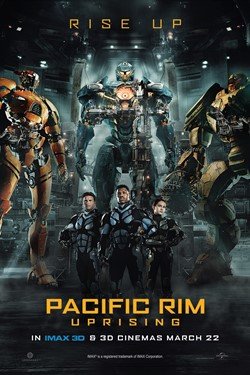
Interview: The Digital Effects Geniuses of Halon Entertainment on “Pacific Rim: Uprising” and More

Interview: The Digital Effects Geniuses of Halon Entertainment on “Pacific Rim: Uprising” and More

Posted on August 8, 2018 at 8:00 am

Copyright Universal 2018
In big summer movie blockbusters, the actors are not the only stars. Equal billing should go to the visual effects brainiacs who make us believe in dinosaurs and skyscraper-sized robots called jaegers, aliens called Kaiju, and a prehistoric 75-foot long shark called a megalodon. At San Diego Comic-Con, I had a chance to talk to Peter Chiang (visual effects supervisor at DNEG) and Ryan McCoy (previs/postvis supervisor), and Brad Alexander (previs/postvis supervisor) of Halon Entertainment about their work on “Pacific Rim: Uprising” and a little bit about this week’s “The Meg.”

First of all, tell me the difference between what a previs and a postvis and visual effects supervision.

PETER CHIANG: I was on the production side so I supervise the film. I sit with Steven DeKnight and work out all the visual effects aspects of the film.

BRAD ALEXANDER: And so previs is where we come in at a very early stage and work with the director to translate the story in a very loose form using 3D animation and edit with as much constraint that we can put in as far as the lens used and how we’re actually going to get the shot.

RYAN MCCOY: After that, we take the film or movie so the principle photography happens. What we get back is a bunch of shots about a character reacting to a monster on a green screen but there’s no actual monster there.

They’re looking at a tennis ball, right?

RYAN MCCOY: Right, reacting to a tennis ball, so we have to make the tennis ball more frightening so that when you look at it in the context of the edit it makes sense and you get what is going on. That’s when postvis comes in. We’ve quickly put together a mock-up of what the final would be like and then the scene goes through iterations real fast without spending a whole lot of money so they can figure out if the scene works really quickly.

BRAD ALEXANDER: Postvis is almost a scaled down version of what a final visual effects shot is, probably it’s maybe 1/100th of the effort put in to convey what needs to be there.

PETER CHIANG: It’s a bit more than one percent. I think Brad is just being modest.

When the actors are looking at the tennis ball have they actually seen drawings of what it is they’re supposed to be looking at to help them create their performance?

BRAD ALEXANDER: Yes, on set we have the art department do amazing visuals to support that idea and we’ve already worked out really how high the robots are and so we’re counting floors on the building to talk to John Boyega and say “Hey, look, it’s going to be roughly about that high and he’s going to come at you from that way,” We do little tricks like we set up balloons and markers. We will put up two weather balloons and tell them to go A to B at a certain time. You’ll see him go like this and we go “No, no, no, no; he’s going to go like thiiisss” .

BRAD ALEXANDER: Or you fly a drone

I was very impressed with the believability of the weight and gravity that your Jaeger and Kaiju characters have and the physics of moving them around. What goes into making that work?

PETER CHIANG: We looked at a lot of things. We looked at lot of oil tankers and large objects moving. And so there was a tug of war constantly between physics and keeping the sequence alive and exciting. I think if we portrayed it in real physics people would have gone to sleep, because it would have taken a long time for that robot to walk down the street so there was a payoff. But even then we had to slow them down so on the set we would say to John and Cailee , “Hey look, you’re moving too quickly, you’ve got to feel like you’re lumbering a bit to slow him down”

BRAD ALEXANDER: At the very beginning when we were doing previs before we had the opportunity to work with Peter a lot of our shots and sequences to me personally just felt like they were moving so fast. It was frustrating. Coming from an animation background, you need to show weight. You need to show secondary motion. You want the plates to jiggle when you have a lot of mass. We kind of got cut off in the beginning phase of doing that and we had to send it off and let it go and then it’s kind of like I bowed my head and prayed to the Gods that someone would fix it. And then Peter came in and they actually fixed it so I think we found a middle ground that worked.

RYAN MCCOY: Yeah often in previs it’s hard because we have to cut down on all of the nuances of the animation and just the lightng and the contacts with the ground and a lot of those little things. That last five percent that polishes it off and makes the photo real is often what really gives it the weight that’s necessary. and so sometimes it can be challenging where it kind of looks okay in previs and then you do it in a final scene and when you see it, it’s like, “Oh well, that’s crazy.” So often what we have to do is put in a little extra work on some of those shots to really get it to sell, to start to understand how that weight would really work and how it would move and just the physics of it.

I was also impressed with the personalities of the different characters, particularly Scrapper who had a believably junkyard feel. I know some of that is from the sound guys but some of that is what you do.

BRAD ALEXANDER: The art department works very fast when they build their models and the model that they initially gave us looked like someone had taken a bunch of engine parts and panels from airplanes and whacked everything together. It wasn’t ribbed at all and I had to figure out — where are the joints going to go on this thing? Are there any gears that I can use as an elbow? Where are the hips going to be? I had to figure a lot of this kind of stuff out and then change some stuff around. Then I pass it off to the art department and say, “Can I move this? Is that okay?”

I think my favorite thing in this movie was that you got to play around with scale in such a dramatic way. We thought the last movie had very big creatures and big robots but now we’re in a whole other level. But you have to keep them all in the same shot, so how did you do that?

RYAN MCCOY: Wide lenses — put the camera really low with the wide lens and go back.

If I came over to your house is there anything I would see that would show that you worked on this project?

BRAD ALEXANDER: I got a Gypsy model from the first film and I had that on my desk the whole time. I have a little shelf in my house that has a little thing from a lot of the movies that I’ve worked on, my memento things.

Some people have pictures of their families…

BRAD ALEXANDER: I have robots.

RYAN MCCOY: Robot children.

PETER CHIANG: I love the toys. I’ve got all the toys; got the four main robots and Obsidian and Fury.

What are the qualities that make somebody very good at doing previs?

RYAN MCCOY: Being close to their inner child. Being able to embrace it while still being mature.

BRAD ALEXANDER: I think it’s generally a skill set. If you are as a 3D artist I think gives you the most to bring to the table as a previs artist because if you can rig a model, animate two effects, you could do everything and that opens you up to most work that we can give you.

RYAN MCCOY: Yeah for previs and postvis we really want filmmakers. We want people that understand storytelling not just people who know one skill particularly well. Alot of schools focus on just perfecting one specific craft and making a character feel very fluid in movement or whatever really is making one image look really beautiful and that’s all great — we need that too — but you can’t tell a story if you don’t know how you cut to one shot and all of a sudden it feels jarring and strange because you crossed the line or this is a weird framing of this creature or you don’t know what lenses are or how to use them effectively. There are so many tools.

BRAD ALEXANDER: Ultimately it’s film language and it all boils down to the composition, screen direction, and all of that kind of stuff.

What’s your next film coming out?

RYAN: He and I worked on “The Meg.” I have no idea if this is going to be good but it was a hell of a lot of fun to make. The whole end scene is what we worked on. And we did the whole ending of “Aquaman,” so that was quite a big endeavor.

Those scenes are underwater, which must be another challenge of physics calculations.

RYAN MCCOY: It was, I feel for Industrial Light and Magic, trying to make that come to life and I can’t wait to see what they do with it. it was a lot of fun to do previs for it because of the vastness of what was going to be told and it was just this big collaboration to try to get it into a really good shape so that it was really exciting. Yeah, the whole thing was fast and really fun.

Related Tags:


Interview Special Effects
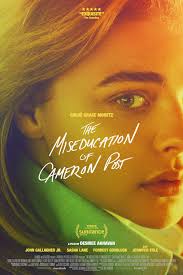
Interview: The Miseducation of Cameron Post’s Chloe Grace Moretz, Desiree Akhavan, and Mathew Shurka

Interview: The Miseducation of Cameron Post’s Chloe Grace Moretz, Desiree Akhavan, and Mathew Shurka

Posted on August 7, 2018 at 3:42 pm

Copyright FilmRise 2018
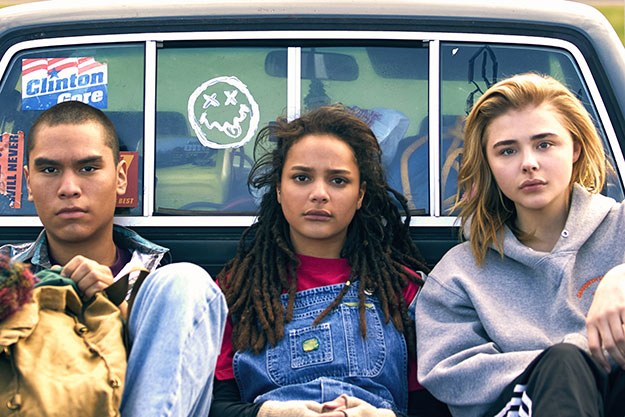
Sundance winner “The Miseducation of Cameron Post” takes place in 1993, when a teenager is sent to a Christian “gay conversion” program something between boarding school, boot camp, rehab, and prison. Chloe Grace Moretz gives a performance of great subtlety and sensitivity in the title role. My friend and fellow critic Leslie Combemale and I spoke to Moretz, director Desiree Akhavan and gay conversion survivor and activist Mathew Shurka about the film.

I always think that one of the greatest challenges an actor can have is a part like this one where your character is so much an observer, with no big speeches.

Chloe Grace Moretz: What’s beautiful about the film is that it really is an ensemble piece. It’s called “The Miseducation of Cameron Post” but I walk through it with you guys, perceiving and understanding and taking in and comprehending this space that I’ve been thrust into. We shot the movie chronologically. We only had 23 days to shoot the movie. It was wonderful because we just walked through each beat. Because we didn’t have much rehearsal time, there wasn’t much to do other than feel and hear and listen and perceive.

Because my character didn’t have a lot of lines, all this stuff is happening to her and around her and she’s having all these projections put on her about of what she is and what her problems are. And all she says is, “I don’t think so.” It all happens in her head and it was really fun for me to play with that and depict it all through my face and my eyes. It’s what I like doing best as an actor, ever since I was a little girl. It’s always been something I enjoy, showing context and subtext in my head and having it pushed it out through my eyes, not having to vocalize it. A lot of times in life, when you’re faced with sadness and depression and anger you can’t really formulate words for that. When someone is looking at you and telling you everything you’re doing is incorrect, sometimes the best you can do is say, “I don’t think so.” You internalize that.

Desiree Akhavan: That was the character. Someone who wasn’t that talkative. An introverted, athletic lesbian, an ode to every woman I’ve ever loved. I was building a type. I’ve been asked if that was something that changed specifically through casting Chloe, because she has a strength for communicating without words, but it was just a happy marriage, when the character meets the right actor.

Copyright FilmRise 2018

Mathew Shurka: It was incredibly powerful to see that in Chloe. It is so hard to turn conversion therapy into a film. All the subtleties are really clear in the film. My favorite part is when she just walks into the conversion therapy center and Reverend Rick is playing the guitar. There’s a shot of Chloe’s face. There’s doubt, there’s fear, and “where am I” and it’s every teenager. As a survivor, it read really clear to me, what was going on with her character.

We’d like to believe we are wiser now than in 1993, when this movie takes place, but how many states still allow conversion therapy?

Mathew Shurka: Only 14 states have banned conversion therapy for minors, which means that some form of it is still permitted in 36. But it’s legal for adults in all 50 states. A majority of conversion therapy programs are religion-based, but not all. This movie shows both, an actual therapist and a pastor. In reality, that’s how it goes. All of my treatment was conducted by licensed professionals. My father, who was the one who was really adamant about me going into conversion therapy did his due diligence and he wanted someone who had gone through the training of a therapist to conduct this.

They’re fighting these bills so a lot more are getting licensed as therapists to have more credibility, because they are fighting these bills. There are licensed and there are unlicensed and then the overlap who are both, pastors and licensed therapists. We say you have to choose. In the states where we passed those bills, people say, “What if there’s a pastor who wants to conduct conversion therapy?” and we say, “You have to honor and obey the terms of your therapist license.” You have to choose. You want to be a pastor and have those rights, fine, but if you’re acting as a therapist you have to honor that license.

Because these issues are still so present, did you ever think of setting the film in the present instead of in 1993?

Desiree Akhavan: We thought about it because it would have been cheaper. But no, it was always really important that they were as isolated as possible. For the dramatic stakes to be as high as possible, Cameron could not even know about other gay kids, let along see them on Instagram or reach out and ask for help. I didn’t want there to be a world outside of what they knew around them. I wanted to be loyal to the book but I also didn’t want to deal with technology and the whole host of changes that would bring to their lifestyle and personalities and their identity and their self-expression. The way kids live right now is very different from the way they lived in 1993 and it was important to keep it that way. But it is a very relevant film and when I began this process I didn’t realize how relevant it would become through the course of production.

Related Tags:


Actors Directors GLBTQ and Diversity Interview
THE MOVIE MOM® is a registered trademark of Nell Minow. Use of the mark without express consent from Nell Minow constitutes trademark infringement and unfair competition in violation of federal and state laws. All material © Nell Minow 1995-2026, all rights reserved, and no use or republication is permitted without explicit permission. This site hosts Nell Minow’s Movie Mom® archive, with material that originally appeared on Yahoo! Movies, Beliefnet, and other sources. Much of her new material can be found at Rogerebert.com, Huffington Post, and WheretoWatch. Her books include The Movie Mom’s Guide to Family Movies and 101 Must-See Movie Moments, and she can be heard each week on radio stations across the country.

Website Designed by Max LaZebnik