
Interview: Thomas Miller of Limited Partnership

Posted on June 11, 2015 at 3:39 pm

In 1975, a Boulder, Colorado county clerk issued six marriage licenses to gay couples, including Filipino-American Richard Adams and his Australian husband, Tony Sullivan.  Richard immediately filed for a green card for Tony based on their marriage. But unlike most heterosexual married couples who easily file petitions and obtain green cards, Richard received a denial letter from the Immigration and Naturalization Service (INS) stating, “You have failed to establish that a bona fide marital relationship can exist between two faggots.” Outraged at the tone, tenor and politics of this letter and to prevent Tony’s impending deportation, the couple sued the U.S. government. This became the first federal lawsuit seeking equal treatment for a same-sex marriage in U.S. history.

The documentary about this couple and their four-decade struggle for the dignity and legal protections available to opposite-sex committed couples, is Limited Partnership, which will be featured on the  PBS “Independent Lens” series on June 15, 2015.  I spoke to director Thomas Miller about making the film.

We think of marriage equality as a very contemporary issue.  How did you discover this extraordinary case from the 1970’s?

I moved to Los Angeles in the early 90’s and came out as a gay man at the same time. And as I started meeting more of my friends; gay and lesbian, especially in Los Angeles, a lot of them were in relationships with foreign partners. And as I watched these relationships get more serious I discovered that the foreign partner could not stay in the United States based on the relationship and the United States citizen couldn’t go to the foreign partner’s home country. And so I started to do some research and I discovered there were almost 40,000 bi-national same sex couples that were in the same predicament. And so in early 2000 I thought that it would be a good idea to start doing a documentary about this. I didn’t know it would take me almost 15 years to finish.

Tell me a little bit about what happened during that 15 year period and in terms of the film and in terms of what happened in the legal and cultural approaches to marriage equality.

In doing the research for the film I came upon Richard Adams and Tony Solomon’s story.  I was very surprised to learn that in 1975 there was a County Clerk in Boulder, Colorado who issued six same-sex marriage license and Richard and Tony received one of those licenses. And what was so important to Richard and Tony was that Richard was Filipino-American, Tony was from Australia. And so they used their marriage license to file for a green card for Tony to stay in the country as a spouse of an American citizen and received a letter back from the INS denying the green cards stating that they didn’t believe that a marital relationship could exist between “two faggots.” which was really shocking.

After getting that letter, they were the first same-sex couple in US history to file for equal same-sex marriage rights including immigration rights in the federal government and that was again in 1975. And so the whole story involved watching these two men fight for the right just to stay together against the United States government for over 40 years. And in covering the story you kind of learn the whole history about when they gay and lesbian movement started. And you sort of get the history of how the country has changed in that 40 year time span.

Why has public opinion shifted so quickly on this issue?

Honestly I think it’s because in the 70s, a lot of people didn’t know of people that were gay or they knew people but they weren’t out so they did not know who they were. And over the course of that time period, people have come out I think thanks a lot to people being more accepting.  You started seeing TV shows with gay characters in it that weren’t the stereotypical drag queens but just regular everyday people.  They weren’t these outsiders. They were just like everybody else. And so as time went on especially the people who started watching those shows are in their 20s and 30s and 40s and so now they are voting age. Now they are the people just going out there making decisions for people of the United States government. And almost everyone knows someone even in their family or close friends who is gay or lesbian or transgendered. So it is not scary to anybody anymore. I think that is why it is so accepted now.

When you were doing research for this film, what were some of the resources that you used? Were you looking at archival footage? Were you looking in libraries?

Yes, I was really lucky.  In Los Angeles we have the One Institute,  I also did search the archives, I did consult with like immigration lawyers and a few other people. And I started looking at some magazines and articles from around the country again in the archives and that’s what led me to Richard and Tony’s story. And one of their friends connected me to them and I found out that they also lived in Los Angeles and so that was very fortuitous.

And what pressure did this kind of long-term litigation put on the relationship?

think that it put on a tremendous strain on the relationship.  Monetarily, Richard had to sort of support Tony, because Tony really couldn’t work legally in this country.  Socially they had to sort of remain… I don’t want to say underground because they weren’t really underground but… How can I put it?  They faced so many different obstacles from the United States government and sometimes their own community.  They had been fired from jobs because they were out and gay and in the media.  They lost parts of their family; Tony was disowned because of that. So a lot of pressures. And it just showed the strength of their love that no matter if it was the government, the family, their friends, the community, their jobs that they were fighting that they had enough love to stay together for 40 years.

Actually Tony says that in the 1970’s when a lot of gay and lesbians were just sort of fighting to come out that they did not get a lot of support from the gay community. The people weren’t thinking about marriage rights or immigration rights, they were just sort of trying to express themselves.  Their biggest supporters came from the Republican gay group, not the Democrats.  A lot of the Democrats, a lot of the gay organizations were maybe afraid of what they verdict might be if they took their case to court so they were against them trying to fight for that. So again the libertarians and the gay Republicans were their biggest supporters.

What did you learn about the legal system either good or bad as a result of working on this movie?

I have learned that being in the United States we’re lucky that we have the chance sometimes to change laws and fight for one’s rights.  I am not just talking my gay and lesbian rights, I’m talking about civil rights, women’s rights, African-American rights, eventually we get it right but it just takes a long time.  It takes pioneers, everyday people, to start the fight.  Richard and Tony were just everyday people that believed in themselves and believed that they were equal and fought for those rights. And I guess the reason we made the film was to show everybody that we can make a difference in the lives of individuals living in United States.  It may take a long time but we can make a difference.

And as a filmmaker, what was the challenge for you in telling the story that stretched out over so many years in an accessible way?

I didn’t want it to be a history lesson. I felt like I wanted to show a love story and in showing a 40-year love story, people could learn the struggles of these characters endured over 40 years. And so that was the challenge, how to do that without getting people mixed up; where were we in time? So we had to learn how we use graphics, how to use a timeline to do that, how do you incorporate a lot of archival footage and keep it interesting and make it emotional. And luckily we had some great characters for really unexpected twists and turns in the story and sort of bittersweet ending.  One of the things that has been nice for me is that when I have gone to the film festivals with this film for years, a lot of people who were not gay came up to me, even really conservative people and said, “You know, you made a love story and I get it.”
 

Related Tags:


GLBTQ and Diversity Television

New on Lifetime: Preach, About Four Charismatic Women

Posted on June 7, 2015 at 8:00 am

Lifetime’s new reality series is “Preach,” following four powerful female leaders who believe God has given them the ability to heal the sick, see the future and rid people of their addictions. Known as “Prophetesses,” these women say that they speak as the interpreter through whom the will of God is expressed. In order for their legacy to continue, they must enlist a “protégé” and teach them how to carry on their gift. These Queens of the Church each have different styles and their own special way of delivering God’s message, but all are united in their love of the Lord.

https://www.youtube.com/watch?v=m1onnZs_r_I
Related Tags:


Spiritual films Television

Critics Choice Television Awards 2015

Posted on May 31, 2015 at 10:28 pm

WINNERS OF THE 2015 CRITICS’ CHOICE TELEVISION AWARDS

· Best Drama Series: The Americans (FX)

· Best Actor in a Drama Series: Bob Odenkirk, Better Call Saul (AMC)

· Best Actress in a Drama Series: Taraji P. Henson, Empire (FOX)

https://www.youtube.com/watch?v=GedtHF5Qc_o

· Best Supporting Actor in a Drama Series: Jonathan Banks, Better Call Saul (AMC)

· Best Supporting Actress in a Drama Series: Lorraine Toussaint, Orange Is the New Black (Netflix)

· Best Guest Performer in a Drama Series: Sam Elliott, Justified (FX)

· Best Comedy Series: Silicon Valley (HBO)

· Best Actor in a Comedy Series: Jeffrey Tambor, Transparent (Amazon)

· Best Actress in a Comedy Series: Amy Schumer, Inside Amy Schumer (Comedy Central)

· Best Supporting Actor in a Comedy Series: T.J. Miller, Silicon Valley (HBO)

· Best Supporting Actress in a Comedy Series: Allison Janney, Mom (CBS)

· Best Guest Performer in a Comedy Series: Bradley Whitford, Transparent (Amazon)

· Best Movie Made for Television: Bessie (HBO)

· Best Limited Series: Olive Kitteridge (HBO)

· Best Actor in a Movie or Limited Series: David Oyelowo, Nightingale (HBO)

· Best Actress in a Movie or Limited Series: Frances McDormand, Olive Kitteridge (HBO)

· Best Supporting Actor in a Movie or Limited Series: Bill Murray, Olive Kitteridge (HBO)

· Best Supporting Actress in a Movie or Limited Series: Sarah Paulson, American Horror Story: Freak Show (FX)

· Best Reality Series: Shark Tank (ABC)

· Best Reality Competition Series: Face Off (Syfy)

· Best Reality Series Host: Cat Deeley, So You Think You Can Dance (FOX)

· Best Talk Show: The Daily Show with Jon Stewart (Comedy Central)

· Best Animated Series: Archer (FX)

· Critics’ Choice LOUIS XIII Genius Award: Seth MacFarlane

· Most Exciting New Series: American Crime Story (FX), Aquarius (NBC), Blindspot (NBC), Minority Report (FOX), The Muppets (ABC), Scream Queens (FOX), Supergirl (CBS) and UnREAL (Lifetime)

Related Tags:


Awards Television
Interview: Martha Williamson on the Expanded “Signed, Sealed, Delivered” Movie Series

Interview: Martha Williamson on the Expanded “Signed, Sealed, Delivered” Movie Series

Posted on May 31, 2015 at 2:59 pm

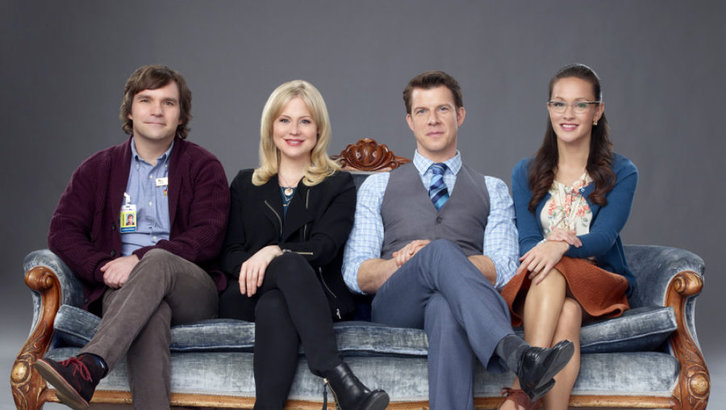
It was just over a year ago that I first spoke to “Touched by an Angel” creator Martha Williamson about her dead letter detective series for Hallmark, “Signed, Sealed, Delivered.” She is one of my all-time favorite interviews, making me feel like an instant old friend, and it was a delight to catch up with her about the series’ new expanded format as feature-length films for the Hallmark Movies & Mysteries Channel.

Tell me about the challenges of the new format.

I’m loving this because we have essentially a whole story now. We were doing the series that was originally going to be about dead letters being delivered late but the life of this quirky little group just took on more of a role. People embraced them so much and just fell in love with the two little love stories between Oliver and Shane and Rita and Norman and wanted more of the backstories of these folks and their lives. I would never compare myself in any way to “Mad Men.” But a guy wrote something brilliant about how in that show the characters take on their own lives and you have to follow their own lives and that’s kind of what I find myself doing. We have these amazing characters in these great actors who embodied them so well that you just kind of have to follow these characters and see where they wanted to go. And as a result we discovered that it was so much more satisfying to make movies. And Hallmark had this new Movies & Mysteries channel that they wanted to do. I’m not a mystery writer per se but every letter is inherently a mystery in one form or another. These people are postal detectives, which actually exists. But they really became this little family. And so I found that we needed extra time and Hallmark really wanted us to go to the Movies and Mysteries. It is turning out to be very gratifying. We’re actually shooting one right now in Vancouver and I’m writing the second one, then there is a third one as well. I’ll stay on the set and write the next one. It’s really a family experience. Some of the actors will walk off the set and say “How’s it coming?” and I’ll say “Oh man! What do you think Oliver would do if we were here?” He always wants to do the right thing and I think he struggles. So it becomes this group discussion because everyone so invested in it. And we’re really having a lot of fun. I have to say it’s just perfect for me, too. I’m the mother of two teenage girls and doing a series as you know is all-consuming but to be able to have this freedom of writing a movie and then go shooting, writing a movie and go shooting, it all seems to be working out for everybody.

Copyright Hallmark 2015

I was excited to hear that we would find out more about Oliver’s wife, and delighted that Poppy Montgomery was cast in the role.

Just brilliant, she was brilliant. The minute I met her I said, “Oh my gosh! You were Holly and I didn’t even know.” It is like I was writing for Poppy. I hate to imagine channeling because I don’t believe in channeling but it was as if I was writing for Poppy and she walked in and said, “This is my part.” It was just perfect. I’ll back up here having done so much about working with angels, all of a sudden, the thing about angels is angels don’t have to have faith because they know, they’ve been there, they know what’s true. People, human beings struggle with faith all the time because they haven’t seen. What was the line? “Blessed are the ones who see and believe but more blessed are the ones who believe without having seen.” That was the next step for me, was in writing, now how we supposed to live?
What does it mean to live in faith?

And I’m still so saddened when I see so many television shows who depict people of faith as rigid and so judgmental and so legalistic and so unforgiving when faith itself is based on forgiveness. Even I go back to “Mad Men” again in the finale the other night. When he showed up and he talked about Jesus, he looks like a fanatic creep. And it’s so disappointing even now and I felt like, why can’t we explore somebody like Oliver? A nice man who goes to church sings in the choir, tries to do the right thing based on the faith in which he has been raised and still finds himself as we all do unable to completely control the circumstances of our lives. How do you address that?

I know that my father was divorced in 1940 and it was this horrible source of shame for him because nobody in the history of his family had ever been divorced. And here he was getting divorced and it just broke his heart. And yet he was this man of great faith and so how was he going to reconcile these two things. It does finally come down to just doing the best you can and trying to do the right thing and carry on. And so that’s who I think Oliver is. How do I take a show like this to churches and say this is a story about a guy whose wife has left him and moved the Paris and now they’re going to decide whether or not they’re going to get divorced? And I think that’s what really interesting to me is that he is working out his faith in front of an audience in fear and trembling and every day as we are all challenged with stuff. It’s not what happens. Its how we face it and how we deal with it.

And Oliver is not bitter but he also knows what he has to have. I think my favorite line is when Oliver and Poppy finally sit down for their come to Jesus conversation. She tells him they realized how completely different they were. They got married for maybe the wrong reasons and their whole faith systems, their whole value systems are very different and finally she says, “What do you want?” and he says, “Peace.” And she in her sort of hippie, new agey way goes, “Oh that’s beautiful” and he goes, “No that’s essential, I need peace”. And I think he realizes that she can’t give it to him. Peace is not something that she can give to him, he’s going to have to take it. And that’s true I think for all of us, nobody else can give us peace, we have to make those choices for ourselves. And I’m excited about it; it is very sweet and loving but surprisingly honest conversation.

Poppy is just perfect and she knocks it out at the park because she’s isn’t crazy, she does not play crazy person. She just sees it as: this is exciting and something fun and I’m going to write a poem about this and I’m going to go to Paris. And this is a guy who does have parameters in his life and he does want to live according to a certain code and it doesn’t make him intractable and it doesn’t make him judgmental. There is nothing wrong with trying to do the right thing and I think somewhere along the way we somehow confused self-awareness with self permission. Yes we want to be happy but not when it hurt other people.

I love Eric Mabius as Oliver. He shows us that Oliver tries to find the order and certainty and closure in his job that he does not have in his life.

That’s exactly right. Oliver is like a lost letter himself. Once that Holly situation is resolved it opens up to the real painful stuff he has to deal with in his past. So that becomes why did he allow himself to be captured by this sprightly personality? Well because she was so fascinating she took him away. As she says, “Why did you marry me?” and he said, “Because I’ve never met anybody like you, you shook me up and I needed shaking up in my life. But the truth is I think we’ll find what it was doing was preventing him from actually having to deal with some deeper issues.

It’s so wonderful to watch Eric at work. He locks up himself in his room and works on that script for days. When you have a chance to see this show pay attention to his face and you will realize at the end of the show that he never once repeated a facial expression. Every facial expression is unique to the moment; he doesn’t rely on the tried and the true reactions that you see in so many people. He carefully lays out the show and then like the best actors that I know then they throw it all away and let this happen and it becomes so fresh in the moment. He’s great! He’s just great, he is so much fun to watch.

Related Tags:


Television
THE MOVIE MOM® is a registered trademark of Nell Minow. Use of the mark without express consent from Nell Minow constitutes trademark infringement and unfair competition in violation of federal and state laws. All material © Nell Minow 1995-2026, all rights reserved, and no use or republication is permitted without explicit permission. This site hosts Nell Minow’s Movie Mom® archive, with material that originally appeared on Yahoo! Movies, Beliefnet, and other sources. Much of her new material can be found at Rogerebert.com, Huffington Post, and WheretoWatch. Her books include The Movie Mom’s Guide to Family Movies and 101 Must-See Movie Moments, and she can be heard each week on radio stations across the country.

Website Designed by Max LaZebnik