Movies about Values

Posted on June 19, 2008 at 7:46 am

Beliefnet has posted my gallery of movies that illustrate important values like integrity, courage, courtesy, learning, and peace.
Movies are our sagas, our myths, our touchstones, and our collective cultural heritage. They are also one way that we teach ourselves and our children about values. Of course, kids get their most important lessons from the behavior of their parents. But movies give us a chance to explain and expand on those lessons through a modern form of parables or Aesop’s Fables. And like parables, stories in movies have the advantage of distance–it can be easier for kids to talk to parents about what’s happening on screen than to talk about what’s going on inside them. Those discussions are a powerful way for families to connect and communicate. I’ve selected 10 terrific movies in which characters show qualities like responsibility, integrity, compassion, and courage. Each is popcorn-worthy entertainment for families to share and a great way to begin conversations about the way that our values affect our choices and their consequences.
Check out the movies on my list and let me know which movies your family thinks illustrates important values.

Related Tags:


For Your Netflix Queue Movie Mom’s Top Picks for Families Rediscovered Classic Understanding Media and Pop Culture

Where are the Wild Things Going?

Posted on June 13, 2008 at 9:09 pm

It seemed almost too good to be true. One of the best children’s books of the 20th century, Where the Wild Things Are, written and directed by Maurice Sendak, was going to be made into a movie written and directed by two extraordinarily sensitive and imaginative men, director Spike Jonze (Being John Malkovich) and writer Dave Eggers (A Heartbreaking Work of Staggering Genius). The style is a combination of actors, giant puppets (remember the puppets in Jonze’s “Being John Malcovich?”) and computer-generated graphics. Sendak worked with them as a consultant.
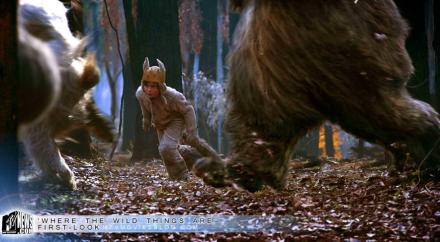
Yes, there was a concern that expanding the book’s 338 perfect words into a feature-length screenplay could be disastrous. Think about Dr. Seuss and “The Cat in the Hat.” But I had faith in Jonze and Eggers and New York Magazine, which obtained a copy of the script, was reassuring, calling it “filled with richly imagined psychological detail, and the screenplay for this live-action film simply becomes a longer and more moving version of what Maurice Sendak’s book has always been at heart: a book about a lonely boy leaving the emotional terrain of boyhood behind.” (I stopped reading after that; I didn’t want to spoil anything.) wherethewildthingsaremtv.thumbnail.jpg
Now the bad news. The $75 million film’s studio has ordered extensive reshoots. Release has been pushed back to 2009. There are rumors of bringing in another team to redo the film. I hope we get to see the version Jonze, Eggers, and Sendak created.

Related Tags:


Understanding Media and Pop Culture

Fox News and the term ‘Baby Mama’

Posted on June 12, 2008 at 10:26 pm

I have always disliked the terms “Baby Mama” and “Baby Daddy.” Originally they were used only to describe unmarried parents and the implication was that their connection through the baby or children was all that remained of their relationship. The implication is derisive and distancing. As often happens with slang, the expressions originally from one segment of the culture (Jamaican terms adapted by African-Americans) appeared in popular song lyrics and were then picked up by the mainstream. Salon’s Alex Koppelman noted that Fox News used the term “Obama’s Baby Mama” in a graphic for a story about criticism of Michelle Obama and Fox is now responding to criticism that the term was inaccurate, inappropriate, offensive, and racist by saying that its producer used poor judgment.
Families should talk about how words used in different contexts can have different meanings and how slang terms move from the fringes to the mainstream and yet still be seen different ways by different people in different circumstances.

Related Tags:


Commentary Understanding Media and Pop Culture

Sleep Disturbance and Media — a Kaiser Report

Posted on June 10, 2008 at 5:00 pm

“American children get too little sleep, with major adverse implications for their cognitive ability, judgment, behavior and physical health,” according to new study from the Kaiser foundation. There are many factors, but one of them is media. Children and adults often watch television or DVDs before going to sleep. But media use — computers, television, DVDs, cell phones, iPods, etc. — all of which have sharply increased, can disrupt sleep. bedtime.bmp
The report notes that children, especially very young children, have much more access to technology than even in the recent past. Some believe that media use has directly displaced sleep. Children stay up later and get up earlier to use media. Many teens and even younger children take their cell phones to bed and stay up late sending text messages. The amount of television time correlates to irregular bedtimes and naptimes. Media use also displaces physical activity which is important for sleep quality. The exciting and dramatic content of programs, even those intended for children, can be disturbing and lead to increase in sleeplessness and nightmares. Surprisingly, passive viewing (having the television on in the background while they do other things) can correlate even more highly to sleep disturbance than active viewing (watching without other distractions).

This result may have arisen because the passive viewing to which the children were exposed was more stressful than the content that they were watching actively, which was presumably children’s fare. This result clearly warrants further research, particularly given the
amount of adult viewing that happens in the presence of children.

Kaiser recommends more research on this important topic.

Related Tags:


Commentary Understanding Media and Pop Culture

J.K. Rowling’s Harvard Speech

Posted on June 7, 2008 at 8:00 am

One of my favorite authors spoke about one of my favorite subjects when Harry Potter author Joanne Rowling addressed the graduating class at Harvard University. rowlingspeech.jpg Many commencement speakers urge the new graduates departing from the ivory tower to succeed in the real world, but Rowling encouraged them to fail and not to neglect the importance of fantasy.

I have wracked my mind and heart for what I ought to say to you today. I have asked myself what I wish I had known at my own graduation, and what important lessons I have learned in the 21 years that has expired between that day and this.

I have come up with two answers. On this wonderful day when we are gathered together to celebrate your academic success, I have decided to talk to you about the benefits of failure. And as you stand on the threshold of what is sometimes called ‘real life’, I want to extol the crucial importance of imagination.

Graduates are usually applauded for their achievements, but Rowling advised the hyper-performing graduates that it is a mistake to measure success or failure based on grades and awards. She was frank about the pain of her own failures and about what she learned from them.

(more…)

Related Tags:


Understanding Media and Pop Culture
THE MOVIE MOM® is a registered trademark of Nell Minow. Use of the mark without express consent from Nell Minow constitutes trademark infringement and unfair competition in violation of federal and state laws. All material © Nell Minow 1995-2026, all rights reserved, and no use or republication is permitted without explicit permission. This site hosts Nell Minow’s Movie Mom® archive, with material that originally appeared on Yahoo! Movies, Beliefnet, and other sources. Much of her new material can be found at Rogerebert.com, Huffington Post, and WheretoWatch. Her books include The Movie Mom’s Guide to Family Movies and 101 Must-See Movie Moments, and she can be heard each week on radio stations across the country.

Website Designed by Max LaZebnik