The false and deceptive marketing by Fisher-Price and Open Solutions creates the impression that their apps effectively educate infants when time with tablets and smart phones is actually the last thing babies need for optimal learning and development. Both companies claim that their mobile apps will teach babies skills and information-including words and numbers- but neither company offers any evidence to back up their claims. To date, not a single credible scientific study has shown that babies can acquire language or math skills from interacting with screens. In addition, screen time may be harmful for babies. Research links infant screen time to sleep disturbances and delayed language acquisition, as well as problems in later childhood, such as poor school performance and childhood obesity. The American Academy of Pediatrics recommends discouraging screen time for children under two.
In their cover letter, CCFC notes that “According to a 2012 report by the Joan Ganz Cooney Center, over 80% of the top-selling apps in the “Education” category of the iTunes’ App Store target children. Sixty percent of the top 25 apps target toddlers and preschool children—more than double the percentage that target adults.”
The whole issue of spoilers has become very complicated because of all the time-shifting and binge-watching in the way we consume media. I don’t like spoilers and really work hard to keep them out of my reviews. I used to try to read as much as possible about a movie before I saw it but I discovered that I enjoy them more if I know less.
Spoilers don’t actually ruin viewing experience, if the show is good I’m not the first person to argue this. Poniewozik himself did it last year. ” takes away the tantalizing sensation of realizing that, in just a few weeks or days or hours, you’ll know this thing that you do not now know,” he writes. “But it doesn’t take away the myriad surprises on the way to getting there, the thrills and pleasures of watching a story play out.” I actually find that if I know the big reveal, I can watch a show more carefully leading up to that moment. Since I watched the entirety of Buffy the Vampire Slayer on Netflix,long after it originally aired, I was primed to most of the big surprises. For instance, I knew that at beginning of season five the show would give Buffy a sister. Knowing that already meant I wasn’t angered by the choice, but more interested in figuring out how that major move was accomplished and why it weirdly worked. Chances are if a spoiler ruined the experience of watching or reading something for you, then it wasn’t worth watching or reading to begin with.
Spoilers can only make you more excited to see something With all due respect to Mad Men creator Matthew Weiner—the don, no pun intended, of spoiler-phobes—but his strict rules for critics actually aren’t doing him any favors. By forbidding critics to write about new characters or new relationships in any way, he kills the element of the tease. On the same note, it’s baffling to mewhy J.J. Abrams didn’t want to use the fact that his villain was in fact Khan as a way to draw people into the theater. (Not that it really mattered; Star Trek Into Darkness still did big business.)
Interview: Phil Hall on “The Greatest Bad Movies of All Time”
Posted on August 7, 2013 at 3:59 pm
I always enjoy interviewing film expert Phil Hall, and it was a special treat to hear his thoughts about his new book, The Greatest Bad Movies of All Time.
The bad movies in your book fall into several different categories, including the big-budget train wreck and the well-intentioned but incompetent low-budget failure, the movies with aspirations of artistic greatness like “The Blue Bird” and the ones with none like “The Hottie and the Nottie.” Do you have favorite examples of each?
In creating the book, I wanted to offer the full depth and scope of the anti-classic experience. Thus, I brought together silent films that achieved profound awfulness without the benefit of spoken dialogue, documentaries that get their facts hopelessly screwed up, musicals that are weirdly off-key, biopics that turn the lives of their famous subjects into ludicrous travesties, comedies where the only laughs are unintentional, experimental films that self-destruct under their artistic pretensions, science-fiction that fails to capture the imagination, and one porno film that offers absolutely nothing that is even vaguely erotic.
I hesitate to offer personal favorite choices, because all 100 films represent my vision of how not to make movies. If anything, I wanted to affirm that cinematic incompetence comes in many shapes and sizes, from many countries and from many decades.
What makes the difference between a “so bad it’s good” hit like “Plan 9” or “The Room” that people enjoy watching or a movie that is too dull or painfully bad to sit through?
Most bad movies are just mediocre – they traffic in formulaic writing and adequate acting, and we forget about them shortly after the closing credits have rolled. But the anti-classics offer a genuine challenge to your intellect – you sit and watch them, wondering how anyone could have possibly brought forth something so wildly misguided without realizing the chaos they were creating.
In viewing these films, their awfulness becomes intoxicating – each reel brings a new assault on the senses. And by the time these films have run their course, the viewer is left in a state of shock and awe, and many people are immediately eager to share their experience with all of their friends and family members – usually by announcing, “You won’t believe what I saw!”
Which is more fatal to the quality of a film — a bad script, bad acting, or bad direction?
The screenplay is the foundation of a motion picture. If the foundation has significant cracks, then no amount of clever direction or energetic acting will help to overcome this significant handicap.
Of course, you can have a marvelous script, but it gets destroyed once the cameras start rolling. For example, the musical “Mame” has a delightful and charming screenplay, but putting the lethally miscast Lucille Ball in the title role threw the entire endeavor off-kilter.
Why are we so fascinated with failure?
I believe that people are fascinated with cinematic failure because it reminds us that the good folks in the movie business are no different from the rest of us. Movies are supposed to represent how life should be – but they create an idealized fantasy world where everyone is too clever and too good looking. Cary Grant – who, in real life, was absolutely nothing like his screen persona – famously commented on this by saying, “Everybody wants to be Cary Grant. Even I want to be Cary Grant!”
When films backfire on a grand scale, it provides a wake-up call that the big screen fantasy has nothing to do with reality. The gorgeous movie stars and the brilliant directors and writers are, ultimately, human – and they can make the same clumsy errors of judgment that anyone else can make.
What was the first bad movie you ever loved?
Forty years ago, I was an eight year old sitting in the audience of the UA Valentine in the Bronx, N.Y., during a presentation of the musical version of “Lost Horizon.” And I couldn’t help but enjoy a weird fascination with what was on the screen – it was a crazy and lumpy film, and it was certainly not the type of film that eight year olds appreciate, yet somehow it resonated with me. I can still remember the bafflement I experienced in the musical number when Bobby Van tap danced off a bridge and into a stream – and all of these years later, I still cannot believe that number was filmed.
You include some legendary flops and failures and some esoteric disasters that are just about unknown. What selections will be most surprising to readers?
I have already received some levels of surprise that Kevin Spacey’s “Beyond the Sea” and Clint Eastwood’s “Mystic River” were included, and a few people wondered why I put in a 2005 high school film version of “A Streetcar Named Desire” (which includes a dance number to “Pennsylvania Polka” – you can find it on YouTube). I’ve also received inquiries why certain turkeys were not included in the book.
I should note that the book is a reflection of my opinion, and it is not intended to be the last word on the subject. I try to explain why I feel these films can be considered anti-classics – and if I don’t change any minds, then at least I hope that I can earn some respect for stating my opinion.
Which of the movie failures has the most talented people behind it and what went wrong?
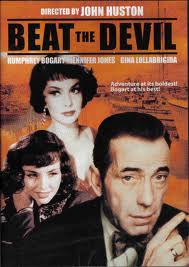
The problem with films that are created with all-star casts often make the mistake of believing that the performers’ charisma can compensate for problems in the screenplay and the direction. John Huston’s “Beat the Devil” and Orson Welles’ “Mr. Arkadin” have extraordinary casts, but both films had major problems with their screenplays – Huston’s work was written as the film was being shot and Welles was doing a lopsided riff on “Citizen Kane” – and the great directors were a bit more self-indulgent than usual with their respective works.
In many ways, I think that the saddest waste of talent of any of the 100 films was the 1954 offering “Dance Hall Racket.” That film had Lenny Bruce in his only film acting role – and he was cast as a gangster in a crime drama. Think about it: you take one of the most brilliantly funny artists of the 20th century and you cast him as a second-rate imitation of Lawrence Tierney. Why?
How do bad films help us understand what makes movies good?
The great bad movies remind us that filmmaking is, ultimately, a magic show. When a film works, we don’t realize how the magic worked. When a film misfires, we see where the tricks went wrong – and we realize that the cinematic magic is a lot harder than we may have previously considered.
Folklore is the mother of all stories – “every story told since stories began has its roots in ,” states Minow. “It was in folklore that the great themes of good and evil, fear and courage, ignorance and understanding, love and selfishness, heroes and villains, were first explored,” she explains.
The Brothers Grimm would recognize many of the themes in today’s movies about superheroes — and super-villains.
All in all, cinematographic portrayal of a folk tale is no boring history book – the audience loves a good story, even if retold for the umpteenth time. Just like tales don’t seem to bore little kids who ask to retell them every night, folk plots keep the audiences in cinema theatres engaged. Provided the screen is bursting with impressive graphics and charismatic actors, of course.
Manic Pixie Dream Girls — Christy LeMire’s Top Five
Posted on August 2, 2013 at 3:59 pm
I am so happy that Christy Lemire, former movie critic for AP, now has her own website and I look forward to checking in often to see what she has to say. One of her first posts is about the popular concept of the “manic pixie dream girl,” first described in those terms by critic Nathan Rabin in discussing the Kirsten Dunst character in the Cameron Crowe film, “Elizabethtown.” This is the female character who represents the Life Force, adorkably quirky and given to spontaneous outbursts and impulsive childlike whims.
I’m not as bothered by the manic pixie dream girl as some people. For one thing, the idea of a Life Force changing the direction of a play-by-the-rules type has been around as long as there have been stories. The conflict between characters representing the id and superego has been played out endlessly, going back to ancient myths and fairy tales. Screwball comedies like “Bringing Up Baby” and “Nothing Sacred” are classic examples, and yet no one calls Katharine Hepburn or Carole Lombard manic pixie dream girls. Of course there are manic pixie dream boys as well — think of William Holden in “Picnic,” Melvin Douglas in “Ninotchka” and “Theodora Goes Wild,” and Burt Lancaster in “The Rainmaker.” Even the dull Vince Vaughn movie “The Internship” this summer featured a Life Spirit character who had to show the overly serious Rose Byrne how to find joy in life.
And I’d much rather watch a manic pixie dream girl than her far less interesting counterpart, the arrested development boy-man so often portrayed by Adam Sandler and the entire Judd Apatow repertory company. Vince Vaughn’s “Internship” character counts twice because he was also in the arrested development category. Even worse is the female character often matched with those perpetual pubescents, the thankless role of the “Johnny, when will you grow up?” nanny/schoolmarm types. I felt very bad for Mila Kunis in “Ted,” a very talented comic actress who was relegated to that overdone character.
Christy Lemire lists five of her favorite manic pixie dream girls. Mine include Jane Fonda in “Barefoot in the Park,” Katharine Hepburn in “Bringing Up Baby,” Goldie Hawn in “Cactus Flower” and “Butterflies are Free,” Maggie Gyllenhaal in “Stranger than Fiction” (bonus points for making her not so stereotypically free-spirited that she can’t still be a meticulous and organized small business owner), and Barbara Stanwyck in “The Lady Eve.”

 .
.