MPAA Head Chris Dodd Speaks at the National Press Club

Posted on February 16, 2013 at 6:43 pm

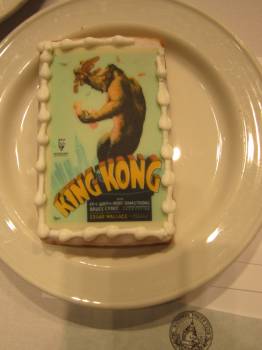
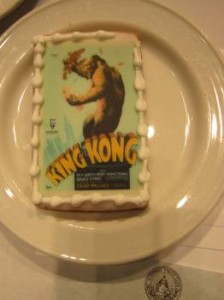
Yesterday Chris Dodd, head of the Motion Picture Association of America (MPAA), spoke at the National Press Club, which prepared movie poster cookies in his honor.  As a member of the club who writes about movies, I was invited to watch from the head table.  Dodd, who was a Connecticut Senator for 30 years (his father also represented Connecticut in the Senate), now runs the trade association for the film industry, which includes lobbying Congress and the Senate on matters like piracy and copyright and assigning ratings from G to NC-17.  He spoke eloquently on “why movies matter.” As an art form, he said, it is a “spectacular convergence” of visual arts, language arts, and music, attracting some of the most talented people in the world who want to paint on one of the largest and most stimulating canvases ever created.  They “tell stories that help us make sense of our world” and are “a vehicle to raise awareness of social and political issues.”

He emphasized the importance of the movie and television production industry to the US economy.  There is a 7 to one export/import ratio, higher than in any other sector. “For every unfathomably rich and beautiful star” there are thousands of people who are employed by the industry, more than 2 million, who have careers, not just jobs, many of which are good paying jobs even for those without a college degree.  Also, movies brand America in the eyes of the world, communicating our openness and opportunity. He quoted one man who told him that he did not agree with much of what the US does, but had to admire the way our filmmakers are so open in their own critiques of America and its policies.  “Your movies examine, ridicule, and challenge public institutions — and get awards for it!”
And he said that every movie is hand-crafted.  Movies also inspire unique technological breakthroughs.  Ang Lee had to wait 12 years from the time he first wanted to make “Life of Pi” into  movie until the technology could be developed to make it work.

Dodd spoke of the need to balance the “free and open internet,” which he supports, with protection of intellectual property.  “Free and open cannot be synonymous with working for free.”

Asked about the responsibility the movie industry bears for its portrayal of violence and the impact that has on audiences, especially children and teenagers, he said with evident feeling that Newtown affected him personally — he once represented the Sandy Hook community.  And Connecticut is the seventh largest producer of guns. “It is not an abstraction to me.”  But his comments were on the abstract side — along the lines of “we of course want to be part of the conversation,” emphasizing the “slippery slope” of content regulation, and pointing to the lack of support for the mentally ill and their families as a more important problem.  “We provide choice.  Not every movie is for everyone.”  The MPAA supports educating the audience about the tools it already makes available for control.  Similarly, he was not willing to commit to any overhaul of the MPAA’s unnecessarily obscure, inconsistent, and biased toward the big studios ratings system.  He also dodged specifics in answering questions about privacy and copyright extension.

Related Tags:


Behind the Scenes Commentary Understanding Media and Pop Culture

A Free Issue of Roger Ebert’s Newsletter

Posted on February 1, 2013 at 3:18 pm

I have been a proud and happy subscriber to Roger Ebert’s wonderful newsletter, always filled with intriguing trailers and commentary and much more.  Check out this free issue of the Ebert Club Newsletter and sign up for the teeny price of $10 a year here.  Well worth it!

Related Tags:


Critics Trailers, Previews, and Clips Understanding Media and Pop Culture

What’s the Worst Sequel Ever Made?

Posted on January 30, 2013 at 8:00 am

I always enjoy the surveys from Criticwire, and this one was especially fun.  The question: What is the worst movie sequel ever made?

I expected to see “Batman and Robin,” “Grease 2,” “Stayin’ Alive,” “Speed 2,” and “The Whole Ten Yards,” all of which appear, but they left off my choice, the awful “Sting 2” with Jackie Gleason and Terri Garr.  What sequel would you pick?

Related Tags:


Understanding Media and Pop Culture

If Bilbo Had a Lawyer….

Posted on January 25, 2013 at 8:00 am

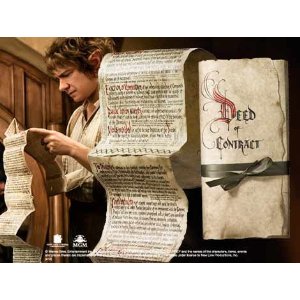
James Daily writes intensive, witty, and very astute analyses of the legal issues raised in feature films.  I love his piece on the 5-foot long  contract between Bilbo Baggins and the dwarves in “The Hobbit.”  Here’s a sample on the very important legal principle of “consideration” (which means that there has to be some sort of exchange).

Here, Bilbo is promising to go with the Company to the Lonely Mountain and performing various services there, including extracting the treasure, plus a few more services we’ll get to later. In turn, as we shall see, the Company promises to pay Bilbo one fourteenth of the profits, plus a few other obligations. Thus we have “a promise for a promise,” otherwise known as a bilateral contract.

There are some other details to notice in these clauses. One is the use of defined terms (e.g. “referred to hereinafter as Burglar”). The parties to a contract may define terms however they wish, even in ways that contradict the definition used in statutes or regulations.

This is important in this case because of the use of the defined term “Burglar.”  Contracts to do something illegal are ordinarily unenforceable (e.g. collecting on an illegal gambling debt). But here what matters is not that the parties used the word ‘burglar’ but rather what sort of meaning they assigned to that defined term. As we shall see, the contract doesn’t require Bilbo to do anything illegal (or at least not obviously illegal), and so the contract will probably not fail for use of a questionable term.

And then there are the liability waivers, the non-disclosure agreement, and the provision for binding arbitration!  The write-up on the tax consequences of Clark Kent’s decision to leave The Daily Planet to be a blogger is pretty good, too!

Related Tags:


Understanding Media and Pop Culture

“Everything Else Was True” — “Catfishing” with Manti T’eo and on MTV

Posted on January 23, 2013 at 3:59 pm

Notre Dame football player Manti T’eo says that he was the victim of a heartless hoax.  He thought he had a girlfriend who died of cancer.  But no such person existed.  Although he told people he had seen and spoken to her, it seems now as though his only contact with “her” was online.

This kind of fraud is now referred to as “catfishing,” based on the documentary that showed us a young man’s online relationship with a woman he thought was young, beautiful, and single, who turned out to be middle-aged and married.  At the end of that film, her husband told a story.

They used to tank cod from Alaska all the way to China. They’d keep them in vats in the ship. By the time the codfish reached China, the flesh was mush and tasteless. So this guy came up with the idea that if you put these cods in these big vats, put some catfish in with them and the catfish will keep the cod agile. And there are those people who are catfish in life. And they keep you on your toes. They keep you guessing, they keep you thinking, they keep you fresh. And I thank god for the catfish because we would be droll, boring and dull if we didn’t have somebody nipping at our fin.

That young man was Nev Schulman, who now has a series on MTV about other “catfish” relationships.  The episodes are heartbreaking, as over and over we see not just the pain of those who discover that they have been lied to, but the anguish of those who are desperate for intimacy and connection but do not believe that they can find it without misrepresenting themselves, and who don’t seem to understand that lying will just make them more isolated.  “Everything else was true,” says one “catfisher,” who lied about his age, his photo, where he lived, and how many children he had.

Online relationships are inherently deceptive because we can’t help projecting more of our hopes and wishes than we realize onto the words on a screen.  Parents should use the story of Manti T’eo and the “Catfish” television series to talk to teenagers about the importance of being careful.

Related Tags:


Internet, Gaming, Podcasts, and Apps Parenting Television Understanding Media and Pop Culture
THE MOVIE MOM® is a registered trademark of Nell Minow. Use of the mark without express consent from Nell Minow constitutes trademark infringement and unfair competition in violation of federal and state laws. All material © Nell Minow 1995-2026, all rights reserved, and no use or republication is permitted without explicit permission. This site hosts Nell Minow’s Movie Mom® archive, with material that originally appeared on Yahoo! Movies, Beliefnet, and other sources. Much of her new material can be found at Rogerebert.com, Huffington Post, and WheretoWatch. Her books include The Movie Mom’s Guide to Family Movies and 101 Must-See Movie Moments, and she can be heard each week on radio stations across the country.

Website Designed by Max LaZebnik