Rebecca Cusey Responds to Christian Complaints About Movies

Posted on January 23, 2012 at 3:00 pm

My friend Rebecca Cusey has a very thoughtful piece on the outstanding Patheos website titled, “Christians and Movies: Recognizing the Danger Within, Not Without.”  She writes:

In Matthew 15:10, Jesus states, “It is not what enters into the mouth that defiles the man, but what proceeds out of the mouth, this defiles the man.” In the passage, He taking religious people to task about their rigid dietary rules, but I think the words apply more broadly. It applies to all makers of dairy products, as Monty Python would say.

We must each do the hard work of recognizing our own weaknesses. For some, it may be that sexual content does indeed feed a weakness within. Others may revel in the dark side of violence or evilly enjoy gruesome scenes. For many women, the danger is a false depiction of romance, as in ‘Titanic,’ which feeds the selfish dissatisfaction in our hearts with our spouses and families.

It’s not only entertainment media, but all aspects of consumer culture that can light the warning lights in the dashboard of our hearts….We give media too much credit for having power over us, and let ourselves off the hook in the process. It’s much easier to blame media for our strayings and discontentments than to recognize they come from within.

I appreciate this point of view and her emphasis on the importance of taking responsibility for ourselves, our actions, and our responses to what we see.  On one hand, we must acknowledge that we are influenced by media and culture.  A multi-billion dollar industry is devoted to using the latest and most sophisticated techniques of psychological conditioning to get us to buy things (Cusey acknowledges that she is as or even more likely to be led into temptation by a catalog as a movie).  The artistic and commercial focus behind any movie or television show is on engaging our emotions and directing our thinking.   And part of responsible, mature behavior is protecting our minds and spirits from toxic influences as we protect our bodies from harmful substances.  But Cusey is right that too often religion-based fears about media fixate on the wrong questions.


 

Related Tags:


Understanding Media and Pop Culture
With Computer Alterations, Who Gives the Performance?

With Computer Alterations, Who Gives the Performance?

Posted on January 17, 2012 at 8:00 am

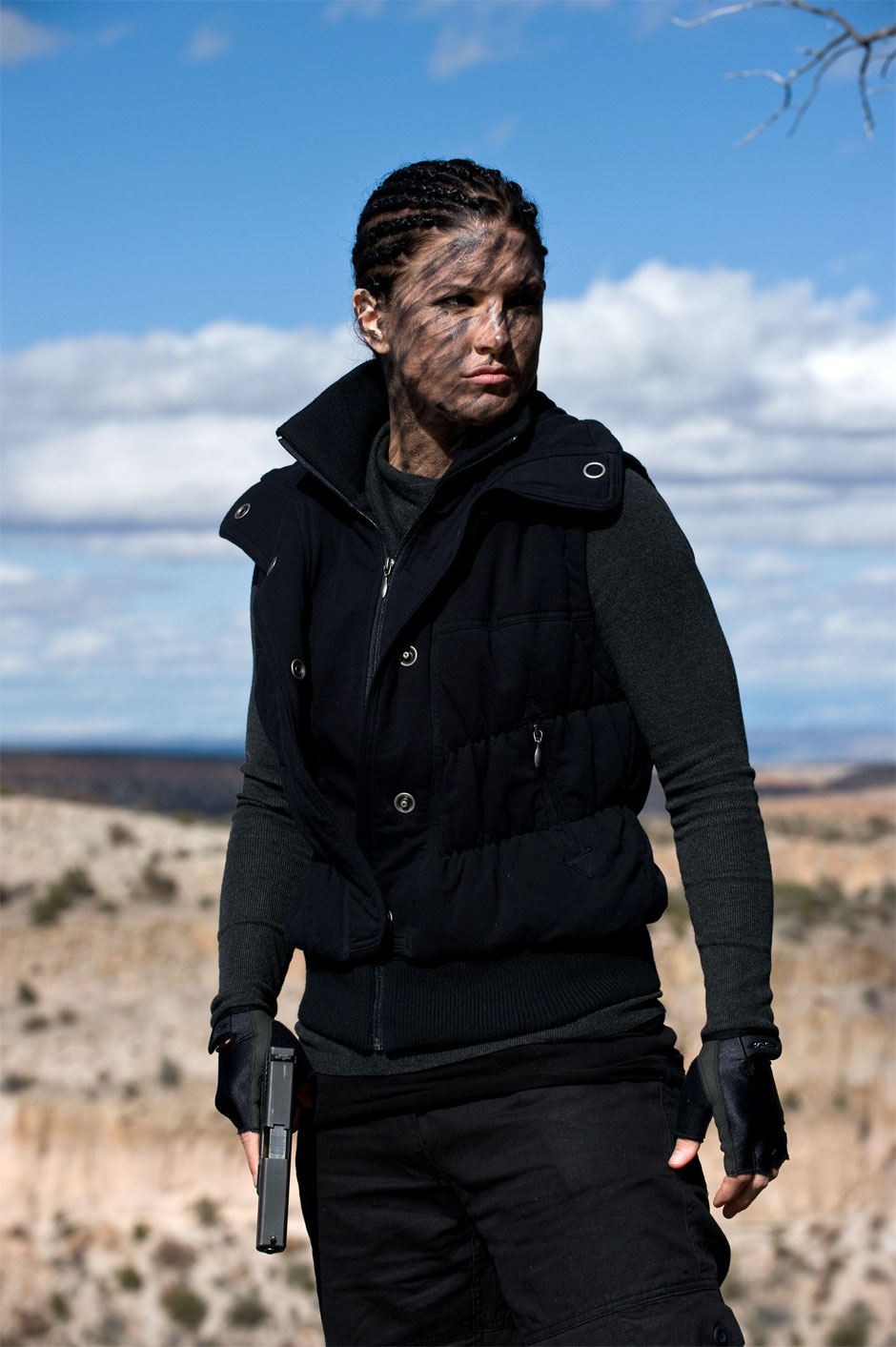
As we wait to see whether Andy Serkis will become the first actor to receive an acting Oscar nomination for a motion capture performance next week, this week’s release of “Haywire” raises some interesting questions about who really gives the performance.  Serkis provided the movements and expressions for the ape Caesar in “Rise of Planet of the Apes” and is considered the most talented actor working in motion capture today.  He also played Gollum in the “Lord of the Rings” and Captain Haddock in “The Adventures of Tintin.”  As the technology improves so that the slightest and subtlest expressions can be captured, it it is the actor, not the computer programmer or animator, who is primarily responsible for the performance.  It is quite an advance over the then-state of the art masks used in the earlier “Apes” films.

The Hollywood Reporter story quotes “Haywire” star Gina Carano was asked about having her voice altered by director Steven Soderburgh.

“Steven Soderbergh wanted Mallory Kane to be a completely different entity than Gina Carano,” she explained. “So he definitely went in and I went in to AVR and he did some tweaking.” But Carano, who starred opposite Channing Tatum and Ewan McGregor, clarified that,”even though it may not sound exactly like me, there are still parts of me that are in there.”

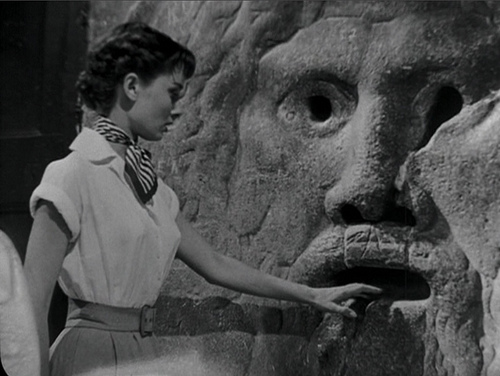
Meryl Streep and Leonardo DiCaprio had their faces dramatically altered with make-up and prosthetics for their performances as Margaret Thatcher and J. Edgar Hoover.  It does not take away from their skill as artists to say that this contributed to their performances, not only to our ability to see them disappear into the roles but their ability as actors to lose themselves in the characters.  And movies have always employed tricks, including capturing real-life surprises that lead us to think we are seeing the character’s reaction when it is really the actor’s.  For example, in a famous scene in “Roman Holiday,” Gregory Peck played a real-life joke on his co-star Audrey Hepburn.  Their characters were putting their hands in the mouth of a fountain that was said to bite off the hands of liars.  He pretended his hand had been bitten off and the look on her face is all Audrey, not the princess she was portraying.  And she won an Oscar.


Our understanding of what it means to act and to perform must evolve as the technology blurs the line between the actor and the other elements that contribute to what we see and hear.  When does the technology function to enhance the performance and when does it become the performance of the technician?


Related Tags:


Commentary Understanding Media and Pop Culture

Psalm 100: Make a Joyful Noise

Posted on January 10, 2012 at 12:00 pm

The title of “Joyful Noise,” this week’s release about a gospel choir starring Queen Latifah and Dolly Parton, comes from the King James Version of Psalm 100, one of my favorites:

 Make a joyful noise unto the Lord, all ye lands.

 Serve the Lord with gladness: come before his presence with singing.

 Know ye that the Lord he is God: it is he that hath made us, and not we ourselves; we are his people, and the sheep of his pasture.

 Enter into his gates with thanksgiving, and into his courts with praise: be thankful unto him, and bless his name.

 For the Lord is good; his mercy is everlasting; and his truth endureth to all generations.

Related Tags:


Understanding Media and Pop Culture

Oscar Candidate Filmed on a Smartphone

Posted on January 6, 2012 at 8:00 am

The Wrap reports that a contender for this year’s Oscars is “Olive,” made entirely on a smart phone, a Nokia N8.  It stars two-time Oscar nominee Gena Rowlands and its song, by Ben Lear (son of television producer Norman Lear) is on the short list for this year’s best song award.  It is a family-friendly, PG-rated story of a girl who visits three troubled adults and changes their lives without speaking.

The Wrap’s story has some fascinating details about what went on behind the scenes including an eyepiece from a dismantled 1940’s camera and dollies to movie the phone smoothly.  They also had to use hoods over their heads to keep out ambient light, just like the earliest days of movie-making.


Related Tags:


Awards Understanding Media and Pop Culture
New to the National Film Registry: ‘Forrest Gump,’ ‘Bambi,’ ‘Stand and Deliver,’ ‘Silence of the Lambs,’ ‘The Lost Weekend,’ ‘Norma Rae,’ and More

New to the National Film Registry: ‘Forrest Gump,’ ‘Bambi,’ ‘Stand and Deliver,’ ‘Silence of the Lambs,’ ‘The Lost Weekend,’ ‘Norma Rae,’ and More

Posted on December 28, 2011 at 6:59 pm

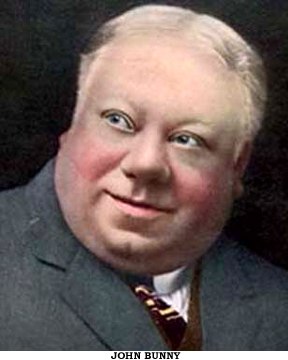
Each year the Librarian of Congress announces 25 titles to be added to the National Film Registry, created in 1988 in response to Ted Turner’s controversial efforts to colorize black and white films.  It is a sort of virtual library, identifying films of particular cultural, artistic, or historical value and significance.  As usual, this year’s National Film Registry list includes some very high profile films like the Oscar-winning “Silence of the Lambs,” “Forrest Gump,” and “Norma Rae,” the Disney animated classic Bambi and some obscure choices like the micro-budget 1977 film, “I, An Actress” and the 1912 silent comedy A Cure for Pokeritis starring then-superstar John Bunny.

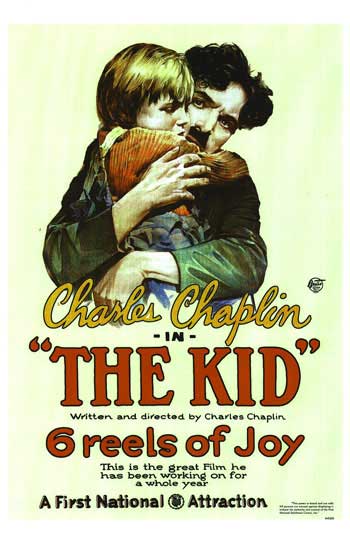
I was very pleased to see some of my favorite classic films on the list, including the screwball comedy Twentieth Century with Carole Lombard and John Barrymore (made into a Broadway musical), The Kid with Charlie Chaplin and Jackie Coogan, and Faces from pioneering director John Cassavetes, whose intimate, improvisational films would inspire a generation of filmmakers.  “Growing Up Female” was a breakthrough in its production, point of view, and distribution. Hester Street, by Joan Macklin Silver, superbly evokes the Jewish immigrant experience with a beautifully fresh and open-hearted performance by Carol Kane.  “Porgy and Bess” is controversial for its portrayal of African Americans but the Gershwin music and luminous Dorothy Dandridge and Sammy Davis Jr.’s performance of “It Ain’t Necessarily So” make it a classic.  “The Lost Weekend” has a heartbreaking performance from Ray Milland in one of the first movies about alcoholism.  Of special interest are documentaries about child labor and the politics of desegregation that were influential in form and content and “A Computer Animated Hand,” a one-minute film from co-Pixar founder Ed Catmull in 1972, a major step in the development of computer animation.

(more…)

Related Tags:


For Your Netflix Queue Understanding Media and Pop Culture
THE MOVIE MOM® is a registered trademark of Nell Minow. Use of the mark without express consent from Nell Minow constitutes trademark infringement and unfair competition in violation of federal and state laws. All material © Nell Minow 1995-2026, all rights reserved, and no use or republication is permitted without explicit permission. This site hosts Nell Minow’s Movie Mom® archive, with material that originally appeared on Yahoo! Movies, Beliefnet, and other sources. Much of her new material can be found at Rogerebert.com, Huffington Post, and WheretoWatch. Her books include The Movie Mom’s Guide to Family Movies and 101 Must-See Movie Moments, and she can be heard each week on radio stations across the country.

Website Designed by Max LaZebnik