
Interview: Alex Gibney of “We Steal Secrets: The Wikileaks Story”
Posted on May 31, 2013 at 11:13 am
I spoke to Alex Gibney, one of my favorite filmmakers, about his brilliant documentary on Wikileaks.
The most interesting character in the movie is Bradley Manning. Where is he now?
He’s in prison, finally Leavenworth, after eight months in solitary confinement and being kept in a cage in Kuwait. While he was in solitary confinement, he was stripped naked, they took his glasses, they kept the lights on, sleep deprivation, no blanket. It was abusive treatment that rose to the level of torture. It’s really a shocking episode which I think was trying to send a message in the most brutal way possible. Like the British navy used to hoist the wretch on the yardarm of the ship. “Pay attention, if you’re thinking about leaking stuff. This could happen to you.” I made a film about the poor kid, Steve Bartman, the Cubs fan, and I think he’s a scapegoat. Governments and organizations go after someone who’s weak because they can. And Manning was weak — in some ways. In some ways he was very strong. That’s what makes him such an interesting character. He’s what Phil Zimbardo calls “an everyday hero.” He’s not a Daniel Ellsberg type. He doesn’t stand up there with his hands on his lapels and proclaim. He has a lot of problems, a lot of issues, a lot of emotional turbulence in his life. But he was determined to do something. And so he is important to all of us because we are all weak, flawed individuals who can occasionally do something big.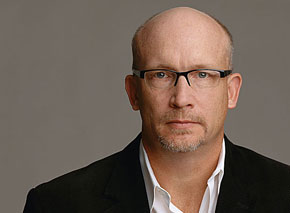
Why would the US military give a troubled, unstable person at a very low rank access to almost unlimited highly sensitive material?
They are desperate for bodies, especially smart people. He was in a discharge unit. A guy who was in it with him says in the movie, “This is the most unlikely military man you could possibly imagine.” But he’s in there because he wants to get a college education. This is the route for poor kids who want to go to college. The army doesn’t want to let him go because he is super-smart. But he has a lot of emotional baggage. He’s gay at a time of Don’t Ask, Don’t Tell. He thinks he might want a sex-change operation.
The music choices in the movie were excellent.
I worked very closely with a guy named Will Bates, from a group called Fall on Your Sword. He created these wonderful themes for each of the characters in an environment where you feel the space of the internet. And all of these people live out worlds in their imagination, and there’s no place to do that better than rock and roll. So you have Midnight Oil, which is a favorite group of Julian Assange. You have Radiohead for James Ball. And for Bradley Manning — he himself says he was listening to Lady Gaga singing “Telephone” while he was downloading the documents. It’s perfect in terms of what she’s concerned about — gender identity, bullying. And then at the end, the Ink Spots, “If I Didn’t Care.” There’s a ghostly quality to that moment, like “The Shining.” It takes you into the past, like an artifact in space that seemed to be mythic in some way.
What did you have to cut out of the movie that we may see on the DVD?
I wish we could have kept more on Julian’s childhood on Magnetic Island off the coast of Queensland. It got its name when Captain Cook sailed by there and said their compasses were “fouled.” What a perfect metaphor for Julian Assange, messing with military compasses. There was a big section we had on Tunisia, and a much longer section on Iceland. That’s when the goal was at its purest and they were operating on this barren rock. It was tough to let it go. This version is a haiku — we had a three hour and thirty minute cut. There are some interesting characters on the DVD extras.
Do we have too many secrets?
Maybe we don’t have enough. You have to assume once you go online, anything you put there can be made public. Yet while you’re online you feel like it’s a private, sacred space. But you’re really broadcasting to the world. When it comes to governments and corporations, we should demand that less is secret. That’s where corruption flowers. When two Reuters journalists are killed and they won’t give the video to Reuters, what’s that about? What about when the images of Abu Gharib were made public? Their concerns were not about what happened, but that when we released the photos we gave comfort to the enemy.
The New York Times and The Guardian play a crucial role in your film in acting as a filter for processing and providing context for the documents Manning provided, and making sure that what was made public was not detrimental to the safety of our troops. What will happen to that function as traditional journalism is in collapse?
 There’s a part of this film that argues for renegade organizations like Wikileaks, but there’s a part that argues very strongly for traditional journalism and the kind of decisions you have to make about what should and should not be secret and how stories should be properly contextualized. When I began this movie, I was interested in the leaking machine, the technical challenge and the technical solution, which we may have to continue to pursue as the Obama administration makes journalism more of a crime. But what Manning needed was a journalist, someone in whom he could confide and trust. That relationship turns out to be terribly important.
Instead, he had a relationship — online only — with a man who had the wrenching moral challenge of protecting Manning or telling the police what he knew.
The biggest problem for him is that he lied to Manning. He squeezed him like a lemon. He said, “Your secrets are safe with me.” Maybe he meant it at the time or maybe he had decided to keep probing so he could get more secrets. He’s a complicated character. If you’re a journalist, you have a bigger conundrum. You have to examine whether this information is in the public interest, whether people will be hurt. But Assange would say journalists are too subject to political pressure.
If everything becomes secret and leaking becomes a capital offense – which is what Bradley Manning is facing — where are we at now? You’d think the law would provide us that easy guidance, but it’s much more of a gray area. The job of a journalist is to find out stuff. The job of the government — sometimes — is to keep stuff secret. There’s a natural tension there. But now they want to make finding out stuff a crime.
Who should decide what is private?
It can’t just be corporations or government. It has to be all of us.
 The young country proved its commitment to independence with this war against Britain that gave us a President (Andrew Jackson), and our national anthem.
 Ken Burns’ series for PBS is meticulously researched and compellingly presented.
 The veterans of “the war to end all wars” tell their stories.
 It was the Cold War era, but a real war was being fought in Korea that embodied the geopolitical conflicts. This documentary covers that story, from Inchon to Pork Chop Hill.
 Many documentaries cover the politics and the protests, and that is covered here, too, but this series focuses on the stories of the battles and the men who fought them.
 Interviews with General Norman Schwarzkopf, former US Attorney General Ramsey Clark, former UN Iraq Program Director Denis Halliday, former UNSCOM team-leader Scott Ritter and many others help tell the story of the American response to the invasion of Kuwait.
 This is the award-winning story of one of the most dangerous postings in the U.S. military, covering the deployment of a platoon of U.S. soldiers in Afghanistan’s Korengal Valley. The remote 15-man outpost was named after a platoon medic who was killed in action.
 Three National Guardsmen (“citizen soldiers”) document their time in Iraq.