The Peanuts Movie

The Peanuts Movie

Posted on November 5, 2015 at 5:26 pm

B
Lowest Recommended Age: Kindergarten - 3rd Grade
MPAA Rating: G
Profanity: None
Alcohol/ Drugs: None
Violence/ Scariness: Some tense scenes of anxiety, hurt feelings, and shyness, some mild action scenes and peril (Snoopy’s flying ace battles)
Diversity Issues: None
Date Released to Theaters: November 6, 2015
Date Released to DVD: February 29, 2016
Amazon.com ASIN: B018WXLHVM

I admit that I approached this film with some of the same trepidation Charlie Brown approaches the football, knowing Lucy’s history of pulling it out of the way at the last second. I’m a fan of Charles Schultz’s original comic strip and fond of many of the animated specials and features that were careful to preserve the simplicity of his aesthetic. I was concerned that a more fully-animated version (in 3D!) would drown out the gentle storylines. But Schulz’s family has been careful to preserve his legacy. The script is co-written by his son and grandson and is timed to appear on the 65th anniversary of the strip and the 50th anniversary of the classic “Charlie Brown Christmas” special. And Blue Sky (which made the “Ice Age” and “Rio” movies) understands the material and its audiences — the older generations who are attached to the original version and today’s children, who are new to these characters.

The brightly colored, rounded figures were easier to get used to than I feared. The iconic details — Charlie Brown’s yellow shirt with the brown zigzag (it turns out he has a whole closetful) and wisps of hair are familiarly iconic. It’s not a period piece but there is a timeless quality. Phones are corded landlines. We never see a laptop and no one ever checks Google or GPS. Indeed, one of the most important items in the story is a pencil. It has glitter and a feather decorating it, but it also has the teeth marks of its sometimes nervous owner, and that is something you won’t find on a smartphone.

The movie does not commit any serious blunders. There are pleasant moments and welcome echoes of the past, but it does not justify its existence by adding anything of value to the canon already available. The first and best of the television specials, A Charlie Brown Christmas, is less than half an hour long, but it has more wit, charm, poignancy, than this feature film, and it includes one of the most beautiful holiday songs ever written, the piercingly bittersweet Christmastime is Here. In almost two hours, this film has time for just a snippet, to make room for inferior contemporary pop songs. A joke about “merch” seems ill-advised given the strip’s history of selling its characters for everything from insurance to toothbrushes.

The film begins promisingly, with Schroder playing the studio’s theme music on his piano and an immersive soft, gentle snowfall. It’s the most joyous day of the year — a snow day — and we meet the characters as they wake up and choose the winter activities they most enjoy. Charlie Brown decides it is a good time for him to try the kite again, figuring that the “kite-eating tree” will be out of commission in winter. It does not go well. Once school is back in session, a new student arrives, a girl with red hair, and Charlie Brown is smitten — and terrified. How can he impress her?

The Schulzes are true to the spirit of the original. We squirm with Charlie Brown as he agonizes over his insecurity, especially when he is faced with a dilemma at the school talent show and when he is awarded an honor it turns out he did not deserve. The sections with Snoopy’s Red Baron fantasy are of less interest and appeal and the 3D effects and the talents of top-tier musical stars (Trombone Shorty playing the “waa waas” for the adult voices and Kristen Chenoweth as Snoopy’s daring aviatrix love interest) are underused. The best use of this film is as an introduction to the classic television specials — and the original comic strips that inspired them.

Parents should know that this film includes some tense scenes of anxiety, hurt feelings, and shyness, and some mild action scenes and peril (Snoopy’s flying ace battles).

Family discussion: Which character is most like your friends? Which would you most want to be like? Why don’t we hear the grown-up voices?

If you like this, try: The Peanuts comic strip collections and the television specials.
Related Tags:


3D Animation Comic book/Comic Strip/Graphic Novel DVD/Blu-Ray Pick of the Week School Stories About Kids
The Martian

The Martian

Posted on October 1, 2015 at 5:50 pm

A-
Lowest Recommended Age: Middle School
MPAA Rating: Rated PG-13 for some strong language, injury images, and brief nudity
Profanity: Some strong language
Alcohol/ Drugs: None
Violence/ Scariness: Intense peril throughout with some injuries, some graphic and disturbing images
Diversity Issues: Diverse characters
Date Released to Theaters: October 2, 2015
Date Released to DVD: January 11, 2016
Amazon.com ASIN: B017S3OP34
Copyright 2015 Twentieth Century Fox

In a crackling sharp movie about brilliant people solving very tough problems, it is endearing that the first and most important involves one of the earliest skills developed by mankind. Indeed, it is the skill that made it both possible and necessary to develop the very first communities. It is the skill that turned nomads and hunters into complex societies: the cultivation of crops.

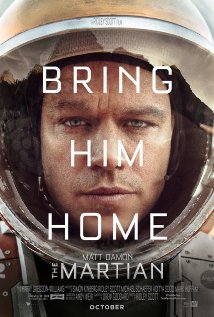
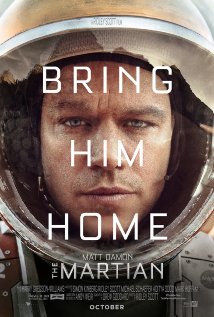
Mark Watney, played by Matt Damon as an endlessly resourceful Eagle Scout-type who would run over from next door to help carry your groceries, is part of a US astronaut team on a mission to Mars. When a storm comes up, they have to make an emergency evacuation weeks before the mission is completed. He is separated from the group and they believe he is dead. So, like ET, he is left behind on an alien planet. But no Reeses Pieces here, and no Elliot to befriend him. The first thing he has to do is figure out how to feed himself. “Fortunately,” he explains to us via his video log, “I am a botanist!” {Hmmm, just like ET, who came to earth to collect plant specimens.) That credential has never been announced with such deserved satisfaction. What if the one left behind was the expert in telemetry or navigation?

As he explains in an unnecessary coda, one of the tightly constructed film’s few excesses, he knew he was probably going to die. But his attitude was, “Not today.” He understands that any hope of rescue is 140 million miles away. Even if NASA could figure out that he was still alive and could figure out a way to rescue him, it would take years before they could reach him. He counts out the meals left behind by the crew to figure out how long he has before he has to have some sustainable source of nourishment. Of course there are no seeds. There is no water (Mark would be very happy with the latest reports that in fact there might be water on Mars, but for this movie, there is none.) The ground (I guess you can’t call it “earth”) does not have the necessary nutrients. But there’s a bag marked “Do not open before Thanksgiving,” and inside, there are potatoes. And Mark is a botanist. He rigs up a machine to create water and empties out the lav for fertilizer. He plants the potatoes and sure enough, little shoots appear.

Meanwhile, the crew is still on its way back to earth. On earth, there is a state funeral for Watney. And then an analyst looking at transmissions from Mars sees something that could be a person. NASA realizes that Watney is alive. Can they mount a rescue mission before it is too late? Given the risks to the crew, should they?

Director Ridley Scott and the nicely space-named screenwriter Drew Goddard (based on the book by first-time author Andy Weir) have created a completely believable and utterly immersive world, and Damon’s Watney is an idea hero for the story. He is smart, self-deprecating, optimistic, and inventive. “I’m going to science the s*** out of it!” he says, understanding that the odds are against him but also understanding that the only way to stay sane and focused is to work each problem, one at a time. He genuinely enjoys the challenge (well, most of the challenges) and that makes it fun to watch.
Watching the way he thinks through problems is endlessly enthralling. He even rigs together a version of ET’s Speak and Spell to phone home. On earth, we see characters debate the politics and practicality of a rescue operation, ranging from who should know what when to whether the US should work with the Chinese on a launch mission. Jeff Daniels as the head of NASA, Kristen Wiig as the media liaison, and the various people in charge of crew and equipment all have different perspectives and priorities. The political and personality puzzles are as tricky as the scientific ones.

Production designer Arthur Max and cinematographer Dariusz Wolski (who worked with Scott on “Prometheus”) provide striking images of stunning beauty that are both strange and familiar. At times, it almost looks like the red rocks of the American Southwest but we are also aware of the peril constantly surrounding Watney, where a crack in the helmet can mean death. The scenes on the spacecraft, with the captain (Jessica Chastain) and crew matter-of-factly floating through corridors, are brilliantly realized.

This is an exciting, absorbing story, an adventure with a genuine hero whose courage, fortitude, and intelligence will spark the hero inside anyone who see it.

Parents should know that this film includes intense and prolonged peril with injuries, some disturbing images, brief nudity, some strong language

Family discussion: What was Mark’s most difficult challenge? What were the differing priorities of the people at NASA and when there are conflicts, who should decide?

If you like this, try: “Gravity” and “Apollo 13” and the miniseries “From the Earth to the Moon” — and the book by Andy Weir

Related Tags:


3D Based on a book DVD/Blu-Ray Pick of the Week Science-Fiction
The Walk

The Walk

Posted on October 1, 2015 at 12:17 pm

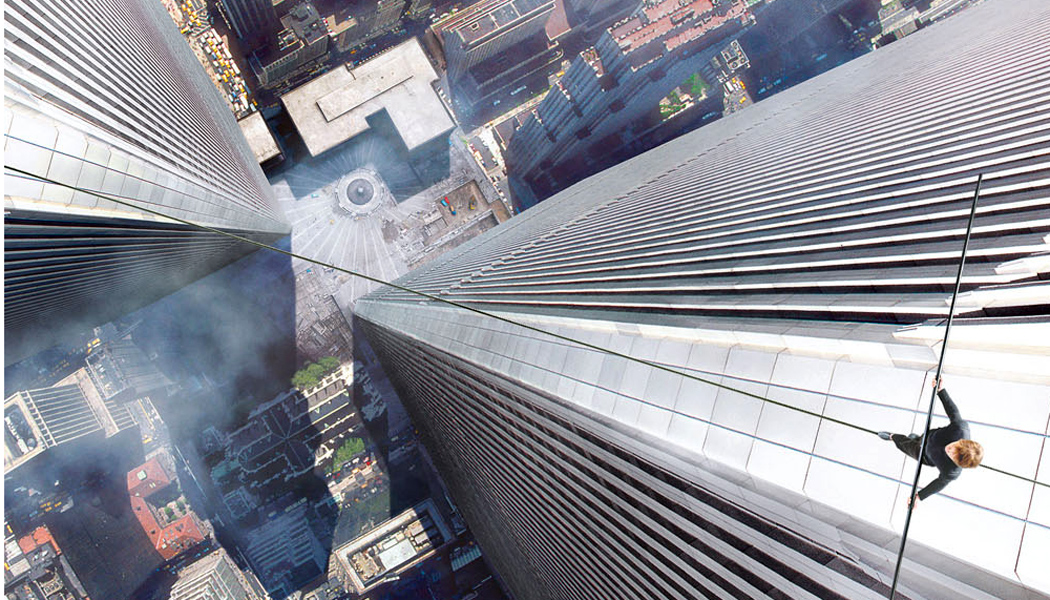
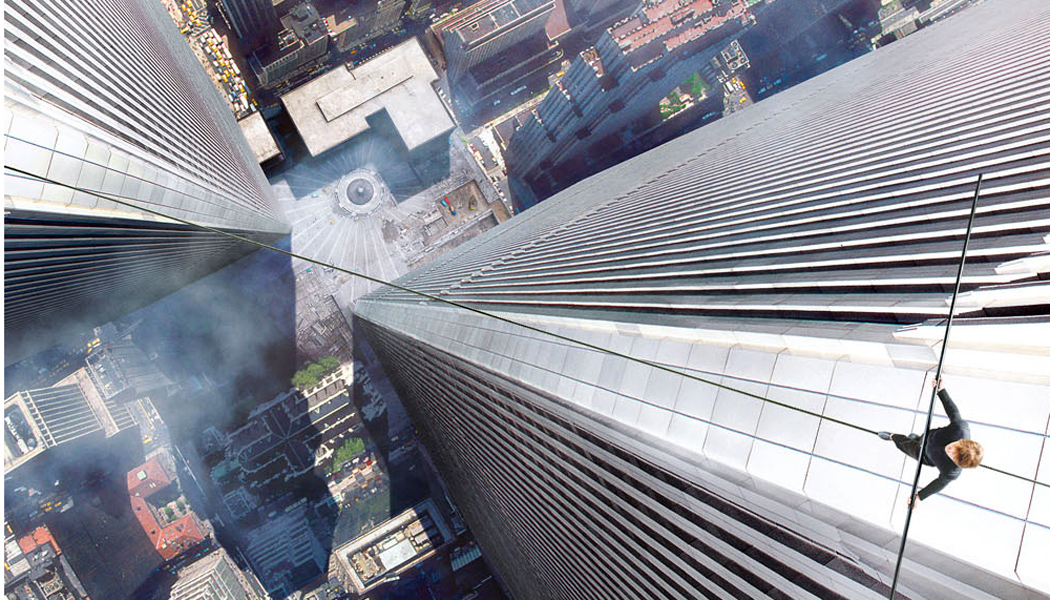
If you have vertigo or acrophobia, you will have trouble with “The Walk,” the story of Frenchman Philippe Petit’s tightrope walk between the towers of the World Trade Center. If you don’t have vertigo or acrophobia, you might have after you watch the movie, with the most stunningly realistic 3D effects ever put on screen. At least I think they’re still just on the screen. It sure feels like it goes on way, way behind it.

Copyright 2015 Sony
Copyright 2015 Sony

“Man on Wire,” a documentary about Petit’s 1974 stunt, or, as he might prefer to say, coup, won an Oscar in 2008. In this film, Joseph Gordon-Levitt, with an accent that just manages to avoid Pepe LePew dimensions, plays Petit, a street performer who saw a photograph of the World Trade Center in the waiting room of his dentist and was instantly consumed with the dream of a walk in the sky, more than 1300 feet above the sidewalk, between the towers. Like Petit himself, the movie does not bother with the question of why this might be a good thing to do. If pressed, he might just say, like Mallory, “Because it’s there.” The problem is that he doesn’t have an answer but still keeps talking and talking. For no reason we keep going back to Petit narrating the story from the torch of the Statue of Liberty. It is distracting and dull.

Petit could not or would not articulate it, but I think I know why. When huge institutions get together to create a world-record setting edifice — taller than the Eiffel Tower, the Frenchman notes — there is something irresistibly enticing about coming back as a lone soul and literally topping it. Director Robert Zemeckis, who can get more excited about the technology than the story in his films, may identify with that challenge. Petit wanted to walk across the sky, with an audience to appreciate it. And Zemeckis wants to recreate that experience for us, taking us to the roof of the Towers, and inviting us to look down.

Still, while we love movies about dreamers of impossible dreams who make them come true, we do like to have a reason, and Petit edges over the line from audacious dreamer to inconsiderate narcissist, despite Gordon-Levitt’s considerable appeal. This lends a hollow quality, overcome less from the story of the film to what is in our own hearts as we watch, knowing what the tragedy that lies ahead for the World Trade Center.

What works well in the first part of the film is Petit’s tutorials with a tightrope master played by Sir Ben Kingsley and the procedural elements once Petit and his team get to New York and start preparing as though they are getting ready to rob a bank. Indeed, it becomes a heist film of a sort because they have to find different ways to sneak into a building that is still under construction and gather the information they need to figure out how to install the cable and keep it from swaying or buckling. And then to install it. There are a lot of problems along the way, including Petit stepping on a nail and injuring his foot and dropping his black turtleneck from the roof when he is trying to assume his performer persona. They omit, however, my favorite detail from the documentary: Petit explains that in America, if there’s pencil in your pocket everyone assumes you are part of the construction team and are entitled to be there. Like the loss of the buildings themselves, Petit’s ability to exploit lax security is a poignant reminder of what we no longer have.

The last half hour or so of the film is breathtaking and well worth the price of admission in IMAX 3D. You will feel that you are on the tightrope with Petit. As the crowd gathers below and the police arrive (who thought a police helicopter would be a good idea?), Petit is suspended in the clouds, mentally, emotionally, and physically. For just a moment, Zemeckis and Gordon-Levitt bring us up there with him, and his dream, however frivolous and ephemeral, becomes ours.

Parents should know that this film has very risky and dangerous behavior, vertiginous 3D effects, brief nudity, some strong language, and smoking and drinking.

Family discussion: What big dream would you like to make come true? Who would you want to be your team?

If you like this, try: the documentary “Man on Wire”

Related Tags:


3D Based on a true story Drama IMAX
Hotel Transylvania 2

Hotel Transylvania 2

Posted on September 24, 2015 at 5:35 pm

Copyright Columbia 2015

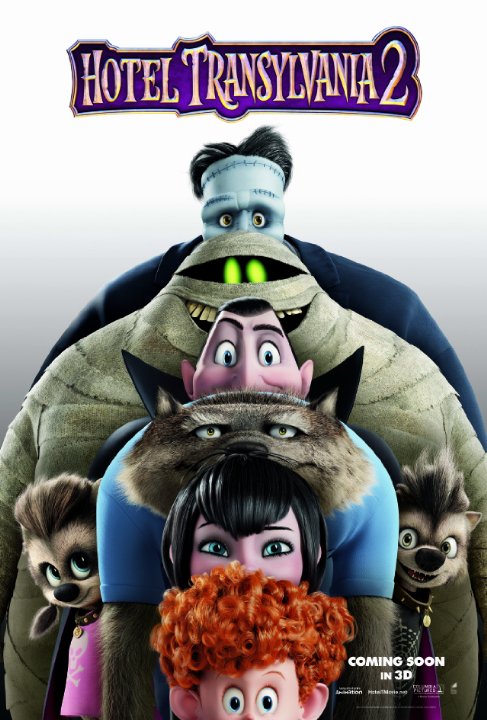
Vampire Mavis (Selena Gomez) and human Jonathan (Andy Samberg) fell in love in the first “Hotel Translyvania,” and in this sequel they get married and have a baby named Dennis. He has his father’s unruly red curls. But his grandfather Drac (Adam Sandler) wants to make sure he has inherited his mother’s vampire genes as well. “He’s a late fanger,” Drac tries to reassure everyone, especially himself.

“Hotel Transylvania 2” suffers from sequel-itis — not as fresh or imaginative as the original and it feels like it was made because they wanted to do a sequel and not because they had anything special to say. But it is still entertaining.

Even before the movie starts, the Columbia logo statue turns into a vampire bat and we know we’re off to a place where cute monsters rule. The wedding scene is a lot of fun as it re-introduces us to the characters, all played by wonderful comic voice actors including David Spade (Griffin, the invisible man, who keeps insisting that he has an invisible girlfriend), Kevin James as Frankenstein and Fran Drescher as his wife, Eunice, Keegan-Michael Key as Murray the mummy, Steve Buscemi as Wayne the very fecund wolfman, and Molly Shannon as his wife, Wanda. We skip ahead quickly to the arrival of Dennis, and then ahead again as he approaches his 5th birthday, and Drac is still waiting to see if he will become a vampire. (Maybe when he grows up, he could marry similarly mixed-race Renesmee from “Twilight”).

This is even more pressing because if he is human, Mavis wants to move to California, near Jonathan’s parents, so he can be around other humans. Even though Dennis loves monsters, she thinks he will be happier around his own kind of people. So, she and Jonathan fly to California to see whether it is right for them, leaving Dennis with his grandfather.

Big mistake.

Drac promises to keep Dennis at the castle/hotel but instead takes him on a journey to try to get his vampire side to come out. And of course he brings his pals along. They visit a monster summer camp and try to scare some humans, but find that their scare power is significantly diminished. Humans ask for selfies and one of them even compliments Drac on his chocolate cereal. Dennis may be a late-fanger but these cuddly monsters are no-fangers, and when you’re looking for silly fun with a hug at the end, that’s just fine.

Parents should know that this film’s themes include monsters and scariness but it is mostly for humor. There is some comic peril and violence with no one hurt, some potty humor, themes of family/culture difference, conflicts. and prejudice.

Family discussion: What are the biggest cultural or ethnic differences in your family? Which is your favorite monster and why?

If you like this, try: the first “Hotel Transylvania” and “Megamind”

Related Tags:


3D Animation Family Issues Series/Sequel
Everest

Everest

Posted on September 17, 2015 at 5:57 pm

Copyright 2015 Universal

This is why we can’t have nice things. As the brief history at the beginning of “Everest” points out, the first successful group to reach the summit of the world’s tallest mountain was led by Sir Edmund Hillary and Tenzing Norgay in 1953. The mountain was the exclusive province of hardy adventurers. But then four decades later, commercial tour groups began to clog the mountain. This made it possible for people who had no business to be there to arrive with certain expectations that people who were being paid to guide them were under a lot of pressure to deliver on. And the crowding itself made it more difficult to keep everyone safe.

Writer Jon Krakauer went on one of those trips for Outside Magazine in 1996, when a huge storm and some bad decisions resulted in the deaths of twelve climbers. His best-selling book, Into Thin Air: A Personal Account of the Mt. Everest Disaster is the basis for this movie.

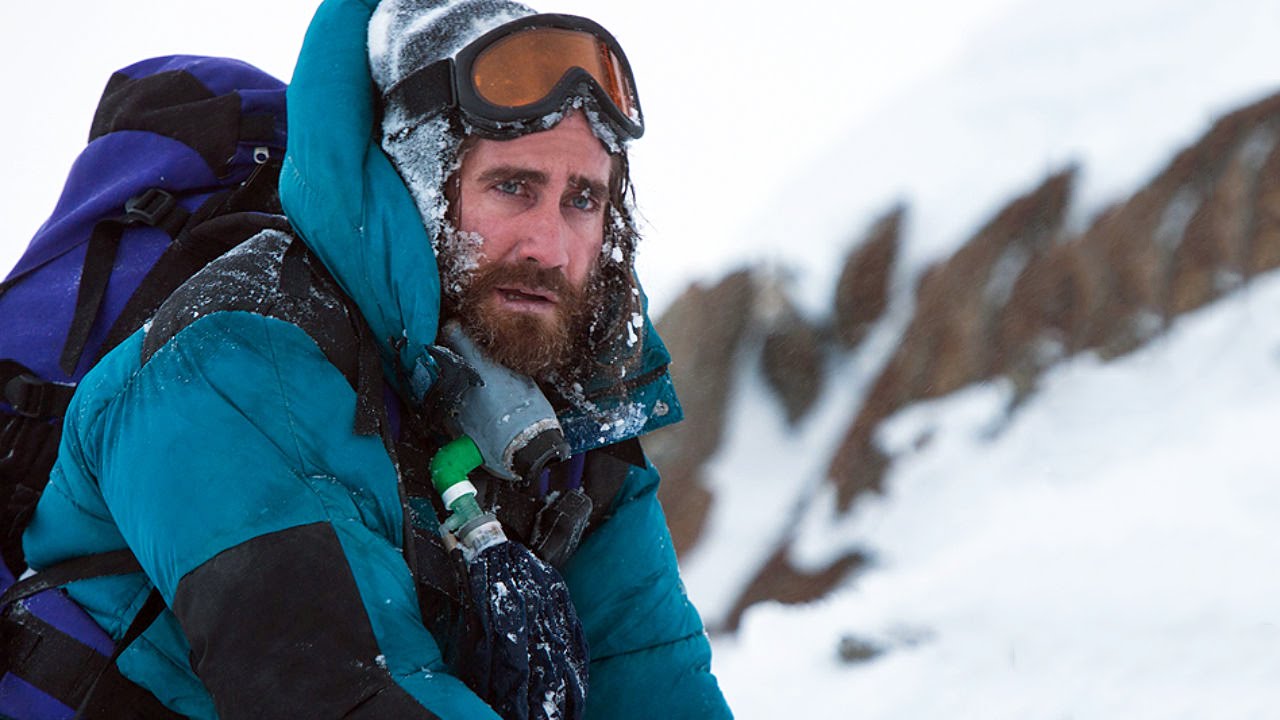
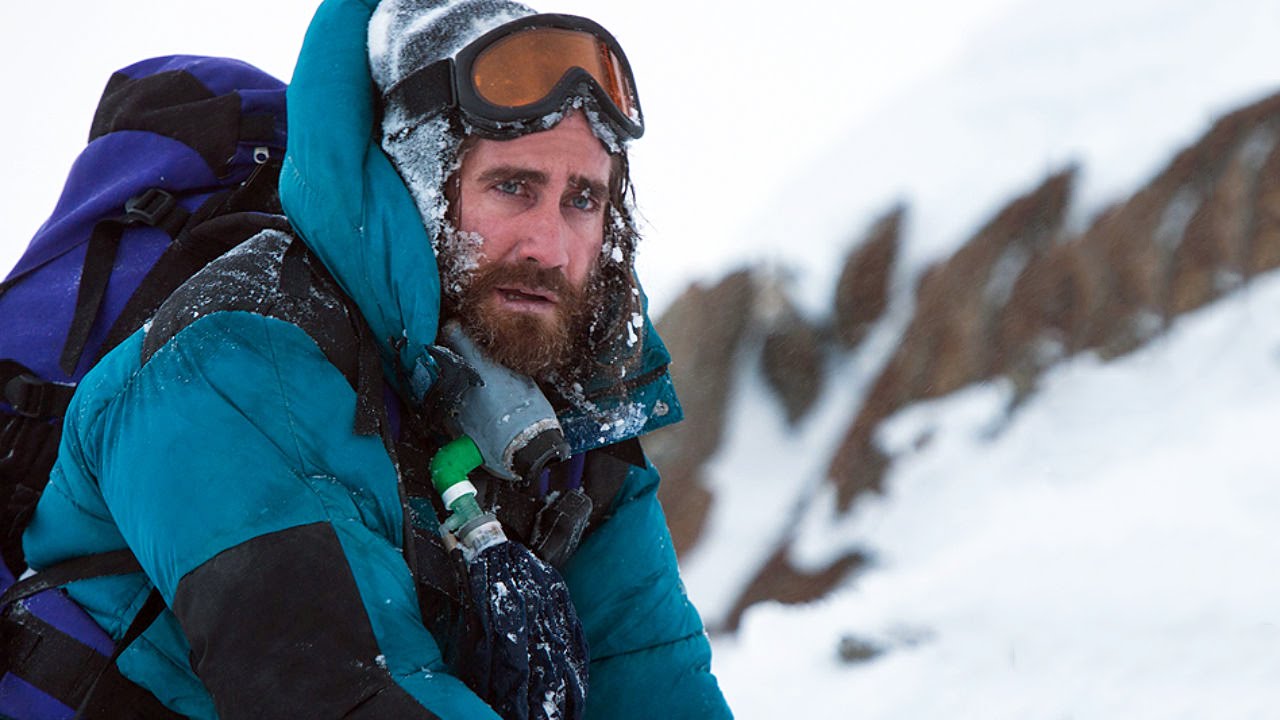
The scenery is spectacular, and the 3D IMAX cinematography is literally breathtaking, especially when one climber slips on a precarious ladder across a gorge and we get a vertiginous view straight down. But the people blocking the scenery never come alive to us as characters, partly because most of the time they are wearing near-identical parkas with hoods and speaking through masks or covered with snow, so it is impossible to tell them apart, and partly because so many of them are arrogant idiots. It is difficult to keep the characters straight, much less connect to them, and impossible to feel sympathy for people who make so many bad choices and then go to a place where the altitude, as high as the pressurized cabins of commercial aircraft, literally swells the brain so that thinking is impaired even further.

There are things we do because we dare. And there are things we do because we have big egos and $65,000. Asked repeatedly why they are climbing, no one has a good answer. Some echo Mallory: “Because it’s there!” but the very act of quoting someone else about daring undermines that spirit.

A woman from Japan (Naoko Mori) says that she has already climbed the other six peaks of the world’s seven tallest mountains. A man from Texas (Josh Brolin) wearing a Dole/Kemp t-shirt to make sure we know he’s a proud Republican, says he feels depressed when he’s not on a mountain — and that when his wife (Robin Wright) says she would divorce him if he went on another climb, he went on this one without telling her. A mailman/carpenter (John Hawkes) wants to tell the schoolchildren who helped him raise the money for the trip that ordinary people can do extraordinary things. Everyone else kind of mushes together.

Then there are the two rival tour guides, the only distinctive and relatable characters. Rob (Jason Clarke) is a tender-hearted New Zealander with a pretty pregnant wife (Keira Knightley) waiting back home. Scott (Jake Gyllenhaal) is a seemingly laid-back American who beams beatifically when he says “It’s all good,” but points out that all of his group made it to the top when Rob’s group has not.

The film touches on important issues of hubris and the impact of commercialization turing an area that was for thousands of years reserved for the hardiest of adventurers into a playground for people with too much money and too little judgment, but frustratingly abandons them for an increasingly confusing storyline. We know a lot of things are going wrong, but it is difficult to tell what is happening to which climber and where they are in relation to each other. The anguished faces of the people trying to make contact do not come close in impact to that one moment on the bridge.

Parents should know that this film depicts real-life events of extreme peril with many characters injured and killed, very sad deaths, some disturbing images, and some strong language.

Family discussion: What changes would you recommend to prevent these kinds of fatalities in the future? What would you say to Rob in those final conversations if you were Helen? If you were Jan?

If you like this, try: “Touching the Void,” a gripping documentary about another real-life mountain climbing accident and Jon Krakauer’s book about the events of this film

Related Tags:


3D Action/Adventure Based on a true story Drama IMAX
THE MOVIE MOM® is a registered trademark of Nell Minow. Use of the mark without express consent from Nell Minow constitutes trademark infringement and unfair competition in violation of federal and state laws. All material © Nell Minow 1995-2026, all rights reserved, and no use or republication is permitted without explicit permission. This site hosts Nell Minow’s Movie Mom® archive, with material that originally appeared on Yahoo! Movies, Beliefnet, and other sources. Much of her new material can be found at Rogerebert.com, Huffington Post, and WheretoWatch. Her books include The Movie Mom’s Guide to Family Movies and 101 Must-See Movie Moments, and she can be heard each week on radio stations across the country.

Website Designed by Max LaZebnik