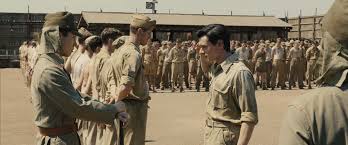
Mortdecai

Posted on January 23, 2015 at 9:36 am
Copyright Lionsgate 2015

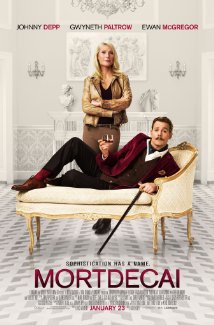
There’s a lot of noise in “Mortdecai” but what I remember most is the silences where everything pauses for a moment to allow the audience to laugh without drowning out the next witty riposte. Nope, just crickets, as there was no laughter, just grim resolve on the part of those of us professionally obligated to stick it out through the bitter end.

“Mortdecai” is based on series of 1970’s comic novels by Kyril Bonfignioli about an art dealer with connections to the upper class and the criminal underground, which provide him with many opportunities for mischief. I’m sure they are all high-spirited and merry and racy and fun, but by the evidence of this film they are also dated, overly precious, and not susceptible to translation into film. Perhaps it was possible decades ago and in print rather than on screen to find it funny when someone is repeatedly shot and injured, often accidentally by his employer, or when someone else is shot and killed. But not now and not like this.

Maybe gag reflexes brought on by Mortdecai’s mustache and widespread barfing brought on by tampering with a sumptuous buffet can be funny when left to the imagination. Not likely, but clever writing might just make it possible as our imaginations are very good at filtering descriptions according to our comfort levels. It’s another thing entirely when it is unavoidably seen and heard. Cue the crickets.

Over the past few years, with the exception of a brief appearance in “Into the Woods” Johnny Depp has made one catastrophically bad movie after another. As proof of the adage that no good deed goes unpunished, the success of his offbeat, fey Captain Jack Sparrow, initially objected to by the studio execs who were very unhappy with the early footage, has given Depp license to go way over the top with quirks and twitches in films like “The Lone Ranger” and “Tusk.” As I noted in my review, in “Transcendence” his performance was so robotic when he was playing a human that it hardly made a difference when he turned into a computer. Here, as the title character, a caricature of a pukka sahib colonial twit/Brit, embodies the fatal combination of profound unpleasantness with the expectation of being seen as irresistibly adorable not just by the other characters but by the audience.

Paul Bettany provides the film’s only bright moments as Jock Strapp, Mordecai’s Swiss army knife of a sidekick, as adept at ironing his lordship’s handkerchiefs as he is at hand-to-hand combat, getaway car driving, anticipating that Lady Mortdecai (Gwyneth Paltrow, looking like the cover of Town and Country in very fetching riding gear) will want the guest room made up for her husband as soon as she sees his new mustache, and bedding many, many, many ladies. Ewan McGregor does his valiant best but is wasted as the Oxbridge-educated MI5 official (and former classmate of Mortdecai, with a crush on Lady M). Director David Koepp, whose “Premium Rush” was a nifty little thriller with unexpected freshness and wit, has stumbled here with a film that is badly conceived in every way, like its title character imagining itself as clever and endearing when in reality it is dull and repellent.

Parents should know that this movie includes strong and crude language, drinking and comic drunkenness, sexual references and situations, some crude, bodily function humor, comic peril and violence including guns, with characters injured and killed.

Family discussion: What was the best way to resolve the issue of the mustache? Who should have the Goya painting?

If you like this, try: The Mortdecai Trilogy and the Austin Powers films

Related Tags:


Based on a book Comedy Crime Satire

Interview: David Heyman, Producer of “Paddington”

Posted on January 15, 2015 at 10:16 am

David Heyman was selected by Entertainment Weekly as one of the smartest people in Hollywood. It may be because he grabbed the rights to a children’s book called Harry Potter and the Philosopher’s Stone. I enjoyed his latest movie, “Paddington,” also based on a beloved children’s book series, and it was a lot of fun to talk to him about bringing the marmalade-loving bear to life.
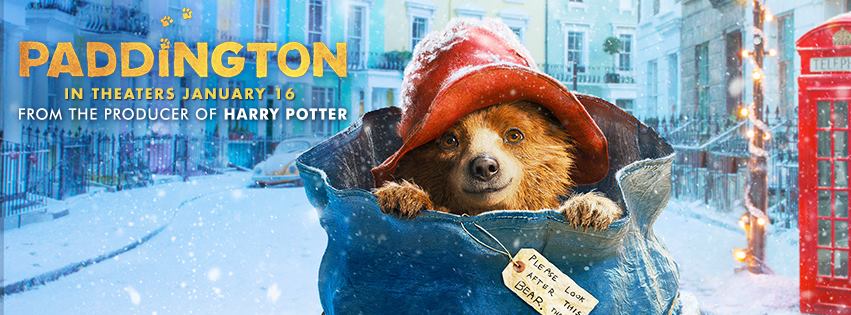
Paddington is known for his “hard stare,” and that is one of the highlights of the film. Have you ever tried doing a hard stare yourself?

Not frequently, but yes I have. I’m not sure I’m quite as effective as Paddington or can make people feel quite as uncomfortable but every once in a while I have to call upon my own hard stare.

It seems like Paddington’s hard stare would be a special challenge for the animators.

Copyright 2014 StudioCanal

I think that one of the reasons why it has taken so long for Paddington to get the film to actually happen is because the technology was not around to realize the bear. To have a bear who you are meant to feel with and care for, you know it’s the emotional center of the film. To have that little digital creation would not have been possible 10 years ago. To have eyes that listen, to make you look into them and make you feel sympathy and when he had the hard stare make you feel frightened is a great challenge and is a real testament to the brilliant people at Framestore who did the visual effects. They also did a film I made last year called “Gravity.”

Did Ben Wishaw, who provided the voice for Paddington, get wired up like Andy Serkis?

No, the difference between “Planet of the Apes” and Gollum and Paddington is Paddington is not a humanoid. So that motion capture we felt wouldn’t work and Framestore works more with animation than taking lots of reference. They did take some reference from, the brilliant clown called Javier Marzan who did a lot of comic work and tWhishaw, we filmed him performing as well.

Ben Wishaw’s voice is just perfect for Paddington.

Well, thank you. We began with Colin Firth who we thought we were so lucky to have and Colin was brilliant but his voice was just too chocolatey and velvety and mature for Paddington. And when we put his voice inside as we began to animate it just didn’t feel right. And it was quite interesting, it was a process and we realized we need someone more youthful, more innocent, with a bigger sense of wonder, a little bit off-center. And Colin obviously came to that realization before we did and so we went to Ben. As soon as we heard his voice it just felt right. He seems less confident, less assured and that felt right for that bear in that particular story.

What makes Paddington such an enduringly popular character?

We all in some ways feel like an outsider and that’s what Paddington is, he’s an outsider. So Ben’s voice really seemed to capture that. What I love about it is that it is about the kindness offered to strangers, it’s about embracing people who are other, it’s about being yourself. Paddington learns to not try and fit in but to be himself and in being himself he finds a home and a place that he belongs. And the Brown family, in our versions they are not the perfect family. They are a little dysfunctional. But through this bear, through embracing him they become whole again. And I think that in today’s world where there is so much friction and there’s so much pointing fingers at people because they’re not like us, I think that message of the kindness to strangers, of embracing others, is a really positive thing. t’s actually is a human story. It is a story about a family coming together it’s a story about an outsider finding a home, it’s about kindness, it’s about generosity, it’s about warmth.

I enjoyed the relationship between Mr. and Mrs. Brown, with him so risk-averse and her so spontaneous.

Sally Hawkins and Hugh Bonneville had almost a theater-length rehearsal period and over that time they begun to shape their characters. And in so doing I think gave it the truth that is not just paper thin.

And, not to give too much away, even your villain was acting out of slightly distorted but genuine family devotion.

There’s a wonderful Graham Greene line: to hate to lack imagination. And hate actually is so diminishing. There’s a context for why people do what they do, good or bad. And it doesn’t mean it’s okay. I’m not saying it justifies it but it explains it. And I think through explaining it in film and in life, in understanding the enemy you allow that not to be repeated. If you don’t understand it then it can just happen again and again if you just hate it you are diminishing it will happen again and again and again. To provide that motivation makes it more truthful.

I think that ultimately if you want to educate, encourage, effect change you need to make people realize the possibilities in life and embrace them. One thing I’m very proud of with this film is that it’s message is implicit but it’s not explicit. We don’t talk the message but the message is there. Because I think the danger with a lot of films, when you become polemic you end up preaching to the converted. That is why there is something in it for all ages. Seeing Paddington with my six-year-old and with my mother who is 77 and to share in that experience was one of the greatest experiences I’ve ever had in my life.

Related Tags:


Based on a book Behind the Scenes Interview

Inherent Vice

Posted on January 8, 2015 at 5:58 pm

B
Lowest Recommended Age: Adult
MPAA Rating: Rated R for drug use throughout, sexual content, graphic nudity, language and some violence
Profanity: Very strong, explicit, and crude language
Alcohol/ Drugs: Extensive substance abuse including drinking, smoking, and drugs, drug dealing
Violence/ Scariness: Peril and violence
Diversity Issues: Diverse characters
Date Released to Theaters: January 9, 2015
Copyright IAC films 2014

We love mystery stories because they reassure us that questions have answers and justice is possible. But some mystery stories are there to remind us that life is complicated and messy, and sometimes answers are just more questions. This is one of those stories.

Inherent Vice is a novel by the famously private author Thomas Pynchon, whose books are dense, complex, and thus rich fodder for grad students and intelligentsia. Writer/director Paul Thomas Anderson (“Boogie Nights,” “Magnolia,” “There Will Be Blood,” “The Master”) is also known for dense, complex stories, and he likes to focus on decay, corruption, and bruised innocence. They are well matched in this weed noir story, sort of Dashiell Hammett crossed with Hunter Thompson.

The original set-up is right out of a classic detective story. A beautiful woman named Shasta Fay Hepworth (Katherine Waterston) visits her ex-boyfriend, Doc (Joaquin Phoenix), some kind of hippie detective, to ask for his help. The narrator (singer Joanna Newsom), in a hypnotic, vocal fry deadpan, lets us know right away that Doc would be better off telling her to leave. But he cannot say no to Shasta or to a mystery, so he is on the case.

Shasta’s new boyfriend is a wealthy (and married) developer named Mickey Wolfman (Eric Roberts). Shasta believes that Wolfman’s wife and her boyfriend are trying to have him committed so they can get his money.  As Doc begins to look into this, he encounters many odd characters, most with their own unsolved mysteries, some of which begin to intersect with the Wolfman story or with each other or both.  And it all comes together, or doesn’t, in a haze of, yes, decay, corruption, and bruised innocence that is about the failure of the American Dream or existential chaos or the fragility of our concept of reality, or maybe just that the journey and those who accompany us along the way are more important than the destination.  Also, something about the optimism and passion for changing society of the 60’s giving way to the me-decade and passion for individual self-exploration of the 70’s.

Doc encounters a number of extremely colorful characters as he explores a series of mysteries that appear to be linked, or perhaps all part of one big mystery involving a secret and very powerful malevolent force.  The only one who seems to know what’s going on is the almost-never-seen narrator, and it’s not clear whether we’re supposed to root for the characters or laugh at them.  But as always, Anderson’s impeccable casting and music choices are captivating, and there is an amusing contrast between his attention to every detail of camera placement, editing, production design, and dialog and the convoluted storyline and druggy fog surrounding the characters.  I’m not sure what it was that I watched, but I have to admit I enjoyed watching it.

Parents should know that this film has just about everything we consider “adult content,” including constant very strong, explicit, and crude language, nudity and very explicit sexual references and situations including prostitution and adultery, drinking, drugs of all kinds and drug dealing, and violence including guns.

Family discussion: Why did Doc help Shasta? Why did he help Coy? Why is Doc a detective?

If you like this, try: “Boogie Nights” and “There Will Be Blood” by the same director and the book by Thomas Pynchon

Related Tags:


Based on a book Crime Drama Movies -- format Mystery

Into the Woods

Posted on December 24, 2014 at 5:55 pm

Copyright Disney Studios 2014
Copyright Walt Disney Pictures 2014

This is not a Disney movie. Oh, well, yes, it is a Disney movie in the sense that it is produced by Disney, which is the only possible explanation for the PG rating (and the slightly sweetened storyline), but this is not the happily ever after fairy tale story time we are used to from Disney. You didn’t remember that in the original version of Cinderella the mean stepsisters sliced off pieces of their feet to try to fit into the slipper the prince was using to find his true love?  That’s because it was, well, cut out of the classic Disney animated version as well as most contemporary printed versions.  But it’s back here, in a complicated, challenging retelling of classic fairy tales where having your wish granted may leave you worse off than you were before.

Parents looking for a movie for the family for the holidays need to know that this is not this year’s “Frozen.”  It is a sung-through (almost no spoken dialogue) and there are characters who are injured and killed, including parents of young children. It is a darker take on fairy tales.  The characters struggle with the consequences of their wishes and of the actions they take when they want something desperately. They lie and they steal to get what they want. And they learn that no one is all bad or all good. “Though scary is exciting, nice is different from good.”

Writer James Lapine says the idea came from a conversation with his frequent collaborator, Stephen Sondheim, who wanted his next project to be about a quest. Lapine wanted to write something about fairy tales.  And so “Into the Woods” became that project, a mash-up of many different classic fairy tales with a witch, and giants, and a dark place where the paths are not clear, a place for people who are yearning for something and willing to take some risks.  “I wish,” they all sing as the movie begins.  Cinderella, with her evil stepmother (Christine Baranski) and mean girl stepsisters, wishes to go to the festival held by the royal family.  The baker (James Corden) and his wife (Emily Blunt) wish for a child.  A boy named Jack (Daniel Huttlestone, who has a voice like a bell), wishes his milky-white cow would give milk and his mother (Tracy Ullman) wishes they had money so they could have enough to eat.  And a girl in a red riding hood (the very gifted Lilla Crawford) wants some bread to take to her grandmother (and some pastries for herself).

And there’s a witch (Meryl Streep) who wishes for something, too.  She tells the baker and his wife that she will remove the curse that is keeping them from having a child if they will bring her four things: a cow white as milk, hair gold as corn, a cape red as blood, and a slipper pure as gold.  The problem is that all of these items are essential props in other stories.  If the baker and his wife take them, then Jack will not have a cow to trade for magic beans, Rapunzel will not have hair to let down so her prince can climb the tower, Red Riding Hood will not be able to go to her grandmother’s house, and Cinderella’s prince will not be able to find her.  What happens to wishes when they cancel each other out? When one person’s wish is another’s nightmare? And when the handsome prince explains that he was raised to be Charming, but not necessarily Sincere? Is there any good in being good?

The characters explore themes of innocence, and the competing urges to protect children by keeping them from knowing about the dangers of the world and to protect them by making sure they understand those dangers. “How do you say it will all be all right/When you know that it might not be true?”

Even the witch tries to protect her (stolen) daughter from the scary world outside her tower. But children do not listen. They will grow up and want to leave, even if it means learning “secrets I never wanted to know,” as Red Riding Hood sings thoughtfully, after she is rescued from the belly of the wolf. On the other hand “children will listen,” sometimes when we don’t want them to, so we need to be careful in setting a good example and in taking care of them. And somehow, it is in taking care of them we become most fully ourselves. “Fairy tales understood us before we understood them,” we are told. This exploration of fairy tale themes shows us that they still understand us better than we understand ourselves.

Parents should know that this film includes fairy tale/fantasy peril and violence with some characters injured and killed (including two parents of children), some disturbing images and troubling situations, mild sexual references and non-explicit situations with some kissing.

Family Discussion:  What is your favorite fairy tale and why?  In the song where everyone blames someone else, who is right?

If you like this, try:  Revisionist fairy tales “Ella Enchanted,” “Stardust,” and “Ever After” and, for more from Sondheim, Six by Sondheim and Sondheim: The Birthday Concert

Related Tags:


Based on a book Based on a play Fantasy Musical

Unbroken

Posted on December 24, 2014 at 5:49 pm

A-
Lowest Recommended Age: Mature High Schooler
MPAA Rating: Rated PG-13 for war violence including intense sequences of brutality, and for brief language
Profanity: Some strong and offensive/abusive language
Alcohol/ Drugs: None
Violence/ Scariness: Intense wartime peril and violence, characters injured, abused, and killed, some disturbing images, parent strikes a child with a belt
Diversity Issues: A theme of the movie
Date Released to Theaters: December 25, 2014
Date Released to DVD: March 23, 2015
Amazon.com ASIN: B00HLTDC9O
Copyright 2014 Universal Pictures

Oscar-winning actress Angelina Jolie breaks into the top ranks of American directors with “Unbroken,” showing an exceptional understanding not just of actors, but of tone, scale, and letting the camera tell the story. Working with the magnificent cinematography of Roger Deakins (“True Grit,” “Skyfall”), she adopts a classical style well-suited to the WWII setting, but every choice is careful, thoughtful, and powerful.

Based on the best-seller by Laura Hillenbrand, this is the story of Louis Zamperini, the son of Italian immigrants. He was a rebellious kid who became an Olympic athlete. His bomber plane crashed over the Pacific, and he survived for 47 days at sea, before being captured with one surviving crewmate, by the Japanese. In the prison camp, he was singled out for horrific abuse and repeatedly beaten.

The screenplay by the famously off-beat Joel and Ethan Coen is straightforward, direct, and sincere, keeping the focus on the war years, with the incidents from Zamperini’s past brought it primarily to show us how he relies on his memories to keep going. “Nobody’s chasing me,” he tells his brother who is urging him to run faster as he trains for a race. “I’m chasing you,” his brother tells him.

That internalized sense of mission helps him hold onto the idea of his own power as the brutal Japanese captors try to take everything away from him.

The opening scene puts us in the sky, and Jolie superbly evokes the thrill and the terror of flying on a bombing mission in aircraft that seem barely past the era of the Wright brothers. The crash scene is vertiginously disorienting. Jack O’Connell plays Zamperini with an effortless masculinity, understanding that it has nothing to do with macho posturing, just an imperishable sense of integrity, courage, and honor. O’Connell, Finn Witrock (“Noah”), and Domhnall Gleeson (“About Time”) perfectly capture the rhythms of an experienced crew, some amiable wisecracks and bravado to recognize the perilousness of their situation, but always focused, on task, and always, always, putting the team first.

We become so attached that it is sharply painful to see the characters experience such deprivation and abusive treatment. Japanese pop star Miyavi (real name Takamasa Ishihara) plays the sadistic Mutsushiro Watanabe, known as Bird. He knows of Zamperini’s celebrity as an athlete and sees that he is a symbol to the other prisoners.

If the Bird can break Zamperini, it will crush the morale of the whole camp. So, he singles Zamperini out for beatings and mind games. But Zamperini knows that “we beat them by making it to the end of the war alive.” He simply will not give up, and defining his own sense of what it means to win allows him to maintain a sense of control that is his most powerful weapon.

It is gorgeously filmed, superbly acted, and directed with great sensitivity and compassion, but the real impact of the film comes at the end, when we learn through a few simple titles, what happened to Zamperini after the war. Even Jolie recognizes that there is nothing she can put on screen to match the real-life footage of Zamperini, back in Japan at four days before his 81st birthday, running with the Olympic torch.

Parents should know that this movie includes very intense and disturbing wartime peril and violence, with a plane crash, an extended period lost at sea, and grueling prison camp abuse, and some strong language including racist epithets. School-age bullies harass and punch a character and a parent beats a child with a belt.

Family Discussion: What was the toughest challenge for Louis? Why didn’t he give up? Why did he forgive his captors?

If you like this, try: the book, Unbroken: A World War II Story of Survival, Resilience, and Redemption, and Zamperini’s own book, Don’t Give Up, Don’t Give In: Lessons from an Extraordinary Life, along with the films Stalag 17 and The Great Escape, also based on real-life WWII stories of American prisoners of war.

Related Tags:


Action/Adventure Based on a book Based on a true story Drama DVD/Blu-Ray Pick of the Week Sports War
THE MOVIE MOM® is a registered trademark of Nell Minow. Use of the mark without express consent from Nell Minow constitutes trademark infringement and unfair competition in violation of federal and state laws. All material © Nell Minow 1995-2026, all rights reserved, and no use or republication is permitted without explicit permission. This site hosts Nell Minow’s Movie Mom® archive, with material that originally appeared on Yahoo! Movies, Beliefnet, and other sources. Much of her new material can be found at Rogerebert.com, Huffington Post, and WheretoWatch. Her books include The Movie Mom’s Guide to Family Movies and 101 Must-See Movie Moments, and she can be heard each week on radio stations across the country.

Website Designed by Max LaZebnik