The Incredible Hulk

Posted on October 22, 2008 at 8:00 am
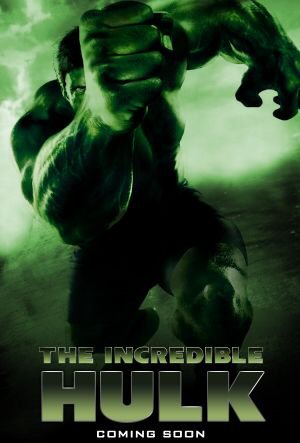
incredible-hulk-poster-0.jpgIt begins with a zippy credit sequence that dispatches with the backstory Ang Lee’s lumbering 2003 version took more than an hour to slog through. And we’re off! Who cares what kind of gamma rays turned Bruce Banner into the Hulk? We just want to see stuff blow up and crash!

You need to know that while I am a Comic-Con-attending fangirl, Hulk never did much for me, so keep that in mind when I tell you this is only a pretty good superhero movie. I like a superhero who is smart as well as strong. David Banner is a scientific genius, but when the Hulk is hulkified he’s too beasty. On the other side he mostly fights a lot of soldiers with a lot of guns and artillery, not as interesting as one worthy adversary.

There’s the obligatory cameo by Stan Lee. There are the obligatory cameos from former Hulk portrayers Bill Bixby (glimpsed on television in “The Courtship of Eddie’s Father”) and Lou Ferrigno and a cheeky variation on Hulk’s signature line. As always, Hulk has to deal with the bursting seams problem and find some stretchy pants. And as often happens with Marvel heroes, a cure seems within reach just as a greater evil based on the same transformative power requires him to get his Hulk on.

In movies like these there is usually a moment where the hero and heroine have to consult some scientist and Tim Blake Nelson is terrific as the professor who is “more curious than cautious.” Edward Norton is fine as Banner, who must plot and run while keeping his heart rate down to avoid an untimely Hulkization. Liv Tyler is lovely as the love interest but as is customary in these films she has little to do. There are some terrific action sequences. I particularly liked it when the Hulk used a car broken in two as boxing gloves. But it all seems a little antiseptic and over-CGI’d. There are echoes of current events — a reference to Homeland Security, some anti-government talk, and echoes of stories like “King Kong” and “Beauty and the Beast,” but they seem derivative and uninspired. Overall, it’s a forgettable popcorn flick with a too-brief appearance by Robert Downey, Jr. as a reminder of what a great superhero movie feels like.

Parents should know that the film has a lot of action violence, crashes and explosions, firing of weapons, bombs, brief non-sexual nudity (side view in shower), a brief non-explicit sexual situation, and some strong language.

Family discussion: What are the advantages and disadvantages of being “more curious than cautious?” Should Banner allow himself to be “cured?”

If you like this, try: Iron Man and the Spider-Man trilogy. And the Hulk always makes me think of the classic anger rampage scene from Woody Allen’s Stardust Memories:

Related Tags:


Action/Adventure Based on a book Based on a television show Fantasy

Speed Racer

Posted on September 16, 2008 at 8:00 am

Andy and Larry Wachowski, the folks behind the Matrix trilogy, have taken the iconic but decidedly low-tech 1960’s Japanese cartoon character and put the pedal to the metal with dazzling effects and electrifying action. Do what Speed Racer does — put on your red socks and GO!

Even as a child, Speed Racer could only think of one thing, making cars go as fast as possible. Not surprising — he was surrounded by racing. The family business was race cars. His father (John Goodman) built them and his older brother drove them. When his brother is killed in a crash, Speed (Emile Hirsch) takes over. On and off the race track he battles the competition, even when they do not fight fairly. By his side are his parents, his little brother, his and his girlfriend Trixie (Christina Ricci, looking like a real-life version of an anime heroine with her enormous eyes).

The plot is pretty much the same as the cartoon series, meaning light-weight and a little incoherent. Basically, evil forces are trying to stop Speed from winning the race. The sections with the kid brother and his chimp are slow points for everyone over age 9 but it is all great fun, with a hero to believe in and visuals that are both reassuringly retro and stunningly innovative. Every wallpaper and fabric, each car, helmet, and racetrack is meticulously designed to evoke a mash-up between Speed’s Norman Rockwell-style, solidly heartland home and the souped-up super space age world outside. The Wachowskis re-invent the color wheel with reds and yellows that make fire engines and school buses seem pale.

The dialogue is pared down to essentials: “You think you can drive a car and change the world? It doesn’t work like that!” “Maybe not, but it’s the only thing I know how to do and I gotta do something.” The plot is no more significant (or confusing) than in the cartoon originals. All we need to know is that in the world of Speed Racer you can drive a car and change the world — if you drive it very, very fast.

Related Tags:


Action/Adventure Based on a television show Comic book/Comic Strip/Graphic Novel Fantasy

The X-Files: I Want to Believe

Posted on July 24, 2008 at 5:00 pm

B-
Lowest Recommended Age: High School
MPAA Rating: Rated PG-13 for violent and disturbing content and thematic material
Profanity: Some strong language
Alcohol/ Drugs: None
Violence/ Scariness: Violence with graphic and very grisly images (severed limbs, wounds), guns, car crashes, character impaled, character is a convicted pedophile and there are references to child sexual abuse, some innuendo, reference to death of children, serial killers, s
Diversity Issues: Diverse characters
Date Released to Theaters: July 25, 2008

I want to believe, too, but this movie did not make it happen. Six years after the record-breaking television series ended its run, this attempt to carry the franchise forward is unlikely to make any new fans or entirely satisfy the old ones.
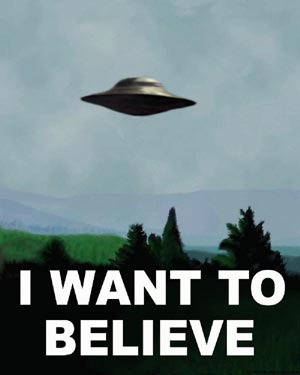
xfiles.jpgThe series made an advantage out of the disadvantages of television budgets and technology by recognizing that it is scarier to leave a good deal to the imagination than to give too much away. By deftly allowing the audience to project its own fears onto the show’s ambiguities, it tapped into its era’s skepticism and paranoia.
But its success means that expectations will be high, and so this movie disappoints with its familiarity and by simply giving too much away in both the dialogue and plot.
It still charts its course between doubt and faith. Five years have gone by and both Mulder (David Duchovny) and Scully (Gillian Anderson) have left the FBI. Scully is practicing medicine at a Catholic Hospital called Our Lady of Sorrows, desperately trying to save a boy dying of a rare disease. The FBI asks her to find Mulder because an agent’s life is at stake. His investigation into the paranormal has been discredited and he is living as a recluse, clipping out newspaper stories, but he and Scully are persuaded to come back to help the FBI determine whether a priest named Father Joe (Billy Connolly) is really having psychic visions about the abduction of the missing agent or whether he is faking, delusional, or a perpetrator. Mulder thinks Father Joe is worth listening to, but Scully does not because of her natural skepticism and her revulsion at his record of child abuse. Still, as another woman disappears and Father Joe’s comments about the case — and one to Scully herself about not giving up — seem to have meaning, they continue to rely on him.
The question of giving up is a theme throughout the movie as several characters have to decide when future effort is pointless or too painful. But the theme is pounded too hard and too often — we end up wishing the film-makers would just give up themselves and move on to something else.
Duchovny and Anderson are magnetic personalities and gifted performers with great chemistry. A scene where they snuggle together under the covers has a welcome natural vibe that keeps us rooting for them. (Be sure to stay all the way through the credits for some additional insights.) There are some striking visuals, particularly in the first scene, with a row of black-suited FBI agents crossing a vast snowy field, stamping with poles as they follow Father Joe, in search of a clue. But part of what made the series work was the sense that the plots were almost or even about-to-be possible. This one is at the same time too pedestrian and too far-fetched. It can coast on the affection of its devoted fans, but won’t make believers out of anyone.

(more…)

Related Tags:


Based on a television show Movies -- format Series/Sequel Thriller

Get Smart

Posted on June 19, 2008 at 3:00 pm

B+
Lowest Recommended Age: High School
MPAA Rating: Rated PG-13 for some rude humor, action violence and language
Profanity: Some strong language
Alcohol/ Drugs: Drinking
Violence/ Scariness: Action-style and comic violence, guns, lasers, bombs, characters in peril
Diversity Issues: Strong female character
Date Released to Theaters: June 20, 2008

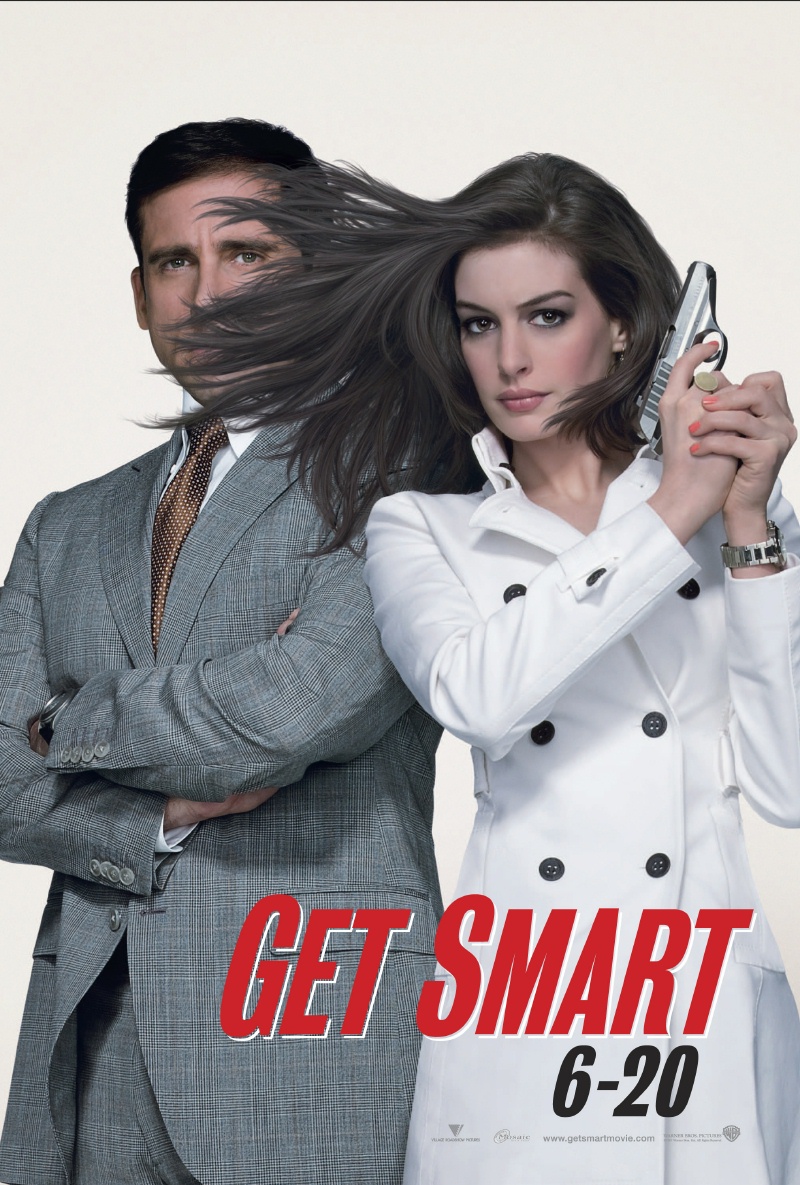
getsmart-%282%29.jpgThe big-screen version of the classic 1960’s television show created by Mel Brooks and Buck Henry is more than an update. It shrewdly tweaks the original, making its hero, Maxwell Smart (Steve Carell) smarter and more capable than the bumbling and befuddled but always game and confident spy played by Don Adams and ramping up the action, and the result is a refreshingly entertaining summer popcorn movie.

The television show could get away with a wilder, more slapstick tone. At the time, spy stories like the early James Bond and television’s The Man From U.N.C.L.E were wildly popular and ripe for parody. But fact and fiction have made the audience less easily dazzled by spycraft and the non-stop silliness of the “Naked Gun” and “Scary Movie” series have made the audience too familiar with that category of comedy convention. Movies are longer and special effects are bigger, so there is the time and capacity for some action sequences.

But the movie will also satisfy fans of the show with its most memorable characters and catch phrases. Carell does not copy Adams’ preeningly clueless characterization but brings his own take — still clueless, but more endearingly sincere. His Maxwell Smart is actually very good at what he does. He analyzes data. He’s a desk guy. But he wants to be a field agent and has worked very hard to get there. The Chief (Alan Arkin, exasperated) does not want to see his best researcher turn into his far-from-best field agent. But when the agents list is compromised and he needs someone whose name is not known to anyone, Smart gets his chance.

He is assigned to work with Agent 99 (Anne Hathaway), an experienced agent who has just had an identity reassignment including a new face. And the two of them are sent to track down a rogue weapons dealer (Terence Stamp, with the indispensable attribute of a bad guy: an English accent), his eastern-European henchmen, one of whom could be a body double for the Yeti.

The action scenes are exceptionally well-paced, genuinely exciting and often very funny. Carell makes Smart an appealing character, a bit of a Walter Mitty who is ideally (and literally) suited for a desk job but who dreams of making the kind of contribution that can only be made in the field. Arkin steps easily into Ed Platt’s shoes (yes the shoe phone makes an appearance) as the Chief and Dwayne (The Rock) Johnson brings the right combination of glamor and wit to the role of a top agent. And the casting for the Hymie character is so perfect I will not spoil it by saying any more.

It is about 20 minutes too long, with one too many set-ups, and the last one drags a bit. But fans of the television show will enjoy some riffs and references to its most popular gags and tag lines and those who are new to the characters will find a lot to enjoy.

Related Tags:


Based on a television show Comedy Movies -- format

‘Get Smart’ Then and Now

Posted on June 17, 2008 at 2:00 pm

The New York Times has a great feature on adapting the 1960’s television show “Get Smart” for the big screen, staying true to the spirit of the original and with in-jokes for the fans but updating it and making it appeal to new audiences.
This page has some scene by-scene comparisons — take a look.

Related Tags:


Based on a television show
THE MOVIE MOM® is a registered trademark of Nell Minow. Use of the mark without express consent from Nell Minow constitutes trademark infringement and unfair competition in violation of federal and state laws. All material © Nell Minow 1995-2026, all rights reserved, and no use or republication is permitted without explicit permission. This site hosts Nell Minow’s Movie Mom® archive, with material that originally appeared on Yahoo! Movies, Beliefnet, and other sources. Much of her new material can be found at Rogerebert.com, Huffington Post, and WheretoWatch. Her books include The Movie Mom’s Guide to Family Movies and 101 Must-See Movie Moments, and she can be heard each week on radio stations across the country.

Website Designed by Max LaZebnik