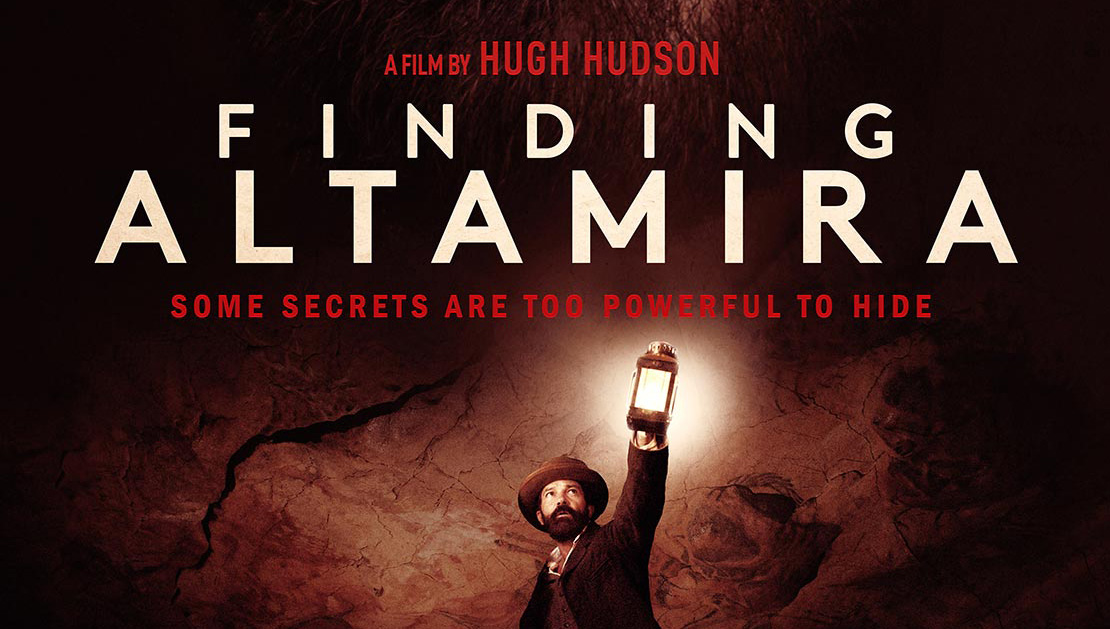
Copyright 2016 Mare Nostrum ProductionsOne of the most deeply moving, inspiring, and just plain thrilling experiences of my life was visiting the legendary Altamira cave, where the earliest humans created art that is stunningly beautiful. It is the earliest work we have that tells us something about the spirit, sophistication, understanding, and aesthetics of our ancestors who lived four or five times as long before ancient Egypt as ancient Egypt is from us. The paintings are every bit as beautiful and sophisticated as Michelangelo’s Sistine Chapel or Rembrandt’s Last Supper.
Imagine being the first modern person to see them, to wander into a cave and find perfectly preserved paintings of animals extinct for thousands of years. This is the story of Marcelino Sanz de Sautola (Antonio Banderas), a nobleman scholar who first identified the cave paintings prehistoric in the 1870’s. The focus of the film is the rejection of his conclusions by the church, which considered them heretical and a threat to their power, and by the scientists of the time, who considered them a secular form of heresy as well. Like the cinematic portrayals of Darwin (“Creation”) and Stephen Hawking (“The Theory of Everything”), it is also the story of a scientist married to a woman of faith, and the conflicts that creates for their relationship.
Director Hugh Hudson (“Chariots of Fire”) has a feel for period drama, but some striking shots cannot make up for static storytelling and a clunky script. There is too much focus on Marcelino’s relationship with his science-minded young daughter (one scene of her gazing at the paintings as they come to life would be more than enough) and the conflicts with his wife. The dialogue is clunky and over-explanatory, more suitable for an educational film to be shown in middle school than a theatrical release. Frustratingly, the movie never really conveys the astonishing splendor and the vibrant colors of the paintings themselves, the way the artists used the surface of the cave for perspective and shaping of the images. For that see Werner Herzog’s “Cave of Forgotten Dreams,” about the cave paintings at Chauvet, a movie that comes much closer to living up to the art to which it pays tribute.
Parents should know that this film has some peril and confrontations and a clash between religion and science.
Family discussion: Why do some people see a conflict between religion and science? Who is most like Marcelino today?
Rated PG-13 for some peril and brief strong language
Profanity:
Brief strong language
Alcohol/ Drugs:
Acohol
Violence/ Scariness:
Intense peril, dire and tense real-life situation, airplane near-crash
Diversity Issues:
None
Date Released to Theaters:
September 9, 2016
Date Released to DVD:
December 19, 2016
Amazon.com ASIN:
B01LBWHQRA
Copyright 2016 Warner Brothers
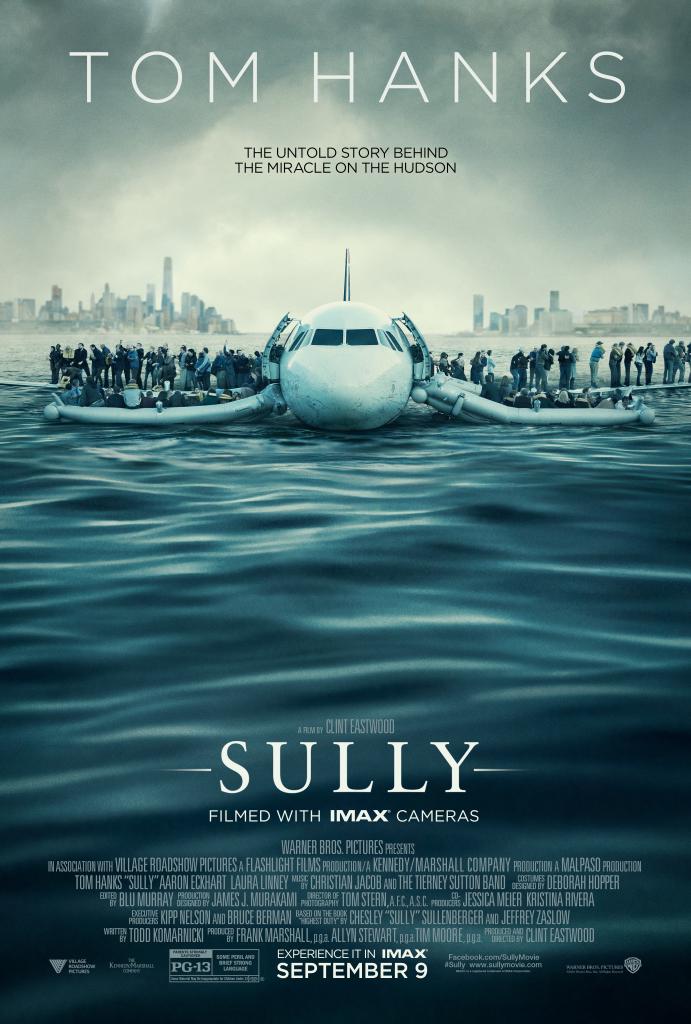
Pay attention to the numbers in “Sully,” the new movie from director Clint Eastwood, with Tom Hanks as “Sully” Sullenberger, the pilot who lost both engines and landed his plane safely on the Hudson River on January 15, 2009. 208 is the number of seconds that Sully and his co-pilot, Jeff Skiles (Aaron Eckhart) had from the time two “bird strikes” took out both of the plane’s engines. 1549 was the number of the United flight, an Airbus A320-214 flying from New York’s LaGuardia Airport to a stopover at Charlotte Douglas International Airport. 155 is the number of people whose lives were saved by Sully’s quick thinking. And 17 — I will let you find out for yourself why that number matters in one of the film’s key turning points.
We know what happened. No one can forget those images of the passengers standing on the wings of the plane on the river in freezing weather. And 208 seconds, no matter how tense and exciting, is not enough for a film. Screenwriter Todd Komarnicki sets the film in the days after the “controlled ditching” (that is the technical term), as Sully and Skiles are lauded as heroes by the media and cross-examined with skepticism by the investigating authorities, overseen by the National Transportation Safety Board. The facts were improbable, even unimaginable. The panel chair (“Glee’s” Mike O’Malley) notes dryly that they have never before listened to the “black box” recording in the presence of the people on the tape. Everyone in the room knows that is because they were all dead. When asked about “the crash,” Skiles interrupts to correct the choice of words: “It was not a crash. It was a ditching, a forced water landing.”
Even Sully, following the intensity of the emergency landing and his concern for what he refers to as the “155 souls” on board, including the crew, is in something of a daze. He is peppered with questions: “When did you last have a drink? Are you having trouble at home?” He is interviewed by Katie Couric and appears with the crew on David Letterman’s show. And yet, he is facing a challenge every bit as daunting and far more complex than losing two engines at a low altitude. There is the relentless, often hostile, dissection of every one of those 208 seconds through an extensive government investigation and the media spotlight, reviewing every decision, every risk assessment, every protocol. Was that second engine really out? Could they have made it to a runway in New Jersey? The only questions tougher and more suspicious than those of the investigators are those Sully asks himself. He is numb from the trauma of the forced landing and especially from the excruciation hours until he was told that all 155 souls were safe.
The script from screenwriter Todd Komarnicki, based in part on Sullenberger’s book, is one of the most well-crafted, tightly constructed screenplays of the year, efficient in providing us the information we need without getting us lost in technical jargon, and making each return to the seconds of crucial decision-making more revealing and more compelling. Hanks, as always, is superb in conveying the ultimate of decency and integrity. And I promise, after this, when they recite the safety details at the beginning of your flight, you will listen.
Parents should know that this movie has extreme, intense peril with some disturbing images. Characters drink and use some strong language.
Family discussion: What experience and character qualities made it possible for Sully to think through his options so quickly and figure out a way to save everyone on board? Were any of the questions they were asked unfair?
If you like this, try: “Apollo 13” and “Captain Phillips,” two other fact-based films with Tom Hanks in charge of a vessel in trouble.
Trailer: Lion, the True Story of a Lost Boy Googling His Way Back Home
Posted on September 4, 2016 at 4:40 pm
At age 5, Saroo Brierley was separated from his mother and brother in India and ended up in Australia, adopted but always longing to find his family again. That true story is brought to the screen in “Lion,” starring Dev Patel as a man who searched the earth — via Google, to find his way back home.
Rated PG-13 for brief strong language, smoking, a violent image and a drug reference
Profanity:
Brief strong language
Alcohol/ Drugs:
Smoking, reference to drugs
Violence/ Scariness:
None
Diversity Issues:
A theme of the movie
Date Released to Theaters:
August 26, 2016
Date Released to DVD:
December 12, 2016
Amazon.com ASIN:
B01LTHMFPK
Copyright 2016 Miramax
People who make movies know that we are eager to see couples falling in love. If they throw in a chirpy pop song over a montage of the highly attractive pair walking on the beach and laughing together at a street fair, we are happy to believe that they are in love and we can move on to the (short-term) complication before the happy ending.
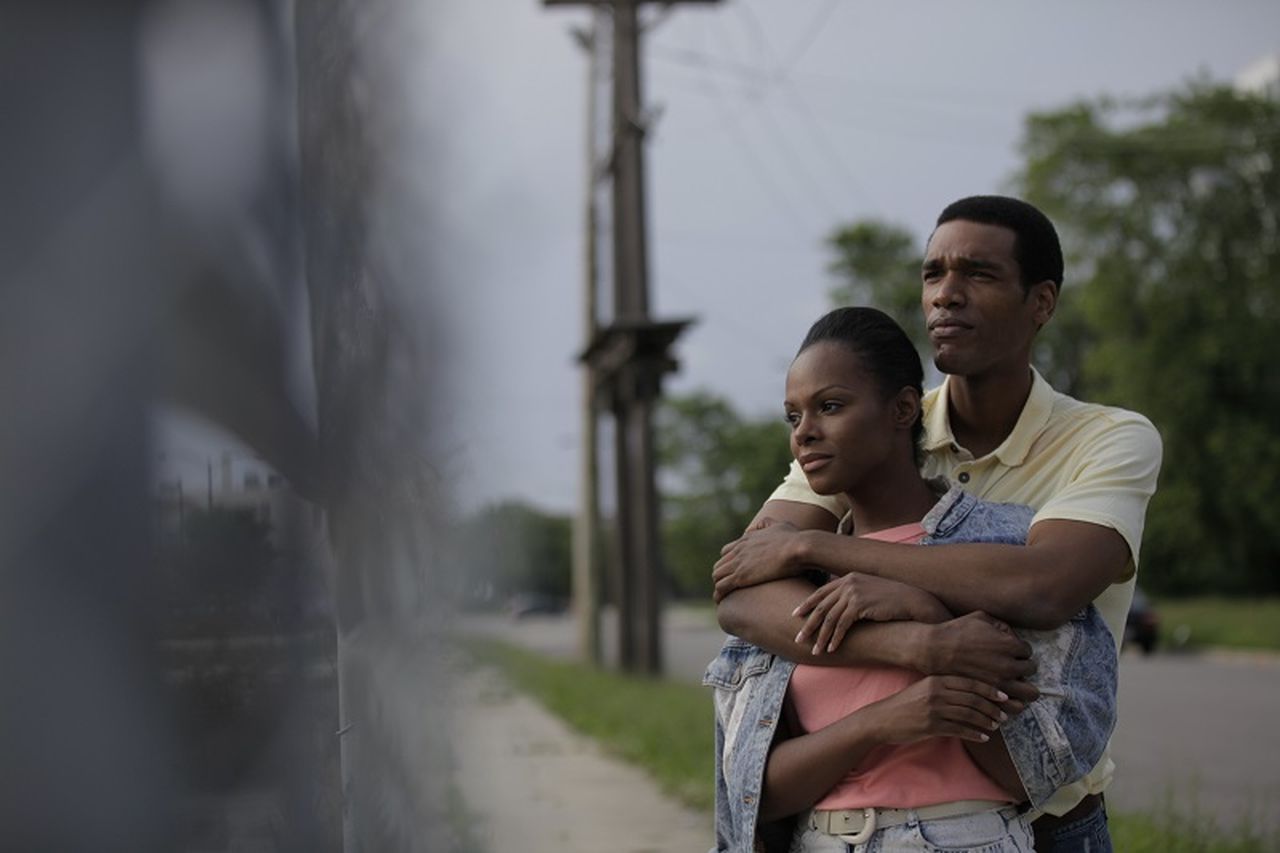
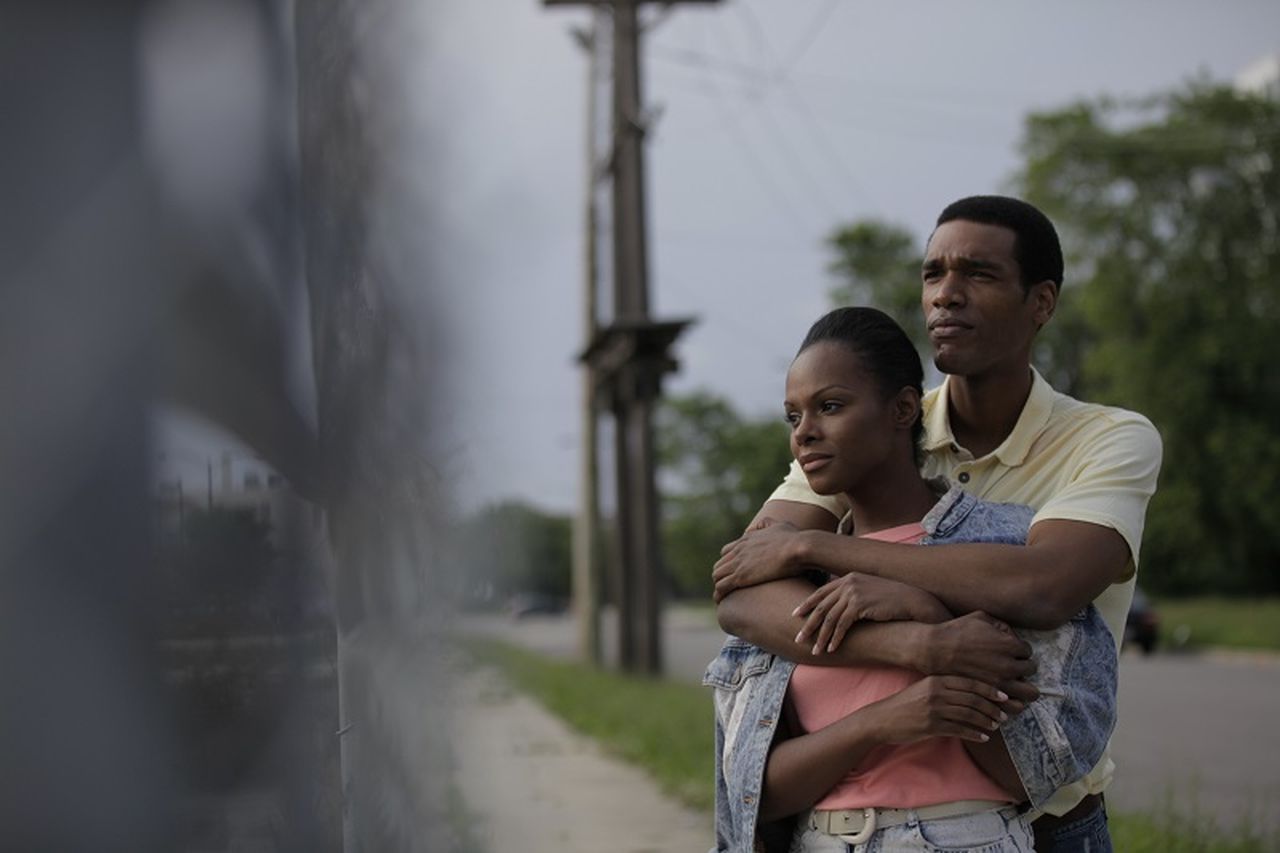
“Southside With You” is a rare movie that shows us what it is really like to fall in love, over the course of an all-day first date. It would still be utterly witty, charming, and captivating even if it was not based on the real-life beginning of the romance of Barack and Michelle Obama. The historical context is primarily significant because we start off with information the characters do not have. We know what they will do and who they will become. But it also is especially meaningful as we come to the end of the Obama administration, and only the most partisan opponents can fail to appreciate their graciousness, elegance, and family values — and the true partnership and romantic spark that is evident in their relationship.
We begin with the amusing contrast of their preparations for the date. Michelle Robinson (Tika Sumpter, who also co-produced) is put together so meticulously that her father (Phillip Edward Van Lear) teases her: “Can’t you at least run a comb through your hair?” She insists to her parents, as she will to Barack, that this is not a date. She is just accompanying the law student she has been assigned to supervise for the summer to a community meeting.
Then there is a glimpse of his “preparation” for the date — smoking and reading a book. And losing track of the time. “You’re late,” she says when he arrives at her home. “I was hoping you wouldn’t notice.” She points out that she is his supervisor and she has noticed his lateness at work as well. She also notices, but does not mention, that the floorboard of his car is rusted through. One of the pleasures of this film is listening in as two extremely intelligent people uncertain about where they are going but certain they want to improve the lives of the people in their communities, getting to know one another through a thoughtful, thought-provoking, and above all honest conversation, especially as we see the growing pleasure each of them feels in finding someone who can both understand and challenge them.
>
Their first stop is an art show. As they look at paintings by Ernie Barnes, Barack asks Michelle if she ever watched the television show, “Good Times.” She says the Robinsons were more of a “Dick van Dyke Show” family, and we can tell she is a bit defensive. Perhaps some of her Princeton classmates assumed that “Good Times,” set in the projects of Chicago, was based on families like hers. But then he tells her why he asked, and we can see her relax and start to appreciate his curiosity, depth, and knowledge. Despite all of her insistence that this is not a date, we can see her begin to get captivated. Each kindly, if not gently, pushes the other, she on his bitterness toward his father, he on her joining a corporate law firm rather than pursuing her goal of working for the community. Each bristles at first at being pushed, but then we see both of them genuinely grateful for being able to engage so honestly.
The talk is superbly written and performed. But some of the moments where nothing is said are just as moving, thanks to the performances of Sawyers and Sumpter, who do not impersonate the First Couple but give portrayals of great sensitivity and wisdom.
The POTUS and FLOTUS we see on television are more polished and self-assured than they were in their 20’s. Sawyers shows us a Barack Obama who was a long way from the understanding and forgiveness toward his absent father he would convey in his book. And yet, when he gets up in front of the community group, people who are disappointed after a setback and ready to give up, we see for the first time some of the cadences and mannerisms and ability to inspire that are so familiar to us now. Sumpter is lovely, with an exquisitely calibrated performance, first less, than more, then much less reserved. She is careful, and professional, and then we see her sense of fun and adventure when she gets up to dance with a group performing in a park. We we see how, despite her resolve, she cannot help being drawn to Barack.
This is a movie that understands that love is a conversation you never want to end, with someone who instinctively understands you and unreservedly supports you but who doesn’t let you get away with being less than you are capable of, someone who earns your absolute honesty. As we see them fall in love, dropping their defenses, allowing themselves to be hopeful, moving together toward a life of service, it renews our faith in love and purpose as well.
A PERSONAL NOTE: The First Couple met when they were both working in my dad’s office, and characters loosely inspired by my parents appear in this film. While I completely support the decision of writer/director Richard Tanne to create a scene with an interaction that is a bit awkward and uncomfortable, in real life my parents are far cooler (and more attractive!) than the characters in the film, and the interaction was warm and supportive. My parents and the Obamas became good friends.
Parents should know that this film includes smoking, brief strong language, drug reference, and some discussion of family dysfunction.
Family discussion: How did the difference in Barack’s and Michelle’s relationships to their parents affect their perspective? What did each of them say to change the other’s mind? What did Michelle learn about Barack at the community event?
If you like this, try: “Before Sunrise” and “Medicine for Melancholy”