Barbershop: The Next Cut

Barbershop: The Next Cut

Posted on April 14, 2016 at 5:13 pm
Copyright 2016 Warner Brothers
Copyright 2016 MGM

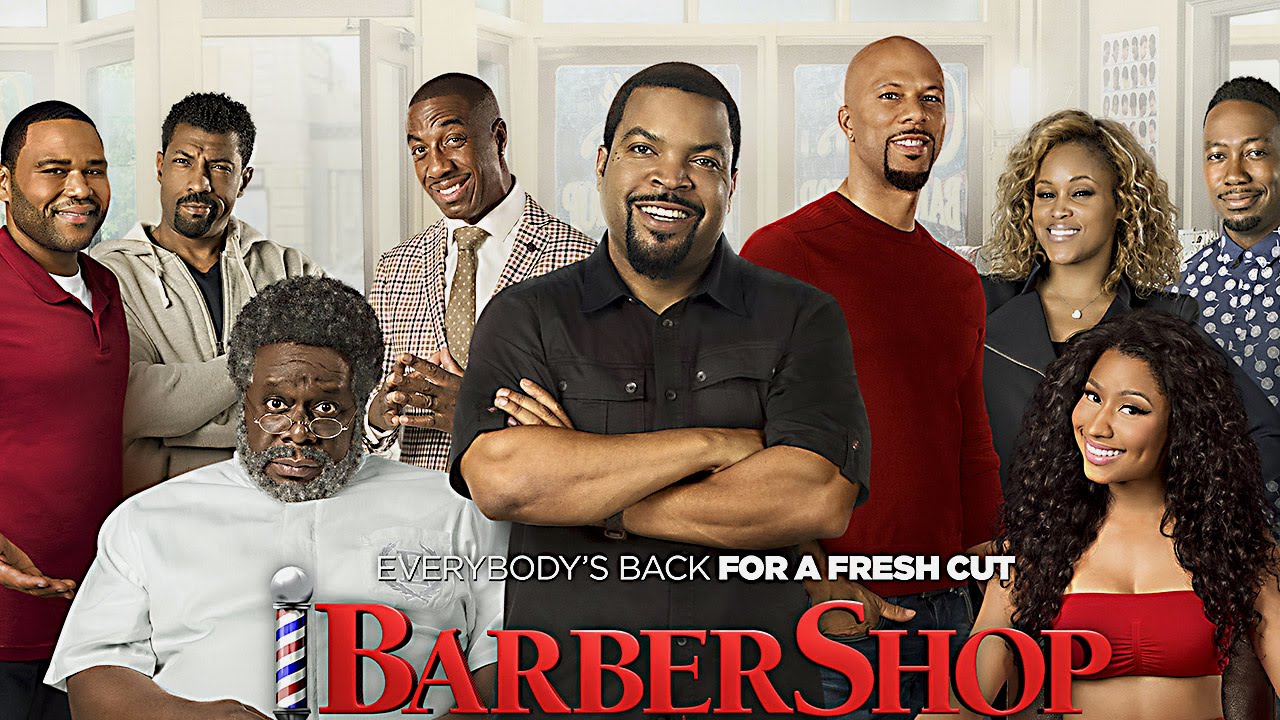
In 1991, Ice Cube was barely into his 20’s when he starred in Boyz N The Hood, one of the most powerful American films of the 20th century, a searing indictment of gang violence and a tribute to one of the truly great fathers in movie history. Fifteen years later, in the third of his “Barbershop” films (fourth if you include “Beauty Shop“), he is now playing the father role but still taking on the tragic toll of gang violence.

It is a gentler film, but it does not pretend that these are gentler times. One of the first images we see is a “No Guns Allowed” sign in the barbershop. Later, when a gang leader comes in for his regular appointment, he hands over two guns to be locked away while he’s in the chair. And there are moments that echo scenes in “Boyz” about the pressure put on young men to join gangs, the danger of the initiation rituals, and the challenges of being a father to a teenager.

The sharp, witty, and heartfelt screenplay is by “Black-ish’s” Kenya Barris and “Survivor’s Remorse’s” Tracy Oliver, and it is directed with warmth and style by Malcolm Lee (“Roll Bounce,” “Undercover Brother”). The original cast returns, led by Ice Cube as Calvin, Cedric the Entertainer and Eve as barbers (Eve’s Terri’s is still trying to protect her apple juice), Sean Patrick Thomas as the upwardly mobile Jimmy (now working for the mayor of Chicago), and Anthony Anderson as the up-to-something but not very good at it J.D. They’re joined by the always-hilarious J.B. Smoove as a jack-of-all-trades and master of most, the always-appealing Common as Rashad, Calvin’s friend and Terri’s neglected husband, the always-terrific Regina Hall as Calvin’s partner on the beauty-shop side, and the always-enticing Nicki Minaj as Draya, a hairdresser who might be interested in Rashad.

Calvin is worried about his 14-year-old son, Jalen (Michael Rainey Jr.), who is wearing dreads and a lot of attitude. He is spending a lot of time with Rashad’s son, Kenny (Diallo Thompson), and worries that he may be a bad influence. He worries more about the constant gang violence in their community, both the threat and the appeal it has for young boys. He thinks it might be time to leave the neighborhood and go somewhere safer.

All of these storylines and more are deftly handled, but, as with the first film, what makes it work is the talk, the constant banter that sways in and out of heartfelt discussion of all the big issues: race, gender, politics, community, family, and love. The talk is intimate and enticing, never stooping to explain its references for anyone’s definition of “mainstream” audiences. That gives it a satisfying warmth and authenticity.

As before, Cedric the Entertainer is the outrageous elder statesman of the group as Eddie, the one who goes there and gives everyone else a chance to react. There are mostly-genial accusations about what men and women want from each other, whether other minorities have the same historical and current struggles as African-Americans, the impact of celebrity scandals like Bill Cosby and R. Kelly, and what anyone can do to stop the violence. Once again, the role of the barber shop as community center, demilitarized zone, and even temporary housing makes this a place we want to keep coming back to.

NOTE: Stay for the credits as there is a funny extra scene.

Parents should know that this film includes sexual references and a non-explicit situation, strong language including racial epithets, gang-related violence, and characters who are injured and killed (off-screen). Characters drink and sell marijuana.

Family discussion: What should families like Calvin’s do to make their communities safer? Who else can make a difference? Where is your favorite place to go hang out and talk to friends?

If you like this, try: the earlier films, Chris Rock’s documentary “Good Hair,” and, for older audiences, “Chi-Raq” and “Boyz N the Hood”

Related Tags:


Comedy Race and Diversity Scene After the Credits Series/Sequel
The Boss

The Boss

Posted on April 7, 2016 at 5:30 pm

Copyright 2016 Universal
Here is what Judd Apatow and Paul Feig know that Melissa McCarthy and Ben Falcone do not: a character can be hilariously obnoxious or endearing but not both, even when played by the irresistible McCarthy. Apatow and Feig have made the best use of Melissa McCarthy’s endless comedic talents, and it is instructive to see how they did it. In “Bridesmaids” (produced by Apatow, directed by Paul Feig), McCarthy played a strange woman with some social deficits but capable (she was right about the air marshall, played by Falcone, who is her husband and co-screenwriter and director of “The Boss”), loyal and self-aware. In “Spy,” written and directed by Feig, McCarthy is awkward and deferential, but she is capable and brave, and she knows it. In “This is 40,” McCarthy has a small role as an angry mother complaining about the main characters’ child. Her fearlessness and improvisational skills, highlighted in a post-credit sequence, were a highlight of the film.

She gave a thoughtful performance in a dramatic role as a single mother in “St. Vincent,” and she was wonderful as a cheerful chef in “Gilmore Girls.” But in other films, including “Identity Thief,” “Tammy,” and now “The Boss,” McCarthy makes the fundamental mistake of committing to an obnoxious character given to outrageous and inappropriate behavior and then insisting that by the end of the movie the other characters and we in the audience have to love her. If she wants to play characters like that, the narrative of the movie has to be about thwarting or triumphing over her in some way. But she can’t insult and cheat everyone for ninety percent of the movie and then expect us to hope for her to have a happy ending.

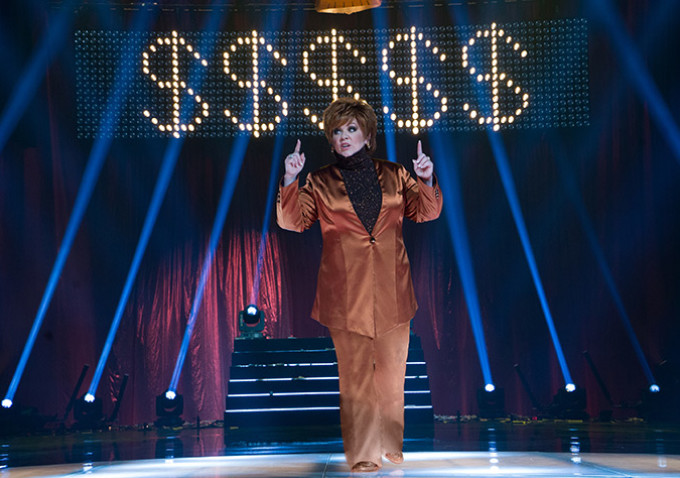
In “The Boss,” McCarthy plays Michelle, the 47th-richest woman in America and the CEO of three companies, at least one of which seems to be either a shady multi-level marketing scheme or some sort of “let me show you how to be rich scam.” She comes out to screaming applause from a huge crowd to brag about her wealth. Nice touch: some of the audience wearing Michelle-style red pixie-cut wigs. Less nice touch: she raps along with T-Pain. Michelle is rude to everyone and ruthless in business to a ridiculously counterproductive degree. For example, she brags to her rival (and ex-boyfriend) that she is making a fortune based on some insider information, which he then reports to the SEC, and which then gets her thrown in jail, Martha Stewart-style.

Five months of a country-club prison equipped with tennis courts (and, apparently, a manicurist because she has professionally done French tips), Michelle discovers she has lost her jobs and all her money. She drags her Vuitton luggage over to the apartment of her level-headed former assistant, Claire (a game Kristen Bell), a single mom with a daughter named Rachel (Ella Anderson). When Michelle tastes Claire’s delectable brownies and sees Rachel’s Dandelions troop (think Girl Scouts or, more accurately, think Troop Beverly Hills), she sees her path to a return to moguldom.

McCarthy, swathed to the chin in turtlenecks that make her look like she is recovering from whiplash, gives herself a one-note role. She is mean, she cheats, she says wildly inappropriate things to children, and she is selfish to a sociopathic degree. Michelle the character and McCarthy the co-scriptwriter give those around her very little to do, criminally under-using Bell, Kathy Bates, Margo Martindale, and Kristen Schaal. Peter Dinklage, as Michelle’s former colleague and boyfriend-turned rival is a bright spot, having a lot of fun going way over the top with pretentiousness, competitive fury, and lust. There’s an “Anchorman”-style rumble between the raspberry beret-topped brownie girls and their cookie-selling former troop. There’s a clever joke about finding just the right place to sell the brownies and there are a couple of very funny lines. But Michelle wears out her welcome very quickly and the resolution is unearned and cloying.

NOTE: There is an “unrated” DVD release. It is hard to imagine how much more offensive it could possibly get.

Parents should know that this film includes extensive strong and crude language, often directed at children, very crude sexual references, drinking, drugs, and comic peril and violence.

Family discussion: How did Michelle’s childhood experiences affect her relationships and priorities? What were the qualities that made her successful in business?

If you like this, try: “Spy” and “Bridesmaids”

Related Tags:


Comedy Scene After the Credits
My Big Fat Greek Wedding 2

My Big Fat Greek Wedding 2

Posted on March 24, 2016 at 5:46 pm

The original “My Big Fat Greek Wedding” was a charming surprise, a fresh, honest story about a young woman trying to find a way to be true to herself despite her loving but overwhelmingly intrusive Greek-American family. This 15-years-later sequel is an overstuffed, undercooked cash grab, operating at the low level of a basic cable sit-com with a juiced-up laugh track. There’s a big difference between finding it funny when a family has what therapists call boundary issues and bombarding the audience with overshares. Or, as Toula tells us just to make sure we understand, “We see no difference between hugging and suffocation.”

Copyright Universal 2016

The original was an exaggerated but affectionate portrayal of family dynamics that are familiar to anyone who struggled to find a distinctive individual direction despite family expectations to the contrary, which is pretty much everyone. The sequel is grotesque caricature, repeating and coarsening the humor of the first one, with repeated clunky set-ups for each of its obvious twists. The first one was a sleeper made for a shoestring that became one of the highest-profit films of all time, released in the same month as a big-budget special effects flop, “Pluto Nash,” with a mirror image record-breaking balance sheet — it lost almost as much as “Big Fat Greek Wedding” made. This sequel won’t set any records in either direction. It has some appealing characters and mild humor. But it devalues the franchise so badly that it is retroactive, diluting any remaining affection for the first one.

The couple who had the titular nuptials in the 2002 film were Toula (screenwriter Nia Vardalos), the daughter of Greek-American restaurant owners who dreamed of working with computers as a travel agent, and Ian (John Corbett), a WASP-y vegetarian teacher. At the engagement party, her parents brought a battalion of cousins named Nicky. His parents brought a bundt cake. An adorable culture clash! Is this a great country or what!

Fifteen years later, Toula, Ian, and their 17-year-old daughter Paris (Elena Kampouris, lovely even in ghoulish makeup) live next door to her parents, Gus (Michael Constantine), who still believes that the Greeks invented everything and Windex can cure anything, and Maria (Lainie Kazan), who still lets him think he runs everything. Toula tries hard to make everyone happy as she is sandwiched between a daughter who needs her less than she wants her to and parents who need her more than she wants them to. “Just when my daughter doesn’t want me around anymore, my parents need me more than ever.”

All the relatives live right nearby and everyone is up in each other’s business all the time and Hollywood Greek-Americans John Stamos and Rita Wilson, who produced the film, show up for an obvious gag and can the Stamos character, a TV newscaster really have a tagline involving shooting a finger-gun?

Toula’s big fat Greek family is supposed to be loveable, but they are just shrill and annoying. Either Aunt Voula (Andrea Martin) is going into excruciating detail on her sex life or her medical quirks or Gus is trying to find a nice Greek boyfriend for Paris to marry so she can have lots of Greek babies. Ian is now the high school principal and Tula is back where we first met her, working in her parents’ restaurant and even has to don her old glasses. They want Paris to stay near them in Chicago when she goes to college. Like Toula in the first film, Paris wants more independence. Like Toula’s parents in the first film, Toula and Ian do not want to let her go. Meanwhile, their focus on the family has led Toula and Ian to lose touch with one another. So, hey, why not another makeover for Toula?

And this is a Big Fat Greek Wedding film, so there must be another wedding. It turns out that Gus and Maria’s marriage license from half a century ago in Greece was never signed. So, Gus has to persuade Maria to marry him all over again and that means giving her the wedding of her dreams. Opa!

It is filled with the kind of stereotyping that would elicit howls of protest from anti-defamation groups if not made by Greeks themselves. That doesn’t prevent the ugly stereotyping of non-Greeks, all portrayed as thin-blooded and snobbish, except for Ian and the real-life Ian, the actor husband of Vardalos, as a kind-hearted cop who married into the family. A revelation about a family member who is gay could have led to some interesting moments, given the family’s very narrow concepts of masculinity, but it is too busy with jokes about how gross an old man’s nudity is. Even Gus would agree that this is beyond the powers of Windex.

Parents should know that this movie has some crude humor, sexual references, and a non-explicit situation. There is some scuffling, a non-serious medical emergency, social drinking, and tipsiness.

Family discussion: Ask family members about how they handled parent-child conflicts about independence — and weddings. Why was it important for Maria that Gus propose to her?

If you like this, try: the first film and another film from Vardalos, “Connie and Carla”

Related Tags:


Comedy Family Issues Romance Series/Sequel
Hello, My Name is Doris

Hello, My Name is Doris

Posted on March 17, 2016 at 5:14 pm

B+
Lowest Recommended Age: Mature High Schooler
MPAA Rating: Rated R for language
Profanity: Strong language
Alcohol/ Drugs: Drinking, smoking, drugs
Violence/ Scariness: Sad offscreen death, wrenching emotional confrontations
Diversity Issues: A theme of the movie
Date Released to Theaters: March 18, 2016
Date Released to DVD: June 12, 2016
Amazon.com ASIN: B01F08XCAG

Copyright Roadside 2016
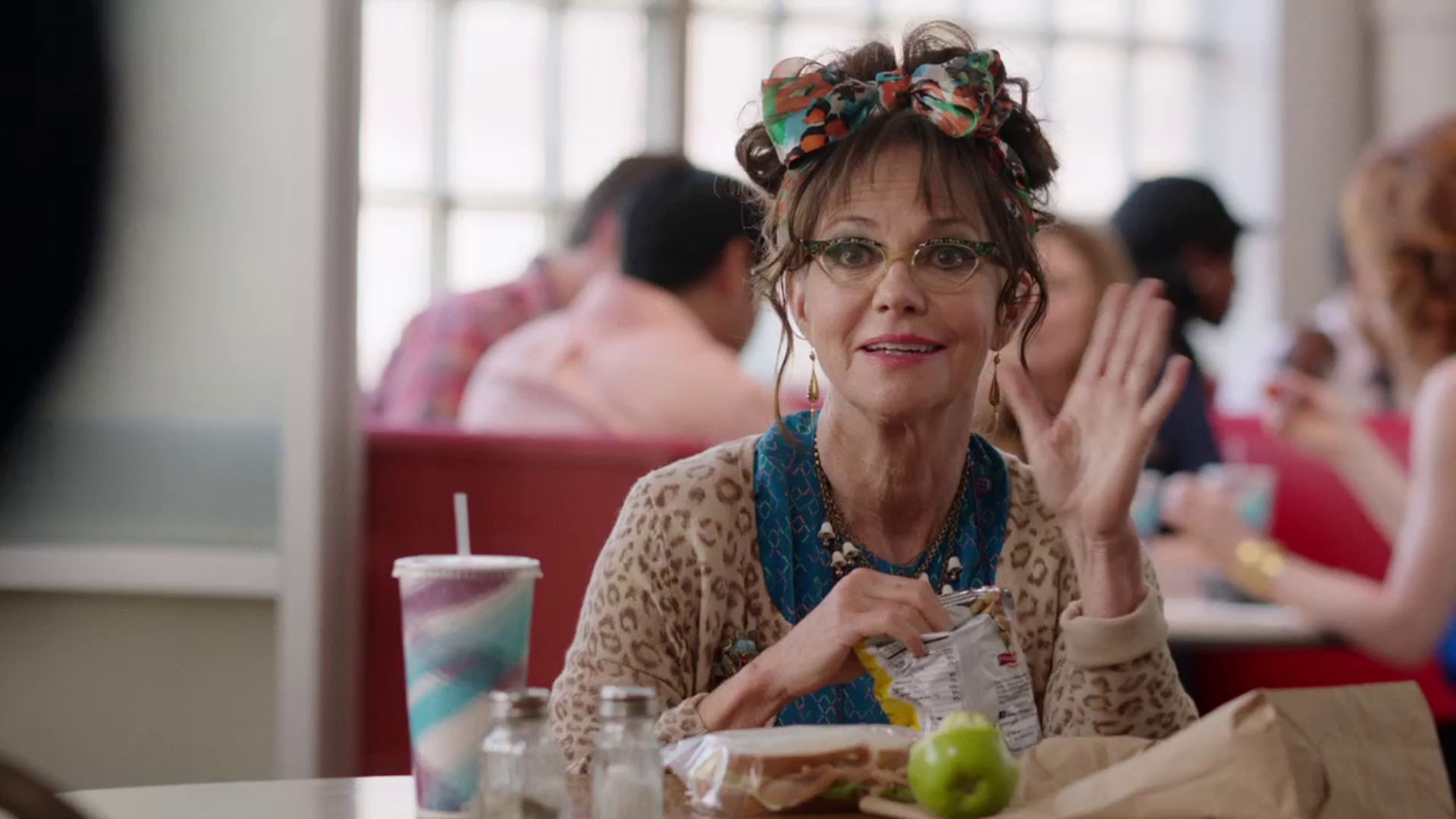
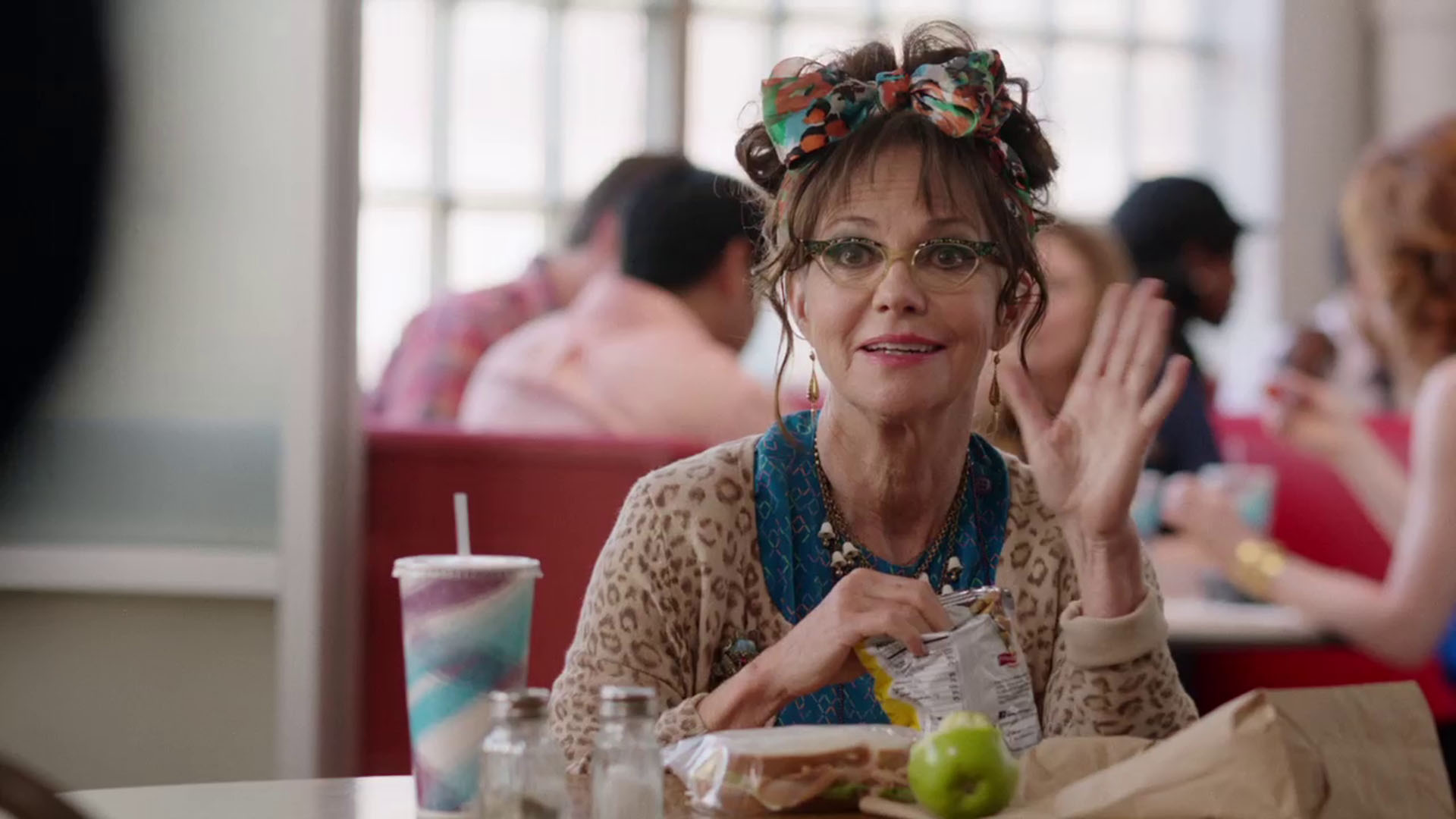
Thank you, Michael Showalter, for giving American treasure Sally Field a role that gives her a chance to show us not just what she is capable of but what it means to fully inhabit a character with enough sensitivity and tenderness to illuminate the world.

In the very first seconds of the film, where we meet the title character at the funeral of the mother she has spent her life caring for, we are asked to look at the kind of person we prefer to ignore. It is the funeral of the mother she has spent her life caring for, and she is bereft, not only of her mother, but of her sense of who she is and what she is in the world. She is odd and needy and repressed. She wears a jumble of mismatched clothes and a frowsy topknot of a hairpiece. She works with a bunch of brisk, hip young people who ignore her. She has a feisty best friend named Roz, played with enormous gusto by Tyne Daly. Roz is so left wing that she comforts herself about here daughter’s imprisonment for for auto theft, because she stole a fuel-efficient hybrid. And she lives in the same house she grew up in, packed full of stuff that she holds onto because of memories or because some day it might be useful. When Roz points out that her refrigerator contains packets of duck sauce that have been there since the 1970’s, Doris responds with incendiary ferocity: “IT KEEPS!”

There’s someone new in Doris’ office. His name is John Fremont (a warm and magnetic Max Greenfield). Doris, whose emotions have been on ice even longer than the duck sauce, somehow explodes with emotion when she sees him.

With her mother gone, Doris begins to have the kind of agonizing crush that most of us get over by the end of middle school. With the help of Roz’s teenage granddaughter, Doris friends John on Facebook under a pseudonym, and then uses what she learns there to make him think they have interests in common, including a band called Nuclear Winter. Doris decides to attend a Nuclear Winter performance, and like Alice through the looking glass, she finds the club an opposite world, where her thrift shop clothes are suddenly vintage and daring. She and John become friends.

Showalter has three great strengths here. First, as we saw in “Hot Wet American Summer” and the underrated “The Baxter,” he is is a master of impeccable casting. Every role, down to the smallest part, is a small gem, deep bench strength that includes Natasha Lyonne as a co-worker, Beth Behrs as the girl John dates, Elisabeth Reaser as an understanding therapist, and Stephen Root as Doris’ impatient but loving brother. Second is his willingness to combine poignancy with humor, grounding and deepening the story. But most important is Field, who is a wonder in a role that has us rooting for her as well as for Doris.

Parents should know that this movie has very strong language and sad and uncomfortable confrontations.

Family discussion: What should Todd and Doris have done when their mother got sick? Why did Doris want to hold on to one ski?

If you like this, try: Some of Fields’ other films like “Norma Rae,” “Steel Magnolias,” “Murphy’s Romance,” and “Soapdish”

Related Tags:


Comedy Drama DVD/Blu-Ray Pick of the Week
THE MOVIE MOM® is a registered trademark of Nell Minow. Use of the mark without express consent from Nell Minow constitutes trademark infringement and unfair competition in violation of federal and state laws. All material © Nell Minow 1995-2026, all rights reserved, and no use or republication is permitted without explicit permission. This site hosts Nell Minow’s Movie Mom® archive, with material that originally appeared on Yahoo! Movies, Beliefnet, and other sources. Much of her new material can be found at Rogerebert.com, Huffington Post, and WheretoWatch. Her books include The Movie Mom’s Guide to Family Movies and 101 Must-See Movie Moments, and she can be heard each week on radio stations across the country.

Website Designed by Max LaZebnik