Birdman (The Unexpected Virtue of Ignorance)

Posted on October 23, 2014 at 5:59 pm
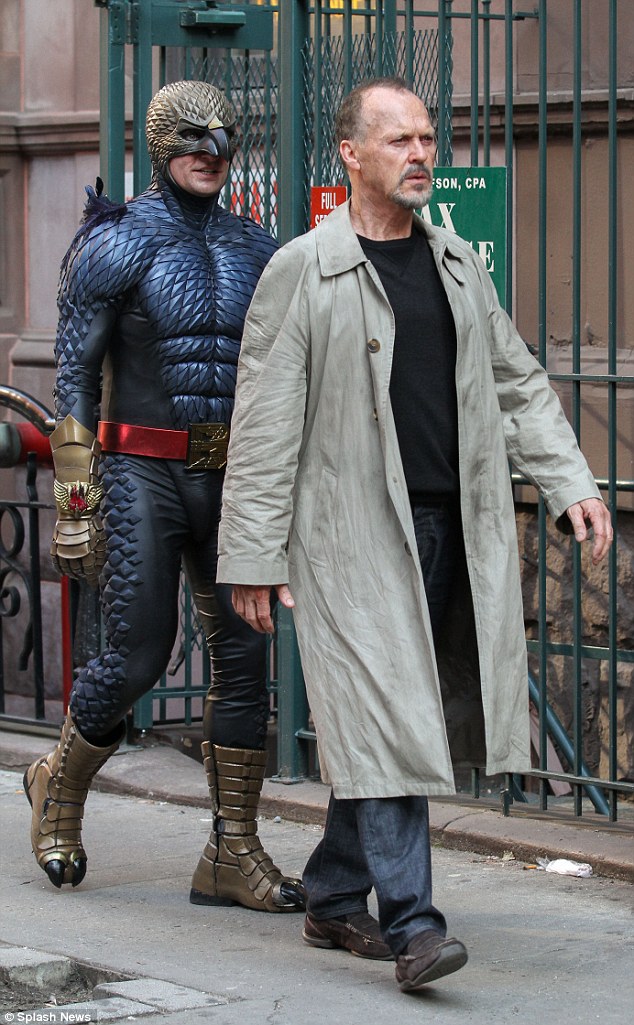
michael-keaton-birdman (1)Filmed as though it was almost entirely one long, stunning, audacious, breathless and breathtaking shot, “Birdman” (subtitled “The Unexpected Virtue of Ignorance”) explodes with ideas and visions, adopting the language of dreams to explore and upend the very idea of storytelling.

Michael Keaton plays a character in superficial ways like Keaton himself. He is Riggan, an actor who has undertaken at least three impossible tasks at once. He has adapted the acclaimed but notoriously difficult and difficult to adapt Raymond Carver collection of short stories, What We Talk About When We Talk About Love, into a Broadway play. The translation of stories whose art is in the spareness and lyricism of the prose into a theatrical production is at best ambitious, at worst impossible. But Riggan is not just the writer. He is also the director and star. He has put his last dime into the show. If it fails, he loses everything. And there is more. His estranged and angry daughter Sam (Emma Stone), just out of rehab, is working as his assistant so he can keep an eye on her and perhaps repair their relationship. One of the actresses (Andrea Riseborough), may be pregnant with his child. And a piece of equipment has just fallen on the head of one of the actors. They are about to go into previews and he cannot perform.

Riggan and Jake, his best friend/lawyer/producer (a slimmed down and pitch-perfect Zach Galifianakis), throw out (real-life) names of possible actor replacements. The best of their generation: Michael Fassbender, Jeremy Renner, Robert Downey, Jr — but they are all in Hollywood playing superheroes. Riggan knows something about that. He played a superhero called Birdman in a series of wildly popular films. He had money, fame, success, and the kind of power all of that brings. But now he has an ex-wife (Amy Ryan), an angry daughter, a possible new child on the way, and he is risking his future on the longest of longshots, a serious play in the high-pressure world of Broadway theater, between the vicious barbs of dyspeptic, despotic critics and audiences who would rather be at the latest musical based on a movie.

Riggan and Jake argue about what to do next.  The understudy? No! “It’s not like the perfect actor is just going to knock on the door!”  Cue knock on the door.  It is Lesley, the non-possibly pregnant actress in the show (Naomi Watts), volunteering her boyfriend, Michael (Edward Norton), who is available (he just got fired or quit or both) and wants to do it.  He is a Broadway darling, a Serious Actor with a lot of fans.  Jake is ecstatic.  This will sell a lot of tickets.

Michael shows up with the script already memorized and able to give a dazzling performance that pushes Riggan to do his best. But Michael is also narcissistic and arrogant. His relationship with Lesley is deteriorating and he is hitting on Sam. Worse, he is sending her mixed signals, making her feel even more insecure and putting her recovery at risk. Riggan is under even more pressure externally and internally as a voice — his Birdman persona? His younger self? His future self? — is urging him, taunting him, distracting him.

It is a high wire act, the endless, dreamlike take festooned with farce-style slamming doors, fantasy interludes with monsters and explosions, sharp satire, poignant drama, and across the board performances of superb precision. As sheer, no-net, bravura filmmaking it is pure wonder, and if it raises more questions than it answers, at least they are the big questions of meaning, identity, work, love, art, and, of course, superheroes.

Parents should know that this film includes very strong and crude language, explicit sexual references and situation, gun violence, drinking, smoking, and drug use.

Family discussion: How much of what we see in this film is “real” and how can you tell? What do you think is happening in the final scene?

If you like this, try: “All That Jazz” and Woody Allen’s “Stardust Memories”

Related Tags:


Comedy Drama Fantasy

Dear White People

Posted on October 16, 2014 at 5:25 pm

B+
Lowest Recommended Age: Mature High Schooler
MPAA Rating: Rated R for language, sexual content and drug use
Profanity: Very strong language including racist terms
Alcohol/ Drugs: Drinking, drug use
Violence/ Scariness: Tense confrontations
Diversity Issues: A theme of the movie
Date Released to Theaters: October 17, 2014
Date Released to DVD: February 2, 2015
Amazon.com ASIN: B00OMCCJIS

dear white people2Before I turn to whitesplaining this film, I will begin by suggesting that you read what Aisha Harris at Slate and what my friends and fellow critics Travis Hopson and Stephen Boone have to say first. If I did not have enough humility before seeing the film about my ability to provide some insight into a movie about racism, the best evidence of the power of the film’s message is that I have more now — and that I recognize it might still not be be enough. I liked the film very much and want to encourage people to see it, so I am going to weigh in with some thoughts and hope that if they come across as disrespectful or ignorant, it will lead to some good conversations and, I hope, to greater understanding.

The focus is on four African-American students at an Ivy League school called Winchester University. Sam White (a biting but layered performance by standout Tessa Thompson) is the host of “Dear White People,” a controversial radio program with stinging, provocative commentary along the lines of “Dear white people: The official number of black friends you are required to have has now been raised to two. And your weed man does not count.” Coco (Teyonah Parris) is an ambitious woman who wants to be selected for a new reality TV series, even if that means creating a fabricated backstory and becoming more confrontational. Troy (Brandon P Bell) is the handsome, accomplished BMOC (and son of the dean) who says he has never experienced prejudice and is under a lot of pressure from his father to succeed. And Lionel (Tyler James Williams) is something of a loner because he feels he does not fit in with any of the rigid categories of the campus hierarchical taxonomy. He is invited by the editor of the school newspaper to go undercover to write about race relations at the school.

Each of these characters’ identities and conflicts is represented in their hair. Sam has tight, controlled coils. Coco has long, straight hair. Troy’s hair is cut very close to the bone. And Lionel’s hair is a marvel of untamed frizz that seems to be a character of its own. Each of the characters will face challenges to his or her carefully constructed identity, and all will be reflected in changes of hairstyle.

The dorm that had previously been all-black is now integrated following a race-blind room assignment policy. Sam takes on Troy in an election for head of house, never anticipating that she might win. But she does. This leads to some changes, including a confrontation with the arrogant frat-bro Kurt (Kyle Gallner), son of the white President of the university and leader of the school’s prestigious humor publication. Kurt is the kind of guy who expects to be allowed to eat wherever he likes, even if he is not a member of the house. He also explains that we live in a post-racial world because Obama is President. And he thinks it is a great idea to plan a “ghetto” party, with white students dressing up as gangsta caricatures.

Just to remind us that, while the movie may have a heightened sensibility for satirical purposes, it is not outside the realm of reality, the closing credits feature a sobering series of photos from real “ghetto” parties held on campuses across the country.

It is refreshing, provocative, and powerfully topical, respecting and updating the tradition of “School Daze” and “Higher Learning.” It deals not only with questions of race but with broader questions of gender, class, identity, and the way we construct our personas, especially in our late teens and early 20’s. Writer/director Justin Simien has created a sharp satire with an unexpectedly tender heart.

Parents should know that this film includes very strong language including racial epithets, sexual references and situations, drinking, drug use, and tense confrontations about race, class, and gender.

Family discussion: Where do the people in this movie get their ideas about race, gender, and class? Which character surprised you the most and why? Do you agree with what Sam said about racism?

If you like this, try: “School Daze” and “Higher Learning”

Related Tags:


Comedy Drama DVD/Blu-Ray Pick of the Week Gender and Diversity GLBTQ and Diversity Race and Diversity Satire School

Alexander and the Terrible, Horrible, No Good, Very Bad Day

Posted on October 9, 2014 at 5:50 pm

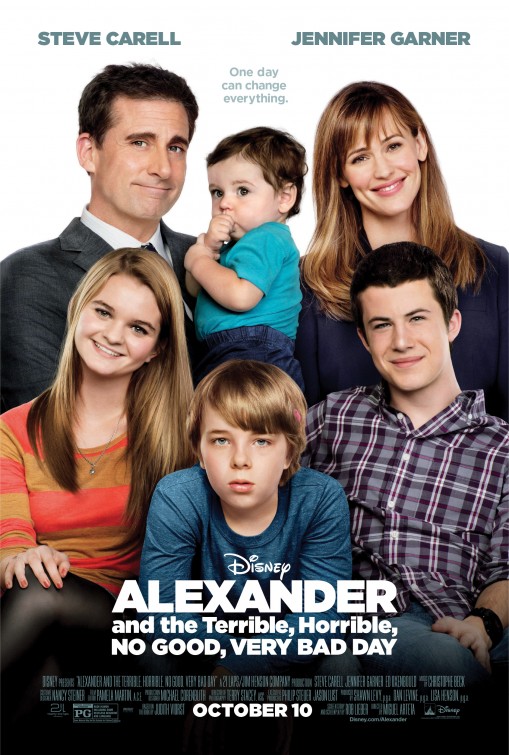
alexander_and_the_terrible_horrible_no_good_very_bad_day_ver2
Copyright Disney Studios 2014

We’ve all had them. Some days, nothing goes right. The classic children’s book from Judith Viorst is about a little boy who wakes up with gum in his hair to a day that includes a dentist appointment, kissing on television, and losing his favorite marble down the bathtub drain has inspired a sweet and gently wacky comedy about an entire family having terrible, horrible, no good, very bad days, all at the same time.
Copyright Walt Disney Studios 2014

In this version, Alexander is about to turn 12, and, as I am pretty sure everyone will agree, that is the age when the most excruciating bad days happen.

In a nod to the original, Alexander (Ed Oxenbould) wakes up on his last day of being eleven with gum in his hair. He trips over the sprinkler in front of the girl he likes Becky (Sidney Fullmer), and later sets her lab notes on fire in science class. It looks like no one will be going to his birthday party because the most popular boy in his class is having a party the same night — with a trampoline and frozen yoghurt cart. To make things worse, everyone else in his family seems to be having nothing but wonderful, beautiful, all-good, very-great days. His mother (Jennifer Garner) is about to get a promotion at the book publishing company for her good work on a book for toddlers about potty training. His father (Steve Carell), a stay-at-home dad since losing his job as an aerospace engineer, has a promising job interview.

His brother Anthony (Dylan Minnette), is about to get his driver’s license and take his dream girl to the prom. “Hashtag blessed,” he smiles, telling the family there’s a rumor that he and his girlfriend will be crowned Prom Duke and Duchess. And Alexander’s sister Emily (the terrific Kerris Dorsey of “Ray Donovan” and “Moneyball”) is starring as Peter Pan in the 8th grade play (in a movie that is both cheeky and charming, the song she sings in the play is not from the stage version that starred Mary Martin but from the Disney animated version, which definitely deserves a family viewing — with one caution for some insensitive racial and gender humor). Alexander also has a baby brother who gets a lot of attention just by being adorable. Everyone’s happiness just makes Alexander feel more isolated and miserable.

That night, Alexander makes himself a birthday sundae at midnight and as he blows out a candle, he can’t help wishing that everyone in the family would know what it was like to have a terrible, horrible, etc. etc. day. And the next day, everything goes wrong for everyone. Catastrophically wrong. Cataclysmically wrong. Monumentally wrong. And, yes, hilariously wrong. Don’t think too hard.  This day would have to be about 72 hours long, and there’s no way some of these disasters could be fixed so easily.  Just go with the goofy fun. There’s a lot of silliness and slapstick, and some gross-out bodily function humor, but the kids in the audience roared with laughter and both kids and adults loved the way the family stayed — most of the time — optimistic and warmly supportive of each other. There are delightful appearances by Dick van Dyke as himself and Jennifer Coolidge as the driver’s license examiner who shares Anthony’s terrible, horrible test drive. I especially got a kick out of the way the movie pays tribute to the book version of Alexander’s wish to be far away from his terrible, horrible, etc. by going to Australia. (In a coincidence, the real-life actor who plays Alexander is in fact Australian, though his American accent is impeccable.)

It does not have the gentle lyricism of the classic book, but it is a warm-hearted story that is less about bad days than it is about good families.

Parents should know that this film includes some bodily function humor and schoolyard language, comic peril and violence (no one hurt), accidental ingestion of too much cough syrup with attendant consequences, family chaos

Family discussion: Which family member had the worst day? What was your worst day and why? What’s the best thing to do on a bad day?

If you like this, try; the book by Judith Viorst and the two short DVD versions, and all three versions of “Freaky Friday”

Related Tags:


Based on a book Comedy

Believe Me

Posted on September 30, 2014 at 11:06 am

B+
Lowest Recommended Age: Middle School
Profanity: Some mild language
Alcohol/ Drugs: Drinking and partying
Violence/ Scariness: None
Diversity Issues: Diverse characters
Date Released to Theaters: September 26, 2014
Amazon.com ASIN: B00MI506MC

Copyright 2014 Riot Studios
Will Bakke has followed his two thought-provoking documentaries on faith with a remarkably smart, funny, brave, and heartfelt first feature film that explores religion and values without ever falling into the easy conventions of many faith-based films. Bakke has a sharp eye but a warm heart and a refreshing honesty that allows him to let us laugh at some of the silliness and hypocrisy he has observed but is always respectful of those who find meaning in the way they engage with God. He is a sharp observer of the craft of filmmaking as well, and the story structure and camera and editing work here show that he is ready for the big leagues. I am looking forward to what he does next.

In his last film, a documentary called “Beware of Christians,” Bakke told the story of his journey with four friends, all from devout Christian families, as they traveled through ten European cities to expand their understanding of what it means to be a person of faith. That experience clearly informs this fictional story of four college fraternity brothers. When one of them discovers that his scholarship has run out with one more tuition payment still due, he persuades his friends to establish a fake Christian charity so they can keep the money. Each of them has a different perspective. Sam (Alex Russell, soon to be seen in Angelina Jolie’s “Unbroken”), is the slick, dimpled operator who thinks this is just the ticket to smooth his path to law school. Pierce (Miles Fisher) is the selfish rich kid who does not want his father to know he is in debt. Baker (Max Adler of “Glee” and “Switched at Birth”) is the party animal who is up for whatever’s going on. And Tyler (Sinqua Walls of “The Secret Life of an American Teenager”) is a nice guy who goes along because they promise he will not have to speak in front of a group and they promise that some of the money will actually go to charity.

Sam is a charismatic speaker and the audience wants to believe. Not only do they raise money quickly for their fake charity (cutely dubbed “Get Wells Soon”), but they attract the attention of a promoter named Ken (Christopher McDonald), who wants to book them on a nationwide tour for Christian audiences. Also on the tour are a singer named Gabriel (“Happy Endings'” Zachary Knighton, with just the right touch of oily smugness) and the tour manager (and Gabriel’s girlfriend) Callie (Johanna Braddy). The guys have to up their game to appear to be more authentic. They don’t just use highlighters and post-its to mark Bible passages, they baptize their Bibles in swimming pool water to give them that thoroughly-thumbed look. In one of the movie’s highlights, Sam explains to the others how to use certain words and poses (like “The Shawshank”) to communicate piety and get more money from believers, and even how to swear just enough but not too much. Can they immerse themselves in the world of faith — and the evidence of true need — without being affected by it, especially with the example of at least one believer who demonstrates true grace?

Bakke and his co-screenwriter Michael B. Allen bring a lot of specificity to these scenes, and a sensitivity that shows he is laughing with the Christians (especially when it comes to Christian entertainment), not at them. They understand that their open-hearted generosity can be unthinking but is almost always kindly meant. And they understand that being a believer does not inoculate anyone from human failings, especially pride. They also understand that true faith requires the full engagement of the spirit. And they respect their characters and the audience enough to make it clear that the answers we value most are never easy.

Parents should know that this film has some drinking and partying and some criminal and unethical behavior.

Family discussion: Which character best fits your idea of what it is to have faith? What should Ken have done when he found out what the boys were doing? What will Sam do next?

If you like this, try: “Beware of Christians” and films like “Elmer Gantry,” “Jesus Camp,” “Marjoe,” “Blue Like Jazz,” and “Leap of Faith”

Related Tags:


Comedy Drama Movies -- format Satire Spiritual films VOD and Streaming

Hector and the Search for Happiness

Posted on September 25, 2014 at 5:00 pm

hector

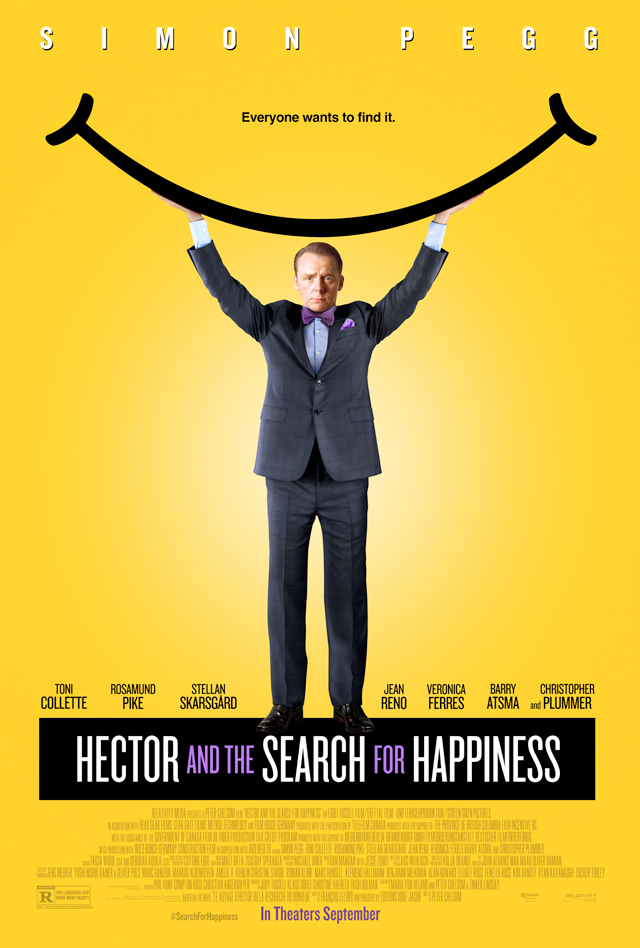
Simon Pegg stars as Hector in this gentle fable based on the whimsical French novel by psychiatrist Francois Lelord.  Like Lelord, Hector is a psychiatrist.  He has a “tidy” life with a nice girlfriend named Clara (“Gone Girl’s” Rosamund Pike), nice patients, and a nice apartment.  But he is missing something.  He wonders if he is really helping people.  And he is not sure what he is helping them toward.  If he is not sure what happiness is, how can he guide his patients toward finding it?

Your level of happiness on viewing this film will vary depending on your tolerance for whimsy and your affection for last year’s The Secret Life of Walter Mitty, as it is almost exactly the same movie, though not as good.

Hector decides that what he needs to do is travel around the world to learn about happiness.  Clara is troubled, and wonders what it might mean for their relationship — especially since he won’t say when he is coming back.  She wonders if “researching happiness” is just a euphemism for “finding Agnes,” the mysterious woman whose photo she found in Hector’s sock drawer (labeled “Hector’s Socks” — he is very tidy).  But she is supportive, and gives him a notebook for his discoveries, directing him to “fill these pages.”  “If you’re going to do this, do it totally,” she says. “Make it worthwhile.”

And so he sets off on a series of adventures and encounters that will teach him something about happiness.  He first meets a genial businessman named Edward (Stellan Skarsgård), who introduces him to one notion of happiness: the kind that can be bought.  Hector enjoys wine, women, and club music.  He enjoys is all so much that he conks out before he can accept the advances of a beautiful “student” (Ming Zhao).  He wonders at first whether it is possible that happiness means the freedom to love two women at the same time, and then discovers to his distress that the interest and affections of the “student” were purchased for him by Edward.  Being rich, being important, believing you are captivating to a “student” — that does not seem to be the answer.  “Sometimes happiness is not knowing the whole story.”

This is the point at which you are either going to go with the premise and tone or you’re not.  It’s either a fairy tale, in which the encounters are metaphors, or it is supposed to be grounded in some semblance of reality, in which case it’s solipsistic, kind of seedy and mired in stereotypes.  For me, it was a fairy tale, and so I gave it some leeway.

Hector’s travels take him to visit an old friend who runs a clinic in Africa, where he runs into a cute sick kid and a vicious but also kind of cute drug lord (Jean Reno), both of whom he helps, and also learns that his friend is gay.  He is captured by gangsters and almost killed until providentially, like a character in a fantasy game who just happened to have picked up a golden arrow and some magic beans, he has the token he needs to get out of jail if not free, at least relatively unscathed.  He meets a dying woman who is philosophical and at peace.  He meets up with Agnes (Toni Collette) and has his brain scanned by a scientist (Christopher Plummer) who is studying the biological basis for happiness.  He takes notes.  He has Skype-fights with Clara.  He learns many important lessons, and, like Dorothy Gale of Kansas, learns that the answer was inside him all along and there’s no place like home.

It is a pleasant little trifle as long as you do not take it too seriously.  If you understand that it is all inside Hector’s head, and that his adventures are more akin to The Little Prince’s planetary hops than to anything resembling reality, it has charm and even some reminders that we get more happiness from what we do for others than from what they do for us.

Parents should know that this movie includes very strong language, scenes of criminal activity including beatings, death threats, and imprisonment, drug dealing, scenes of injured and dying characters, prostitutes, sexual situations, and nudity.

Family discussion: Which of the observations Hector wrote in his notebook do you think were most important? Why did he have to get away from home to understand what he had? Why didn’t things work out with Agnes?

If you like this, try: “The Secret Life of Walter Mitty”

Related Tags:


Based on a book Comedy Drama Romance
THE MOVIE MOM® is a registered trademark of Nell Minow. Use of the mark without express consent from Nell Minow constitutes trademark infringement and unfair competition in violation of federal and state laws. All material © Nell Minow 1995-2026, all rights reserved, and no use or republication is permitted without explicit permission. This site hosts Nell Minow’s Movie Mom® archive, with material that originally appeared on Yahoo! Movies, Beliefnet, and other sources. Much of her new material can be found at Rogerebert.com, Huffington Post, and WheretoWatch. Her books include The Movie Mom’s Guide to Family Movies and 101 Must-See Movie Moments, and she can be heard each week on radio stations across the country.

Website Designed by Max LaZebnik