Whether you consider him a hero or a traitor, it is well worth watching, and considering the fragile balance between privacy and national security — and who decides.
We mourn the loss of film visionary Albert Maysles, who with his brother David, showed us a new way to see film and a new way to see the world. They were the first Americans to create intimate, unstructured documentary storytelling without experts talking from behind their desks or extended narration. This is “direct cinema,” the distinctly American version of French “cinema verité.” The Maysles brothers were the first to make non-fiction feature films where the drama of human life unfolds as is, without scripts, sets, or narration. In part, this was due to their way of looking at the world, which was open-hearted and non-judgemental. But it was also due to changes in technology since the very earliest days of documentary. In 1960, he said, “With the equipment we have today, which is directly descended from the equipment we made; you could go beyond the illustrated lecture for the first time. These innovations made it possible to get what was happening so clearly and directly that the person viewing the film would feel as though he was actually present at those events. For the first time, it was possible for someone watching a documentary to feel as though he was standing in the shoes of the person he was seeing onscreen.”
Maysles’ subjects had lives that were in some ways ordinary, like those of us in the audience. Salesman was about door-to-door Bible salesmen. He said, “There are daily acts of generosity and kindness and love that should be represented on film.”
But he also made extraordinary films about extraordinary lives. Perhaps his most famous was Grey Gardens, about “Big Edie” and “Little Edie” Beale, relatives of Jacqueline Kennedy Onassis who continued to live in their crumbling East Hampton mansion with no money and very little contact with the outside world. The movie was later adapted into a hit Broadway musical and a movie with Drew Barrymore.
He filmed Janis Joplin, Jimi Hendrix, the Who, Otis Redding, and the Mamas and the Papas.
He filmed the Rolling Stones.
He filmed Paul McCartney.
He said,
As a documentarian I happily place my fate and faith in reality. It is my caretaker, the provider of subjects, themes, experiences – all endowed with the power of truth and the romance of discovery. And the closer I adhere to reality the more honest and authentic my tales. After all, the knowledge of the real world is exactly what we need to better understand and therefore possibly to love one another. It’s my way of making the world a better place.
References to injury and environmental degredation
Diversity Issues:
None
Date Released to Theaters:
March 6, 2015
Copyright 2015 Sony Pictures Classics
Do you remember the tobacco executives standing up before a Congressional Committee, their right hands raised, each of them swearing that they did not believe that tobacco caused cancer? That was in 1994, three decades after the US Surgeon General’s report showing the adverse health effects of cigarettes. Any other consumer product with that much proof of its destructive impact would have been restricted or banned long ago. But the tobacco industry was able to delay or prevent meaningful government action through a series of public relations maneuvers and strategic lobbying and campaign contributions. Ultimately, tobacco consumption was reduced in the United States. Television ads were banned. Warning labels were required. Very big fines were assessed following lawsuits that revealed a history of intentional deception as toxic as cigarettes themselves.
But the legacy of using corporate money to undermine science and thus to undermine public policy as well may be the most devastating effect of all. As documented in “Merchants of Doubt,” based on Merchants of Doubt: How a Handful of Scientists Obscured the Truth on Issues from Tobacco Smoke to Global Warming, by Naomi Oreskes and Erik M. Conway, corporations have used distraction, delay, and downright deceit to create pretend opposition to scientific findings. Their tactics have included those as sophisticated and complex as the creation of fake “public interest groups” with secret funding by corporations and their trade associations, to those as simple and old-fashioned as releasing the private contact information of the scientists and encouraging a barrage of bullying threats and personal attacks.
One of the film’s most devastating segments deals with a two-year, Pulitzer Prize-winning investigation by two Chicago Tribune reporters about how the tobacco companies thwarted potential regulation by fraudulently shifting the blame for home fires from cigarettes to the failure of furniture to be coated with toxic flame retardant chemicals. Fake experts and fake studies work because no one, neither the journalists who are hard-wired to present “both sides” nor the law-makers and regulators who are often looking for a way to justify the decisions their corporate funders are supporting, ever make an effort to find out the experience, expertise, reputation, or conflicts of interests of these industry-supported “experts.”
The focus now is climate change, with more than 97 percent of the world’s climate scientists agreed that it is a severe, even critical problem and millions of dollars spent by the fossil fuel industries to distort, delay, and deceive. In the film, former Congressman Robert Inglis, who identified himself as having been elected from “the reddest county in the reddest state in the country” (South Carolina), and who considers himself a hard-core conservative, lost his bid for reelection because, after a visit to Antarctica where he witnessed the evidence of climate change, he was considered a traitor, perhaps less by his constituents than by the industry funding anyone who would oppose government action on climate change.
No matter what you think about tobacco, climate change, or fire retardants, this is an essential film because it addresses the key issue of trust. Whatever policies you support, everyone should agree that they must be grounded in the clearest and best-documented facts. Who can we believe? What questions should we ask? As Senator Whitehouse said last week, “You can believe every single major American scientific society, or you can believe the Senator with the snowball.”
The PBS series Italian Americans is available this week on DVD. The documentary reveals the unique and distinctive qualities of one immigrant group’s experience, and how these qualities, over time, have shaped and challenged America. Unlike other immigrant groups, many Italians did not come to America to stay. At the turn of the 20th century, most came to work, earn money to support their families, and eventually return home. Nearly half of the first generation Italian immigrants returned to Italy. For those that made America home, their struggle to maintain a distinct Italian culture was guided by ideals of family that had always been at the center of their lives. In the Italian family, the needs of the collective came before the individual – a value system often at odds with American ideals of freedom and personal choice. While the power of the Italian family became a source of strength, it also bred suspicion, popularized in popular media as a dark, criminal element. The Italian gangster group known as the “Black Hand” was able to prey on the insularity of the Italian immigrant community’s distrust of authority and outsiders. This clash of culture echoed through generations of Italian Americans and, as they entered positions of political, social and cultural influence, left its mark on the American landscape.
Through extensive archival materials and interviews with scholars and notable Italian Americans such as Tony Bennett, Dion DiMucci, David Chase, Gay Talese and John Turturro, who speak from personal experience, “The Italian Americans” tells the story of those who played vital roles in shaping the relationship between Italians and mainstream American society. These include the stories of:
· Amadeo Giannini, who founded the Bank of Italy in 1904 in San Francisco to help Italians who could not secure loans or financial assistance elsewhere. He would later build it into the largest financial institution in the country and rename it Bank of America.
· Arturo Giovannitti, the union activist and poet who led the Lawrence Textile Strike in Lawrence, Massachusetts in 1912.
· Rudolph Valentino, who introduced a new image of the sex symbol to movie audiences of the 1920s, yet still endured the prejudices directed at Italians of southern extraction.
· Joe DiMaggio, who became one of the most celebrated baseball players of his generation, but whose parents were labeled “Enemy Aliens” during World War II.
· U.S. Representative Nancy Pelosi, New York Governor Mario Cuomo and Associate Justice Antonin Scalia, who each broke new ground for Italian Americans in public service.
The series also presents the expertise and insights of historians, scholars, journalists and authors including Donna Gabaccia, Thomas Guglielmo, Gerald Meyer, Robert Orsi, Mary Anne Trasciatti, Lawrence DiStasi, Bruce Watson, Stephen Fox and Selwyn Raab.
Interview: Dogs on the Inside, Documentary About A Prison Program for Rescue Dogs
Posted on February 10, 2015 at 7:00 am
“Dogs on the Inside” is a profoundly moving documentary about a program that teaches prisoners how to care for rescue dogs. Seeing the dogs and the men in prison learn patience and trust from each other is touching and inspiring. I imagine it will attract the attention of Hollywood as it would make a great feature film.
BC: Doug and I were looking for a story about dogs that we wanted to be both compelling and kind of informative about how great dogs are. But we wanted it to have a little bit of an edge and we discovered this prison dog training program and thought it was both a no-brainer in the sense that the program existed and taking stray dogs and pairing them with prison inmates, I thought it was interesting. I think that was the story to bring to life on film.
What did the inmates learn from the dogs?
BC: I think the biggest thing that they learned was understanding, kind of getting outside of their own heads and learning about the benefits of helping others and in this case it was dogs.
DS: I think the most important thing they learned was that they are still human. If an image were to pop in your head of an inmate you might just think that of something negative and I think what this film does is remind people that wherever you are, if you are even an inmate it does not matter, you’re still human.
CS: From an inmate’s point of view, it was more often learning how to cope and deal with not only the other cons but also with dogs as well and growing with them as well as a person.
What are the qualities that are required for the inmates who participate?
Copyright 2015 Bond/360
DS: Before they can be allowed into the program, each of the inmates is thoroughly screened. What they are looking for is patience, responsibility, and trust, and most importantly caring. And overall they cannot be violent, they cannot have any type of violent history.
Are there other programs like this throughout the country?
DS: There are and since we started filming over three years ago they have been continuing to pop up all over the country.
And are there any studies being done of how effective they are or monitoring the participants after they leave?
BC: Yes. There is a great program called New Leash On Life USA, based in Philadelphia. And they are the gold standard for this type of prison program because they have measurable results and the recidivism rate for prison inmates coming out of Philadelphia prison system goes down about 50% by comparison to the average. These guys are actually staying out of jail because of what they do helps them get internships, help get them placed in jobs in animal care and those kinds of things. So it is much about a person as it is about an animal.
Do many of them chose to continue professionally with animal care when they get out?
CS: I want to be a zookeeper. I love animals in general. The person that gets into these dog programs, they have got to love animals first and foremost. If I could, I would own a farm and adopt all of them. Because I love animals in general but reality is that I can only take the step of helping the dogs that are in shelters. I’m going to be donating my time doing that in a shelter out in Springfield, Massachusetts. I’m going to get my education and try to see if I can become the very best zookeeper that there ever was in history.
Candido, tell me a little bit about your first experience in working with one of the dogs.
CS: My first experience was with Sam, who was a very scared dog, he was very skittish, he used to tremble when he first got there. He used to growl when anyone got close to him and it took me a little bit of time to actually get him comfortable with me. What I mean by that is, it took me a few days but I got half my body inside the crate in order for him to feel comfortable with me. Then once I was able to finally caress him and rub him, I guess he looked at me like “Wow! You are not what I expected.” So with that being said I carried on and everything, he was a Chihuahua and by the end of the term he got adopted to a very young, very beautiful kindhearted person. She got married, the lady that is Sam’s owner and they sent me pictures of Sam in a tuxedo, so I’m guessing he was the Best Dog.
When an animal has been abused and is afraid of people, how do you gain their trust?
CS: I know that for me it took a lot of patience first. I looked at Sam the way I looked at my own life. I could relate to the way he felt, the way he thought probably. And in the beginning when I tried to get close to him and he growls, I got up, kept walking around doing whatever I had to do in the room but I still talked to him and I told him “Don’t worry about it. I got you, I’ll take care of you, sooner or later you’ll come around.” And that’s basically it, you have got to have a lot patience and a lot of love for any animal that goes through something like that. I mean it’s horrendous to begin with but you have got to have a lot of understanding too behind it. I’ll say this too, it took a little bit of bribery too. I used to give them treats, and I mean, who doesn’t like treats? I love treats. I love candy bars so you give me a candy bar and I’ll do anything for one bar, how about that?
So you can identify.
CS: Yes, I could definitely, with Sam and with every dog that kept coming through there.
And what was the most important thing that you learned from the training that you got about working with the dogs?
CS: I learned a lot actually. The trainer that we had, her name is Paulette, she is a very good trainer. She taught us and it was installed in me by her to have patience but be firm, to be loving and caring at the same time. But also to try to understand their point of view as much as possible. It’s about them primarily, you’ve got to put them first before yourself. It’s like having a baby, when you have a baby, your baby comes first before yourself.
What do you want people to learn from this film?
DS: If they could adopt a dog that would be wonderful but that’s a lot of responsibility so I think one of the things that people can take away from this film is that they have the opportunity to make a difference on their own. And it is attainable for them, it is not too far out of reach for each person. And not only that but to remind people that everyone is equal and to believe in second chances.
BC: I think for me it is to remind people that there’s some really good things going on around the world. That is one of the motivations we had in looking for a story. It just goes to show that with effort and the right thoughts we can really create the magic in this world.

 was about door-to-door Bible salesmen. He said, “There are daily acts of generosity and kindness and love that should be represented on film.”
 , about “Big Edie” and “Little Edie” Beale, relatives of Jacqueline Kennedy Onassis who continued to live in their crumbling East Hampton mansion with no money and very little contact with the outside world. The movie was later adapted into a hit Broadway musical and a movie with Drew Barrymore.
 , by Naomi Oreskes and Erik M. Conway, corporations have used distraction, delay, and downright deceit to create pretend opposition to scientific findings. Their tactics have included those as sophisticated and complex as the creation of fake “public interest groups” with secret funding by corporations and their trade associations, to those as simple and old-fashioned as releasing the private contact information of the scientists and encouraging a barrage of bullying threats and personal attacks.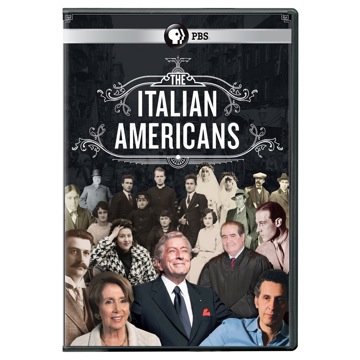
 is available this week on DVD. The documentary reveals the unique and distinctive qualities of one immigrant group’s experience, and how these qualities, over time, have shaped and challenged America. Unlike other immigrant groups, many Italians did not come to America to stay. At the turn of the 20th century, most came to work, earn money to support their families, and eventually return home. Nearly half of the first generation Italian immigrants returned to Italy. For those that made America home, their struggle to maintain a distinct Italian culture was guided by ideals of family that had always been at the center of their lives. In the Italian family, the needs of the collective came before the individual – a value system often at odds with American ideals of freedom and personal choice. While the power of the Italian family became a source of strength, it also bred suspicion, popularized in popular media as a dark, criminal element. The Italian gangster group known as the “Black Hand” was able to prey on the insularity of the Italian immigrant community’s distrust of authority and outsiders. This clash of culture echoed through generations of Italian Americans and, as they entered positions of political, social and cultural influence, left its mark on the American landscape.
 .
.