The Birth of a Nation

The Birth of a Nation

Posted on October 6, 2016 at 5:52 pm

B+
Lowest Recommended Age: Mature High Schooler
MPAA Rating: Rated R for disturbing violent content, and some brief nudity
Profanity: Racist epithets
Alcohol/ Drugs: Drinking and drunkenness
Violence/ Scariness: Intense, brutal, and graphic violence, rape, murder, hanging, lynching
Diversity Issues: A theme of the movie
Date Released to Theaters: October 7, 2016
Date Released to DVD: January 9, 2017
Amazon.com ASIN: B01LTHN5TU

Copyright 2016 Fox Searchlight
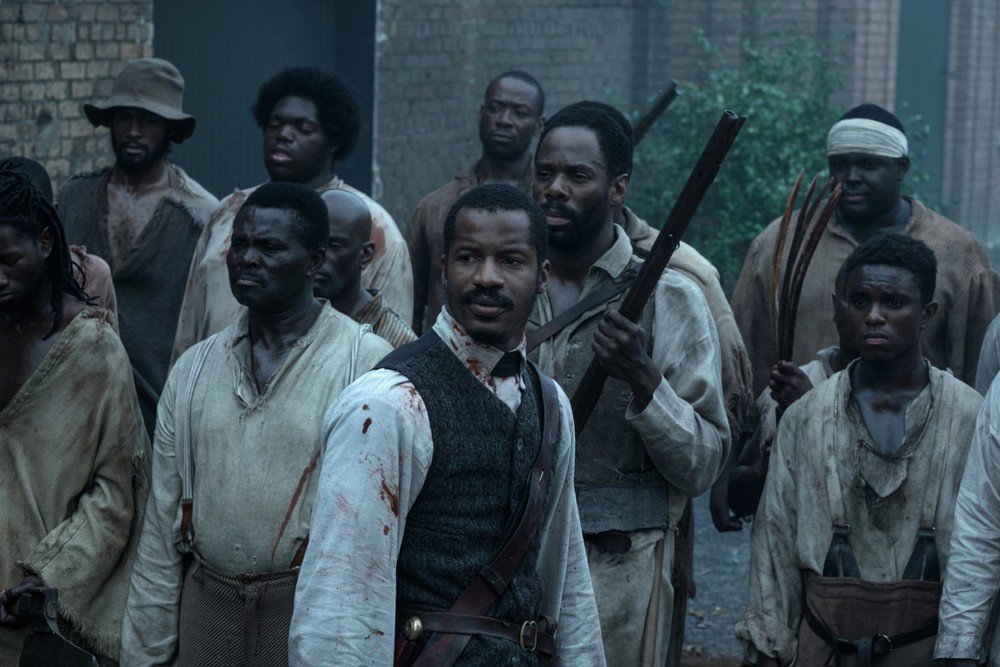
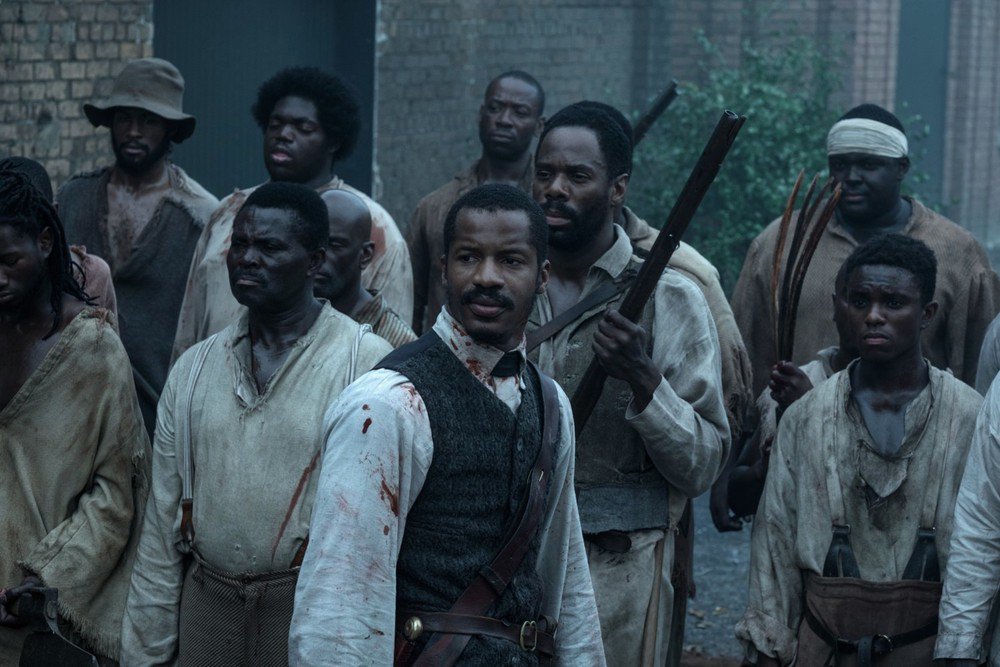
Nat Turner was an enslaved man in early 19th century Virginia who led other enslaved people in an armed rebellion against slaveholders thirty years before the Civil War. They killed more than 50 white people and more than 200 black people.

For actor Nate Parker, Turner’s story has been a long-time passion project, and he has audaciously claimed, or reclaimed the title of the D.W. Griffith silent film as revered for its innovations in cinematic storytelling as it is reviled for its racist, pro-KKK storyline. “The Birth of a Nation” title is provocative, timely, serious-minded, and powerful, and so is the film. The title refutes the pernicious narrative of the 1915 Griffith film, an act of rebellion and justice and an assertion of dignity and humanity. And so does the quote at the beginning of the film, from the man who both wrote of the inalienable rights of all men and was a slaveholder, Thomas Jefferson. The film opens with a selection from this passage:

an the liberties of a nation be thought secure when we have removed their only firm basis, a conviction in the minds of the people that these liberties are of the gift of God? That they are not to be violated but with his wrath? Indeed I tremble for my country when I reflect that God is just: that his justice cannot sleep for ever: that considering numbers, nature and natural means only, a revolution of the wheel of fortune, an exchange of situation, is among possible events: that it may become probable by supernatural interference! The Almighty has no attribute which can take side with us in such a contest.–But it is impossible to be temperate and to pursue this subject through the various considerations of policy, of morals, of history natural and civil. We must be contented to hope they will force their way into every one’s mind. I think a change already perceptible, since the origin of the present revolution. The spirit of the master is abating, that of the slave rising from the dust, his condition mollifying, the way I hope preparing, under the auspices of heaven, for a total emancipation, and that this is disposed, in the order of events, to be with the consent of the masters, rather than by their extirpation.

We first see Nat as a young boy, in a firelight gathering where enslaved people have congregated for some moments that recall the traditions of their home. Three birthmarks on the boy’s chest identify him as someone who will be a leader. Nat’s father, trying to get food for his family, kills a slave hunter and runs away.

There is a tense scene of terrible menace, as the other slave hunters come looking for Nat’s father that night, threatening Nat’s mother and grandmother, and finally the boy, too. We then see Nat running from a young white boy on the plantation, only to find that it is an innocent game, and the two seem to share a genuine sense of companionship. This is mirrored later in the film, when the then-adult Nat sees a little white girl playing with an enslaved girl by tugging her along with a rope like a dog on a leash.

Later, noticing the boy’s intelligence, the wife of the plantation owner (Penelope Ann Miller) brings the boy inside her home and teaches him to read. But the books on the shelves are not for him. “These books are for white folks. They are full of things your kind won’t understand.” There is just one book she will let him read: the Bible. He becomes a fervent believer, preaching the gospel to the other enslaved people.

As adults, Sam (Armie Hammer), the boy who was playing with him, has become the plantation owner and Nat (Parker) is his trusted servant. Nat persuades Sam to buy a woman who is being auctioned, and who clearly has suffered terribly. She becomes his wife and they love each other dearly.

When Sam falls on hard times and begins to drink too much, he starts renting out Nat’s services as a preacher to the other slaveholders. The plantation owners hope that his lessons about God’s will and the promise of heaven will keep them compliant. But Nat’s travels bring him into contact with the horrific atrocities inflicted by other slave holders. And some of the Bible’s lessons about justice and opposing tyranny take on an urgent power, as Nat’s wife is raped and beaten by slave hunters, another enslaved woman (Gabrielle Union) is forced to have sex with a man Sam hopes to do business with, and Nat is brutally whipped for baptizing a white man. He increasingly sees visions of a rebellion.

As a film, the movie falters, slipping into melodrama that recalls the Griffith film in ways it does not intend. But it transcends its storytelling shortcomings because of its palpable sincerity and passion, its force as a searing statement of history, and its relevance today. The fight for justice is a defining purpose of humanity, and Nat Turner’s cause goes on.

Parents should know that this film includes brutal slavery-related abuse including whipping, rape, beating, and forced feeding, a marital sexual situation with some nudity, drinking and drunkenness, and strong and racist language.

Family discussion: What made Nat Turner willing to take the risks of a rebellion? Why does this movie share the title of the famous D.W. Griffith silent film?

If you like this, try: “12 Years a Slave” and “Amistad” and read Nat Turner’s own words

Related Tags:


Based on a book Based on a true story Drama DVD/Blu-Ray Pick of the Week Epic/Historical
Denial

Denial

Posted on October 6, 2016 at 5:50 pm

Copyright 2016 Bleeker Street
You can refuse. You can disagree. You can object. You can argue. But none of those words is as charged as “denial,” with its multiple uses all implying injustice, unfairness, even bullying. The title of this film establishes immediately that the courtroom and media battle it depicts is not one of popularity, reputation, or consensus. It is about the core issue of proof — how we know what we know, and, in this case, what that means as we approach the time when everyone with a memory of the experience in question is gone.

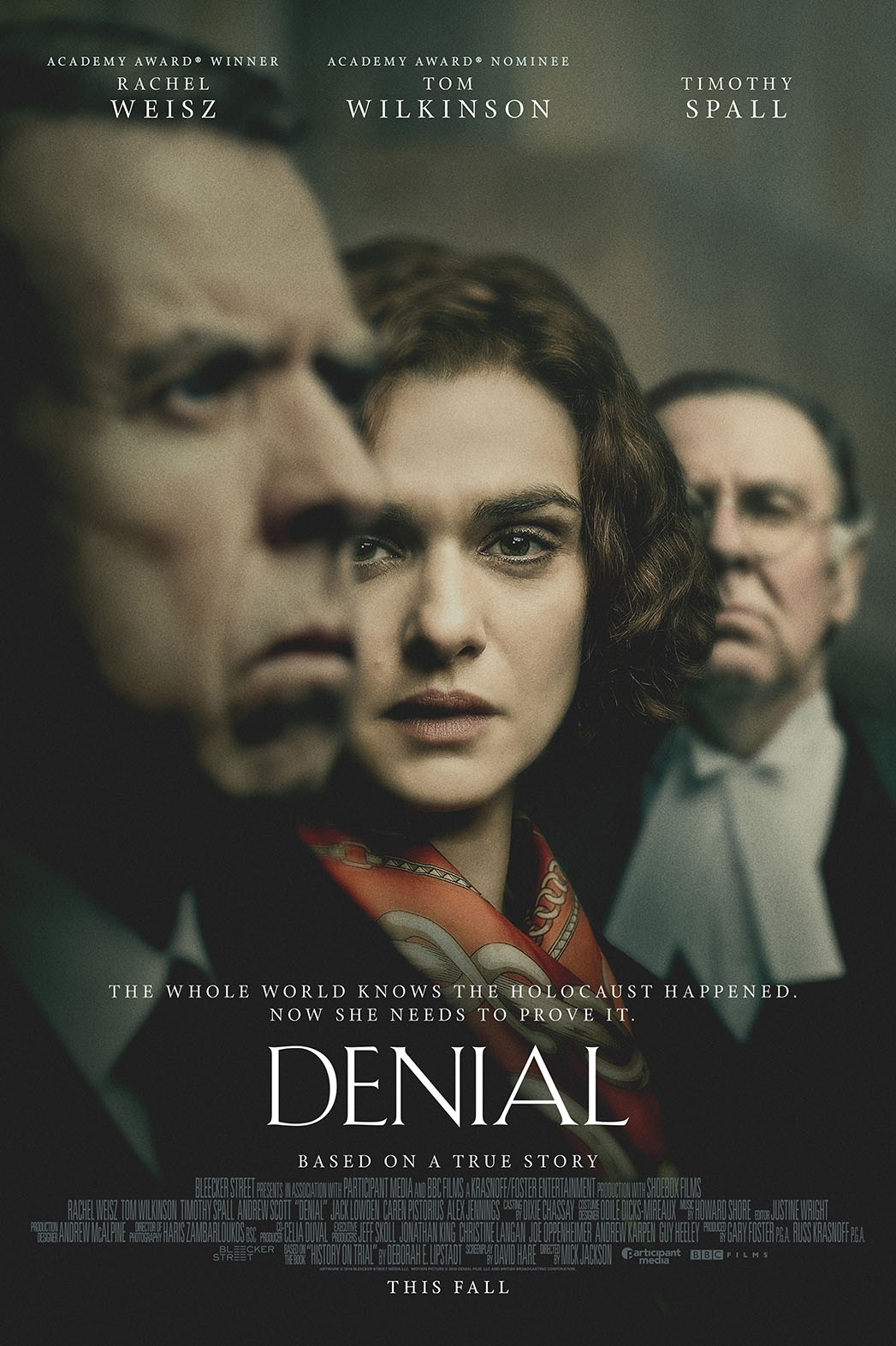
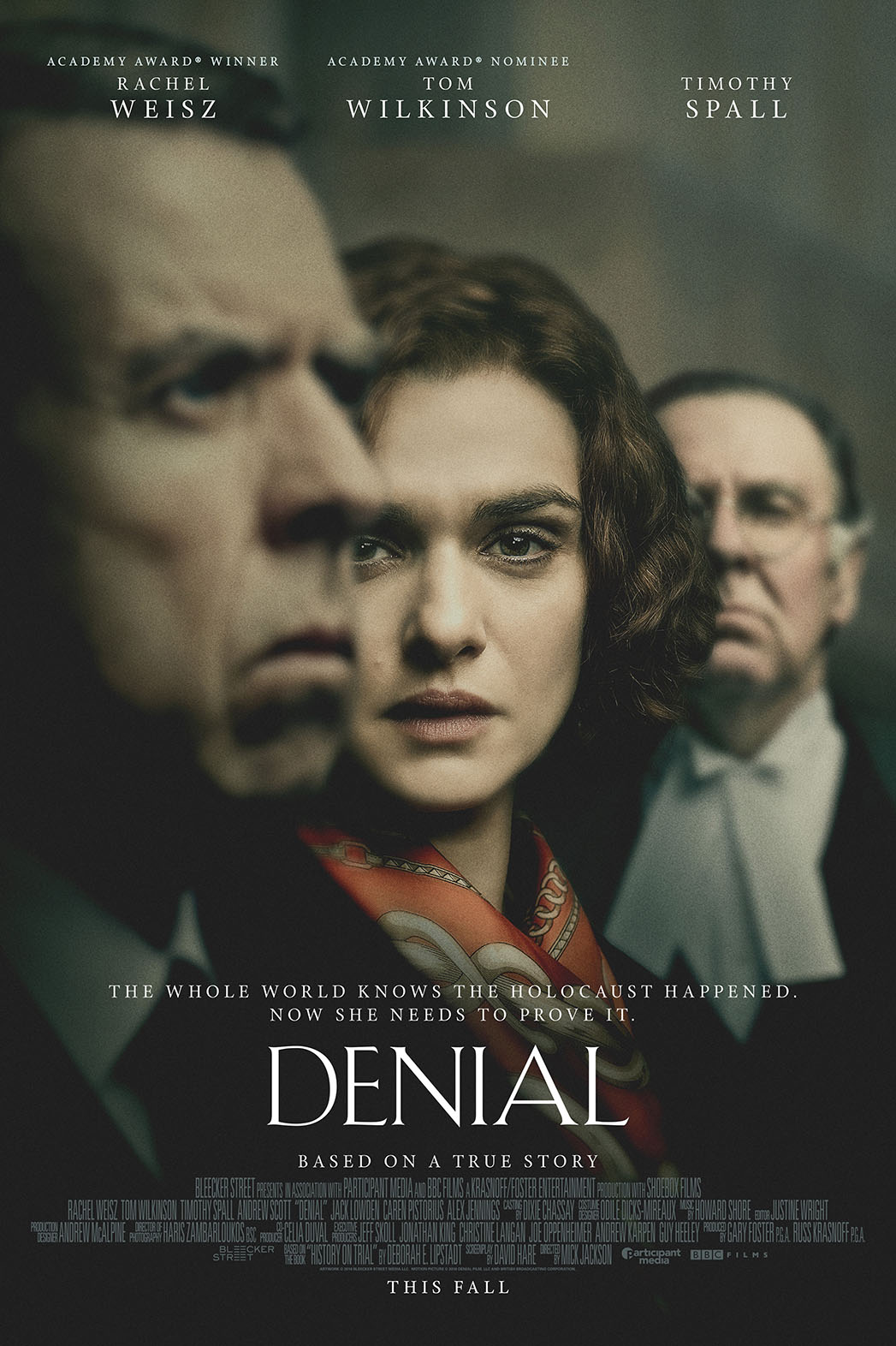
The experience in question, in the most literal sense of the term, is the Holocaust. David Irving (Timothy Spall, all oily charm), a British self-described historian, wrote and lectured widely about his view that Hitler never ordered the killing of Jews in concentration camp and that in fact there were no gas chambers used for mass executions of Jewish prisoners. He was intentionally offensive — in both sense of the word. He said:

Ridicule alone isn’t enough, you’ve got to be tasteless about it. You’ve got to say things like ‘More women died on the back seat of Edward Kennedy’s car at Chappaquiddick than in the gas chambers at Auschwitz.’ Now you think that’s tasteless, what about this? I’m forming an association especially dedicated to all these liars, the ones who try and kid people that they were in these concentration camps, it’s called the Auschwitz Survivors, Survivors of the Holocaust and Other Liars, ‘ASSHOLs’. Can’t get more tasteless than that, but you’ve got to be tasteless because these people deserve our contempt.

And he took his case to the classroom of a professor who specialized in the Holocaust, Emory’s Deborah Lipstadt (Rachel Weisz, feisty but thoughtful, with a red perm, bright scarves, and a Queens accent), to confront her in person, without notice but with a video camera. She refused to debate him, saying that it would legitimize his arguments. And she described him in her book, Denying the Holocaust: The Growing Assault on Truth and Memory, as:

one of the most dangerous spokespersons for Holocaust denial. Familiar with historical evidence, he bends it until it conforms with his ideological leanings and political agenda. A man who is convinced that Britain’s great decline was accelerated by its decision to go to war with Germany, he is most facile at taking accurate information and shaping it to confirm his conclusions.

He wanted more than a classroom confrontation after that. He filed a lawsuit against Lipstadt and her publisher, and he filed it in England, where the laws are more favorable for plaintiffs in libel cases. In the US, the person filing the suit has to prove his or her case. In the UK, it is up to the defendant to prove the truth of the statements made. In cinematic terms, the legal and physical setting heightens the inherent courtroom drama — all the wigs and posh accents and strangeness of the rules boost the theatricality of the presentation, especially after Lipstadt learns that neither she nor the Holocaust survivors who are vitally concerned with the trial will be allowed to testify. For Lipstadt, not being permitted to use her voice was a whole separate category of denial.

This is a compelling courtroom drama that goes to the deepest questions not just of Holocaust history or any history but of how we know what we know and who we believe. It is always tempting to say “let’s listen to both sides.” But as the late Daniel Patrick Moynihan used to say, “Everyone is entitled to his own opinion, but no one is entitled to his own facts.” The meticulous combing of Irving’s work to check footnotes and translate original documents (funded by Steven Spielberg and other donors) proved that Irving’s “conclusions” were based on misrepresentation. The meticulous combing of his shelves and shelves of diaries proved his bias. This is a compelling drama and an urgent reminder of the importance of rigorous challenges to unsubstantiated, malicious “history.”

Parents should know that this film deals with the Holocaust, with references to genocide and ethnic bigotry. It includes social drinking and some strong language.

Family discussion: What evidence would you want to see if you were the judge in this case? Should Professor Lipstadt have testified?

If you like this, try: This C-SPAN program about the trial, featuring Irving and Lipstadt and the website that includes the trial documents

Related Tags:


Based on a book Based on a true story Courtroom Drama
The Dressmaker

The Dressmaker

Posted on September 22, 2016 at 5:29 pm

B
Lowest Recommended Age: Mature High Schooler
MPAA Rating: Rated R for for brief language and a scene of violence
Profanity: Some strong language
Alcohol/ Drugs: Drinking and tipsiness, drugs
Violence/ Scariness: Some peril and violence, murder, sad deaths
Diversity Issues: None
Date Released to Theaters: September 23, 2016

Copyright 2016 Amazon Studios
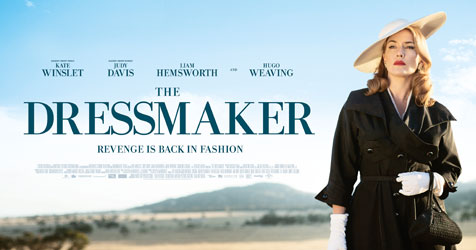
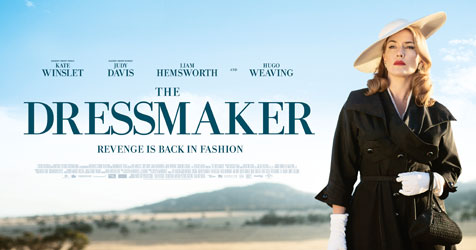
Kate Winslet plays Tilly Dunnage, a woman with secrets who returns to the tiny Australian town that threw her out as a child. She has become an accomplished couturier, working in London, Paris, and Milan. And she is a master of the bias cut, pioneered by Vionnet, whose photograph she carries with her for inspiration. This film, based on the novel by Rosalie Ham is also, in its way, cut on the bias, alternately wildly funny, wildly romantic, wildly satiric, and, at the same time, dark and tragic. Some will find that disconcerting; others will find it refreshing.

It is 1951. Tilly arrives home in the dust-covered town, her stylish heels stepping off the bus onto the dirt road. She goes up the hill to her mother’s shack, when there is a question from the local sheriff. “Is that…….Dior?” It is not; it is one of Tilly’s own designs. But she acknowledges the Dior inspiration. Sargent Ferrat (Hugo Weaving) is dazzled by the bold colors and sumptuous fabrics of Tilly’s designs. He’s a secret cross-dresser.

Winslet is marvelous as Tilly, who has come home to see her mother, known as Mad Molly (Judy Davis of “My Brilliant Career”), to find out the true story of what led to her exile, and to extract some revenge, both of the “living well is the best” variety and of the old-fashioned “make them suffer” variety as well. Tilly, then known as Myrtle, was abused by her teacher and the students in her class because she was poor and because her mother was not married. After an incident that resulted in the death of a boy in her class, she was sent away. The experience was so traumatizing that she cannot let herself remember exactly what happened, and worries that she was responsible, as everyone thinks. “Am I a murderer?” she asks of her mother.

Director Jocelyn Moorhouse and editor Jill Bilcock bring a vibrant energy to the storytelling that suits the theme of Tilly’s force and focus having an impact on the insular little town, and it is a lot of fun to see assumptions challenged and relationships in upheaval. There is a woman crippled by her wife-beating husband, a pharmacist who seems to be suffering from ankylosing spondylitis as he is bent over parallel to the ground. A civil leader gives his wife, agoraphobic and germophobic since the death of their son, knock-out medicine and then rapes her when she is unconscious. There are vicious gossips and snobs. And there are a few kind-hearted people, Ferrat, who regrets his treatment of Tilly and Teddy (Liam Hemsworth, clearly relishing the chance to speak in his native accent and very swoon-worthy when he removes his shirt). Molly becomes less mad and more feisty under Tilly’s care. Ferrat is not the only one who cannot resist the chance to wear something spectacular. “A dress never changed anything,” a local girl longing to be noticed by the town’s most eligible bachelor says to “Tilly.” “Watch and learn, my girl. Watch and learn.” And we know a Cinderella at the ball moment is coming — when it does, it is breathtaking. Soon, the tiny backwater is populated with ladies wearing haute couture. This has to be a dream assignment for a costume designer, and Marion Boyce and Margot Wilson (Winslet’s clothes) rise to the occasion with fabulously gorgeous and entertaining dresses.

The heightened quality of the story makes the darker turns unexpected and disconcerting. It is not as much of a feel-good movie as it originally promises. But it has its odd pleasures, and one of them is that, like its heroine, it has style to space.

Parents should know that this movie includes some strong language, drinking and drunkenness, sexual references and situations with some nudity, adultery and questions of paternity, domestic violence, murder, and very sad deaths.

Family discussion: What did Tilly want from her return home? Why was Teddy different?

If you like this, try: “Strictly Ballroom” and “Muriel’s Wedding”

Related Tags:


Comedy Drama Movies -- format Romance Satire
Snowden

Snowden

Posted on September 15, 2016 at 5:51 pm

B
Lowest Recommended Age: High School
MPAA Rating: Rated R for language and some sexuality/nudity
Profanity: Very strong language
Alcohol/ Drugs: Alcohol
Violence/ Scariness: Tension and peril
Diversity Issues: None
Date Released to Theaters: September 16, 2016

Copyright Endgame Entertainment 2016
Who better to take on the story of Edward Snowden than cinema-of-paranoia director Oliver Stone? Well, Laura Poitras, who directed the documentary about Snowden, “Citizenfour,” and who is portrayed in this film by Melissa Leo. As is usually the case, the documentary is the better film. But Stone’s narrative version, “Snowden,” is an absorbing version of the story, presenting vitally important issues in an arresting, provocative manner, with some superb moments. It is flawed, as Stone’s “historical” films tend to be, by unnecessary stacking of the deck that detracts from the credibility of the film. Stone does not trust the government, which is fine, but he doesn’t trust his audience, which is distracting. If you are going to make your hero a seeker of Truth, then Hollywood-izing the story is counter-productive.

The movie takes on three big questions, answers one, partially answers another, and turns the third over to us. The first question is: what happened? How did a 29-year-old computer guy get access to what appears to be the entire scope of US intelligence, copy it, and turn it over to reporters? Second, why did he do it? And third, is he a hero or a traitor?

Snowden was an enormously gifted, deeply patriotic young man who was in training for military special forces when an injury forced his return to civilian life. “There are other ways to serve your country,” the doctor crisply advises him. Naming Ayn Rand as one of his influences does not raise any concerns in his battery of entry tests and interviews, including lie detector tests. And so he goes to work for the CIA, NSA, and private contractors for both agencies, gaining access to the information and intrusions into personal data that are being constantly combed and mined for possible terrorist activity. Think of it as the government having Google that searches not just all public material but everything we think of as private: every email, every phone call, every bank account and credit card transaction, even invading your non-digital, analog world, including your home. According to this film, the government can spy on you Big Brother style via your webcam, even if the indicator light is off. I will wait here while you go get a Band-Aid to cover it up right now.

A combination of consciousness-raising from his left-leaning girlfriend (Shailene Woodley), horrifying discoveries of 4th Amendment violations, disturbing revelations about the military-industrial complex (from Nicolas Cage!), and disappointment in President Obama’s failure to curb these abuses leads Snowden to decide to go public. Briefly touched on are some other possible factors: the abuse of Tom Drake, who tried to raise these questions through official channels, and, possibly, some psychological or cognitive disturbance resulting from the onset of epilepsy and the drug used to treat it, or from the level of work-related stress that may have triggered the seizures. There is one “Beautiful Mind”-style scene where Snowden’s CIA boss (Rhys Ifans) speaks to him via a Skype-ish video conference, with a looming, room-size head along the lines of the Wizard of Oz. It is not clear whether this is Snowden’s subjective viewpoint or intended to be a realistic portrayal, but the conversation is, even within the framework of this film about massive intrusions into private lives of citizens with no suggestion of any inappropriate activity, preposterously paranoic.

All of this would be so much easier to take if Snowden was not heroic and brilliant every single moment. Given 5-8 hours to complete a programming test at the beginning of his tenure at the CIA, he finishes in under 40 minutes (38, he corrects his instructor), and everywhere he goes, he blows everyone away with his mad skills. As he zippily downloads the files he plans to turn over to the press (in real life it took months, not minutes), colleagues knowingly nod their approval, hard to understand given his insistence that he was careful to make it clear that he alone was responsible for the breach. Gordon-Levitt is, as ever, an enormously talented actor, but he is playing something of a cipher, a person with low affect. The endlessly skilled Melissa Leo is playing a tough and savvy journalist but as written she has little to do but gaze adoringly as she points her camera. The standouts in the cast are two of the most versatile and talented young actors working on film today: Ben Schnetzer and Lakeith Lee Stanfield as two of Snowden’s colleagues. In their brief screen time, each of them creates vivid, three-dimensional characters we instantly connect to more than we do to any of the main characters.

No matter where we place the balancing point between national security and individual freedom, we can all agree that the decisions should not be made unilaterally by individuals in their 20’s like Edward Snowden and Chelsea Manning. Snowden says he is hoping to start a conversation. I hope that the conversations about this film will be less about its failings and more about what we should do to make sure the next Snowden does not decide to take this step.

Parents should know that this film has very strong language, sexual references and situations and some nudity, tense and perilous situations, and issues of betrayal.

Family discussion: Is Snowden a hero or a traitor? What would you have done if you discovered the level of government surveillance? Who should decide and how much should be disclosed?

If you like this, try: “Zero Days” and “Citizenfour

Related Tags:


Based on a book Based on a true story Drama Movies -- format Politics Spies
Finding Altamira

Finding Altamira

Posted on September 15, 2016 at 5:18 pm

B-
Lowest Recommended Age: Middle School
MPAA Rating: Not rated
Profanity: Mild language
Alcohol/ Drugs: Alcohol
Violence/ Scariness: Some peril
Diversity Issues: None
Date Released to Theaters: September 16, 2016

Copyright 2016 Mare Nostrum Productions
One of the most deeply moving, inspiring, and just plain thrilling experiences of my life was visiting the legendary Altamira cave, where the earliest humans created art that is stunningly beautiful. It is the earliest work we have that tells us something about the spirit, sophistication, understanding, and aesthetics of our ancestors who lived four or five times as long before ancient Egypt as ancient Egypt is from us. The paintings are every bit as beautiful and sophisticated as Michelangelo’s Sistine Chapel or Rembrandt’s Last Supper.

Imagine being the first modern person to see them, to wander into a cave and find perfectly preserved paintings of animals extinct for thousands of years. This is the story of Marcelino Sanz de Sautola (Antonio Banderas), a nobleman scholar who first identified the cave paintings prehistoric in the 1870’s. The focus of the film is the rejection of his conclusions by the church, which considered them heretical and a threat to their power, and by the scientists of the time, who considered them a secular form of heresy as well. Like the cinematic portrayals of Darwin (“Creation”) and Stephen Hawking (“The Theory of Everything”), it is also the story of a scientist married to a woman of faith, and the conflicts that creates for their relationship.

Director Hugh Hudson (“Chariots of Fire”) has a feel for period drama, but some striking shots cannot make up for static storytelling and a clunky script. There is too much focus on Marcelino’s relationship with his science-minded young daughter (one scene of her gazing at the paintings as they come to life would be more than enough) and the conflicts with his wife. The dialogue is clunky and over-explanatory, more suitable for an educational film to be shown in middle school than a theatrical release. Frustratingly, the movie never really conveys the astonishing splendor and the vibrant colors of the paintings themselves, the way the artists used the surface of the cave for perspective and shaping of the images. For that see Werner Herzog’s “Cave of Forgotten Dreams,” about the cave paintings at Chauvet, a movie that comes much closer to living up to the art to which it pays tribute.

Parents should know that this film has some peril and confrontations and a clash between religion and science.

Family discussion: Why do some people see a conflict between religion and science? Who is most like Marcelino today?

If you like this, try: “Cave of Forgotten Dreams”

Related Tags:


Based on a true story Drama Movies -- format
THE MOVIE MOM® is a registered trademark of Nell Minow. Use of the mark without express consent from Nell Minow constitutes trademark infringement and unfair competition in violation of federal and state laws. All material © Nell Minow 1995-2026, all rights reserved, and no use or republication is permitted without explicit permission. This site hosts Nell Minow’s Movie Mom® archive, with material that originally appeared on Yahoo! Movies, Beliefnet, and other sources. Much of her new material can be found at Rogerebert.com, Huffington Post, and WheretoWatch. Her books include The Movie Mom’s Guide to Family Movies and 101 Must-See Movie Moments, and she can be heard each week on radio stations across the country.

Website Designed by Max LaZebnik