Son of God

Posted on February 27, 2014 at 6:00 pm

B
Lowest Recommended Age: Middle School
MPAA Rating: Rated PG-13 for intense and bloody depiction of The Crucifixion, and for some sequences of violence
Profanity: None
Alcohol/ Drugs: Wine
Violence/ Scariness: Intense and graphic torture and abuse and disturbing images in depiction of crucifixion, swords
Diversity Issues: Religious diversity issues
Date Released to Theaters: February 28, 2014
Date Released to DVD: June 2, 2014
Amazon.com ASIN: 1455585831

son-of-god“Son of God,” re-cut and expanded from the popular miniseries produced by Roma Downey and Mark Burnett, “The Bible,” tells the story of Jesus from birth to crucifixion and resurrection in a thoughtful, reverent, and dignified manner. This is a movie made by believers for believers. It expects viewers to be familiar enough with the story to fill in some of the gaps and devout enough to assume the significance of each moment. It tells the story in a westernized, conventional manner that can seem superficial at times, more a cinematic Sunday School lesson than a movie.  It is unlikely to persuade anyone, but it is undeniably moving and many believers will find it inspiring.

The production values are high, with Morocco providing the Biblical landscapes, elaborate sets and costumes, and a stirring Hans Zimmer score.  Portuguese actor Diogo Morgado plays Jesus with dignity.  He is very handsome, though his western features seem out of place.  The portrayal of the Jews is always a sensitive issue in the depiction of the New Testament story.  This version is more sympathetic than some, showing the political pressure that gave the Jewish community in Rome-occupied Jerusalem little choice.  But it seems odd that Jesus and his followers, who considered themselves Jews, show no evidence of Jewish practice other than the Hebrew prayer for he dead following the crucifixion.  Even the Last Supper, which has no elements of a Passover seder, though the Gospel of Mark says that Jesus prepared for the Last Supper on the “first day of Unleavened Bread, when they sacrificed the Passover lamb.”

The movie also reflects its source with some odd re-cuts and deletions.  Those who are not familiar with the details of the Gospels may have trouble understanding who some of the characters are and how they fit in.  The death of John the Baptist is mentioned briefly without making it clear what his contribution was and how he died.  Roma Downey has explained that they chose to literally cut the devil out of the story, in part as a result of some claims that the actor cast in the role for the television version bore a resemblance to President Obama.  But that means eliminating a key element of the story, the Garden of Gethsemane, which is an important part of understanding the way Jesus saw his role and his sacrifice. This is an accessible version of the story, but it is also a simplified one.

Parents should know that the New Testament storyline includes illness, bigotry, and graphic and disturbing images of torture, abuse, and crucifixion.

Family discussion: How does this differ from other versions of the story?  What was Jesus’ most important statement and why?

If you like this, try: the rest of “The Bible” miniseries and other depictions of the life of Jesus including “The Gospel of John” and “King of Kings”


Related Tags:


Based on a book Drama DVD/Blu-Ray Pick of the Week Epic/Historical Spiritual films

Pompeii

Posted on February 20, 2014 at 6:00 pm

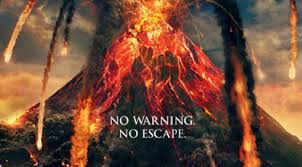
pompeii posterIn 79 AD Mount Vesuvius erupted, wiping out the city of Pompeii. Director Paul W.S. Anderson, who gave us movie versions of “Resident Evil” and “Mortal Kombat,” presents the story as a video game. If what you are looking for is special effects and well-staged action, or even buff bodies, you’re all set.  But those who are looking for history, meaningful drama, character development, or good dialog — well, they weren’t paying attention a moment ago when I mentioned the director of game console-to-movie theater movies and Paul W.S. Anderson.  It is basically “The Legend of Hercules” with a volcano.

“Game of Thrones'” Kit Harington plays Milo, who as a child saw his entire community brutally slaughtered by the vicious and corrupt Roman soldier Corvus (an imperious Kiefer Sutherland).  Milo escaped by hiding in a pile of dead bodies.  He is later captured and sold into slavery, where his outstanding fighting skills bring him to the attention of a purveyor of gladiator battle-to-the-death entertainment.  He travels to the big city of Pompeii to compete in the arena there.  Along the way, he sees a beautiful young woman named Cassia (Emily Browning) and he impresses her by putting her injured horse out of its misery.  Cassia is returning to her parents (Jared Harris and Carrie-Ann Moss) after a visit to Rome, where she attracted the attention of Corvus, now a high-ranking Senator.  But Milo has attracted her attention.  In an example of dialog that could have come out of a middle school slam book, a character says, “I never saw you look at any man the way you looked at that slave.”

Milo is set to fight the enormous and powerful Atticus (“Thor’s” Adewale Akinnuoye-Agbaje), who can earn not just his life but his freedom with one more win in the arena.  They end up forming an alliance like that of Kirk Douglas and Woody Strode in the classic “Spartacus.”  Meanwhile Corvus is attempting to extort Cassia’s hand in marriage from her father, who needs the support of Rome for his building project.

And all of this is about to be trumped by a nearby mountain and some seismic movement of the earth.  There are huge sinkholes and then there is an ocean of burning lava and chokingly thick ash.  Every element of the lives of the Pompeiians is turned upside down as all societal restrictions are removed and all anyone wants to do is stay alive.  Well, you’d think that, but unfortunately the storylines that have already more than overstayed their welcome drag on, interfering with what we really want to see — the special effects — and jettisoning any possible remaining legitimacy of the plot.

Harington is very good as Milo and he and the excellent Akinnuoye-Agbaje make the fight scenes exciting and compelling.  Sutherland has a nice sneer (I could not help remembering his bully in “Stand By Me.”)  The special effects, especially in 3D, are impressive.  But the movie is dragged down by its cheesy storyline.

This is not the first movie version of the story of Pompeii and it will not be the last.  Pliny the Younger’s eyewitness description of what happened when the volcano erupted excerpted in the opening moments of the film, is still more vivid and powerful than any version yet put on screen.

You might hear the Shrieks of Women, the Cries of Children, the Noise of Men: Some called aloud for their Parents, some for their Husbands, and knew them only by their Voices; some bewailed their own Share in the Calamity; and others that of their Neighbours; some wished for Death from the Fear of Dying; many lifted up their Hands to Heaven; a Multitude disbelieved all the Gods, and looked upon the Time to be the last eternal Night, that has been prophesied. Some improved the real Dangers by feigned and imaginary Fears; others gave it out, that this House at Misenum was fallen, that was burnt; both falsely, but they met with Believers. A Glimpse of Light appeared, that did not show us the Return of Day, but the Approach of the Fire that threatened us: The Fire indeed, stood at a Distance; then the Darkness revived, and after that, a plentiful Shower of Ashes and Cinders: We rose up now and then and shook them off, otherwise we should have been covered and oppressed with the Weight of them. I could boast, that neither a Sigh, nor a complaining Expression dropped from me in the midst of these Alarms; but I was supported by this Consolation, not very Reasonable indeed, but natural enough, to think that all the World perished with me. 

Parents should know that this film has extensive sword and sandal-era violence including the slaughter of a village, a child seeing his parents get killed, a horse put down, and many gladiator fighting scenes with many characters injured and killed. Also, natural disaster violence destroys an entire city with some disturbing images and there is a brief sexual situation (slaves as prostitutes) and reference to a brothel.

Family discussion: Why didn’t Milo want to say his name? What kind of culture finds gladiator fighting entertaining?

If you like this, try: read up on the real history of Pompeii and watch classics like “Gladiator,” “Ben Hur” and “Spartacus”

Related Tags:


3D Action/Adventure Drama Epic/Historical Inspired by a true story Tragedy

The Monuments Men

Posted on February 6, 2014 at 6:00 pm

B+
Lowest Recommended Age: High School
MPAA Rating: Rated PG-13 for some images of war violence and historical smoking
Profanity: Some mild language ("SOB," etc.)
Alcohol/ Drugs: Drinking, references to drinking problem
Violence/ Scariness: Wartime violence, peril, guns, explosions, characters injured and killed, some disturbing images
Diversity Issues: A theme of the movie
Date Released to Theaters: February 7, 2014
Date Released to DVD: May 19, 2014
Amazon.com ASIN: B00DL48CN4

monuments menMany years ago, my husband and I attended an art auction at which one item was a pencil drawing of a peaceful river setting, made by an Austrian art student in the early 20th century: Adolf Hitler.  The bidding opened at $10. There were no takers.  Hitler retained his appreciation for art as he became a dictator and the man responsible for the most devastating war in world history and the Holocaust that killed six million Jews and hundreds of thousands of Slavs, Romany, gays, and disabled people.  A part of his plan to take over the world and remake according to his dream of a Thousand Year Reich was to own the greatest art masterworks of all time, many to be displayed in a “Furher Museum” in his own honor.  He ordered his army to take art from Jewish collectors, from churches, and from museums, and he hid them until they could be retrieved at the end of the war.  When it appeared that he was going to lose the war, he ordered many of them to be destroyed.

In a little-known part of the Allied war effort, an international group of 345 art historians, scholars, curators, and architects served in the Monuments, Fine Arts, and Archives section, to seek out the missing art treasures and, where possible, to prevent the battles going on in Europe from collateral damage of historic buildings and artworks.  Writer-director-star George Clooney has turned this story into an exciting and entertaining film, but by no means a great one.  At times it feels like “Oceans 11 Goes to War.”  In fact, Clooney not only gave himself the same line he has in “Oceans 11,” he gives it the same line reading. It is one thing to make a heist film set in Las Vegas cuddly, with a bunch of pretend adorable crooks.  It is another to try to make that work in the midst of a devastating real war, especially when every one of the clearly fictionalized and composite characters is always the essence of dignity, courage, honor, dedication, and dashing gallantry, quips included.

In this Hollywood-ized version, there are six primary operatives: Clooney plays the leader, Frank Stokes, who rounds up his non-dirty half-dozen, including recovering alcoholic Brit Donald Jeffries (“Downton Abbey’s” Hugh Bonneville), dashing Frenchman Jean Claude Clement (“The Artist’s” Jean Dujardin), MMoA curator James Granger (Damon), sculptor Walter Garfield (John Goodman), architect Richard Campbell (Bill Murray), and Preston Savitz (Christopher Guest regular Bob Balaban).  Cate Blanchett is sincere but misused as a French woman working for the Germans who are taking paintings from Paris so she can give information to the Resistance.

Clooney can do better (“Goodnight and Good Luck”) than this script, which feels like a Robert McKee formula special, all the beats and plot points laid out according to the formula.  As a result, it works.  The sad casualties are balanced with the sentimental pauses (a nice moment when a character gets a recorded message from home is clumsily juxtaposed with a soldier dying on a table in the medical tent) and the bro-banter.  But the breadth and brutality of the crimes and the humility and devotion of the heroes cannot help but move us and, I hope, inspire us to treasure the masterworks they saved and the heroes who saved them.

Parents should know that this film includes wartime peril and violence, with characters injured and killed, some graphic and disturbing images, sad deaths, explosions, shooting, land mine, constant smoking, some drinking and references to a drinking problem, and mild references to adultery.

Family discussion:  Should people risk their lives to save art?  Who should decide?

If you like this, try: “Is Paris Burning?” and The Train and the documentary about Nazi art theft, The Rape of Europa — and look into the history of some of your favorite artworks

Related Tags:


Based on a book Based on a true story Drama DVD/Blu-Ray Pick of the Week Epic/Historical War

Two Film Noir Classics Now Free Streaming

Posted on January 31, 2014 at 11:59 am

“Film Noir” (“black films”) usually refers to the stylized dark crime films of the 1940’s, usually made by German directors who came to the United States to escape the Nazis.  Their cynicism, sense of dread and loss, and themes of betrayal, obsession, and sin gave their stories of crime and mystery an archetypal feeling.  Two of the best can now be seen for free.

A neglected gem from Orson Welles, “The Stranger” is the story of an investigator (Edward G. Robinson) who is tracking down a Nazi war criminal (Welles), now living a quiet life as a professor and married to a woman (Loretta Young) who knows nothing of his past.  The climax in a church belfry tower is brilliantly staged.

Edward G. Robinson also appears in the less characteristic role of a mild-mannered professor who gets caught up in a web of deception and betrayal in “The Woman in the Window.”  The ending is a disappointment, but the direction by Fritz Lang is a masterpiece of noir mood.

Related Tags:


Classic Drama Mystery Thriller

The Wolf of Wall Street

Posted on December 24, 2013 at 6:30 pm

A-
Lowest Recommended Age: Adult
MPAA Rating: Rated R for sequences of strong sexual content, graphic nudity, drug use and language throughout, and for some violence
Profanity: Constant very strong and crude language
Alcohol/ Drugs: Every possible kind of substance abuse
Violence/ Scariness: Peril including a crashed helicopter and a sinking ship
Diversity Issues: Diverse characters, insensitive treatment of little people
Date Released to Theaters: December 25, 2013
Date Released to DVD: March 28, 2014
Amazon.com ASIN: 0345549333

Wolf-of-Wallstreet-585x370

Jordan Belfort is a selling machine the way a shark is a killing machine.  Every single element of his being is optimally designed for just one purpose, with no extraneous or pesky attributes like a conscience to slow him down.  And so, when he interrupts the story right off the bat to make sure that we see the color of his Lamborghini was white (like in “Miami Vice”) not red, he knows it will encourage us to believe that he cares about making sure we get the truth, the whole truth, and nothing but the truth.  It’s his version of it, anyway, as told in his book, The Wolf of Wall Street.

Belfort actually doesn’t spend much time on Wall Street, but those magic words make for a better sales pitch.  The man knows how to tell a story.  He gets a job on Wall Street at age 22, a “smile and dial” position where he is supposed to get 500 people a day on the phone and ready to talk to a broker who will pitch them some stocks.  A senior broker (a still painfully skinny post “Dallas Buyers Club” Matthew McConaughey, perfectly capturing the insanity of people who make a ton of money pretending they understand something that makes no sense) takes him out to lunch.  He tells the waiter to keep the liquor coming, and explains to Belfort the key lesson: brokers are not there to make money for the clients — they are there to make money from the clients.  He also advised Belfort to keep his lower half, uh, relaxed, and his upper half, uh, stimulated.  This is advice that Belfort will take, uh, to heart.

But first he has to lose his job when Wall Street firm collapses following what we then called a crash back in October of 1987, but now, having recalibrated following far greater financial disasters, we call a momentary dip.  Belfort then discovers a whole new world of not-quite-legal penny stock brokerages on Long Island (director Spike Jonze has a very funny cameo as his new boss) and soon he is running his own boiler room operation out of what once was a car repair shop.  This was, in fact, the inspiration for the terrific movie “Boiler Room,” starring Giovanni Ribisi, Ben Affleck, and Vin Diesel.  He gives his firm a made-up name, brilliantly constructed to sound established, solid, and vaguely familiar: Stratton Oakmont.

Here Belfort learns two more important lessons.  First, there’s no such thing as bad publicity.  A story in Forbes that calls him a reverse Robin Hood, stealing from the poor to make money for himself, gets him an avalanche of job applicants eager to join his Merry Men.  Second, too much is never enough. Belfort does not fall into every possible kind of addiction and substance abuse; he embraces it.  There are mountains of drugs and hookers in this movie, plus a helicopter crash (while Belfort was high), sinking a yacht “suitable for a Bond villain” that once belonged to Coco Chanel (while Belfort was high), midget tossing and a crazy-hilarious conversation about the parameters  of  midget-tossing (and, in passing, the ethics), a near-naked marching band in the brokerage, and then more drugs and hookers.  This is all in the book, and screenwriter Terrence Winter told Joe Nocera of the  New York Times that “when he interviewed the F.B.I. agent who finally nailed Mr. Belfort, the man said, ‘I tracked this guy for 10 years, and everything he wrote is true.'”  That includes the macabre but over-the-top hilarious scene of a drug overdose that leaves Belfort incapable of standing or speaking coherently that comes at the worst possible place and time.  The cocaine and ludes are not nearly as powerful as the most intoxicating substances of all: greed mixed with testosterone and pure id.

“Is this legal?” Belfort cheekily asks us as he explains what he is up to?  “Absolutely not!”  He knows we are not interested in the details.  We are too busy being dazzled by the excess and how much fun everyone is having with it.  By now, Belfort has left his pretty first wife (big-eyed Cristin Milioti, the mother from “How I Met Your Mother”) for a second, spectacularly beautiful wife he calls “The Duchess of Bay Ridge” (Margot Robbie, nailing the accent and the attitude).  He has houses, horses, Coco Chanel’s yacht, and two security guards, both named Rocco.  He is taking a hospital’s worth of pills and a “Scarface”-load of cocaine.  And an FBI agent (“Friday Night Lights'” Kyle Chandler) is looking into his activities.  We know he’s serious because he has one of those cork boards with pieces of paper thumb-tacked onto it to keep track of the case.

Like his “Goodfellas,” Scorsese’s storytelling here is utterly mesmerizing, with brilliant performances in every role.  DiCaprio is electrifying.  If Stratton Oakmont was still around, there would be a line of eager applicants around the block tomorrow.  In smaller roles, Rob Reiner, as Belfort’s father and compliance officer, “AbFab’s” Joanna Lumley as a willing accomplice and “The Artist’s” Jean Dujardin are stand-outs, and Jake Hoffman (son of Dustin Hoffman and Anne Byrne) is just right as shoe designer Steve Madden, whose company was taken public by Belfort’s firm.  In one brief but key scene, Stephanie Kurtzuba beautifully creates a complete and compelling character who tells us a lot about her life and about Belfort as well.

And like “Goodfellas,” this is the story of a ruthless entrepreneur that illuminates the best and worst of the American spirit, big dreams,  ambition, energy, focus.  We know Belfort is a crook who exploits the trust of people who don’t know better but we can’t help being sold ourselves because he makes it look like so much fun.  And we know that while he spent less than two years in jail, where he played tennis and came out to a lucrative new career as a motivational speaker and got to be played by Leonardo DiCaprio in a Martin Scorsese film, the real Wolves of Wall Street will love this movie.  And then they’ll go back to their hundreds of millions of dollars, houses, horses, and two security guards named Rocco who, along with the loopholes they made sure stayed in the laws, will protect them from even the slap on the wrist faced by Belfort.

Parents should know that this film has NC-17-level content with extremely explicit and mature material, with explicit sexual references and situations including orgies and nudity, extensive drinking and drug abuse, crooked dealings and fraud, constant very strong language, peril, and some violence.

Family discussion: Why were Belfort’s colleagues so loyal to him? Why were the customers so willing to be cheated? Was justice done?

If you like this, try: “Boiler Room” (also inspired by Belfort), “Goodfellas,” and “Wall Street” and Michael Lewis’ books Liars Poker and The Big Short.

Related Tags:


Based on a book Based on a true story Biography Crime Drama DVD/Blu-Ray Pick of the Week
THE MOVIE MOM® is a registered trademark of Nell Minow. Use of the mark without express consent from Nell Minow constitutes trademark infringement and unfair competition in violation of federal and state laws. All material © Nell Minow 1995-2026, all rights reserved, and no use or republication is permitted without explicit permission. This site hosts Nell Minow’s Movie Mom® archive, with material that originally appeared on Yahoo! Movies, Beliefnet, and other sources. Much of her new material can be found at Rogerebert.com, Huffington Post, and WheretoWatch. Her books include The Movie Mom’s Guide to Family Movies and 101 Must-See Movie Moments, and she can be heard each week on radio stations across the country.

Website Designed by Max LaZebnik