Fruitvale Station

Posted on July 18, 2013 at 5:51 pm

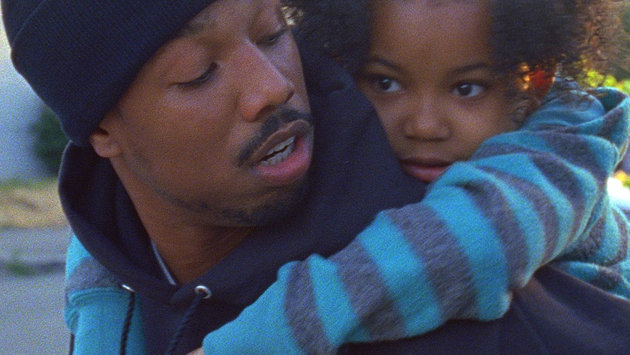
The sadly timely release of Sundance award-winner “Fruitvale Station” begins with the shocking real-life cell phone footage shot in a San Francisco subway station on New Year’s Eve 2008.  A young black man named Oscar Grant was handcuffed and lying on the ground when he was shot and killed by a policeman.fruitvale-station

We then go back in time to see how Grant (a star-making performance by Michael B. Jordan of “The Wire”) spent the last day of his life.  First-time writer-director Ryan Coogler creates an intimate, documentary feeling to the story, candid in its portrayal of a young man who has made some mistakes (he was a drug dealer, he has served time in prison, he cheated on his girlfriend, he gets fired for being late).  But, with a transcendent performance by Jordan, we see that Grant was a devoted son and father who wants very much to be the man his mother, girlfriend, and daughter deserve.

https://www.youtube.com/watch?v=ceVVVils8z4

We follow him through the day, seeing him charmingly assist a woman at the grocery story by calling his grandmother to advise her on a recipe, celebrating at the birthday party for his mother (Oscar-winner Octavia Spencer), and defusing a tense situation with a store owner.  And all that time, we know he will be dead in the earliest hours of 2009. By the time it happens, we are different people than we were the first time we saw him get shot.  We care about Oscar in a way that will make it harder to jump to conclusions about a young black man ever again.

Parents should know that this film includes some strong language, sexual references and situations, drug dealing, and a shocking murder.

Family discussion: Why was Oscar Grant shot?  Do you agree with the punishment for the man who shot him?  How does this relate to the debate over the verdict in the George Zimmerman/Treyvon Martin case?

If you like this, try:  Melonie Diaz in “Raising Victor Vargas”


Related Tags:


Based on a true story Crime Drama

The Lone Ranger

Posted on July 7, 2013 at 11:32 pm

C
Lowest Recommended Age: High School
MPAA Rating: Rated PG-13 for sequences of intense action and violence, and some suggestive material
Profanity: Some mild language
Alcohol/ Drugs: Scenes in bar
Violence/ Scariness: Extensive action-style violence, some graphic, many deaths and injuries
Diversity Issues: A theme of the movie but some insensitivity to racial differences
Date Released to Theaters: July 4, 2013
Amazon.com ASIN: B008JFUOC2

lone rangerFor more than a century the movies have been telling us the story of America through westerns, and each decade gets the version it deserves.  We have seen films range from the optimistic, heroic, and racially insensitive movies of the 40’s (“Destry Rides Again,” “My Darling Clementine”) to the more politically metaphoric movies of the cold war era (“High Noon,” “The Ox-Bow Incident”) to the subversive 60’s (“Butch Cassidy and the Sundance Kid,” “Cat Ballou”), to the bleakness of spaghetti westerns and the Oscar-winning “Unforgiven.”

And now, 110  years after Edwin S. Porter’s “Great Train Robbery” (considered the first movie western), we get an update on the radio show-turned television series-turned forgettable 1981 movie version starring model-almost-turned-actor Klinton Spilsbury and Michael Horse, “The Lone Ranger.”  And it is indeed a reflection on the era of Citizens United and squestration.  It is the very essence of soulless corporate excess and celebrity self-regard.

The folks behind “Pirates of the Caribbean” have reunited for a reboot of “The Lone Ranger,” but this is more like the overstuffed sequels than the fresh and charming original.  Everything is out of balance in this bloated two and a half-hour endurance challenge.  The worst part is that pared down to lose 40 minutes or so of filler, this could be a nice little action movie.  It has the key ingredients: a story and characters that have stood the test of time, inventive and absorbing action sequences, and talented performers.  Unfortunately, it is hard to find any of that in the midst of all of the bombast and overkill and tooooo many cooks.

It is now well known that Depp became a superstar with his performance as Captain Jack Sparrow in the “Pirates” movies, a performance of such quirk and weirdness that it completely freaked out the suits.  So of course now, with him as producer, they let him do whatever he wanted for the character of Tonto, including spending the entire movie with his face completely painted and wearing a dead crow on his head, inspired by a picture he saw.  This is when the suits should have stepped in.  Instead they were enablers, allowing the quirks to become distracting and unpleasant.  That is especially true in a completely unnecessary framing story set in 1933, with Depp in old man make-up appearing in an old west display, telling a little kid dressed as the Lone Ranger his story.

Armie Hammer does his best in a thankless role.  His John Reid is part James Stewart in “The Man Who Shot Liberty Valance” (bookish lawyer who wants to bring Lockeian notions of a civil society to the west), part doofus.  He isn’t as smart as Tonto or the villains, which is fine, but he isn’t as smart as his horse, either.  He isn’t as smart as the blanket under his saddle, except when he is, or when he is called upon to do crazy stunts like racing the snow-white “spirit horse” across the top of a racing train, shooting his gun as he goes.  He is a fine actor with a strong screen presence and he is clearly game.  He deserves better.

The many, many references to other movies seem like crutches, not tributes.  The many, many anachronisms are sloppy and show contempt for the audience, not meta-commentary.  People in 1869 did not say “Let’s do this.”  They did not eat hot dogs in buns with ketchup.  The “Star Spangled Banner” did not become the national anthem until 1931. There was no such thing as “health code violations” in a bar — or a house of prostitution.  And the all-purpose conspiracy that has the military, a hostile takeover, and an outlaw feels desperate and generic.  Any commentary on today’s economic and political woes is purely coincidental.

The real commentary on the failures of capitalism is in spending $250 million of the Disney shareholders’ money on this uninspired vanity project.

Parents should know that this film has intense and graphic violence for a PG-13.  A villain literally eats the heart of a man he has murdered and there is massive slaughter, with many characters injured and killed.  There are prostitutes, a cross-dresser, bathroom humor, some alcohol, and mild language.

Family discussion:  Why did Tonto feed the crow?  Why was trading so important to him?  Read the Lone Ranger’s creed and discuss how it applies to your life.

If you like this, try: “The Man Who Shot Liberty Valance,” “Silverado,” “Cat Ballou,” and “Butch Cassidy and the Sundance Kid”

Related Tags:


Action/Adventure Based on a television show Comedy Drama Movies -- format Remake Western

The Way Way Back

Posted on July 5, 2013 at 9:12 pm

B+
Lowest Recommended Age: High School
MPAA Rating: Rated PG-13 for thematic elements, language, some sexual content, and brief drug material
Profanity: Some strong language
Alcohol/ Drugs: Drinking and drunkenness, drug reference
Violence/ Scariness: Emotional confrontations
Diversity Issues: Insensitive treatment of a person with a disability
Date Released to Theaters: July 5, 2013
Date Released to DVD: October 21, 2013
Amazon.com ASIN: B00DL46ZN8

THE WAY, WAY BACKNat Faxon and Jim Rash, Oscar winners for the screenplay of “The Descendants,” have written, produced, and directed an endearing coming-of-age story called “The Way Way Back,” appearing in it as well. At times it seems there have been as many movies of the summer that changed some adolescent’s life as there have been adolescents to face the daunting challenges of growing up. It is a daunting challenge, as well, to make this story fresh and meaningful, but Faxon, Rash, and their exceptionally capable cast have managed, with a story that is specific enough to feel new but universal enough to hit home.

Liam James plays Duncan, who gives the movie’s title its double resonance as we first see him, facing the back window of an old station wagon driven by his mother’s new boyfriend, riding in the “way back.”  We can feel everything he knows, everything that feels like home and welcome and normal to him receding into the distance.  He’s looking back.

Trent (Steve Carell), the boyfriend, in the driver’s seat, is looking back, too.  He is sizing Duncan up in a primal urge to establish Duncan’s mother, Pam (Toni Collette), as his territory.  We see his eyes in the rear view mirror.  The tone is friendly, avuncular, even paternal but the words are devastating.  He asks Duncan how it rates himself on a scale of one to ten.  When Duncan ventures a six, Trent tells him he’s a three.  And he expects Duncan to use his time at the beach house to “get that score up.”

Duncan is in teen hell.  And his mother’s happiness makes him feel at the same time happy for her and fury and isolation at her inability to see that Trent is a bully and a liar.

THE WAY, WAY BACKThen one day Duncan wanders off and finds a water park called Water Wizz, where he meets an amiable slacker of a manager named Owen (Sam Rockwell).  Soon, he is working there.  He’s found his home.

It would be so easy to mess this up.  Trent could be a caricature. Owen could be idealized.  But Faxon and Rash wisely let us understand that we are seeing both of them in slightly exaggerated form through Duncan’s eyes.  We know that Trent is not as bad nor Owen as good as Duncan thinks they are.  Duncan sees Trent as a liar and a cheat, but does not see him struggle to deserve a woman like Pam.  Duncan sees Owen as a courageous free spirit.  Owen loves being seen that way, but he knows and we know that he is irresponsible and ashamed of his life.  Faxon and Rash, who contribute their own performances of wit and heart, make the movie a safe place for us as Water Wizz is for Duncan.

Parents should know that this film includes drinking, smoking, strong language, drug use, sexual references, infidelity, and bullying.

Family discussion: What did Pam and Trent see in each other? How do the various children and teens in this story respond when they cannot find support and understanding at home? What other stories are examples of this?

If you like this, try: “Little Miss Sunshine” and “Adventureland” (both rated R)

Related Tags:


Comedy Coming of age Drama DVD/Blu-Ray Pick of the Week Stories about Teens Teenagers

The Heat

Posted on June 30, 2013 at 10:33 pm

B
Lowest Recommended Age: Mature High Schooler
Profanity: Constant strong and crude language, use of bad language as an expression of freedom
Alcohol/ Drugs: Drinking, drunkenness (as an expression of freedom), scenes in bars, drug dealing and some drug use
Violence/ Scariness: Law enforcement violence, chases, explosions, murder, torture, characters in peril, injured, and killed
Diversity Issues: A theme of the movie, but a number of insults of a character with albinism
Date Released to Theaters: June 28, 2013
Date Released to DVD: October 14, 2013
Amazon.com ASIN: B00BEIYJ8G

the-heat-bullock-mccarthy_510x317By my count, I have seen some sixty jillion buddy cop movies, and they follow a format as rigid as a sonnet.  One cop is by-the-book.  One is free-wheeling and impulsive.  There is a frustrated superior officer.  There is a scene in a nightclub.  There is a bad guy with access to some inside information.  One is catnip to the opposite sex; one is romantically challenged or solidly married. And our heroes, initially antagonistic, learn to respect, trust, and like each other.  Some buddy cop movies have more comedy, some have more action.  Some buddy cop movies are PG-13, some are R.  There are always many wisecracks.  Quite often, we get to meet the family of one or both.  Sometimes the leads are white, sometimes they’re black, sometimes it is one of each.  But all of them, all of them, all of them have one more thing in common.  They’re both guys.  Until now.

So thoroughly conforming to the conventions of the genre that the opening credits could have been lifted from a 70’s movie, “The Heat,” is not interested in breaking any new ground except for the considerable change of a gender switch.  For the first time in decades, there is an action comedy with two female leads.  It even passes the Bechdel rule.  That is a major breakthrough.  Everything else is, well, by the book.

Sandra Bullock, basically carrying over her “Miss Congeniality” role, is the by-the-book FBI agent named Ashburn.  According to her supervisor, she has inspired “countless complaints of arrogance, competitiveness, and showmanship.”  She is assigned to a new case and has to work with a tough, brash, impulsive, profane local cop named Mullins (Melissa McCarthy, basically carrying over her last three roles).  “If you’re not in trouble, you’re not doing your job,” she explains. She also has an exasperated boss (Thomas F. Wilson, Biff the bully in “Back to the Future”).

Pretty soon they are battling over jurisdiction and getting caught as they both try to go through the doorway at the same time.

https://www.youtube.com/watch?v=J0HWlvP1xdk

Cue the wisecracks.  “What is this, ‘Training Day?'” asks Ashburn.  And there are some bonding moments, including a makeover in a nightclub ladies’ room, a joint appreciation of an impressive arsenal, and a drunken dance to “Groove is in the Heart” by Deee-Lite with Lady Miss Kier.  But it feels like putting women in the lead roles was such a stretch they did not want to take any other chances with the genre.

They visit Mullins’ family, who appear to be visiting from “The Fighter.”  (Nice to see Jane Curtin, Nathan Corddry, and NKotB-er Joey McIntyre, though.)  Her brother’s girlfriend has breasts so significant to the character they deserve their own credit.  Wait, they do.  The girlfriend, Gina, is played by Jessica Chaffin, and the credits helpfully note that Gina’s boobs are played by “Jessica Chaffin’s boobs.”  So, not quite the step forward for gender equality we might have hoped.  And the Yale-educated Ashburn’s acid critique of a bad guy’s poor grammar loses some of its punch when she immediately follows it with a sentence that begins, with “me and her.”  Not quite the step forward for literacy, then, either.

Bullock and McCarthy are both terrifically appealing and talented actresses and they have such evident pleasure in playing these roles that they are fun to watch.  Maybe next time, though, they could put some more effort into the script.

Parents should know that this movie has non-stop strong, profane, and crude language with sexual references (and strong language is an expression of being free), drinking and drunkenness (including drinking as an expression of being free and open-minded and drunkenness as humorous), law enforcement violence with shooting, stabbing and explosions, murder, characters injured and killed, dead bodies, and drug dealing.

Family discussion:  How are Mullins and Ashburn different from each other? How are they similar?  Who is right, Mullins or her family?

If you like this, try: “The Other Guys” and “48 Hours”


Related Tags:


Comedy Crime Drama DVD/Blu-Ray Pick of the Week
THE MOVIE MOM® is a registered trademark of Nell Minow. Use of the mark without express consent from Nell Minow constitutes trademark infringement and unfair competition in violation of federal and state laws. All material © Nell Minow 1995-2026, all rights reserved, and no use or republication is permitted without explicit permission. This site hosts Nell Minow’s Movie Mom® archive, with material that originally appeared on Yahoo! Movies, Beliefnet, and other sources. Much of her new material can be found at Rogerebert.com, Huffington Post, and WheretoWatch. Her books include The Movie Mom’s Guide to Family Movies and 101 Must-See Movie Moments, and she can be heard each week on radio stations across the country.

Website Designed by Max LaZebnik