The Lady in the Van

The Lady in the Van

Posted on January 21, 2016 at 5:55 pm

Copyright 2015 Sony Pictures

What connects us to each other? What creates a sense of obligation? Why is it that we somehow find ourselves alone when we don’t want to be and with others when we don’t want to be? Are there secrets that completely change the way we think about people we thought we knew?

And is it possible to be fair to the other people in our lives when we tell stories about them?

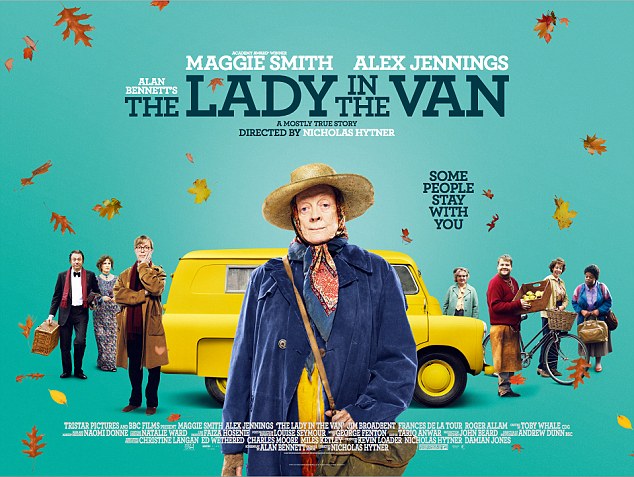
Writer Alan Bennett (“The History Boys,” “The Madness of King George”) got an urgent appeal from a disheveled woman in a kerchief. You know the kind of person I am talking about, the ones we ignore or pretend to ignore. She is not exactly homeless. She has a dilapidated, broken-down van parked on the street near his new home. His neighbors are not unkind. One even tries to bring her food. But for some reason, Miss Shepherd (Maggie Smith) likes Bennett. And for some equally inexplicable reason, he kind of doesn’t dislike her. And for another equally inexplicable reason, as frustrating and annoying and inconvenient and often infuriating as Miss Shepherd (as he always calls her) is, he finds it easier to deal with her than with his own mother, who is beset with her own cognitive challenges.

“A writer is doubled,” Bennett tells us, “the one who writes, the one who lives.” He is clearly most comfortable as the one who writes. And we get to see them both. Alex Jennings plays two slightly different variations on Bennett, the subtle variations of clothing and attitude showing us the tension as he wavers between being involved and observing. Part of him recoils from Miss Shepherd’s “multi-flavored aroma” with a thin layer of talcum powder. Part of him knows that she could lead to exactly what we are watching — a book, a radio play, a theatrical production, a movie with an Oscar-winning Dame in the title role. Yes, she asks if she can park temporarily in his driveway and stays for 15 years. But given the money he made from the story, who was sponging on who?

A writer will inevitably be drawn to the peculiar mix of sense and nonsense, sometimes called a word salad, coming from someone like Miss Shepherd. There’s something about the way she ends her mildly preposterous statements with equivocation. “I’m in an incognito position, possibly,” she tells Bennett. He will learn more about her past, but Bennett has enough respect for us and for Miss Shepherd that there is no attempt to try to explain her. It is just to help us do what he did instinctively, though perhaps reluctantly — to see the person inside the weirdness.

“A proper writer might welcome such an encounter.” Yes, he might. Yet, he thinks, “You won’t catch Harold Pinter pushing a van down the street.” Shouldn’t a writer get to pick his subject? “I don’t want to write about her,” he says. “I want to write about spies.” He knows that “you don’t put yourself into what you write; you find yourself.” And his two selves seem to come closer together as Miss Shepherd disintegrates further. If, as Arthur Miller wrote in “Death of a Salesman,” attention must be paid to people we would prefer to overlook, Bennett has done that for Miss Shepherd, with grace and humanity.

Parents should know that this film includes themes of mental and physical illness, fatal car accident, blackmail, and non-explicit sexual situations and bodily functions.

Family discussion: Why did Alan treat his mother and Miss Shepherd differently? Why does he let her stay? Why are there two Alans and what can we tell from the way they dress and speak?

If you like this, try: “The Madness of King George” by the same author and his early work in “Beyond the Fringe”
Related Tags:


Based on a book Based on a play Based on a true story Drama Family Issues
Joy

Joy

Posted on December 24, 2015 at 5:38 pm

Copyright 20th Century Fox 2015

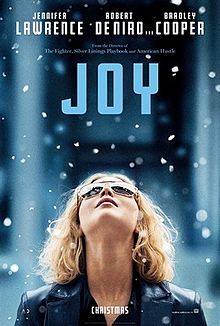
Jennifer Lawrence is “Joy,” reuniting with her “American Hustle” and “Silver Linings Playbook” #squad, director David O. Russell and co-stars Robert De Niro and Bradley Cooper. She plays real-life consumer products inventor and television sales mogul Joy Mangano, who lived something of a Cinderella story — if the fairy godmother was the QVC shopping channel.

The film is something of a mess. It never quite comes together, but some of the individual pieces are marvelous, especially the performances by Lawrence, radiant in her first adult lead (though she still seems too young to have those children), Virginia Madsen as Joy’s dotty mother, De Niro as her father, and Isabella Rossellini as his wealthy new girlfriend. Cooper has so much magnetism as a QVC executive that his tour of the network’s revolving studio provides one of the best moments. He is so good it misdirects us about where the movie is going and leaves us feeling vaguely cheated.

Russell, who so savagely took out after both consumer culture and at those who attack it for the most superficial reasons in the underrated “I Heart Huckabees,” cannot seem to settle into a point of view beyond the idea that the woman with the almost-too-on-the-nose name has the ingenuity and what used to be called moxie to overcome obstacles that include massive family dysfunction and business partners who bully and defraud her. It emphasizes her ability as an inventor and her determination but loses track of the storyline with confusing sequencing and superfluous narration. When a prospective funder asks her if she would be willing to pick up a (possibly metaphorical) gun to protect her invention, she says she would. And when she is turned down, she keeps coming back. But the primary factors in the success of her product are a chance connection and a much-too-convenient discovery of incriminating evidence. The most interesting elements of the story are abruptly glossed over (What? Who sued her?). And lovingly staged episodes from Joy’s mother’s favorite soap opera (starring real-life soap stars including Susan Lucci) are not nearly as entertaining or illuminating as they are intended to be.

Joy has monumental obstacles to overcome and Russell clearly considers her heroic, but there is a heightened gloss on the story that keeps us at a remove. A moment of particular triumph is truncated and artificial and the narration is clumsy and intrusive. “In America,” Cooper’s character tells us, “the ordinary meets the extraordinary every day.” But in this movie, that meeting is awkward, and the result is buyer’s remorse.

Parents should know that this movie includes themes of family conflict and dysfunction, corrupt, thuggish, and fraudulent behavior, some sexual references, and some strong language.

Family discussion: Why did Joy keep taking care of everyone in her family? What did Neil mean about staying friends? What invention would you like to create?

If you like this, try: “Erin Brockovich”

Related Tags:


Based on a true story Biography Family Issues
Daddy’s Home

Daddy’s Home

Posted on December 24, 2015 at 5:25 pm

Copyright Paramount 2015
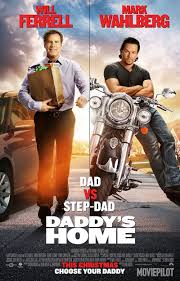
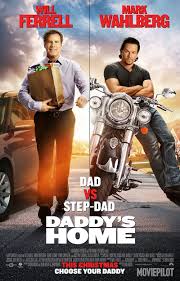
It is sometimes said that competition between men is a substitute for comparing their male body parts. In “Daddy’s Home,” the men actually lower their trousers — in front of a doctor and a woman who has been married to them both — so they can measure their differences. Belief me, metaphoric competition is better.

Will Ferrell and Mark Wahlberg, who were terrific together in the buddy cop film The Other Guys, reunite with far less success in “Daddy’s Home,” about the battle between a stepdad and a biological dad for the affections of the wife and children.

Ferrell plays Brad, a decent, devoted, responsible, guy who wants more than anything in the world for his stepchildren to love him. It is supposed to be very funny that (1) he lost his ability to have his own biological children in a dental x-ray machine accident depicted in the film’s first moments, (2) he works for a Smooth Jazz station, and (3) his little step-daughter draws a family portrait that shows him with a knife in his head and poop in his hair. Wahlberg is Dusty, Brad’s worst nightmare. He is dashing, exotic, mysterious, and he looks like Mark Wahlberg.

Each tries to outdo the other to impress the children, their mother (Linda Cardellini), Brad’s boss (Thomas Hayden Church), the fertility doctor (Bobby Cannavale), the handyman (Hannibal Buress in one of the film’s few bright spots), and anyone else they can find.

This is a great issue to explore with comedy and heart. Unfortunately, in this film the comedy is not funny and the heart is missing. The competition is all about the men vying against each other; there is not even the most perfunctory suggestion of any benefit for the children or even any consideration of their feelings. They exist as props, and Cardellini is relegated to a thankless role somewhere between sympathy and scold. Ferrell and Wahlberg still have great chemistry, but their characters are just pale imitations of roles we’ve seen them in too many times. A series of lackluster skits based on insults, virility panic, and slapstick don’t make a movie.

Parents should know that this film includes extremely crude and raunchy content with many sexual, reproductive, and bodily function references, drunkenness, very strong language, and themes of rivalry between step and biological fathers.

Family discussion: What did Brad and Dusty most dislike about each other? What did each do best?

If you like this, try: “Big Daddy” and “The Other Guys”

Related Tags:


Comedy Family Issues
Alvin and the Chipmunks: The Road Chip

Alvin and the Chipmunks: The Road Chip

Posted on December 17, 2015 at 5:13 pm

Copyright Fox 2000 2015

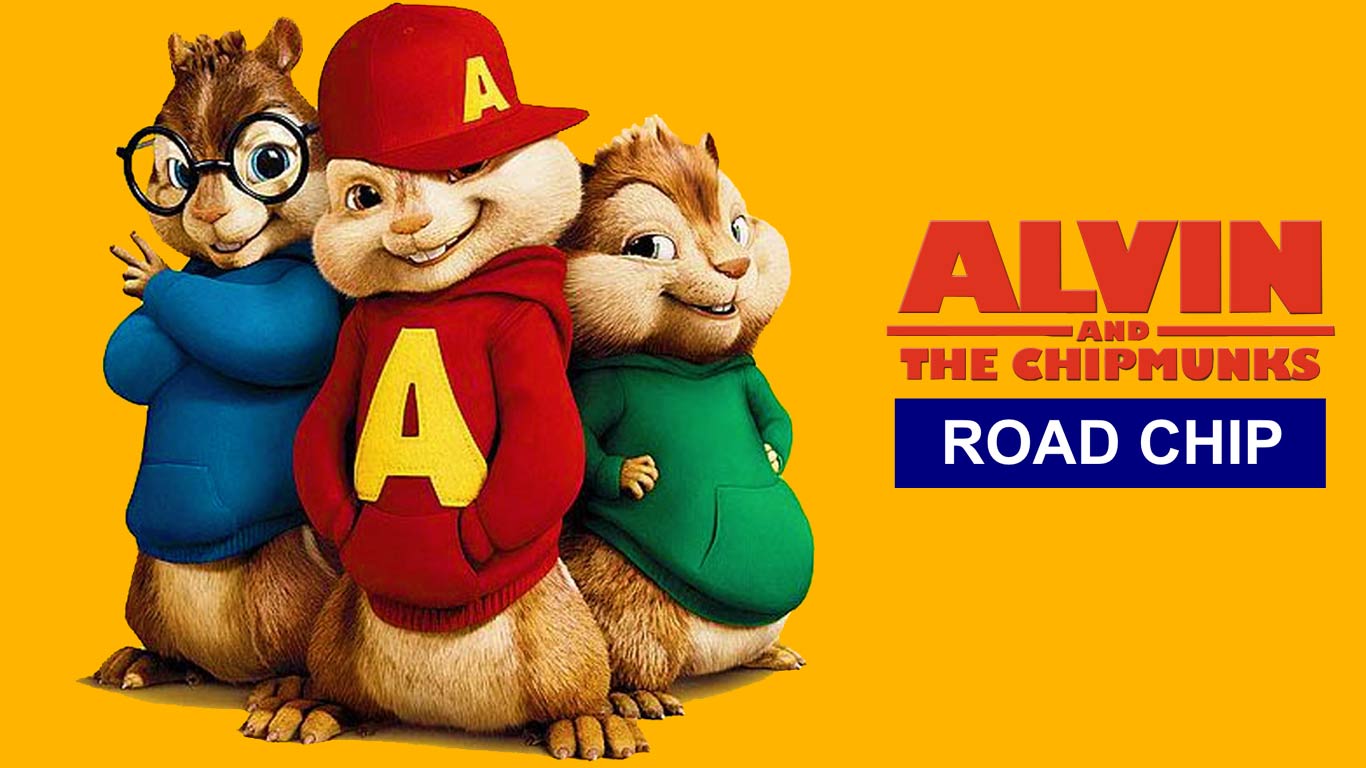
About five minutes after it began, the long-suffering Dave (Jason Lee, looking tired and oh so over this) comes home to find that the irrepressable little singing chipmunks in the midst of a wild party with a half-pipe set up in the back-yard and LMFAO’s Redfoo working the turntables as DJ. Two-thirds of the dear little creatures experience flatulence, which middle chipmunk Theodore (the hungry, chunky one) describes as “pizza toots.” Sigh. Later on, when one of the chipmunks is hiding inside a character’s clothes as he goes through TSA, pee and poop come out the character’s pant leg. And another character gets pooped on by a bird. Yes, this is that movie. It’s so proud of its potty humor that most of it is featured in the trailer.

Once again our little scamps create chaos and destruction wherever they go. Dave wails, “AAAAAAAAlvin!” Then he scolds them. Then he forgives them. Rinse and repeat.

Dave has two developments in his life, and it is the task of the Chipmunks to create as many complications and catastrophes as possible to impede both of them. First, there is the release of a new album he produced from Taylor Swift-style pop artist Ashley (Bella Thorne), at a big, splashy event in Miami. Second, there is a new woman in Dave’s life. Her name is Shira (Kimberly Williams-Paisley), she is a heart surgeon (but so adorably ditzy that she keeps forgetting that her stethoscope is still around her neck), and she has a son named Miles (Josh Green, a welcome bright spot we hope to see in a better movie soon). When the chipmunks discover an engagement ring just before Dave and Shira are about to leave for Miami, they decide to hide the ring and, when that doesn’t work, they decide to go to Miami to prevent Dave and Shira from getting engaged. At this point, their relationship with Miles is one of outright hostility, but he shares the goal of keeping Dave and Shira apart, so they set off for Miami together.

After various hijinks, they are put on the no-fly list by air marshall Benson (Tony Hale, slumming and looking glum about it) who makes it his personal vendetta to hunt them down as they make their way to Miami, finding (duh) that they and Miles kinda like each other.  This road trip, I mean road chip, provides opportunities for musical numbers. The choreography by Richmond and Anthony Talauega is joyously inventive.  Unfortunately, the “singing” is just the same sped-up buzzy drone sound that Dave Seville (Ross Bagdasarian) came up with for a novelty Christmas record back in 1958.

Parents should know that this movie includes potty humor and slapstick peril and violence. There are some issues of fears of parental abandonment and actual parental abandonment.

Family discussion: Why did Miles lie about his father? Why didn’t Miles want to like Dave and the chipmunks? Which is your favorite chipmunk and why?

If you like this, try: the earlier chipmunk movies and the “Garfield” movies

Related Tags:


Based on a television show Comedy Family Issues Scene After the Credits Series/Sequel Talking animals
Hotel Transylvania 2

Hotel Transylvania 2

Posted on September 24, 2015 at 5:35 pm

Copyright Columbia 2015

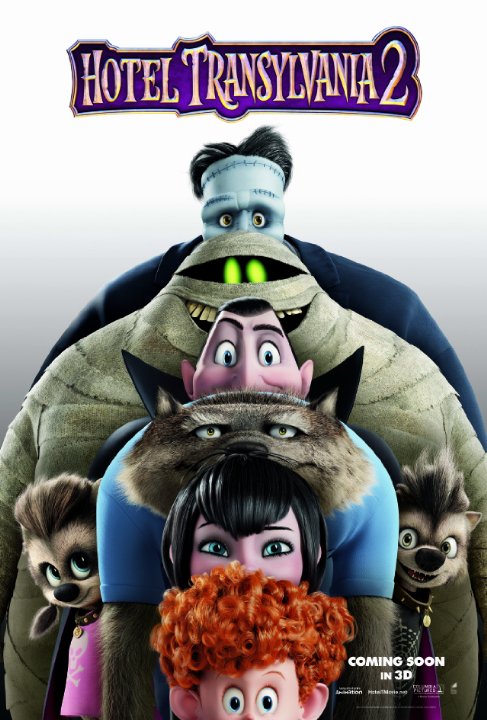
Vampire Mavis (Selena Gomez) and human Jonathan (Andy Samberg) fell in love in the first “Hotel Translyvania,” and in this sequel they get married and have a baby named Dennis. He has his father’s unruly red curls. But his grandfather Drac (Adam Sandler) wants to make sure he has inherited his mother’s vampire genes as well. “He’s a late fanger,” Drac tries to reassure everyone, especially himself.

“Hotel Transylvania 2” suffers from sequel-itis — not as fresh or imaginative as the original and it feels like it was made because they wanted to do a sequel and not because they had anything special to say. But it is still entertaining.

Even before the movie starts, the Columbia logo statue turns into a vampire bat and we know we’re off to a place where cute monsters rule. The wedding scene is a lot of fun as it re-introduces us to the characters, all played by wonderful comic voice actors including David Spade (Griffin, the invisible man, who keeps insisting that he has an invisible girlfriend), Kevin James as Frankenstein and Fran Drescher as his wife, Eunice, Keegan-Michael Key as Murray the mummy, Steve Buscemi as Wayne the very fecund wolfman, and Molly Shannon as his wife, Wanda. We skip ahead quickly to the arrival of Dennis, and then ahead again as he approaches his 5th birthday, and Drac is still waiting to see if he will become a vampire. (Maybe when he grows up, he could marry similarly mixed-race Renesmee from “Twilight”).

This is even more pressing because if he is human, Mavis wants to move to California, near Jonathan’s parents, so he can be around other humans. Even though Dennis loves monsters, she thinks he will be happier around his own kind of people. So, she and Jonathan fly to California to see whether it is right for them, leaving Dennis with his grandfather.

Big mistake.

Drac promises to keep Dennis at the castle/hotel but instead takes him on a journey to try to get his vampire side to come out. And of course he brings his pals along. They visit a monster summer camp and try to scare some humans, but find that their scare power is significantly diminished. Humans ask for selfies and one of them even compliments Drac on his chocolate cereal. Dennis may be a late-fanger but these cuddly monsters are no-fangers, and when you’re looking for silly fun with a hug at the end, that’s just fine.

Parents should know that this film’s themes include monsters and scariness but it is mostly for humor. There is some comic peril and violence with no one hurt, some potty humor, themes of family/culture difference, conflicts. and prejudice.

Family discussion: What are the biggest cultural or ethnic differences in your family? Which is your favorite monster and why?

If you like this, try: the first “Hotel Transylvania” and “Megamind”

Related Tags:


3D Animation Family Issues Series/Sequel
THE MOVIE MOM® is a registered trademark of Nell Minow. Use of the mark without express consent from Nell Minow constitutes trademark infringement and unfair competition in violation of federal and state laws. All material © Nell Minow 1995-2026, all rights reserved, and no use or republication is permitted without explicit permission. This site hosts Nell Minow’s Movie Mom® archive, with material that originally appeared on Yahoo! Movies, Beliefnet, and other sources. Much of her new material can be found at Rogerebert.com, Huffington Post, and WheretoWatch. Her books include The Movie Mom’s Guide to Family Movies and 101 Must-See Movie Moments, and she can be heard each week on radio stations across the country.

Website Designed by Max LaZebnik