Pick of the Litter Directors on Five Adorable Puppies Training to be Guide Dogs

Pick of the Litter Directors on Five Adorable Puppies Training to be Guide Dogs

Posted on September 12, 2018 at 9:31 am

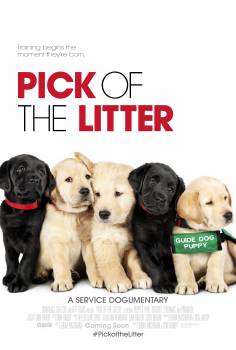
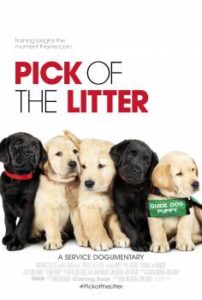
Pick of the Litter was one of the highlights of Washington DC’s AFIDocs documentary film festival. It follows five puppy siblings, all with names beginning with P, as they go through the extensive training and rigorous tests over two years to become guide dogs for the blind. Only a fraction of the dogs bred for the program have the temperament and skills for the job. We follow Patriot, Poppet, Primrose, Phil, and Potomac from birth to their ultimate place in a film that is exciting, funny, and always heartwarming.
Copyright IFC 2018

In an interview, directors Dana Nachman and Don Hardy, Jr. revealed their own favorites and described some of the behind the scenes choices and challenges.

Before we even meet the puppies, we get to hear from people whose lives have been saved by guide dogs. Why did you want to start with that?

DH: It’s really a life and death thing and what these dogs do is really extraordinary. So if you start there, then you can go back to the little bundles of fur and the people.

DN: It was very important to us to show what was at stake before we get to the cuteness of the puppies. It is essential to set that tone.

Your camera work was really impressive. At some points you had us at dog level. And for some essential conversations, you had us at both ends of the phone calls.

DH: It’s something we talked about from the very beginning, trying to tell it from that point of view of the dog. So we’re on the ground a lot. We’re trying to just stay in that world.

DN: Typically you see a lot of dog stuff just shooting down at the dog and we just didn’t want that. It really diminishes them if you’re coming from the upper angle whereas if you’re down low then you’re in their world and experiencing it like they do.

DH: We started with the big shoulder mount camera that is typical. It was fine when the dogs were small and didn’t move a lot but then once they got big they got faster. And they train the dogs really fast. There was no way to keep up. So we developed this little steadicam-like system, a small camera on a gimbal. And then I plug that into a monopod so then I could swing it down very low to get the dog’s eye level and then go up really high to to almost look like a drone.

And they’re inexpensive cameras so we ended up with a couple of them and so for a few key sequences Dana was shooting too. It just would all pair together well but it was a big undertaking to make this thing look like cohesive.

So much of the training of the dogs has to do with focusing their attention and not letting them get distracted. How did you get all the footage you needed without getting in their way?

DH: That was a big concern early on and we thought it would be maybe prevent Guide Dogs for the Blind from allowing us the access that we needed. We’re always going to be in the way. So that was another reason we had to develop this lightweight camera system to be able to not interrupt anything; there was no stopping to say, “Can you do that again?” We just had to keep up. But their response is interesting. They said that we’re just another distraction that these dogs have to deal with and it’s just part of life. We did a lot of the shooting ourselves so they just got to know us and I think we were just part of the training in a way.

DN: At one point one of the dogs was really tanking in some of his tasks like he wasn’t doing well and that particular dog liked Don a lot and so I think we even felt more nervous. We wanted to hang back because we didn’t want him to be out on our account. But they said, “If he can’t deal with Don being there then what’s he not going to be able to deal with if he’s with a visually impaired person?”

DH: It’s important in whatever story you’re telling to remember that the life the real events going on is more important than you.

How did you get started on this story?

DH: We worked together at the NBC station in San Francisco. We were both dog lovers and we did several pieces together on Guide Dogs for the Blind and so we always knew that they were just the tip of the iceberg. Pretty much coincidentally my mom was a newspaper reporter and she did a series in New York following a litter from birth until if they made it. We were like, “Oh well it’s great for a newspaper but so much better if it’s on camera.”

The dogs are wonderful, but the people are pretty wonderful, too, so dedicated and kind. I love their euphemism for the dogs who don’t make it all the way through the program: career changed.

DN: And some of the best parts in this film. They take it all very seriously. It’s almost a quasi Best in Show. It’s not even that you’re making fun of that. They own it. It is an earnestness that really resonates with me.

Did you each have a favorite? Were you sad for the dogs who were “career changed?”

DN: I’m #teampatriot.

Me, too!

DH: I’m #teamphil. They really say and it turns out to be true that the dogs choose. If you think of it that all of these dogs are doctors but only a few of them can be brain surgeons. They’re all like very incredible animals but only a few can do this job which is has life and death stakes.

DN: And I hope one of the things that people take away from the film too is that anybody who has a dog or has had a dog — it is a profound relationship. Even just for a regular person who has nothing wrong with them per se, it really is a life-changing relationship and we all know that.
Related Tags:


Directors Documentary Interview
Interview: Patrick Creadon on his Father Ted Documentary, “Hesburgh”

Interview: Patrick Creadon on his Father Ted Documentary, “Hesburgh”

Posted on September 1, 2018 at 7:50 am

Patrick Creadon’s new film about Notre Dame’s Father Theodore Hesburgh is one of my favorite films of the year. Like the popular documentaries that came out this year about Supreme Court Justice Ruth Bader Ginsburg and Mr. Rogers, it is an extraordinary story about an extraordinary life, devoting much of its focus to Father Ted’s work on huge, complex, controversial issues like civil rights, but it also shows us how small kindnesses made a big difference in the lives of students and other individuals. And it includes an interview with my dad, Newton Minow, who was invited by Father Ted to become the first Jewish trustee of Notre Dame University and who became one of Father Ted’s oldest friends and biggest fans. The film will be shown September 4, 2018 at the Midwest Independent Film Festival.

In an interview, Creadon, also the director of the delightful “Wordplay” (about crossword puzzles and the people who love them) and the provocative “I.O.U.S.A” (the threat that debt poses to the US economy), talked about the most important lesson he learned from Father Ted.

“I don’t subscribe to this idea that when you’re telling a story or a nonfiction story that the film has to reside in a dark edgy underbelly space; not for everything,” he said. The link that draws him to a story is passion. “Passion in other people is what is most inspiring.”

This film had a special meaning for Creadon and his wife Christine O’Malley, who co-produced it.

The Hesburgh film is an extremely personal project for us. Both of our fathers went to Notre Dame, both of our grandfathers went to Notre Dame, I went to Notre Dame, so we grew up not just in a Notre Dame family but we grew up in a Hesburgh family. Father Hesburgh is really…he really was the father of the University for 35 years. At the same time our mantra from day one was, “We’re making a documentary film about a historical figure; we’re not trying to do a puff piece, we’re not trying to do a promotional piece on behalf of the school and the family.”

In fact we were one hundred percent independent from the school and from the Hesburgh family and from the Holy Cross congregation of which Father Hesburgh was a member. We raised the money independently and we had final creative say. That was critically important because I didn’t want anyone looking at the film and thinking this is like a promotional piece for the university; it isn’t. We had the same journalistic approach to “Hesburgh” as we did for any of the films we’ve ever made but at the same time it was very personal for us. I think we do our best work when we pick projects that we really feel connected to but at the same time it was important for us to make a film for general audience, we were not making a film for the Notre Dame community, we were making a film for general audience.

Creadon said that even though he could not remember a time before he knew that Father Ted was an important figure in America, at Notre Dame, and to his own family, he learned a great deal in researching the film.

The things I knew about Father Hesburgh when we began are the following: I knew that he had received 150 honorary degrees which is in the Guinness Book of World Records, I knew that he had served on 16 presidential commissions and I knew that he was the president of Notre Dame for 35 years. I think for a lot of people, that’s kind of all they know. They don’t know why he was chosen to do all that work, they don’t know what were his qualities as a human being, what were his leadership qualities. What we found in the 18 months that it took to make the film, what we discovered, was that more than anything he had a very strong moral compass. For one he knew the difference between right and wrong always and always tried to do the right thing but more importantly I think the defining quality of Father Hesburgh is that he enjoyed bringing people together. He truly enjoyed the friendships, the diplomacy, and the finding common ground that it takes to move our society forward.

It was Father Ted’s genuine love for people that made it possible for him to create consensus on the most intractable issues.

He was a problem solver and he was very, very good with people. People liked him. Even though he was fully committed to his Catholic faith and his Catholic heritage he was one hundred percent tolerant and respectful of other people’s faiths or people who did not have a faith. He was not a, ”It’s my way or the highway” guy. He was not that way with his politics, he was not that way with his faith, he was not that way with his style of education.

It’s, “Let’s find common ground” and “Let’s aspire to be the best individuals that we can be.” That’s who Father Ted was. I have one hundred percent faith in the sense that we’re going to get through the problems today and we’re going to find our way back to each other.

Over and over in the film, we see Father Ted bring people together to solve problems through patience, endless energy, a genuine curiosity about how different people saw the world, and by setting an example of integrity and goodwill.

Remember Hesburgh was only 35 when he became president of Notre Dame. He was 40 when he was chosen to be on the Civil Rights Commission and the average age of the other five commissioners was 65. He was a kid; he was a generation younger than all of them but I think Eisenhower saw something in him and had seen his work in some other arenas and he said, “I want to get that guy on the commission.” What you come to understand is that the commission could’ve easily failed; they didn’t get along. The commissioners didn’t really get along; they were Northerners and Southerners, Democrats and Republicans.

The commission was really a reflection of the country and Hesburgh for one wanted victory. He wanted to accomplish the mission. Father Ted is almost like an Indiana Jones character. He would just go off to do these very important missions that people couldn’t figure out how to fix. He had an ability to try to encourage people to bring out their best selves. I think because of the way he lived his life he wanted people to rise to the occasion. He did that in a quiet way. He certainly wasn’t a yeller, he wasn’t demanding, he wasn’t mean spirited, he was just one of the good guys. I’ve come to understand what great leadership really looks like; it looks a lot like Father Ted.

Related Tags:


Directors Documentary Interview
An Actor Prepares

An Actor Prepares

Posted on August 30, 2018 at 12:20 pm

B
Lowest Recommended Age: Mature High Schooler
MPAA Rating: Not rated
Profanity: Very strong and crude language
Alcohol/ Drugs: Alcohol and drug abuse, psychedelics
Violence/ Scariness: Mild peril, medical issue
Diversity Issues: Discussion of feminism
Date Released to Theaters: August 31, 2018
Copyright 2018 Gravitas Ventures

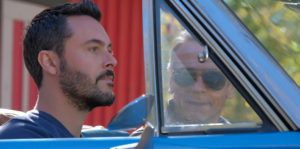
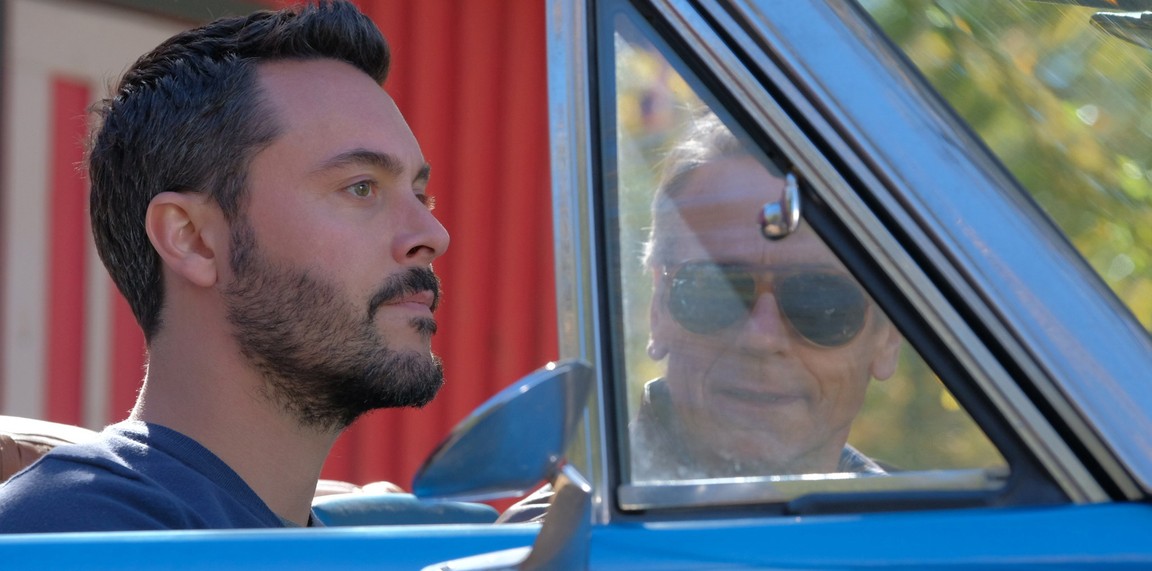
The third movie this year with an acclaimed older actor playing a selfish, negligent father who must be driven across country by an angry, estranged adult child has some familiar tropes, but also some distinct pleasures. Following “Kodachrome” (Ed Harris, Jason Sudeikis), and “Boundaries” (Christopher Plummer, Vera Farmiga) we have “An Actor Prepares,” with Jeremy Irons and Jack Huston. The title comes from the legendary book by Constantin Stanislavski that is a core text for method actors. The joke here is that Jeremy Irons plays a three-time Oscar-winning, substance-abusing actor named Atticus Smith who seems to have no method to his madness and does not really prepare for anything.

Atticus is a mess. His agent (Ben Schwartz) is trying desperately to keep him together so he can literally play God in a movie. Atticus is looking forward to the wedding of his “favorite child” (Mamie Gummer). But both the movie and attending the wedding are in jeopardy when he has a heart attack and his doctor says he needs surgery. She reluctantly agrees to delay it for a week so he can go to the wedding, but he has to take his medicine, refrain from sex, drugs, and alcohol, and he cannot go by plane. That is how Adam (Jack Huston) ends up on a road trip with the father he despises, as a favor to the sister he loves.

The road trip is one of the oldest of all stories, going back to The Odyssey and before. It’s a lovely metaphor of life’s journey and provides opportunities for characters to have many seemingly random interactions, from happy to scary to moving, that help them resolve their differences by working together and learning about one another. This one involves bickering and recrimination, many opportunities for Atticus to do or say wildly inappropriate things and Adam to disapprove, a switch of vehicles/drivers, a cellphone tossed out a window, an old love, jail, and an campfire-lit trip on the hipster psychedelic ayahuasca.

So, no big surprises and at least one too many plot contrivances and at least one too few reasons to believe in the resolution. Irons and Huston make it work. Irons is clearly overjoyed to have a chance to break out of Serious Actor mode and perhaps have some fun at the expense of some of the master thespians he has had the chance to observe. He makes the most of the silly scarves, the cluelessly self-involved constant stream of free-association, and the endless series of hilarious fake movie titles for Atticus’ resume, from “Throwdown at Bitch River” to “Cops and Slobbers.” And Huston is marvelous in what could have been a thankless straight man role. I counted at least a dozen different ways of looking exasperated. His reaction to the ayahuasca is funny and very specific to the character. Mamie Gummer and Schwartz make the best of small roles, and Huston and Irons remind us why all these reconciliation road trips are worth taking.

Parents should know that this film includes extremely strong and crude language, substance abuse, psychedelic drugs, smoking, drinking, very explicit sexual references, medical issues, and tense family confrontations.

Family discussion: Why was the car meaningful to Adam? Why did Adam and his sister have different responses to their father?

If you like this, try: “Kodachrome” and “Boundaries”

Related Tags:


Drama Family Issues movie review Movies -- format Movies -- Reviews
Operation Finale

Operation Finale

Posted on August 29, 2018 at 5:49 pm

B +
Lowest Recommended Age: High School
MPAA Rating: Rated PG-13 for disturbing thematic content and related violent images, and for some language
Profanity: Some strong and hateful language
Alcohol/ Drugs: Drinking, smoking
Diversity Issues: A theme of the movie
Date Released to Theaters: August 31, 2018
Date Released to DVD: December 3, 2018
Copyright 2018 MGM

Operation Finale considers what is, perhaps, the ultimate conundrum, one that echoes throughout all of human history. How can good guys defeat the bad guys without becoming bad themselves? If the bad guys do not play by any rules at all, the good guys have two choices: to stay within the rules themselves, which can be high risk because it is like going into a fight with both arms tied behind your back, or decide that the ends justify the means and violate the rules to improve their chance of winning. Can it really be a win if you abandon your principles to get there?

Sometimes there is ambiguity about who exactly are the good guys and the bad guys. That is not the case with the Nazis in WWII. Among the worst of the worst, certainly the worst to survive the war, was Adolf Eichmann, the head of the “Department of Jewish Affairs” and the man responsible for creating the system that led to the murder of millions of people, including six million Jews. The other top Nazi leaders, Hitler, Himmler, and Goering, killed themselves at the end of the war. Then there were the Nuremberg trials for many others. But Eichmann and a few others escaped to Nazi-friendly Argentina. Fifteen years later, agents of Israel’s Mossad intelligence agency captured him and brought him back to Israel for a trial that was broadcast around the world. This is the story of how that happened, so tensely presented that we hold our breath even though we know that Eichmann made it to Israel, where his “man in a glass booth” (for security) trial was broadcast as it happened throughout the world, giving most people their first chance to hear testimony from Holocaust survivors.

Director Chris Weitz and screenwriter Matthew Orton skillfully portray the people of the young state of Israel, just 12 years old, still defining itself internally and still justifying its existence to the world. When someone approaches Mossad with evidence that Eichmann has been identified in Argentina, the first reaction is that the atrocities are old news, and they don’t have the resources to go after him because they are too busy fighting for the right to exist now. They ultimately decide to get him less from a sense of justice or even revenge than from the notion that at this stage, everything they do is definitional; every choice they make shows the world what it means to be a Jewish state after the Holocaust, an atrocity so unprecedented that the term was not even in widespread use for several more years.

We see what it is to have a country made up of displaced people, each of whom has suffered unthinkable trauma and grief. In one scene they almost start to have a grim “who lost the most” conversation before they stop. Their focus has to be on what happens next, and that is the risky, complicated plan to get Eichmann out of Argentina, even though there is no extradition and they don’t have access to military aircraft capable of transporting him.

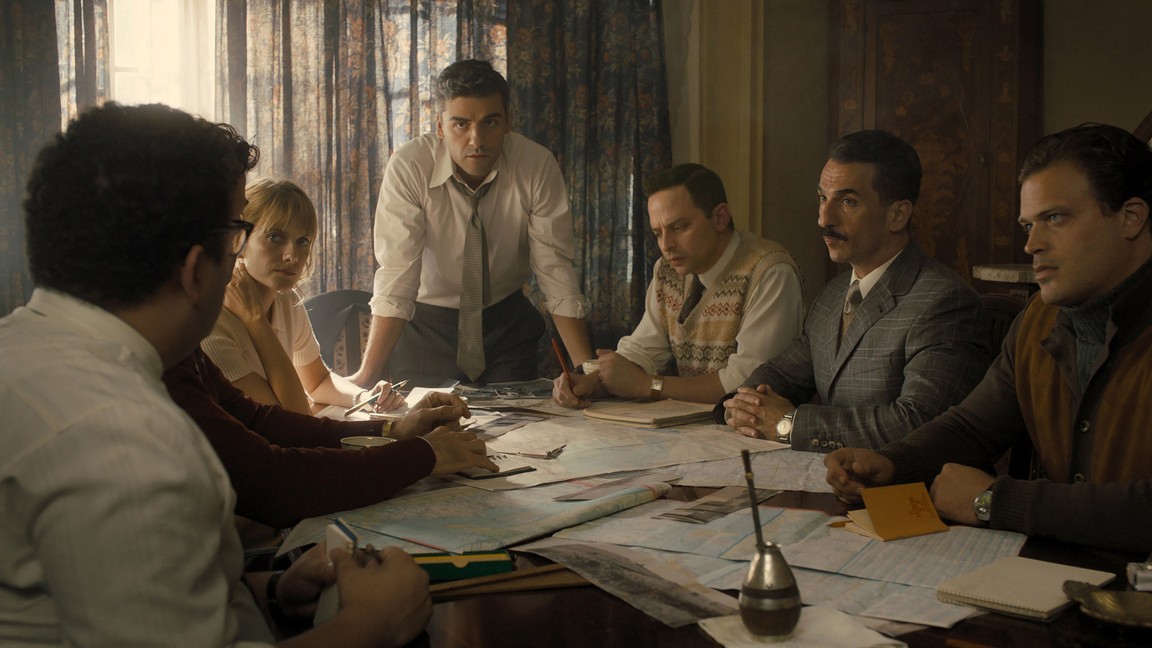
Sir Ben Kingsley plays Eichmann, living under an assumed name, working at a Mercedes factory, living with his wife and sons, and speaking often to groups of other escaped Nazis about his wartime experiences. Oscar Isaac plays Peter Malkin, the Mossad agent who actually tackled Eichmann, and who, with his colleagues, had to keep him captive until he could be extracted and put on a commercial flight to Israel.

There is a wisp of a love story, and there is some exploration of the moral dilemmas. But it is the electrifying scenes between Kingsley and Isaac that are even more riveting than the “can they get him” and “will they be caught” moments of spycraft.

It was Eichmann himself who inspired Hannah Arendt’s term “the banality of evil,” and disconnect is jarring between Eichmann’s deeds in overseeing the mechanics of rounding up Jews and transporting them to their execution and torture and the bland, civilized factory foreman who loves his wife and children. Eichmann is not bothered by the slaughter of millions, even when a murdered baby’s brain was splattered over his coat. Malkin is still deeply wounded by the loss of one person, his adored sister, who was killed with her children. He is still anguished by a fatal mistake on a previous mission. We see that the very conscience that keeps Malkin from “putting a bullet between eyes,” as he said he would gladly do, can make it much harder to bring him to justice.

Eichmann, a master manipulator, tries to put them both in the same category of following orders to save their country. Malkin tries to manipulate Eichmann into signing the necessary consent form for leaving the country. Each tries to gain ground over the other, usually through appearing to be conciliatory, to find some point of vulnerability. The action scenes, especially toward the end, have a ramped-up “Argo” rhythm, but what is far more engrossing is when two people talk to each other.

The stakes are incalculable and inherently dramatic, but Kingsley and Issac take it to another level as characters and as actors, and it is fascinating to see them challenge each other. Two of the greatest actors alive, each with endless screen magnetism, superb control of acting technique, and the ability to tell a lifetime with an almost imperceptible shift of the eyes or slight additional huskiness in the voice, put all of that to show us a massive historical event can come down to two people in a room.

Parents should know that this film includes footage of Holocaust atrocities, including mass murder, with some graphic and very disturbing images, some peril and violence, drinking, smoking, and some strong language.

Family discussion: Why is it important to give someone a fair trial when the crime is unimaginably big and the evidence against him is overwhelming? Is it possible for a trial under those circumstances to be fair? Why did Eichmann sign the agreement?

If you like this, try: “Argo,” “Munich,” and “The Eichmann Show,” a film about the trial, and read Peter Malkin’s book, Eichmann in My Hands.

Related Tags:


Based on a true story Drama DVD/Blu-Ray movie review Movies -- format
The Happytime Murders

The Happytime Murders

Posted on August 23, 2018 at 5:35 pm

C
Lowest Recommended Age: Adult
MPAA Rating: Rated R for strong crude and sexual content and language throughout, and some drug material)
Profanity: Very strong, crude, and offensive language
Date Released to Theaters: December 3, 2018
Copyright STX Films 2018

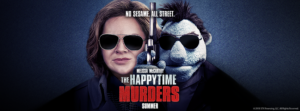
A couple of minutes into “The Happytime Murders,” an adorable Muppet-like puppet says the f-word. If that strikes you as funny, think very carefully about whether it is funny enough for 90 minutes of pretty much the exact same joke to justify the price of a movie ticket. If you want to hear puppets swear and talk about porn, see “Avenue Q.” If you want to see a detective try to solve a murder in a show business community where entertaining non-human characters are second-class citizens, see “Who Framed Roger Rabbit?” If you want a good time at the movies, do not go to see this.

It might have made a pretty good Funny or Die video. But it is not enough to sustain even a less-than 90-minute running time. It is vastly less entertaining than the behind-the-scenes credit sequence showing how some of the scenes were filmed. And it is vastly less interesting than a movie about adults trying to trash the imperishable legacy of a legendary father, as is the case here with the Henson kids making a hard-R movie with characters from the Muppet world their father created.

Phil Philips (Bill Barretta) is a disgraced cop-turned private detective with a comely receptionist named Bubbles (Maya Rudolph, the movie’s highlight). A beautiful new client (Dorien Davies) asks Phil to find out who is blackmailing her. Phil investigates a possible connection in a porn shop (where a puppet cow is having her udder massaged by a puppet octopus) just as a gunman arrives and kills everyone else in the store. One of the victims was an actor on a popular television show called “The Happytime Gang,” featuring Phil’s brother and a bunch of other puppets, along with a human named Jenny (Elizabeth Banks), once Phil’s girlfriend.

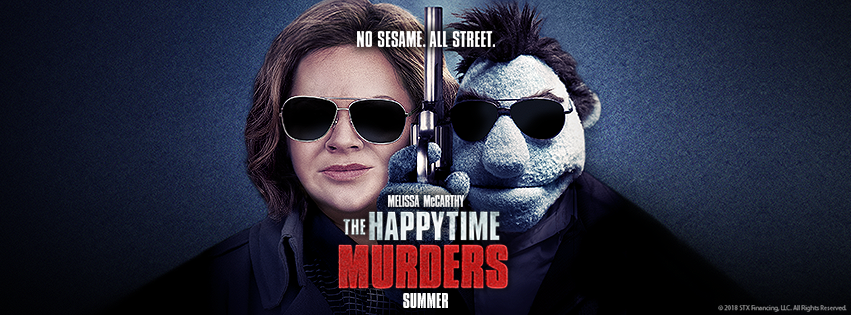
Phil’s former partner, Connie Edwards (co-producer Melissa McCarthy) shows up, and her lieutenant (Leslie David Baker) assigns them to work together on what turns out not to be a simple robbery but a plot to kill off all of the Happytime Gang. Phil and Connie track each one down, bickering along the way, and failing to protect any of them. This is an opportunity to show many puppets engaging in extremely depraved behavior including substance abuse and prostitution and brutal murders with bits of fluff and disembodied puppets everywhere. Fun!

What makes the Muppets magical is the vivid personalities. We don’t love Kermit and Miss Piggy and Statler and Waldorf and Elmo and Oscar and Big Bird and the Swedish Chef and Fozzy Bear because they are puppets. We love them because they are characters, as vivid and engaging and real as any human. The puppets here, are expertly made but bland. And so, despite all the naughty talk and truly filthy behavior, is the script. It is too lazy to even think through its premise, beyond “it’s funny to have characters usually designed for children say and do R-rated things.” A human has a transplanted puppet liver. Puppets and humans apparently have sex with each other. Puppets have puppet children and, if the puppets who have children are cousins, those children do not have the correct number of eyes. Hilarious! And on top of regular old fashioned bad taste, it has the extremely poor judgment to have a “puppet lives matter” element.

A brief pause before my conclusion to mention Maya Rudolph, who almost packs a whole movie’s worth of watchability in her irresistible performance. As Bubbles, she manages to pay tribute to and slightly parody the classic hard-boiled but soft-hearted dames who used to work for detectives like Bogart’s Marlowe and Spade. The timbre of her voice, she way she holds her shoulders, the way she walks, the way she picks a lock, the way she thanks Phil for bringing her a candy bar — each moment is a small chamber piece of exquisite choices. McCarthy is great. She’s always great. But she is not always great at picking projects, and this one, despite her crackerjack timing and remarkable focus, is a big, fluffy, dud.

Parents should know that this film includes constant extremely strong, vulgar, and crude language, very explicit sexual references and situations, drinking, smoking, drugs, violence including guns and fire, and characters injured and killed.

Family discussion: What parallels is this movie suggesting about today’s political issues? Why did the humans feel superior to the puppets?

If you like this,try: “Avenue Q”

Related Tags:


Comedy Crime DVD/Blu-Ray Fantasy movie review Movies -- format
THE MOVIE MOM® is a registered trademark of Nell Minow. Use of the mark without express consent from Nell Minow constitutes trademark infringement and unfair competition in violation of federal and state laws. All material © Nell Minow 1995-2026, all rights reserved, and no use or republication is permitted without explicit permission. This site hosts Nell Minow’s Movie Mom® archive, with material that originally appeared on Yahoo! Movies, Beliefnet, and other sources. Much of her new material can be found at Rogerebert.com, Huffington Post, and WheretoWatch. Her books include The Movie Mom’s Guide to Family Movies and 101 Must-See Movie Moments, and she can be heard each week on radio stations across the country.

Website Designed by Max LaZebnik