Bobby Kennedy for President: Interview with Dawn Porter About Her Netflix Series

Bobby Kennedy for President: Interview with Dawn Porter About Her Netflix Series

Posted on May 18, 2018 at 8:32 am
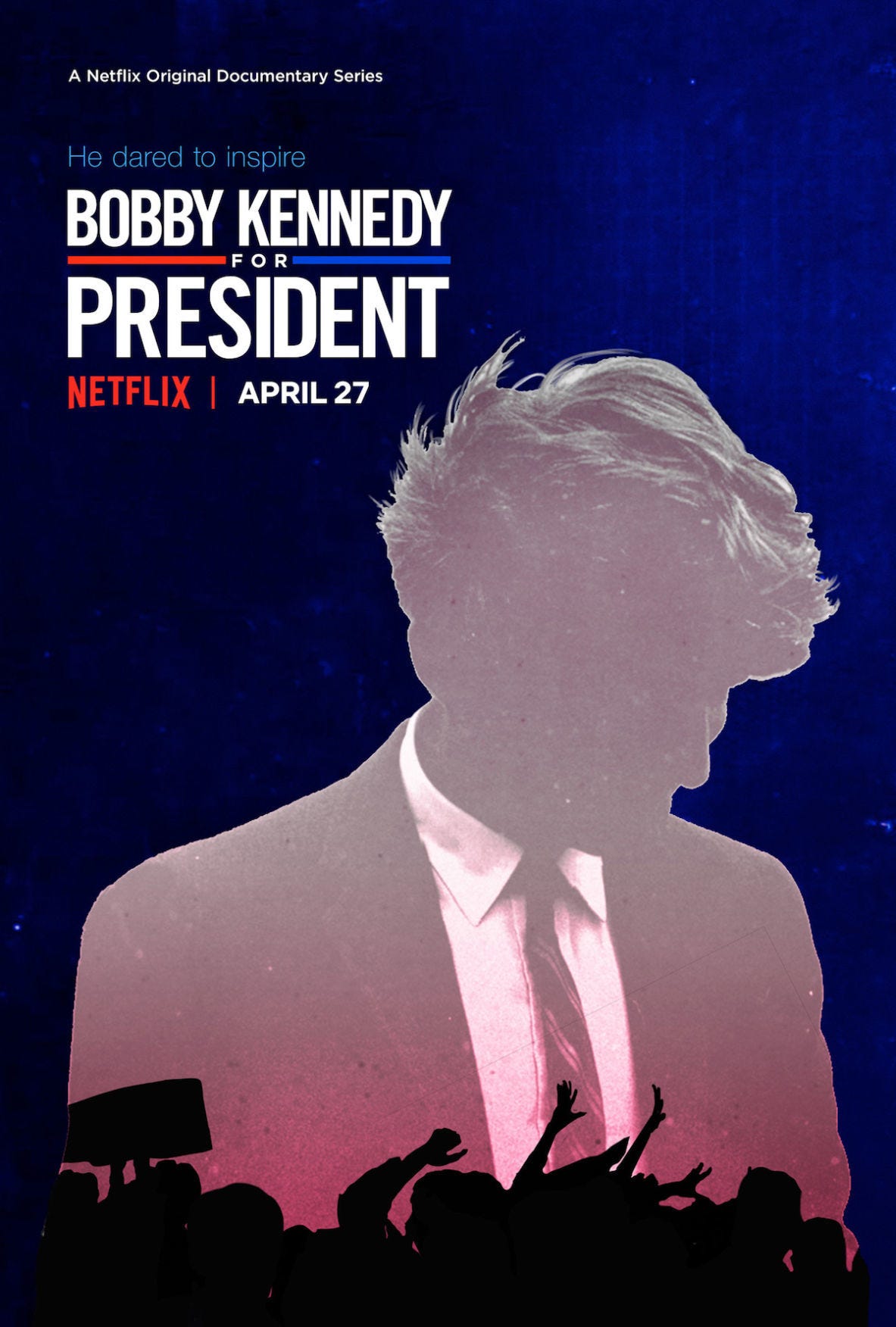
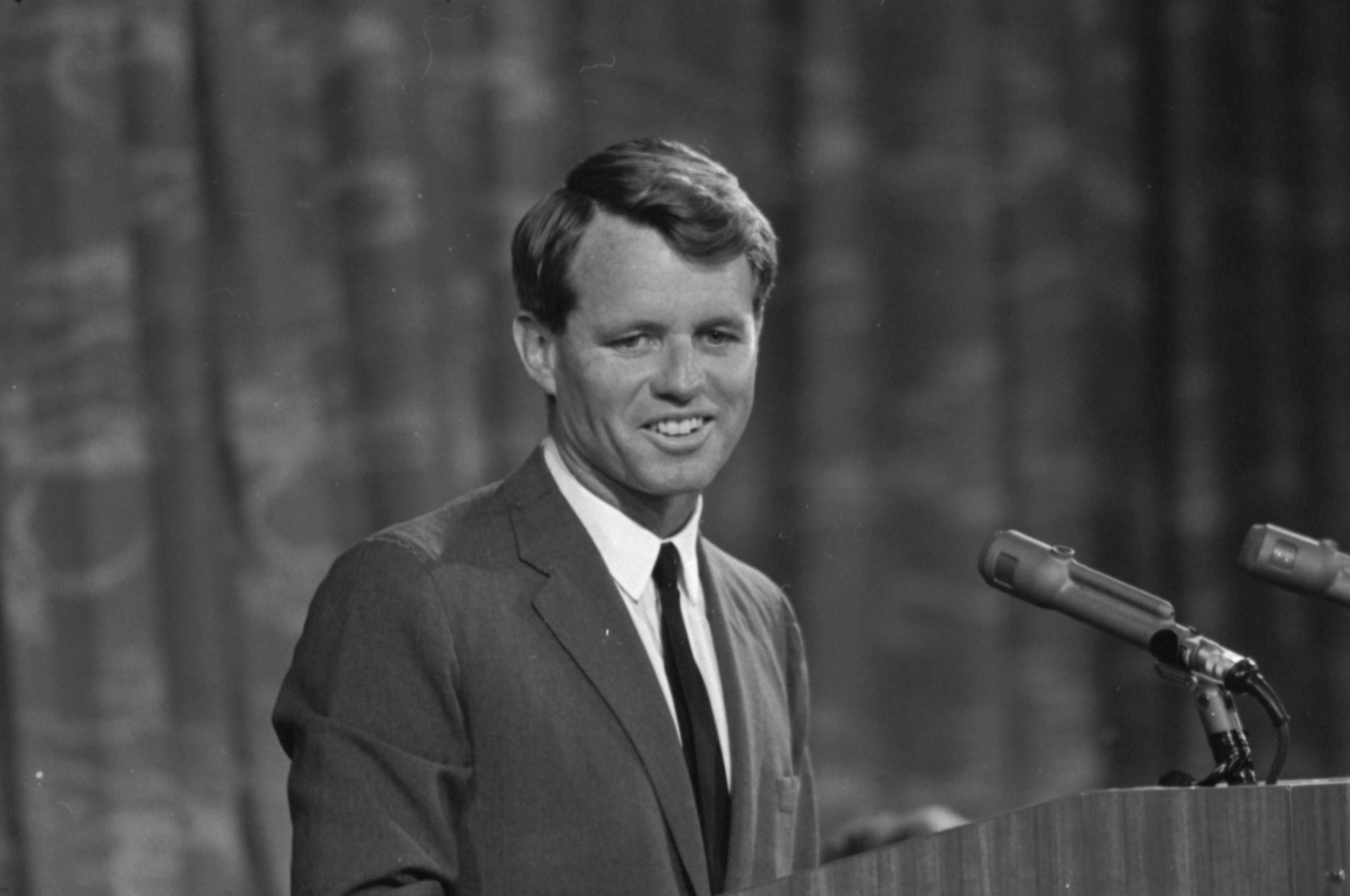
Dawn Porter’s four-part Netflix series, “Bobby Kennedy for President,” examines the life of one of the central political figures of the 1960’s. In an interview, she described the process of collecting the extraordinary and surprisingly intimate archival footage and her interviews with people who worked closely with Bobby Kennedy and are still deeply moved by the experience.

They say that history doesn’t repeat itself but it rhymes. I felt like there was a lot of rhyming in this series, which takes place during the politically tumultuous 1960’s. What parallels do you see going on today?

We’re in a really confusing and chaotic era right now where people are choosing sides. The country is never a hundred percent united but it certainly feels as if we are more divided than we have been in recent years. It’s unsettling and I think that it is very similar to the middle through late sixties the series covers. I think the big difference is there was more confidence in the leadership and people felt acutely behind one candidate or the other and so there was confusion and chaos but I don’t know that there was the same amount of fear but more anger I think than in the 1960’s. There was more activism then and I think we’re seeing a more resurgence of that activism, now so I think that’s actually a good thing.

People say today, “oh goodness, it’s never been worse,” but we had the Vietnam War, a huge racial divide, poverty like in the Deep South, assassinations happening routinely, you don’t want to do a misery comparison but you could certainly say that things were as bad or as serious. That’s when we really do value leadership and Kennedy stepped into that role.
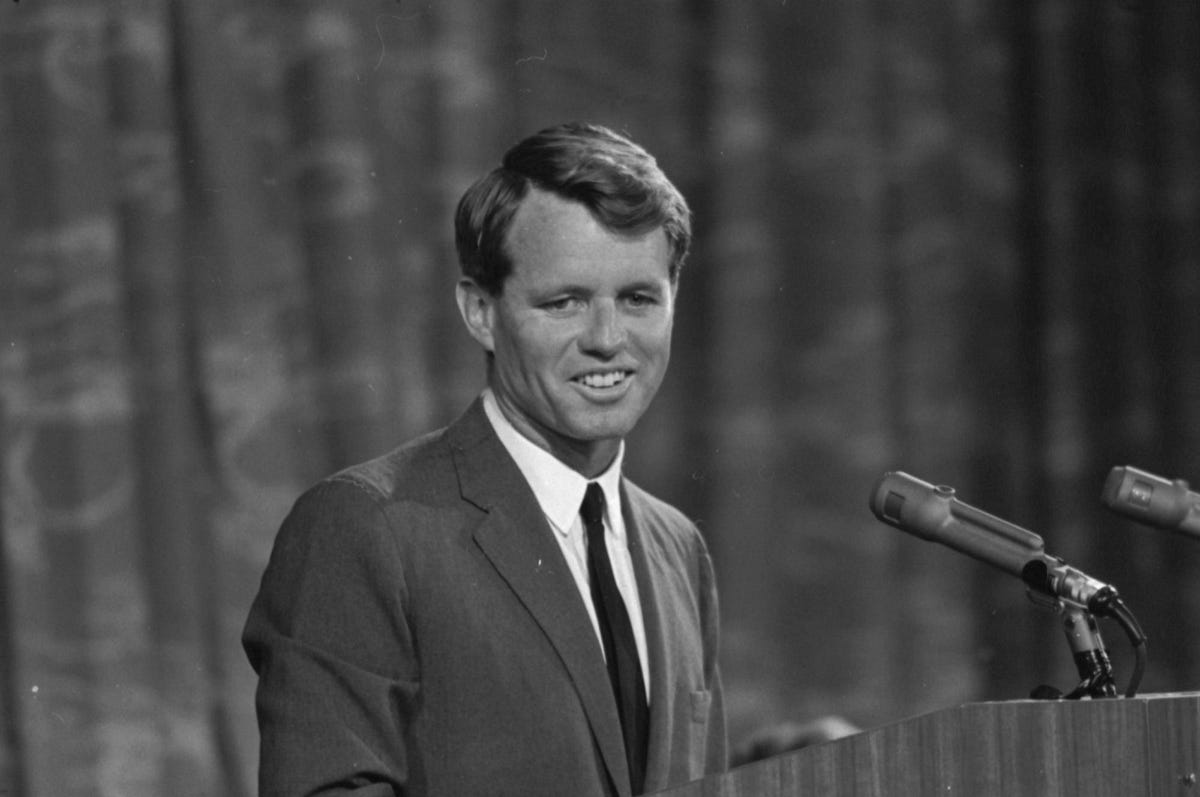
If you were making a film about a historical figure from even a decade before you would not have anywhere near the wealth of archival footage that you had here. It was really breathtaking because there were so many scenes where he seemed unaware he was being filmed, not just giving speeches but talking to his staff, being with his family.

I used to work for ABC News and I remember a colleague there telling me that there was all this film footage that had been shot during the time period that I was interested in. So one of the things that I thought would be really effective is to allow the viewers as much as possible to experience the footage themselves, to experience the time. And so there were two things to do. You can see at the beginning there was more black and white, there was more sometimes grainy/sometimes smooth footage. This was a period that coincided with the shift in news coverage. Upstart news entities such as ABC News began shooting in film and shooting in color and sending really gifted cinematographers out to do political coverage. So you get this feeling not only of the candidates but of the era: the clothes, the cars, the light. I think that helps point you in time in a way that still pictures can’t even quite accomplish.

That is why working with Netflix was so great because we convinced them to give us investigation room. We ended up digitizing over 140 hours of news footage and one of the things I’m really, really happy about is that footage is now available to others who want to explore the period for whatever storytelling they’re doing. It was quite a project of discovery in that way but we went through about 2,000 reels of film and our archivist ended up using 100 different sources so it was quite a massive undertaking but once we got our rhythm it was really fun. All the news organizations might cover the same event but they would shoot it differently and so we could have different angles from different news organizations. But 100 percent of that material had to be licensed, so we were constantly trying to figure out what we could afford to actually use.

There was another exciting thing that was happening. It was also the era of growth and excitement about that type of verite filmmaking. So there were filmmakers like D.A. Pennebaker, Robert Drew, like Charles Guggenheim who had sent a bunch of independent cinematographers out to cover Bobby Kennedy. We used all of those sources and got outtakes from them and I even visited Pennebaker and Chris Hegedus in their office and got material from them personally. So there is also quite a bit of film history contained in the series.

I think the most powerful moment in the series is the John Lewis interview.

I wanted to only have interviews with people who worked very closely with Bobby Kennedy, who were either staffers or people like Marian Wright Edelman. We had known that John Lewis was involved with Kennedy and he agreed right away. One of the things that I think was very helpful for these interviews was we would show people footage that was material they hadn’t necessarily seen of themselves as young people and I think that that helped them go back in time and remember. John Lewis is a spectacular interview. He’s very giving, he’s a very open, very, very, very generous and Kennedy was really important to him and he wanted to communicate that. He’s also not a person who is afraid of being emotional and didn’t try and stop it and that was really quite a gift to a project like this.

What do you think is Bobby Kennedy’s most enduring legacy?

I am really moved by his curiosity, his ability to change and grow, his inclusiveness (particularly to minority groups) and this kind of resilience and relentlessness which can be a blessing and a curse but in the end I think he made it a blessing and really refused to give up on things that are too important to give up on.

Related Tags:


Directors Documentary Interview Politics
Book Club

Book Club

Posted on May 17, 2018 at 5:11 pm

B-
Lowest Recommended Age: Mature High Schooler
MPAA Rating: Rated PG-13 for sex-related material throughout and for language
Profanity: Some strong and explicit language
Alcohol/ Drugs: Drinking
Violence/ Scariness: Comic peril
Diversity Issues: None
Date Released to Theaters: May 18, 2018
Date Released to DVD: August 27, 2018
Copyright 2018 Paramount

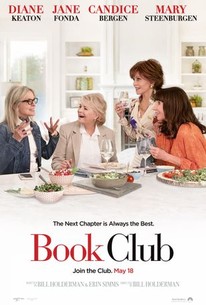
Hey, people behind “Sex and the City,” you might want to call your lawyers. Maybe those of you behind “The Golden Girls,” too. “Book Club,” starring three Oscar winners and an Emmy winner from the last century, is pretty much an AARP version of SATC, with four women who endlessly confide everything in each other, mostly about sex and some about romance. How does a movie with these magnificent, strong, smart stars fail the Bechdel test?

In this mix, Jane Fonda plays Samantha, I mean Vivian, the luxury hotel owner who has a lot of sex but only with men she doesn’t care about. “I can’t sleep with people I like,” she says referring to the literal act of slumber. “I gave that up in the 90’s.” Mary Steenburgen plays Charlotte, I mean Carol, happily married to a man she loves (Craig T. Nelson), but not happy about their humdrum sex life. Candice Bergen is Miranda, I mean Sharon, a judge who is long-divorced and resolutely single, living only with a cat called Ginsburg. And Diane Keaton plays a character named Diane who is somewhere between Carrie and “Golden Girls'” Rose, a sweet-natured recent widow with two devoted and over-solicitous daughters (Alicia Silverstone and Katie Aselton), who want her to leave her home and move in with them in Arizona.

The women have had a book club together for decades, mostly an excuse for them to get together. When Vivian hands out copies of the naughty bondage and discipline Fifty Shades of Grey novel by E.L. James, it causes all four of them to rethink their own romantic and sexual options. Vivian reconnects with the guy she almost married four decades earlier (Don Johnson, whose daughter starred in the movie version of Fifty Shades). Diane meets a very handsome man on a plane (Andy Garcia) and has to decide if she is open to a new relationship. Sharon decides to try swiping right with a little online dating and ends up having dinner with a tax lawyer (Richard Dreyfuss, every bit as charming as he was in “The Goodbye Girl“). And Carol tries to spice it up with her recently retired husband, who seems to have no interest in sex.

This provides many opportunities for the foursome to get together to discuss each other’s situations in detail. And if you think that they might omit the makeover scene with everyone weighing in on what one of them should wear on a big date and a scene of triumph over the ex’s new young love, rest assured they did not.

It is good to see these brilliant stars give it their best, which is what it takes to overcome the drippy screenplay, co-written by director Bill Holderman (with Erin Simms), and pedestrian direction. It’s like taking a Hallmark Romance Channel movie script and instead of casting the farm team (1990’s television series stars), it sends in the All-Pro heavy hitters. Or a “Love Boat” episode from the days when one segment always featured some 80-something former movie star. This group is able to carry it pretty far, especially Fonda, clearly relishing her role, and Garcia, who is able to give some grounding to a thinly written Prince Charming character. But the silly premise, Bumble product placement, clunky double entendre, unimaginative soundtrack, and Viagra humor make us long for the more reliable middle-age female empowerment fluff of Nancy Meyers.

Parents should know that this film has extensive and explicit sexual references and situations, including the visible results of a double does of Viagra, played for comedy, as well as some strong language and alcohol.

Family discussion: Why were Diane’s daughters so worried about her? Why was it hard for her to tell them no? Why was Vivian reluctant to become close to Arthur? Did the books have an impact on their choices?

If you like this, try: “The Jane Austen Book Club” and some of the earlier films of these stars like “Barefoot in the Park,” “Starting Over,” “Melvin and Howard,” and “Annie Hall”

Related Tags:


Comedy Date movie DVD/Blu-Ray movie review Movies -- format Romance
Deadpool 2

Deadpool 2

Posted on May 15, 2018 at 9:04 pm

B +
Lowest Recommended Age: Mature High Schooler
MPAA Rating: Rated R for strong violence and language throughout, sexual references and brief drug material
Profanity: Very strong and crude language
Alcohol/ Drugs: Drinking, drugs
Violence/ Scariness: Extended and very graphic peril and violence, many characters injured and killed, disturbing images
Diversity Issues: None
Date Released to Theaters: May 18, 2018
Date Released to DVD: August 20, 2018
Copyright 20th Century Fox 2018

Wait. Don’t read any further. If you liked the first Deadpool, then go see Deadpool 2 before you read or hear any spoilers and come back here afterward to hear what I thought and share your own reactions. Oh, no, one thing before you go. No popcorn, no Twizzlers, no giant sodas for this one. Between laughing so hard you gasp for air and just gasping at some of the crazy stunts, if you try to eat or drink something as you watch, you just might choke or spill it.

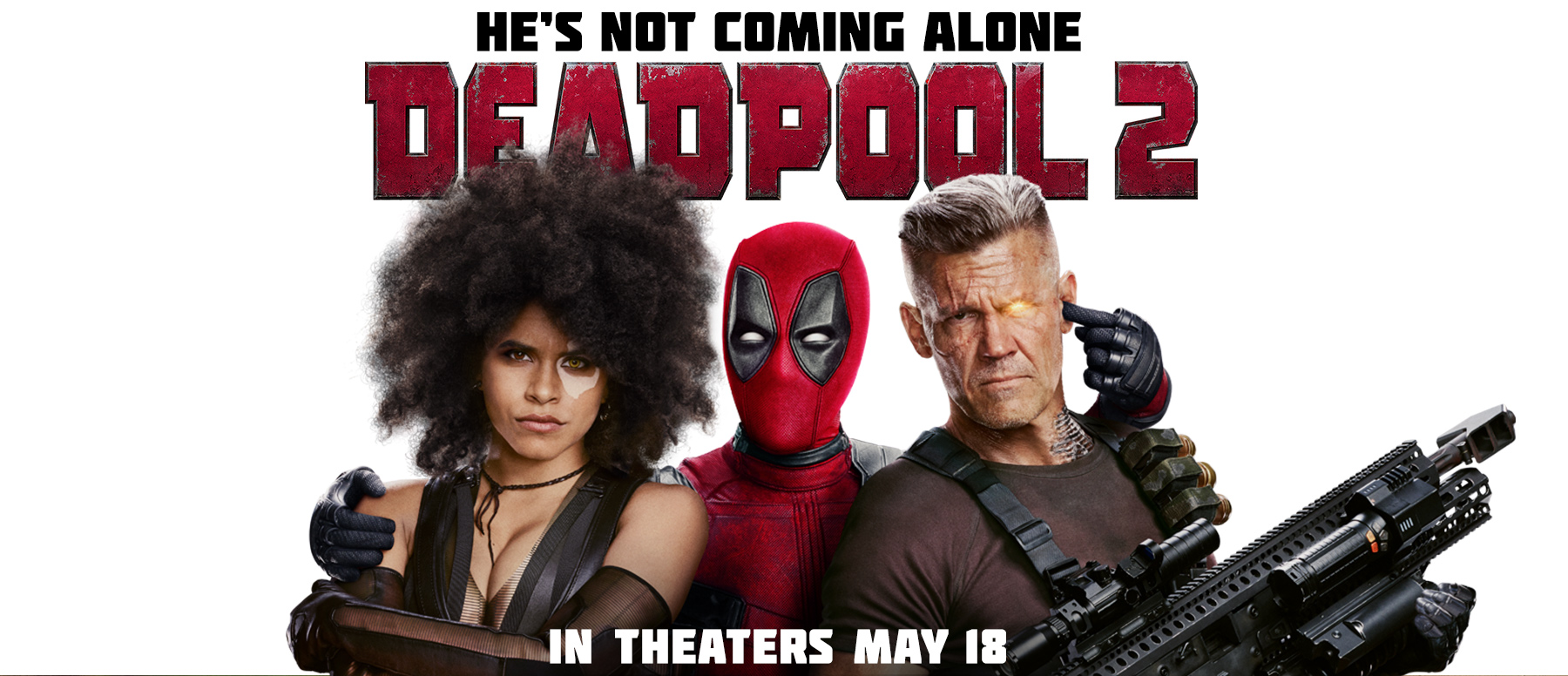
Remember the first “Deadpool?” That crazy sloooow-motion opening action scene to the tune of “Angel in the Morning” with Ryan Reynolds’ deadpan Deadpool voiceover introducing us to the fourth-wall-breaking, meta-meta, winking-at-us-and-itself while-delivering on the action and a tender romance as well Marvel movie about the special forces guy turned gun for hire turned cancer patient turned science experiment turned super(anti)hero? Well, he’s back, (temporarily) blown to bits, out for revenge, and out for something a bit unexpected as well. Yes, believe Wade/Deadpool when he tells you that this is a story about family. Also butterfly-effect-free time travel, a prison break, ironic use of a classic pop song, some snark on DC (and Wolverine, of course), one of the funniest scenes ever filmed about a bad guy trying to get information from the good guy’s buddy, a bad guy played by the same actor who played Thanos but this time less CGI, a new ballad from Celine Dion, a blink and you’ll miss it cameo by one of the biggest stars in Hollywood, the guy from “Catastrophe,” the guy from “IT,” and some very persuasive evidence that the best superpower could just be….luck. And that last one would be Domino, perhaps the only superhero character whose name is not as cool as the name of the actor — Zazie Beetz, who needs her own movie, now.

Just in case you’re still with me and have not seen it yet, I’m doing my best to keep this as spoiler-free as possible, though I would love nothing more than telling you some of my favorite funny moments. Bad stuff happens and Wade/Deadpool seeks revenge. Then a sort of cyborg from the future with seemingly infinite very powerful weapons named Cable (Josh Brolin) shows up, Terminator-style, in search of a kid who has been abused in a “conversion” facility for mutants with special powers (Julian Dennison of “Hunt for the Wilderpeople”). Deadpool puts together a team he dubs the gender-neutral X-Force. (Speaking of dubbing, there’s a whole thing in the movie about dubstep, too.

The quips and pop culture references come at you “Airplane!”-style, faster than the bullets, meta on meta, times meta, meta about meta, breaking the fourth wall and probably the fifth, sixth, and seventh as well. “No more speaking lines for you,” DP tells one character. Instead of the director’s name in the opening credits, it just says “Killed John Wick’s dog.” (That’s David Leitch, and he did.) And yes, there is some sweetness, too, every bit as important in making this work as the wisecracking dialog and bone-cracking stunts. It does not take itself seriously, but it does take delivering a smart, funny, entertaining, and satisfying movie very seriously. With so many superhero franchises out there, it is great to see them developing sub-genres, and “Deadpool” has found the sweet spot in one of the most purely entertaining.

Parents should know that this film includes very strong, explicit, and crude language, sexual references and situations, graphic comic nudity, drinking, drugs, and extended action/superhero violence with many characters injured and killed and some disturbing images.

Family discussion: How do Wade and Cable respond differently to tragedy? What would you say to Russell? What’s the best joke in the movie?

If you like this, try: “Deadpool” and “Guardians of the Galaxy”

Related Tags:


Action/Adventure Comedy Comic book/Comic Strip/Graphic Novel DVD/Blu-Ray movie review Movies -- format Scene After the Credits Superhero

The Russo Brothers Talk: Thanos, Infinity Powers, and Their Favorite Special Effect in “Avengers: Infinity War”

Posted on May 12, 2018 at 8:03 am

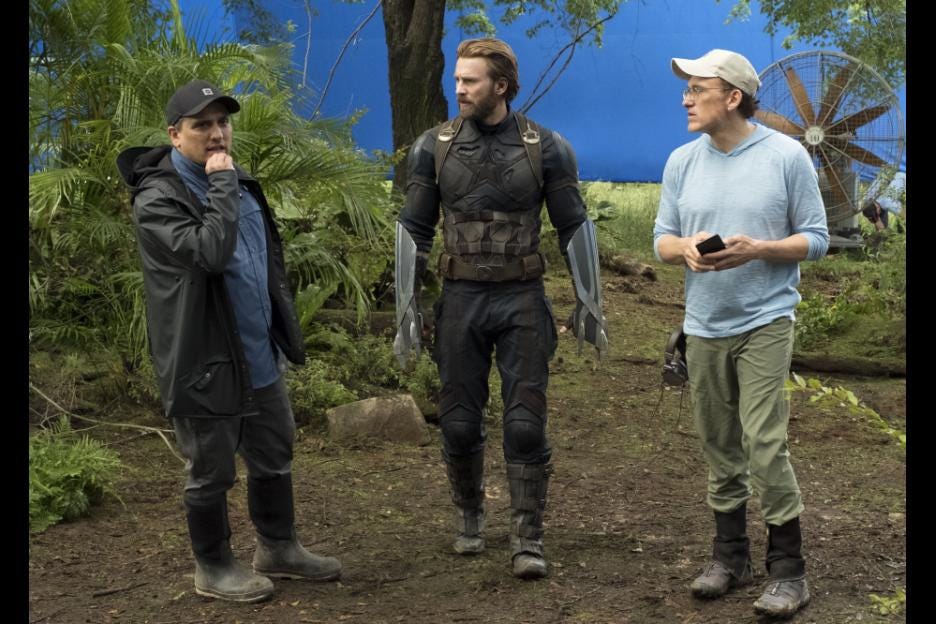
Everyone knew that “Avengers: Infinity War” was going to be big. But were our expectations impossibly high? Even the extraordinarily talented brothers and co-directors Anthony and Joseph Russo, who made two of the most critically acclaimed of the 18 Marvel superheroes in the past decade, had to feel daunted by the challenge of taking on so many characters and such a complicated story. In an interview, they talked about choosing which characters would be most interesting together, who the supervillain Thanos is, which special effect they particularly enjoyed, and which superpowers they most wish they had.

People love the movie but are very shook up by some of the developments. Do you feel like the two most hated people in the whole world right now?

JR: It’s interesting that people are having this kind of emotional response. But this is a really unique experiment in filmmaking in the Marvel Universe. Ten years of storytelling spread out over very diverse franchises, diverse tonally, diverse from a story standpoint, with unique and different characters. This film represents the ending of that story and “Avengers 4” as well. So the audience is invested in the incredible amount of emotion and time and energy and passion in these characters. And the response we’re seeing to the movie is that it’s a representation of that emotion and passion that they feel for this unique experiment in cinema.

As I have told you before, I am a huge fan especially of your work on “Captain America: Winter Soldier” and “Civil War,” which integrated with the rest of the MCU but had a very distinctive tone inspired in part by the 1970’s cinema of paranoia films. The two most recent Marvel superhero movies were also great, “Black Panther” and “Thor: Ragnarok,” but they had very different tones from very different directors. How do you take those characters and more and make them seem as though they’re in the same movie while maintaining their distinctive personas, worlds, and storylines?

JR: We look at that as one of the great creative upsides of trying something like this. We’ve always thought of ourselves, specifically our creative processes, as sort of akin to being mad scientists. We like to take disparate elements and smash them together and see what that gives us on a tonal level. We’ve done that in a lot of our work, and this movie is the perfect setup for that process.

Like you said, we have all these different tones and styles to draw on. But primarily we look at it as our responsibility to give people our version of these characters. That’s what we love about these characters — they can morph from movie to movie. Our version of Captain America was very different than Joss Whedon’s version. Taika Waititi’s version of Thor has been very different than the previous versions.

I think audiences like that. They like the fact that each individual movie is a conceptual and tonal and narrative presentation that while it is tethered on a story level to what’s come before; its own expression on a tonal level and a style level is unique. And so we try to be very specific to what the needs of our story were in this movie and how we want it balanced, because we’re big fans of balanced storytelling. We like movies that make you laugh, make you cry, make you think, etc.

This movie was challenging to balance because it is so dark in many respects, and intense. So we use that variety of tones that all these characters bring us to give what we think is like a very complete fulfilling cinema experience, the kind of experience that we aspire to see.

In the past, the series has addressed some classic fanboy questions about power like whether Thor’s hammer is stronger than Captain America’s shield. I thought it was interesting that in this film it was more about the way the personalities work together. And it was particularly choice to put the two strongest egos up against each other, Doctor Strange and Tony Stark. So tell me how you looked at all the characters lined in front of you and thought about who would set off the most sparks against who?

AR: Tony Stark and Stephen Strange — one thing that drew us to it is exactly what you’re saying, their egos, and their narcissism. We knew that it would be hard for those two characters to exist within the same space. But I think also what we loved about that was the contrast between the two with Tony being such a man of science and Strange being a man of magic and the incongruity of those two things, their approaches and their respective powers. So that was particularly fun for us.

We spent a long time with the writers, Christopher Markus and Stephen McFeely exploring every possible combination before we started to lock into a story. But that was so elemental in terms of what the fun and thrill and creative upside of this film would be for us. So the Star Lord/Thor combination with the Guardians was certainly one of our most exciting ones. I have to say the Gamora/Thanos combination was one thing that we were particularly interested in. We always love it when there’s a relationship between a villain and a hero that has a personal dimension to it. That was really what excited us most about “Winter Soldier” right from when we started with Marvel. And so to be able to play with that father/daughter relationship and that villain/hero relationship in a way that had so many personal layers and so much personal complexity to it; that’s something for us as storytellers that’s very exciting creatively.

I loved the interplay between Thor, Groot, and Rocket.

JR: Thor is in a very vulnerable and emotional place of himself. He’s hiding it under a veneer disconcern. He’s trying to act like you know the his mission is to to stop Thanos, which it is, but he’s devastated with all the loss that he suffered in this film and in Ragnarok. Rocket is the most caustic and seemingly unemotional character and Groot, too, is in a very caustic and emotional phase as a teenager. Putting them together, was interesting and it is the most emotional that we have seen Rocket, the most sensitive that you’ve ever seen Rocket portrayed in that scene on the pod. That is because it’s hard not to empathize with Thor because of the level of loss that he has endured. It’s played for somewhat absurdist humor at first. But then slowly it seeps into Rocket’s heart and he makes a gesture by handing Thor that eye.

But we also do get a lot of humor out of that crew.

AR: I think that that grouping is interesting in that you know if you go back to our very early work with like “Welcome to Collinwood” or “Arrested Development,” Joe and I have a strong penchant for for absurdity and absurdist comedy. There’s a strong spirit of absurdism moving through that story line.

Well tell me a little bit about the monumental challenge of keeping so many different not just characters but different locations going at the same time? How do you even begin to remind everybody who is where and what is happening?

JR: Great question. It takes a lot of work and a lot of story discipline. We spent a long time in the writers room with Markus and McFeely going through various iterations of the structure of the script to try and unlock one that tracks the best. Once we committed to the script we then in editorial did the same thing over again. Because rarely does the script offer the same sort of information that a cut film will. Once you cut the film together you can sit there and assess transitions and assess which characters have been missing for too long. And so we really played with that for about five or six months with different iterations of structure until I think we lighted the one that we felt tracked the cleanest and the best. So it really just requires an intensive amount of work.

We’ve been building up to the confrontation with Thanos for a very long time. What makes him the villain you wanted to have as the ultimate threat?

AR: Right from the very beginning Thanos started to loom large in our mind because we knew the goal for this film and the following Avengers film was to provide a climax and a culmination for the entire road that we’ve been travelling for ten years. And a narrative that would somehow inolve the MCU at least to some degree in its entirety. Thanos was in a very unique position for us to find a central figure that could actually bring every corner of the MCU together in a single narrative in his quest for the stones and the fact that the stones have been so well placed throughout the various films. All of a sudden he just started to become this sort of sense central concept here.

And the other thing in thinking about Thanos was that like he had been so lightly teased up to this point in the MCU; we knew very little about him on-screen. We understood that very little about him. So for us and for Markus and McFeely, it was an opportunity to go into a very deep dive into the question of who was this guy and how is he going to end up crashing into these other characters and ideas that we’ve been playing with in this world. And as we started to sink deeper into that and realize that he was sort of like the central figure in a way, we began to fill him out as if he was a lead character and build a narrative around him in a way that you typically build a narrative around a lead character.

That was one of the most exciting parts of the creative process for us, the fact that we got to think about a villain in those terms, to put a villain in that position in the narrative. And I think ultimately that’s really what a lot of people are responding to in this film. It is a very fresh perspective to approach a movie like this from. A lot of the surprises and a lot of the shock of the experience comes from the fact that the movie was designed that way.

We couldn’t have asked for a better actor of course than Josh Brolin to play that role. I can’t think of any other actor that can embody the physical presence that that character has or the level of violence that character has within him, at the same time giving him a soul and a depth and a complexity, and an emotional landscape that you can actually read and relate to on screen. It was quite remarkable and we have to give a big thanks to our visual effects team for being able to innovate and use new technologies to translate Brolin’s performance onto a CG character in a way that I don’t think anyone’s ever seen before on screen.

I won’t ask who your favorite Avenger is, but can you tell me which of the Avenger powers you would most like to have?

JR: I always say and it’s easy because it was my favorite character growing up and I collected most of his books was Spiderman. So I think it was because I always secretly desired to go in to climb walls and swing on webs.

The special effect in the scene with the hair on his arms was absolutely fantastic.

JR: Yeah, it’s a favorite of ours, just the opportunity to physically represent the Spidey sense.

AR: It’s pretty much informed by our experience and having to make two of the largest movies ever made back-to-back; I would love to have the Time infinity stone. We could use that.

Related Tags:


Behind the Scenes Comic book/Comic Strip/Graphic Novel Directors Interview
Life of the Party

Life of the Party

Posted on May 10, 2018 at 5:53 pm

B +
Lowest Recommended Age: High School
MPAA Rating: Rated PG-13 for sexual material, drug content and partying
Profanity: Some strong language
Alcohol/ Drugs: Drinking and drugs
Violence/ Scariness: Comic peril and violence, gun, no one hurt
Diversity Issues: None
Date Released to Theaters: May 11, 2018
Date Released to DVD: August 7, 2018
Copyright 2018 Warner Brothers

Thank you, Melissa McCarthy and Ben Falcone, for figuring out that what we want to see is Melissa McCarthy as America’s sweetheart, not a deranged sociopath. In their previous films, “Tammy” and “The Boss” and in McCarthy’s “Identity Thief” the brilliant comic actress with the adorable dimples was cast as weird, heartless, damaged and damaging characters. It takes nothing away from McCarthy’s considerable dramatic talent (she was outstanding in “St. Vincent” and we are very much looking forward to her performance later this year in the fact-based story of a literary fraud and forger, “Can You Ever Forgive Me?”) to say that she is at her very best and funniest when she is irrepressibly sunny.

And so Falcone and McCarthy have created just that in Life of the Party, where she plays Deanna, a loving mother and housewife who learns, as she and her husband (Matt Walsh of “Veep”) drop their daughter off at college for her senior year, that her husband is leaving her because he has fallen in love with another woman (“Modern Family’s” Julie Bowen).

Deanna, who wears a “Proud Mom” sweatshirt and has devoted her whole life to her family, is angry and disappointed. She decides that her biggest regret was dropping out of school when she became pregnant with Maddie (Molly Gordon), so what she wants to do is go back and get her degree. This has the additional benefit of being on campus with Maddie who is predictably a bit nonplussed, but supportive. And Maddie’s sorority sisters love Deanna’s enthusiasm and kindness. Yes there’s a mean girl (and an 80’s party dance-off! Yay!), but we don’t have to slog through the expected scenes of students underestimating Deanna just so she can show them how wrong they were.

As in McCarthy’s other best comic roles, in “Bridesmaids,” “Spy,” “Ghostbusters,” and “The Heat,” Deanna may be awkward and overly effusive, but she is also supremely capable and in most situations, confident as well. It’s easy to get a cheap laugh from incompetence and failure, and there are a few of those here, primarily from the underused Gillian Jacobs, playing an undergraduate who was in a coma for eight years and has some catching up to do. Deanna may have a problem with oversharing, she does not always make good choices, and for some reason public speaking puts her into a panic, but she is both smart and wise. She has a sustaining friendship (the invaluable Maya Rudolph) and a perpetual sunniness that everyone around her finds endearing. Her soon-to-be-ex with a skinny blonde girlfriend and a new earring tells her he needs an “upgrade.” But it is Deanna who finds herself upgrading in every category, including a handsome and devoted young beau, played by the very appealing Luke Benward. That is a satisfying starting point for some mostly-adorable silliness and a lot of heart. Deanna repeatedly says she is “down to clown,” which is supposed to be an eye-rolling mom-ism. But it is McCarthy who is truly down to clown and we are all the better for it.

Parents should know that this movie includes sexual references and situations, potty humor and crude jokes, drinking and drugs, comic mayhem, peril and violence, a gunshot, and some mild language.

Family discussion: What did the girls like about Deanna? What was the biggest change she made?

If you like this, try: More college comedies, including “Back to School,” “Sydney White,” “High Time,” and “The House Bunny”

Related Tags:


Comedy DVD/Blu-Ray Features & Top 10s movie review Movies -- format
THE MOVIE MOM® is a registered trademark of Nell Minow. Use of the mark without express consent from Nell Minow constitutes trademark infringement and unfair competition in violation of federal and state laws. All material © Nell Minow 1995-2026, all rights reserved, and no use or republication is permitted without explicit permission. This site hosts Nell Minow’s Movie Mom® archive, with material that originally appeared on Yahoo! Movies, Beliefnet, and other sources. Much of her new material can be found at Rogerebert.com, Huffington Post, and WheretoWatch. Her books include The Movie Mom’s Guide to Family Movies and 101 Must-See Movie Moments, and she can be heard each week on radio stations across the country.

Website Designed by Max LaZebnik