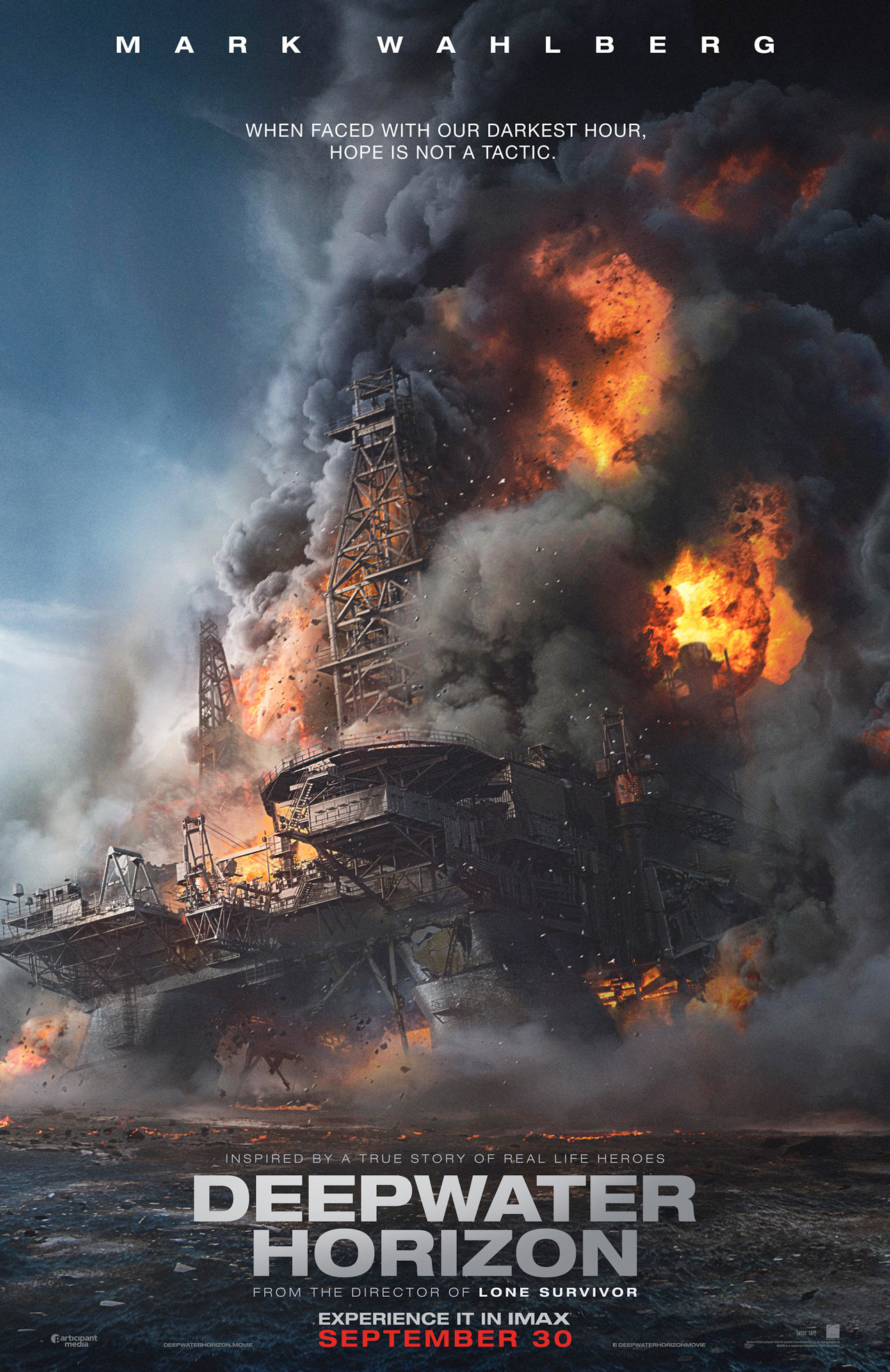
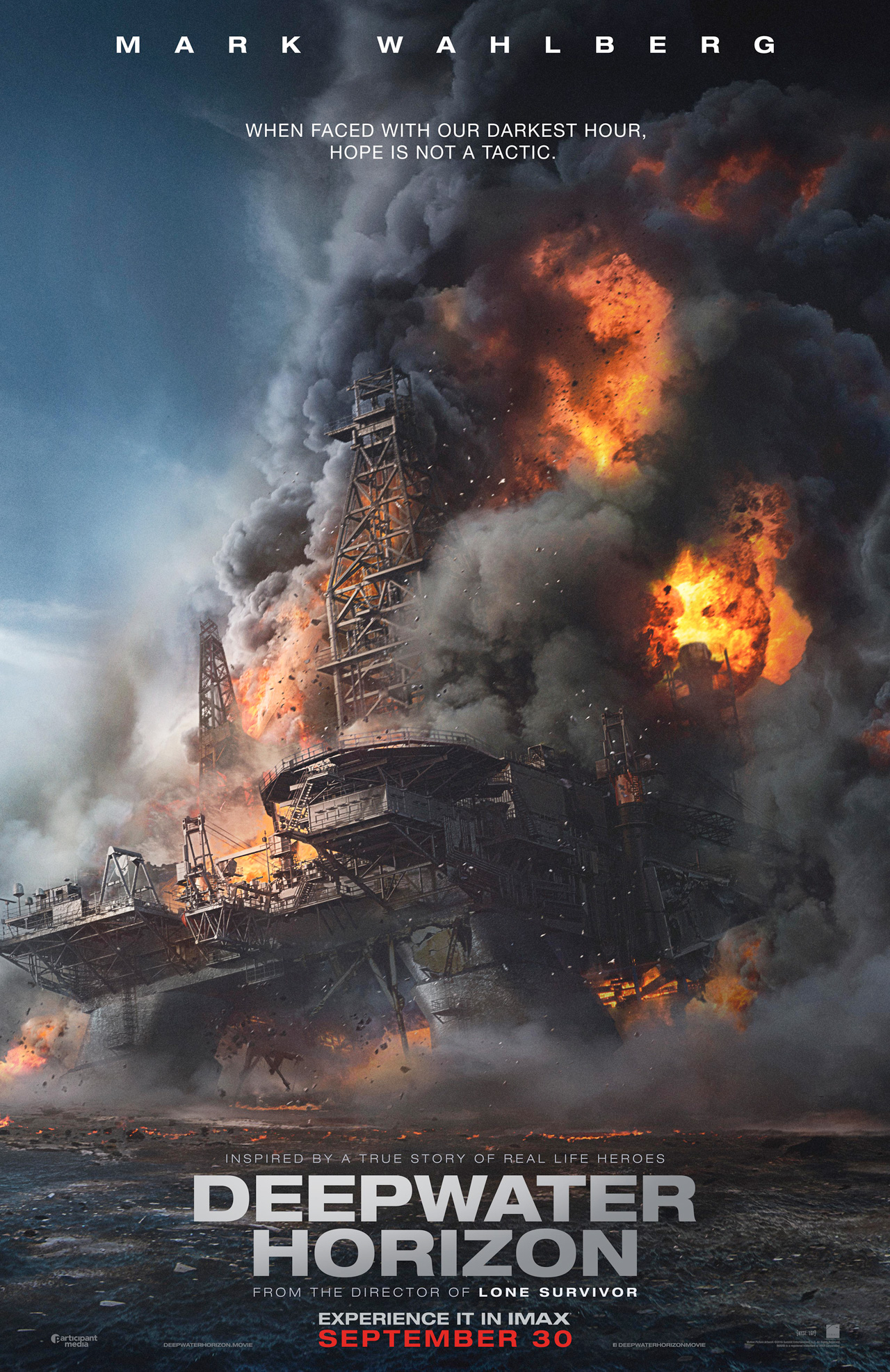
Copyright 2016 Lionsgate I’m a fan of director Peter Berg. His excellent “Friday Night Lights” film has been eclipsed by the popular television series it inspired. And I like the much-derided “Battleship,” which I thought was a great example of well-executed action movie, taking its entertainment value seriously without taking itself too seriously. His new “Deepwater Horizon,” based on the 2010 explosion and sinking of BP’s Deepwater Horizon oil rig in the Gulf of Mexico, shows his skill in cinematic storytelling and his gift for pacing and action. But it is curiously constructed, as though for a fictional story more along the lines of Bruce Willis fighting a meteor than a real-life environmental catastrophe that killed 11 people and spread an estimated 3.19 million barrels of oil into the Gulf. It should be an action-movie version of “The Big Short.” Instead, it’s an updating of “The Towering Inferno,” meaning — spoiler alert — the bad guy is the one who tries to cut costs.
Berg and screenwriters Matthew Michael Carnahan and Matthew Sand follow the established formula for action films. The first ten minutes make us fall in love with the hero, his adoring wife, and adorable child. That’s not hard to do. The hero is Mike Williams, Mark Wahlberg, his wife is Felicia (Kate Hudson), and their daughter happens to be working on a report for school about Daddy’s job, which gives us a chance to find out about some very technical stuff in very simple terms. Daddy works on an oil rig out in the middle of the Gulf that pumps up oil from under the ocean. “That oil is a monster like the dinosaurs it used to be. My daddy tames the dinosaurs.” And Mommy will miss him very much when he goes. They are adorable. Got it.
The next scene introduces us to hero number 2, the weary veteran who is all about competence and integrity, Captain Jimmy Harrell, superbly played by Hudson’s real-life dad, Kurt Russell. And then there are the guys in suits, who are all about making their numbers and therefore cutting the corners that the veterans knows are not there for show but are actually necessary. There’s a lot of jargon, but basically all you need to know is that the good guys understand that there may be a problem and the bad guys do not want to take the steps necessary to find or prevent it. And the good guys are really endearing, and therefore it all matters a lot.
And then it all starts to blow up, and we get to the real reason for the movie, which is the “who will get out of this and how will they do it?” part. This is where Berg’s strengths really show, as each of the set-pieces are thrillingly staged. He has an exceptional clarity in conveying a three-dimensional space on screen — actually, several of them in different locations — and balancing the urgency of the action with genuine emotion. We see how the people on board think through the problems, from the logistics and the mechanics to the choices based in morality and courage. Wahlberg is, as ever, just right to play the guy you’d like to have next door, a decent, hard-working, family-loving man with enormous capability and integrity. Here, as in their previous collaboration, “Lone Survivor,” Berg keeps the focus on the challenges faced by individuals who have little control over the monumental, life-or-death tasks they are assigned by people far away with little understanding of the consequences of their orders. That worked better in the earlier film, as the story of the soldier far from command has existential implications that are inherent and instantly recognized. Here, the action is disconnected from the consequences that a brief text coda before the credits cannot make up for.
Parents should know that the movie includes extensive peril and violence, with some disturbing images and characters injured and killed, some strong language, and sexual references and a situation.
Family discussion: Why do the people on the rig use the term “Mr.”? Who could have prevented the explosion?
If you like this, try: “The 33” and the documentary about Deepwater Horizon, “The Great Invisible”
Trailer: “Fences” with Denzel Washington and Viola Davis
Posted on September 28, 2016 at 8:00 am
There is no movie I am looking forward to this fall more than “Fences,” with my two favorite performers, Denzel Washington and Viola Davis, and based on the Tony and Pulitzer prize winning play by August Wilson. Here is the first look.
Interview: Paige O’Hara, Belle in Disney’s “Beauty and the Beast”
Posted on September 26, 2016 at 1:12 pm
Copyright Nell Minow 2016
Broadway star Paige O’Hara provided the sweet singing and speaking voice for Belle in Disney’s classic “Beauty and the Beast,” celebrating its 25th anniversary with a gorgeous new DVD/Blu-ray edition. She is also an accomplished painter. I was delighted to get a chance to talk to her about her earliest and favorite singing roles and what it was like to appear in Disney’s most romantic musical fairy tale. She told me the exact moment when Belle falls in love – and she shared for the first time a lovely story about her favorite singer, Mary Martin.
What was the first song you ever learned to sing?
“Swing Low, Sweet Chariot,” because my nanny used to sing that.
And did you always love performing?
My family always knew I was an actor, I’ve always been an actress. They called me “Little Sarah Bernhardt” but I didn’t know I could really sing till I turned around 12 years old and did I did the “Peter Pan” song “I’ve Gotta Crow” for a competition. And they said “Oh my gosh! That voice is huge, you’ve got to sing.” And I started singing really around 12 years old.
Were there performers in your family?
No, not really. The only singer or musical person in my family was my aunt who sing with Dinah Shore. But she fell in love and got married and left the business. But my mom was my drama eacher. She did the acting and directing for the performing arts high school. So my mom was really my teacher, she was amazing.
She’s really brilliant but she wasn’t “method” in the fact that she didn’t over-intellectualize everything. She would actually try to be organic with the direction of the characters. So the realism of my characters I think came from her teaching me about that. Do you remember the character Auntie Mame? She was like that, with the looks of Carole Lombard!
What was the first musical play you saw?
I think the first musical play I saw I was in. It was “The Wizard of Oz.” I was like a little this background munchkin person but then the next year I got to play Cinderella so that was fun.
You came to New York after high school to be on Broadway?
Of course! I actually turned down a full scholarship at the Cincinnati Conservatory to go right to New York, but I was ready. I had been in this school with my mom and I’d been acting my whole life. It’s not really the norm for most people and I don’t really recommend it unless you’re in this circumstance that I was in. I was just ready to do it and I was lucky. I had to do those watercolors and sell them on the street to pay my rent. But within one year I had my equity card and created Della in “Gift of the Magi” on Broadway. So it was really cool.
What was your audition song for “Beauty and the Beast?”
I sang “Heaven Help My Heart” from Chess. That’s a great, great song because it shows range.
It’s a very challenging song.
I played the lead in “Chess” so I knew it really well and from the reaction from the casting director, I could tell I was getting a callback. So we went through five auditions and every audition had more people, two people, four people, all of them including Jeffrey Katzenberg. So it was crazy and it was over a span of two weeks and my husband had proposed to me, a day before I got the job. The next day I walked into the apartment and there was a message from David Friedman who was the musical director for Beauty and the Beast saying “Paige it’s David, we’ve got to get together and set keys” and I was like, “My God, my God!”
That’s how I found out. And literally like two seconds later my agent called and I said, “I know!!” It was just crazy, a pretty exciting week!
Tell me about creating the character of Belle.
I always say there’s a lot of us in Belle. We all share the role, Linda Woolverton who wrote it, James Foster and Mark Swain who animated it and then me. So it’s kind of funny that a lot of people said that the Linda Woolverton and I could be sisters. She is very much like me and like Belle she loves books and reading and I pushed that. Belle has a sense of humor and she is the oldest Disney Princess. She’s in her early 20s. They had never done it before; the other princesses are teenagers. She is an old soul, too, and her heart has got to be evident throughout the entire film; you’ve got to feel her heart. And I appreciate it more now, 25 years later, what she did being willing to give up her life for her father. I just love the fact that Belle was her own person. She wasn’t looking for a man and she had the guts to stand up to Gaston.
You were lucky enough to work with your fellow actors in recording, which is not always the case in animated films.
It was fun working with Richard Wild because he was a friend and I had known him for years, so I felt I could take it pretty far. We had the written words and everything but they said, “If you want to expand a little bit on the dialogue, you can.”
Robby Benson and I were together, too. My whole character came to fruition when Robbie was hired because I was hired a month before they found him. It was instant chemistry. I’m such a fan because I was one of the many to have crushes on him. We were the same age when he was doing his films as a teenager and he would love hearing that but he would also love the fact that I loved him in “One on One” because I’m a diehard NBA fan. I think it’s kind of disappointing he didn’t have his own song in the movie but what an actor, oh my gosh!
Belle’s feelings change a lot over the course of the story.
Yes, absolutely, from being terrified to falling in love with him. And I know the moment she falls in love with him. When the little birds jump up on this paw and she smiles and she touches him and runs behind the tree. We talked about that with the directors. That’s the moment when she realizes she’s never felt this before, and her heart is going and she knows that… She knows she’s falling in love with him at that point.
Did you meet Angela Lansbury?
Yes! I was a huge fan of Angela’s and when I came to New York she was starring in “Gypsy” on Broadway. I paid to see it once. I was so broke but then I sneaked in at intermission and came back again and again and again to hear her sing “Rose’s Turn.” Every night the audience would stand and stop the show. So it was really cool to talk to her. I pointed out that she played Mama Rose as if she was the child and Louise was the adult. She looked at me and she said, “You were the first person that ever said that and that’s exactly my intention”. And I was like, cool. I got it, I understand her theory in that role because she’s the most lovable of all the women that played that role. Because that role can be very abrasive but she was something else when she did that.
When she recorded “Beauty And The Beast” she spent all night traveling. She had gotten stuck in another city and was on the planes all night long before the session. They said they could cancel it and she could do it another day and she said, “Oh no, I’ll be there.” She gets in and she’s very nervous. She said, “I don’t know, that song has so much line, I don’t know if I can do that anymore,” they said, “Of course you can,” and lo and behold we have the whole orchestra, everybody’s there, and she’s behind the headset, and did it in one take. One take, one take and people were crying, people were crying. It was just unbelievable! It’s crazy!
And you’ve continued to play Belle into some other versions.
You have appeared on stage in so many classic musicals. Do you have a favorite?
One of my favorites of course is “The Sound of Music.” Mary Martin’s granddaughter, Heidi Hagman, Larry Hagman’s daughter, played Liesel in our show. She told Mary that I was a huge fan of hers. She said, “This Paige girl is like crazy for you, Grandma.” I got this big box sent to the theater she had pulled out her Ordinary Couple dress that was in the museum and the note said, “I want you to wear this. Love, Mary. I hear you are a lot like me.” I still have the note. I wore the dress and it fit perfectly and then I sent it back. That was like the most amazing thing. And she set it up for me to talk over phone with the real Maria.
What do you hope families will talk about after they see the movie?
It’s timeless. It’s one film where every single factor came together. I get so much fan mail from of little girls because they don’t feel like a geek anymore because Belle loves to read. The message is just timeless, it’s relevant now. Beauty comes from within.
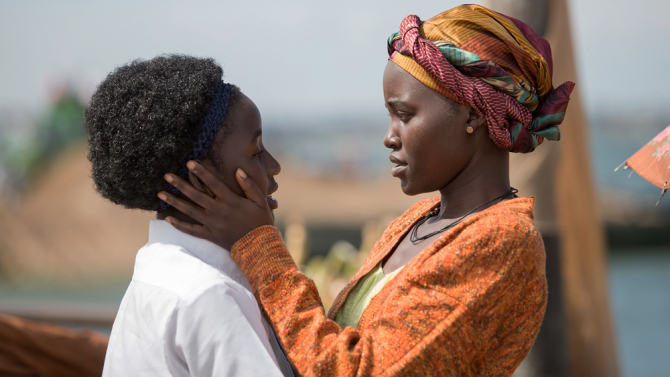
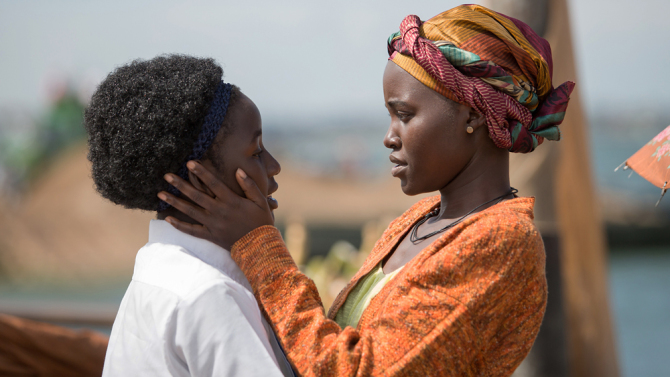
Copyright Disney 2016An illiterate girl from the slums of Uganda became an internationally ranked chess champion. So of course there is a Disney movie. But director Mira Nair has not made the usual feel-good underdog story. It is a wonderfully rich depiction of a family and a culture, as complex in its way as a master-level chess game with intricate moves by many pieces with different strengths and vulnerabilities.
At the center of the story is Harriet (Lupita Nyong’o of “12 Years a Slave”), a young widow with five children living in dire poverty. She cannot afford to send her children to school, and so they sell maize in the street and at an open market. Her oldest daughter, Night (Taryn Kyaze) is a young teenager already attracting the attention of a man. The youngest is a baby. When Harriet’s daughter Phiona (Madina Nalwanga) and her brother are lured into a chess class with cups of porridge, Harriet is scared and angry. She needs the children to bring in money, and she believes that the chess teacher, Robert Katende (David Oyelowo of “Selma”) is using them for some sort of gambling operation. But Katende, who is waiting for a job as an engineer, persuades her that he just wants her children to learn.
Nair (“Monsoon Wedding,” “The Namesake”) has a great eye, and a great gift for creating vibrant, layered, wonderfully inviting communities on screen. As Harriet tries to protect her family, despite eviction, a sexual predator, a terrible injury, she recognizes that she has to do more than keep her children safe. She has to open the world to them. Phiona cannot read or count, but somehow she can see eight moves ahead on a chess board as only a very few masters of the game can do. Robert knows that poverty is only the beginning of the problem the children face. The snobbery and bigotry of the middle class Ugandans is the real obstacle. They will not even allow the children from the slum to compete. Robert tricks the official into agreeing to let them in if they can raise the entry fee. And then he raises the money himself, by playing soccer.
Newcomer Nalwanga, from a community much like Phiona’s, has a winning screen presence, and we can see that she has inherited her ability to think through chess problems from her mother’s canny navigation of the challenges to the family’s most basic survival. Nyong’o shows a grace and courage, even in the direst moments, that echo Phiona’s resilience.
Parents should know that this movie includes themes of poverty and deprivation, child is hurt in an accident with scenes of painful medical treatment, there are also some references to sexual predators and there is an out of wedlock teen pregnancy.
Family discussion: Why did Robert change his mind? Why did Phiona get cranky after she returned home?
If you like this, try: “Searching for Bobby Fischer,” “Brooklyn Castle,” and “Endgame”
Theme of nuclear weapons and accidents, peril and violence, sad death
Diversity Issues:
None
Date Released to Theaters:
September 23, 2016
Copyright 2016 Robert Kenner Films
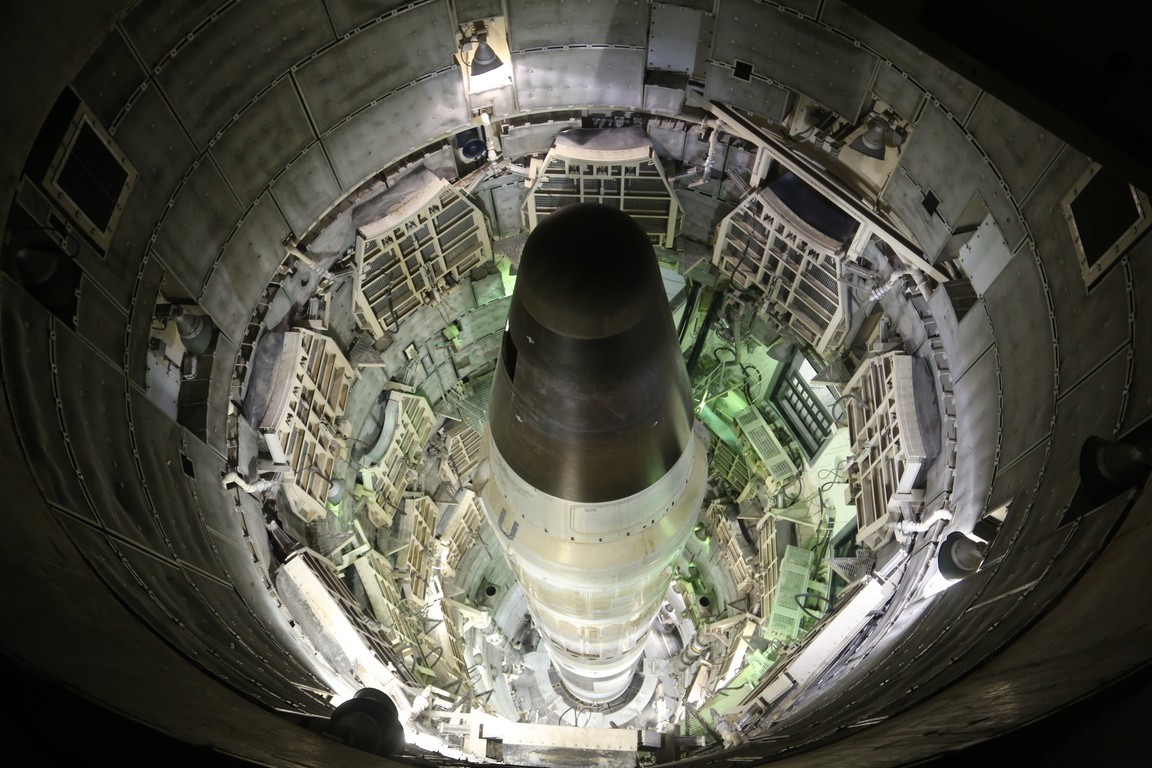
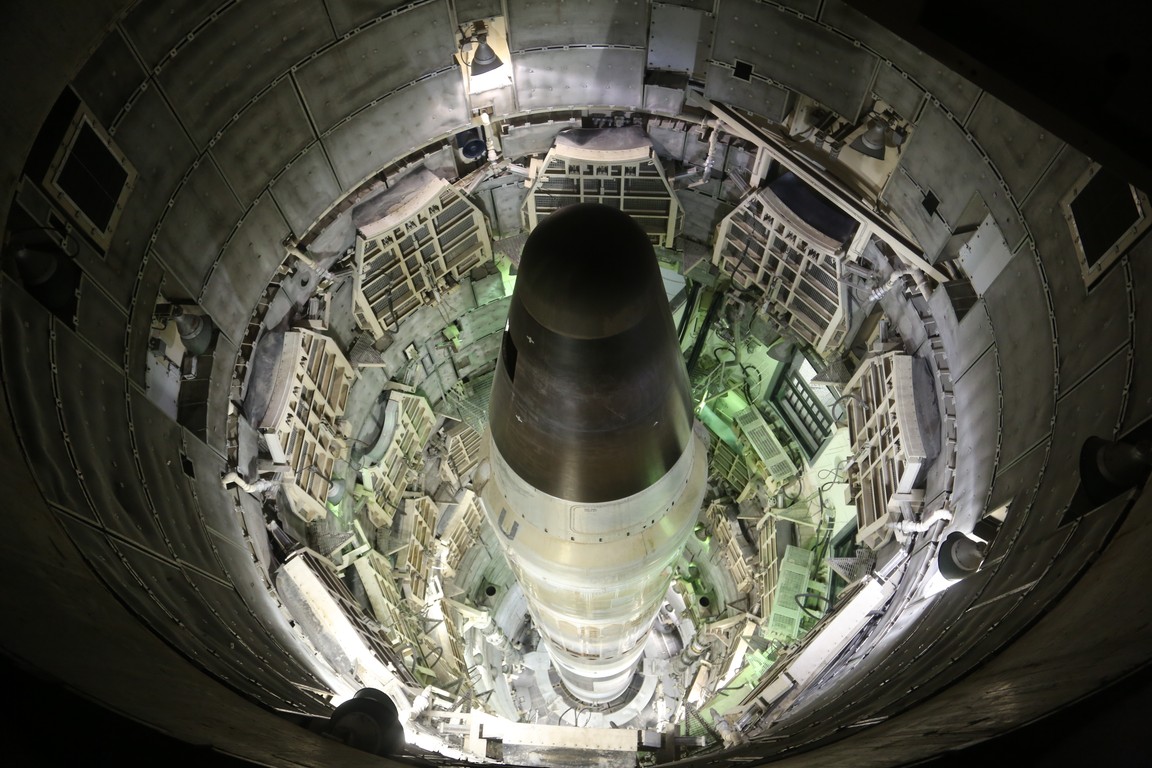
You want to know what’s scary? A teenager dropping a wrench onto an aging but still very potent nuclear missile. Even scarier is that the wrench hit so hard it poked a hole in the missile, which led to a fuel leak, which led to a massive explosion, killing one man, injuring others, and destroying the launch facility. Scarier than that is that this happened in 1980, in Arkansas. It wasn’t a secret. Then-governor Bill Clinton appeared on television to reassure Arkansans that everything was all right. Here’s what’s scary: no one remembers it, and it was just one of many “broken arrow” accidents involving nuclear weapons stored on US soil, and that’s just the ones we know about that took place in America. Who knows what is going on in other countries?
Based on a book by reporter Eric Schlosser, “Command and Control” tells the story of the Titan II Missile explosion with riveting interviews and seamless re-creations, moment by moment of the night the young airman dropped the wrench and the steps taken at great risk and great speed to prevent contamination. We see how painful the events still are to the people involved and how terrifyingly close we — meaning all of us on the planet — were to complete annihilation. Schlosser, whose calm delivery somehow makes it seem even more dire, has assembled a terrifying dossier of denial and neglect.
Director Robert Kenner (“Merchants of Doubt”) wisely presents it like a “tick-tock” thriller, a “Mission: Impossible” or James Bond story come to life. But this film has no supervillain attempting total world domination. This is a Pogo-style “we have met the enemy and he is us” story. Somehow, it is easier for us to believe that a Dr. Evil out there can devise a strategy to destroy us than to believe that in a world where most of us cannot re-set our car clocks for Daylight Savings Time, we keep designing machines that are too complicated for us to operate, or, in this case, even store safely. The bombs used during WWII were built and dropped. The deterrence-arsenal built up during the Cold War has created an unprecedented maintenance problem. We simply do not know how to take care of them or even whether it is possible to do so for decades or centuries.
It seems pretty obvious that at some point, someone is going to drop a wrench. Indeed, that seems far more likely than someone breaking in to do intentional damage. And yet, Kenner and Schlosser show us, calmly, devastatingly, while we argue about every other political issue, this one keeps being overlooked. This movie should make it harder to continue to do so.
Parents should know that the topic of this film is nuclear weapons. There are scenes of peril and explosions and discussions of injuries and death.
Family discussion: Which politicians are paying attention to this issue?