
Animated Short: The Long Spoons
Posted on October 18, 2015 at 8:00 am
The parable of the long spoons is beautifully told in this short video, “One Human Family, Food for All.”
Posted on October 16, 2015 at 5:25 pm
B-| Lowest Recommended Age: | Mature High Schooler |
| MPAA Rating: | Rated R for strong bloody horror violence throughout, language and brief drug use |
| Profanity: | Very strong language |
| Alcohol/ Drugs: | Drinking, brief drug use |
| Violence/ Scariness: | Extensive and grisly violence, characters injured and killed, many disturbing images |
| Diversity Issues: | Diverse characters |
| Date Released to Theaters: | October 16, 2015 |
True to its name, “Tales of Halloween” is a collection of ten short horror stories of the type that Boy Scouts might tell around a campfire late at night. That’s both its strength and weakness.
The movie begins on Halloween night in a small town, where a radio announcer (Adrienne Barbeau, legendary horror star making a meta point) introduces us to a series of spooky goings-on about town. What follows are ten short films by ten different directors about monsters, murderers, devils and demons. Most of the directors are veterans of the horror genre with a genuine affection for the medium. Neil Marshall (writer and director of the 2005 horror film, “The Descent”), Paul Solet (writer and director of the 2009 horror film “Grace”) and Lucky McKee (writer and director of the 2002 horror film “May”) all do their best with limited budgets. Director Darren Lynn Bousman creates an enjoyable story of a trick-or-treater who inadvertently plays a trick on the devil.
These stories are short on depth, plot and dialogue. They are long on the kind of revenge fantasies that appeal to adolescent boys. Parents who steal their kids’ Halloween candy late at night, mean baby sitters and neighborhood bullies all meet terrible fates (usually involving buckets of blood). Many of the tales are more “icky” or “gross” than serious horror stories. Some moments turn out to be more laughable than frightening. But there is a kind of cheerful innocence and simplicity to these stories that will endear them to their target audience. It will not help the film’s marketers that most of that audience will be to young to see a film that is rated R for “strong bloody horror violence throughout, language and brief drug use.”
In a 92 minute movie, there is not much time to develop each individual story. This film is not destined to become a Halloween classic but the eclectic combination of directors, actors and costume designers manages to produce some interesting moments. Some segments stand out for their low budget creativity or for unusual twists and turns. The attitude of the film is displayed in the closing credit, “No animals were harmed in the making of this film, but we sure did kill a lot of pumpkins.”
Parents should know that this is a very scary film with many disturbing images and a lot of violence, as well as drinking, drugs, and very strong language.
Family discussion: Which episode do you think was the scariest? Which villain was the most convincing? Is it important in horror to believe the victims deserved their fates?
If you like this, try: “Dead of Night”
NOTE: I am proud to disclose my conflict of interest — my daughter, Rachel Apatoff, designed the costumes for one of the segments, “The Weak and the Wicked,” clearly the highlight of the film!
Posted on October 16, 2015 at 7:46 am
Posted on October 15, 2015 at 5:58 pm
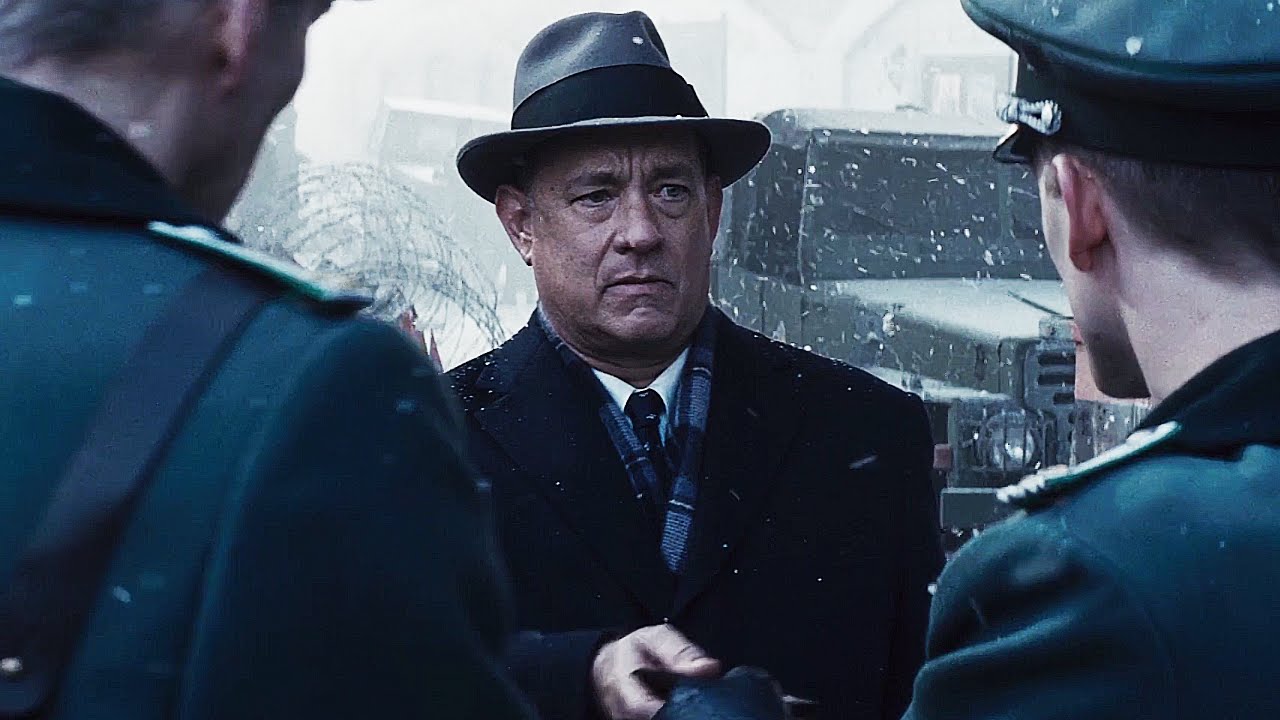
Following World War II, Lord de l’Isle and Dudley was harshly criticized when he organized a legal defense fund for a Nazi general. He responded, “Had I met General Manstein during the war I would have shot him on sight. I am not concerned with whether von Manstein is guilty or not…I want Britain’s reputation upheld.” 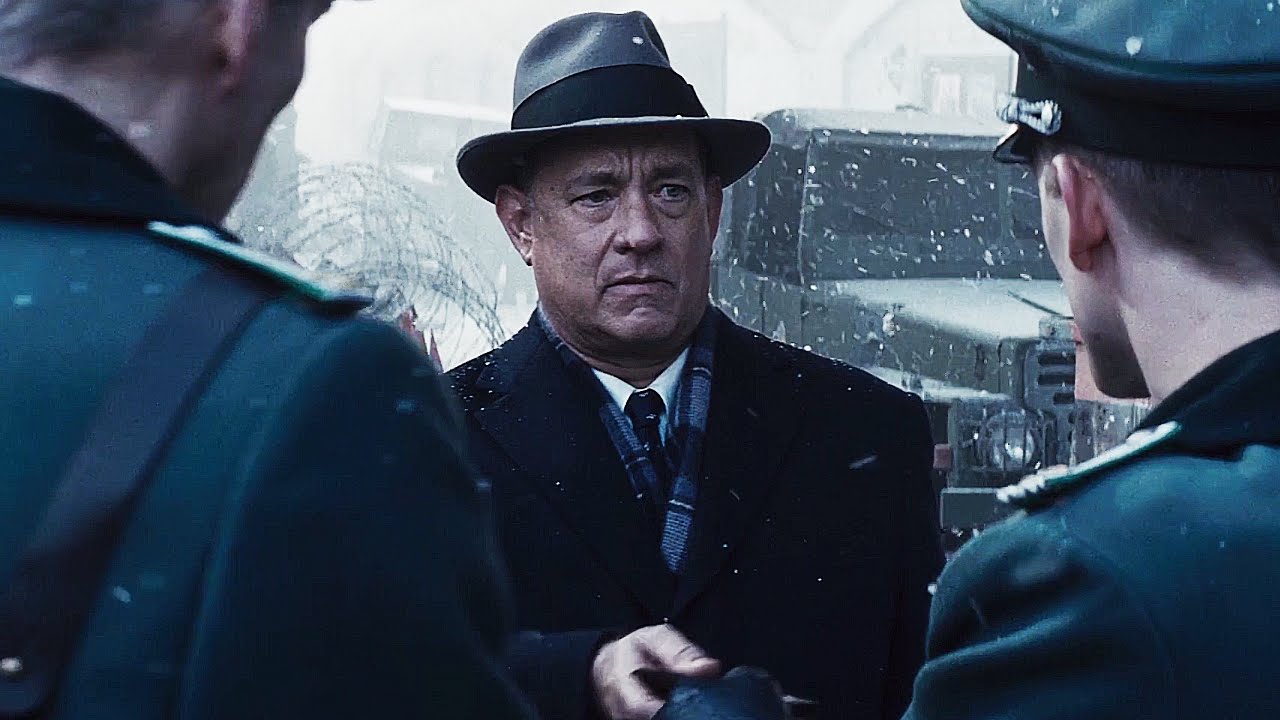
Like the nobleman, American insurance lawyer Jim Donovan (Tom Hanks) understood that it means nothing to win a war against tyranny if we then become tyrants ourselves. Donovan, an assistant to future Supreme Court Justice Robert Jackson at the Nuremberg Nazi war criminals trials who had been litigating insurance claims, was asked to defend an artist accused of spying for the Soviet Union. No one would have complained if he provided a less than vigorous defense. His wife (Amy Ryan) worries about the impact that his defense of an enemy spy will have on their family.
But Donovan had two fundamental principles. First, he recognized that the spy was doing for his country what others were doing for the US and he deserved to be treated as we would want our spies to be treated when they got captured. Second, he understood that if even one small rule was bent or one small step was skipped, it could do more damage to the essential principles of justice that define us than the theft of nuclear secrets.
Those secrets were hidden in a hollowed-out nickel. And the man who had them was a British artist named Rudolf Abel, superbly played by Broadway star Mark Rylance with wry resolve. There is a running joke in the film as he is repeatedly told he does not seem nervous or scared and he replies, “Would it help?” Donovan does his best to defend Abel, taking the case all the way to the Supreme Court to argue that the evidence against Abel was taken in violation of the 4th Amendment protection against unreasonable search and seizure. He is unsuccessful in the appeal but does manage to persuade the judge (in a dramatic but highly unlikely and completely illegal ex parte visit to the judge’s home) not to impose the death penalty.
That comes in handy a few years later when American pilot Francis Gary Powers (Austin Stowell) is shot down over the Soviet Union in what the United States calls a mistaken detour by a “weather plane.” But he was flying a spy plane outfitted with special cameras for the CIA. The US wants him back. So they call on Donovan.
Meanwhile, as the Berlin Wall is being constructed, an American PhD candidate named Pryor (Will Rogers) found himself on the wrong side and was captured and accused of spying by the East Germans. Donovan’s government contacts tell him not to worry about Pryor, but Donovan is determined to get both young men home.
Spielberg and Hanks are an unbeatable combination, and their work here, with an unironic and sincerely gripping screenplay by Matt Charman and the Coen brothers, is as good as it gets. Donovan’s time in Berlin, crossing back and forth over the dividing line as the wall is being built — and as people trying to escape are being shot — is so evocatively cold, physically and emotionally, you will want to button your coat and you will feel for Donovan, who loses his to thugs on the East German side. The nuclear age minuet of politics, statecraft, diplomacy, and ego is tense and compelling. As Donovan warns, any mistake they make could be the last one. Spielberg’s signature touches include scenes of American schoolchildren watching real-life “safety” movies telling them to duck and cover and a quick glimpse of a wrenching parallel as Donovan sees children at recess, climbing in a way that echoes the desperate escape attempts he had just seen. It is too bad to see Ryan underused in a “honey, I’m worried — maybe you better not go” role, with a superfluous coda scene at the end. But the movie is still one of the best of the year, with a stunning sequence when Powers is shot down and sheer masterful storytelling.
Parents should know that this is a cold war story of spies with threat of atomic bombs, shooting down a spy plane, and extensive tension and peril including guns and abuse of prisoners, drinking, smoking, and brief strong language.
Family discussion: What do we learn about Donovan from his negotiation over the insurance payout? Why did he insist on including Prior?
If you like this, try: “13 Days” and Donovan’s book about the negotiation, Strangers on a Bridge: The Case of Colonel Abel and Francis Gary Powers
Posted on October 15, 2015 at 5:50 pm

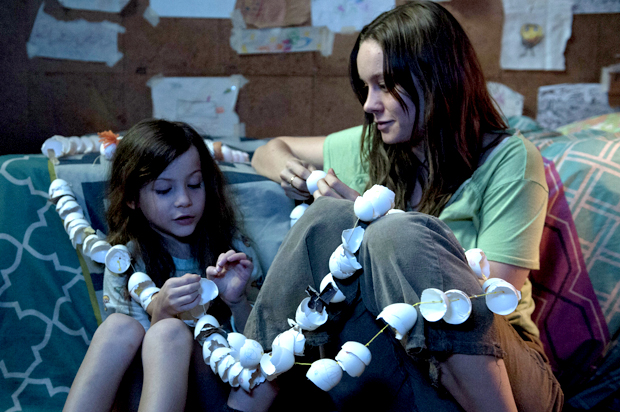
Jack (Jacob Tremblay) wakes up on his fifth birthday and says hello to everything in his world. Through his eyes, and his narration, we gradually come to understand that his world is so entirely circumscribed by the walls of his tiny home that no definite or indefinite articles are needed. There is only one of everything, and everything means very little.
Where Jack and his mother, Ma (Oscar winner Brie Larson) live is just called “Room.” And anything outside of Room, the world Jack glimpses in the flickers of a broken down television, is, his mother tells him, just pretend. Their entire world is contained in Room, and anything they have is brought to them by a gruff-voiced man they call Old Nick (Sean Bridgers). When he comes to Room, opening the locked door whose combination Ma is not allowed to know, Jack hides in Wardrobe until he is gone.
It is only gradually that we come to understand what Jack still does not see. Ma was a teenager when Old Nick captured her and locked her in the shed behind his house so he could rape her and keep her there as his prisoner. She became pregnant with Jack two years later.
Keeping Jack safe and happy is what has kept her from despair. As horrifying as her circumstances are, they have enabled her to maintain a sense of control over Jack’s world that helps her through the absence of control she feels, having to cajole Old Nick for even the smallest accommodation and with no way to escape or contact her family.
But she cannot control Jack’s getting older, challenging her authority, and wanting to know more about what is really happening. That means he may be getting old enough to help her with a daring plan of escape.
Irish writer Emma Donoghue wrote the screenplay, adapted from her book. While it was inspired in part by a real-life case, this is not a true crime story or a woman in jeopardy thriller. Like the post-apocalyptic “The Road,” this is a heightened dramatic exploration of universal experiences all parents — and children of parents — struggle with: the challenges of setting boundaries in an ever-shifting relationship and balancing the need for protection with the need for independence.
And that is why Ma’s greatest challenge comes after the escape. It is surreal to be back in the bedroom she left as a teenager, with her parents who are both the same and different. At first, Jack is terrified. Ma is numb. Everything outside of Room has to be re-evaluated and re-negotiated. Issues of identity, control, separation, boundaries, and what parents and children owe each other are sensitively explored. Larson is one of the finest young actors making movies today and her interaction with the gifted Tremblay is natural, fiercely devoted, and deeply moving.
Parents should know that this movie deals with abduction, rape, and abuse. While they are portrayed sensitively, the material is disturbing. The movie includes strong language, tense scenes, and a suicide attempt.
Family discussion: How was going home different from what Ma expected? How did Ma and Jack differ in their reactions to the escape? Why didn’t Ma’s father want to look at Jack?
If you like this, try: another magnificent performance by Brie Larson in “Short Term 12”
