Rated R for language throughout, some graphic images and violence
Profanity:
Constant strong language
Alcohol/ Drugs:
Drinking, smoking
Violence/ Scariness:
Extended, intense, and graphic peril and violence, many characters injured and killed, some accidentally, some intentionally
Diversity Issues:
Diverse cultures
Date Released to Theaters:
January 30, 2015
Copyright 2015 Focus Features
Two comments made by characters in this film summarize what it is that makes submarine stories so instantly compelling. “Outside is just dark, cold, and death,” says one. “We all live together or we all die together,” says another.
Submarines are the setting for the ultimate locked room story, the purest form of human interaction, with a small group of people (usually all men), cut off from everyone else. You can’t call the cops, appeal to higher authority, or run away.
This submarine story ramps up the conflict. In most cases, the crew may have some conflicts about how to proceed but everyone is literally on board with the task, whether exploration or military action. But “Black Sea” adds the most divisive element of all: greed. This crew, half British, half Russian, is going in search of lost Nazi gold at the bottom of the Black Sea, with 40 percent going to the rich guy who financed the expedition and the rest to go to everyone on board. None of these people are American, but just to make sure we get the message about the value of a huge pile of gold bars, Captain Robinson (Jude Law, with receding hairline and Scottish brogue) counts it up in dollars.
It’s “The Treasure of the Sierra Madre” with a bit of “Moby Dick” and “The Towering Inferno,” plus some Occupy Wall Street thrown in for good measure.
We first see Robinson getting laid off. It has nothing to do with his performance, he is assured. It’s just that they don’t need sub captains or even subs any more. They have better ways of doing marine salvage. They give him a paltry £8000 and the job he has had all his life, the one he lost his wife and son by being away too much, evaporates. “They want me to flip burgers,” he says. Everything he has devoted his life to seems lost.
Then a friend tells him “I think I knew a way not to be like this.” He knows about missing gold, and puts Robinson in touch with the representative of the wealthy man who will fund the operation, at least to the extent of a rusty old tub of a Russian submarine, in exchange for 40 percent.
Robinson assembles the crew, understanding that it is a volatile mix. “He’s a psychopath, but he’s an incredible diver, half man, half fish,” he says about one member of the crew. When the one who told him about the gold commits suicide, Robinson replaces him with an 18 year old who has never been to sea. They also bring along the man who negotiated the deal on behalf of the wealthy American (Scoot McNairy), who has no experience at sea and suffers from claustrophobia. Also arrogance and a highly questionable sense of integrity.
Director Kevin Macdonald (“The Last King of Scotland”) skillfully navigates the narrow corridors of the decrepit submarine as the tension builds, though equipment problems, crew battles, and the overheated impact of all that money. Suddenly, people who would think themselves wealthy with thousands of pounds are calculating how much more their share of the gold would be with a smaller number to divide it among. The political overlay and flashbacks to Robinson’s (possibly imagined) idyll with his family are heavy-handed and at least one of the plot twists is preposterous, but the fundamentals of the story and that irresistibly cramped and isolated setting keep the tension level high.
Parents should know that this film includes constant very strong language, extended and peril and violence with many characters injured and killed, fighting, knives, guns, some very disturbing images, and mild sexual references.
Family discussion: Why was Robinson so protective of Tobin? Do you think he was a good captain?
If you like this, try: “The Hunt for Red October,” “U-571,” “K-19: The Widowmaker,” and “Crimson Tide,” and, for a change of tone, “Operation Petticoat”
For the First Time at Sundance: A Panel on Faith and Films
Posted on January 28, 2015 at 3:37 pm
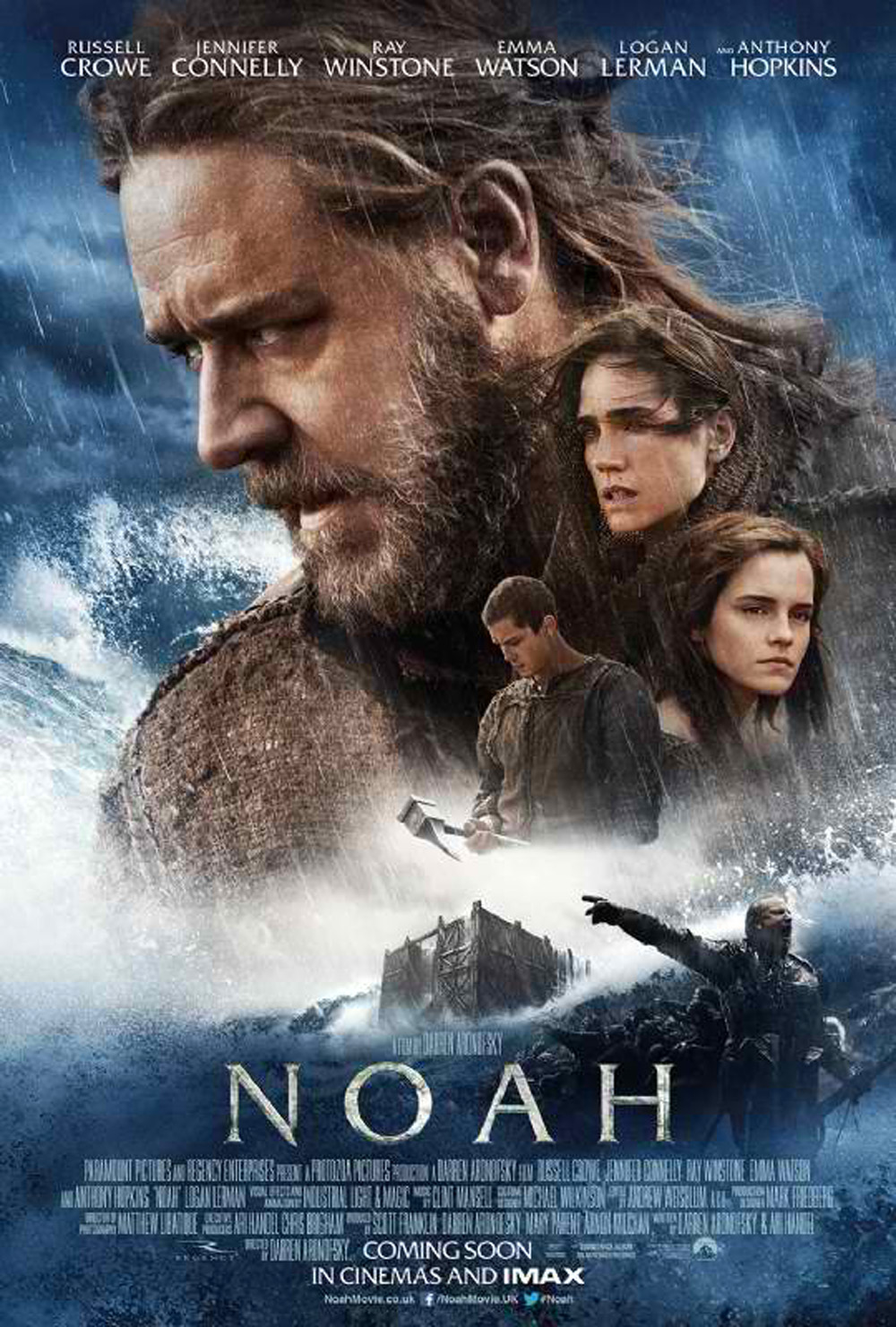
Copyright 2014 Paramount
The acclaimed Sundance Film Festival, where ground-breaking films and indie favorites often premiere, will have its first-ever panel discussion of faith and films this week. “Hollywood reflects society, society reflects Hollywood, and each needs the other,” Tim Gray, founder and president of Gray Media said of unprecedented panel discussion. “Years in the making, this conversation will challenge storytellers’ notions of faith in films and inspire filmmakers to next levels.”
Copyright 2014 Sony Pictures
On January 29, 2015, the 4 p.m. panel will open in a one-on-one with Devon Franklin, now president/CEO of Franklin Entertainment. At MGM and as SVP of Columbia Pictures, Franklin produced “Pursuit of Happyness,” “The Karate Kid 2,” “Heaven is for Real,” and “Annie.” He is the author of Produced by Faith: Enjoy Real Success without Losing Your True Self. This will be followed by a panel moderated by Gray, featuring Franklin along with Adam Hastings, Pure Flix Entertainment director of marketing and operations, whose 2014 “God’s Not Dead” earned more than $60 million domestic box office; Bill Reeves, founder of Working Title Agency, behind faith-market groundbreakers “Fireproof,” “Courageous,” “Soul Surfer,” “Heaven is for Real” and more; and Julie Fairchild of Lovell-Fairchild Communications, whose film work ranges from “Fireproof” to “Get Low,” “20 Feet from Stardom.” and “Heaven is for Real.”
This is an important step forward, and I hope it becomes an annual tradition — and, unless they want to change the name to “Some Sects of Christianity and Films,” that future panels include a broader range of faith traditions.
Interview: Nancy Spielberg and Roberta Grossman of “Above and Beyond”
Posted on January 28, 2015 at 1:26 pm
Copyright Paramount Productions 2015
In 1948, a group of World War II pilots volunteered to fight for Israel in the War of Independence. As members of “Machal” (volunteers from abroad), they not only turned the tide of the war, they also laid the groundwork for the Israeli Air Force. “Above and Beyond” is the first major feature-length documentary about the foreign airmen in the War of Independence, featuring new interviews with pilots from the ’48 War, scholars and statesmen, including Shimon Peres, to tell their story. I spoke to producer Nancy Spielberg and director Roberta Grossman about making the film and why this story mattered so much to them.
Why tell this story now?
NS: First of all the, “Why now,” is any of the stories that are coming from this generation of World War II veterans and Holocaust survivors, that whole generation, whatever they did, are things that if we don’t grab them now, we’ve lost them and they are slipping through our fingers. And I think we’ve all seen that that the way that people learn, mostly way the the younger people learn is visual. They don’t read books, they don’t like history books, they don’t want black and white on a page. The best way to teach it, to capture it, is through a visual format. And I think that the urgency of getting stories like these, is that the stories are just incredible. To me it’s a study in character, in human nature. What makes these heroes? What makes these veterans, these World War II veterans that served their country, survived; one of them was shot down and wandered for a couple of months, another one almost crashed his plane. What made these people come out of war, get back to their normal lives or be supposed to be getting back and then drop everything to go help somebody else? And it is just sort of amazing because I think they are very matter of fact about it but it is a wonderful lesson for all of us. To what degree, what extent would you undertake such personal risk to help somebody else? And I just think that is a lesson that we all have to hold onto.
What was it like doing the research and finding the archival footage for the film?
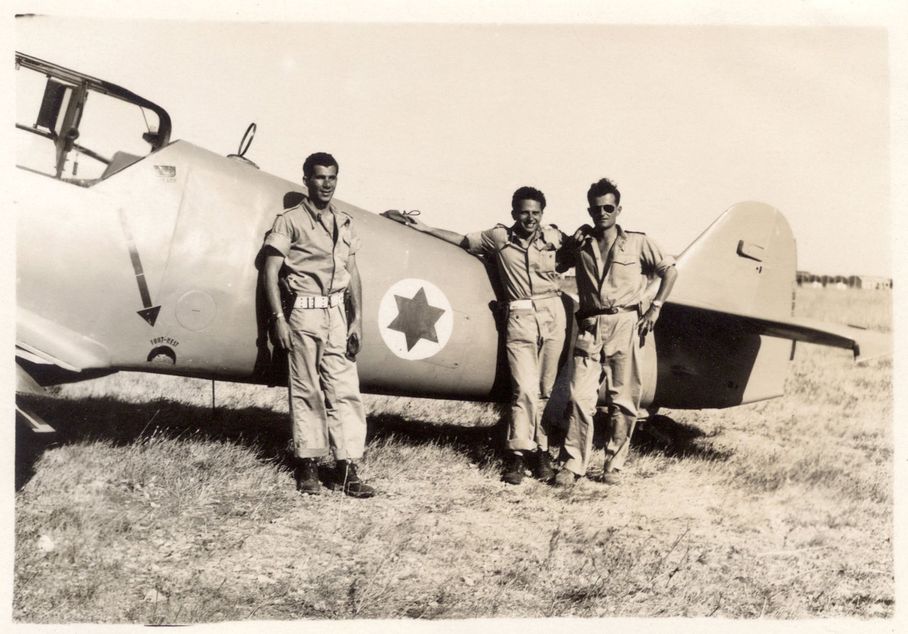
Pilots Lou Lenart, Gideon Lichtman, and Modi Alon in Israel in 1948. Copyright Paramount Productions 2015
RG: Well, first of all I should say that there is a lot of archival footage in the film that was drawn from a lot of different archives around the world, primarily of course Israel and the United States. But there is a lot of footage in the film that is unabashedly made to look like archival footage and blend with our footage that is actually re-creations that we did in conjunction with Industrial Light and Magic. So the conceit was to make re-creation look like archival footage when the fact of the matter is there were gun cameras. There were cameras on pretty much every American plane in World War II but in the the ragtag Israeli Air Force in the 1948 war, there were no cameras since the planes could barely fly. So we pretended that there were those cameras there and created sequences that would match or illustrate the stories they were telling. I strongly believe that documentary filmmakers get to use all the tools of cinema and using those tools as historically accurately as possible or else you lose the trust of the audience.
NS: Roberta, you have these connections more than I do with the archivists and people were so engaged with the story that they really dug around it. There is one shot we have which is authentic archival footage of this Egyptian spitfire that kept flying and bombing over Tel Aviv and all they could do on the ground was run in their houses and get the camera and film it because there was no fighting back. They had no planes, they had no way to defend themselves, it was duck and cover. And the idea that this plane could just keep flying over at will, bombing whenever it wanted must have been a feeling of being so exposed and vulnerable for these people. But like Roberta said, this wasn’t World War II with a rich camera crew going off. This was people running for their lives that have nothing. So I think that finding that footage was huge and it really was the efforts here in America and over in Israel, and we had footage archives in Czechoslovakia, really all over.
RG: We really like to try to dig as deeply as possible as time and resources would allow because a lot of footage or archival footage gets recycled all the time because it is the stuff that bubbles to the top, we see the stuff over and over and over again. So if you want to find interesting material you have to keep digging. Our editor, Chris Callister is really great with archival sequences, to really make scenes out of that footage, that’s the idea.
You touched on one of the key differences in aerial combat between the experience that these men had in World War II and the resources available and the documentation of the effort in Israel. Were there differences in strategy as well? What were some of the differences that these men had to adapt to?
RG: The differences were tremendous. In World War II, the American pilots that flew in that war were part of a giant machine. And in Israel there were so few that they each became their own machine and probably made much bigger strides in the overall war efforts.
Because in fact in May 29, that one battle where they were just right outside of Tel Aviv, there were supposed to be five planes to fly against them and these planes had been brought in in pieces and assembled and one plane wouldn’t work so instead of five they had four and they had five pilots. I mean working with bare-bones. So only four planes could go out and try and stop an army.
And in that battle, one of the men died. So in the very first aerial battle, 25 percent of the Air Force was lost. So it was sort of incredible because it’s such a smaller fishpond and so these guys were bigger fish and I think that strategy wise, I think their training supposedly helped a lot but they had to wing it a lot because it’s not like this is a wealthy country with lots of supplies. They had to be pretty versatile. There was a 26-year-old put in charge of the Air Force and there really were only two Israeli pilots that were experienced enough to be able to take command but there wasn’t a lot of order back then. There weren’t manuals and operational guides. It was really sort of “fly by the seat of your pants.”
So they had a young guy who tried to keep it together. But what he was trying to keep together was also a group of foreigners that spoke different languages. Most of them spoke English and English was the official language of the Israeli Air Force. It’s the language almost everybody knew. The Israeli Air Force was really molded from the British Royal Air Force and American Air Force and South African. So they had access to those manuals and later on they used those as guidelines.
When you interviewed the men, was this a story that they had told before or was it something that was a surprise to their families?
RG: It certainly wasn’t a surprise to their families, their kids knew about it. But I think in some cases when their kids saw the finished film, they saw a fuller and heard a more wonderful story than they had heard before because they heard not only their father’s story but they heard about it in an historical context and they heard of the entire efforts. And so I think that a lot of the kids, the children of the pilots were really, really so excited and so happy about the film not only because the film honors their fathers in such a wonderful way but because it gave them a fuller picture of what their fathers had done during the period.
NS: The grandchildren actually love it. They think that their grandfather is the coolest dude around. They really related to him in a different way.
RG: But some of these stories are new because the interesting part of the question is that there wasn’t a lot of talking about this chapter because of the legal ramifications of it. And when the guys first came back and I think many years afterwards, they didn’t go around boasting about it because it was illegal to fight for a foreign country, it was illegal to smuggle a plane. Some people did go to jail for it, one lost his citizenship. It wasn’t something that people talk about a lot. It’s been really interesting everywhere that we have gone and shown the film. People just kind of came out and said, “Oh, my uncle smuggled machine guns,” or, “My grandfather was part of this.” Just on and on and on. It was just like people just are very excited to put all the pieces together.
NS: In fact one person said to us he thought the FBI were going to come always knocking on the door so he really never wanted to share these stories. And another gentleman brought a personal photo album that had never gone out of the house. We used some of those pictures in the film.
Do you think today’s audiences have an understanding of the origins of Israel? And do you think this movie will change their ideas about Israel?
NS: I do not think that people bother too much to think about origins of Israel. And I say that in this sense because I think people are caught up with a CNN version of Israel and don’t go beyond that. When you stop for a second and go, wait a minute, there was a partition plan for a two state solution and the Jews agreed to it. I don’t know, I am not naïve but that could have changed a lot of things and so in some ways the idea that Israel was there, Israel was interested in a two state solution. Israel was attacked, Israel defended itself. I think those things just have to be emphasized again.
What do you want people to learn from this film?
NS: I hope that they will consider a few things. First of all the idea that these guys went to help somebody in trouble, that’s a great universal lesson that we should be there for other people, we should be there to help each other. I also do hope that people will just go, “Hmm, let’s not be so harsh about Israel and Israel’s right to exist.” That is personally important to me but my most important thing is sort of focusing on some feelings of American pride, of Jewish-American pride, of the idea that being a volunteer is a good thing and that you should do it because it is the right thing to do, not for the glory necessarily.
RG: I hope they understand how urgent the situation on the side of Israel was at the time of its creation, how right and necessary it was, how different things might have been if the partition plan had been accepted and how tenuous the state was in its beginning, how it could have easily gone another way and how threatening the issue was in 1948. I think just to take another look. Obviously it is a very fraught issue but I really think that the discussion is so one-sided these days. We’ve got sort of frantic anti-Israel sentiments; believe me I understand why, but it is really nice to have a story that talks about what the intentions were, what the need was, what the spiritual standing of the state was.
Despite the big names behind it, including George Lucas, who came up with the story and produced, it feels like a straight-to-DVD, about the level of Disney’s Tinkerbell series. It’s bright, colorful, self-affirming, and bouncy. And, likely to be appreciated more by the adults than the kids in the audience, there is a Glee-style mix, or, perhaps re-mix, of assorted songs from the 60’s through today. But that isn’t enough to make it work on a big screen.
It is supposedly inspired by Shakespeare’s A Midsummer Night’s Dream, but the only similarities are the forest, the fairies, and the love potion.
It takes place in an enchanted world that is divided in parts, whose generic names are characteristic of the dim pilot light of the creative imagination at work here. The happy, colorful Fairy Kingdom is ruled by a king (Alfred Molina) with two daughters. The Dark Forest is ruled by the gnarled, bitter Bog King (Alan Cumming) who hates the idea of love because it is chaotic. “Love is dangerous. It weakens. It rots. It destroys order. Without order, there is chaos.”
The fairy king’s oldest daughter is the brave and responsible Marianne (Evan Rachel Wood), who, as the movie begins, is thrilled that she is about to marry the handsome Roland (Sam Palladio). She flies through the kingdom singing a sweet, girl pop version of the Elvis classic, “I Can’t Help Falling in Love With You.” Her younger sister is Dawn (Meredith Anne Bull), who has good intentions but is impetuous and a little naive. Her best friend is an elf named Sonny (Elijah Kelley), who patiently listens to Dawn talk about her various crushes and does not let her know that he is in love with her. They have a cute duet to Bob Marley’s “Three Little Birds.”
Marianne discovers Roland kissing another girl and breaks their engagement. But Roland wants to be king, and that means he must persuade Marianne to be his wife. He persuades Sonny to cross the border into the Bog King’s domain to get a love potion from the Sugar Plum Fairy (Kristin Chenoweth), who was imprisoned by the Bog King. Sonny agrees so he can get some for Dawn, to make her fall in love with him. Sonny has a lot of adventures on the way to obtaining the potion, and the Sugar Plum Fairy insists on getting out of her cage in return for her services. Sonny gets the glowing green potion, but just as in Shakespeare, it does not work as intended. The Bog King captures Dawn, demanding the potion as ransom. Marianne flies in to the rescue, but so do Sonny and Roland, creating some confusion and misunderstandings. And a lot of singing. The well-chosen tunes include: “What Do You Get When You Fall In Love?,” “Marianne,” “I Want to Dance With Somebody,” “When You’re Strange,” “Love is Strange,” “Sugarpie Honeybunch,” “Crazy Little Thing Called Love,” “Tell Him,” and “Wild Thing.”
There is an unexpectedly endearing romance, and the usual kids-film messages about the importance of what’s inside us. But the light-weight storyline is weighed down by sub-standard design and low-level animation that relies too much on algorithms and not enough on imagination.
This is where looks do matter, and this film cannot overcome the clunkiness of its design.
Parents should know that there is some fairytale peril and violence, including some scary creatures, some mild gender humor including an accidental same-sex kiss portrayed as gross (really? In 2015?), and brief potty humor.
Family discussion: Why did Marianne and Bog have trouble trusting others? Why did Bog start to be nice?
If you like this, try: “The Book of Life” and the Tinkerbell series of DVDs.
Pure pleasure: Four great Disney artists, Marc Davis, Eyvind Earle, Josh Meador, and Walt Peregoy, paint a tree. There’s a reason they call them actors with pencils. Or, just call them geniuses.


 . This will be followed by a panel moderated by Gray, featuring Franklin along with Adam Hastings, Pure Flix Entertainment director of marketing and operations, whose 2014 “God’s Not Dead” earned more than $60 million domestic box office; Bill Reeves, founder of Working Title Agency, behind faith-market groundbreakers “Fireproof,” “Courageous,” “Soul Surfer,” “Heaven is for Real” and more; and Julie Fairchild of Lovell-Fairchild Communications, whose film work ranges from “Fireproof” to “Get Low,” “20 Feet from Stardom.” and “Heaven is for Real.”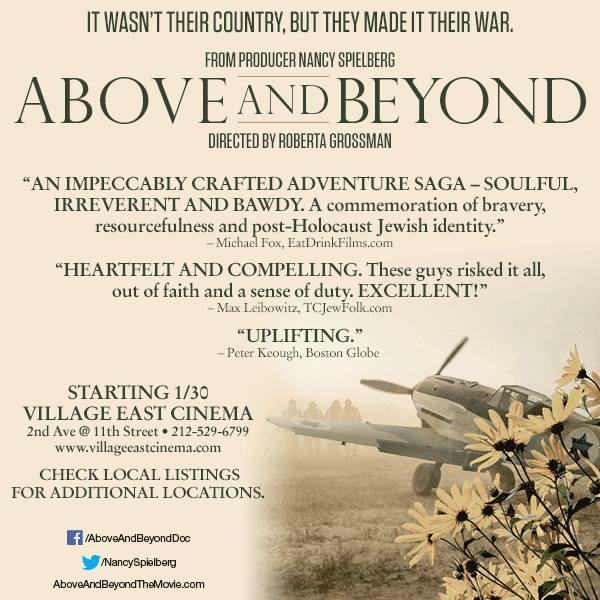

 . It’s bright, colorful, self-affirming, and bouncy. And, likely to be appreciated more by the adults than the kids in the audience, there is a Glee-style mix, or, perhaps re-mix, of assorted songs from the 60’s through today. But that isn’t enough to make it work on a big screen.
 , but the only similarities are the forest, the fairies, and the love potion.